Conclusion / First View
If you’re running a small creative business, managing social media for clients, or building brand assets without a design team, choosing between MidJourney V7 and Ideogram 3.0 comes down to control versus speed. MidJourney V7 excels at delivering stunning, artistically coherent visuals with minimal prompt engineering—ideal for mood boards, concept art, and high-end creative exploration. Ideogram 3.0, however, prioritizes typography accuracy and practical design workflows, making it the better choice for ad creatives, social graphics, and any work requiring text-in-image reliability. Neither tool replaces professional design software, and both require iterative prompting to achieve business-ready results. The best choice depends on whether you value artistic flexibility (MidJourney) or production-ready assets with readable text (Ideogram). Many users find themselves using both for different stages of the creative process, rather than committing to just one.
Introduction: Why This Comparison Matters

The explosion of AI image generation tools has created a paradox for small business owners and solo operators: more options mean harder decisions. When you’re evaluating MidJourney V7 versus Ideogram 3.0, you’re not just comparing technical capabilities—you’re deciding which tool will actually integrate into your daily workflow without requiring a design degree or hours of trial and error.
This comparison cuts through the marketing hype to address a practical question: which AI helps you produce usable visual assets faster while maintaining enough quality to represent your business professionally? The distinction matters because these tools serve overlapping but fundamentally different purposes. MidJourney V7 approaches image generation as an artistic medium, prioritizing aesthetic coherence and creative exploration. Ideogram 3.0 treats it as a design utility, emphasizing functional outputs like legible text and template-ready compositions.
For businesses evaluating AI design tools, the real challenge isn’t choosing the “best” option—it’s identifying which tool’s strengths align with your actual bottlenecks. If you’re spending too much time on concept development and mood boards, your needs differ significantly from someone struggling to produce enough social media graphics to maintain consistent posting. This article provides decision frameworks based on business context, not feature lists, helping you match tool capabilities to operational realities.
Who This Comparison Is Best For
This comparison serves professionals facing specific visual content challenges without dedicated design resources. You’re likely managing multiple responsibilities where design is important but not your core expertise—common situations include freelance consultants building thought leadership content, small agency owners creating client deliverables, e-commerce operators needing product lifestyle shots, and marketing managers maintaining brand presence across platforms.
The typical pain points these tools address include: inconsistent visual quality across marketing materials, excessive time spent on design revisions, difficulty communicating creative direction to freelance designers, and budget constraints that make traditional design services unsustainable. A concrete example: a business coach producing weekly LinkedIn posts struggles to create scroll-stopping visuals quickly enough to maintain posting consistency. Another: a Shopify store owner needs lifestyle product images but can’t afford professional photography for every SKU variation.
Common mistakes when evaluating these tools include expecting AI-generated images to work perfectly on first attempt, underestimating the learning curve required to write effective prompts, and choosing based on impressive showcase examples rather than typical use-case performance. Many users assume “better image quality” automatically means better business results, when factors like iteration speed, text readability, and aspect ratio flexibility often matter more for practical workflows.
These tools work best for professionals comfortable with iterative creative processes who understand that AI assists rather than replaces design judgment. If you need to explain brand positioning to a tool through examples and refine outputs across multiple attempts, these platforms fit your workflow. If you expect to input precise specifications and receive pixel-perfect compliance, traditional design software or human designers remain more appropriate.
The decision between MidJourney V7 and Ideogram 3.0 specifically matters for users who’ve already determined AI image generation fits their needs but struggle to identify which platform supports their dominant use cases. Someone creating one hero image per month has different requirements than someone producing twenty social graphics weekly—the tools excel at different points along this spectrum.
Why Each AI Fits That Need

MidJourney V7 approaches visual creation as an artistic collaboration, where the AI interprets creative direction rather than executing technical specifications. This design philosophy makes it exceptionally powerful for exploratory creative work—developing brand mood boards, visualizing abstract concepts, or creating emotionally resonant imagery without detailed art direction. The platform’s strength lies in its sophisticated understanding of artistic styles, lighting, composition, and aesthetic coherence. When you prompt for “minimalist product photography with soft natural lighting,” MidJourney V7 doesn’t just render the elements—it applies holistic aesthetic judgment that often exceeds what you explicitly requested.
For small business applications, this translates to fewer iterations when creating conceptual content. A consultant developing presentation visuals can describe a concept in plain language and receive aesthetically sophisticated results without mastering design terminology. The learning curve focuses on understanding how the AI interprets creative language rather than memorizing parameter syntax. This makes MidJourney V7 particularly valuable when your business challenge is elevating perceived quality rather than increasing production volume.
The platform integrates primarily through Discord, which creates friction for some workflows but enables rapid community learning—you can observe how other users prompt similar concepts. For businesses where visual content serves brand positioning or thought leadership, MidJourney V7 supports outcomes like: creating distinctive hero images for blog posts, developing cohesive visual themes across content series, and producing mood boards that communicate creative direction to collaborators.
Ideogram 3.0 takes a fundamentally different approach, positioning itself as a design production tool rather than artistic medium. Its defining advantage is typography handling—the platform can render readable, properly formatted text within images with accuracy that MidJourney V7 cannot consistently match. This single capability shifts its entire use-case profile toward practical marketing applications: social media graphics with headlines, promotional materials with pricing callouts, and ad creatives requiring text overlays.
The platform’s interface emphasizes template-like workflows and aspect ratio controls optimized for common social media formats. When creating Instagram carousel slides or Facebook ad variations, Ideogram 3.0 provides the structural predictability that practical design work requires. You’re less likely to generate aesthetically stunning images that work poorly for their intended purpose—a common MidJourney V7 outcome when prompting for functional designs.
For small business application, Ideogram 3.0 reduces the gap between generation and publication. A social media manager can create quote graphics, announcement posts, or promotional banners that require minimal post-processing in Canva or Photoshop. The learning curve centers on understanding how to structure prompts for compositional consistency rather than artistic interpretation. This makes the platform valuable when your bottleneck is content production velocity rather than creative differentiation.
Integration occurs through a standard web interface with straightforward download workflows, making it more accessible for users unfamiliar with Discord or community-based tools. For businesses where visual content serves functional marketing purposes, Ideogram 3.0 supports outcomes like: maintaining consistent posting schedules across social platforms, producing multiple ad creative variations for testing, and creating text-heavy informational graphics without design software expertise.
The critical distinction: MidJourney V7 helps you create images you couldn’t conceptualize alone, while Ideogram 3.0 helps you produce images you already know you need but lack resources to create manually. Neither replaces the other—they address different points in the design workflow where businesses experience friction.
Who Should Choose Another AI
Neither MidJourney V7 nor Ideogram 3.0 serves users requiring deterministic visual outputs where exact specifications must be met with zero variance. If your business needs involve technical diagrams, architectural renderings, medical illustrations, or any visualization where accuracy takes absolute precedence over aesthetic quality, traditional CAD software, data visualization platforms, or professional illustration services remain necessary.
Legal and compliance-sensitive industries face additional constraints. Both platforms generate outputs through probabilistic models that can inadvertently reproduce copyrighted visual elements, create misleading representations, or fail to meet accessibility standards. Financial services, healthcare marketing, and legal communications typically require human design oversight that validates not just aesthetic appropriateness but regulatory compliance—a validation layer that negates much of AI generation’s speed advantage.
Users working with established brand guidelines requiring pixel-perfect adherence face practical limitations. While both tools can approximate brand aesthetics, neither provides the parametric control needed to maintain exact color values, typography specifications, or spacing requirements that formal brand systems demand. A franchise operator or corporate marketing team working within strict brand standards will spend more time correcting AI outputs than creating compliant assets directly in design software.
High-volume production workflows requiring automated generation at scale—such as generating thousands of product variations, creating personalized images for individual users, or building dynamic visual content systems—need API access with programmatic control. As of 2025, MidJourney V7 offers limited API functionality and Ideogram 3.0’s API remains in development, making both unsuitable for technical integration into automated marketing systems or product platforms.
Businesses requiring predictable per-image costs for budgeting purposes struggle with both platforms’ subscription models. Traditional stock photography or design services provide fixed per-asset pricing that enables precise project budgeting. AI generation’s subscription structure works efficiently only when usage volume remains consistently high—sporadic users often pay more per usable image than stock alternatives would cost.
Finally, users expecting AI to compensate for lack of creative judgment face disappointing results. Both platforms require iterative refinement based on evaluating outputs against business objectives—if you cannot assess whether an image effectively communicates your message, no amount of prompt engineering produces strategically appropriate results. The tools amplify creative direction but don’t replace the judgment needed to evaluate alignment with business goals.
Use Cases by Business Goal
Productivity

Internal Communication and Documentation
Both platforms can reduce time spent creating visual explanations for internal processes, training materials, or documentation. MidJourney V7 excels at generating conceptual diagrams that communicate abstract ideas—a team lead explaining a new workflow can describe the process conversationally and receive visually clear representations without using diagramming software. However, the lack of precise control over element placement means outputs often require manual annotation in presentation software.
Ideogram 3.0 better serves structured internal content like process charts, step-by-step guides, or informational posters where text labels must remain readable. A small team creating onboarding materials can generate branded graphics with instructional text that new hires can actually read and follow. The trade-off is less aesthetic sophistication—these images look functional rather than inspirational.
For productivity-focused use cases, the determining factor is whether your internal content prioritizes clarity or engagement. Training materials explaining complex concepts benefit from MidJourney V7’s ability to create memorable visuals that aid retention. Standard operating procedures or quick-reference guides require Ideogram 3.0’s functional clarity and text reliability.
The productivity gain comes from eliminating the cognitive overhead of using traditional design tools for simple internal needs. A manager can generate a team announcement graphic in three minutes rather than spending thirty minutes in Canva—but only if they accept aesthetic variability and plan for iteration time. Neither tool provides the deterministic control that eliminates revision cycles entirely.
For workflows focused on internal efficiency and communication, explore AI Efficiency strategies that help teams adopt AI tools without disrupting established processes.
Revenue / Marketing

Content Marketing and Social Media
This category represents both platforms’ primary small business application. MidJourney V7 serves businesses differentiating through visual storytelling—lifestyle brands, creative agencies, thought leaders building personal brands. A consultant writing LinkedIn articles can generate distinctive featured images that make posts visually memorable in feeds dominated by stock photography. The aesthetic quality elevates perceived expertise, supporting premium positioning.
Ideogram 3.0 targets businesses competing on content volume and consistency—social media managers, e-commerce brands, local businesses maintaining multi-platform presence. A coffee shop posting daily Instagram stories can generate “drink of the day” graphics with readable text overlays without consuming staff time. The production speed enables consistent publishing schedules that algorithm performance rewards.
Ad Creative and Promotional Materials
For paid advertising, the distinction becomes sharper. MidJourney V7 creates scroll-stopping imagery but struggles with text-heavy ad formats requiring headlines, pricing, or call-to-action text. A DTC brand running Facebook ads might use MidJourney for lifestyle product shots but must add text in external design tools. The workflow involves generation, download, import to Canva/Photoshop, text addition, and export—reducing but not eliminating design work.
Ideogram 3.0 enables more complete ad creative production within a single tool. An e-commerce operator can generate promotional graphics with sale percentages, product names, and urgency messaging as readable text elements. The output often requires minimal editing before upload to ad platforms. However, the aesthetic ceiling is lower—these ads look professionally adequate rather than creatively exceptional.
The revenue impact depends on your marketing strategy. Premium brands and consultative services benefit from MidJourney V7’s ability to communicate sophistication visually. Volume-driven businesses and promotional campaigns benefit from Ideogram 3.0’s production efficiency and text functionality.
Email Marketing and Lead Magnets
Both tools can produce email header images, downloadable resource graphics, and lead magnet visuals, but serve different email strategies. MidJourney V7 suits brands using email for relationship building and thought leadership—creating visually distinctive newsletters that stand out in crowded inboxes. Ideogram 3.0 fits promotional email programs requiring template consistency and rapid variation testing—generating multiple header options for A/B testing with different text headlines.
To develop AI-enhanced marketing systems that drive measurable revenue, visit AI Revenue Boost for implementation frameworks specific to small business contexts.
Systemization / Automation
Workflow Templates and Repeatable Processes
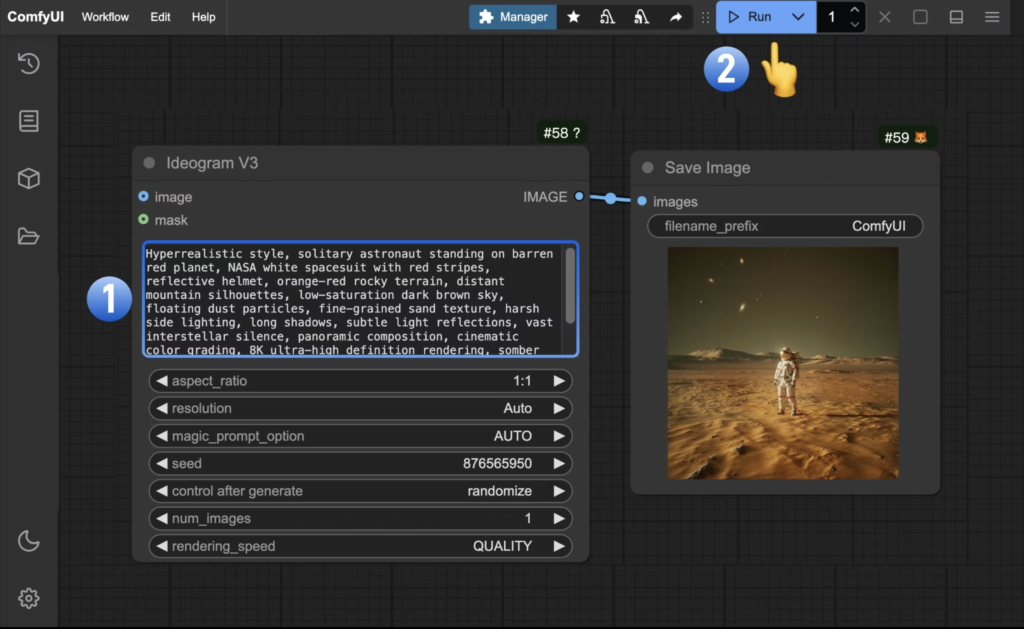
Neither platform currently offers robust API access for full automation, but both support semi-automated workflows through prompt templates and batch generation. MidJourney V7 users can develop prompt formulas that reliably produce on-brand imagery—a content creator might maintain a prompt template like “[subject], editorial photography style, muted earth tones, natural lighting” that ensures visual consistency across blog posts without starting from scratch each time.
Ideogram 3.0’s more structured approach better supports templated workflows for recurring needs. A weekly newsletter producer can create prompts for header graphics that maintain consistent composition while varying content—”motivational quote graphic, [QUOTE TEXT], modern sans-serif typography, gradient background [COLOR SCHEME]” becomes a reusable template requiring only variable updates.
The systemization value comes from developing prompt libraries and style guides rather than technical automation. A small agency can document successful prompt patterns as internal knowledge, reducing variance when multiple team members generate client assets. This creates consistency without requiring design skill standardization across staff.
Long-term Stability and Platform Risk
For businesses building systematic dependencies on these tools, platform stability and pricing predictability matter significantly. Both platforms remain venture-backed companies that may adjust pricing, limit features, or change access models as they mature. MidJourney V7 has demonstrated relative pricing stability since launch but operates through Discord, introducing platform dependency risk. Ideogram 3.0 offers more conventional web access but exists in a competitive market where feature accessibility may shift.
Businesses treating these tools as infrastructure rather than utilities should maintain workflow flexibility—documenting which outputs could revert to stock photography, which require human designers, and which could shift to alternative AI platforms if necessary. This isn’t pessimism but operational planning appropriate for dependencies on rapidly evolving tools.
For comprehensive approaches to building sustainable AI workflows, explore Solo DX methodologies that balance efficiency gains with operational resilience.
AI Comparison Table + Explanation
| Axis | MidJourney V7 | Ideogram 3.0 |
| Ease of Use | Moderate learning curve; requires Discord familiarity and understanding artistic prompt language | Easier initial access via web interface; more intuitive for users familiar with design tools |
| Best For | Concept development, brand mood boards, thought leadership content, aesthetically-driven marketing | Social media graphics, ad creatives, text-heavy designs, high-volume content production |
| Strengths | Superior artistic coherence, sophisticated style interpretation, excellent for exploratory creative work | Reliable typography rendering, template-friendly workflows, consistent compositional structure |
| Limitations | Poor text rendering, Discord dependency, less control over precise composition, requires iteration for functional designs | Lower aesthetic ceiling, less creative interpretation, may produce generic-looking outputs for conceptual work |
| Pricing Perception | Mid-tier subscription ($10-60/month typical plans); value increases with high creative usage | Competitive subscription pricing; value increases with high-volume production needs |
Understanding the Trade-offs
The choice between these platforms reflects a fundamental tension in AI-assisted design: artistic quality versus functional reliability. MidJourney V7 optimizes for the former, making it invaluable when visual distinctiveness drives business value—personal brands, creative portfolios, premium product marketing. The platform assumes users will iterate toward aesthetic goals rather than execute predetermined specifications.
Ideogram 3.0 optimizes for production efficiency, making it essential when content volume and format compliance drive business value—social media management, e-commerce marketing, multi-platform content distribution. The platform assumes users know what they need and require tools to produce it faster rather than tools to explore creative possibilities.
Business maturity influences which trade-off matters more. Early-stage businesses building brand recognition often benefit more from MidJourney V7’s ability to create memorable, distinctive imagery that communicates positioning. Established businesses scaling content production benefit more from Ideogram 3.0’s reliable output for standardized formats.
The practical reality for many small businesses is that both tools serve different workflow stages. Creative strategy and brand development work suits MidJourney V7’s exploratory strengths. Tactical content execution and campaign production suits Ideogram 3.0’s template efficiency. Users treating these as mutually exclusive choices often end up subscribing to both as their visual content needs mature and diversify.
How to Choose the Right AI
Decision Checkpoint: Budget Reality
Evaluate not just subscription costs but total workflow costs. If you’ll spend significant time editing AI outputs in Photoshop or Canva to make them usable, the apparent cost savings versus stock photography or simple design services may disappear. MidJourney V7 often requires more post-processing for functional business use but may eliminate mood board and creative direction costs. Ideogram 3.0 reduces post-processing time but may require more prompt iterations to achieve adequate aesthetic quality.
Calculate your cost per usable asset rather than cost per generated image. If you generate twenty images to get three usable ones, your effective per-image cost triples. Track this across initial trial periods to understand true ROI rather than theoretical capability.
Decision Checkpoint: Time-to-Output
Consider your content calendar reality. If you plan visual content weeks in advance, MidJourney V7’s iterative creative process fits comfortably. If you create content reactively in response to trends or news, Ideogram 3.0’s faster path from concept to publishable asset becomes critical. Neither tool supports true real-time content creation—both require prompting, evaluation, revision, and usually some post-processing.
Decision Checkpoint: Team Technical Skills
Honestly assess your team’s comfort with new platforms and iterative workflows. MidJourney V7’s Discord interface creates adoption friction for team members unfamiliar with community platforms. Ideogram 3.0’s web interface reduces technical barriers but still requires understanding AI prompting logic. If your team struggles with adopting new tools, the platform with gentler learning curves provides faster ROI regardless of feature superiority.
Decision Checkpoint: Review and Compliance Needs
If generated visuals require legal review, brand compliance checking, or accessibility validation before publication, factor this into workflow planning. Both platforms can produce outputs requiring revision for compliance reasons—the question is whether your review process can accommodate AI-generated content or whether approval friction negates generation speed advantages.
Common Mistakes to Avoid
Choosing based on showcase examples rather than median performance represents the most frequent error. Both platforms highlight their best outputs in marketing materials—these exceptional results may not reflect typical generation quality for your specific use cases. Trial both platforms with your actual business content needs before committing to annual subscriptions.
Using AI as a complete design replacement rather than a collaborative tool sets unrealistic expectations. These platforms work best when integrated into workflows that include human creative judgment, post-processing capabilities, and quality evaluation against business objectives. Teams expecting to eliminate all design work typically end up disappointed with output quality.
Underestimating the prompt engineering learning curve leads to premature platform abandonment. Effective AI image generation requires developing an intuitive understanding of how the specific platform interprets language—this skill develops over weeks of use, not hours. Early frustration with results often reflects inexperience with the tool rather than fundamental capability limitations.
For systematic approaches to AI tool selection and implementation, visit AI Workflows for decision frameworks applicable across different business AI applications.
FAQs
Is MidJourney V7 better than Ideogram 3.0 for small business marketing?
Neither is universally better—the right choice depends on your dominant content type and bottleneck. If your marketing emphasizes visual storytelling, brand differentiation, and thought leadership where distinctive imagery drives engagement, MidJourney V7’s superior aesthetic quality provides better ROI. If your marketing requires consistent social media posting, ad creative variations, or any text-heavy graphics, Ideogram 3.0’s typography handling and production speed make it more operationally valuable. Many small businesses ultimately use both: MidJourney V7 for hero images and brand assets, Ideogram 3.0 for routine social content and promotional graphics.
Can these AI tools completely replace hiring designers?
No, but they shift which design work requires professional expertise. Both tools effectively handle exploratory creative work and routine content production that previously required designer time. They struggle with projects requiring exact brand compliance, complex multi-element compositions, or designs where aesthetic judgment must align with specific business strategy. The practical outcome for small businesses is typically reducing design freelancer dependency for routine needs while still engaging professionals for strategic brand work, website design, and materials requiring precision. Think of these tools as expanding your internal capability rather than eliminating external design needs entirely.
Which platform is easier for non-technical users to learn?
Ideogram 3.0 presents a gentler initial learning curve due to its familiar web interface and more structured prompting approach. Users comfortable with tools like Canva typically grasp Ideogram’s logic quickly. MidJourney V7 requires learning Discord navigation and understanding more nuanced creative prompting language, creating steeper initial friction. However, long-term mastery difficulty is comparable—both platforms reward users who invest time understanding how the AI interprets prompts and developing systematic approaches to iteration. If your team has zero technical confidence, Ideogram’s conventional interface reduces adoption resistance, but neither platform requires coding skills or technical expertise.
How do I know if AI image generation is worth the learning investment for my business?
Evaluate based on your current visual content bottleneck, not theoretical capability. If you’re currently limiting content publication because creating visuals takes too long, paying for stock photos you can’t quite afford, or struggling to maintain visual consistency across platforms, AI generation likely provides ROI. If you’re satisfied with your current visual content workflow or your business doesn’t heavily rely on imagery for marketing, the learning investment may not pay off immediately. A practical test: try creating five pieces of actual business content you need this week using free trials of both platforms. If you successfully produce usable assets faster than your current method, the tools fit your needs. If you spend more time fighting the tools than you would have using existing workflows, they may not align with your business reality yet.
What happens to my generated images if I cancel my subscription?
Both platforms allow you to retain and use images generated during active subscription periods, but you lose the ability to generate new images or access generation history through the platform. Downloaded images remain yours to use commercially based on each platform’s terms of service. MidJourney V7’s terms grant commercial usage rights to paying subscribers for images they generate. Ideogram 3.0 offers similar commercial rights with some tier-dependent restrictions. Always download and organize generated assets you plan to use long-term rather than depending on platform storage, as access to historical generations may be limited or removed after cancellation. Read current terms of service carefully, as licensing terms can evolve with platform policy updates.
Next Steps
- Compare AI – Explore detailed comparisons across different AI tool categories to find the right fit for your specific business needs
- AI Efficiency – Learn systematic approaches to integrating AI tools into daily workflows without disrupting productivity
- AI Revenue Boost – Discover strategies for using AI to create measurable marketing and revenue outcomes in small businesses
- Solo DX – Understand frameworks for digital transformation as a solo operator or small team without enterprise resources
- AI Workflows – Build repeatable, sustainable AI-enhanced workflows that scale with your business growth
Leave a Reply