
Introduction
You’ve successfully grown your business from a solo operation to a team of five, maybe eight people. You thought scaling would solve your problems, but instead, you’ve inherited new ones: missed deadlines because someone didn’t know the process, client deliverables that vary wildly in quality, and a nagging feeling that you’re still the bottleneck in every decision. Sound familiar?
In 2025, the gap between solo efficiency and team chaos has never been more apparent. When it was just you, everything lived in your head—client preferences, workflow shortcuts, quality standards. But now? Every new hire means re-explaining the same processes. Every project handoff risks miscommunication. Every client interaction reveals how little your team actually knows about your standards.
This is where AI for team operations becomes transformative. Semrush SEO Toolkit, traditionally known for its powerful search engine optimization capabilities, has evolved into an unexpected ally for small teams seeking systemization. Its AI-powered features don’t just optimize websites—they help founders document tribal knowledge, standardize workflows, and build the operational backbone that prevents team chaos. If your team has grown beyond solo work but still feels like you’re personally holding everything together, this article will show you how to systemize operations without hiring a COO or spending months writing SOPs manually.
What is Solo DX?
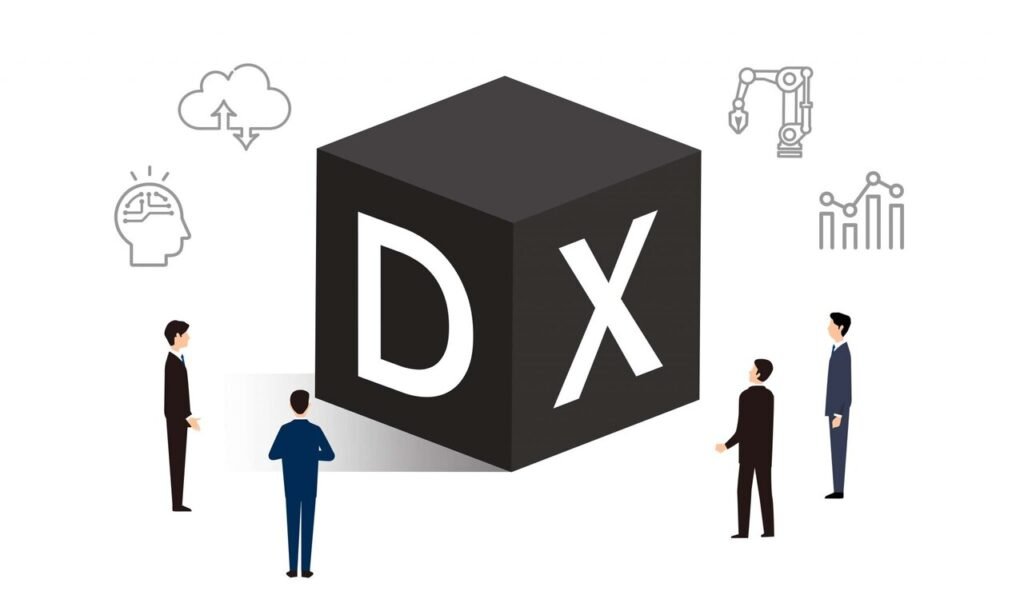
Solo DX represents small-scale digital transformation led by founders who’ve outgrown solo work but aren’t yet large enough for dedicated operations teams. It’s the messy middle ground between running everything yourself and having formal management layers. Unlike traditional digital transformation initiatives that require consultants and six-month timelines, Solo DX happens in small, founder-led increments—often late at night after the team has logged off.
The term distinguishes itself from our other AI categories in important ways. AI Efficiency focuses on personal productivity—how you as an individual can accomplish more with AI assistants. AI Revenue Boost targets growth activities like lead generation, sales automation, and customer acquisition. Solo DX sits between them: it’s about building systems that make your small team function predictably, even when you’re not directly involved in every task.
Consider a three-person design studio that recently hired their first account manager. Without Solo DX, the founder personally briefs the new hire on every client, explains brand guidelines verbally, and reviews all deliverables because “it’s faster than explaining the system.” With Solo DX, that founder uses AI to generate standardized client onboarding checklists, document brand specifications in searchable formats, and create quality control templates that the account manager can follow independently.
Solo DX acknowledges a fundamental truth: small teams don’t fail from lack of talent—they fail from lack of systems. When your business has 1-10 people, you can’t afford a full-time operations manager, process documentation specialist, or training coordinator. Yet without these functions, knowledge remains locked in the founder’s head, quality varies by who’s handling the work, and scaling feels impossible. Solo DX uses AI to fill this gap, enabling founders to build the operational infrastructure their growing teams desperately need without adding headcount or burning themselves out documenting every process manually.
The distinction matters because the problems Solo DX solves are neither personal productivity challenges nor growth marketing opportunities. They’re structural: how do we ensure consistent client experiences when three different people might handle the account? How do we onboard new team members without the founder spending two weeks in training mode? How do we capture the shortcuts and judgment calls that make work actually get done? These are systemization problems, and in 2025, AI has become the most practical tool small teams have for solving them.
Why AI is Key for Mini-Team Systemization

Small teams suffer from a documentation paradox: they need structured processes more than anyone, yet they’re least equipped to create them. The founder is too busy firefighting to write SOPs, and the team is too new to know what needs documenting. Meanwhile, critical knowledge exists only in scattered Slack messages, partially remembered verbal instructions, and the founder’s increasingly overwhelmed brain.
This creates three cascading problems that AI for small teams can systematically address:
Knowledge lives exclusively in the founder’s head. You know exactly how to handle a difficult client conversation, which vendors to prioritize, and why certain formatting details matter for brand consistency. Your team doesn’t. They make reasonable guesses, but those guesses create inconsistency. A customer receives slightly different service depending on who handles their request. A marketing asset gets published with the wrong tone because the designer didn’t know your brand voice preferences. These aren’t competence failures—they’re information access failures. The knowledge exists; it’s just trapped in one person’s experience and never systematized.
New hires create operational slowdowns instead of relief. Every founder hiring their second, third, or fifth employee expects breathing room. Instead, they discover that training consumes more time than the help provides—at least initially. Without documented workflows, onboarding becomes an oral tradition. You explain the client intake process verbally, answer follow-up questions via Slack, correct mistakes in real-time, and ultimately redo work that didn’t meet unwritten standards. The new hire feels frustrated by unclear expectations; you feel exhausted by constant interruptions. SOP automation would solve this, but who has time to write comprehensive training materials when you’re already underwater?

Quality and output vary dramatically across team members. Your best team member produces work that perfectly matches your standards—not because they’re more talented, but because they’ve absorbed your preferences through months of feedback. Your newer team members produce acceptable work that still requires your review and refinement. This quality inconsistency isn’t sustainable. Clients notice. Your reputation depends on consistent delivery, but achieving that traditionally requires either micromanagement (exhausting) or extensive written guidelines (time-consuming to create). Without systemize operations through documented standards, you’re perpetually trading quality for scalability.
AI fixes each problem by dramatically lowering the effort required to capture, organize, and disseminate operational knowledge. Where writing an SOP manually might take three hours of painful documentation work, AI can generate a first draft from a brief voice recording in minutes. Where creating training materials traditionally meant formatting documents and organizing information hierarchically, AI can structure your unorganized notes into searchable, actionable guides. Where answering the same question five times via Slack was your only option, AI can synthesize your past responses into a queryable knowledge base.
The transformation isn’t that AI makes documentation fun—it’s that AI removes the activation energy that prevented documentation from happening at all. Small teams know they need systems; they simply haven’t had the bandwidth to build them. AI changes that equation. Instead of choosing between serving clients and building infrastructure, founders can now do both. A thirty-minute AI-assisted session can generate workflow documentation that previously would have required days of focused writing. That shift from “impossible given our constraints” to “achievable this week” is why AI has become essential for mini-team systemization in 2025.
How Semrush SEO Toolkit Enables Solo DX
Semrush SEO Toolkit brings unexpected power to team operations through features designed for content intelligence but perfectly suited for workflow automation and knowledge management. Here’s how specific capabilities translate into operational improvements for small teams:
AI-Powered Content Templates for SOP Creation
Semrush’s SEO Writing Assistant and Content Marketing Platform include AI template generation that extends far beyond blog posts. Small teams use these features to create standardized operational documents—client reporting templates, project brief formats, quality control checklists, and onboarding guides. The process works like this: you input key requirements (what needs to be covered, what tone to use, what structure to follow), and the AI generates a comprehensive template that team members can follow consistently.
For example, a six-person marketing agency used Semrush to create twelve client reporting templates in three days—a task they’d postponed for six months because manual creation felt overwhelming. Each template included standard sections (campaign performance, insights, recommendations, next steps), placeholder text showing what information goes where, and formatting that matched their brand. New account managers could now generate consistent, professional reports without guessing at structure or asking the founder for examples.
The business benefit compounds over time. Templates don’t just save immediate effort—they encode best practices into repeatable formats. When your best team member discovers an effective way to brief designers or structure client kickoff calls, that knowledge becomes a template others can follow. Quality becomes less dependent on individual experience and more embedded in your operational systems.
Competitive Analysis Features as Process Documentation Tools
Semrush’s domain comparison and gap analysis tools reveal an unexpected application: documenting how your team should approach different business scenarios. Small teams use these features to analyze competitor strategies, then convert those insights into decision-making frameworks.
A boutique e-commerce consultancy discovered this accidentally. They regularly used Semrush to analyze client competitors, identifying keyword gaps and content opportunities. They realized the analysis process itself—how they evaluated domains, what metrics they prioritized, which insights mattered most—was valuable operational knowledge. Using Semrush’s reporting features, they documented their analysis methodology as a repeatable workflow. Now junior consultants follow the same systematic approach the founder developed, producing consistent strategic recommendations without constant supervision.
This transforms tribal knowledge into teachable process. Instead of explaining “how we analyze competitors” verbally to each new hire, the team simply shares the documented Semrush workflow. New consultants learn by doing, following the same steps experienced team members use, generating comparable insights regardless of experience level.
Keyword Research Tools for Internal Knowledge Organization
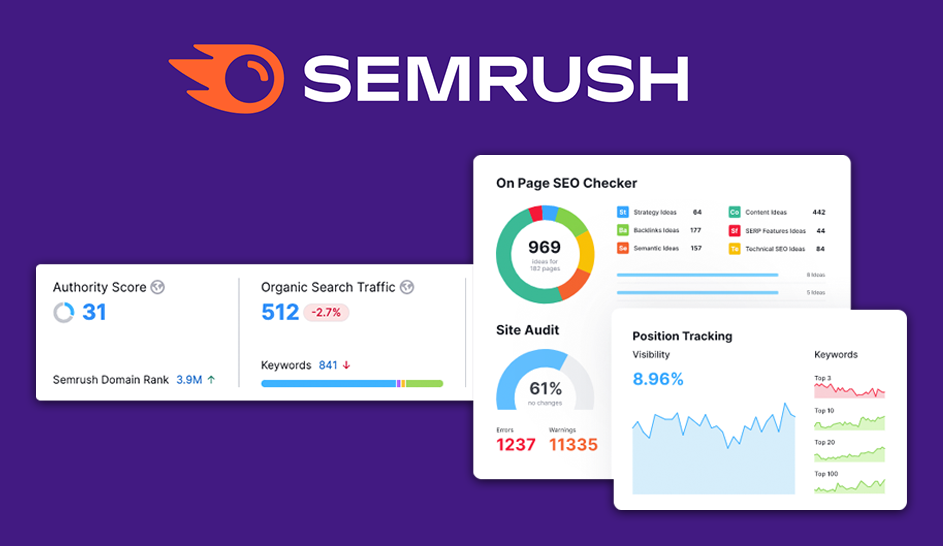
Semrush’s keyword research capabilities—designed to find search opportunities—work surprisingly well for organizing internal documentation. Small teams struggle with knowledge management because information lives everywhere: Slack threads, Google Docs, email chains, someone’s notes. When team members need answers, they don’t know where to look or even what to search for.
Forward-thinking teams use Semrush’s keyword clustering and search intent features to organize internal resources around the questions people actually ask. They identify common internal queries (“How do we handle refund requests?” “What’s our approval process for social posts?” “Where are brand assets stored?”), then structure documentation around those natural language searches. The result feels like internal SEO—team members can find answers quickly because content is organized around their actual needs, not arbitrary folder structures.
A seven-person SaaS company implemented this approach after their third support specialist asked the same onboarding questions. They analyzed Slack search patterns to identify repeated queries, used Semrush to understand search intent and related questions, then restructured their internal wiki around those natural information-seeking behaviors. Time spent searching for information dropped by 40%, and new hires became productive faster because answers were organized around questions they naturally asked.
Reporting Automation for Consistent Client Communication
Semrush’s automated reporting features help small teams maintain consistent client communication without manual effort. Teams create branded report templates that pull live data from Semrush dashboards—SEO performance, keyword rankings, backlink growth, competitive positioning—and automatically generate client-ready documents on scheduled intervals.
This matters more than it sounds. For small teams, inconsistent client communication is a major stress point. When the founder handles reporting, clients receive detailed, insightful updates. When team members handle it, quality varies. Some reports are thorough; others are rushed. Clients notice, and the founder ends up reviewing everything anyway.
Workflow automation through Semrush reporting solves this by standardizing what good looks like. The founder creates the template once, defining what metrics matter, what context to provide, what insights to highlight. From then on, team members use the template, and clients receive consistent communication regardless of who generates the report. The founder shifts from doing the work to designing the system—a crucial transition for scaling operations.
?? Ready to systemize your business? Try Semrush SEO Toolkit ? https://www.semrush.com/
The cumulative effect of these features is that Semrush—despite being positioned as an SEO tool—functions as Solo DX infrastructure. It helps small teams document processes, standardize outputs, organize knowledge, automate routine communications, and measure performance objectively. These capabilities matter because they address the core operational challenges that prevent small teams from scaling: inconsistent quality, knowledge trapped in the founder’s head, and lack of repeatable systems.
Use Cases by Team Role

Founder Juggling Three Departments
Sarah runs a twelve-person digital marketing agency but personally oversees creative, client services, and strategy. Before implementing AI for team operations through Semrush, her days consisted of constant context-switching: answering creative questions about brand guidelines, joining client calls because account managers weren’t confident handling objections, and reviewing every strategic recommendation before it went to clients.
Her old workflow meant being available from 8 AM until 7 PM for Slack questions, personally reviewing 80% of client deliverables, and spending weekends documenting processes she never had time to write during the week. Work quality was high when Sarah touched it, inconsistent when she didn’t. The agency couldn’t take on new clients because Sarah was the bottleneck in every department.
Using Semrush, Sarah systematized her departments one at a time. For creative, she used the SEO Writing Assistant to create brand voice templates for their top five clients, documenting tone, style preferences, formatting requirements, and quality standards. Designers and copywriters could now reference clear guidelines instead of asking Sarah to define “on-brand.” For client services, she built standardized reporting templates using Semrush’s automated reports—account managers could generate professional performance summaries without Sarah reviewing each one. For strategy, she documented her competitor analysis methodology using Semrush’s domain comparison tools, creating a repeatable workflow that junior strategists could follow.
The transformation took six weeks of incremental effort—thirty-minute sessions where Sarah documented one process at a time using AI assistance. Time saved exceeded twenty hours per week. More importantly, the agency could finally scale because quality no longer depended on Sarah’s direct involvement. As she described it:
“Before Semrush, I was the quality control for everything. Now our systems are the quality control, and I review exceptions rather than everything. We doubled our client capacity without me working more hours—we just built processes that work without constant supervision.”
Executive Assistant Onboarding New Staff
Marcus supports a seven-person consulting firm as their operations coordinator. His primary challenge: onboarding new consultants without formal training materials. Each time the firm hired someone, Marcus spent two weeks in constant training mode—explaining tools, client preferences, project workflows, and quality expectations through a combination of verbal briefings, screen shares, and reviewing work with detailed feedback.
The old approach meant every new hire received slightly different training depending on when they joined and what Marcus remembered to cover. Some consultants learned critical shortcuts early; others discovered them months later by accident. Client work quality varied significantly during the first ninety days because new hires simply didn’t know the firm’s standards and had no documented reference to check against.
Marcus transformed onboarding using Semrush as his systemization engine. He created a standardized onboarding checklist using Semrush’s content template features, documenting every tool, process, and expectation new consultants needed to master. He used Semrush’s keyword research functionality to identify common questions new hires asked during training, then organized onboarding materials around those natural queries. He built client brief templates showing exactly how to structure research, recommendations, and deliverables.
Most critically, he used Semrush’s position tracking and reporting features to create a ninety-day performance framework. New consultants could see exactly what success looked like—which skills to develop, what deliverables to master, how their work compared to firm standards. Instead of Marcus providing subjective feedback, consultants accessed objective benchmarks that clarified expectations.
The results were immediate. New consultant productivity improved 60% in the first thirty days because they had clear guidance instead of figuring things out through trial and error. Marcus reduced active training time from two weeks to four days of structured onboarding sessions, with ongoing questions answered through documented resources rather than constant Slack interruptions. As he explained:
“Before Notion AI and Semrush, I rewrote onboarding docs every month because processes changed and I never had time to maintain them. Now onboarding is versioned, updated systematically, and new hires can self-serve answers instead of interrupting me constantly. It’s the difference between chaos and actual systems.”
Marketing Lead Standardizing Client Reporting

Jennifer manages a four-person content marketing team serving B2B clients. Her persistent frustration: inconsistent client reporting. When Jennifer created reports, they were comprehensive, insight-driven, and tied campaign metrics to business outcomes. When her team created reports, quality varied wildly. Some were thorough but took six hours to produce; others were quick but superficial. Clients noticed the inconsistency and began requesting that Jennifer personally handle their accounts.
The old workflow involved Jennifer creating custom reports for each client monthly, pulling data from multiple sources, formatting everything manually, and writing narrative insights. It consumed twelve hours monthly per client. When she delegated reporting to team members, she spent almost as much time reviewing and correcting their work as doing it herself. The team wanted to help but lacked clear models of what great reporting looked like.
Jennifer used Semrush to solve this through radical standardization. She created five client reporting templates using Semrush’s automated reporting features—each designed for different client types (SaaS, e-commerce, B2B services, local business, content publishers). Each template pulled live data from Semrush dashboards: keyword rankings, organic traffic trends, backlink growth, competitive positioning, and content performance. She documented in each template exactly what insights to highlight, what context to provide, and what recommendations to make based on the data.
Team members could now generate client-ready reports in ninety minutes instead of six hours. More importantly, quality became consistent because the templates encoded Jennifer’s expertise. Every report included the same depth of analysis, similar narrative structure, and comparable strategic recommendations. Clients received better service because reports arrived on schedule with consistent quality, regardless of who produced them.
Jennifer’s time commitment shifted from doing twelve hours of reporting per client to spending thirty minutes reviewing team-generated reports for accuracy. As she described the change:
“Semrush didn’t just save time—it made my knowledge transferable. Instead of being the only person who could create great reports, I built a system that lets my entire team create great reports. That’s what SOP automation actually means for small teams.”
Want smoother operations with less stress? Start using Semrush SEO Toolkit ? https://www.semrush.com/
Common Pitfalls & How to Avoid Them

Using Too Many Disconnected Tools
Small teams often approach Solo DX by adopting every AI tool they encounter—one for writing, another for project management, a third for client communication, a fourth for documentation. This creates new problems: data scattered across platforms, team members unsure which tool to use for what purpose, and the founder spending time managing tools instead of using them productively.
The solution is to build AI around one or two core platforms that integrate with your existing workflow. If you’re already using Semrush for SEO work, extend it to operational documentation and client reporting rather than adding separate tools. Consolidation matters more than features. A simple system everyone actually uses beats a sophisticated system that creates confusion.
Delegating Without Documentation
Founders sometimes use AI to generate work products without creating the underlying systems that enable delegation. They’ll use AI to write client reports, create marketing content, or draft proposals—but they do this work themselves rather than building templates and processes their team can follow. This creates temporary relief but no lasting operational improvement.
The fix is to shift from “AI helps me work faster” to “AI helps me build systems my team can use.” When you use AI to create something, immediately ask: “How do I turn this into a template or process others can follow?” That mindset shift—from personal productivity to team systemization—is what separates AI Efficiency from genuine Solo DX.
Failing to Review AI Output
Teams sometimes implement AI-generated SOPs, templates, or workflows without testing them in real conditions or gathering feedback from the people who’ll actually use them. The result: systems that work in theory but fail in practice because they don’t account for edge cases, client-specific requirements, or workflow realities.
Build review loops into your systemization process. When you create an AI-assisted SOP, have a team member follow it for real work and report what’s missing, unclear, or impractical. Iterate based on actual usage, not theoretical completeness. AI generates excellent first drafts; human feedback creates systems that actually work.
FAQs

What is Solo DX?
Solo DX stands for small-scale digital transformation focused on systemizing team operations without formal management layers. It addresses the specific challenges founders face when they’ve grown beyond solo work but aren’t large enough for dedicated operations staff. Unlike AI Efficiency (personal productivity) or AI Revenue Boost (growth and sales), Solo DX targets operational infrastructure—documentation, standardization, knowledge management, and workflow consistency. It’s about building the systems that make your team function predictably, even when you’re not personally involved in every decision.
How can AI write my SOPs?
AI generates SOPs by converting your unstructured knowledge into organized, actionable documents. You provide the raw input—verbal explanations, recorded walkthroughs, bullet-point notes, or even transcripts of how you’ve explained the process to team members—and AI structures this into clear step-by-step procedures. Tools like Semrush’s content templates help standardize formatting and ensure completeness. The AI doesn’t create procedures from nothing; it captures and organizes the expertise you already have but haven’t had time to document formally. You’ll always need to review and refine AI-generated SOPs, but the initial draft happens in minutes rather than hours.
What’s the difference between AI Efficiency and Solo DX?
AI Efficiency focuses on personal productivity—how you as an individual can accomplish more through AI assistance. It’s about writing faster, managing your calendar more effectively, or conducting research more efficiently. Solo DX focuses on team operations—building systems that enable your entire team to work consistently and independently. If the benefit primarily helps you personally, it’s AI Efficiency. If it creates repeatable processes your team can follow without you, it’s Solo DX. Both matter, but they solve different problems at different business stages.
Conclusion
Systemizing team operations isn’t about eliminating human judgment or turning your business into an assembly line. It’s about capturing the knowledge, standards, and workflows that already exist in your head and making them accessible to your entire team. Solo DX through AI tools like Semrush SEO Toolkit enables small teams to build operational infrastructure that previously required dedicated staff, extensive documentation time, or expensive consultants.
The transformation from chaotic operations to systematic ones doesn’t happen overnight, but it also doesn’t require massive upfront investment. Start with your biggest pain point—inconsistent client reporting, unclear onboarding, scattered knowledge management—and use AI to systemize that one area. Build incrementally, letting each small system success create momentum for the next improvement.
In 2025, the competitive advantage for small teams isn’t just AI for team operations—it’s the operational maturity to use AI effectively for systemization rather than just individual productivity. Founders who build these systems now create businesses that can scale without burning out, hire without weeks of intensive training, and deliver consistent quality regardless of which team member handles the work. Solo DX isn’t just about saving time—it’s about creating a business that works without consuming you.
Next Steps
Ready to explore how AI can transform your business operations? Check out these resources:
Compare AI – Find the right AI tools for your specific business needs and team size
AI Efficiency – Discover how AI can boost your personal productivity and daily workflow
AI Revenue Boost – Learn strategies for using AI to drive growth and increase revenue
AI Workflows – Explore pre-built AI workflow templates you can implement immediately
Leave a Reply