Introduction
It’s 2026, and the average solo founder spends less time building their business and more time drowning in it. Email chains spiral into chaos. Client requests pile up like unread notifications. Repetitive admin tasks eat away hours that could be spent on strategy, creativity, or simply catching your breath. You know this reality well—the overwhelming sense that you’re working harder than ever but not making real progress.
The shift from manual busywork to AI-powered daily operations isn’t coming; it’s already here. The difference between thriving small businesses and those barely surviving often comes down to one thing: how efficiently they leverage intelligent automation. This isn’t about replacing human judgment or creativity—it’s about reclaiming time, mental energy, and focus for what truly matters.
Enter Claude Opus 4.5, Anthropic’s flagship AI assistant designed specifically to handle the complex, nuanced workflows that drain small business owners every day. Unlike simple automation tools that break when faced with edge cases, Claude Opus 4.5 understands context, adapts to your specific needs, and handles multi-step processes with remarkable sophistication. For solo founders, freelancers, and small business owners struggling to keep all the plates spinning, Claude represents a smart alternative to burning out while trying to do everything manually.
When we talk about AI efficiency for small business, we’re talking about more than saving a few minutes here and there. We’re talking about fundamentally transforming how you work—shifting from reactive firefighting to proactive strategy, from mental exhaustion to sustainable productivity. This article will show you exactly how Claude Opus 4.5 makes that transformation possible, with real-world use cases, practical implementation strategies, and honest conversations about both the potential and the limitations of AI-powered efficiency.
Key Concepts of AI Efficiency
Before diving into how Claude Opus 4.5 transforms small business operations, it’s essential to understand the core concepts that make AI efficiency different from traditional productivity hacks. These aren’t just buzzwords—they’re the foundational principles that explain why AI tools like Claude can deliver results that manual workflows and simple automation cannot.
Cognitive Offloading
Cognitive offloading is the process of transferring mental tasks from your brain to an external system. Think about how you use a calendar instead of memorizing every appointment, or how a grocery list frees you from the anxiety of forgetting something important. AI efficiency for small business takes this concept to a new level by offloading not just simple reminders, but complex cognitive tasks like drafting client proposals, analyzing spreadsheet data, or synthesizing research from multiple sources.
For a solo consultant preparing for a client presentation, cognitive offloading might mean asking Claude Opus 4.5 to review three years of industry reports and extract the five most relevant trends. Instead of spending hours reading, highlighting, and note-taking, the consultant offloads that cognitive burden to the AI and receives a synthesized summary in minutes. This isn’t about being lazy—it’s about preserving your brain’s limited capacity for high-value thinking. Your mental energy becomes a strategic resource, not something you waste on tasks that AI can handle equally well.
The business result is profound: reduced decision fatigue, fewer mistakes from mental overload, and more bandwidth for creative problem-solving. When you’re not exhausted from information processing, you show up sharper for the strategic conversations that actually move your business forward.
Context Switching Cost

Every time you shift from one task to another—responding to an email, then jumping to a client call, then switching to invoice creation—your brain pays a switching cost. Research shows it can take up to 23 minutes to fully refocus after an interruption. For small business owners juggling multiple roles, these switching costs add up to hours of lost productivity every single day.
AI workflow automation for small business directly addresses this problem by handling entire workflows from start to finish. Instead of bouncing between tasks, you hand off a complete process to Claude Opus 4.5. For example, a freelance graphic designer might upload a client’s brand guidelines, project brief, and feedback notes, then ask Claude to draft three rounds of project proposals with pricing variations. What would normally require switching between email, spreadsheet, and document creation tools multiple times becomes a single handoff, dramatically reducing context-switching costs.
The real-world scenario looks like this: you start your morning focused on creative work—your highest-value activity. Mid-morning, instead of fragmenting your attention across a dozen admin tasks, you batch them into AI-assisted workflows. Claude handles the heavy lifting while you maintain focus. By lunch, you’ve accomplished what would typically take a full day, and you’re mentally fresher because you haven’t ping-ponged between a dozen different contexts.
Workflow Orchestration
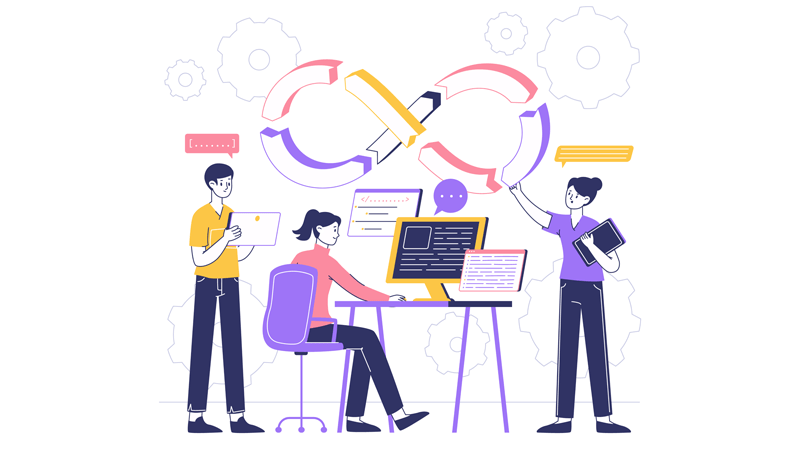
Workflow orchestration refers to coordinating multiple steps, tools, and decisions into a coherent process. Traditional automation tools struggle with this because they’re rigid—they break when something unexpected happens. AI-powered workflow orchestration is different because it can handle ambiguity, make judgment calls, and adapt to variations in the process.
Consider an e-commerce owner managing customer support. The traditional workflow might involve reading an email, checking order history in a separate system, determining if a refund is warranted based on company policy, drafting a response, and logging the interaction. That’s five distinct steps, each requiring context and decision-making. With business process automation AI tools like Claude Opus 4.5, you can orchestrate the entire workflow: paste the customer email, provide access to order data and policy guidelines, and receive a complete response draft that accounts for all relevant factors.
This orchestration becomes even more powerful for multi-step projects. A solo founder launching a new service might need to create a landing page, draft social media announcements, prepare email sequences, and develop sales collateral—all coordinated around consistent messaging and brand voice. Claude can orchestrate these interconnected tasks, maintaining coherence across every output while you focus on the strategic decisions that AI can’t make for you.
The connection to AI efficiency for small business is direct: instead of managing ten separate tasks, you’re orchestrating one intelligent workflow. The result is faster execution, fewer errors from miscommunication between steps, and the ability to handle complexity that would otherwise require hiring additional help.
How Claude Opus 4.5 Helps Efficiency
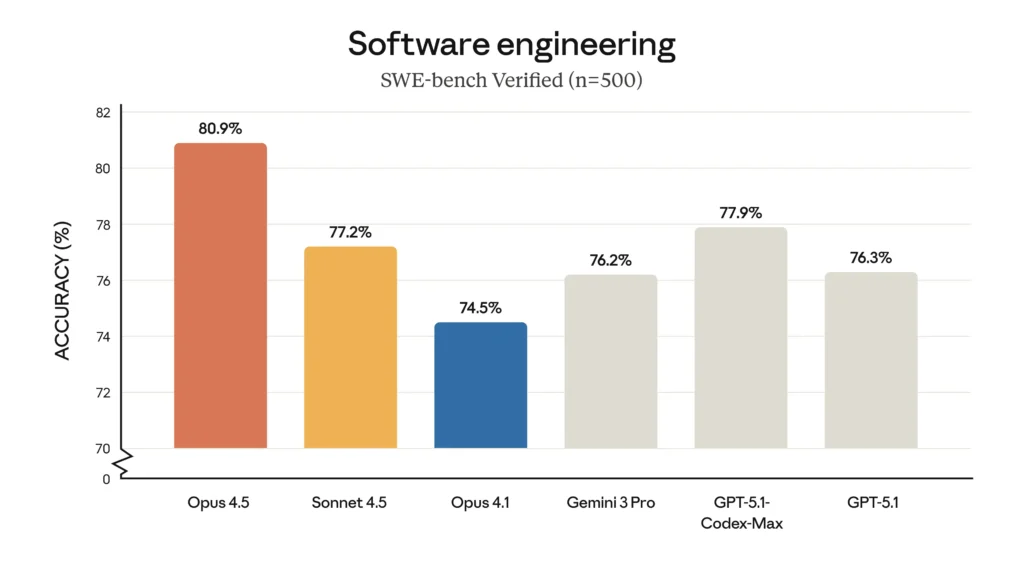
Understanding concepts is one thing; seeing how a specific tool delivers results is another. Claude Opus 4.5 isn’t just another chatbot—it’s a sophisticated AI assistant built to handle the messy, complex reality of small business operations. Here’s exactly how its core features translate into measurable efficiency gains.
Natural Language Summarization That Cuts Through Noise

Information overload is the silent productivity killer for small businesses. You’re drowning in Slack threads, email chains, industry reports, and customer feedback. Claude Opus 4.5’s summarization capabilities help you cut through the noise and focus on what matters.
How it works: Claude doesn’t just shorten text—it understands what’s important based on your specific context. You can ask it to summarize a 50-page industry report focusing only on implications for small businesses, or condense three months of customer feedback into actionable product improvements. The AI identifies patterns, extracts key points, and presents information in the format you actually need.
Business result: Hours spent reading, highlighting, and synthesizing information compress into minutes. You make faster, better-informed decisions because the signal-to-noise ratio dramatically improves. This is especially powerful for solo founders who can’t afford to hire analysts but need analytical insights to compete.
Realistic usage scenario: Elena, running a small e-commerce store, receives 200 customer support emails per week. Every Friday, she uploads the week’s emails and asks Claude to categorize issues, identify recurring complaints, and suggest product or policy improvements. What would take an entire afternoon of manual review now takes 20 minutes, and Elena spots trends she would have missed in the noise.
Ideation, Rewriting, and Formatting That Feels Like Magic
The best AI productivity tools for solo founders don’t just process information—they actively help you create better work. Claude Opus 4.5 excels at ideation (generating creative options), rewriting (improving clarity and impact), and formatting (making your content professional and polished).
How it works: Whether you’re stuck on how to position a new service, need to transform rough notes into client-ready proposals, or want to ensure your website copy actually converts, Claude brings sophisticated language capabilities to the table. It understands nuance, tone, and audience in ways that make outputs feel genuinely helpful rather than robotic.
Business result: You ship higher-quality work faster. The gap between “rough draft” and “ready to send” shrinks dramatically. For businesses where communication quality directly impacts revenue—consulting, creative services, coaching—this efficiency gain translates directly to competitive advantage.
Realistic usage scenario: James, a freelance writer, receives a client brief for a thought leadership article. He brainstorms with Claude to generate five angle options, selects the strongest one, drafts the article structure, then asks Claude to help refine the introduction for maximum impact. The entire process takes half the time it used to, and the final product is sharper because Claude helped James iterate rapidly instead of getting stuck in perfectionist paralysis.
Ready to cut admin time in half? Try Claude Opus 4.5 ? https://www.anthropic.com/
Use Cases: Small Business & Freelancer Efficiency
Theory is useful; real-world application is everything. Let’s explore four detailed personas that represent common small business and freelance scenarios, showing exactly how Claude Opus 4.5 transforms their daily workflows from overwhelming to manageable.
Creative Freelancer: From Scattered to Streamlined
Meet Alex, a freelance graphic designer and brand consultant
Old workflow: Alex’s mornings started with email overwhelm—client requests, project updates, revision notes, and new inquiries all mixed together. Each email required context switching: opening project files, checking previous communications, updating task lists, and drafting responses. By 11 AM, Alex had sent maybe five emails and felt mentally drained before touching any actual design work. Client onboarding alone consumed six hours per project, involving back-and-forth emails, manual creation of questionnaires, and piecing together brand discovery information from scattered conversations.
New AI-enhanced workflow: Alex now starts the day by uploading all overnight emails to Claude Opus 4.5 in one batch. Claude categorizes them (urgent client requests, general inquiries, administrative, updates), drafts initial responses for each category, and flags items needing Alex’s personal attention. For client onboarding, Alex has taught Claude the entire discovery process. When a new client signs on, Claude sends the questionnaire, processes responses, and creates a comprehensive brief document—ready for Alex’s review in 45 minutes instead of 6 hours.
Time saved: 15 hours per week on email management and client communications. Alex now spends mornings doing actual design work—the high-value creative activity that directly generates revenue.
Clarity and stress reduction: No more email anxiety. Alex knows nothing falls through the cracks because Claude’s systematic approach catches everything. Mental bandwidth previously wasted on admin now flows into creative problem-solving.
“With Claude Opus 4.5, I automated three hours of weekly client outreach and turned my scattered inbox into a managed workflow. I’m designing again instead of drowning in logistics.”
Solo Consultant: From Reactive to Strategic

Meet Priya, an independent business strategy consultant
Old workflow: Priya’s expertise is strategic thinking, but most of her time went to low-value tasks. Preparing for client meetings meant manually reviewing past session notes, industry research, and competitor analysis—often scattered across Google Docs, email attachments, and handwritten notes. Creating deliverables like strategic roadmaps or market positioning documents required hours of synthesis work before the actual strategic writing could begin. Priya often worked evenings and weekends just to stay current on industry trends while serving existing clients.
New AI-enhanced workflow: Priya maintains a running Claude conversation for each active client engagement. Session notes, research links, and strategic frameworks live in that conversation context. When preparing for meetings, she asks Claude to synthesize the current state of the engagement, highlight open questions from previous sessions, and suggest strategic angles based on recent industry developments. For deliverables, Claude handles the synthesis heavy lifting—transforming raw research and discussion notes into structured first drafts that Priya then refines with her strategic expertise.
Time saved: 12 hours per week on research synthesis, meeting prep, and document creation. Priya reclaimed her evenings and now takes on one additional client per quarter.
Clarity and stress reduction: The panic of “did I miss something important?” disappeared. Claude’s comprehensive memory means every client conversation builds on a complete context history. Priya shows up to meetings confident, prepared, and energized to think strategically rather than scrambling to remember details.
“Claude Opus 4.5 cut my meeting prep time from two hours to 20 minutes. I’m finally doing the strategic thinking I was hired for instead of drowning in note-taking and research synthesis.”
Technical Founder: From Scattered to Systematic
Meet Rachel, a solo founder building a SaaS product
Old workflow: Rachel wore every hat—product development, customer support, sales, marketing, and investor relations. Each area demanded different contexts and communication styles. Developer documentation consumed hours because writing clear explanations pulled Rachel away from actual coding. Customer support questions arrived in Slack, email, and Twitter DMs—fragmenting her attention and making it impossible to maintain coding flow. Fundraising preparation meant days of assembling materials: pitch decks, financial models, one-pagers, email outreach—all while trying to maintain product development momentum.
New AI-enhanced workflow: Rachel treats Claude as her AI co-founder for non-technical work. For documentation, she explains features to Claude conversationally, and Claude generates user-friendly docs, API references, and FAQ content. Customer support follows a triage system: Claude drafts responses to common questions using Rachel’s knowledge base, escalating only issues requiring technical expertise. When fundraising season arrived, Rachel uploaded her product vision documents, financial projections, and pitch narrative to Claude. Together, they created cohesive investor materials in one intensive day instead of dragged-out weeks of fragmented effort.
Time saved: 18 hours per week on documentation, support, and business communications. Rachel increased her actual coding time by 40% without sacrificing quality in other business areas.
Clarity and stress reduction: The context-switching nightmare ended. Rachel chunks her week into focused blocks—deep coding sessions, Claude-assisted business operations, and strategic planning. She’s no longer mentally exhausted from constantly switching between developer mode and founder mode.
“As a solo technical founder, automate repetitive business tasks with AI was my lifeline. Claude Opus 4.5 handles everything from customer support to investor communications while I build the actual product. It’s like having a co-founder who never sleeps.”
Streamline your workflow with smart automation. Start free with Claude Opus 4.5 ? https://www.anthropic.com/
FAQs
1. What is AI efficiency for small business?
AI efficiency for small business refers to using artificial intelligence tools to automate repetitive tasks, synthesize information, and handle complex workflows that traditionally consume significant time and mental energy. Unlike simple automation that follows rigid rules, AI efficiency adapts to context, handles ambiguity, and supports decision-making. For solo founders and small teams, this means reclaiming hours weekly from admin work, communications, and information processing—redirecting that time toward strategic growth activities that actually require human judgment and creativity.
2. Can AI replace admin work entirely?
AI can handle a substantial portion of administrative work, but “replace entirely” is unrealistic and often undesirable. Claude Opus 4.5 excels at drafting emails, scheduling coordination, document summarization, data entry formatting, and routine customer support responses. However, final review, approval, and nuanced judgment remain human responsibilities. The realistic expectation is that AI reduces admin work by 60-80%, transforming a 10-hour weekly admin burden into 2-3 hours of focused review and decision-making. This shift is transformative even if it’s not total elimination.
3. How do freelancers use AI to save time?
Freelancers use AI tools like Claude Opus 4.5 across their entire workflow: client communication (drafting proposals, project updates, and follow-ups), project management (creating briefs, organizing feedback, tracking deliverables), content creation (ideation, outlining, drafting, and editing), and business operations (invoicing assistance, contract reviews, and administrative coordination). The key advantage for freelancers is the ability to maintain professional quality and responsiveness without hiring staff. AI essentially acts as a force multiplier, allowing solo professionals to operate with the efficiency of a small team.
4. What’s the best AI tool for reducing workload?
The best AI tool depends on your specific needs, but Claude Opus 4.5 stands out for small businesses because of its versatility, large context window, and sophisticated language understanding. Unlike specialized tools that excel in narrow domains, Claude handles diverse workflows—writing, analysis, coding support, research synthesis, and more—within a single platform. This versatility reduces the complexity and cost of managing multiple AI subscriptions. For automate repetitive business tasks with AI, Claude’s ability to understand business context and maintain conversation continuity across complex projects makes it particularly effective for the messy, interconnected workflows typical of small businesses.
Conclusion
The transformation from overwhelmed solo founder to efficiently operating business owner doesn’t require superhuman discipline or working even longer hours. It requires smart leverage—using tools like Claude Opus 4.5 to handle the cognitive heavy lifting that drains your energy without advancing your business goals.
AI efficiency for small business isn’t about replacing human intelligence; it’s about augmenting it. When Claude handles your email triage, document synthesis, and content drafting, you’re not becoming less capable—you’re becoming more focused. The strategic thinking, creative problem-solving, and relationship-building that truly differentiate your business? Those remain fully human activities. What changes is that you now have the mental bandwidth to excel at them because you’re not exhausted from admin work.
The small businesses thriving in 2026 aren’t necessarily the ones with the biggest budgets or largest teams. They’re the ones that adopted AI efficiency early, learned to wield these tools strategically, and redirected their human energy toward activities that AI cannot replicate. This is the practical reality of AI productivity tools for solo founders—not science fiction, not replacement anxiety, but simply a better way to structure your workday.
Approach AI adoption with realistic expectations. Start small, track results, iterate your processes, and maintain the human-in-the-loop oversight that ensures quality. Give yourself permission to experiment, make mistakes, and refine your approach. The efficiency gains compound over time as you develop better prompts, deeper understanding of Claude’s capabilities, and more sophisticated workflows.
The question isn’t whether AI will transform how small businesses operate—it already has. The question is whether you’ll adopt these tools strategically now or scramble to catch up later when competitors who mastered AI efficiency have pulled ahead. The choice, as always, is yours. But the opportunity for transformation is real, available, and waiting.
Next Steps
Ready to implement AI efficiency in your business? Explore these resources to deepen your understanding and accelerate your results:
- Compare AI – Evaluate different AI tools and find the perfect fit for your specific business needs and workflows.
- AI Revenue Boost – Discover how AI tools can directly impact your bottom line by freeing time for revenue-generating activities.
- Solo DX – Learn digital transformation strategies designed specifically for solo founders and one-person businesses.
- AI Workflows – Access detailed workflow templates and implementation guides for common small business use cases.
Leave a Reply