Conclusion / First View
If you’re a solo creator, small business owner, or marketing manager trying to produce video content without a production team, choosing between Sora 2 and Veo 3.1 isn’t about picking the “best” AI—it’s about matching tool capabilities to your actual workflow constraints. Sora 2 excels at cinematic, narrative-driven content with strong motion coherence and emotional storytelling, making it valuable for brand films, explainer videos, and content where visual polish matters more than iteration speed. Veo 3.1 prioritizes precision, controllability, and faster generation times, serving businesses that need reliable, repeatable outputs for social media, ad variations, and high-volume content calendars. Both tools have significant limitations: neither handles complex text overlays reliably, both struggle with brand consistency across multiple generations, and each requires careful prompt engineering to avoid uncanny results. The real decision hinges on whether your business prioritizes creative expression or operational efficiency—and whether you have the time and budget to experiment with AI-generated video as a production tool rather than a plug-and-play solution.
Introduction: Why This Comparison Matters

The explosion of text-to-video AI tools has created a paradox for business users: more options mean more confusion about which tool actually delivers results worth the investment. When OpenAI launched Sora 2 and Google released Veo 3.1 within months of each other in late 2025, both promised to democratize video production for businesses without in-house creative teams. The marketing materials looked nearly identical—sophisticated AI models that transform text prompts into professional-quality video. But the reality is far more nuanced, and choosing the wrong tool wastes not just money but the cognitive bandwidth required to learn a new platform and integrate it into existing workflows.
This comparison cuts through the hype to address the practical question facing solo entrepreneurs, freelancers, and small marketing teams: which AI video generator actually helps you create content that drives business outcomes without requiring a degree in prompt engineering or endless revision cycles? The keyword “Sora 2 vs Veo 3.1 for text-to-video generation” reflects a common search, but the real question is about fit—understanding how each tool’s strengths and weaknesses align with your specific business context, skill level, and content goals. Whether you’re producing social media ads, explainer videos for landing pages, or educational content for YouTube, this article provides a decision-making framework grounded in real-world business constraints rather than technical specifications alone.
Who This Comparison Is Best For
This comparison serves business users who face a specific set of challenges: you need video content to grow your business, but you lack the time, budget, or team to produce videos traditionally. You might be a freelance consultant who needs explainer videos to clarify complex services, a small e-commerce brand owner creating product demos for Instagram, or a SaaS founder building educational content to reduce customer support volume. The common thread is that video production has become non-negotiable for visibility and conversion, but traditional solutions—hiring videographers, learning editing software, or outsourcing to agencies—are either too expensive, too slow, or create dependencies you can’t sustain.
You’ve likely encountered the painful trade-offs: stock footage libraries feel generic and fail to communicate your unique value proposition; DIY tools like Canva or InVideo require significant time to master and still produce amateur-looking results; and freelance video editors on platforms like Fiverr introduce quality variability and communication overhead. Meanwhile, you’re seeing competitors produce slick video content regularly, and you’re wondering if AI tools can finally bridge the gap without requiring a steep learning curve or substantial upfront investment.

Common mistakes in this situation include assuming AI video generators are plug-and-play solutions that instantly produce broadcast-quality content, choosing tools based solely on viral demo videos without considering your specific use case, or failing to account for the iterative nature of AI content creation—where getting usable output often requires multiple generations and prompt refinements. Another frequent error is underestimating the importance of brand consistency; AI-generated videos can look impressive in isolation but may fail to maintain visual coherence across a content series, creating a disjointed brand experience.
A concrete example: a B2B marketing manager at a 10-person SaaS company needs to produce 8-12 short educational videos per quarter for LinkedIn and email campaigns. Traditional production would cost $15,000-25,000 annually and require 2-3 months of lead time per batch. The manager has explored hiring a junior video editor but can’t justify a full-time salary for episodic work. AI video tools promise to compress this timeline and cost, but the manager has limited technical skills and no time for extensive experimentation. This is the type of user who benefits most from understanding the practical differences between Sora 2 and Veo 3.1—not just their technical capabilities, but how each tool’s workflow, output consistency, and learning curve align with real business constraints.
Why Each AI Fits That Need
Sora 2: Cinematic Quality for Brand-Driven Content

Sora 2 positions itself as the tool for businesses that prioritize visual storytelling and emotional resonance over rapid iteration. Built on OpenAI’s video generation architecture, Sora 2 excels at producing videos with strong narrative coherence, fluid motion dynamics, and cinematic visual polish. The system demonstrates particular strength in understanding complex scene descriptions and translating them into videos that feel intentionally composed rather than algorithmically assembled. For businesses where brand perception and creative differentiation matter—think boutique agencies, premium consumer brands, or thought leaders building personal brands—Sora 2’s ability to generate videos that look like they emerged from a professional creative brief rather than an AI prompt provides tangible value.
The learning curve for Sora 2 reflects its creative orientation. Users who succeed with the tool typically invest time upfront learning prompt structures that specify not just what appears in the video but how it should feel—camera movements, lighting mood, pacing, and emotional tone. This requires thinking like a creative director rather than simply describing desired outcomes. For users comfortable with this conceptual shift, Sora 2 becomes a tool for exploring creative possibilities quickly; you can generate multiple stylistic variations of a concept in hours rather than the weeks traditional production requires. The integration story is more limited: Sora 2 operates primarily as a standalone web interface, meaning outputs need to be manually downloaded and incorporated into broader workflows. This isn’t necessarily a weakness—it keeps the tool focused and reduces complexity—but it does mean businesses expecting seamless API integration or direct-to-platform publishing will need to build those connections themselves.
The business result Sora 2 supports best is creative differentiation in crowded markets. When your value proposition depends on being perceived as innovative, premium, or culturally attuned, having video content that doesn’t immediately read as “AI-generated” or “template-based” protects brand equity. A boutique strategy consulting firm using Sora 2 to create thought leadership videos for LinkedIn can produce content that visually matches the sophistication of their service offering, reinforcing rather than undermining their positioning. The tool shines when video serves as a brand signal, not just an informational medium.
Veo 3.1: Operational Efficiency for High-Volume Content
Veo 3.1, developed by Google DeepMind, takes a fundamentally different approach optimized for businesses that need consistent, controllable video outputs at scale. The system prioritizes generation speed, prompt adherence, and stylistic consistency over creative flourish. Veo 3.1 excels in scenarios where you need to produce multiple video variations quickly—think A/B testing ad creative, localizing content for different markets, or maintaining a regular posting cadence across social platforms. The tool’s architecture emphasizes reliability: given a well-structured prompt, Veo 3.1 delivers predictable results with less variation between generations than Sora 2, which can be either a feature or limitation depending on your use case.
The learning curve for Veo 3.1 is more technical than creative. Users who succeed focus on building repeatable prompt templates and understanding the system’s constraints around object placement, camera angles, and scene complexity. This makes Veo 3.1 particularly accessible for users with operations or project management backgrounds who think in systems and processes rather than creative exploration. The tool feels less like working with a creative partner and more like operating a highly capable production machine—once you understand the controls, you can reliably generate specific outputs without extensive iteration. Integration capabilities are stronger here: Veo 3.1 offers API access and connects more naturally to Google’s broader ecosystem, including YouTube and Google Ads platforms. For businesses already using Google Workspace or running video ads through Google, this reduces friction in getting generated content into distribution channels.
The business result Veo 3.1 supports best is content volume and consistency. If your growth strategy depends on maintaining presence across multiple platforms, testing creative variations, or producing localized versions of the same message, Veo 3.1’s speed and consistency enable content operations that would otherwise require a full production team. An e-commerce brand running product launch campaigns across Instagram, TikTok, and YouTube Shorts can use Veo 3.1 to generate dozens of video variations testing different hooks, visual styles, and calls-to-action, then use performance data to identify winning formulas—something effectively impossible with traditional production economics.
Who Should Choose Another AI

Neither Sora 2 nor Veo 3.1 fits every business video need, and being honest about their limitations prevents costly mismatches between tool capabilities and business requirements. If your video content demands absolute precision in representing specific products, services, or technical processes, rule-based tools or human-led production remains necessary. AI video generators struggle with exact replication—showing specific product features, demonstrating step-by-step software interfaces, or maintaining precise brand color specifications across frames. A SaaS company creating tutorial videos that must accurately depict their interface will find both tools frustrating; the AI might generate something that looks like software, but rarely reproduces exact button placements, labels, or workflows.
Similarly, businesses in highly regulated industries where video content requires compliance review—healthcare, finance, legal services—face challenges with AI-generated content. Both tools occasionally produce subtle inconsistencies or unexpected visual elements that, while not harmful, create compliance uncertainty. The effort required to review and verify every frame of AI-generated video may exceed the time saved in production. In these contexts, the controllability of traditional tools like Adobe After Effects or even template-based platforms like Descript provides more defensible audit trails.
Industries requiring highly vertical-specific content also typically need specialized tools. Medical procedure animations, architectural visualization, technical product demonstrations, and legal explainer content often benefit more from purpose-built software with domain-specific libraries and templates. These tools may lack the creative flexibility of Sora 2 or Veo 3.1, but they encode industry knowledge and compliance requirements that general-purpose AI video generators cannot replicate. A medical device manufacturer would struggle to generate FDA-compliant product demonstration videos using either Sora 2 or Veo 3.1, but could do so relatively easily with specialized medical animation software designed for that purpose.
Finally, if your content strategy depends on building a distinctive, highly consistent visual brand across hundreds of videos, both tools present challenges. While they can generate individual impressive videos, maintaining exact visual consistency—same character appearances, identical environments, matching lighting across a series—remains unreliable. Businesses building YouTube channels, educational courses, or serialized content where viewers expect visual continuity may find the tools’ variability breaks immersion and undermines production value. In these cases, investing in learning traditional tools or building relationships with human creators who can maintain consistent style guides delivers better long-term results.
Use Cases by Business Goal
Productivity
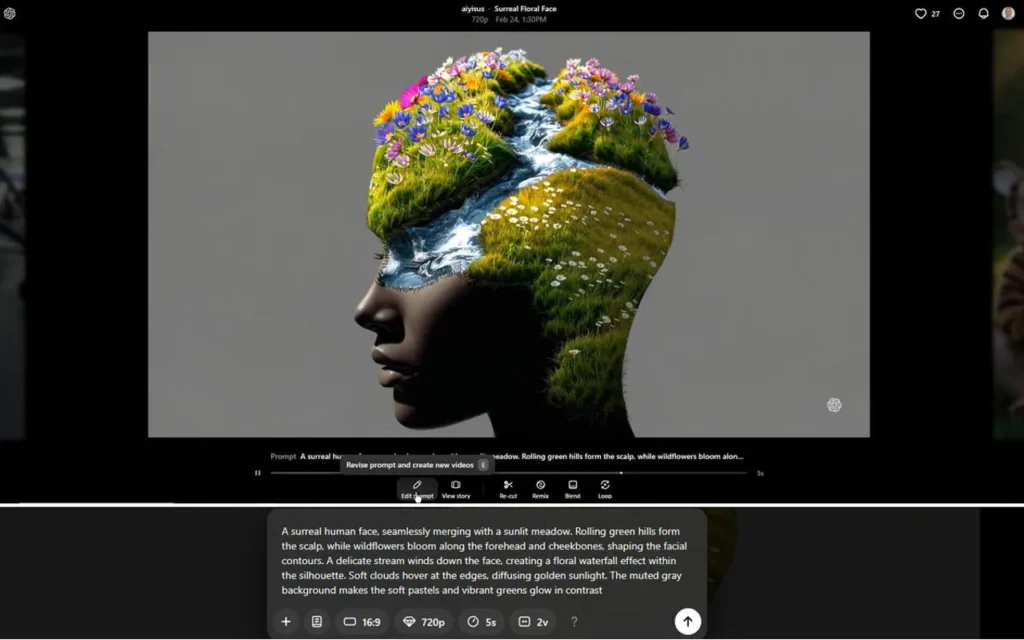
Internal productivity applications represent a sweet spot for AI video generation where output polish matters less than speed and cost efficiency. Both Sora 2 and Veo 3.1 can transform how small businesses handle internal communications, training, and documentation that traditionally consumed disproportionate resources.
Sora 2 serves internal storytelling needs where emotional engagement matters—company culture videos, leadership messages, or change management communications. A remote-first company using Sora 2 to create quarterly all-hands videos can generate visually engaging content that communicates company values and direction without requiring executives to perform on camera or hiring external production. The tool’s cinematic quality helps important messages feel appropriately weighty without the overhead of traditional video production. However, Sora 2’s iteration speed and creative unpredictability make it less suitable for routine internal content like process documentation or safety training where consistency matters more than visual flair.
Veo 3.1 excels at standardized internal content creation—onboarding videos, process documentation, training modules, and safety briefings. Its prompt consistency means you can develop templates that reliably generate similar outputs, critical for maintaining coherent training programs. A small restaurant chain could use Veo 3.1 to create location-specific training videos that maintain consistent messaging while customizing visual details for each franchise. The tool’s speed enables rapid content updates when processes change, eliminating the bottleneck of outdated training materials that plague many small businesses.
The productivity trade-off centers on whether your internal content benefits more from emotional resonance (Sora 2) or operational consistency (Veo 3.1). For infrequent, high-stakes internal communications, Sora 2’s quality justifies the additional prompt refinement. For recurring, standardized content where the video primarily serves as a delivery mechanism for information, Veo 3.1’s efficiency and reliability provide clearer ROI.
Explore more about maximizing AI for operational efficiency: AI Efficiency
Revenue / Marketing

Marketing applications expose the sharpest differences between Sora 2 and Veo 3.1, as the tools optimize for fundamentally different marketing strategies. The choice often depends on whether your growth model prioritizes brand building or performance marketing.
Sora 2 serves brand-building strategies where video positions your business as premium, innovative, or culturally sophisticated. Boutique brands, consultants, and businesses selling high-consideration products benefit from Sora 2’s ability to generate videos that feel crafted rather than manufactured. A boutique hotel could use Sora 2 to create atmospheric property videos that evoke mood and lifestyle rather than simply showcasing amenities—content that performs well in earned media contexts like press features or influencer partnerships where production quality signals brand tier. The limitation is iteration speed: generating multiple creative variations for testing requires patience, making Sora 2 poorly suited for rapid A/B testing cycles typical in performance marketing.
Veo 3.1 dominates performance marketing scenarios where volume, variation, and velocity determine results. Businesses running paid social campaigns, testing landing page videos, or optimizing ad creative benefit from Veo 3.1’s ability to generate dozens of variations quickly. An e-commerce brand could generate 20 different product video ads testing various hooks, visual styles, and calls-to-action, run them through Meta’s ad platform, and identify winning combinations—all within a single day. This operational approach treats video as a testable variable in a performance marketing system rather than a craft exercise. The trade-off is visual distinctiveness: Veo 3.1’s outputs, while consistent and professional, less frequently produce the standout creative that earns organic reach or press coverage.
The marketing choice fundamentally reflects your customer acquisition model. If your growth depends on building brand authority that commands premium pricing or generates inbound interest, Sora 2’s creative capabilities support that positioning. If you grow through systematic testing, optimization, and paid acquisition at scale, Veo 3.1’s operational efficiency enables content velocity that traditional production cannot match.
Learn strategies for driving revenue with AI content: AI Revenue Boost
Systemization / Automation
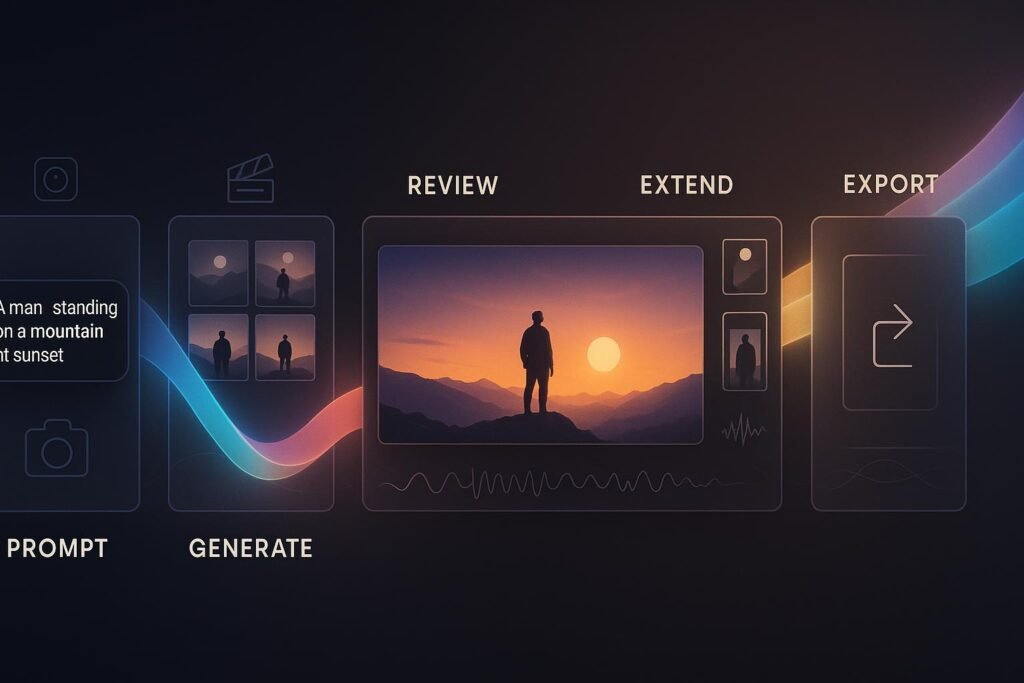
Long-term content systems require different considerations than one-off projects, particularly around technical integration, output consistency, and workflow sustainability. This is where the tools’ architectural differences become most consequential for business operations.
Sora 2’s standalone interface model makes it challenging to build automated content systems. The tool works best in creative workflows where humans remain in the loop for each generation, reviewing outputs and making iterative refinements. This isn’t necessarily a weakness—maintaining human oversight prevents brand-damaging outputs that fully automated systems risk—but it limits how much content production you can scale without proportionally scaling human attention. A content agency could use Sora 2 to increase creative team output by 3-5x, but not to fully automate content production. The tool fits businesses building scalable creative practices rather than automated content factories.
Veo 3.1’s API access and Google ecosystem integration enable more automated content systems for businesses comfortable with technical implementation. A marketing operations manager with basic coding skills could build workflows where Veo 3.1 automatically generates social video variations from product data feeds, blog posts, or campaign briefs. The system’s consistency means automated outputs require less human review to ensure brand safety, though complete automation remains risky without quality checks. For businesses already invested in Google’s toolchain—using Google Workspace, running YouTube channels, or operating Google Ads campaigns—Veo 3.1’s integration reduces the technical lift required to build semi-automated content systems.
The systemization trade-off is between creative flexibility and operational scalability. Sora 2 keeps humans central to the creative process, enhancing rather than replacing creative capability. Veo 3.1 enables more aggressive automation for businesses willing to accept somewhat less distinctive outputs in exchange for dramatically higher content velocity. Neither tool fully delivers the “set it and forget it” automation some businesses hope for—AI video generation remains too unpredictable for complete hands-off operation—but Veo 3.1 gets closer for businesses with appropriate technical resources.
Discover how to build sustainable AI workflows: Solo DX
AI Comparison Table + Explanation
| Axis | Sora 2 | Veo 3.1 |
|---|---|---|
| Ease of Use | Moderate learning curve requiring creative thinking and prompt refinement; best for users comfortable with conceptual/directorial thinking | More structured learning curve with technical orientation; better for systematic, process-driven users |
| Best For | Brand storytelling, thought leadership content, premium positioning, infrequent high-impact videos | Performance marketing, high-volume content, A/B testing, systematic content operations |
| Strengths | Cinematic quality, narrative coherence, emotional resonance, strong motion dynamics, creative differentiation | Generation speed, prompt consistency, API integration, Google ecosystem compatibility, operational reliability |
| Limitations | Slower iteration, limited integration options, variable output consistency, requires creative expertise | Less distinctive creative output, can feel formulaic, technical learning curve for advanced features |
| Pricing Perception | Premium positioning reflecting creative tool orientation; cost justifiable for brand-driven content | Efficiency-oriented pricing model; value proposition centers on volume and consistency |
The choice between these tools ultimately reflects your business’s operational maturity and strategic priorities. Early-stage businesses or solo operators often benefit more from Sora 2’s ability to punch above their weight class creatively—producing content that signals professionalism and sophistication without requiring a creative team. The tool helps small players compete on creative quality rather than production resources. However, as businesses scale and content volume becomes critical, Veo 3.1’s operational advantages become more compelling. The transition point typically occurs when you’re producing more than 5-10 videos monthly and consistency matters more than creative surprise.
Neither tool eliminates the need for strategic thinking about what content to create, who it serves, and how it advances business objectives. Both can generate impressive videos, but impressive videos without strategic purpose waste resources regardless of how efficiently they’re produced. The businesses seeing strongest ROI from either tool are those who’ve already clarified their content strategy and use AI video generation to execute that strategy more efficiently, not as a substitute for strategic clarity.
How to Choose the Right AI

Effective decision-making requires evaluating these tools against your specific business constraints and success criteria rather than abstract capabilities. Start with budget realism: both tools require subscription costs, but the total cost of ownership extends to prompt refinement time, revision cycles, and integration effort. Sora 2’s premium pricing reflects its positioning but can be justified if a single high-impact video generates meaningful business results—a case study video that closes enterprise deals, for example. Veo 3.1’s efficiency pricing makes sense when content volume drives results and you can build repeatable processes that reduce per-video costs through scale.
Time-to-output matters differently depending on your content cadence. If you publish weekly or more frequently, Veo 3.1’s speed becomes strategically important—waiting hours for Sora 2 generations when you need to maintain a publishing schedule creates operational friction. If your content strategy involves monthly or quarterly tentpole pieces where each video receives intensive promotion, Sora 2’s longer generation time becomes irrelevant against the weeks or months those pieces remain in market.
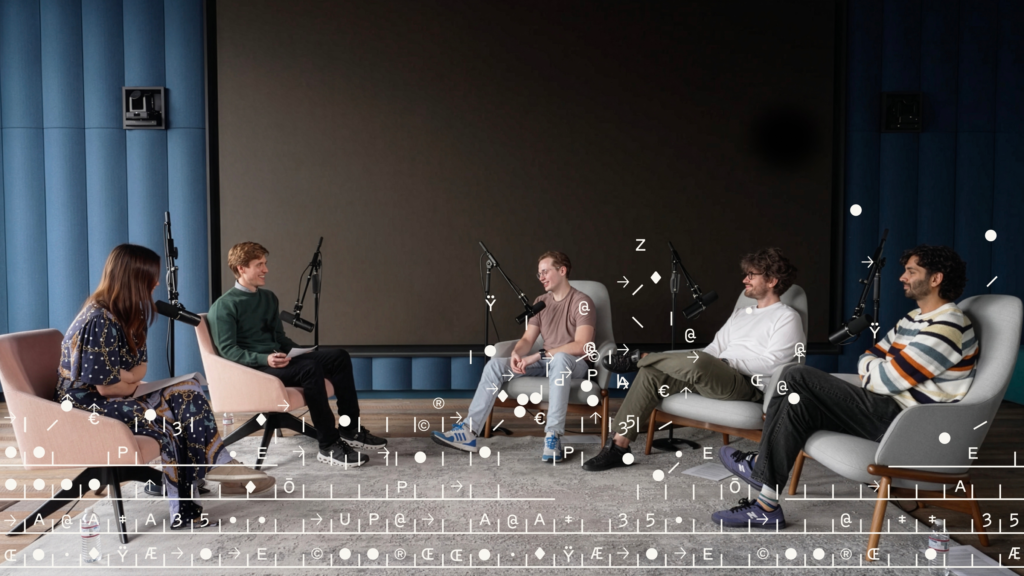
Team technical skills influence which tool integrates successfully into your workflow. Sora 2 requires creative thinking skills but minimal technical capability—anyone comfortable writing creative briefs can likely succeed. Veo 3.1’s full value emerges with technical skills to leverage API access and build automated workflows, though the basic interface remains accessible to non-technical users. Realistically assess your team’s skills and appetite for learning; choosing a tool whose advanced features require capabilities you don’t have wastes potential value.
Review and compliance needs also shape appropriate tool selection. If video content requires legal review, brand approval, or compliance verification, factor in how each tool’s output consistency affects review burden. Veo 3.1’s predictable outputs make establishing review processes easier; Sora 2’s creative variability means each video requires fresh evaluation. For businesses where approval processes already bottleneck content production, adding AI tools that increase review unpredictability can worsen rather than improve productivity.
Common mistakes to avoid include choosing based on viral demo videos that may not represent typical outputs; demos typically showcase best-case scenarios after extensive prompt engineering. Similarly, avoid treating AI video tools as creative replacements rather than creative tools—the businesses succeeding with either platform maintain human creative direction rather than expecting the AI to generate strategy along with execution. Finally, resist the temptation to choose the tool with more features; unused features provide no value, while a simpler tool that fits your actual workflow delivers tangible returns.
Build decision frameworks for AI tool selection: AI Workflows
FAQs

Is Sora 2 better than Veo 3.1 for small business marketing?
Neither tool is universally “better”—the question is which aligns with your specific marketing strategy and operational constraints. Sora 2 excels when your marketing depends on brand differentiation and creative quality, particularly for high-consideration products or services where video positions your business as premium or innovative. Veo 3.1 serves performance marketing strategies better, where success depends on testing creative variations, maintaining consistent posting cadences, and systematically optimizing content based on data. Small businesses with limited time and resources often find Veo 3.1 more immediately practical because its consistency enables building repeatable content processes, while Sora 2’s creative capabilities require more sustained engagement to extract value.
Can I use AI video generation to replace all my video production?
Current AI video generation tools augment rather than replace human-led video production for most business applications. Both Sora 2 and Veo 3.1 excel at specific use cases—conceptual explainers, atmospheric brand content, social media clips, and content variations—but struggle with precision-dependent applications like product demonstrations, software tutorials, or content requiring exact brand compliance. The realistic value proposition is reducing production costs and timelines for 30-50% of your video needs while maintaining traditional production or hybrid approaches for content requiring tighter control. Businesses seeing strongest results use AI generation for ideation, rapid prototyping, and high-volume content while keeping human production for strategic flagship pieces.
Which AI video tool is easiest for non-technical users?
Both tools are accessible to non-technical users, but “ease” depends on your natural thinking style. Sora 2 is easier for users who think creatively and can articulate visual concepts—if you’re comfortable writing creative briefs or directing photoshoots, Sora 2’s interface will feel intuitive. Veo 3.1 is easier for users who think systematically and prefer structured inputs—if you’re comfortable with spreadsheets, process documentation, or project management tools, Veo 3.1’s more technical approach will feel natural. Neither requires coding or technical expertise at the basic level, but extracting advanced value from Veo 3.1 benefits from technical capability while Sora 2’s advanced use requires creative sophistication.
Next Steps

Ready to implement AI video generation in your business workflow? Explore these resources to deepen your understanding and build sustainable practices:
- Compare AI – Evaluate other AI tools across different business functions and find the right combinations for your specific needs
- AI Efficiency – Learn systematic approaches to integrating AI tools without disrupting existing workflows or overwhelming your team
- AI Revenue Boost – Discover strategies for translating AI-generated content into measurable business growth and customer acquisition
- Solo DX – Build one-person operations that leverage AI tools to compete with teams while maintaining work-life sustainability
- AI Workflows – Access frameworks and templates for building repeatable AI-assisted processes that scale with your business
Leave a Reply