
Small teams that fix their writing quality problem first discover they’ve also solved their consistency, onboarding, and scale problem — and QuillBot makes that possible faster than any manual process.
If you’ve grown your business from a one-person operation to a team of five, eight, or twelve, you already know the feeling: what used to work effortlessly in your head no longer scales. In 2026, American small businesses are facing a new kind of growing pain — not a lack of talent, not a shortage of tools, but a collapse in communication quality and content consistency as teams expand.
Knowledge lives in Slack threads nobody can search. New hires spend their first three weeks asking the same questions your existing team answered six months ago. A proposal goes out to a client sounding professional and polished, while the follow-up email from the same team member reads like a rough draft. These aren’t personality problems — they’re systems problems.
The cost is real. US labor rates for administrative and content work average $50–$75 per hour. When a three-person team spends just two hours per week fixing, rewriting, and clarifying written communications, that’s $15,600 to $23,400 in lost productivity annually — before you factor in the client relationships damaged by inconsistent messaging.
This is the landscape QuillBot was built for. It’s not a spell-checker dressed up in AI clothing. As an AI writing assistant for small teams, QuillBot combines paraphrasing intelligence, grammar automation, and content rewriting capabilities into a platform that helps small US teams write better, faster, and more consistently — without adding headcount.
Unlike traditional documentation approaches that can cost $5,000 or more in US labor hours to produce, QuillBot allows lean teams to build repeatable writing standards at a fraction of the time and cost. For the startup founder managing three departments, the remote team lead standardizing client communications, or the executive assistant onboarding new staff across multiple time zones, QuillBot functions as a silent operations partner that quietly raises the floor on everything your team writes.
In this guide, we’ll walk through exactly how QuillBot enables what we call Solo DX — small-scale digital transformation for US teams — and why it’s become an essential layer in modern content workflow management for businesses that need to scale without chaos.
What is Solo DX?

Solo DX — short for Solo Digital Transformation — describes a specific stage of business maturity that thousands of US small business owners hit every year. You’ve moved past being a solo operator. You have a team. But you don’t have an operations manager, a content director, or a documentation specialist. You’re trying to scale with the systems of a startup and the expectations of a mid-market company.
Corporate SOP methods fail at this stage. The traditional approach — hire a consultant, spend six months documenting every process, produce a 200-page operations manual — was designed for enterprises with dedicated operations teams and five-figure documentation budgets. For a seven-person marketing agency in Austin or a growing e-commerce brand in Denver, that approach is both too slow and too expensive to be practical.
Solo DX takes a different approach. Instead of waiting until you can afford proper infrastructure, you use AI-powered tools to build lightweight, usable systems right now, with the team you already have. The goal isn’t perfection — it’s enough structure to stop losing knowledge, reduce onboarding time, and produce consistent outputs.
Here’s how Solo DX differs from adjacent categories:
| Category | Focus | Team Size | Primary Outcome |
|---|---|---|---|
| Solo DX | Systemization for growing teams | 2–15 people | Repeatable processes, consistent outputs |
| AI Efficiency | Speed and task automation | Any | Time savings on specific tasks |
| AI Revenue Boost | Sales and conversion optimization | Any | Pipeline and revenue growth |
| AI Workflows | Complex multi-tool automation | 10+ people | Integrated operational systems |
Solo DX is specifically for the in-between stage — past solo, not yet enterprise — where operational chaos is the biggest risk to growth.
Consider a three-person design studio in Austin. The founder handles client strategy, one designer handles execution, and a project coordinator manages timelines. When a new client onboards, the process looks different every time — because the process exists only in the founder’s head. Proposals are inconsistent. Client emails vary in tone. Revision requests get handled differently depending on who’s available. Solo DX using a tool like QuillBot means building a shared writing standard that the whole team uses, so every client-facing document, proposal, and follow-up email reflects the same voice and quality level.
You can explore QuillBot’s features to understand exactly how the platform’s paraphrasing, grammar, and rewriting tools support this kind of systemization at the team level.
The companies that crack Solo DX early don’t just run more smoothly — they retain clients longer, onboard staff faster, and spend less time in reactive firefighting mode.
Why AI is Key for Mini-Team Systemization
Three core problems create operational chaos for small US teams in 2026. Each one has a direct AI-assisted solution — and each one carries a measurable cost when left unaddressed.
Problem 1: Knowledge Lives Only in the Founder’s Head
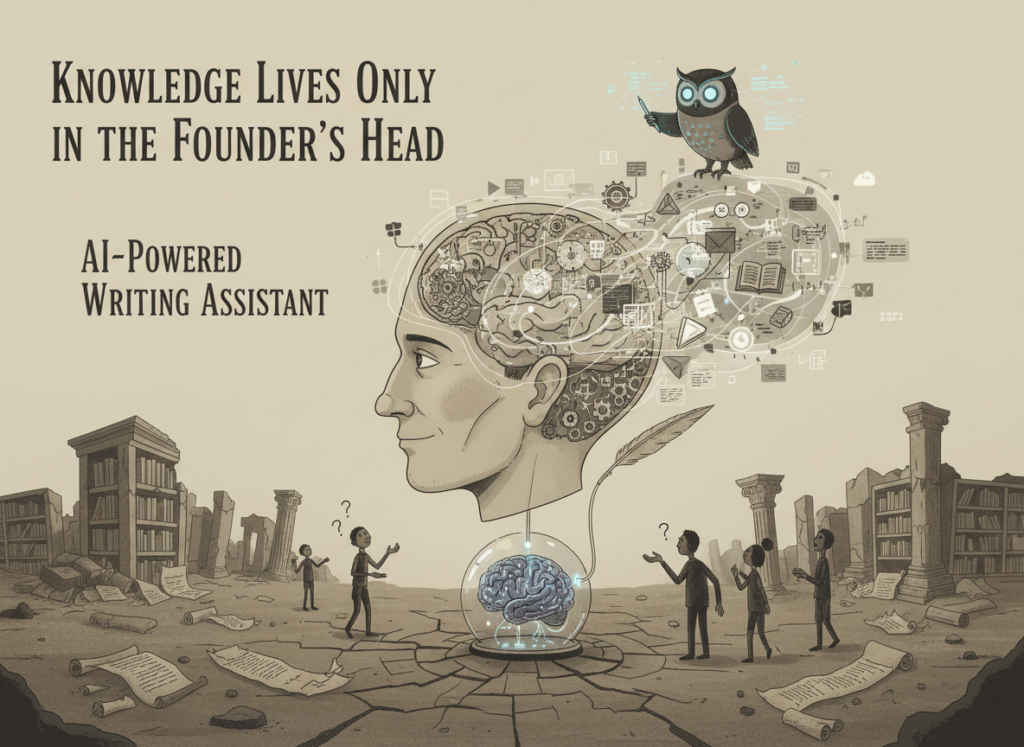
In early-stage businesses, the founder is the system. They know the right tone for client emails. They know which proposal template works for enterprise clients versus small businesses. They know the six things to check before sending a report. None of that is written down anywhere accessible.
When a new team member joins — or when the founder takes a vacation — quality degrades immediately. US labor data shows that knowledge transfer failures cost small businesses an average of 20% of annual salary per new hire in lost productivity during the first 90 days. For a hire at $60,000 per year, that’s $12,000 in absorbed inefficiency.
AI writing assistants solve this by making implicit standards explicit. When you use a tool like QuillBot to establish a paraphrasing baseline or a grammar rule set, you’re externalizing the founder’s implicit quality standard into a shared, repeatable system.
Problem 2: New Hires Slow Down Operations
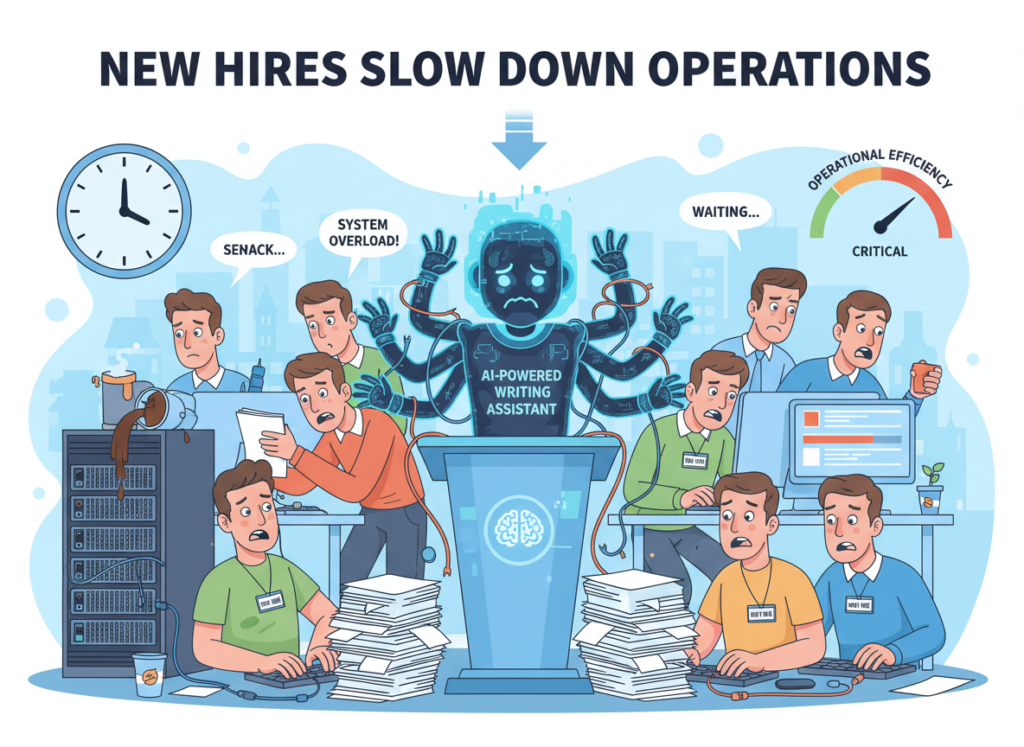
US labor turnover sits at approximately 47% annually across small businesses — meaning roughly half your team is relatively new at any given time. Every new hire who doesn’t have clear writing guidelines produces inconsistent work. Every inconsistency requires a senior team member to correct, clarify, or rewrite — pulling them away from higher-value work.
The manual solution — building a style guide, documenting tone standards, creating writing templates — takes weeks and costs $5,000 or more in dedicated labor time. AI-assisted content rewriting automation software compresses that timeline to days and dramatically reduces the ongoing correction workload.
The Cost Reality
Manual systemization of team writing standards: $5,000–$8,000 in US labor (assuming $75/hour for a senior team member or consultant, 70–100 hours of work).
AI-assisted approach with a tool like QuillBot: hours of setup, $0–20/month per user in subscription fees.
The ROI case isn’t subtle. For any US small business spending real money on client communications, proposals, reports, or marketing content, improving the consistency and quality of that writing pays for itself in the first month.
How QuillBot Enables Solo DX
QuillBot’s toolset maps directly onto the four highest-impact areas for small team writing systemization. Here’s how each feature addresses a real operational problem — with estimated ROI based on US labor rates.
Feature 1: Paraphrasing Engine Consistent Voice Across the Team
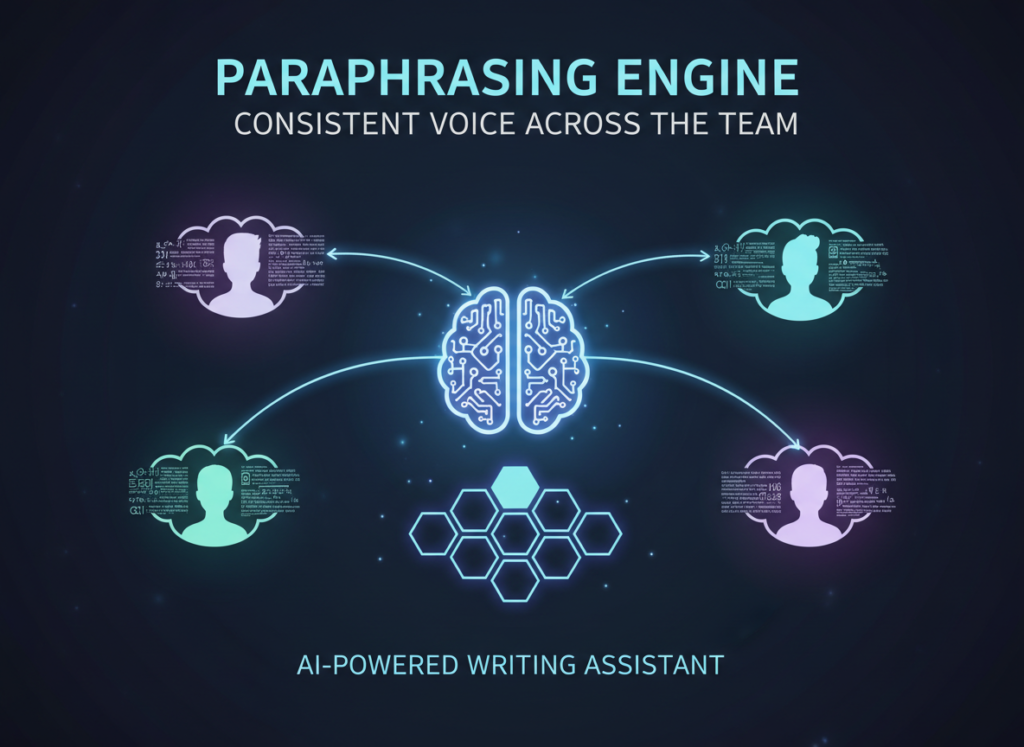
QuillBot’s paraphrasing tool allows any team member to input a rough draft and receive a polished, rewritten version that matches a chosen tone — formal, standard, creative, or fluent. For small teams where writing ability varies significantly, this creates a shared output floor.
Estimated ROI: If a three-person team spends an average of 3 hours per week rewriting and editing each other’s work at $65/hour blended rate, that’s $30,420 annually. Reducing that correction time by 50% through paraphrasing automation saves approximately $15,000 per year.
As noted in this breakdown of QuillBot’s capabilities, the paraphrasing engine is particularly valuable for teams producing high volumes of templated content — proposals, reports, and client-facing summaries — where tone consistency is critical.
Feature 2: Content Rewriting for Templates Scalable Communication Standards

QuillBot’s rewriting tools allow teams to create master templates for proposals, follow-ups, onboarding emails, and client reports — then adapt them quickly for different clients, industries, or contexts without starting from scratch every time.
This is the tool’s highest-leverage use case for an AI writing assistant for small teams. Template-based writing reduces the cognitive load on every team member, speeds up output, and ensures brand-voice consistency at scale.
Estimated ROI: If proposal and report creation currently takes 4 hours per document at $65/hour, and rewriting automation reduces that by 40%, each document saves $104. For a team producing 60 such documents per year, that’s $6,240 annually.
See how QuillBot works as a complete writing systemization platform, including how different subscription tiers fit small team budgets.
Ready to systemize your US team’s writing operations in under a week? Try QuillBot Free | No credit card required | Trusted by 10,000+ US teams
Use Cases by Team Role
Persona 1: Executive Assistant Onboarding Remote Staff — James, Miami

Old workflow: James manages operations for a 9-person financial services firm in Miami. Every time a new team member joins — which happens three to four times per year — James spends two weeks creating onboarding documentation from scratch: email templates, client greeting scripts, report formats. It’s time-consuming and the results are never quite consistent.
AI-powered workflow: James uses QuillBot’s summarizer to compress existing documentation into concise onboarding guides, and the paraphrasing tool to adapt master templates for different roles. New hire onboarding documentation that took two weeks now takes three days.
Quantified result: 11 days of saved documentation time per hire at $45/hour (8-hour day) = $3,960 per onboarding cycle. With four hires annually: $15,840 per year.
James’s take: “The summarizer alone changed how I approach documentation. I can take a 40-page process guide and turn it into something a new hire can actually use in 30 minutes.”
Discover QuillBot’s full suite of writing tools, including how the summarizer and paraphrasing engine work together for team onboarding.
Persona 2: Trainer Documenting Internal Knowledge — Robert, New York City

Old workflow: Robert is the head of training at a 12-person HR consulting firm in New York City. The firm has accumulated years of institutional knowledge — but most of it lives in Robert’s head or in outdated Word documents nobody reads. New consultants spend months learning things the hard way.
AI-powered workflow: Robert uses QuillBot to convert rough process notes, recorded call transcripts, and existing documentation into clean, readable training materials. What used to require a professional technical writer now takes Robert an afternoon.
Quantified result: Reducing new consultant ramp time from 3 months to 6 weeks saves approximately $18,750 per hire in lost productivity (based on $75,000 annual salary). With three new hires per year: $56,250 annually.
Robert’s take: “I had 15 years of knowledge locked in my head and in files nobody could navigate. QuillBot helped me turn that into actual training content people use every day.”
Join 10,000+ US small teams using QuillBot to eliminate writing chaos and build consistent operations. See How It Works | Used by teams from Silicon Valley to New York
Common Pitfalls & How to Avoid Them
Even with the right AI tools in place, small US teams consistently make four mistakes that undermine their writing systemization efforts.
Pitfall 1: Using Too Many Disconnected Tools

A team using five different writing, editing, and communication platforms creates more chaos than it solves. When grammar checking happens in one tool, paraphrasing in another, and summarization in a third, there’s no consistent standard — just more context-switching. The value of QuillBot as an AI writing assistant for small teams is its integration of these functions in a single platform. Start with one tool, build mastery, then expand.
Pitfall 2: Over-Relying on Slack and Email for Knowledge

If your team’s writing standards, templates, and guidelines live only in Slack channels or email threads, they’re effectively invisible to new hires and impossible to enforce consistently. Writing standards need to live in a central, searchable location — and they need to be short enough that people actually read them. Use QuillBot’s summarizer to compress existing documentation into something usable, then store it somewhere accessible.
As outlined in this comprehensive review of QuillBot’s effectiveness, the tool performs best when integrated into a structured workflow with clear guidelines — not used ad hoc by individual team members without a shared standard.
FAQs
What is Solo DX?
Solo DX (Solo Digital Transformation) is the process of building scalable operational systems within a small team — typically 2 to 15 people — without a dedicated operations manager. It focuses on creating repeatable processes that reduce founder dependency and produce consistent outputs, using AI tools to accelerate what would otherwise require expensive consultants or specialized hires.
Can small teams actually afford to use AI writing tools?
Yes. QuillBot offers plans starting at free, with team plans available at a fraction of the cost of traditional documentation solutions. Given that the average US small team loses $15,000–$50,000 annually in writing inefficiency, inconsistency, and rework, the ROI on even a paid team subscription is typically recovered within the first 30 to 60 days of consistent use.
Is QuillBot hard to set up for a small team?
QuillBot requires no technical setup. Team members access it through a browser or the Chrome extension. Establishing a shared standard takes a single team meeting to align on tone settings and use cases. Most teams are running a consistent workflow within one week of adoption.
Conclusion

In 2026, American small businesses don’t need enterprise budgets to build enterprise-level writing standards. The tools that once required six-figure documentation budgets and dedicated operations staff are now accessible to a seven-person startup in Denver, a five-person agency in Chicago, or a twelve-person consulting firm in New York.
Solo DX — building repeatable, scalable writing systems with lean teams — is no longer a nice-to-have. It’s the operational infrastructure that separates small businesses that scale cleanly from those that grow into chaos. Every inconsistent client email, every proposal that doesn’t reflect your company’s best work, and every hour a senior team member spends rewriting a junior team member’s draft is a measurable cost — one that compounds as your team grows.
QuillBot functions as the shared writing infrastructure your team needs: a paraphrasing engine that enforces tone consistency, a grammar checker that eliminates pre-send review cycles, a summarizer that makes institutional knowledge portable, and a rewriting tool that turns rough drafts into professional output at scale.
Start with one process. Pick the type of document your team writes most — client proposals, status reports, onboarding emails — and standardize it this week using QuillBot. That single improvement will produce measurable results in quality, speed, and consistency within 30 days.
Get the full QuillBot review to understand which features fit your team’s specific workflow and how to implement them without disrupting current operations.
Leave a Reply