
Small teams that master AI email marketing for small business in 2026 will outpace competitors still spending hours writing campaigns by hand.
There’s a specific kind of chaos that hits American small businesses right around the 5-to-10-person mark. You’ve grown past the solo stage, but you haven’t yet built the systems that keep a real team running. Email campaigns live in someone’s drafts folder. The newsletter didn’t go out last month because the one person who “knows how to do it” was swamped. Your welcome sequence hasn’t been updated since you launched. And your leads? They’re going cold because there’s no automated follow-up keeping them warm.
In 2026, this isn’t an operations problem — it’s a systems problem. And it’s costing US small businesses real money.
Email marketing remains one of the highest-ROI channels available to American founders. Industry data consistently shows $36–$42 returned for every $1 spent. But capturing that ROI requires consistency, personalization, and scale — three things a 5-person team can’t easily deliver without help. Traditional solutions mean hiring a marketing manager at $70,000–$90,000/year, or outsourcing campaign management at $3,000–$6,000/month. Neither is realistic when you’re still proving product-market fit or managing cash flow.
That’s where MailerLite AI changes the equation entirely.
MailerLite AI is an AI-powered email marketing platform built for exactly this stage: small teams who need enterprise-level automation without the enterprise budget or headcount. Its built-in AI writing assistant, powered by OpenAI GPT, generates campaign copy, subject lines, CTAs, and full email sequences in minutes — not hours. Its automation engine handles lead nurturing, onboarding sequences, and re-engagement campaigns while your team focuses on the work only humans can do.
Unlike building out a traditional marketing stack ($5,000+ in US labor just to document and configure), MailerLite AI costs a fraction of that and delivers results from day one. For US founders managing remote teams across multiple states, that’s not just convenient — it’s a competitive advantage that compounds over time.
This guide shows exactly how AI email marketing for small business works in practice, which team roles benefit most, and how to avoid the mistakes that keep small teams stuck in email chaos.
What is Solo DX?

Before diving into the tool itself, it’s worth defining the category this article lives in — because it shapes how you should think about MailerLite AI and what you’re actually trying to build.
Solo DX stands for Small-Scale Digital Transformation — the process by which US founders and small team leaders (typically 1–10 people) systematically replace ad-hoc, person-dependent workflows with documented, AI-assisted, repeatable systems. It’s not about becoming a tech company. It’s about building a business that doesn’t fall apart when you take a week off.
Here’s how Solo DX differs from related categories:
| Category | Focus | Who It’s For |
|---|---|---|
| Solo DX | Systemizing operations so teams scale without chaos | Founders with 1–10 people managing growth |
| AI Efficiency | Using AI to complete individual tasks faster | Solopreneurs and individual contributors |
| AI Revenue Boost | Using AI to directly increase sales and conversions | Growth-stage teams with defined funnels |
| AI Workflows | Automating multi-step cross-tool processes | Ops leads managing complex integrations |
Solo DX is the bridge between “everything depends on me” and “we have real systems.” It’s what happens when a founder decides to stop being the bottleneck.
Why corporate SOP methods fail for US SMBs: Traditional documentation approaches were designed for organizations with dedicated operations managers, lengthy project timelines, and the budget to hire consultants. A 200-page process manual works for a 500-person company. It doesn’t work for a 6-person design studio in Austin that needs its email marketing running by Thursday.
Real example: Consider a 3-person design studio in Austin — let’s call it Loma Creative. The founder handles all client communication and marketing. When she brought on two employees, email marketing essentially stopped because nobody else knew how to run campaigns in their platform. Leads dried up. Three clients churned because follow-up sequences weren’t running. The cost of that knowledge gap: approximately $18,000 in lost revenue over one quarter.
The Solo DX answer isn’t to write a 40-page manual. It’s to use AI to create documented, automatable systems that any team member can run — and explore MailerLite AI’s features to understand exactly how that applies to email marketing.
Solo DX recognizes that the #1 asset of a growing small business isn’t its product or its people — it’s the operational knowledge that makes those people effective. When that knowledge lives only in one person’s head, the business is fragile. When it’s embedded in AI-assisted systems and documented workflows, it becomes a platform for scale.
Why AI is Key for Mini-Team Systemization
American small teams face a specific set of obstacles when trying to scale email marketing. They’re not unique to any one industry — they show up in consulting firms, e-commerce brands, SaaS startups, and service businesses alike. Understanding them is the first step toward solving them with AI.
Problem 1: Knowledge Lives Only in the Founder’s Head

In most US small businesses, the person who “knows how to do email” is the founder or the one employee who set up the platform. When that person is busy, email doesn’t happen. When they leave, campaigns collapse. This isn’t a people problem — it’s a systems problem.
The AI solution: AI writing assistants like MailerLite’s built-in tool externalize that knowledge. The founder’s voice, their brand tone, their campaign logic — it all gets encoded into prompts, templates, and automation sequences that anyone can execute. Marketing automation for small teams means turning institutional knowledge into a repeatable system.
Problem 2: New Hires Slow Down Operations

US labor turnover hit 47% annually in recent years (Bureau of Labor Statistics data), and onboarding a new marketing hire costs an average of $4,000–$6,000 in ramp time, training, and lost productivity. Every time someone new joins your team, they have to learn your email marketing process from scratch — if that process is even documented.
The AI solution: With AI-generated templates, pre-built automation workflows, and a documented prompt library, email automation with AI dramatically reduces onboarding time. New hires can run campaigns within days instead of weeks, because the system does the heavy lifting.
Problem 3: Quality Varies Across Team Members

Ask three different people on your team to write an email campaign and you’ll get three completely different voices, structures, and quality levels. This inconsistency damages brand perception and makes it impossible to A/B test meaningfully, because you’re always testing multiple variables at once.
The AI solution: An AI newsletter generator with standardized prompts ensures that regardless of who executes the campaign, the output meets a consistent quality bar. Brand voice stays intact. Structure stays consistent. Results become measurable.
The Cost Reality — Manual vs. AI-Assisted
| Approach | Time | Cost (US Labor) |
|---|---|---|
| Manual email copywriting | 3–5 hours/campaign | $225–$750 at $75/hr |
| Manual automation setup | 8–15 hours | $600–$2,250 |
| Manual sequence documentation | 20–40 hours | $1,500–$6,000 |
| AI-assisted (MailerLite AI) | 30–90 minutes/campaign | $0–$39/month subscription |
The math is straightforward. A 6-person US team sending two email campaigns per week — at $150/hour for a skilled marketing contractor — spends $1,200–$3,000/week on email alone. AI email marketing for small business doesn’t just save time; it redirects thousands of dollars per month toward growth activities.
Lead nurturing automation compounds these savings further. A properly configured drip sequence runs 24/7 without human intervention, nurturing leads through the funnel while your team sleeps. For US small teams with limited bandwidth, this is the single highest-leverage investment in marketing operations.
How MailerLite AI Enables Solo DX
MailerLite AI packages four core capabilities that directly address the email marketing challenges described above. Each has a quantifiable ROI that makes the business case clear for US founders evaluating the investment.
Feature 1: AI Writing Assistant — Built-In Email Copywriting
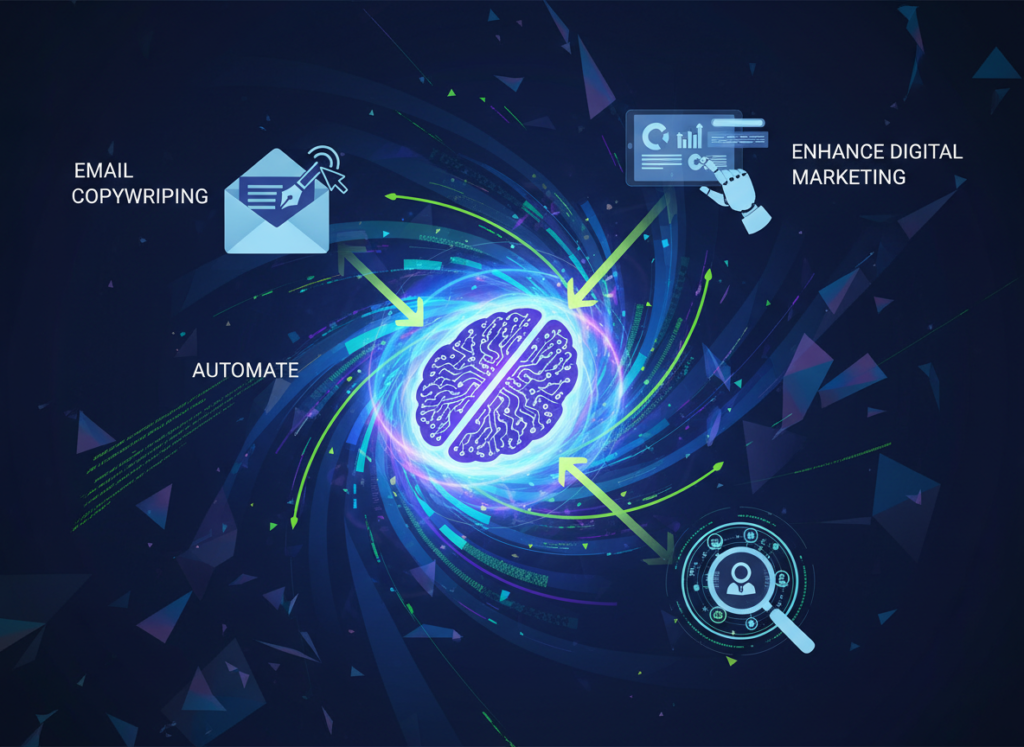
MailerLite AI’s writing assistant is embedded directly into the Drag & Drop campaign editor, landing page builder, and pop-up form creator. You don’t switch between tools. You write a prompt, choose a tone (Natural, Catchy, Professional, or Persuasive), select a text type (Title, Short Paragraph, Long Paragraph, or CTA), and get campaign-ready copy in seconds.
The assistant understands context. A prompt like “Write a subject line for a re-engagement campaign targeting ecommerce customers who haven’t purchased in 90 days — persuasive tone, urgency-focused” produces dramatically better output than generic AI tools that don’t understand email marketing structure.
ROI: A US marketing contractor charges $75–$150/hour to write email copy. An average campaign requires 2–4 hours of copywriting. MailerLite AI’s writing assistant cuts that to 20–30 minutes of prompt refinement. Savings: $150–$500 per campaign, or approximately $2,000–$6,000/month for teams running 2–3 campaigns per week.
This is AI copywriting for email campaigns done right — not a generic text generator, but a tool trained on email marketing best practices and integrated into your send workflow.
Feature 2: Email Automation Builder — Lead Nurturing on Autopilot

MailerLite’s automation engine handles complex multi-step sequences without requiring technical expertise. Trigger-based workflows activate when subscribers join a list, click a link, make a purchase, or hit a date-based condition. Visual workflow builders make sequence logic visible and editable by any team member.
For US small teams, the most impactful automation sequences are:
- Welcome sequences (5–7 emails over 14 days for new subscribers)
- Lead nurturing sequences (educational content driving toward conversion)
- Abandoned cart recovery (for e-commerce integrations)
- Re-engagement campaigns (for subscribers inactive 60–90 days)
- Post-purchase follow-up (testimonial requests, upsell sequences)
ROI: Building and managing these sequences manually requires 10–15 hours of setup plus 3–5 hours of monthly maintenance. At $75/hour, that’s $975–$1,500 in initial labor and $225–$375/month ongoing. Once automated, lead nurturing automation runs indefinitely with minimal intervention. Annual savings: $2,700–$4,500 per automation sequence.
Feature 3: Analytics and A/B Testing — Data-Driven Optimization
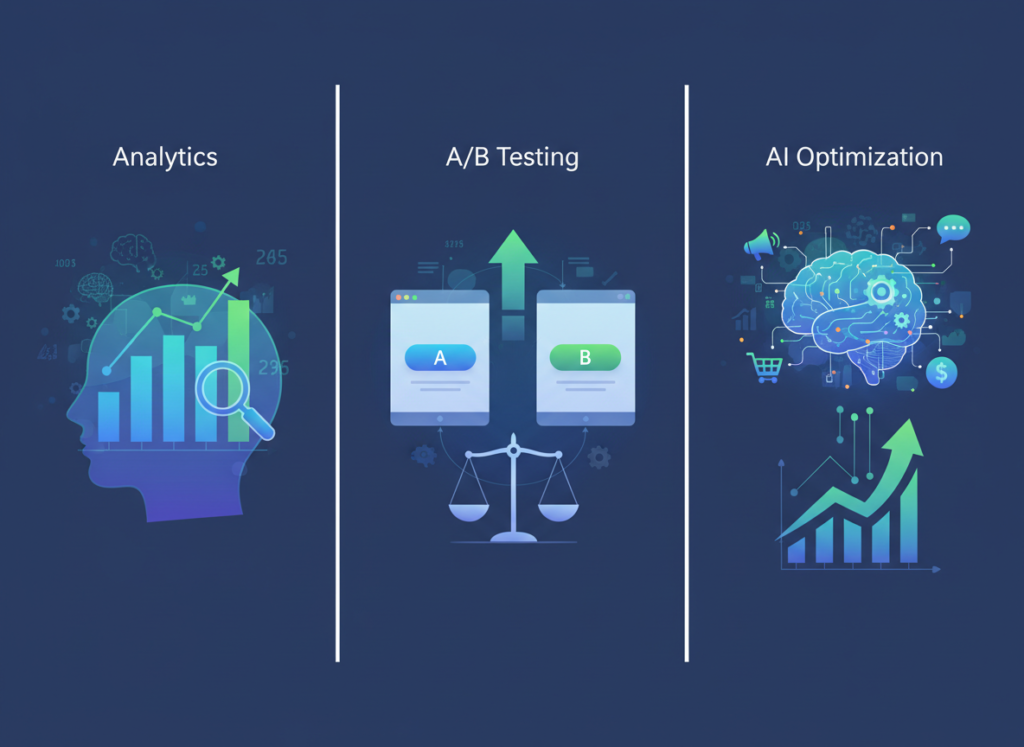
MailerLite AI includes built-in campaign analytics (open rates, click rates, conversion tracking) and A/B testing tools for subject lines and content variants. Small teams can run systematic optimization experiments without needing a data analyst.
For US founders used to making marketing decisions by gut feel, this is the infrastructure for evidence-based marketing. You stop guessing which subject line performs better. You test it.
ROI: Improving email open rates from 20% to 28% on a 5,000-person list means 400 more people reading each campaign. At a modest 2% click-through rate, that’s 8 additional leads per send — worth $800–$2,400/month at average US B2B lead values.
See how MailerLite AI works across all four of these capability areas with detailed screenshots, pricing breakdowns, and user reviews.
Ready to systemize your US team’s email marketing in under a week? Try MailerLite Free | No credit card required | Trusted by 1.4M+ businesses worldwide
Use Cases by Team Role
Theory is useful. Specifics are better. Here’s how four common small team roles in US businesses are using MailerLite AI to solve real operational problems.
Persona 1: US Startup Founder Juggling 3 Departments

Maria, 34 — Co-Founder, SaaS Startup, San Francisco, CA Team size: 6 people. Maria handles product, manages two developers, and somehow also owns marketing because no one else can.
Old workflow: Maria wrote every email herself, usually at 11pm. Campaigns went out inconsistently — sometimes twice a month, sometimes not for six weeks. The welcome sequence was three emails that she’d written at launch and never updated. New trial users were getting a 2-year-old product tour.
AI-powered workflow: Maria now uses MailerLite’s AI writing assistant to generate campaign drafts from a 3-sentence brief. She reviews and refines in 20 minutes, then schedules. The onboarding sequence was rebuilt in one afternoon using AI-generated copy for each step, triggered automatically by signup. Marketing automation for small teams means Maria’s email presence is now consistent whether she has time for it or not.
Quantified results:
- Email time reduced from 4 hours/campaign to 45 minutes
- Welcome sequence updated and re-activated (driving 18% higher trial-to-paid conversion)
- Monthly campaigns back on schedule — 3 sends/month consistently
Maria’s take: “I stopped treating email like something I’d get to when I had time. Now it runs whether I think about it or not.”
Persona 2: Executive Assistant Onboarding Remote Staff

James, 29 — Executive Assistant, Consulting Firm, Miami, FL Team size: 8 people across 4 states. James coordinates operations for a boutique HR consulting firm. His role includes client communication, internal coordination, and managing the firm’s newsletter.
Old workflow: James had no documented process for the newsletter. He’d start fresh each month, searching old emails for inspiration and formatting from memory. Onboarding new consultants to email standards took two full days of side-by-side training.
AI-powered workflow: James used MailerLite’s template system to build a reusable newsletter block structure. AI-generated copy fills the sections from monthly topic briefs. As noted in this breakdown of MailerLite’s AI writing features, prompts can encode tone, audience, and purpose — enabling anyone on the team to generate on-brand content. New consultants now follow a documented prompt guide and produce their first newsletter independently within hours.
Quantified results:
- Newsletter production time: 6 hours ? 90 minutes
- New staff onboarding to email system: 2 days ? 3 hours
- Client newsletter open rate up from 21% to 33% after consistent schedule restoration
James’s take: “Having the AI assist with copy means I spend my time editing and thinking, not staring at a blank page.”
Persona 3: Marketing Lead Standardizing Client Reporting

Aisha, 31 — Marketing Director, Digital Agency, Chicago, IL Team size: 7 people. Aisha manages a small team that serves 12 active clients. Each client gets a monthly performance email update — previously written from scratch each time.
Old workflow: Aisha’s team spent 3–4 hours per client writing performance update emails. With 12 clients, that’s up to 48 hours of writing per month — equivalent to more than a full work week. Quality varied depending on who wrote each report.
AI-powered workflow: Aisha built standardized AI prompts for each client email type (performance update, campaign launch, recommendation summary). MailerLite templates handle the formatting; AI generates the copy from metric inputs. The AI newsletter generator approach meant she could systematize content production without sacrificing the personalized feel clients expected.
Quantified results:
- Client update email time: 48 hours/month ? 12 hours/month (saving ~$2,700/month at her team’s billing rate)
- Email quality consistency: standardized across all team members
- Client email open rates averaged 47% — above agency industry benchmarks
Aisha’s take: “We turned what felt like custom creative work into a scalable process. Clients can’t tell the difference — and our team has their lives back.”
Persona 4: Trainer Documenting Internal Knowledge

Robert, 44 — Head of Training, E-Commerce Brand, Denver, CO Team size: 9 people. Robert manages internal training and customer education for a DTC outdoor gear brand. He owns the customer email education series and internal team communication.
Old workflow: Robert had been meaning to build a customer education email sequence for two years. Every time he started, the scope felt overwhelming. Internal team updates went out as Slack messages that got buried.
AI-powered workflow: Robert used MailerLite AI to build a 10-email customer education series in a single afternoon. He prompted the AI with product category, customer knowledge level, and desired outcomes for each email. The full MailerLite AI review on AI Plaza covers how the automation trigger system works for exactly this type of evergreen content delivery. As referenced in this independent analysis of MailerLite’s capabilities, the platform’s simplicity is a genuine differentiator for non-technical team leads.
Quantified results:
- Customer education series launched after 2 years of delay — built in 6 hours
- Customer LTV up 11% among subscribers completing the series
- Internal team digest now reaches 100% of staff on a reliable weekly schedule
Robert’s take: “I kept telling myself I needed more time to build the system. Turns out I needed better tools.”
Join 1.4M+ businesses using MailerLite AI to eliminate email marketing chaos. See How It Works | Trusted by teams from Silicon Valley to New York
Common Pitfalls & How to Avoid Them
Even with the right tools, US small teams make predictable mistakes when implementing AI email marketing. Here are the four most common — and how MailerLite AI helps you sidestep them.
Mistake 1: Using Too Many Disconnected Tools
The average US small business uses 8–10 separate software tools for marketing. When your email platform doesn’t talk to your CRM, your landing pages, or your e-commerce store, data gaps appear, automation breaks, and nobody has a complete picture of campaign performance.
The fix: MailerLite integrates natively with Shopify, WooCommerce, Stripe, Zapier, and Make — covering the majority of US small business tech stacks. Building on a platform with native integrations prevents the “disconnected tool” problem before it starts. Discover MailerLite AI’s integration options to see which connections matter most for your stack. As this practical overview from FetchProfits highlights, the ability to build complete funnels within a single platform is a genuine differentiator for lean US teams.
Mistake 2: Delegating Without Documentation
Handing email marketing to a new team member without documented processes is the fastest way to get inconsistent campaigns and missed sends. “They’ll figure it out” is not a system. It’s wishful thinking that costs US businesses an average of 20+ hours in ramp time per new hire.
The fix: Use MailerLite’s template and global branding features to encode your standards into the platform itself. Supplement with a simple prompt guide for the AI writing assistant. When the process lives in the tool, not in someone’s head, delegation actually works.
Mistake 3: Failing to Review AI Output
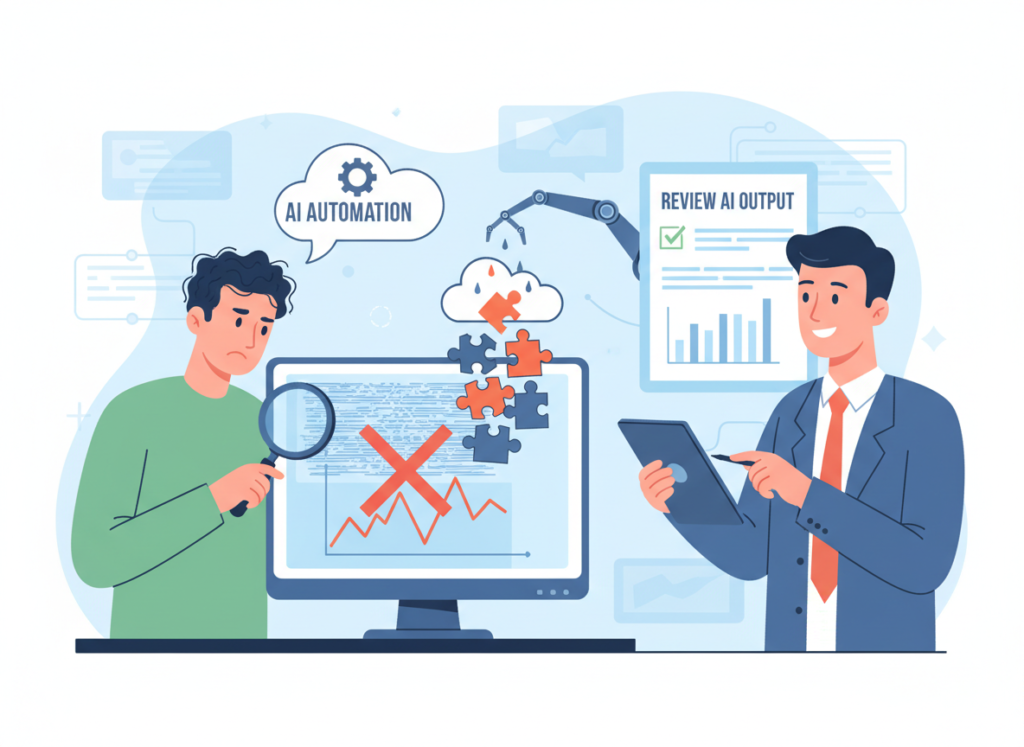
AI generates fast — which means it can also generate consistently mediocre content if nobody’s checking. Teams that publish AI copy without a human review step end up with off-brand emails that erode subscriber trust over time.
The fix: Build a 15-minute review step into every campaign workflow. MailerLite’s editor makes it easy to refine, adjust tone, and personalize AI-generated content before publishing. AI copywriting for email campaigns works best as a first draft, not a final draft.
FAQs for US Small Businesses

What is Solo DX?
Solo DX (Small-Scale Digital Transformation) is the process of US founders and small team leaders building repeatable, AI-assisted operational systems without an enterprise budget or dedicated operations staff. It’s the stage between “everything in the founder’s head” and “fully documented, delegatable workflows.” Email marketing automation is one of the highest-ROI Solo DX investments available to American small teams.
How can AI write my email campaigns?
MailerLite AI’s built-in writing assistant lets you describe what you need in a short prompt — product, audience, tone, goal — and generates campaign-ready copy in seconds. The tool produces subject lines, body paragraphs, CTAs, and full email sequences. You review, refine, and publish. The whole process typically takes 20–45 minutes for a campaign that would have taken 3–4 hours to write manually.
Can small teams afford to use MailerLite AI?
MailerLite offers a generous free plan supporting up to 1,000 subscribers and 12,000 emails/month — which covers most US small teams in early-growth stages. Paid plans start at $9/month for growing lists. The AI writing assistant is available on the Advanced plan. For context: a single hour of US marketing contractor time ($75–$150) typically costs more than a full month of MailerLite’s advanced features.
Is MailerLite AI hard to set up?
No. MailerLite is consistently rated among the most user-friendly email marketing platforms available. The drag-and-drop editor requires no coding knowledge. Automation workflows are visual and template-driven. Most US small teams are sending their first AI-assisted campaign within 1–2 hours of signing up. Email automation with AI on this platform has a shallow learning curve by design.
Conclusion
In 2026, American small businesses don’t need enterprise budgets to build enterprise-level email marketing systems. That equation changed — and AI email marketing for small business is the clearest proof.
The old model required choosing between doing it yourself (time you don’t have) and paying someone else (money you’d rather invest in growth). MailerLite AI offers a third path: a platform that encodes your voice, your sequences, and your campaign logic into repeatable, automated systems that your whole team can run.
The ROI is concrete. The setup time is measured in hours, not weeks. The documentation lives in the platform, not in one person’s memory. And the result — consistent, on-brand email marketing that nurtures leads and converts subscribers — is something most US small teams have been trying to build for years.
Start with one process. Pick your welcome sequence, your monthly newsletter, or your lead nurturing flow. Systemize it this week using MailerLite AI. Then build from there.
The teams that win in 2026 aren’t the ones with the biggest budgets — they’re the ones with the best systems. Get the full MailerLite AI breakdown and start building yours today.
Leave a Reply