
Most small teams don’t have a design problem — they have a brand consistency problem that AI for team operations can solve in hours, not months.
If you’ve grown your business from a solo operation to a team of three, five, or ten, you already know what “controlled chaos” feels like. The Instagram post your contractor created last Tuesday looks nothing like the one your marketing manager posted this morning. Your pitch deck uses four different fonts. Your proposals still have the old logo. Nobody is doing anything wrong — you just never had a system.
This is the hidden tax of scaling a small US business in 2026. According to research on brand consistency, companies with consistent brand presentation see significantly higher revenue than those without standards in place. For a small team, that inconsistency compounds fast: one off-brand post, one misaligned proposal, one poorly formatted report chips away at the credibility you’ve spent years building.
The typical response? Hire a designer. In major US markets — San Francisco, New York, Austin, Chicago — that means $65–$120 per hour for freelance design work, or $55,000–$85,000 annually for a full-time hire. For a team of five to ten people, that’s a budget-breaking decision.
Adobe Express changes the equation. It’s not just a design tool — it’s an AI-powered brand operations platform that allows every member of your US small team to create on-brand social posts, presentations, videos, and marketing materials without any design background. For founders managing multiple departments, marketing leads juggling client deliverables, and executive assistants onboarding remote staff, Adobe Express functions as the missing operations layer between your brand guidelines and your team’s daily output.
This article walks through exactly how Adobe Express enables Solo DX — small-scale digital transformation for growing US teams — and why it’s emerged as one of the most practical brand content creation tools available in 2026.
Get the full Adobe Express breakdown on AI Plaza and see exactly which features apply to your team’s current content challenges.
What is Solo DX?
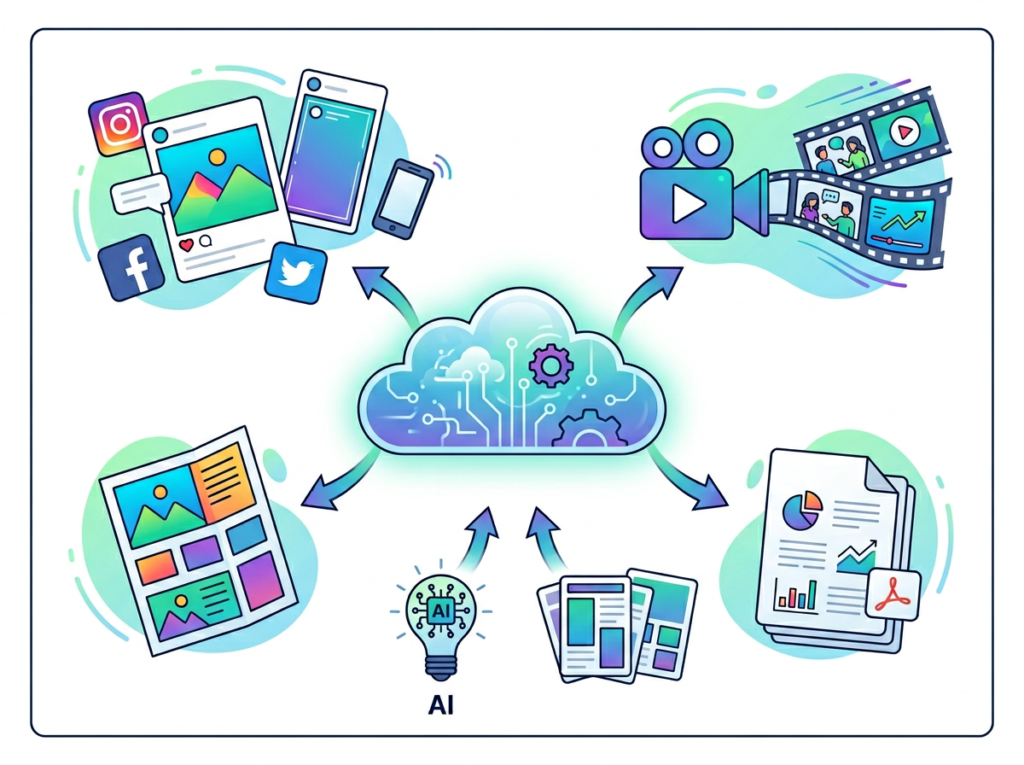
Solo DX stands for Solo Digital Transformation. It describes the process of systemizing your small business operations using digital tools — not enterprise software suites or $50,000 consulting engagements, but accessible, affordable AI platforms that a non-technical founder can implement in days.
Where corporate SOP methodologies require dedicated operations managers, change management consultants, and months of rollout planning, Solo DX operates on a different principle: start with one broken process, systemize it this week, and move to the next one. The tools are lightweight. The investment is low. The results are immediate.
Here’s how Solo DX compares to other operational frameworks:
| Framework | Who It’s For | Time to Implement | Cost (US) | Outcome |
|---|---|---|---|---|
| Corporate SOP | 50+ employee orgs | 3–6 months | $50,000+ | Rigid documentation |
| AI Efficiency | Solo operators | 1–2 weeks | $0–50/month | Personal productivity |
| Solo DX | Teams of 2–15 | 1–7 days | $0–30/month | Repeatable team workflows |
| Agency Ops | 20+ employee agencies | 1–3 months | $10,000–30,000 | Client delivery systems |
Consider a three-person design studio in Austin, Texas. The founder handles client relationships and strategy. Two contractors execute design and copywriting work. Every time they win a new client, the onboarding process starts from scratch: digging through old emails for brand assets, rebuilding proposal templates, re-explaining deliverable formats. The studio loses approximately six to ten billable hours per new client engagement just on administrative rework.
Solo DX applied to this problem looks like: one afternoon spent setting up Adobe Express with the studio’s brand kit, locking in fonts and colors, building three reusable proposal and report templates, and training both contractors to use them in under two hours. The result is that onboarding time drops from six hours to forty-five minutes. Proposals go out faster. Client presentations look consistently professional.
That’s the Solo DX premise: not transformation for transformation’s sake, but targeted systemization of the workflows causing the most daily friction.
Explore Adobe Express’s features on AI Plaza to see how it fits into a Solo DX rollout for your specific team structure.
Why AI Is Key for Mini-Team Systemization
Problem 1: Brand knowledge lives only in the founder’s head.

The founder knows that the brand uses a specific shade of blue, that the logo always needs 20px of padding, and that client-facing documents use a particular header format. Nobody else knows any of this — and they can’t know it until someone writes it down and makes it accessible.
In a traditional workflow, codifying that knowledge means paying a designer or operations manager to build a brand guide. At US consulting rates, that’s $3,000–$8,000 for a professional brand standards document. Most small teams skip the investment and live with inconsistency.
With Adobe Express, the brand kit setup takes under an hour. Upload your logo, input your hex codes, set your fonts, and every team member immediately works from the same locked standards. The AI handles the technical enforcement — meaning your team can’t accidentally use the wrong color even if they try.
Problem 2: New hires slow down operations instead of accelerating them.
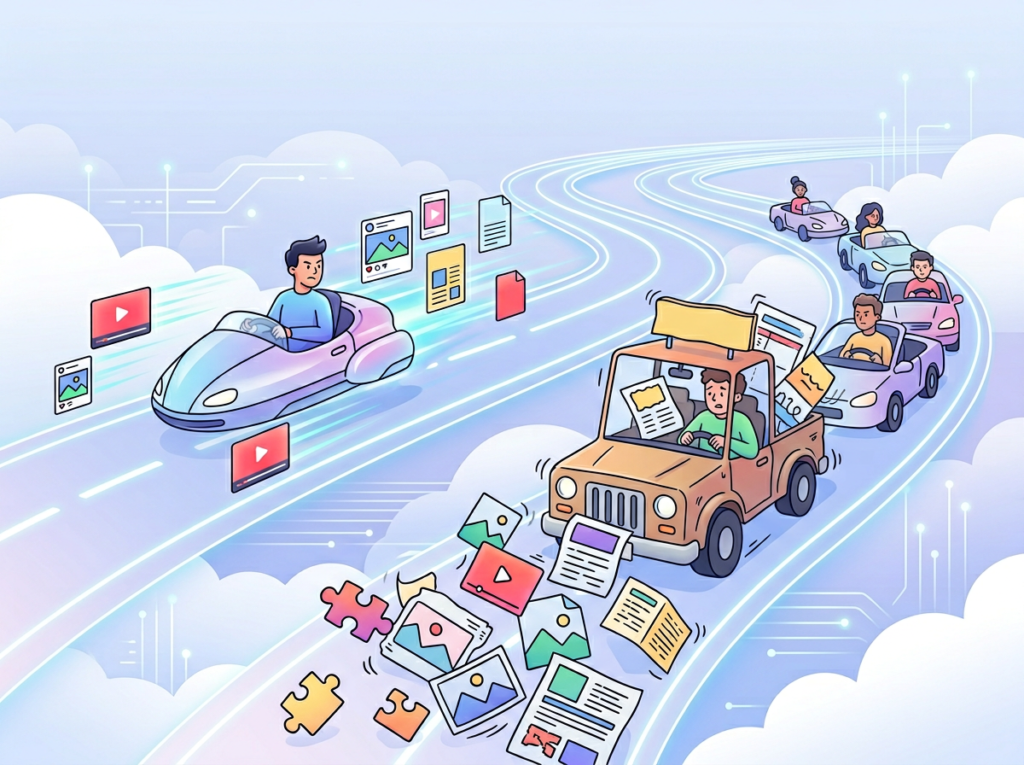
US labor turnover rates remain above 47% annually in many industries. That means the average small business owner spends a significant portion of each year onboarding new team members — and every onboarding cycle costs real money. Research from SHRM estimates the average cost of replacing an employee ranges from 50% to 200% of their annual salary.
For a lean team, the onboarding drag is felt immediately. A new marketing coordinator who doesn’t know your brand standards will produce off-brand content for weeks. A new account manager who hasn’t internalized your proposal format will send clients inconsistent materials.
AI-powered template systems eliminate this gap. When templates are built once and locked, new team members produce professional output from day one — without requiring hours of one-on-one training.
Problem 3: Quality varies unpredictably across team members.
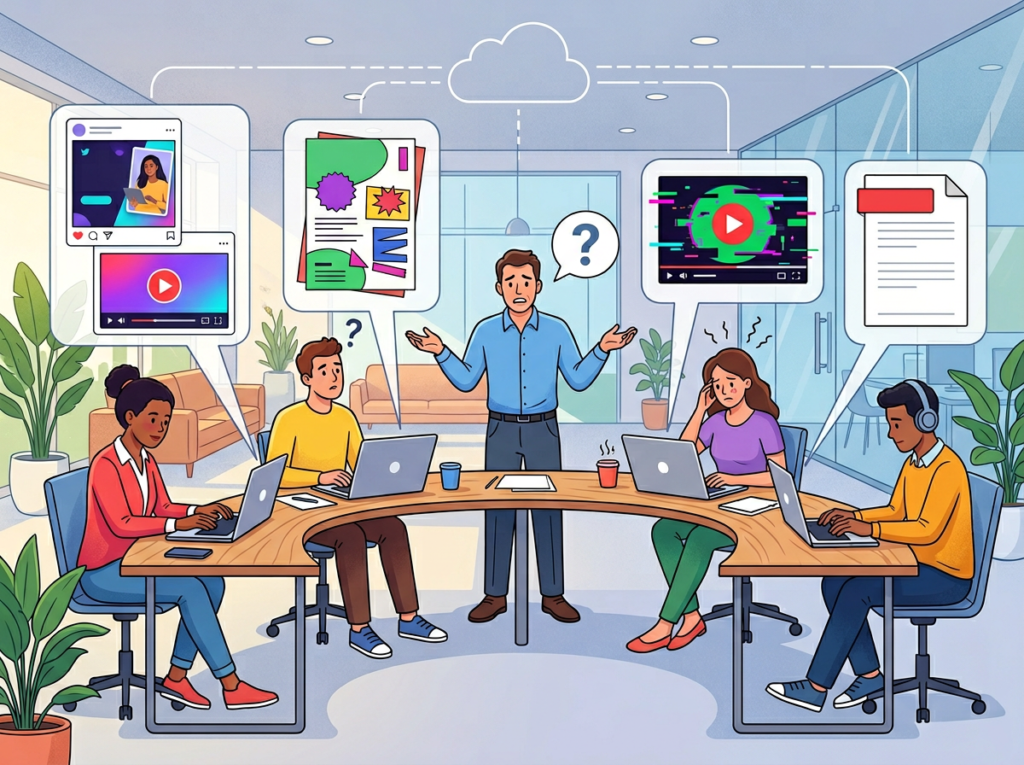
Even experienced team members produce inconsistent output when they don’t have enforced standards. One person’s “social media post” is a carefully sized graphic; another’s is a screenshot of a Word document. One person’s client report has a polished header; another’s is a blank Word doc with Arial 12.
The cost of this inconsistency isn’t just aesthetic — it directly affects client retention and referral rates. A 2024 Lucidpress study found that brand consistency can increase revenue by up to 20% for small businesses. For a team generating $500,000 annually, that’s a $100,000 delta attributable to whether or not your team uses standardized templates.
The cost comparison is stark:
Manual approach: Hire a freelance brand designer ($3,000–$8,000 one-time) + ongoing design requests at $65–$120/hour. A team with two design requests per week spends $6,760–$12,480 annually on freelance design alone.
AI-assisted approach (Adobe Express): $54.99/month for a team license = $660/year. Team members self-serve the majority of design needs without designer involvement.
The annual savings potential for a typical five-person US small business: $6,100–$11,820 per year.
Get the full Adobe Express breakdown on AI Plaza and see exactly which features apply to your team’s current content challenges.
How Adobe Express Enables Solo DX
Feature 1: AI-Powered Brand Kit and Template Locking
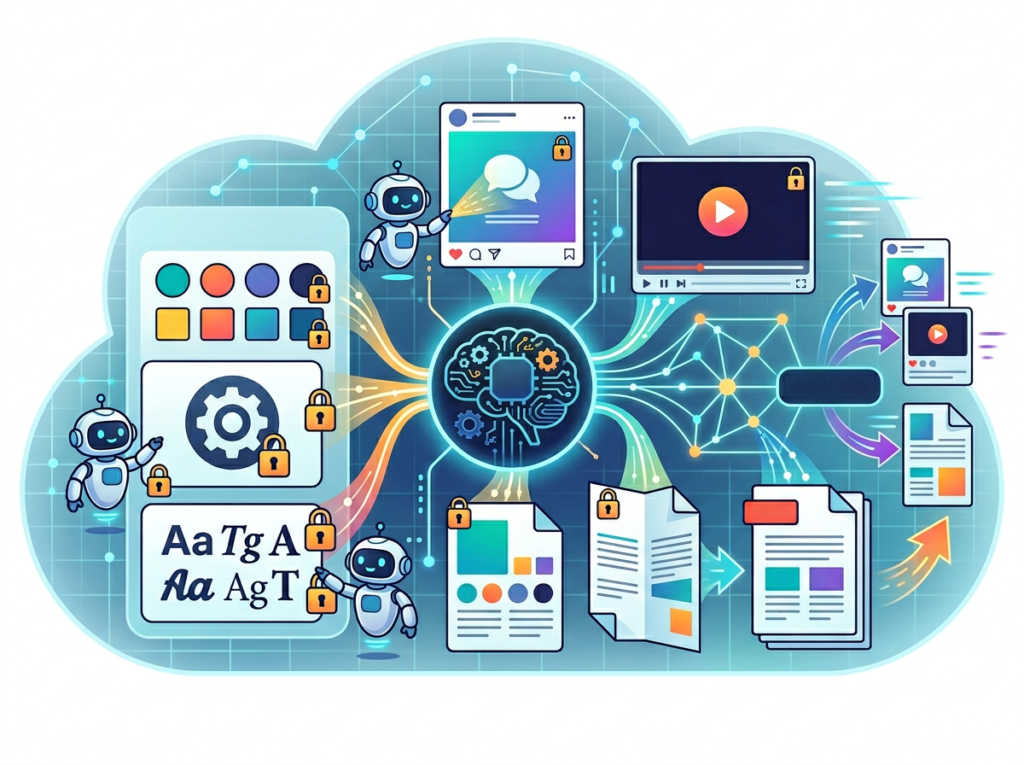
The Brand Kit feature in Adobe Express is the operational backbone of the entire platform. Upload your logo files, define your color palette, set your approved fonts, and every template your team creates automatically pulls from those locked standards.
For a small US business, the ROI here is direct: $2,000–$6,000 saved per onboarding cycle where you’d otherwise walk a new hire through brand standards manually or pay a designer to refresh off-brand materials.
The AI component goes further than simple asset storage. Adobe Express’s generative AI can resize any asset to any platform specification — take a LinkedIn banner, and with one click it adapts for Instagram Stories, Facebook cover, or Twitter header. For a marketing lead managing five social channels, this eliminates 3–5 hours of weekly manual reformatting work, worth approximately $9,750–$15,600 annually at a $65/hour US labor rate.
Feature 2: AI Text and Image Generation
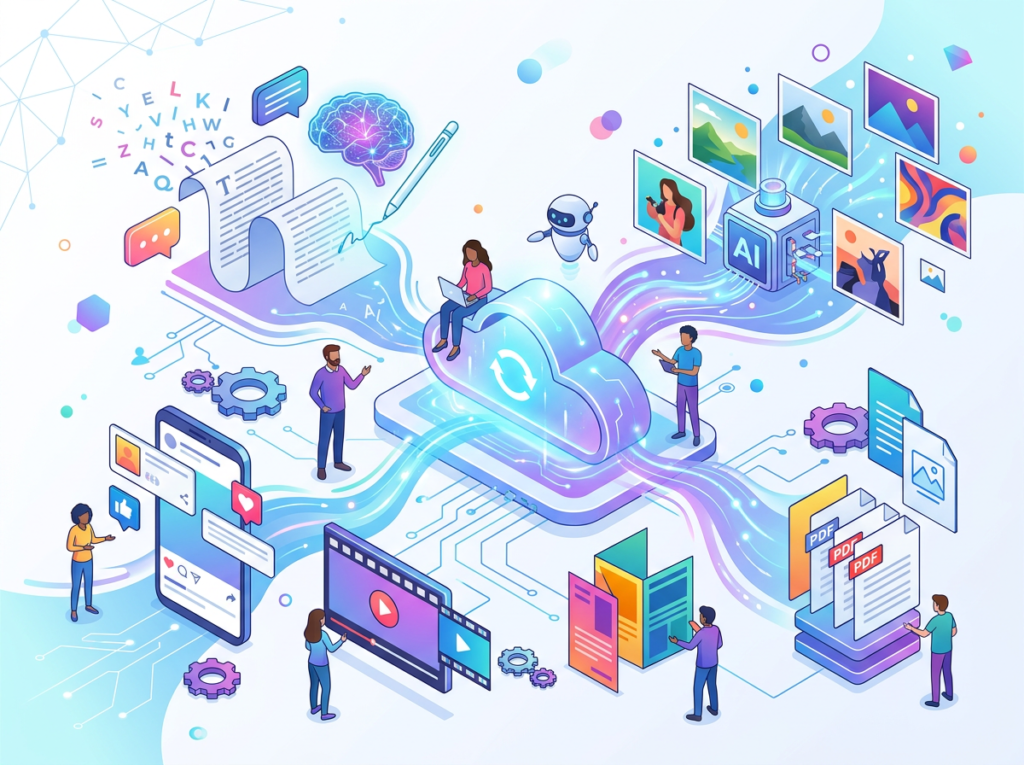
Adobe Express integrates Adobe Firefly, Adobe’s proprietary generative AI, directly into the design workflow. Need a custom background image for a client proposal? Generate it in seconds without leaving the platform. Need headline copy variations for an A/B test? The AI drafts options on demand.
This matters for small US teams because it eliminates the most time-consuming parts of content production: sourcing stock images (average 45 minutes per project), writing copy variations (60–90 minutes), and waiting on contractor revisions (24–48 hours). The AI handles first drafts; your team handles approvals.
Estimated annual savings for a five-person team that produces content three times per week: $18,720–$23,400 in reduced contractor and freelance costs.
Feature 3: Video Creation and Editing
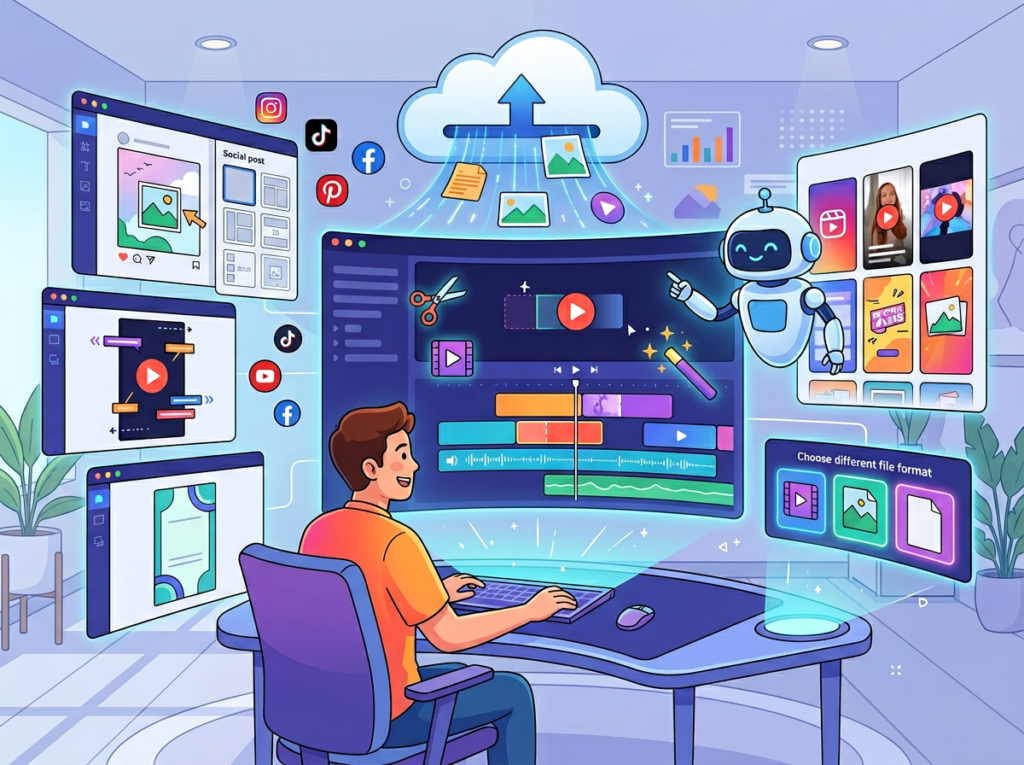
Adobe Express includes an AI-powered video editor that allows teams to produce short-form marketing videos, social reels, and internal training clips without video editing experience. This is increasingly critical for US small businesses competing in a social-first marketing environment.
The practical impact: a marketing coordinator who previously couldn’t produce any video content can now generate a polished 30-second Instagram Reel in under an hour using existing brand assets, stock footage, and the platform’s AI-generated text animations. Outsourcing that same video to a freelance editor in markets like Denver or Chicago costs $150–$350 per video. At a pace of two videos per week, the savings reach $15,600–$36,400 annually.
See how Adobe Express works for US team operations in our full platform breakdown.
Ready to systemize your US team’s brand operations in under a week? Try Adobe Express Free | No credit card required | Trusted by millions of US teams
Use Cases by Team Role
Maria — Startup Founder Juggling 3 Departments | San Francisco, CA

Old workflow: Maria runs a 6-person SaaS startup and serves as de facto head of marketing, operations, and sales. Every week, she manually reformats investor updates, client proposals, and social content from scratch — or chases down contractors to do it. Average time lost: 8 hours per week on content creation and brand maintenance.
AI-powered workflow: Maria sets up Adobe Express with the company’s brand kit on a Monday afternoon. She builds four core templates: investor update deck, client proposal, LinkedIn post, and product demo video. The entire setup takes 3 hours.
Results:
- Weekly content creation time reduced from 8 hours to 2.5 hours
- Time savings: 5.5 hours/week × $125/hour (founder’s effective hourly value) = $687.50/week, $35,750/year
- Proposal turnaround time drops from 3 days to same-day
- New contractor onboarding for content tasks: from 4 hours to 45 minutes
Maria’s take: “I didn’t realize how much time I was losing to just finding the right logo file and reformatting things. Now my team opens a template and the brand is already right. We shipped four investor updates last quarter and every one looked exactly the same — in a good way.”
James — Executive Assistant Onboarding Remote Staff | Miami, FL

Old workflow: James supports a 12-person remote operations team for a logistics company. Every time a new hire joins, James manually assembles a welcome packet, creates a custom org chart, and builds a 30-day onboarding schedule — using a mix of Google Slides, Word, and Canva. Average onboarding document prep: 6 hours per new hire.
AI-powered workflow: James builds a single Adobe Express onboarding template suite: welcome packet, org chart, 30-day schedule, and tools overview. Variables like the hire’s name, start date, and manager are updated in minutes using the platform’s editing tools.
Results:
- Onboarding document prep: from 6 hours to 45 minutes per hire
- For a team that hires 12 new people annually: saves 63.75 hours/year
- At $45/hour (executive assistant US market rate): $2,869 annual labor savings
- Consistency improvement: every new hire receives identical, professional materials regardless of who prepares them
James’s take: “The old process was embarrassing — we’d send new hires a mismatched pile of documents in different styles. Now everything looks like it came from a real company, not someone’s personal Google Drive.”
Aisha — Marketing Lead Standardizing Client Reporting | San Francisco, CA

Old workflow: Aisha manages marketing for a boutique PR agency with 8 clients. Each monthly client report is built from scratch in PowerPoint, with manual data entry, custom chart creation, and individual formatting. Average time per report: 4 hours. Eight clients = 32 hours per month on report production.
AI-powered workflow: Aisha builds a master client report template in Adobe Express with locked brand standards, pre-formatted data visualization layouts, and modular slide sections. Monthly reporting becomes a fill-in process.
As noted in this breakdown of Adobe Express’s template capabilities, the platform’s template system is specifically designed to let non-designers produce professional output at scale — which is exactly the use case Aisha needed.
Results:
- Report production time: from 4 hours to 1.5 hours per client
- Monthly time savings: 20 hours
- At $75/hour (marketing lead US market rate): $18,000 annual savings
- Client satisfaction improvement: consistent, professional reports build trust and reduce scope creep questions
Aisha’s take: “My clients used to ask why reports looked different each month. Now they say our reporting is the clearest of any agency they’ve worked with. That’s a retention argument, not just an efficiency argument.”
Join thousands of US small teams using Adobe Express to eliminate brand chaos. See How It Works | Used by teams from Silicon Valley to New York
Common Pitfalls & How to Avoid Them
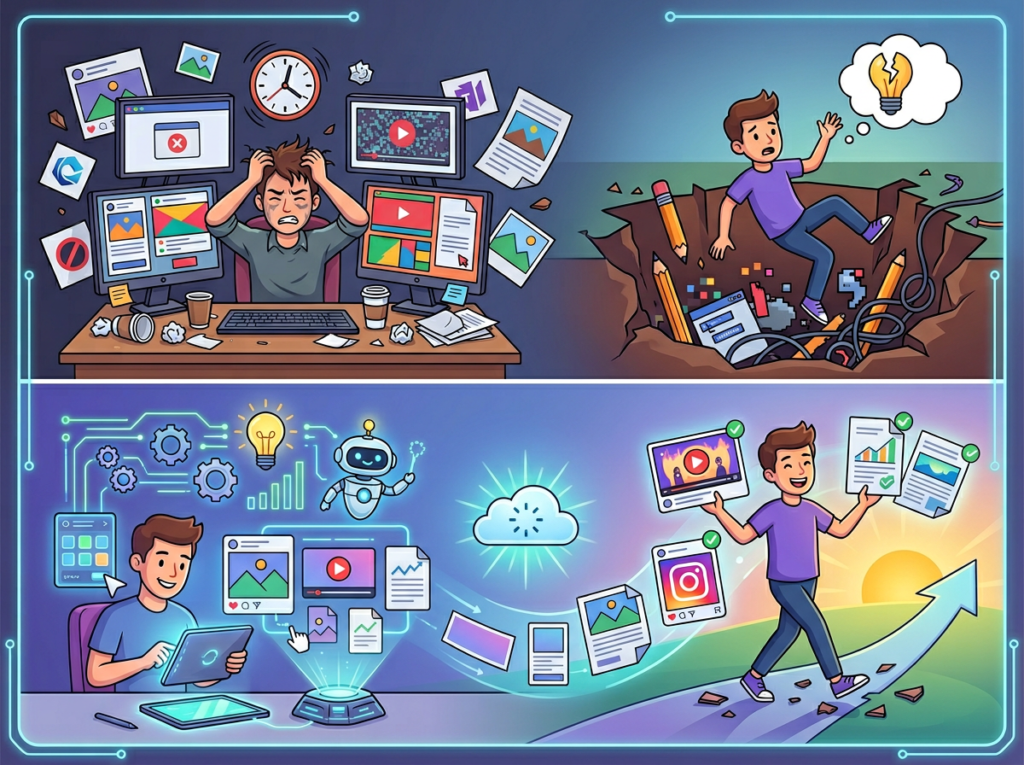
Pitfall 1: Using too many disconnected tools.
A marketing team that creates social posts in Adobe Express, builds proposals in Canva, edits videos in CapCut, and designs email headers in Photoshop doesn’t have a brand system — it has five separate brand systems. Each platform has different defaults, different template logic, and different export behaviors.
The fix: consolidate your most common content types into a single platform. Adobe Express handles social posts, presentations, short-form video, print materials, and web graphics. For most small US teams, that covers 80% of weekly content needs in one tool.
Pitfall 2: Delegating without documentation.
Giving your team access to Adobe Express without a brief onboarding session doesn’t create a system — it creates a different flavor of chaos. Without instruction on which templates to use, which brand colors are approved, and what the approval process is, team members will improvise.
The fix: spend 90 minutes building a simple one-page “content creation SOP” that specifies template names, output specifications, and the review process. Discover Adobe Express’s team features to understand how the platform’s built-in permissions and sharing tools support this workflow.adopting AI design tools.
Pitfall 3: Over-relying on Slack or email for creative feedback.
“Looks good” in a Slack thread is not an approval workflow. When feedback lives in chat instead of directly on the design, context gets lost, revisions take longer, and version control becomes a problem.
The fix: use Adobe Express’s built-in commenting and sharing features to keep creative feedback attached to the actual design file. This is especially important for AI for team operations workflows where multiple team members touch the same asset.
FAQs
What’s the difference between AI Efficiency and Solo DX?
AI Efficiency focuses on individual productivity — how a single person can do more work in less time using AI tools. Solo DX focuses on team systemization — how a small business can build repeatable workflows that produce consistent output regardless of which team member does the work. AI Efficiency is “I use AI to write my emails faster.” Solo DX is “my whole team uses AI-powered templates so every client deliverable looks the same regardless of who produced it.”
Can small teams actually afford Adobe Express?
Yes. Adobe Express offers a free tier that covers basic design needs, and the Team plan runs approximately $54.99/month for up to five users — about $11/user/month. Compared to the cost of a single freelance design session in any major US city ($65–$120/hour), Adobe Express pays for itself in under two hours of design work replaced per month. For teams producing multiple pieces of content weekly, the ROI is typically 10x to 20x within the first three months.
Is Adobe Express hard to set up for a non-technical team?
No. Adobe Express is one of the most accessible platforms in the AI design tool category. Most teams complete initial brand kit setup and template creation within one afternoon. The learning curve for individual team members — creating a new post or presentation from an existing template — is typically under 30 minutes. The platform is browser-based, requires no software installation, and works on any device, which is particularly relevant for distributed US teams working across time zones.
Get the full Adobe Express breakdown on AI Plaza and see exactly which features apply to your team’s current content challenges.
Conclusion

In 2026, American small businesses don’t need enterprise budgets to build enterprise-level brand systems. The gap between a scrappy team producing inconsistent content and a professional operation with a scalable content workflow has narrowed to one afternoon and one well-configured platform.
Adobe Express represents the practical center of what AI for team operations looks like for small US teams: not a dramatic overhaul of how your business functions, but a targeted system that eliminates the most expensive daily friction — inconsistent branding, time lost on reformatting, slow onboarding, and the silent cost of content that doesn’t look as credible as your work deserves.
The Solo DX approach starts with one process. Pick the one that’s costing you the most — weekly social posts, client proposals, onboarding materials, training decks — and systemize it this week. Build the template, lock the brand standards, train your team in 90 minutes, and measure what changes.
The teams seeing the clearest results aren’t the ones who’ve overhauled their entire tech stack. They’re the ones who fixed one broken workflow, watched it hold, and then fixed the next one.
Get the full Adobe Express breakdown on AI Plaza and see exactly which features apply to your team’s current content challenges.
Leave a Reply