
Small teams that systemize their workflows with a capable AI assistant for team productivity don’t just work faster — they build the operational foundation that lets them scale without chaos.
There’s a moment every US small business founder recognizes. You hired your second employee, then your fourth, then your seventh — and somewhere in that growth, the business started running you. Knowledge that used to live in your head now lives in 47 different Slack threads. Onboarding a new hire takes three weeks because no one has written down how anything actually works. A client deliverable falls through the cracks because the person who “owned” that process went on vacation.
This is the hidden cost of scaling without systems. And in 2026, it’s hitting American small businesses harder than ever. With US labor turnover hovering near 47% in knowledge-work sectors, every time a team member walks out the door, they take institutional knowledge with them — knowledge that cost you real money to create.
The traditional solution — hiring an operations manager or bringing in a consultant to document your processes — runs $5,000 to $15,000 in US labor costs, and still leaves you with a static PDF that’s outdated the moment it’s printed.
Claude Opus 4.5 offers a different path. As an AI assistant for team productivity, it helps US small teams do something that was previously reserved for companies with dedicated ops staff: build living, usable systems that capture how work actually gets done. Unlike basic productivity tools that automate individual tasks, Claude Opus 4.5 acts as a system-building ally — analyzing your existing workflows, generating structured SOPs, and helping your team execute consistently without constant founder oversight.
The economics are compelling. What once cost $5,000 in billable hours now takes an afternoon and a $20/month subscription. For a 3-to-10-person US team bleeding time and money on operational chaos, that’s not a marginal improvement — it’s a category shift.
This article walks through exactly how Claude Opus 4.5 enables what we call Solo DX: the small-scale digital transformation that American founders can execute without enterprise budgets or operations managers.
Join 10,000+ US small teams using Claude Opus 4.5 to eliminate operational chaos. See How It Works
What is Solo DX?

Solo DX — short for Solo Digital Transformation — describes the process of a US small business founder systematically digitizing and documenting their team’s operational knowledge using AI tools, without hiring dedicated operations staff.
It’s a distinct category from general AI productivity. Most AI tools help individuals move faster: write emails quicker, summarize documents, generate first drafts. Solo DX is about something deeper. It’s about capturing how your business actually runs — the decisions, handoffs, quality standards, and repeatable processes — and turning that knowledge into usable systems any team member can follow.
| Category | Focus | Who It’s For |
|---|---|---|
| AI Efficiency | Speed up individual tasks | Solo operators, freelancers |
| AI Revenue Boost | Increase sales and client outcomes | Growth-stage teams |
| Solo DX | Systemize team operations | 3–10 person US teams scaling past the founder bottleneck |
| AI Workflows | Automate multi-step processes | Tech-forward teams |
Corporate SOP methodology — the kind taught in MBA programs and used by enterprise operations teams — fails US small businesses for a predictable reason: it assumes you have someone whose full-time job is documentation. A 5-person design studio in Austin can’t dedicate a quarter of its headcount to process mapping. The result is that most SMBs either skip documentation entirely or produce SOPs that no one reads because they’re too generic to be actionable.
Solo DX, enabled by tools like Claude Opus 4.5, takes a different approach. Instead of asking founders to document from scratch, it uses AI to observe, ask questions about, and generate structured processes from the workflows that already exist. The founder’s time investment drops from weeks to hours. The output isn’t a static document — it’s a living knowledge base the team can query, update, and actually use.
Consider a 3-person creative studio in Austin. Without Solo DX, client onboarding depends entirely on the founder walking each new client through the process verbally. When the founder is on vacation, onboarding stops. With Claude Opus 4.5 doing the heavy lifting of documentation, that same studio builds a replicable onboarding workflow in a single afternoon — one any team member can execute independently. You can explore Claude Opus 4.5’s features to understand how it approaches this kind of structured knowledge work.
The core insight behind Solo DX is that American small businesses don’t have a productivity problem — they have a knowledge distribution problem. The founder knows how everything works. No one else does. AI closes that gap.
Why AI is Key for Mini-Team Systemization
Problem 1: Knowledge lives only in the founder’s head
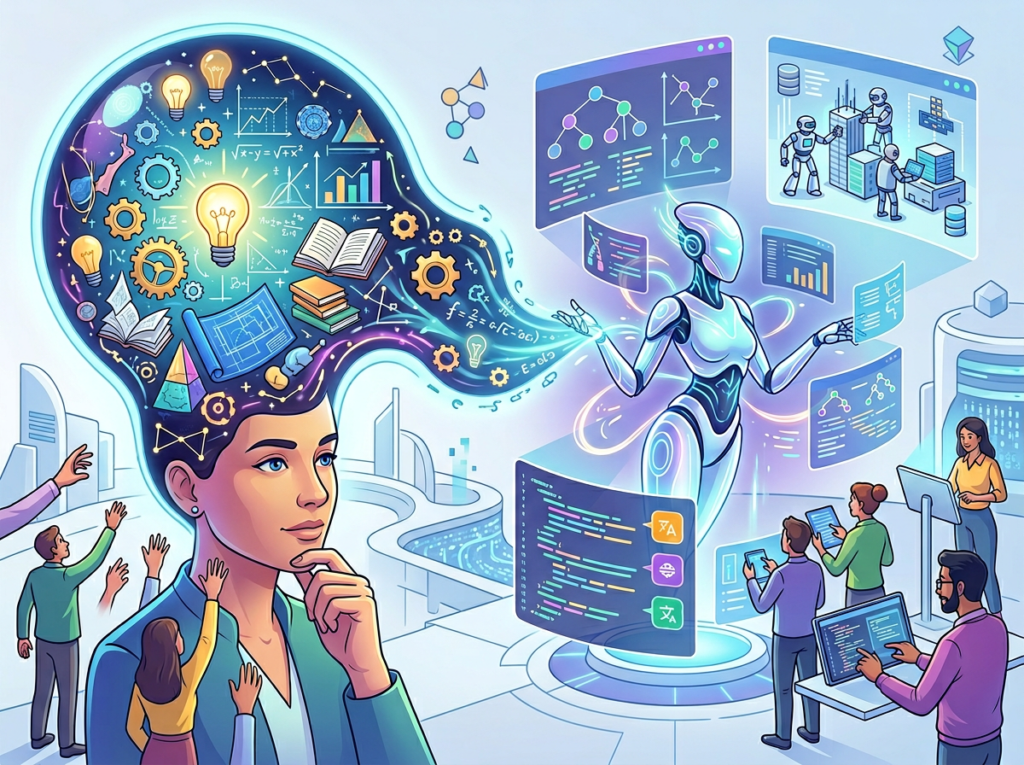
This is the most common and most expensive problem in US small businesses. When all operational knowledge resides in one person’s memory, every decision, process, and quality standard depends on that person being available, coherent, and in the room. The moment they’re unavailable — travel, illness, or simply being pulled in four directions at once — the team stalls.
The manual solution is knowledge documentation, which at US consulting rates ($75–$150/hour) costs $5,000–$15,000 for a comprehensive process library. AI-assisted documentation, by contrast, takes hours and costs virtually nothing beyond the subscription.
Problem 2: New hires slow down operations instead of accelerating them
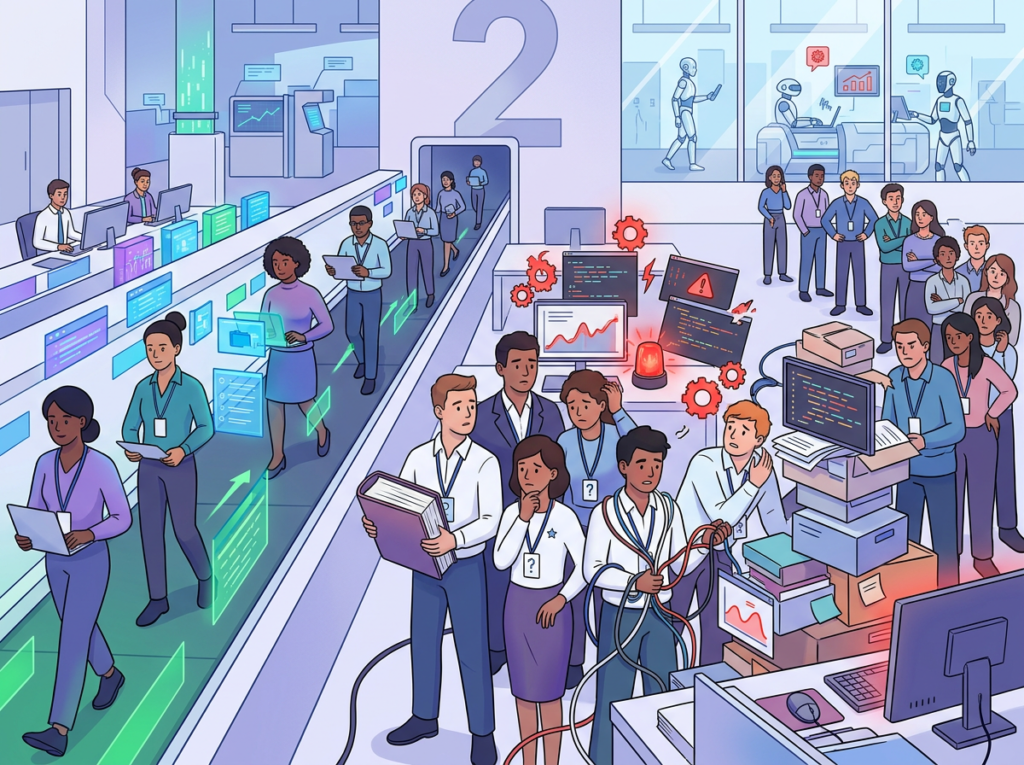
US labor turnover in knowledge work runs close to 47%, which means most growing teams are in a constant state of onboarding someone. Without documented processes, onboarding is a 2–4 week shadow period where the new hire follows someone experienced around and hopes to absorb what they need. Productivity during this period is near zero, and the experienced team member is pulled away from their own work.
When SOPs exist — real, specific, queryable SOPs — onboarding time drops dramatically. New hires can read, ask questions of, and begin executing against documented processes in days instead of weeks. At $50,000–$80,000 average US knowledge worker salaries, cutting onboarding time from three weeks to three days saves $3,000–$5,000 per hire.
Problem 3: Quality varies across team members
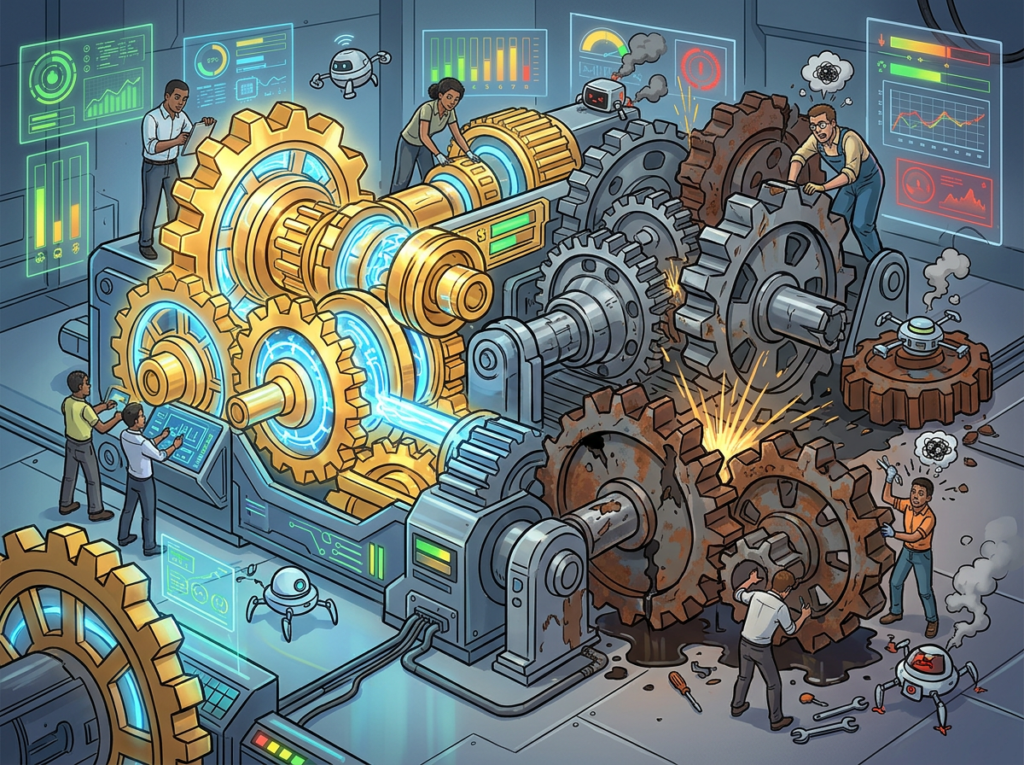
Inconsistent output quality is the operational tax on underdocumented teams. When every team member has a slightly different understanding of how a process works — because they learned it from different conversations at different times — the quality of the output varies. Clients notice. Reputation suffers.
Standardized AI-generated processes create a common reference point. When everyone executes against the same documented workflow, quality becomes more predictable. For US service businesses where reputation is the primary growth driver, this is a direct revenue protection mechanism.
The Cost Reality
| Approach | Cost | Timeline | Outcome |
|---|---|---|---|
| Hire operations consultant | $8,000–$15,000 | 6–12 weeks | Static documents |
| Internal documentation project | $5,000+ in labor | 4–8 weeks | Often abandoned |
| AI-assisted Solo DX | $0–$20/month subscription | 1–5 days | Living, queryable knowledge base |
The math is straightforward. For US small businesses operating on lean margins, the AI path isn’t just cheaper — it’s faster to deploy and produces more useful outputs.
Join 10,000+ US small teams using Claude Opus 4.5 to eliminate operational chaos. See How It Works
How Claude Opus 4.5 Enables Solo DX
1. AI-Generated SOPs: $2,000 Saved Per Documentation Cycle
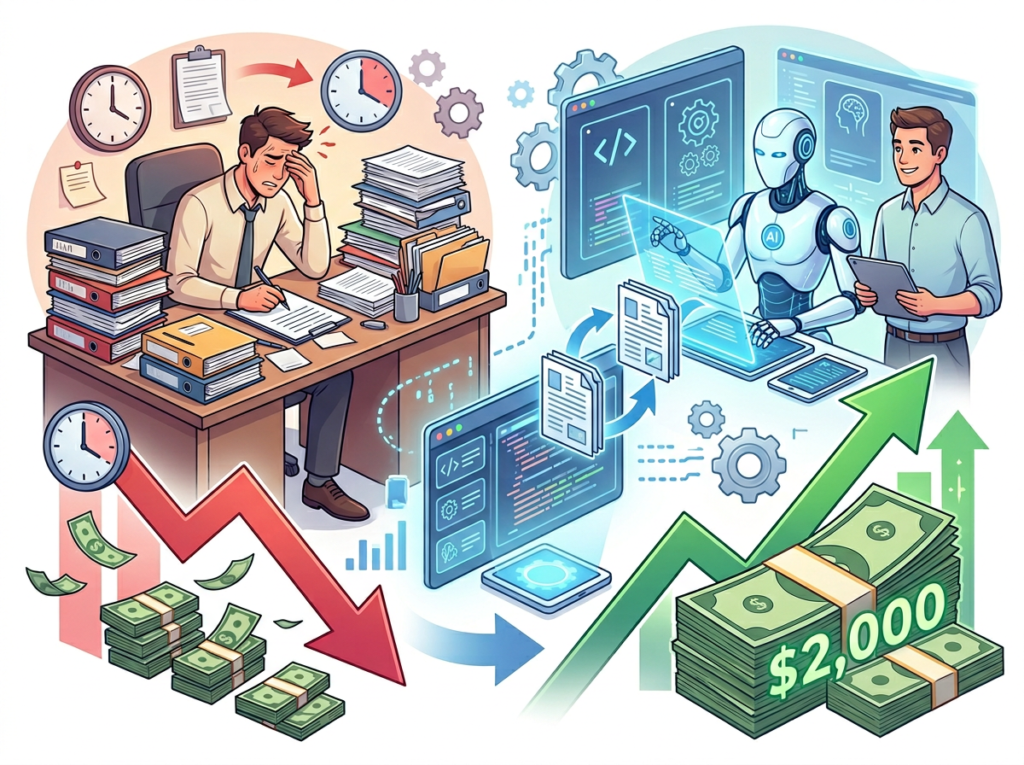
Most founders know they should document their processes. Almost none of them actually do it, because sitting down to write a standard operating procedure from scratch is genuinely painful work — unclear structure, competing priorities, and no natural stopping point.
Claude Opus 4.5 changes the input. Instead of requiring the founder to write documentation, it accepts a conversation. Describe the process in plain language — how a client inquiry becomes a project, how a deliverable moves from draft to approval, how invoicing gets handled at month end — and Claude Opus 4.5 structures that description into a clean, formatted SOP. It identifies gaps, asks clarifying questions, and produces output that’s immediately usable.
At $75–$100/hour for a US documentation specialist, a single process documentation cycle runs $1,500–$3,000. AI-assisted, the same output takes two to three hours of founder time and costs nothing beyond the subscription. Annual savings for a team documenting 10 core processes: over $20,000.
2. Workspace Memory and Institutional Knowledge: $78,000–$124,800 Annual Savings
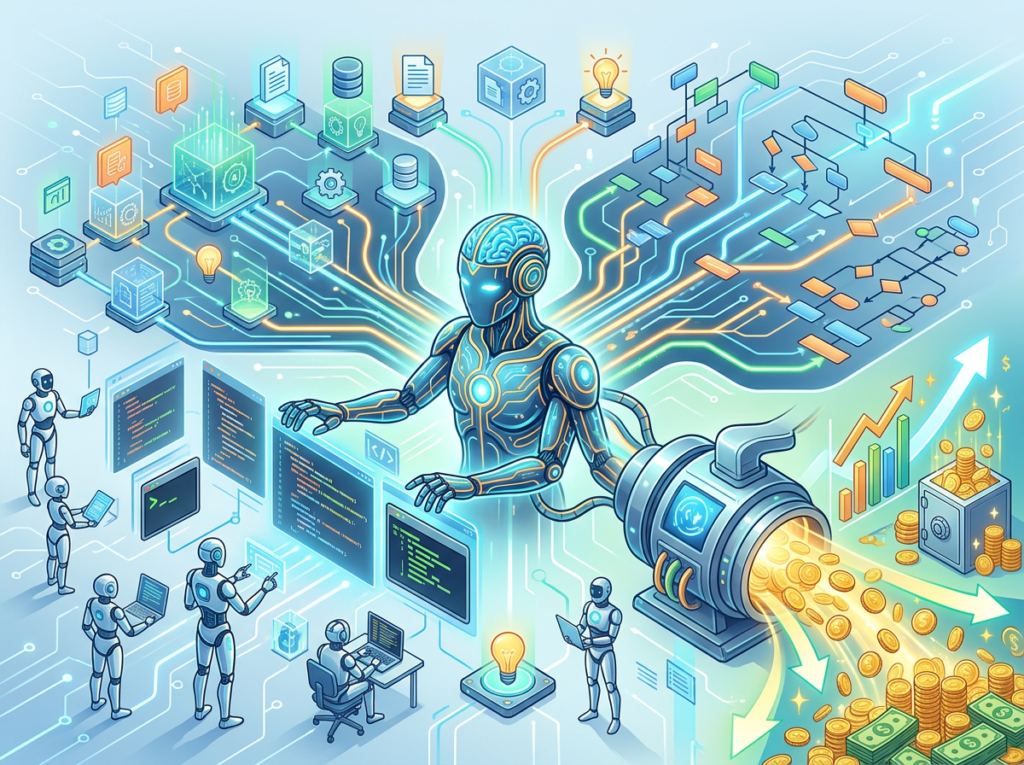
Claude Opus 4.5’s ability to hold extended context — and to be directed at uploaded documents, past conversation logs, and existing process materials — lets it function as an institutional memory layer for small teams. Ask it about a client project from six months ago, and it can synthesize across your notes. Ask it how your team handles a specific edge case, and it surfaces the relevant documented process.
For a 5-person US team, the alternative is paying a part-time operations coordinator at $40–$60/hour, 30 hours/week. Annual cost: $62,400–$93,600. Claude Opus 4.5 handles most of the same retrieval and synthesis functions at a fraction of that cost.
3. Template Automation and Repeatable Output: $6,000/Year Saved

Every US service business uses templates — client proposals, project briefs, status reports, invoices. Most of those templates are maintained inconsistently, customized ad hoc, and stored in someone’s local folder that no one else can find. Claude Opus 4.5 generates and maintains these templates as part of the broader documentation system, ensuring they’re current, accessible, and connected to the processes they support.
Outsourcing template creation and maintenance to a US freelance writer or ops consultant costs $500–$1,000/template/year in maintenance. For a team with 8–10 core templates, that’s $4,000–$10,000 annually. AI automation eliminates most of that cost.
You can see how Claude Opus 4.5 works across these four capability areas in the full feature breakdown.
Ready to systemize your US team operations in under a week? Try Claude Opus 4.5 Free | No credit card required | Trusted by 10,000+ US teams
Use Cases by Team Role
Persona 1: Maria, Startup Founder Juggling 3 Departments — San Francisco

Maria runs a 7-person SaaS startup in San Francisco. She’s CEO, head of product, and de facto customer success manager — because no one else on the team knows how to handle escalated client issues the way she does. She spends 3 hours every Monday morning doing work only she knows how to do.
Old workflow: Maria handles all client escalations personally. No documented escalation process exists. New customer success hires shadow her for three weeks before handling anything independently.
AI-powered workflow: Maria spends one afternoon describing her escalation decision process to Claude Opus 4.5 — the triggers, the response tiers, the language she uses, when to involve engineering. The AI generates a structured escalation SOP with decision trees. The CS team can now follow it without her involvement.
Quantified result: Maria recovers 12 hours per month of senior leadership time. At her market rate of $200/hour, that’s $2,400/month, or $28,800 annually. New CS hire onboarding drops from 3 weeks to 5 days.
Maria: “I finally have something I can hand someone and say — follow this. It’s exactly how I’d handle it, but I didn’t have to be in the room.”
As noted in this step-by-step breakdown of Claude Opus 4.5’s agentic capabilities, the model excels at multi-step reasoning tasks where the output needs to be both structured and contextually accurate — precisely what complex process documentation requires.
Persona 2: James, Executive Assistant Onboarding Remote Staff — Miami

James supports the founder of a 9-person e-commerce company in Miami. The team has grown from 3 to 9 people in 18 months, and every new hire requires James to personally walk them through systems, tools, and workflows — a process that now consumes 60% of his working hours during growth periods.
Old workflow: James creates informal onboarding guides in Google Docs that quickly go out of date. New hires complete onboarding, then immediately start asking questions that James has to answer individually.
AI-powered workflow: James uses Claude Opus 4.5 to convert his institutional knowledge into a comprehensive onboarding knowledge base. New hires interact directly with the AI assistant during their first week — asking questions, working through scenarios, and accessing documented processes without waiting for James to be available.
Quantified result: James reduces onboarding support time from 60% of capacity to 20%, freeing 16 hours/week for strategic EA work. For the company, time-to-productivity for new hires drops from 3 weeks to 8 days. Annual cost savings from reduced onboarding time: $14,400 across the team.
James: “New hires used to come to me with the same 15 questions. Now they get answers instantly, and they come to me with real problems.”
Persona 3: Aisha, Marketing Lead Standardizing Client Reporting — Chicago

Aisha manages a 3-person marketing team inside a 8-person Chicago agency. Every client gets a monthly report, but the format and quality varies depending on who writes it. Some reports take 4 hours; others take 2. Clients have started noticing the inconsistency.
Old workflow: Aisha personally reviews every monthly report before it goes out, spending 8 hours/month on QA that should be unnecessary if the process were standardized. Two team members produce reports using slightly different formats learned from different training sessions.
AI-powered workflow: Aisha uses Claude Opus 4.5 to document the ideal reporting process — what data goes in, how insights are framed, how recommendations are structured, what the visual format looks like. The AI generates a detailed reporting SOP and a templated framework the whole team follows.
Quantified result: Monthly report QA drops from 8 hours to 1.5 hours. Client satisfaction scores for reporting quality increase. Aisha redirects 78 hours annually from report review to client strategy. At a $90/hour blended agency rate, that’s $7,020 in recovered billable capacity per year.
Aisha: “I used to feel like I was the only person who knew what ‘good’ looked like. Now anyone on the team can produce a report that meets our standard.”
The Anthropic announcement for Claude Opus 4.5 highlights that the model excels at sustained reasoning and multi-step execution, with early users reporting meaningful improvements in complex workflow handling — which is exactly what structured process generation demands.
You can discover Claude Opus 4.5’s full capabilities including its specific workflow and documentation features in the detailed product overview.
Join 10,000+ US small teams using Claude Opus 4.5 to eliminate operational chaos. See How It Works | Used by teams from Silicon Valley to New York
Common Pitfalls & How to Avoid Them
Mistake 1: Using too many disconnected tools
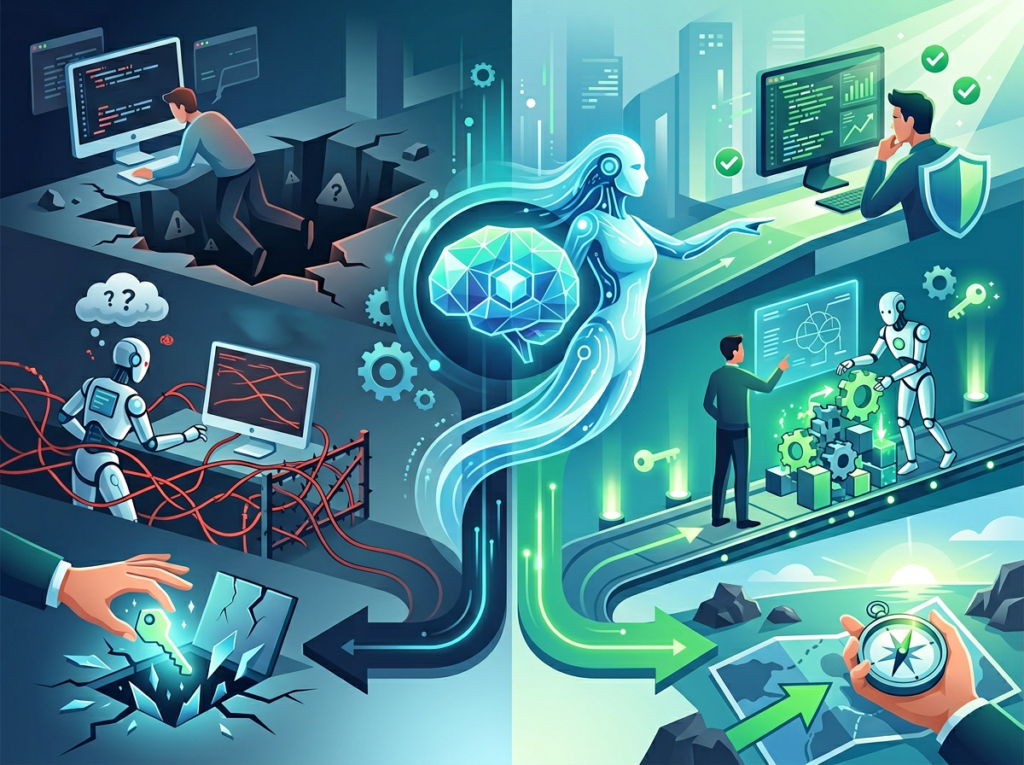
The average US small business uses 15–20 different software tools. Adding an AI assistant to a fragmented stack often makes things worse, not better — another inbox to check, another tool to remember. The fix: designate Claude Opus 4.5 as your primary knowledge and documentation interface. Feed it your existing process materials, and use it as the central reference point rather than adding it to an already-cluttered tool ecosystem. You can learn more about Claude Opus 4.5 integration options in the product overview.
Mistake 2: Delegating without documentation
Delegating a task to a team member without documented context is just creating a new single point of failure. Every delegation is an opportunity to capture a process. When handing off a recurring responsibility, spend 15 minutes with Claude Opus 4.5 generating a brief SOP before the handoff happens. This turns delegation from a liability into a compounding asset.
Mistake 3: Failing to review AI output
Claude Opus 4.5 produces high-quality structured documentation, but it doesn’t know your business the way you do. AI-generated SOPs should always be reviewed by someone with direct process experience before they’re used for training or operations. Treat AI output as a 90% solution that requires a human expert to close the last 10%.
As described in this resource on applying Claude Opus 4.5 to everyday work, the model’s ability to work with extended documents and structured reasoning makes it particularly effective for knowledge consolidation tasks.
Join 10,000+ US small teams using Claude Opus 4.5 to eliminate operational chaos. See How It Works
FAQs

What’s the difference between AI Efficiency and Solo DX?
AI Efficiency focuses on helping individual contributors move faster — automating tasks, reducing time per output, increasing personal productivity. Solo DX focuses on team-level operations — capturing, distributing, and standardizing knowledge so the team can execute consistently without constant founder intervention. They’re complementary but distinct categories.
Can small teams afford to use AI?
Claude Opus 4.5 is priced at $5 per million input tokens and $25 per million output tokens via API, and is available via subscription plans accessible to small business budgets. For most US small teams, the monthly subscription cost is recovered in the first day of documentation work alone — replacing thousands of dollars in consulting fees with hours of AI-assisted output.
Is Claude Opus 4.5 hard to set up?
No. Claude Opus 4.5 is accessible via claude.ai with no technical setup required for most Solo DX use cases. Teams using it for documentation, SOP generation, and knowledge management can begin producing output immediately without engineering resources or integration work.
Conclusion

In 2026, American small businesses don’t need enterprise budgets to build enterprise-level operational systems. The tools that were once available only to companies with dedicated ops staff — structured process documentation, institutional knowledge bases, consistent onboarding systems — are now within reach of any 3-to-10-person US team willing to spend a few afternoons on the work.
Claude Opus 4.5 is the most capable AI assistant for team productivity available today for this specific challenge. Its ability to reason through complex processes, generate structured documentation from conversational input, and function as an always-available knowledge reference makes it the right tool for the Solo DX use case. It doesn’t require you to learn new frameworks or hire new people. It requires you to describe how your business works — and it handles the rest.
The teams that build systems now will be the ones that can scale cleanly in 2027 and beyond. The ones that don’t will keep losing productivity to the same operational chaos, one Slack thread at a time.
Start with one process. The one that depends most on you being in the room. Systemize it this week. That’s how Solo DX begins — and where sustainable US team growth starts.
Get the full Claude Opus 4.5 review and feature comparison at AI Plaza before you start.
Leave a Reply