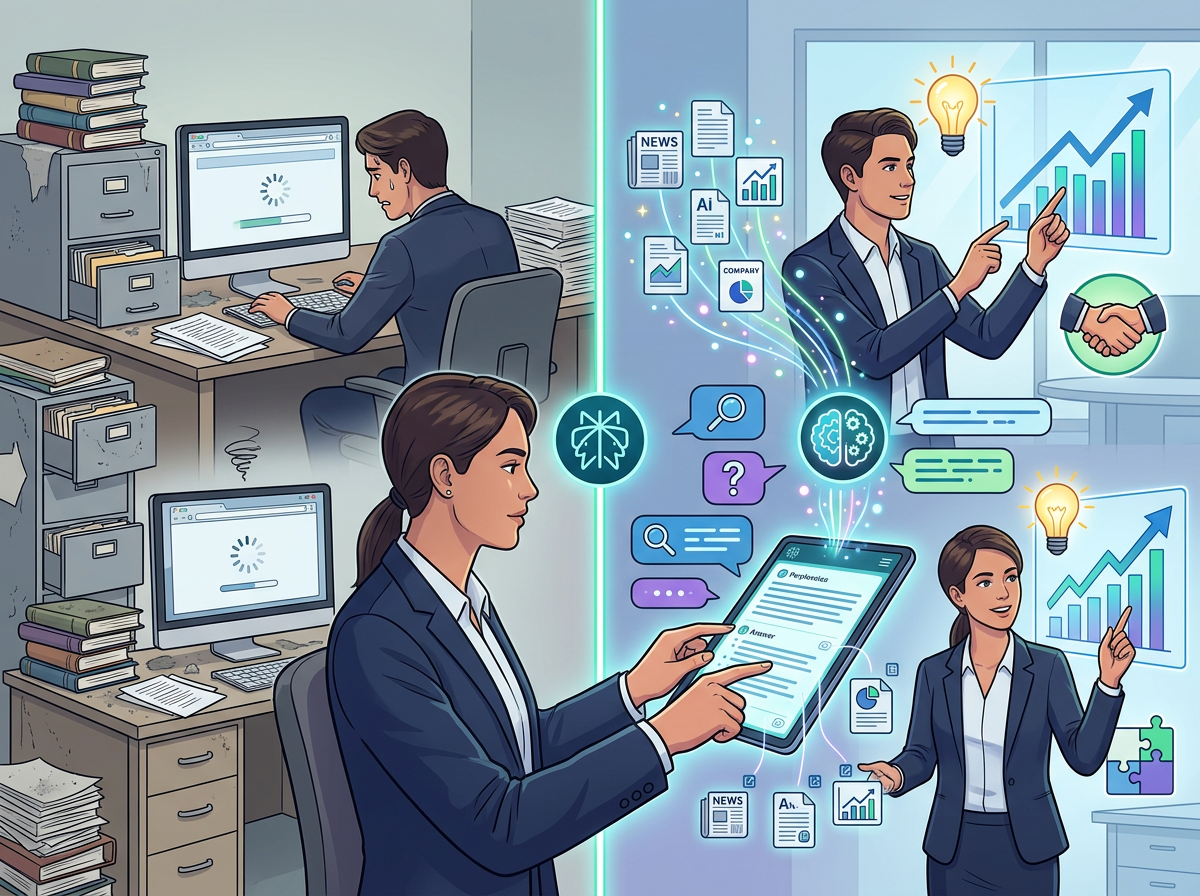
The fastest US small teams now use an ai search tool for business that delivers cited, decision-ready answers in seconds — not hours of tab-switching.
In 2026, the average American small business team spends more than 9 hours per week searching for information — pricing benchmarks, supplier comparisons, competitor moves, regulatory updates — across browser tabs, Slack threads, and half-remembered bookmarks. For a 5-person team billing at $75/hour, that’s over $1,700 in lost productivity every single week.
This is the bottleneck no one talks about: not execution, not talent, not even funding. It’s the cost of not being able to find the right answer fast enough to act on it.
The problem compounds when you’re scaling. Knowledge lives in the founder’s head. New hires ask the same questions twice. The team makes decisions on stale data because nobody had time to research properly. Remote teams across multiple time zones can’t afford to wait for a Slack reply to move forward.
Enter Perplexity AI — not just another chatbot, but a structured ai research assistant built for teams that need answers tied to real sources, updated in real time, and organized in ways that actually inform decisions.
Unlike traditional research methods that cost US businesses $5,000+ in billable labor hours per month, Perplexity AI compresses that cycle into minutes. The Pro plan runs $20/month — roughly the cost of one billable hour from an entry-level researcher — and it handles an entire team’s information workflow.
This review is written specifically for US-based founders, operators, and small teams in 2026 who are tired of spending more time finding information than acting on it. We’ll break down exactly how Perplexity AI enables what we call Solo DX — small-scale digital transformation — across real business roles, with quantified ROI in USD, so you can make an informed decision about adding it to your stack.
Learn more about Perplexity AI and start your free trial today.
What is Solo DX?
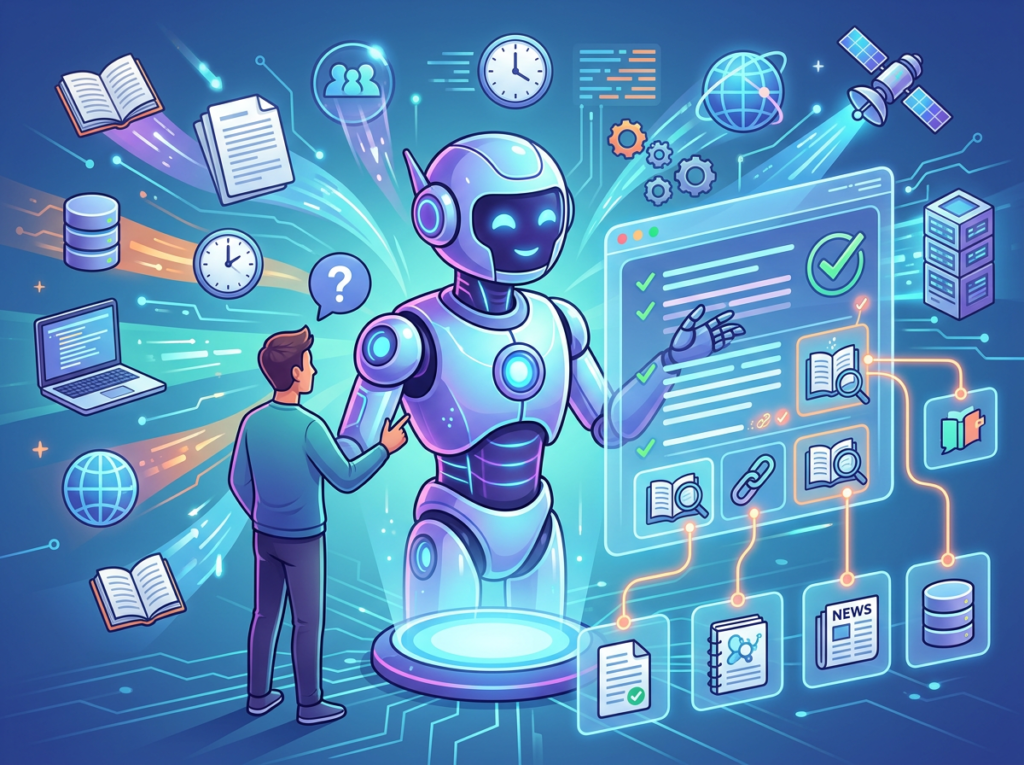
Solo DX stands for Small-Scale Digital Transformation — the process of building repeatable, AI-assisted workflows inside a growing US small business without a dedicated operations manager, IT department, or enterprise software budget.
It’s the answer to a specific problem: what happens when a business grows from 1 to 5 to 10 people and the systems that worked for a solo operator start breaking down? Suddenly, you need everyone to find information consistently, make decisions from shared data, and operate without the founder having to answer every question.
Traditional corporate approaches to this problem — formal SOPs, knowledge management consultants, enterprise search tools like Confluence — cost $10,000–$50,000 to implement and require dedicated staff to maintain. That’s not realistic for the Austin-based 4-person logistics consultancy or the Denver marketing agency with a team of six.
Solo DX is different. It focuses on three pillars:
- Information access — anyone on the team can find the right answer without waiting on the founder
- Decision quality — team members make choices based on current, cited data rather than assumption
- Operational consistency — the same question gets the same quality of answer regardless of who’s searching
| Approach | Time to Implement | Monthly Cost | Requires IT? |
|---|---|---|---|
| Enterprise Knowledge Tools | 3–6 months | $500–$5,000 | Yes |
| Manual SOPs + Docs | 2–4 weeks | $2,000+ labor | No |
| Solo DX with Perplexity AI | 1–3 days | $20–$40 | No |
A real example: a 3-person design studio in Austin was losing 6+ hours per week to competitive research — manually scanning competitor websites, pulling pricing benchmarks, and summarizing industry news. After adopting Perplexity AI as their primary ai search engine, that workflow dropped to under 90 minutes with more thorough output.
The key distinction between Solo DX and general productivity hacks is systemization. You’re not just saving individual minutes — you’re building a team-wide research infrastructure that scales with you. For a detailed breakdown of Perplexity AI and how it fits into a Solo DX stack, see the full tool profile.
What makes Perplexity AI a Solo DX tool rather than just a productivity app is this: every answer it returns is sourced, citeable, and structured for decisions — not just conversational replies. For small US teams operating without a research department, that distinction is worth thousands of dollars a month.
Learn more about Perplexity AI and start your free trial today.
Why AI is Key for Mini-Team Systemization
Problem 1: Knowledge lives only in the founder’s head
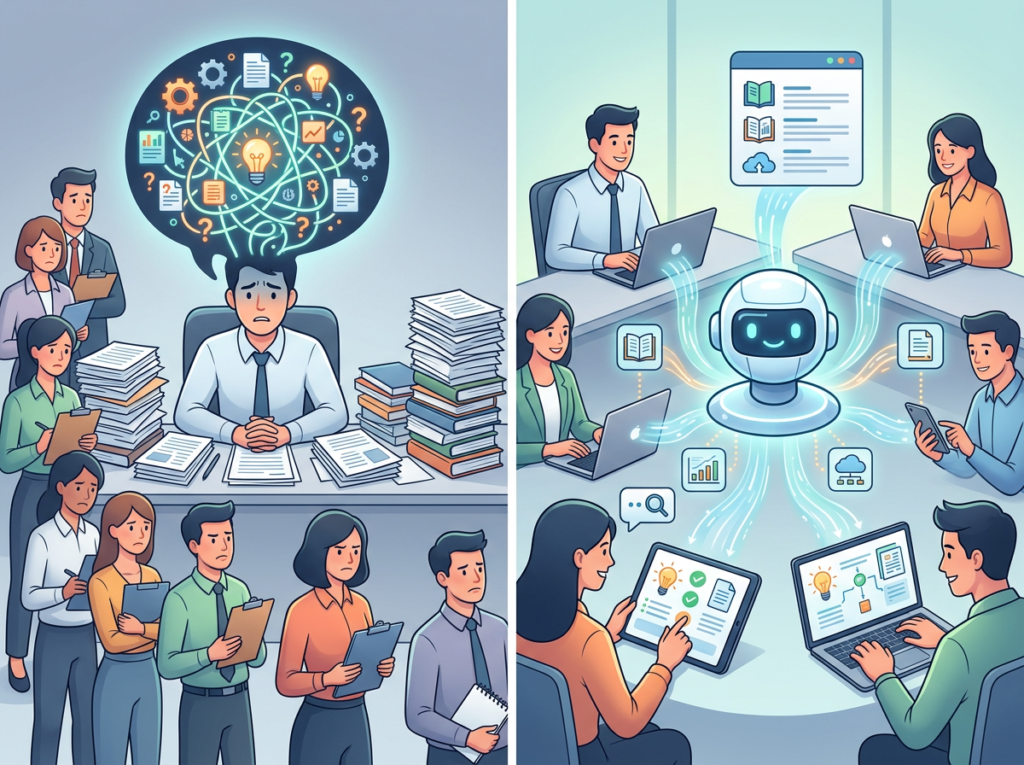
In most US small businesses under 10 people, 80% of institutional knowledge belongs to the founder or a single senior team member. When that person is unavailable — in a client meeting, traveling, or simply overwhelmed — the team stalls. They make decisions on old data, escalate unnecessarily, or simply don’t act.
The manual fix is documentation — but creating and maintaining a living knowledge base costs real money. At US labor rates of $50–$100/hour, producing a thorough research report or competitive analysis takes 3–6 hours of skilled work. Multiply that across the 15–20 decisions a typical small team makes each month, and you’re looking at $2,250–$12,000 in monthly research labor.
Problem 2: New hires slow operations down
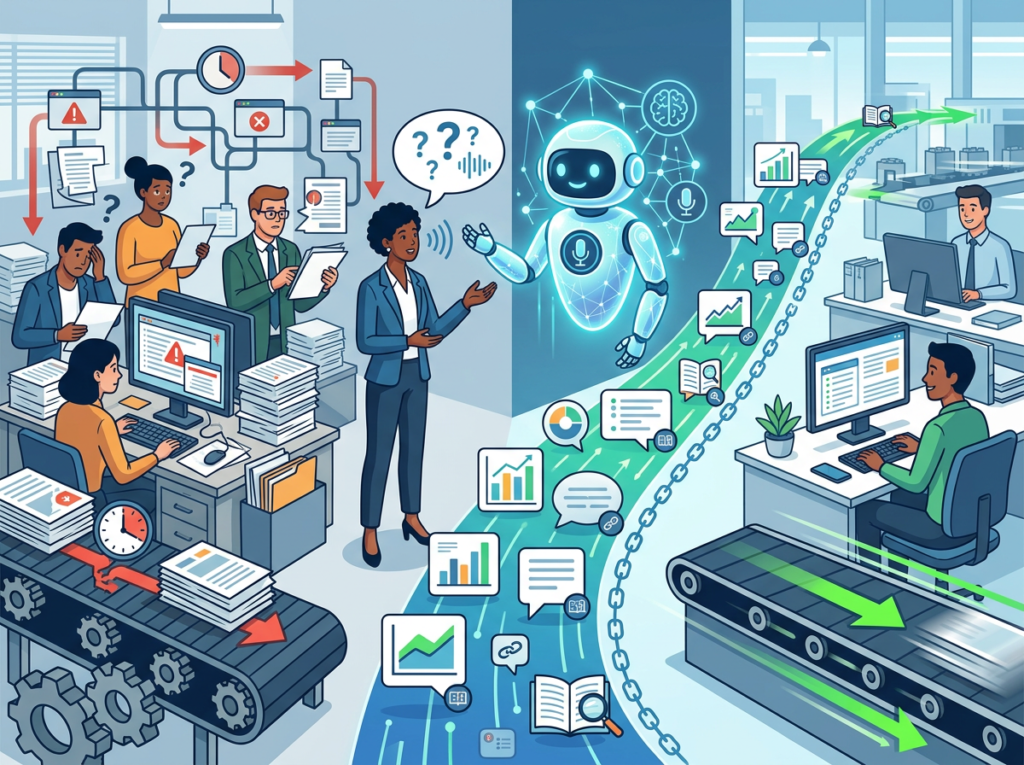
The US labor market has normalized high turnover — industry averages hover around 47% annually for small businesses. Every new hire needs to get up to speed on market context, competitive landscape, vendor options, and industry norms. Without a systematic way to find that information, onboarding stretches from days to weeks, and founders end up becoming the onboarding process themselves.
Problem 3: Decision quality varies across team members
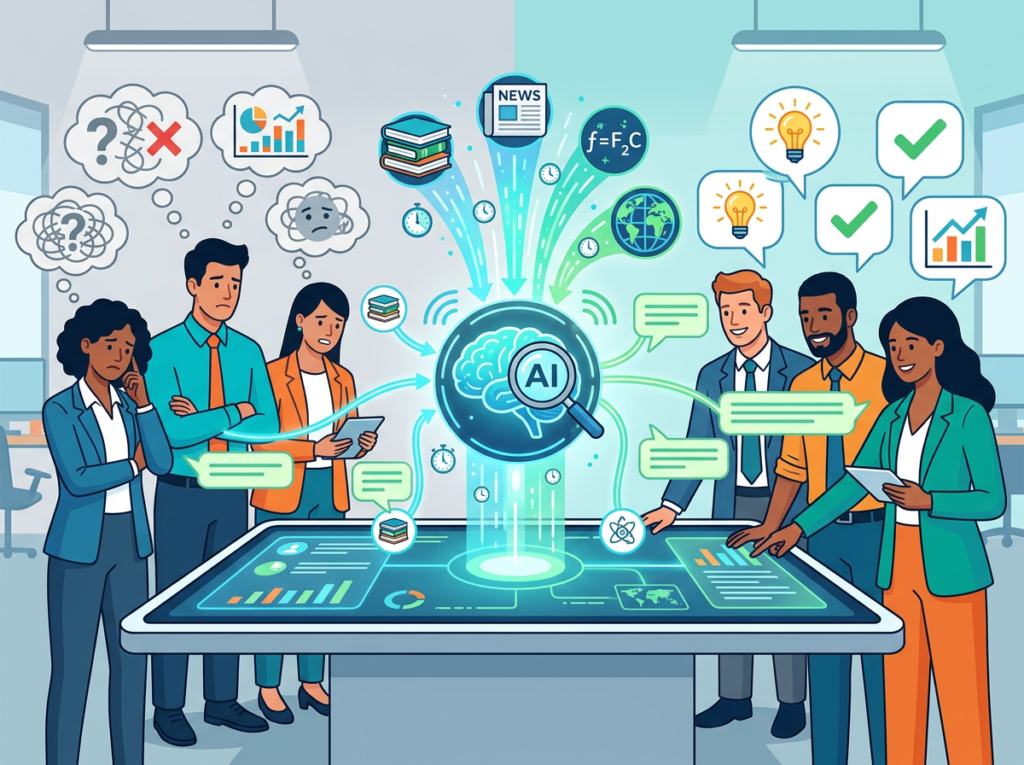
When Sarah finds a competitor’s pricing by browsing their website and James finds different pricing via a blog post from two years ago, the team is making decisions from inconsistent data. This is especially damaging in fast-moving markets — tech, media, ecommerce, services — where pricing, regulations, and competitive positioning shift monthly.
What AI-assisted research actually changes:
The cost-benefit calculation for ai productivity tools for teams flips dramatically when you factor in speed and consistency. A task that requires 4 hours of manual research — pulling sources, cross-referencing, summarizing, citing — can be accomplished with Perplexity AI in 15–25 minutes with equivalent or superior output quality.
For a 5-person US team:
- Manual research: $75/hour × 4 hours × 3 research tasks/week = $3,600/week
- Perplexity AI-assisted: 25 minutes × 3 tasks = 75 minutes at $20/month subscription
The ROI isn’t marginal — it’s structural. And unlike enterprise research tools that require IT setup and training programs, best ai search tools in 2026 like Perplexity deploy in under an hour.
The broader context matters too: as noted in this walkthrough of Perplexity’s capabilities, the tool functions as far more than a search engine — it’s a full research automation platform with integrations, dashboard capabilities, and workflow automation that most small teams never fully leverage.
How Perplexity AI Enables Solo DX
Feature 1: Real-Time Search with Cited Sources to $2,000+ saved per research cycle

Every Perplexity response pulls from live web sources and returns direct citations alongside the answer. For US business teams making vendor, pricing, or competitive decisions, this eliminates the biggest risk of AI-assisted research: hallucinated or outdated information.
A typical competitive analysis that a founder or EA might spend 4–5 hours assembling manually — scanning competitor sites, pulling review data, summarizing pricing structures — takes 20–30 minutes with Perplexity at equivalent quality. At $75/hour US labor, that’s $300–$375 saved per cycle. Run that 6–8 times per month across a team of five, and you’re saving $1,800–$3,000 monthly.
For teams evaluating vendors, monitoring regulatory changes, or tracking market trends, the cited-source format also means the output is immediately usable in presentations and reports — no secondary verification step required.
Feature 2: Spaces and Collections for Team Knowledge to $9,360 annually saved
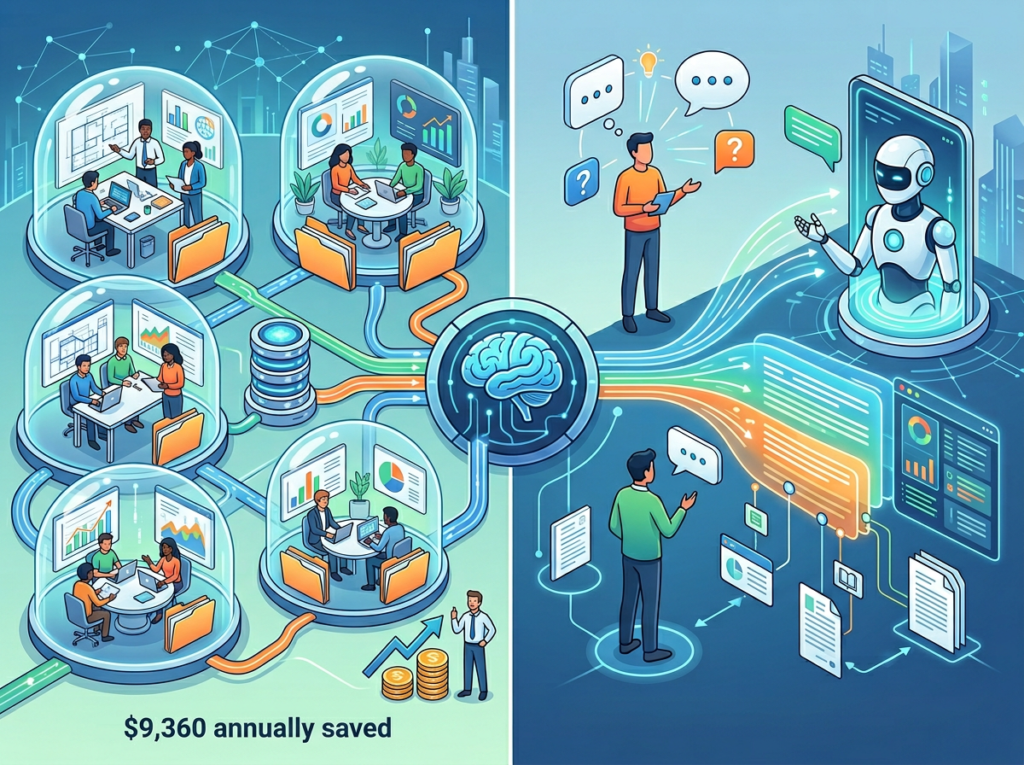
Perplexity’s Spaces feature allows teams to create shared research environments — essentially lightweight knowledge bases where search threads, summaries, and source collections are organized by project or client. For a 3-person consulting team juggling 5–8 active clients, this replaces ad-hoc Slack threads and shared Google Docs folders as the primary research layer.
The time savings here compound. Instead of a new team member or junior hire spending 2–3 hours re-researching context a senior team member already found, they access the Space and get up to speed in 15 minutes. At US rates, that’s a saving of $112–$225 per onboarding event. For teams that onboard 3–4 people per year with moderate turnover, that’s $1,344–$3,600 in recaptured onboarding cost — plus the harder-to-quantify benefit of decisions made on consistent information.
The estimated annual savings assumes a team member currently spending 5 hours/month on deep research that Pro Search compresses to 1.5 hours. At $75/hour: $262.50 saved per month × 12 months = $3,150/year per team member using Pro Search monthly.
Feature 3: Perplexity Pages for Structured Deliverables to $78,000–$124,800 annual savings

Perplexity Pages allows users to generate structured, document-style reports directly from research threads — formatted for sharing with clients, stakeholders, or team members. For consulting firms, marketing agencies, and client-service businesses, this compresses what used to be a 3–4 hour “research-to-report” workflow into under 30 minutes.
For a 5-person agency producing 4 client research deliverables per month at $150/hour billed labor, eliminating 3 hours of research time per deliverable saves $1,800/month in recaptured team capacity — or $21,600/year if that time is redirected to billable work.
Ready to systemize your US team’s research workflow in under a week? Try Perplexity AI Free | No credit card required | See how Perplexity AI works for US small business teams
Use Cases by Team Role
Maria, Startup Founder Juggling 3 Departments — San Francisco

Old workflow: Maria, co-founder of a 6-person SaaS company in San Francisco, was spending 8+ hours per week pulling competitive intelligence manually. She’d open 12 browser tabs, scan competitor pricing pages, read G2 review threads, and compile notes into a shared doc — a process that was inconsistent, slow, and produced reports that were outdated within two weeks.
AI-powered workflow: Maria uses Perplexity’s Pro Search with a Focus Mode set to web + academic sources. She runs a single query — “current pricing and review sentiment for [competitor] in US SMB market” — and gets a cited, multi-source summary in under 3 minutes. She saves the thread to a Space shared with her co-founder and marketing lead. Monthly competitive reports that took 8 hours now take 45 minutes.
Quantified result: 7.25 hours saved per week × $125/hour founder rate = $906/week, or $47,000+ annually in recaptured high-value founder time.
Maria says: “I stopped dreading competitive analysis. Now it’s the first 45 minutes of my Monday, not an all-day thing I kept postponing.”
James, Executive Assistant Onboarding Remote Staff — Miami

Old workflow: James supports a 9-person consulting firm in Miami where new hires used to spend their first two weeks asking James the same questions: what vendors do we use, what are their pricing structures, what’s our current competitive landscape, how do we handle client research requests. James had no central knowledge source — just memory and a 47-page Google Doc nobody kept updated.
AI-powered workflow: James built a Perplexity Space for each major practice area the firm covers. When a new hire joins, James shares the relevant Spaces. Questions that used to require a 30-minute call with a senior consultant are answered by running a search in the Space in under 5 minutes. James also uses Perplexity to generate vendor comparison summaries on demand — a task that previously took 3–4 hours per vendor evaluation.
Quantified result: Onboarding time per new hire reduced from 10 days to 4 days. At a blended team rate of $85/hour and 6 productive hours per day: 6 days × 6 hours × $85 = $3,060 saved per onboarding × 4 hires per year = $12,240 annually.
James says: “New hires stop interrupting the partners in week one. That alone is worth the subscription cost ten times over.”
Robert, Internal Trainer Documenting Knowledge — New York

Old workflow: Robert runs internal knowledge management for a 12-person professional services firm in New York. Building training materials required him to research industry standards, then manually write, edit, and format documents — a process that took 20+ hours per training module.
AI-powered workflow: Robert uses Perplexity to research each training topic end-to-end — pulling cited industry standards, regulatory requirements, and best practice frameworks — then uses the structured summaries as the source material for module creation. He also uses Perplexity Pages to generate first-draft training documents directly from research threads, which he then edits and formats. Time per module dropped from 20 hours to 6 hours.
Quantified result: 14 hours saved per module × 8 modules per year × $95/hour = $10,640 annually in labor savings, plus faster time-to-deployment for new team training.
Robert says: “The research quality is actually higher than what I was producing manually because Perplexity pulls from primary sources I wouldn’t have found in a regular Google search.”
For a deeper look at the feature set powering these workflows, the full Perplexity AI review on AI Plaza covers pricing tiers, integration options, and team deployment guidance.
Join 10,000+ US small teams using Perplexity AI to eliminate research bottlenecks. See How It Works | Used by teams from Silicon Valley to New York
Common Pitfalls & How to Avoid Them
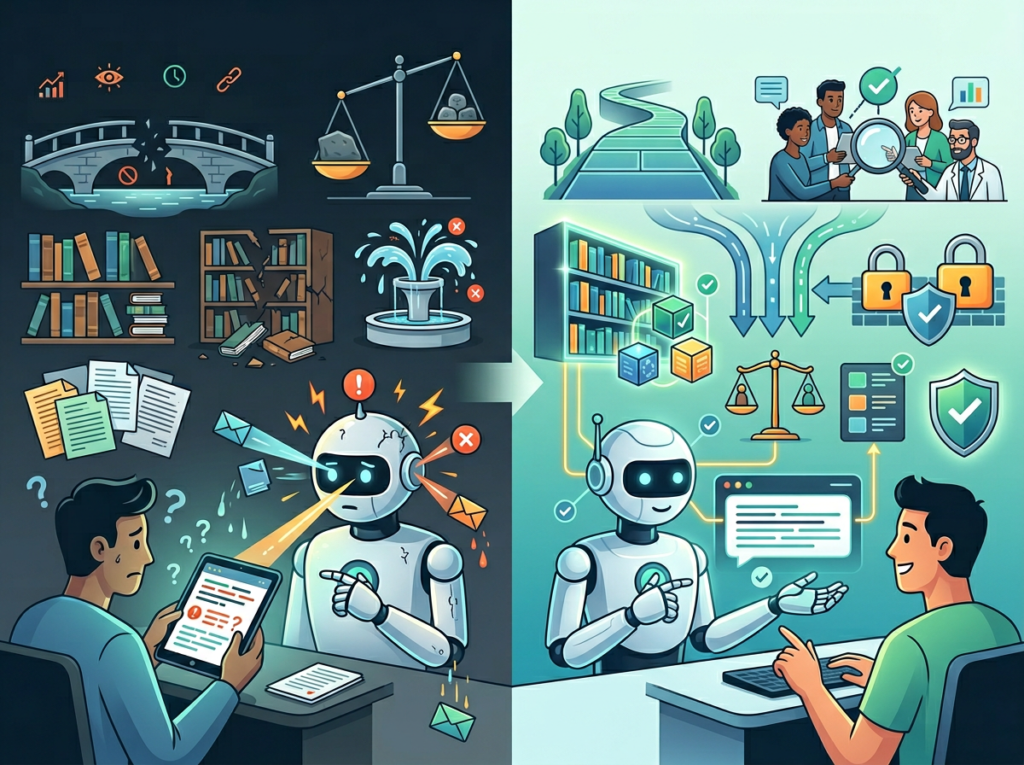
Mistake 1: Using Perplexity alongside 5 other disconnected tools
The efficiency gains from Perplexity evaporate if the output gets pasted into a Slack thread, mentioned in a meeting, and then lost. Teams that see the biggest ROI designate Perplexity Spaces as the single source of truth for research — not one of seven places information might live. Set a team norm: research lives in the Space, not in your inbox.
Mistake 2: Failing to verify AI output on high-stakes decisions
Perplexity cites its sources, which makes verification dramatically easier than with other AI tools. But for decisions involving contracts, regulatory compliance, or financial commitments, the citations should be clicked and verified — not just trusted. Build this into your workflow explicitly: for any research that will directly inform a business decision over $5,000, one team member spot-checks three primary sources. As detailed in this guide to Perplexity’s capabilities, the tool’s source transparency is one of its core differentiators — use it.
Mistake 3: Over-relying on Slack and email as the knowledge layer
The most expensive mistake small US teams make is treating Slack and email as their knowledge base. Messages disappear, context is lost, and new hires have no way to access institutional research. Perplexity Spaces solve this — but only if the team commits to saving research there rather than in DM threads. Set a rule: if you searched for something that will matter in two weeks, it goes in the Space.
For teams ready to avoid these pitfalls from day one, explore Perplexity AI’s features and use the setup checklist in the full tool profile to deploy correctly.
FAQs

What’s the difference between AI Efficiency and Solo DX?
AI Efficiency focuses on doing existing tasks faster — writing emails quicker, summarizing documents, automating individual steps. Solo DX is about building systems: repeatable workflows that allow a team to operate consistently without the founder’s constant involvement. Perplexity AI supports both, but its highest value in the Solo DX context is as the research infrastructure underneath every team decision.
Can small teams afford to use AI?
Perplexity AI’s Pro plan costs $20/month per user. For a 5-person US team, that’s $100/month — less than two billable hours at average US contractor rates. The ROI question isn’t whether small teams can afford AI tools; it’s whether they can afford not to use them when competitors are. Most teams that deploy Perplexity systematically report recouping the subscription cost within the first week of use.
Is Perplexity AI hard to set up?
No. The core product requires no installation, no IT support, and no training beyond an hour of onboarding. Team Spaces can be created and shared in under 15 minutes. The complexity ceiling is low enough that a 3-person team with no technical background can deploy Perplexity AI as their team research tool in an afternoon.
Learn more about Perplexity AI and start your free trial today.
Conclusion
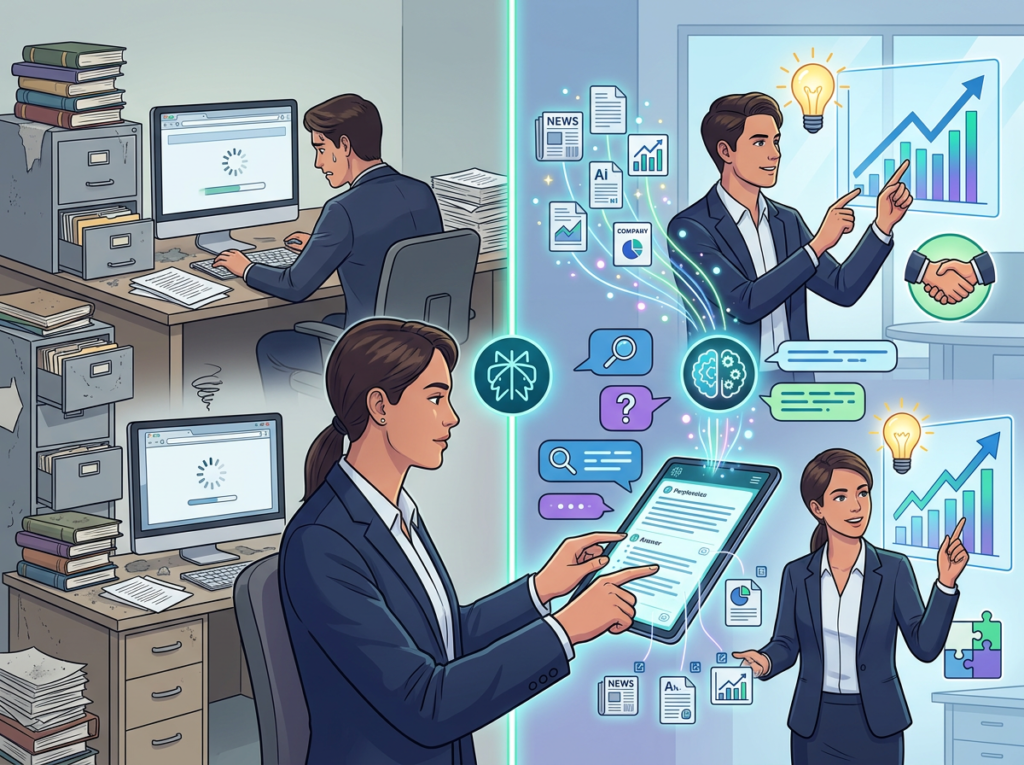
In 2026, American small businesses don’t need enterprise budgets to build enterprise-level research capabilities. The ai search tool for business gap that used to separate 50-person companies from 5-person teams has closed — and Perplexity AI is one of the primary reasons why.
The Solo DX value proposition is simple: stop losing $3,000–$10,000 per month in research labor and decision-making delays, and replace that cost with a $20/month subscription and a few hours of team setup. The ROI isn’t theoretical — it’s measurable in hours recaptured, decisions accelerated, and onboarding compressed.
The teams getting the most out of Perplexity AI in 2026 share one trait: they treated it as infrastructure, not a novelty. They built Spaces, established prompt conventions, and committed to research living in one place. Start with one process — competitive monitoring, vendor evaluation, or client research briefs — and systemize it this week.
The research bottleneck is solvable. And at $20/month, it’s the highest-ROI infrastructure investment most small US teams will make this year.
Learn more about Perplexity AI and start your free trial today.
Leave a Reply