Most small teams don’t lose deals or miss deadlines because of bad strategy — they lose them because critical meeting decisions never make it into a system.
It starts the same way for almost every US small business that scales past five people. The founder remembers every decision from every call. The team assumes someone else took notes. Slack fills up with half-remembered action items. A new hire asks what was decided in last Tuesday’s product meeting, and the honest answer is: nobody’s sure.
In 2026, this isn’t a knowledge problem — it’s a systems problem. And it’s costing American small businesses more than they realize. At an average US labor rate of $65–$85 per hour for knowledge workers, a 10-person team that spends even one hour per week reconstructing meeting context is burning roughly $33,000–$44,000 annually on preventable chaos.
The remote work culture that exploded post-2020 made this worse. Teams now span San Francisco to Chicago to Miami. Meetings happen across time zones, platforms, and departments. Zoom calls replace hallway conversations. But the old problem — valuable information disappearing after the call ends — got bigger, not smaller.
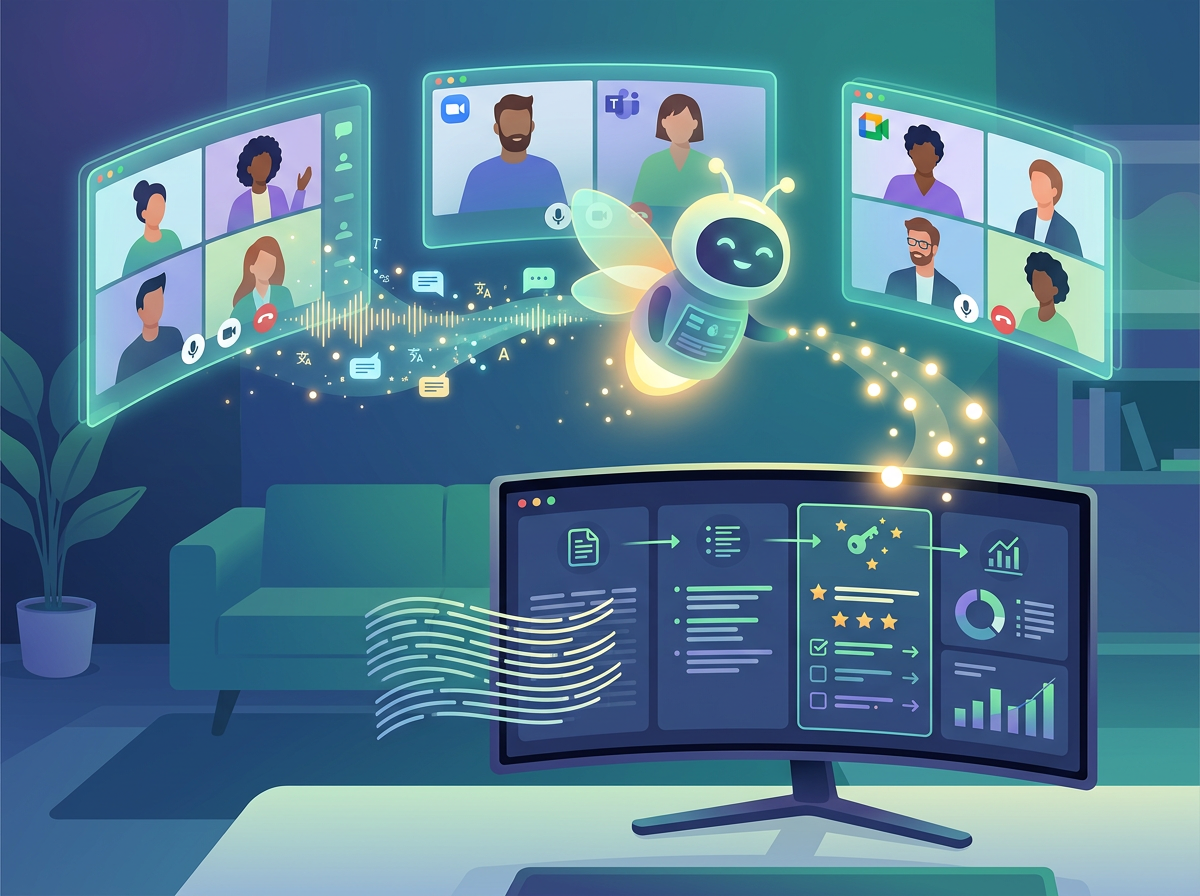
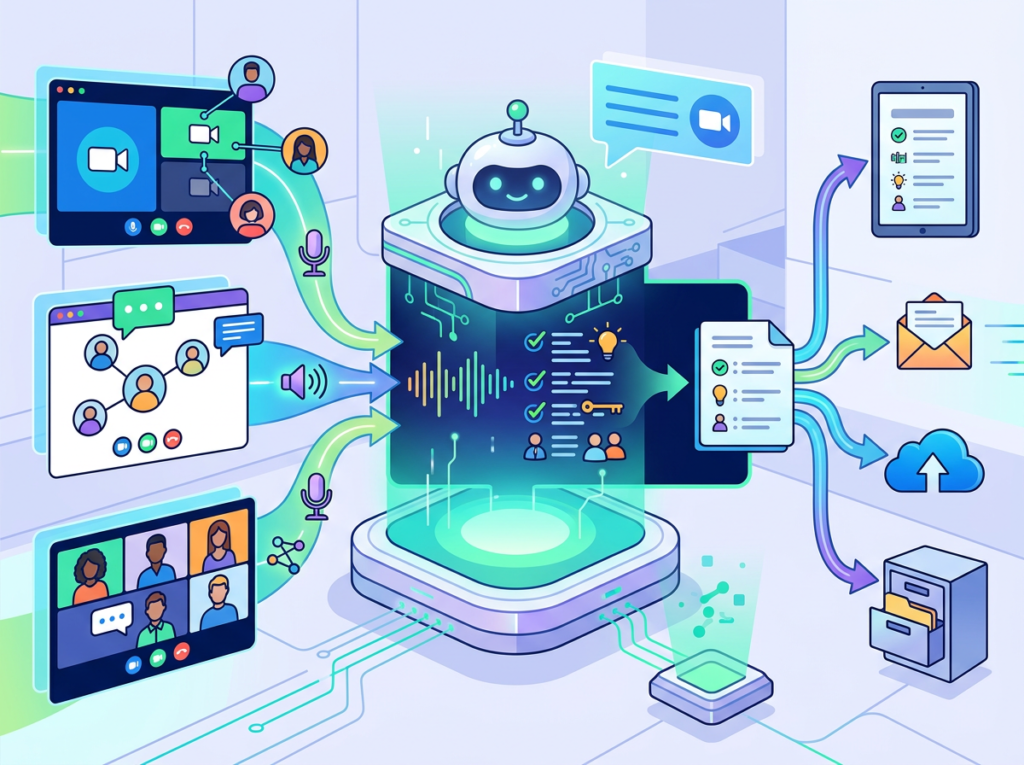
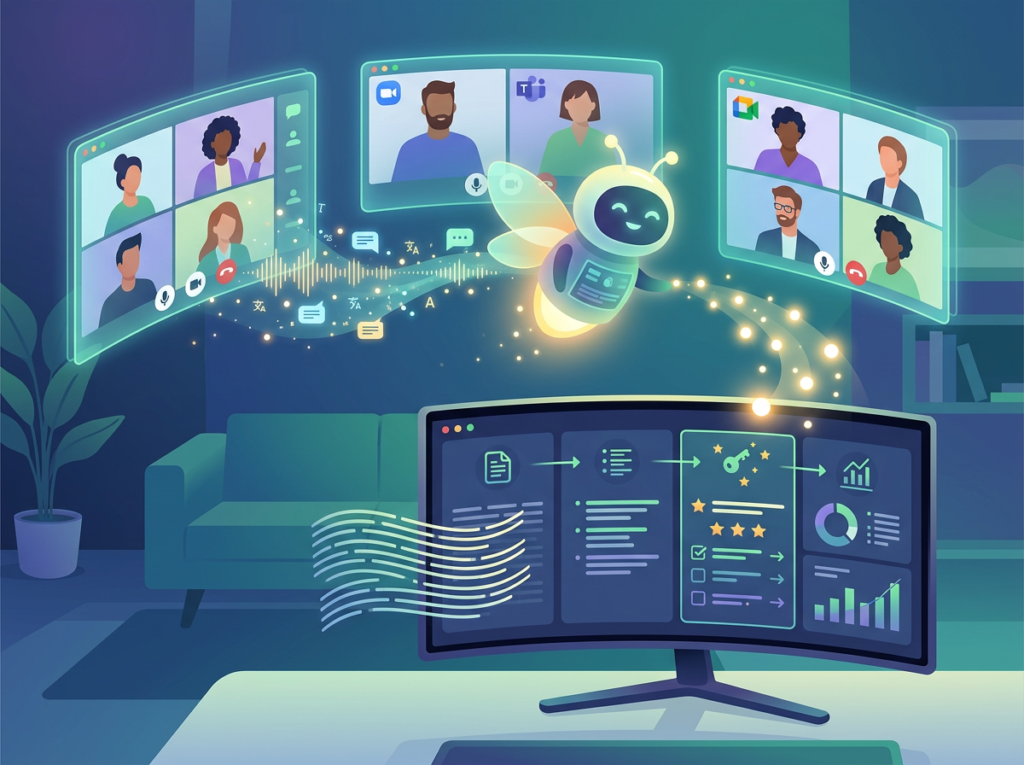
This is exactly where Fireflies AI enters the picture. Unlike generic note-taking apps that require human effort to maintain, Fireflies operates as a true AI meeting assistant: it joins your calls automatically, transcribes everything in real time, generates structured summaries, extracts action items, and makes every conversation searchable across your entire organization.
Unlike traditional documentation approaches — which can cost $5,000 or more in US labor to set up a basic knowledge capture system — Fireflies starts at $0 and can be running in under 10 minutes.
This guide walks through exactly how US small teams are using Fireflies to convert their meetings from time sinks into operational assets, with real workflows, quantified outcomes, and practical implementation advice.
Get the full Fireflies review and feature comparison on AI Plaza before you commit to a plan.
What is Solo DX?
Solo DX — short for Small-Scale Digital Transformation — is the operating category for US founders who have moved past the solo hustle and are now running a real team. You have 3–15 people. You’re past survival mode. But you’re not yet at the size where you can afford an operations manager, a chief of staff, or an enterprise software suite.
Solo DX describes the inflection point where your business stops scaling on founder memory and starts scaling on documented systems.
| Category | Focus | Best For |
|---|---|---|
| AI Efficiency | Automate repetitive individual tasks | Solopreneurs, 1-person teams |
| Solo DX | Build repeatable team systems with AI | 3–15 person US small teams |
| AI Revenue Boost | Use AI to grow top-line revenue | Sales-focused teams |
| AI Workflows | Integrate AI across existing tools | Operations-heavy teams |
Most corporate SOP frameworks — ISO documentation, enterprise playbook systems, formal knowledge management platforms — were designed for companies with dedicated ops staff and compliance budgets. They fail for US small businesses because they require too much upfront labor to build and too much ongoing maintenance to sustain.
Solo DX takes a different approach: use AI to capture institutional knowledge as it’s naturally created, then make it retrievable and replicable without extra effort from the team.
Consider a 4-person design studio in Austin, Texas. The founder, creative director, and two client-facing designers are on four to six video calls per day. Decisions about scope, revision timelines, client preferences, and creative direction happen in those calls. Without a capture system, those decisions live in the founder’s memory — right up until the moment the founder takes a vacation, a key hire leaves, or the team doubles in size.
With Fireflies operating as the team’s AI meeting assistant, every call is automatically transcribed, summarized, and logged. The creative director can search “logo revision — client Apex Tech” and pull up the exact conversation from three weeks ago. New hires onboard against real call records, not vague tribal knowledge.
Explore Fireflies’ features on AI Plaza to see how this tool fits the Solo DX framework for growing US teams.
Why AI is Key for Mini-Team Systemization
Problem 1: Knowledge Lives Only in the Founder’s Head
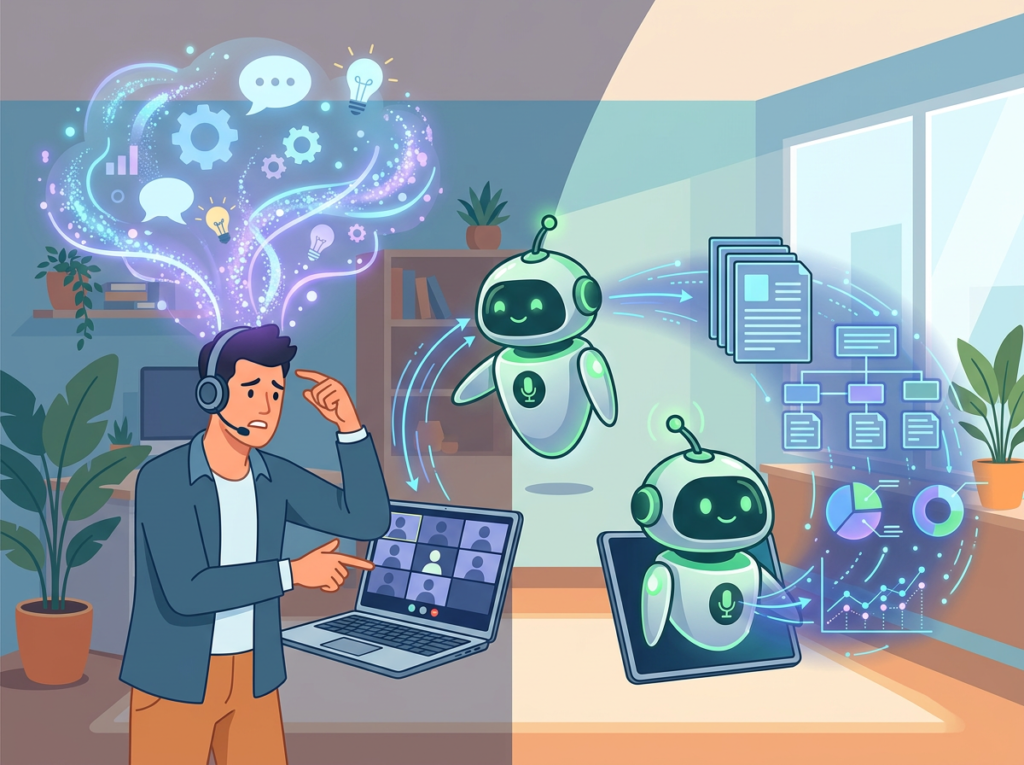
In the early days, founder memory is a feature, not a bug. The founder knows every client, every preference, every internal shortcut. But as the team grows, this becomes a single point of failure. When the founder is unavailable, the team stalls. When a key early employee leaves — and at US labor turnover rates hovering near 47% annually in knowledge work, they will leave — institutional knowledge walks out the door with them.
The cost isn’t just inconvenience. Replacing a mid-level knowledge worker costs an estimated 50–200% of their annual salary in recruiting, training, and lost productivity. For a $70,000 annual salary role, that’s $35,000–$140,000 per departure. Teams that have documented systems consistently report 40–60% faster onboarding and materially lower turnover-related costs.
Problem 2: New Hires Slow Down Operations
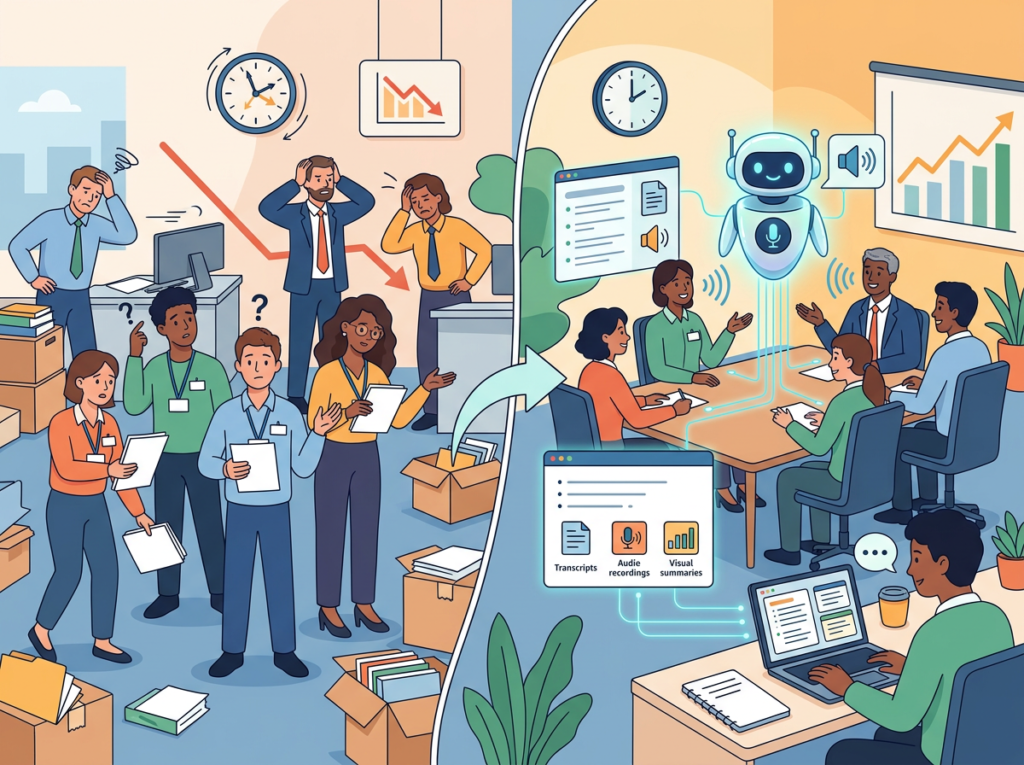
The standard US small business onboarding process is informal. New hires shadow experienced team members, ask questions that get answered differently each time, and spend weeks piecing together context that should have been documented months ago. A 2026 survey of US SMBs found that the average new hire takes 3–6 weeks to reach full productivity without structured onboarding materials — a period that costs roughly $4,000–$8,000 in lost output per hire.
AI meeting transcription changes this equation. When every client call, project kickoff, and internal discussion is logged and searchable, new hires can self-onboard against real institutional knowledge rather than relying on whoever happens to be available.
Problem 3: Quality Varies Across Team Members
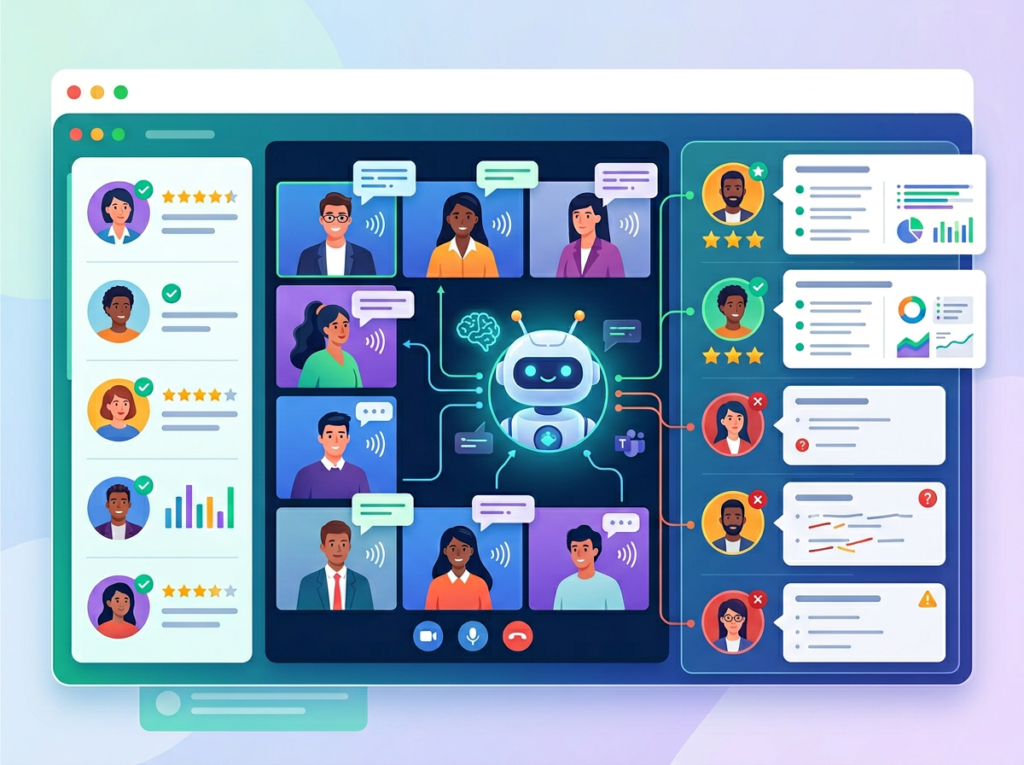
Without standardized processes, output quality becomes person-dependent. One account manager runs exceptional client calls; another leaves clients confused. One developer follows a consistent deployment checklist; another improvises. This variation is invisible until a client complains or a mistake escalates.
The fix isn’t micromanagement — it’s documentation. Teams that capture and systematize their best practices see measurable quality improvements within 30–60 days of implementation. AI meeting tools make that capture automatic rather than aspirational.
The Cost Reality:
- Manual documentation approach: $5,000–$15,000 in US labor to build a basic knowledge base from scratch
- AI-assisted approach with Fireflies: Operational in under a week, starting at $0 on the free plan or $10–$19/user/month on paid tiers
Get the full Fireflies review and feature comparison on AI Plaza before you commit to a plan.
How Fireflies AI Enables Solo DX
1. Automatic Meeting Transcription and AI Summaries
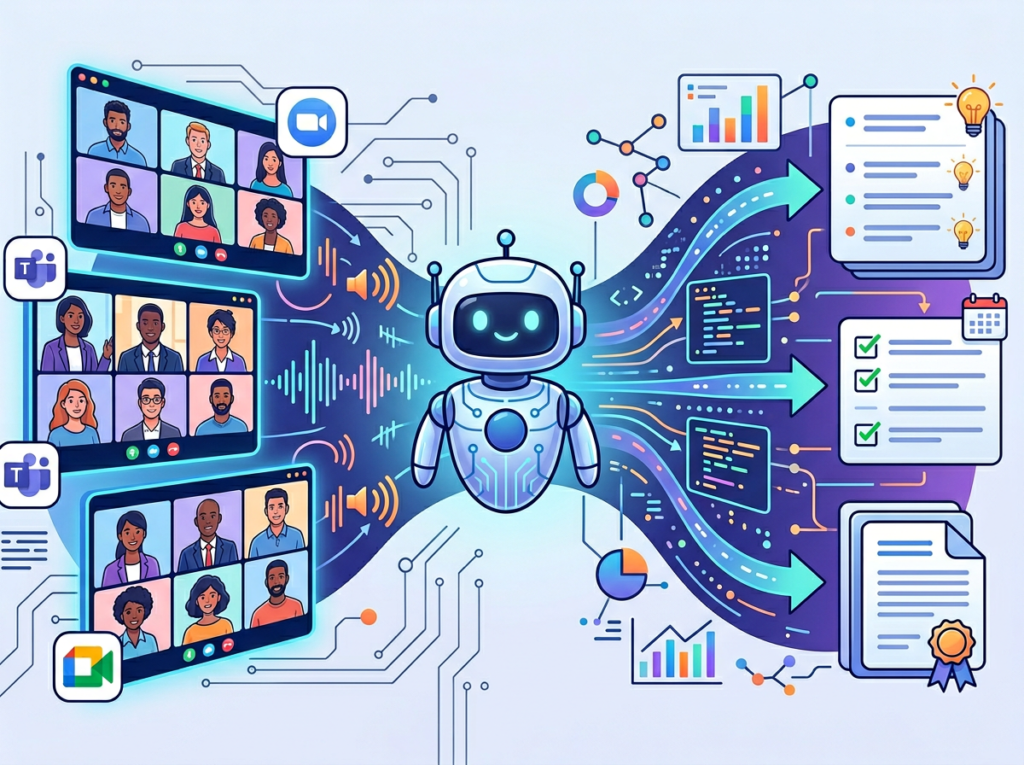
Every meeting Fireflies joins — Zoom, Google Meet, Microsoft Teams, Webex, and 10+ other platforms — is automatically recorded, transcribed at over 90% accuracy across multiple languages, and summarized within minutes of the call ending.
The summary isn’t a raw transcript dump. Fireflies structures output into key decisions, action items, questions raised, and next steps — organized consistently across every call type. For a 10-person US team averaging 8 hours of meetings weekly, this eliminates approximately 3–5 hours of manual note-taking and summary writing per week.
At $65/hour average US knowledge worker cost, that’s $9,360–$15,600 recovered annually for a single 10-person team.
2. Searchable Meeting Intelligence
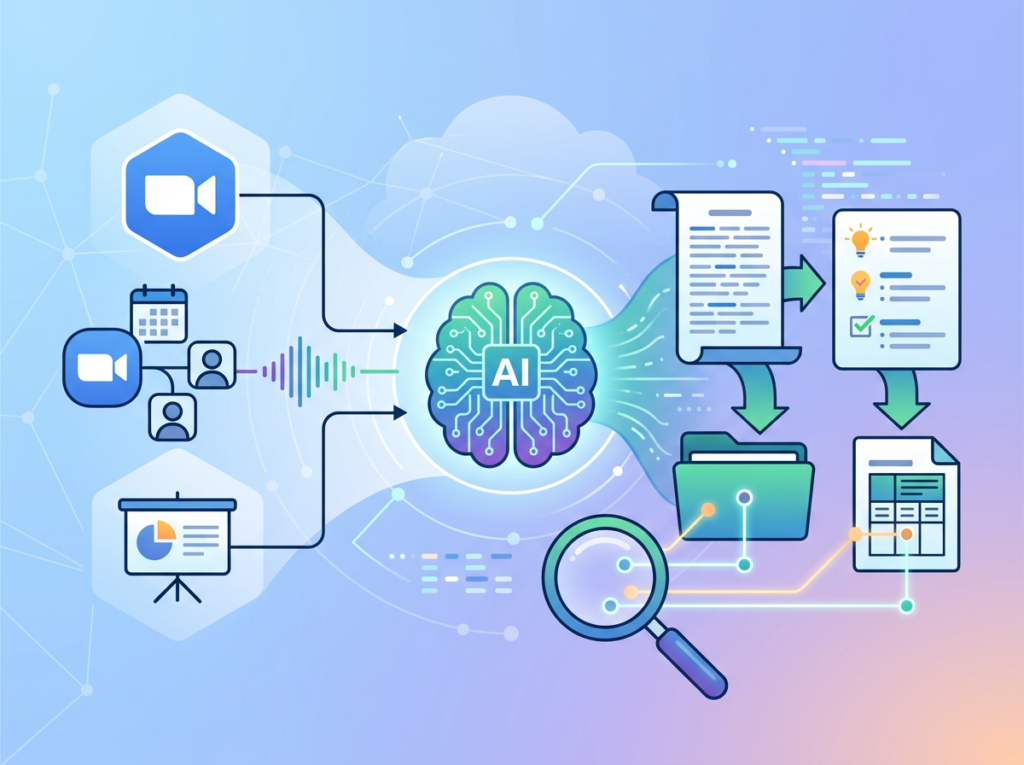
Fireflies builds a searchable database of every conversation your team has ever recorded. Search “pricing objection — enterprise clients” and pull every relevant moment across six months of sales calls. Search “delay — Acme project” and surface the exact meeting where scope creep was first flagged.
This converts meetings from ephemeral events into organizational memory. The practical impact for US small teams: less time spent hunting for context before follow-up calls, faster decision-making, and dramatically reduced “wait, what did we decide?” moments.
Teams using Fireflies’ Smart Search report reviewing hour-long calls in under five minutes — a 12x reduction in review time.
3. Topic Trackers and Conversation Analytics
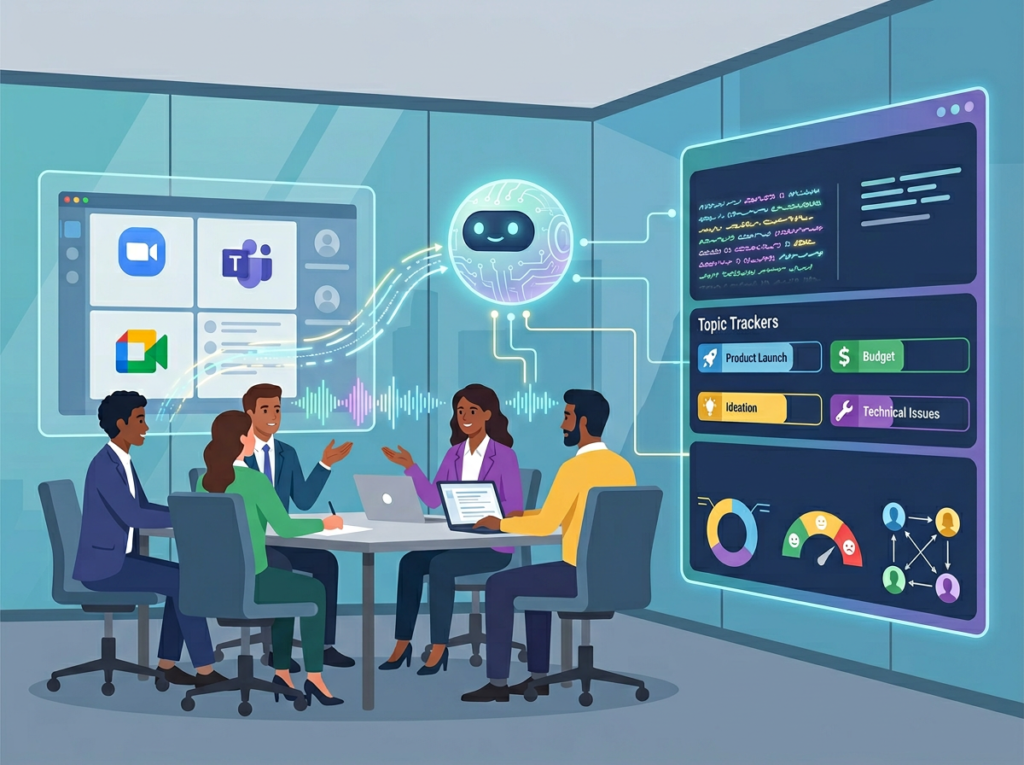
Fireflies lets you define custom topics — competitor names, objection types, pricing signals, compliance phrases — and automatically flags every time those topics surface across all recorded meetings. For a Denver-based SaaS startup tracking competitive mentions across their sales calls, this turns 200 hours of recorded conversations into structured competitive intelligence without a dedicated analyst.
Conversation analytics surface talk-to-listen ratios, silence duration, sentiment scores, and speaker statistics — giving US team leads actionable coaching data without manual review.
See how Fireflies works for US small teams in our full platform breakdown.
Ready to systemize your US team’s meeting knowledge in under a week? Try Fireflies Free | No credit card required | Trusted by 3M+ users across US teams
Use Cases by Team Role
Persona 1: Startup Founder Juggling Three Departments
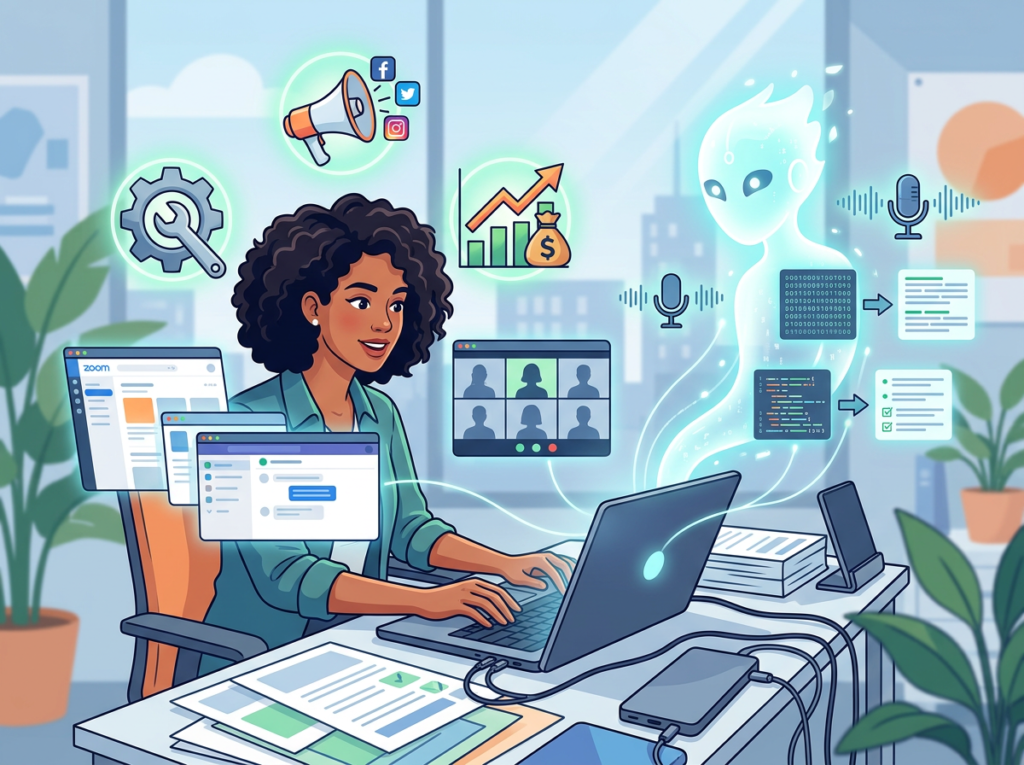
Old workflow: Maria, founder of a 7-person fintech startup in San Francisco, spent 45 minutes after every investor call writing up notes, extracting action items, and updating her CRM. With 12–15 calls per week across fundraising, client success, and product, she was spending 10–12 hours weekly on post-meeting admin.
AI-powered workflow: Fireflies joins every Maria’s calls automatically. Summaries land in her inbox within minutes of each call ending. Action items sync directly to Asana. HubSpot deal records update without manual entry. Maria reviews summaries in 5 minutes instead of writing them in 45.
Quantified results: Time recovered: 8–10 hours per week. At Maria’s founder-equivalent rate of $120/hour, that’s roughly $50,000–$62,400 in recovered productive time annually — time she now directs toward fundraising and product strategy.
Maria’s take: “I used to feel like I was working for my calendar. Now my calendar works for me. Every call is documented before I’ve even grabbed coffee.”
Persona 2: Executive Assistant Onboarding Remote Staff
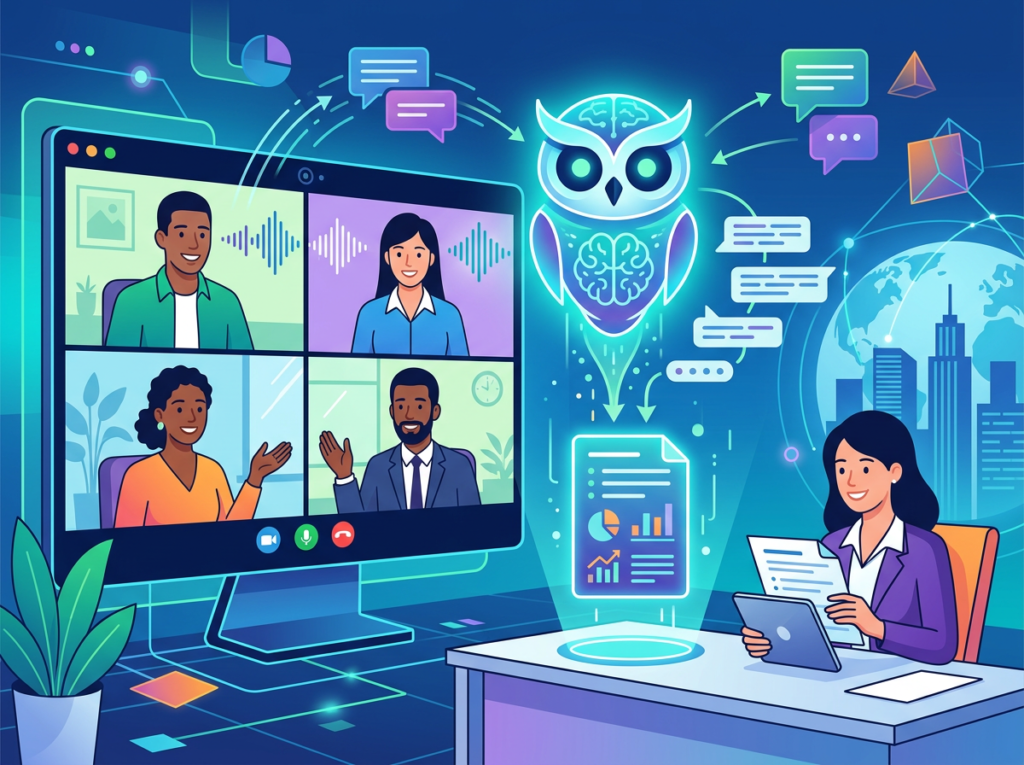
Old workflow: James, EA at an 11-person Miami logistics consultancy, was responsible for onboarding new hires to client processes. Without recorded call history, onboarding meant scheduling hours of shadowing sessions and hoping new hires retained everything from informal briefings. Each new hire took 4–5 weeks to reach full productivity.
AI-powered workflow: James built an onboarding library using Fireflies’ searchable transcript database. New hires now study real client call recordings — filtered by client, topic, and outcome — before their first live interaction. James tagged 30 model calls across key client scenarios, creating a self-serve onboarding resource that didn’t exist before.
Quantified results: Onboarding time dropped from 4–5 weeks to 2 weeks. For a 6-person annual hiring rate at $55,000 average salary, the productivity acceleration is worth approximately $25,000–$30,000 annually in recovered output time.
James’s take: “New hires used to ask the same questions 10 times because there was nowhere to look. Now I point them to the recordings and they come back with smart questions, not basic ones.”
As noted in this detailed Fireflies implementation breakdown, the tool’s integration with platforms like Slack and Asana is where post-meeting automation compounds fastest for multi-platform teams.
Persona 3: Trainer Documenting Internal Knowledge

Old workflow: Robert ran sales training at an 8-person NYC-based B2B SaaS company. He held weekly coaching sessions and quarterly skills reviews. None of it was captured systematically. High performers’ techniques weren’t documented. When the top SDR left, the playbook left with him.
AI-powered workflow: Robert now records all coaching sessions, top-performer calls, and deal review meetings through Fireflies. He built a Playlist of the team’s best-performing calls — Fireflies’ Playlist feature lets you curate clips into sharable training libraries. New SDRs onboard against real winning calls, not role-played scenarios.
Quantified results: New SDR ramp time fell from 90 days to 45 days. With a 3-person annual SDR hiring rate and $80,000 average OTE, the ramp acceleration delivers roughly $32,000 in recovered quota attainment in year one.
Robert’s take: “I finally have a training library that doesn’t require me to rebuild it every time someone new joins. The calls are already there.”
According to this analysis of Fireflies’ productivity features, the Meeting Rules automation — pre-defining which meetings Fred joins automatically — is one of the most underused features that high-volume teams should configure first.
Discover how Fireflies supports US team onboarding and training with our full feature breakdown.
Join growing teams using Fireflies to turn every meeting into an operational asset. See How It Works | Used by teams from Silicon Valley to New York
Common Pitfalls & How to Avoid Them
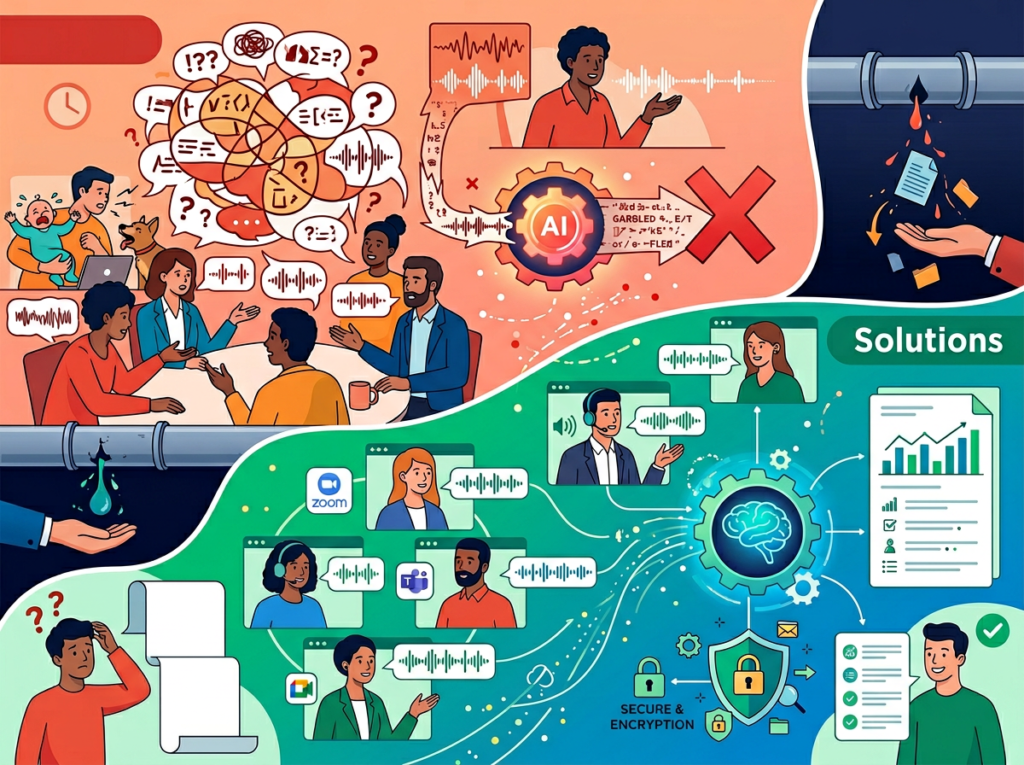
Mistake 1: Treating Transcripts as Passive Archives
The most common Fireflies failure mode: teams turn on recording, let transcripts accumulate, and never build a retrieval habit. Transcripts sitting in a dashboard nobody opens are worth exactly nothing. The fix is to designate a weekly 15-minute “meeting intelligence review” — one team member scans the week’s AI summaries and flags action items that slipped through.
Mistake 2: Skipping Integration Setup
Fireflies delivers 30–40% of its ROI through integrations: pushing action items to Asana, logging call notes to HubSpot, notifying Slack channels when key topics are flagged. US teams that use Fireflies as a standalone recorder without connecting it to their existing stack are using a fraction of the tool’s value. Spend 30 minutes in the Integrations tab during initial setup.
Mistake 3: Letting Meeting Volume Grow Unchecked
Fireflies makes meeting documentation frictionless — which can inadvertently justify holding more meetings. The tool should reduce meeting overhead, not increase it. If your team is running more meetings because documentation is easier, you’ve inverted the benefit. Use Fireflies’ analytics to identify your longest, lowest-signal meetings and cut them first.
See a full breakdown of how Fireflies fits US small team workflows, including pricing tiers and integration options.
As this step-by-step Fireflies usage guide from the Fireflies team notes, configuring custom vocabulary during setup — adding your product names, industry terms, and client names — meaningfully improves transcription accuracy from day one.
Get the full Fireflies review and feature comparison on AI Plaza before you commit to a plan.
FAQs
What is Solo DX?
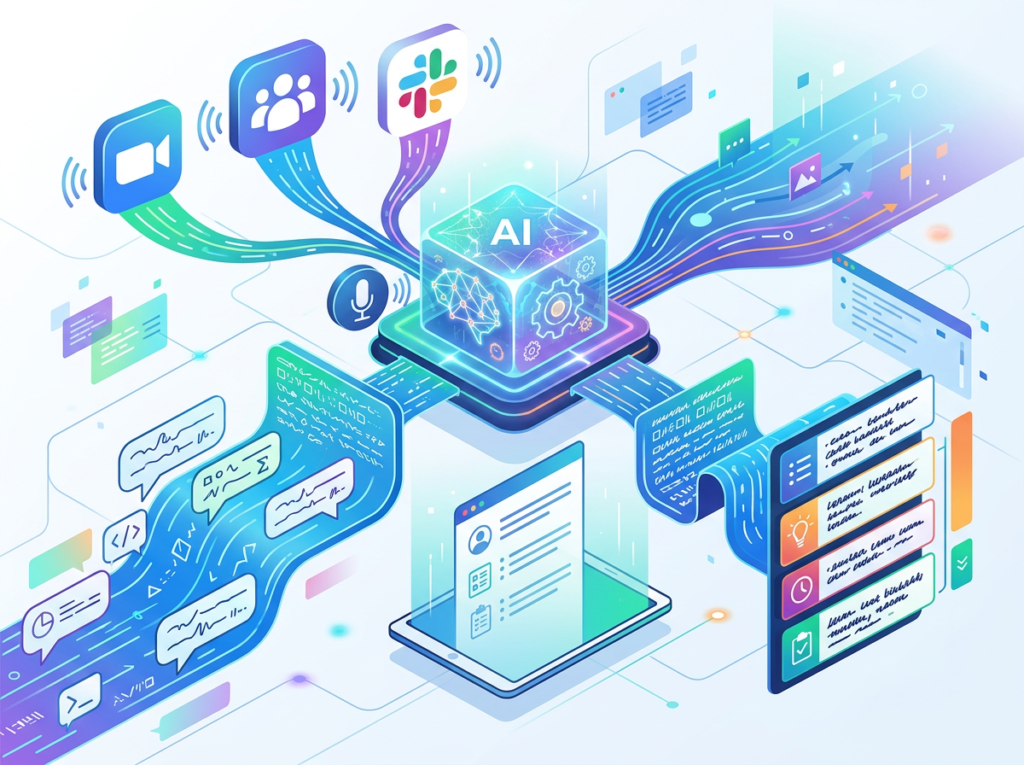
Solo DX (Small-Scale Digital Transformation) is the practice of using AI tools to build repeatable, documented systems in small US businesses — typically 3–15 person teams — without an enterprise budget or dedicated operations staff. It’s designed for founders who need operational leverage without the overhead of a traditional ops function.
Can small teams afford to use AI meeting tools?
Fireflies has a free plan that includes basic transcription for up to 800 minutes per seat per month — enough for many small US teams to evaluate the tool at zero cost. Paid plans start at approximately $10–$19/user/month. Given that a single recovered hour of US knowledge work at $65/hour recoups a month of subscription cost, the ROI case closes quickly.
Is Fireflies hard to set up?
No. Setup takes under 15 minutes for a basic configuration: connect your Google or Outlook calendar, set your meeting rules (which calls Fred should auto-join), and configure one integration. Most US teams are capturing their first meeting within the same business day they sign up.
Get the full Fireflies review and feature comparison on AI Plaza before you commit to a plan.
Conclusion
In 2026, American small businesses don’t need enterprise budgets to build enterprise-level meeting intelligence systems. The infrastructure that Fortune 500 companies spent millions building — searchable knowledge bases, consistent meeting records, automated follow-up workflows — is now available to a 5-person team in Denver for the cost of a lunch.
Fireflies is one of the best-positioned ai meeting assistant tools for US small businesses because it removes friction at every stage: joining calls automatically, generating structured summaries without manual editing, and pushing outputs into the tools your team already uses. That’s the Solo DX model — AI doing the operational heavy lifting so founders and teams can focus on the work that actually moves the business forward.
The teams that will win the next phase of US small business growth aren’t the ones with the biggest budgets. They’re the ones that build the best systems. And you don’t need a 90-day transformation project to get there.
Start with one process. Pick the meeting type your team runs most often — client calls, weekly standups, project kickoffs — and let Fireflies own the documentation for one month. By the end of week four, you’ll have a searchable archive of institutional knowledge that would have taken $5,000+ in manual labor to build any other way.
Get the full Fireflies review and feature comparison on AI Plaza before you commit to a plan.
Leave a Reply