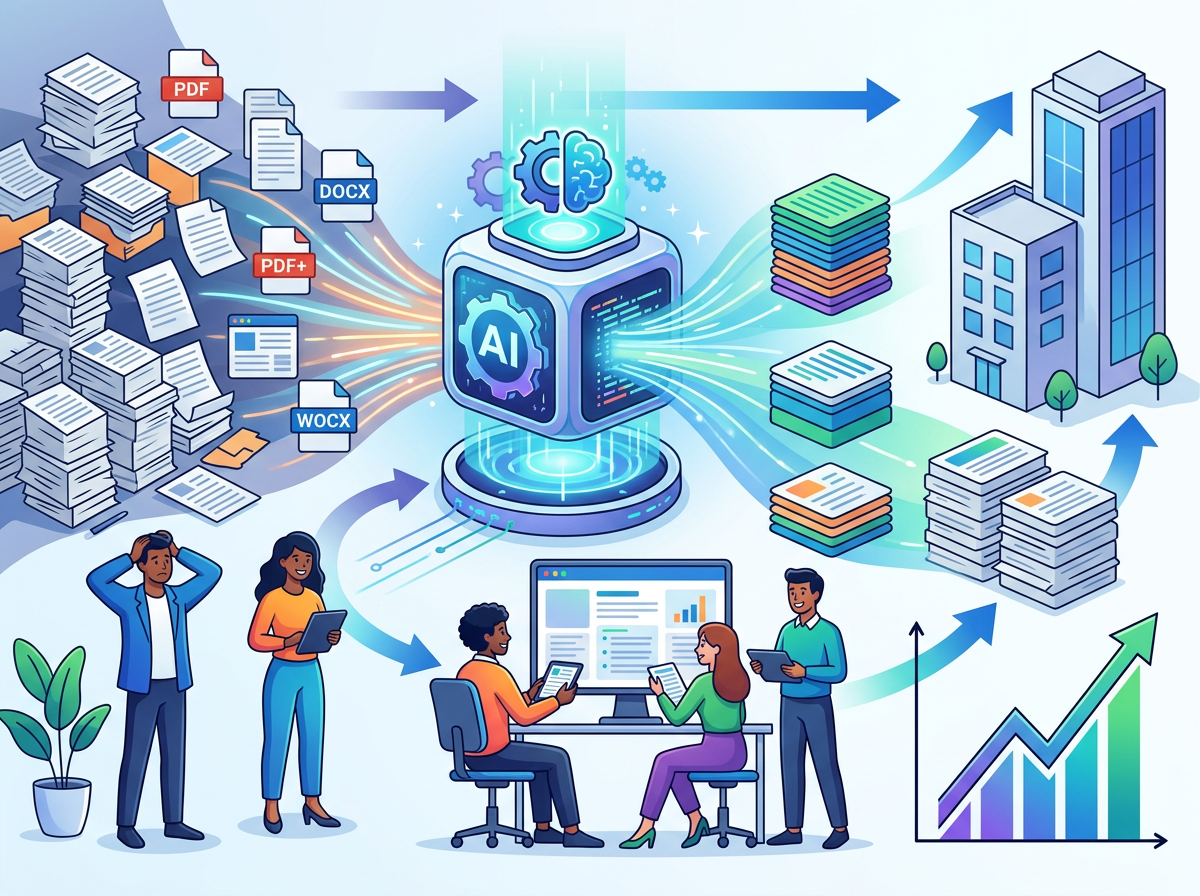
Most small teams don’t have a reading problem — they have a knowledge retention problem that a smart AI text summarizer can permanently fix.
Something breaks when a US small business grows past three people. It doesn’t happen all at once — it sneaks up on founders through a hundred small frustrations. A contractor asks the same question a full-timer answered last month. A client report takes twice as long because the person who knew the template is out sick. A new hire spends their first two weeks decoding Slack threads instead of doing actual work.
This is the hidden tax of growing without systems. And in 2026, it’s hitting American small businesses harder than ever. Remote-first teams span time zones. Freelance contributors rotate in and out. Founders are managing three departments while still doing the work that used to be their entire job. Knowledge — the real kind, the strategic kind, the “how we do things here” kind — lives in people’s heads, not in documents anyone can find.
The financial cost is staggering. Replacing a single US employee costs between 50% and 200% of their annual salary. Miscommunication and poor knowledge transfer cost US businesses an estimated $37 billion per year. At the small team level — no HR department, no operations manager, no documentation team — the problem compounds fast.
Enter Resoomer. This AI content summarization tool was built for exactly this challenge: distilling long, complex documents, reports, articles, and research into clear, actionable summaries that teams can actually use. For a growing US small business, that means faster onboarding, tighter research workflows, and knowledge that finally escapes the founder’s inbox and becomes part of the system.
Unlike traditional documentation approaches that can run $5,000 or more in US labor just to produce a single process guide, Resoomer-powered workflows cost a fraction of that — and take hours, not weeks.
Full Resoomer review and feature breakdown — see how leading small teams are building research-powered operations.
What is Solo DX?
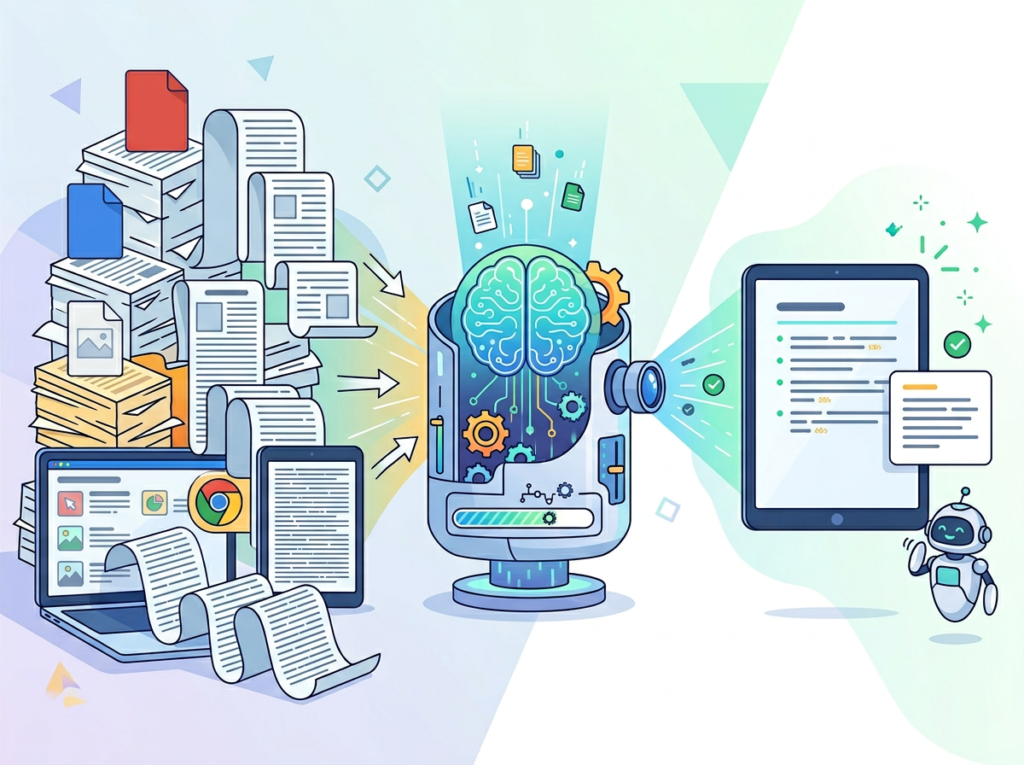
Solo DX — Small-Scale Digital Transformation — is the emerging operating model for US small teams that are past the solo-founder phase but not yet large enough to justify a dedicated operations function. It’s the gap between “I do everything myself” and “we have an ops manager.” It’s where most American small businesses live, and it’s where most scaling pain happens.
Traditional digital transformation is a corporate exercise. It involves consultants, lengthy discovery phases, six-figure software implementations, and rollout plans that take 18 months to complete. None of that applies to a seven-person marketing agency in Austin or a four-person SaaS startup in Denver. Solo DX is transformation at the speed and budget of a small team.
The key insight behind Solo DX is that small US teams don’t need enterprise-grade systems — they need repeatable, documented workflows that don’t depend on any single person. When Maria in San Francisco can hand off a client research brief to a new contractor and that contractor produces the same quality output, that’s Solo DX working. When a new hire can onboard themselves using documented SOPs rather than scheduling four hours of founder time, that’s the goal.
Solo DX vs. Other AI Categories:
| Category | Focus | Typical Buyer | Timeline |
|---|---|---|---|
| Solo DX | Systemization & knowledge transfer | Founders managing 2–10 person teams | Immediate need |
| AI Efficiency | Task-level automation | Individual contributors | Short-term |
| AI Revenue Boost | Growth and acquisition | Sales and marketing leads | Medium-term |
| AI Workflows | End-to-end process automation | Operations teams | Long-term |
Why do corporate SOP methods fail for US SMBs? Because they’re built for scale, not speed. A 50-page process manual written by a $150/hour consultant doesn’t help a three-person design studio. What helps is a concise, scannable document created in two hours that new team members can reference without booking a meeting.
Resoomer fits directly into this model. Rather than writing documentation from scratch, teams use it to explore Resoomer’s features for rapidly compressing existing knowledge — research reports, client briefs, industry publications, meeting transcripts — into structured, reusable summaries that become the raw material for team systems. A 40-page industry report becomes a two-page reference document. A competitor analysis becomes a three-paragraph brief. Knowledge that used to live in one person’s reading history becomes shared team intelligence.
Real Example: A three-person content studio in Austin, TX was spending 6–8 hours per client engagement just reading and synthesizing research before writing began. Using Resoomer to pre-process research inputs, they cut that phase to under 90 minutes — reclaiming 20+ billable hours per month across the team.
Full Resoomer review and feature breakdown — see how leading small teams are building research-powered operations.
Why AI Is Key for Mini-Team Systemization
Problem 1: Knowledge lives only in the founder’s head.

The founder of a 6-person US e-commerce business knows which supplier has the best lead times, how to handle a charge-back dispute, what to say when a wholesale account goes quiet, and 200 other things that keep the business running. None of it is written down. When that founder takes a week off, or hires someone to take over a function, the transfer is painful and incomplete.
AI-assisted knowledge extraction changes this. Tools like Resoomer can summarize internal documents, meeting notes, and research that already exists — turning passive information into structured, shareable knowledge. The founder doesn’t have to write a manual from scratch; they feed the tool what already exists and the system does the compression work.
Problem 2: New hires slow operations down.
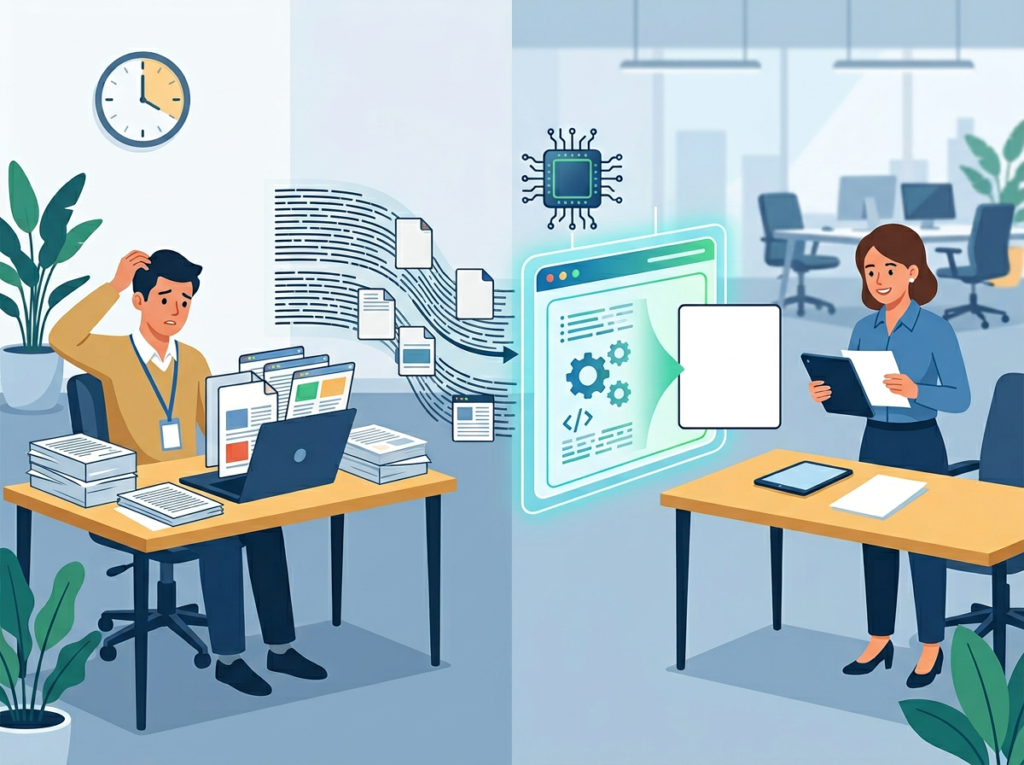
The US labor market is unforgiving for small teams. Annual turnover across US small businesses runs at roughly 47%, and each new hire requires meaningful ramp time. Employees with access to structured documentation onboard 40–60% faster than those who rely on shadow learning from colleagues.
For a small team billing $75–$150 per hour, every week of slow onboarding costs real money. A new account manager who takes four weeks to become productive instead of two weeks represents $3,000–$6,000 in lost output at conservative billing rates.
Problem 3: Output quality varies across team members.
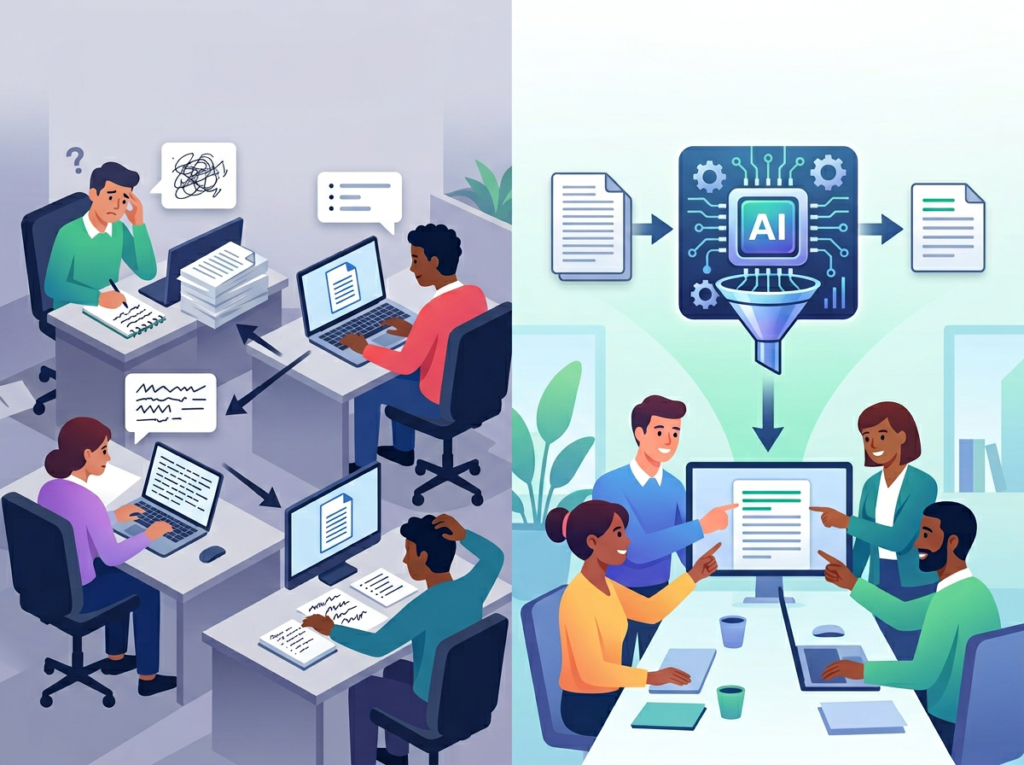
Inconsistency is one of the most damaging costs in small team operations. When every team member synthesizes research differently or approaches a standard task using their own method, the variability creates rework, client friction, and reputation risk.
AI summarization tools establish a consistent input-processing layer. When all research runs through the same text summarization software before reaching the team, everyone works from the same quality and format of input — reducing variability at its source.
The Cost Reality:
| Approach | Time Required | Labor Cost (est.) | Consistency |
|---|---|---|---|
| Manual research synthesis | 6–10 hrs/project | $450–$1,500 | Low |
| AI-assisted with Resoomer | 30–90 min/project | $15–$50 | High |
| Outsourced to contractor | 3–5 hrs/project | $225–$750 | Medium |
For a US small team running 8–12 client projects per month, AI-assisted research synthesis can reclaim $4,000–$10,000 monthly in labor hours.
Full Resoomer review and feature breakdown — see how leading small teams are building research-powered operations.
How Resoomer Enables Solo DX
1. Multi-Format Document Summarization to $2,000+ Saved Per Research Cycle
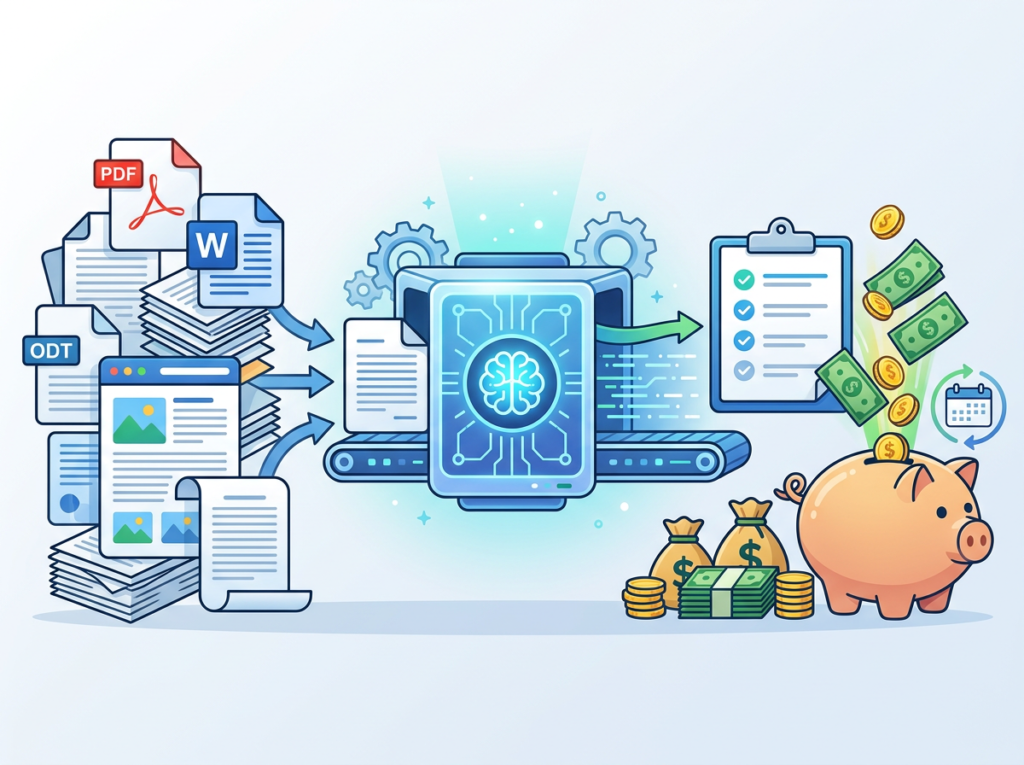
Resoomer processes text across multiple input formats: direct paste, URL import, PDF upload, image scanning, and EPUB files. For a small US team that regularly consumes industry reports, academic papers, competitor content, and client-submitted documents, this means one consistent tool handles the entire document intake process.
A typical US B2B research cycle might involve 10–15 documents totaling 80,000–120,000 words. Reading and synthesizing that manually at $65/hour (mid-range knowledge worker rate) runs $1,500–$2,000 per cycle. Resoomer compresses that to a few hours of supervised AI processing, dropping the cost to under $100 while improving consistency.
The multi-language support (66 languages) is particularly relevant for US teams working with international suppliers, clients, or research sources. A product team in Chicago sourcing research from European markets doesn’t need a translator — they need a smart text summarization software that handles the compression regardless of source language.
2. Adjustable Summary Length to Workflow-Ready Outputs at Every Detail Level
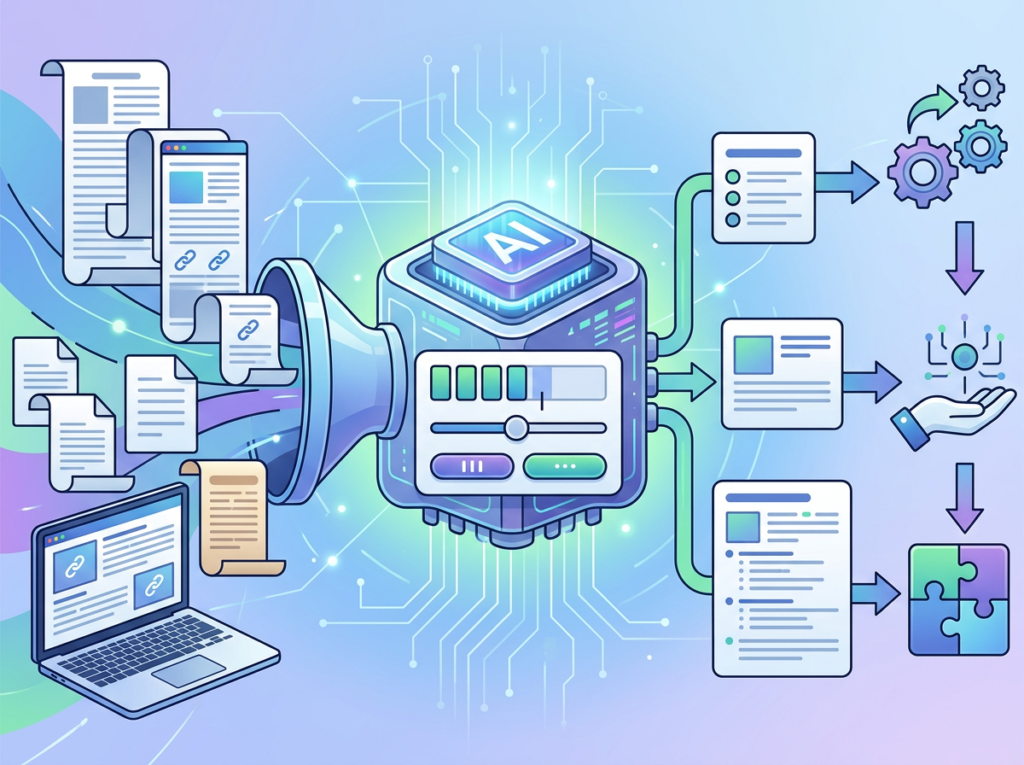
One of Resoomer’s most practical features for team use is the ability to control summary length and reduction percentage. Teams can generate executive-level one-paragraph overviews for leadership, mid-depth summaries for account managers, and detailed summaries with highlighted key passages for subject-matter experts — all from the same source document.
This creates a knowledge distribution system without extra labor. One team member processes the source document; the tool generates outputs at multiple depth levels; different team roles get the version appropriate to their needs.
For a 5-person consulting firm in Denver that produces client briefing materials at three detail levels (executive summary, working brief, full analysis), this workflow eliminates the step where a junior researcher produces a long summary that a senior consultant then has to compress. Estimated time saved: 3–4 hours per client engagement, or roughly $9,360 annually at $75/hour for a team running two engagements per week.
3. Browser Extension for Real-Time Research to $6,000+/Year in Reclaimed Research Hours
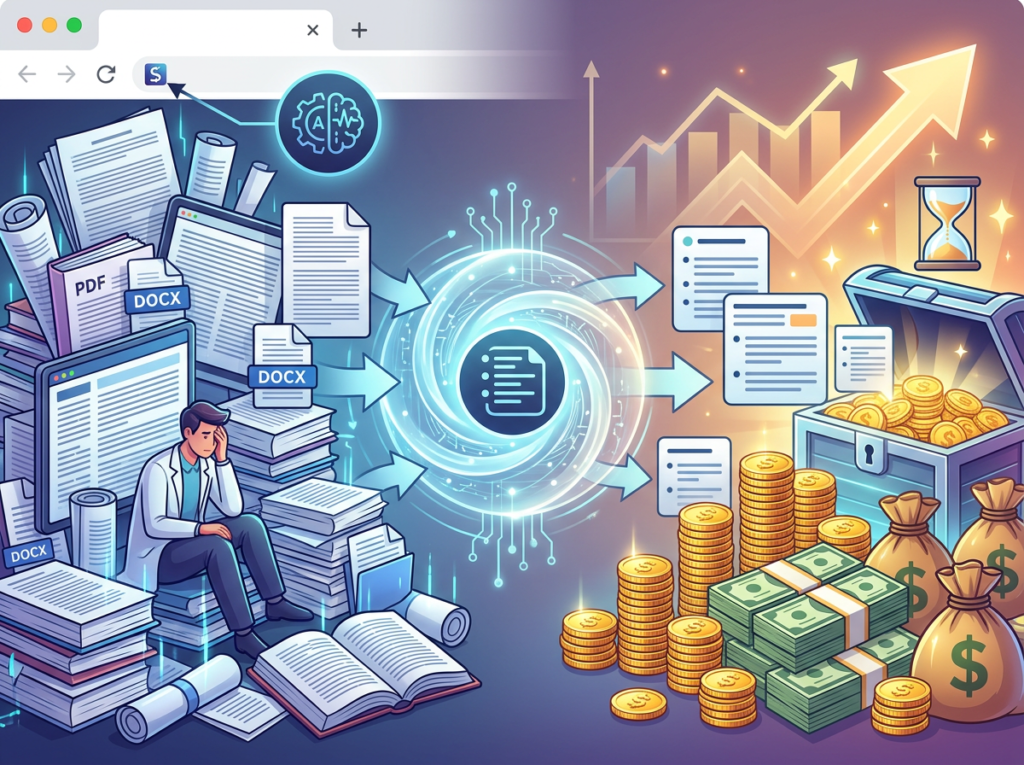
Resoomer’s browser extension allows team members to summarize any web article or page with a single click, without leaving their current workflow. For US small teams that use content research as part of client services — content agencies, PR firms, market research shops, consulting practices — this eliminates the most friction-heavy part of the research process.
The workflow shift: instead of reading a full article to decide whether it’s relevant, team members skim the AI-generated summary, decide in 30 seconds, and move on. A researcher who evaluates 25–30 sources per day reclaims 60–90 minutes of reading time daily. At $50/hour, that’s $12,500–$18,750 in annual labor savings for one team member. Even at 50% efficiency capture, the savings exceed $6,000 per year.
As noted in this detailed breakdown of Resoomer’s capabilities, the browser extension maintains full access to summary length controls and analysis modes, making it as capable as the main platform interface.
Ready to systemize your US team’s research workflows in under a week? Try Resoomer Free | No credit card required | Trusted by teams across the US
Use Cases by Team Role
Persona 1: Startup Founder Juggling 3 Departments

Old Workflow: Maria runs a 6-person SaaS startup in San Francisco. Every Monday, she reviews 12–15 industry newsletters, two or three competitor announcements, and at least one analyst report before her team standup. It takes 2.5–3 hours. By the time the meeting starts, she’s summarized everything mentally — but none of it is documented, and her team only gets what she remembers to mention.
AI-Powered Workflow: Maria pastes newsletter URLs directly into Resoomer or uses the browser extension to process each one as she encounters it. By Sunday evening, she has 12 Resoomer-generated summaries exported to a shared Google Doc. Monday’s standup runs from a shared document instead of her memory. Team members can review context asynchronously before the call.
Quantified Results: Maria reclaims 8–10 hours per month of research synthesis time. At a conservative $150/hour opportunity cost for a founder, that’s $1,200–$1,500 per month, or $14,400–$18,000 annually. Strategic alignment improves because knowledge is now written down, not whispered at standup.
Maria’s take: “I used to be the bottleneck for every market update. Now the doc does the talking and I just add context where it matters.”
Persona 2: Marketing Lead Standardizing Client Research

Old Workflow: Aisha manages content strategy for an 8-person content agency in San Francisco. Each new client engagement starts with a research phase where team members independently read industry sources and produce briefs — which vary wildly in quality, depth, and format. Senior team members spend 2–3 hours per engagement reviewing and rewriting junior briefs before they’re usable.
AI-Powered Workflow: Aisha establishes a team protocol: all research sources get processed through Resoomer using a standard summary length setting before being shared. The output format is consistent. Senior review time drops from 2–3 hours to 30–45 minutes because the raw input is already structured. According to this analysis of Resoomer’s text processing capabilities, the tool’s NLP algorithms are particularly effective at extracting key ideas from argumentative and analytical texts — exactly the type of content that appears in industry research.
Quantified Results: Aisha’s team runs 10–12 client engagements per month. Saving 1.5–2.5 hours of senior review time per engagement = 15–30 hours monthly. At $85/hour for a senior content strategist, that’s $1,275–$2,550 per month, or $15,300–$30,600 annually. Brief quality consistency improves, reducing client revision requests by an estimated 25%.
Aisha’s take: “We stopped arguing about brief formats. The AI sets the baseline; everyone works from the same quality input.”
Persona 3: Trainer Documenting Internal Knowledge

Old Workflow: Robert is the in-house trainer at a 12-person financial services consulting firm in New York City. He’s responsible for keeping the team current on regulatory changes, industry trends, and new methodologies — which means reading dense government publications, legal briefs, and industry white papers. He spends 6–8 hours per week just keeping up with source material, and still can’t convert everything into usable training materials.
AI-Powered Workflow: Robert routes all incoming publications through Resoomer first. The tool’s ability to process PDFs and produce summaries at adjustable detail levels means Robert gets a layered view of each document — a one-paragraph executive summary to decide if it’s relevant, and a full detailed summary if it is. He reduces source reading time from 6–8 hours to 2–3 hours per week, and uses the exported summaries as first drafts of training briefs.
Quantified Results: Robert reclaims 3–5 hours per week, or 156–260 hours annually. At his $90/hour compensation rate, that represents $14,040–$23,400 in reclaimed productive capacity per year — redirected into actual training design rather than information processing. The tool reduces source text length by roughly half while preserving key ideas — a significant gain for high-volume readers like Robert. For a deeper look at how Resoomer handles educational and professional documents, this educator-focused review covers the core mechanics well.
Robert’s take: “I went from drowning in white papers to actually building the training content. The summarizer does the first pass; I do the thinking.”
Discover Resoomer’s full capabilities for team-wide knowledge management workflows.
Join thousands of US small teams using Resoomer to eliminate research overwhelm. See How It Works | Used by teams from Silicon Valley to New York
Common Pitfalls & How to Avoid Them

Mistake 1: Running Every Tool in Isolation
Many US small teams add Resoomer to a stack that already includes Slack, Notion, Google Drive, and three other productivity tools — without integrating them. The result is that Resoomer-generated summaries live in one place while the team’s actual work happens in another. Summaries don’t get referenced; knowledge doesn’t transfer.
Fix: Designate one system of record (typically Notion or Google Drive) as the destination for all Resoomer exports. Create a standard folder structure so summaries are findable. The tool only creates value when its outputs are embedded in workflows, not siloed in a separate app.
Mistake 2: Delegating Research Without Delegating the Process
Founders who hand off research to junior team members often skip the step of documenting how to use the summarization tool effectively. The team member produces inconsistent summaries because they’re guessing at the right settings, length, and format.
Fix: Create a one-page “Resoomer protocol” that specifies default summary length settings for different document types (short for news articles, detailed for analyst reports), output format requirements, and naming conventions for exported files. This takes 30 minutes once and saves hours of inconsistency going forward.
Mistake 3: Using Slack or Email as a Knowledge Store
This is the underlying disease that Solo DX is designed to cure. Even teams that use Resoomer effectively often let the summaries live in email threads or Slack channels, where they disappear within 48 hours of posting. Knowledge gets created and immediately lost.
Fix: Treat Resoomer exports the same way you’d treat any formal document. Every summary gets filed, named, and tagged — not shared as a Slack attachment and forgotten. Learn more about Resoomer and how teams use it to build durable knowledge systems rather than temporary information dumps.
FAQs

What is Solo DX? Solo DX stands for Small-Scale Digital Transformation. It describes the process of small US teams — typically 2–15 people — implementing AI-powered systems to create repeatable workflows, document institutional knowledge, and reduce operational dependence on any single person. Unlike enterprise digital transformation, Solo DX is fast, low-cost, and founder-led.
How can AI write my SOPs? AI tools can’t write SOPs from nothing — but they can dramatically accelerate the process. Feed an AI text summarizer like Resoomer your existing process notes, email threads, or reference documents, and it generates structured summaries that serve as SOP first drafts. A human then reviews and formats the output. A process that used to take 8–10 hours to document manually can be completed in 1–2 hours using this workflow.
What’s the difference between AI Efficiency and Solo DX? AI Efficiency focuses on individual-level task automation — making one person faster at specific tasks. Solo DX focuses on team-level systemization — creating documented, repeatable workflows that work regardless of who’s performing them. The goal of Solo DX isn’t speed for one person; it’s consistency and resilience across the whole team.
Can small teams afford to use AI? Yes. Resoomer’s free tier provides basic summarization capabilities with no account required. Paid plans start at approximately $9.90/month and provide 200 processing units per month — sufficient for a small team’s typical research volume. Compared to the cost of manual research synthesis ($50–$150/hour for US knowledge workers), the ROI is immediate and substantial.
Is Resoomer hard to set up? No. Resoomer requires no technical setup. Teams can start using it within minutes: copy-paste text into the interface, or install the browser extension in under 60 seconds. There’s no API configuration, no workflow automation to build, and no training required. For a US small team that needs a quick win on documentation and research, Resoomer is one of the lowest-friction tools available.
Full Resoomer review and feature breakdown — see how leading small teams are building research-powered operations.
Conclusion
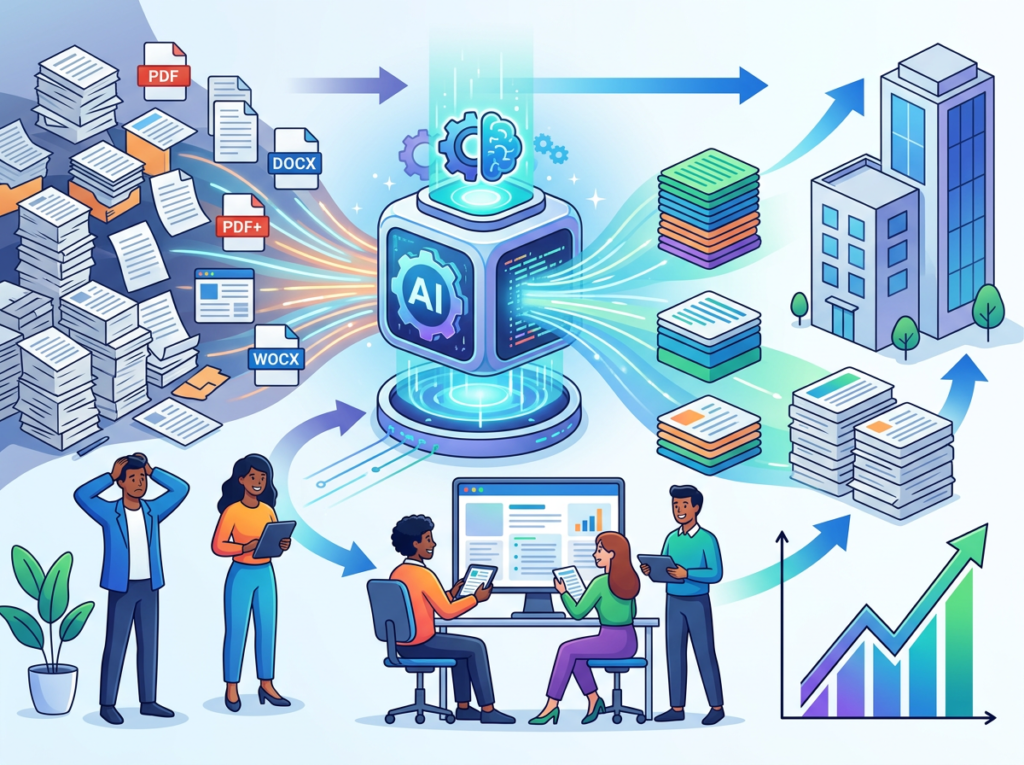
In 2026, American small businesses don’t need enterprise budgets to build enterprise-level systems. They need the right tools, applied consistently, to the right workflows.
The ai text summarizer category has matured to the point where tools like Resoomer deliver genuine operational value — not just faster reading, but a real shift in how teams capture, structure, and share knowledge. For US small teams that are scaling past the founder-does-everything phase, that shift is worth tens of thousands of dollars annually in reclaimed labor, faster onboarding, and reduced rework.
The Solo DX playbook is simple: identify the knowledge that lives in one person’s head or inbox, use Resoomer to compress and structure the source material, export the outputs into your team’s system of record, and build repeatable workflows around the result.
Start with one process — your client onboarding research, your weekly competitive intelligence review, your new hire reading list. Systemize it this week. Then do the next one.
The teams that win in 2026 aren’t the ones with the biggest budgets. They’re the ones that turn knowledge into systems before their competitors do.
Full Resoomer review and feature breakdown — see how leading small teams are building research-powered operations.
Leave a Reply