
The teams that scale fastest in 2026 aren’t the ones with the biggest budgets — they’re the ones using ai research tools for business to turn scattered information into confident, repeatable decisions.
There’s a moment every US small team founder recognizes. You’ve hired your second or third person, and suddenly the work that used to live entirely in your head — the vendor comparisons, the market research, the “why we made this call” documentation — has no home. Decisions that took you twenty minutes now take two days because you have to re-justify them from scratch every time someone new joins the conversation.
In 2026, this is the operational bottleneck breaking American small businesses at the scale-up stage. Knowledge isn’t the problem. Access to knowledge — structured, searchable, shareable knowledge — is.
Remote work culture made it worse. Teams spread across Austin and Denver and Chicago are running in parallel but not in sync. A marketing lead in Miami reaches a conclusion through three hours of web research; a founder in San Francisco reaches the opposite conclusion two weeks later because nobody documented the first one. Slack threads disappear. Notion pages go stale. And every new hire starts from zero.
Consensus (consensus.app) is a different kind of AI research tool for business. Rather than generating content or automating tasks, it pulls evidence-backed answers directly from 200+ million peer-reviewed papers, synthesizes what the research actually says, and presents it with citations your team can verify and archive. Think of it as replacing “I heard somewhere that…” with “here’s what 47 studies actually show.”
Unlike building a traditional knowledge base — which can cost $5,000+ in US labor hours to create, maintain, and keep current — Consensus lets a team of three function with the research depth of a ten-person operation. It’s not about replacing expertise. It’s about making the expertise your team already has go further, faster.
This guide breaks down exactly how US small teams are using Consensus to make better decisions, onboard faster, and build research-backed systems that hold up as they grow.
What is Solo DX?

Solo DX stands for Small-Scale Digital Transformation — the process of building enterprise-grade operational systems without an enterprise budget, headcount, or IT department. It’s what happens when a US founder running a 1–10 person team decides to stop managing by memory and start managing by documented, repeatable process.
Solo DX sits in a different category from general AI efficiency or AI-powered productivity. Those approaches focus on doing individual tasks faster. Solo DX focuses on building the infrastructure that lets a growing team operate consistently, even when the founder isn’t in the room.
Here’s a simple comparison:
| Category | Goal | Example |
|---|---|---|
| AI Efficiency | Speed up individual tasks | Drafting emails faster |
| AI Revenue Boost | Increase output or conversion | Automating outreach |
| Solo DX | Systemize team operations | Building decision frameworks a new hire can follow |
Corporate SOP methods fail for US SMBs because they were designed for companies with dedicated operations managers, training departments, and six-month implementation cycles. A three-person design studio in Austin can’t afford to spend Q1 documenting processes — they have clients to serve.
What they can do is use AI research tools for business to compress the research-to-decision cycle: validate assumptions with evidence, document the rationale behind key choices, and build a searchable institutional memory that grows with the team.
Real example: A three-person UX consultancy in Austin was losing two to three hours per client engagement on competitive landscape research — each team member doing their own searches and arriving at slightly different conclusions. After integrating Consensus into their pre-project workflow, they standardized on a shared research protocol: one team member runs the relevant questions through Consensus, exports the findings, and the whole team operates from the same evidence base. Client kickoff prep dropped from three hours to 45 minutes.
That’s Solo DX in practice: not more tools, but better-structured tools that create consistency across a small team.
Explore Consensus’s features and see how it fits your team’s research workflow
Why AI is Key for Mini-Team Systemization

Problem 1: Knowledge lives only in the founder’s head
The founder knows why the company uses vendor A instead of vendor B. They know the three studies that informed the pricing strategy. They know what questions to ask before green-lighting a new initiative. But that knowledge is entirely non-transferable — until it gets documented.
AI research tools for business solve this by making knowledge searchable and auditable. When a decision is backed by evidence from Consensus, that evidence can be saved, shared, and referenced later. The founder isn’t the library anymore — the tool is.
Problem 2: Quality varies across team members
When three people research the same question independently, they rarely reach the same conclusion. One person searches Google. One asks ChatGPT. One relies on memory. The result is inconsistent outputs, internal debates, and rework.
Consensus addresses this by functioning as a shared research standard — a single, reliable source that surfaces what the evidence actually says rather than what any individual team member happens to recall or find first.
The cost reality is stark. A manual knowledge-building process — compiling research, documenting findings, maintaining references — can consume 100+ hours of US labor annually for a five-person team. At $75/hour average, that’s $7,500/year in research overhead that produces no direct output. Consensus Premium runs $8.99/month; the Teams plan is $9.99 per seat per month. Even at full team deployment, the math is straightforward.
Following best practices for evidence-based search matters significantly here: teams that frame research questions precisely — with context, scope, and a clear hypothesis — get dramatically more useful results than those running vague, keyword-style queries.
Data-driven decision making isn’t a luxury for US small teams in 2026. It’s the operational baseline that separates businesses that scale from businesses that stall.
How Consensus Enables Solo DX
Feature 1: Natural Language Research Queries to Faster, Better-Grounded Decisions
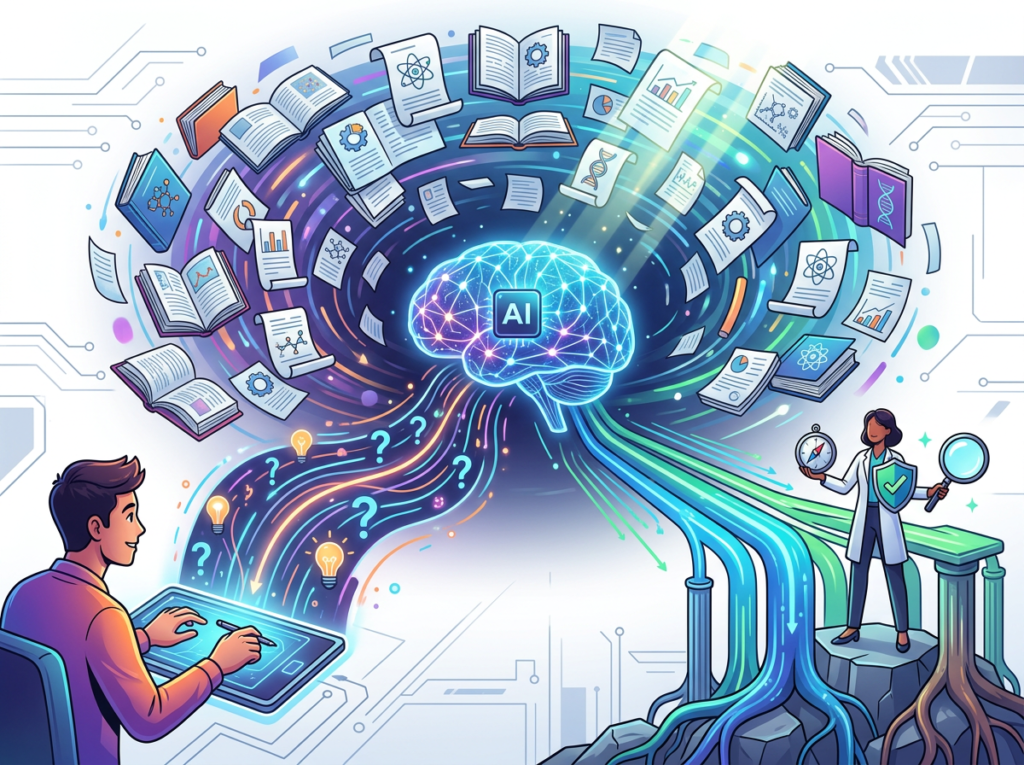
Instead of keyword searches that return inconsistent results, Consensus lets team members ask full questions in plain English: “Does remote work reduce team cohesion in small organizations?” or “What pricing models perform best for B2B SaaS under $50/month?” The tool searches across 200+ million peer-reviewed papers and returns cited, synthesized answers.
ROI estimate: A typical business decision requiring external research takes 3–6 hours of US team time when done manually — web searches, evaluating source quality, synthesizing findings, writing it up. Consensus compresses this to 20–40 minutes. For a team making four major research-backed decisions per month at $75/hour labor cost, that’s roughly $2,400–$4,800 in recovered labor annually per decision-maker on the team.
Feature 2: Consensus Meter for Hypothesis Validation
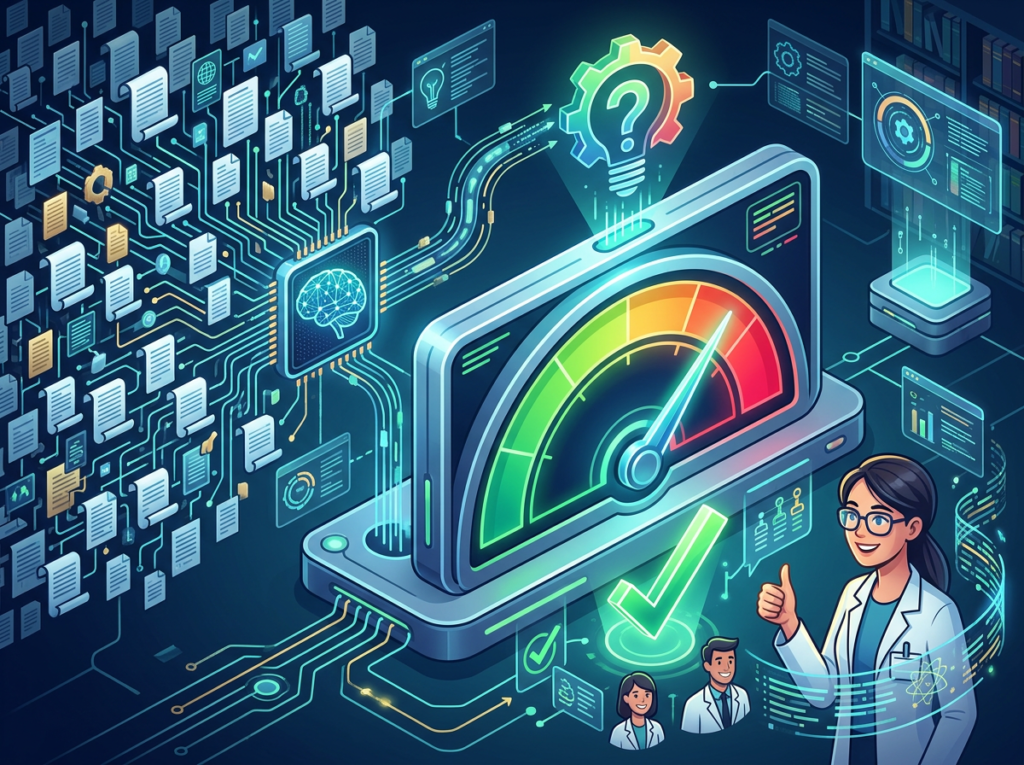
The Consensus Meter is the tool’s most distinctive feature for business teams. When you ask a yes/no question, Consensus shows the proportion of relevant studies that support, contradict, or are inconclusive on the claim — visually, with citations. For US small teams, this is a fast-track to confidence: instead of “I think this approach works,” you get “73% of relevant studies support this approach, here’s the breakdown.”
ROI estimate: Teams that validate strategic assumptions before committing budget reduce costly pivots. If a team avoids just one $5,000 initiative per year that would have failed due to faulty assumptions, the Consensus subscription pays for itself roughly 40 times over.
Feature 3: Teams Plan with Centralized Access to Consistent Research Infrastructure
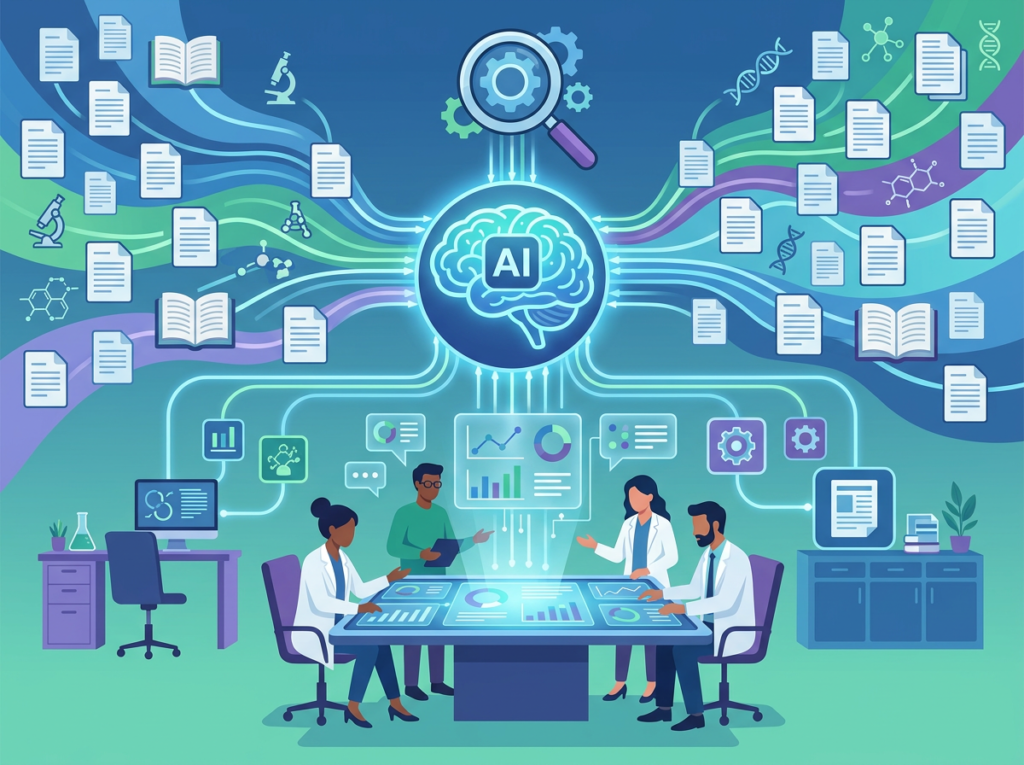
The Consensus Teams plan ($9.99/seat/month) gives small teams shared access, centralized billing, and collaborative research capability. Every team member runs searches through the same evidence base, which means decisions across the team reference the same quality of source material.
ROI estimate: Eliminating research redundancy — where multiple team members independently research the same questions — can recover 5–10 hours per week across a five-person team. At $75/hour average, that’s $19,500–$39,000 in annual recovered labor for a team of five.
As noted in this breakdown of Consensus’s capabilities for researchers, the tool’s strength lies in surfacing both sides of a research question rather than returning cherry-picked results — a critical feature when team decisions need to hold up to scrutiny.
The cumulative picture: a five-person US team using Consensus consistently can recover $25,000–$45,000 in annual research and decision-making overhead. That’s not a technology investment — it’s an operational leverage play.
See how Consensus works for small US teams
Ready to systemize your US team’s research and decision-making in under a week? Try Consensus Free | No credit card required | Trusted by researchers and teams across the US
Use Cases by Team Role
Persona 1: Startup Founder Juggling Strategy Across Departments

Maria, 34 — Founder, 6-person SaaS startup, San Francisco
Old workflow: Maria spent Sunday evenings compiling research for Monday strategy calls — pulling articles from Google, skimming industry reports, and trusting her own synthesis to represent “what the market says.” Her team made decisions based on her summary, which meant decisions were only as good as what she happened to find on a Sunday night.
AI-powered workflow: Maria now runs strategic questions through Consensus before major planning calls. She asks questions like “What growth levers are most effective for B2B SaaS teams under 10 employees?” and gets cited, synthesized answers her team can review directly. She saves key findings to a shared Notion page linked to the Consensus source — building a growing body of evidence that new hires can access from day one.
Quantified results: Research prep time for weekly strategy calls dropped from 4 hours to 45 minutes. At Maria’s estimated opportunity cost of $150/hour, that’s $4,875 recovered annually from strategy prep alone. Two major initiatives validated through Consensus avoided pivots that would have cost an estimated $15,000 in misdirected development time.
Maria’s take: “I stopped being the research bottleneck. Now my team can verify the assumptions behind any decision I make — which actually made them trust my calls more, not less.”
Persona 2: Executive Assistant Onboarding Remote Staff
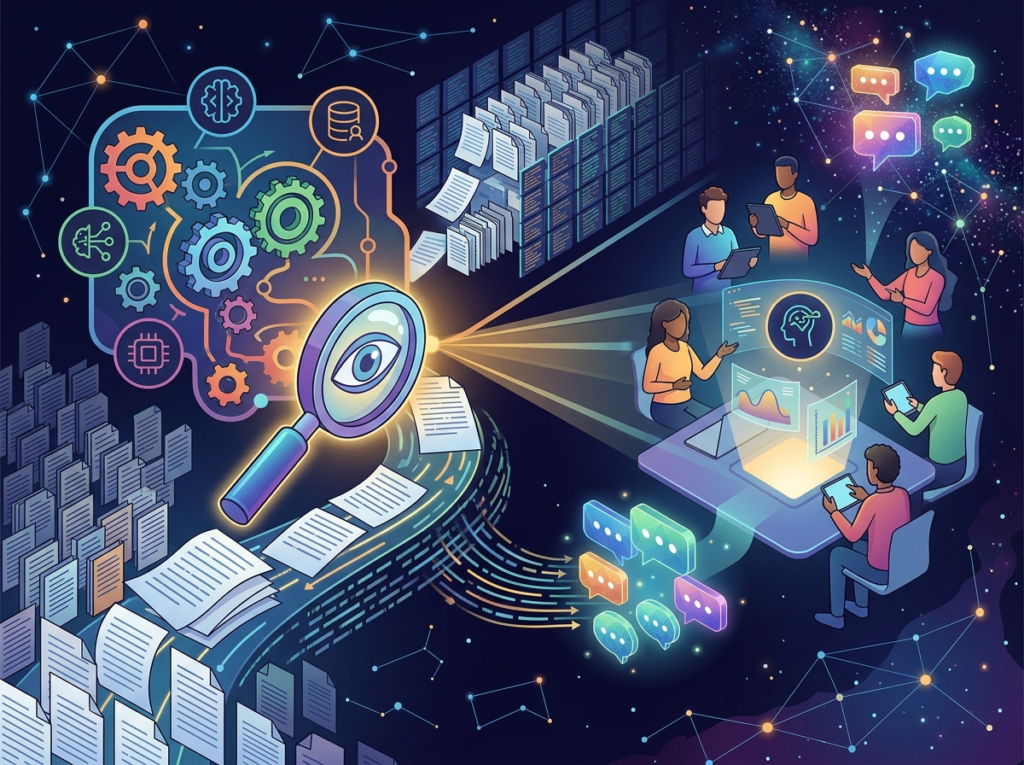
James, 29 — Operations Lead, 8-person consulting firm, Miami
Old workflow: James built onboarding materials from scratch for each new hire — compiling best practices from across the web, writing up internal rationale, and hoping new team members would absorb it all in two weeks. The materials were inconsistent, quickly outdated, and required James to update them manually whenever policy changed.
AI-powered workflow: James uses Consensus to build evidence-backed onboarding frameworks. For each core operational area — client communication, project scoping, deliverable standards — he runs the relevant questions through Consensus, documents the research findings, and attaches the citations to the team wiki. New hires don’t just see what the process is; they see why it’s structured that way, grounded in evidence rather than “James decided this.”
Quantified results: Average new hire ramp-up time dropped from 14 days to 8 days. At $80/hour fully-loaded cost for new staff, that’s $3,840 per hire in recovered productive capacity. With two new hires in 2026, that’s $7,680 in direct ROI from onboarding efficiency alone.
James’s take: “When new team members can see the research behind our processes, they stop second-guessing and start executing. It completely changed how fast people get up to speed.”
Persona 3: Marketing Lead Standardizing Research-Backed Content Strategy

Aisha, 31 — Head of Marketing, 5-person e-commerce brand, Denver
Old workflow: Aisha’s content decisions were largely intuition-driven. She’d pick topics based on what felt relevant, write briefs from personal research, and defend her choices in team reviews with vague references to “what I’ve been reading.” Results were inconsistent across quarters, and post-mortems rarely produced clear learnings.
AI-powered workflow: Aisha now validates content strategy hypotheses through Consensus before committing to production cycles. Before investing in a new content format or channel, she runs the relevant positioning questions — “Does long-form content outperform short-form for B2C purchase intent?” — and documents the evidence. Her editorial briefs now include a “research rationale” section linking to Consensus findings.
Quantified results: Content ROI improved significantly in the first quarter of using Consensus — not because production volume increased, but because topic selection became more evidence-based. Aisha estimates the shift eliminated two underperforming content investments per quarter worth approximately $4,000/quarter in wasted production budget.
Aisha’s take: “I can now walk into any budget review and show exactly why we made the content choices we did, with citations. That changed the conversation completely.”
Discover how Consensus fits your team’s workflow
Join growing US small teams using Consensus to eliminate research chaos and make faster, better-grounded decisions. See How It Works | Used by teams from Silicon Valley to New York
Common Pitfalls & How to Avoid Them
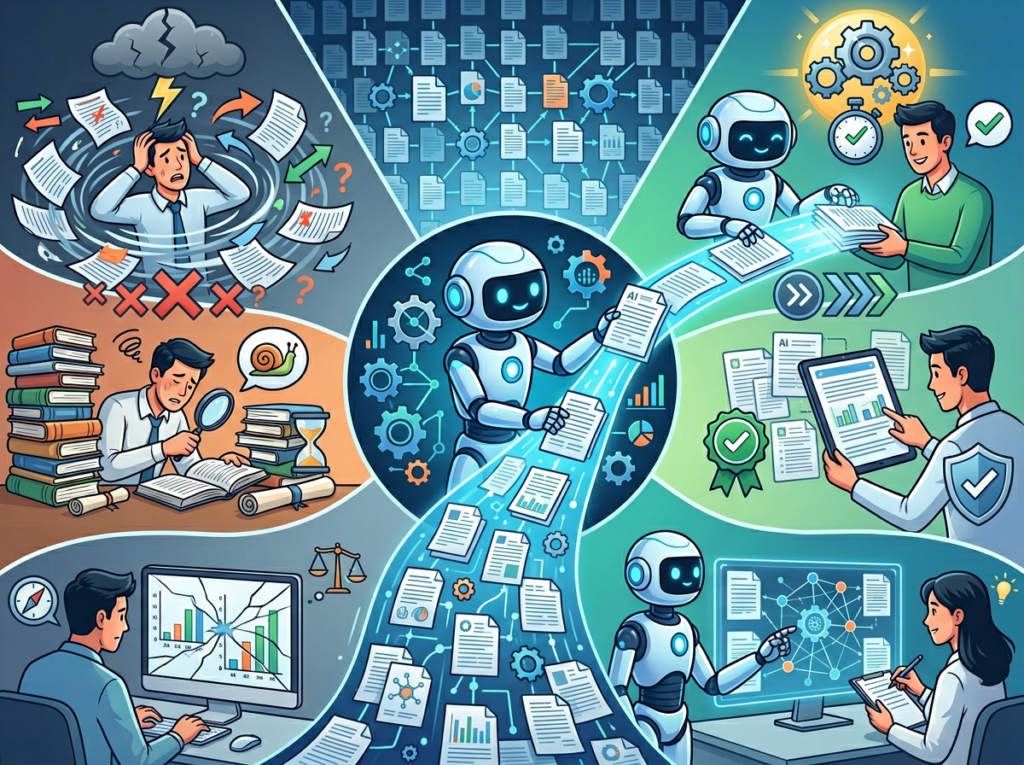
Pitfall 1: Using Consensus in isolation from other team tools
Consensus surfaces evidence, but that evidence needs a home. Teams that run searches and don’t document findings in a shared workspace (Notion, Confluence, Google Docs) end up with the same problem they started with: knowledge that disappears after the conversation ends. Fix: Build a simple research log — a shared document where Consensus findings get pasted with the original question, key conclusions, and the date. Ten minutes of documentation per research session creates months of institutional memory.
Pitfall 2: Delegating research without defining the question
AI research tools for business return better results when the question is specific. “Tell me about marketing” produces noise. “What messaging strategies most effectively drive B2B SaaS free-trial conversion for teams under 50 employees?” produces signal. Vague delegations lead to vague research, which leads to vague decisions. Fix: Require that any Consensus research task starts with a clearly defined question, written out before the search begins.
Pitfall 3: Accepting Consensus output without critical review
Consensus cites peer-reviewed research — but research quality varies, and study findings don’t always translate directly to your specific business context. A study on enterprise software adoption isn’t automatically applicable to a five-person consultancy. Fix: Treat Consensus findings as strong evidence, not final answers. Review the Consensus Meter scores, check citation dates, and apply team judgment to translate findings into context-specific decisions.
Full Consensus review and feature breakdown available here
FAQs

What is Solo DX?
Solo DX (Small-Scale Digital Transformation) is the practice of building enterprise-grade operational systems — documented processes, evidence-backed decisions, consistent workflows — in a business run by 1–10 people. Unlike large-company digital transformation, Solo DX is designed to be implemented by the founder or a small ops team without external consultants or IT departments. The goal is to replace founder-dependent institutional knowledge with scalable, team-accessible systems.
How can AI research tools help my team make better decisions?
AI research tools for business like Consensus pull evidence from large databases of peer-reviewed studies and synthesize it into usable answers. Rather than relying on a single Google search or a team member’s memory, your decisions are backed by what the research actually shows — with citations your team can review and reference. Over time, building a library of research-backed decisions gives your organization an evidence base that compounds as the team grows.
What’s the difference between AI Efficiency and Solo DX?
AI Efficiency tools focus on speed: making individual tasks faster, automating repetitive actions, reducing time-on-task. Solo DX tools focus on systems: creating the infrastructure that makes a growing team operate consistently. You need both, but at different stages. If your team is inconsistent or losing institutional knowledge as it grows, Solo DX is the higher-leverage investment. According to an analysis of AI research tools for business, systematic evidence retrieval reduces decision error rates significantly compared to ad-hoc web research.
Conclusion

In 2026, American small businesses don’t need enterprise budgets to build enterprise-level decision-making infrastructure. The gap between a founder making calls on instinct and a team making calls on evidence isn’t a resources gap — it’s a systems gap.
Consensus closes that gap by giving US small teams access to the same evidence base that research institutions and large companies use, at a price point that makes sense for a five-person operation. The ai research tools for business that matter most aren’t the ones that generate the most content — they’re the ones that make your team’s decisions more reliable, more defensible, and more transferable to the next person who joins.
Solo DX is the operating model that turns that research capability into lasting infrastructure. Start with one decision framework: a recurring question your team researches repeatedly. Run it through Consensus. Document the findings. Link the evidence to your team wiki. That one system, built in an afternoon, will pay dividends every time a new hire needs to understand why your team does things the way it does.
The teams winning in the US market in 2026 aren’t the ones with the most information — they’re the ones with the best-organized evidence, and the systems to use it consistently.
Start building your team’s research infrastructure with Consensus
Leave a Reply