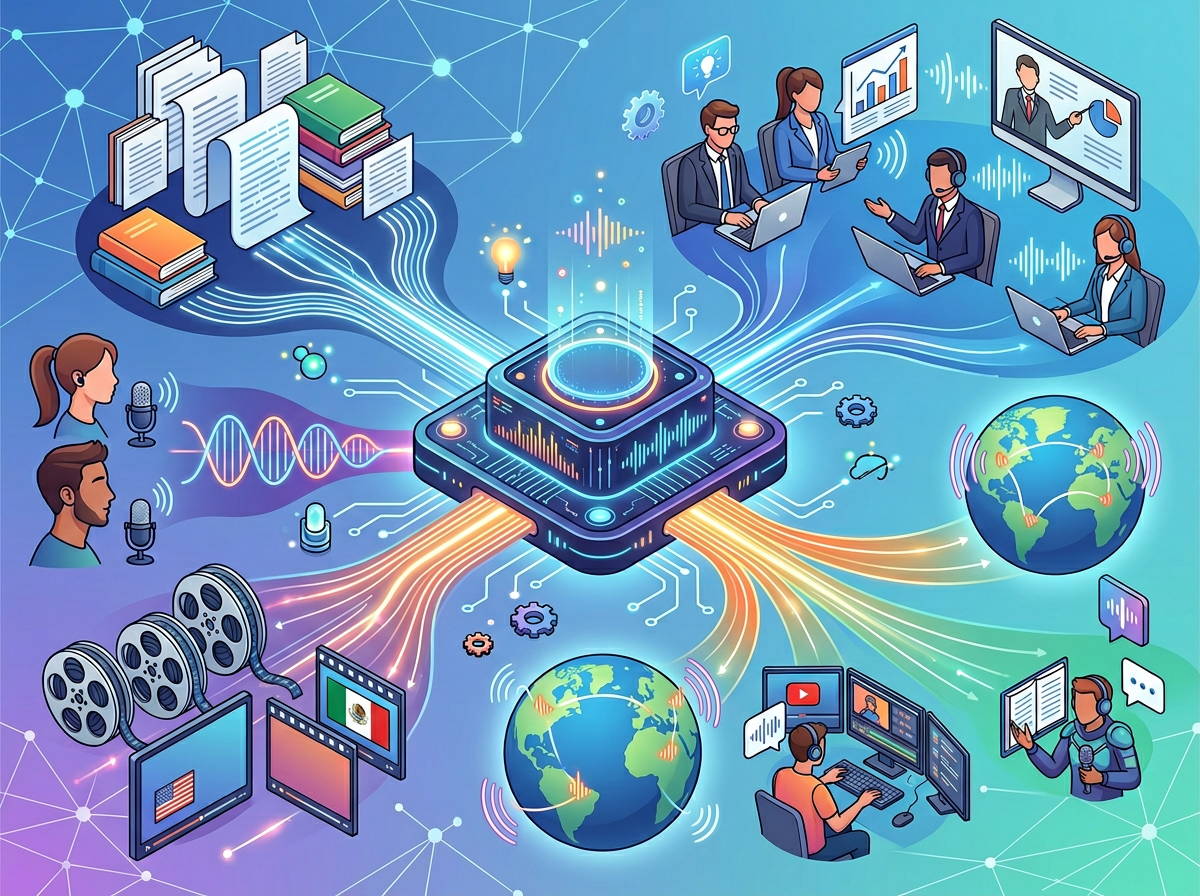
Stop paying voice talent rates for content your AI can produce in minutes — ElevenLabs gives US small teams a scalable voice production system without the studio overhead.
If you run a small business that creates content — YouTube videos, ads, onboarding recordings, product demos, podcasts — you already know the bottleneck. You write the script. Then you wait. You either record it yourself (which takes three takes and sounds inconsistent), or you hire a voice actor (which costs $200–$800 per finished minute in the US market), or you outsource to a freelancer who delivers on their schedule, not yours.
For a 3–10 person team in 2026, that bottleneck is a growth ceiling.
The US content economy has exploded. Short-form video, multilingual marketing, AI-generated explainers, automated customer onboarding — small teams are now expected to produce at a volume that was unthinkable five years ago. And yet most are still using workflows designed for a single creator who has unlimited time.
That’s not a content problem. That’s a systems problem.
ElevenLabs, one of the leading AI voice generation platforms available today, changes the math entirely. Instead of ad-hoc voice production that depends on a single person’s schedule or a freelancer relationship, small teams can build a repeatable, AI-powered voice production workflow — one that runs consistently whether you’re a two-person agency in Austin or a seven-person e-commerce brand in Chicago.
Unlike traditional voice production (which can run $5,000+ in combined labor and talent costs per quarter for active content creators), an AI voice generator for business like ElevenLabs compresses that into hours of work at a fraction of the subscription cost. The real value isn’t just speed — it’s the ability to systemize voice production so anyone on your team can execute it, not just the founder.
This article shows exactly how US small teams are using ElevenLabs to move from chaotic, one-off voice production to repeatable Solo DX workflows that scale.
Join thousands of small teams using ElevenLabs to eliminate voice production bottlenecks. See How It Works
What is Solo DX?
Solo DX — short for Small-Scale Digital Transformation — is a framework for US small business founders who are done doing everything themselves but haven’t yet hired an operations team to build the systems they need.
It’s the stage between “solo grind” and “mid-market machine.” You have 3 to 15 people. You have recurring clients or product lines. But your processes still live in your head, your Slack threads, or your Google Drive folders with names like “Final_v3_ACTUAL_FINAL.”
Solo DX draws a sharp distinction from two adjacent ideas:
| Framework | Who It’s For | Core Goal |
|---|---|---|
| AI Efficiency | Individuals | Do personal tasks faster |
| Solo DX | Small teams (3–15) | Build systems that run without the founder |
| Enterprise DX | Large orgs | Restructure at scale with IT and ops leadership |
Corporate SOP methodology — the kind taught in MBA programs and deployed by Fortune 500 operations teams — fails for US SMBs because it assumes headcount that doesn’t exist. A three-person design studio in Austin can’t hire a process consultant to document their workflows. A five-person podcast production agency in Denver doesn’t have time to run cross-functional alignment sessions.
What they can do is use AI tools to build lightweight, repeatable systems that any team member can execute.
Consider a real-world scenario: a 3-person branded content studio in Austin. The founder records all video narrations herself because “no one else sounds right.” When she’s traveling or sick, content production stops entirely. The business has a people dependency disguised as a quality standard. Solo DX thinking reframes the question: instead of “how do I get better at voice recording,” it becomes “how do I build a voice production system my whole team can run.”
That’s where ElevenLabs enters the picture — not as a productivity shortcut, but as the foundation of a systemized voice workflow.
Why AI is Key for Mini-Team Systemization

Problem 1: Voice production knowledge lives only in the founder.
Most small content teams have an implicit standard for how their brand sounds. The founder knows it intuitively. They can record a 90-second narration and it feels right. But when they try to hand that off — to a VA, a junior team member, a contractor — the output sounds wrong, and the correction process takes longer than just doing it themselves.
This is the classic founder knowledge trap. And in US content businesses, it’s costing teams 5–10 hours per week in correction cycles and founder bottlenecks.
Problem 2: New hires slow down content production.
US labor turnover sits near 47% across industries, which means small content teams are constantly onboarding new people into voice and content production workflows. Without documented processes, every new hire requires direct time from the founder to get up to speed — typically 2–4 weeks of reduced output before they’re producing independently.
An AI-powered voice system solves this at the root. When voice production follows a documented workflow — script format ? voice selection ? generation settings ? review checklist — any team member can execute it after a 30-minute onboarding session. The system carries the institutional knowledge, not the founder.
Problem 3: Output quality varies wildly across team members.
Even when small teams try to collaborate on content, the results are inconsistent. One team member produces engaging narration; another sounds flat. One uses the right pacing for ads; another records as if reading a terms of service document.
AI voice generation eliminates that variance at the output level. You define the voice, the tone parameters, and the style — and every piece of content produced through the system sounds like your brand, regardless of who runs the workflow.
The Cost Reality
| Approach | Typical US Cost | Time Required |
|---|---|---|
| Professional voice talent | $200–$800/finished minute | 3–7 days turnaround |
| In-house recording (founder time) | $75–$150/hour in opportunity cost | 2–4 hours per project |
| Freelance voiceover (Fiverr/Voices.com) | $50–$300 per project | 1–5 days turnaround |
| AI voice generator (ElevenLabs) | $5–$22/month subscription | 15–45 minutes per project |
For a small US content team producing 8–12 voice assets per month, the difference between traditional workflows and AI-assisted production can exceed $15,000 annually in combined talent and labor costs.
Join thousands of small teams using ElevenLabs to eliminate voice production bottlenecks. See How It Works
How ElevenLabs Enables Solo DX
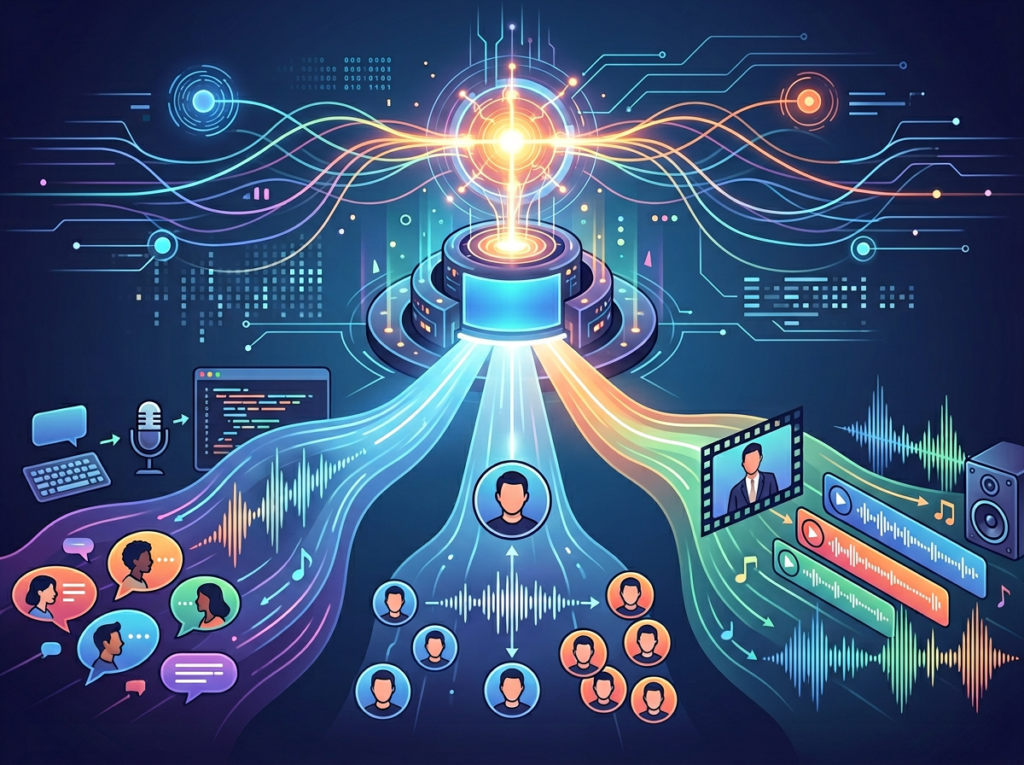
Feature 1: Studio + Voice Library to Brand Voice Documentation
ElevenLabs Studio allows teams to save specific voices, settings, and project configurations as reusable templates. For a Solo DX implementation, this means your brand voice is no longer in the founder’s throat — it’s encoded in a saved configuration anyone on the team can load and use.
ElevenLabs Studio — the platform’s core production environment — is built for exactly this kind of team-level workflow, with project management, version history, and shared voice libraries. A five-person marketing agency in San Francisco implemented this after their founder spent 12 hours in a single month recording narrations for client deliverables. After documenting their voice settings in ElevenLabs Studio and creating a simple script-to-audio SOP, they handed production to a junior account coordinator. Output time dropped to 45 minutes per asset. Estimated annual savings: $8,400 in founder time at $70/hour.
Feature 2: Multilingual Voice Generation to Scalable Market Reach
ElevenLabs supports multilingual voice generation AI across 29+ languages with accent-aware models. For US small businesses serving bilingual markets — Spanish-speaking customers in Miami, Mandarin-speaking audiences in the Bay Area — this isn’t a nice-to-have. It’s a revenue enabler.
The traditional alternative: hire bilingual voice talent, coordinate recording sessions, manage revision cycles. Cost: $300–$600 per language per asset. With ElevenLabs, the same workflow that produces your English narration produces your Spanish version in the same session, from the same script, with consistent brand voice. As noted in this technical overview of ElevenLabs’ capabilities, the platform’s multilingual models are designed to preserve natural intonation and pacing across languages — not just translate words.
Estimated savings for a team producing bilingual content 2x/month: $7,200 annually.
Feature 3: Voice Cloning to Consistent Brand Identity at Scale
ElevenLabs’ voice cloning feature allows teams to create a digital version of a specific voice — whether that’s the founder’s voice for brand continuity, or a custom voice persona built from a short sample. For YouTube channels, branded podcasts, and product demo libraries, this means producing AI voice for YouTube videos that sounds consistent across hundreds of pieces of content without the founder recording a single word.
The instant cloning feature works from as little as 10–30 seconds of clean audio. Professional cloning (available on paid plans) produces higher fidelity from 30+ minutes of studio-quality audio. For small teams building content libraries, this is the foundation of a scalable voice asset.
Explore ElevenLabs’ full feature set to understand which capabilities fit your team’s current workflow stage.
Join thousands of small teams using ElevenLabs to eliminate voice production bottlenecks. See How It Works | Used by content teams from Silicon Valley to New York
Common Pitfalls & How to Avoid Them
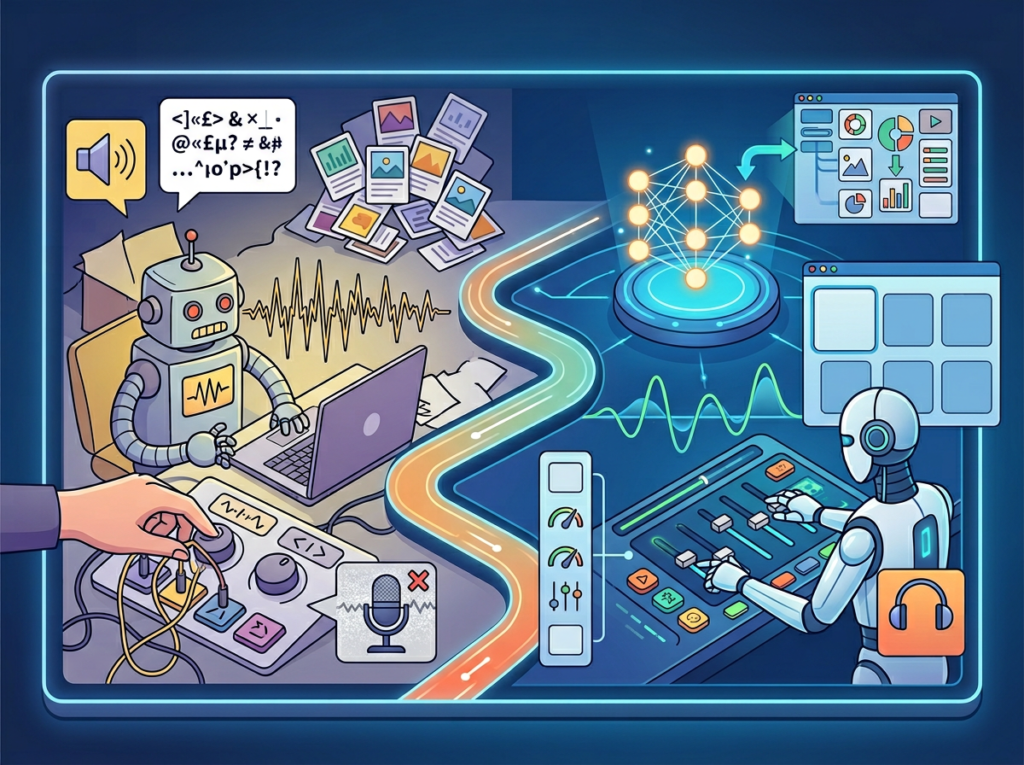
Mistake 1: Using AI voice generation as a one-off tool instead of a system.
Teams that get the most value from an AI voice generator for business build it into a defined workflow — script template ? generation settings ? review checklist ? delivery protocol. Teams that use it ad-hoc get inconsistent results and abandon it within 60 days. Build the system first, even if it’s just a one-page SOP.
Mistake 2: Skipping the voice configuration step.
ElevenLabs offers significant control over stability, clarity, and style parameters. Teams that skip this step and generate with defaults end up with audio that sounds generic or inconsistent across projects. Spend 30–60 minutes up front defining and saving your brand voice settings. That configuration becomes a permanent asset.
Mistake 3: Failing to review AI audio output before publishing.
AI voice generation is highly accurate but not infallible — unusual proper nouns, acronyms, and technical terminology occasionally require pronunciation adjustments. Build a 10-minute listen-through into your production checklist. This is especially important for generate voiceovers with AI that will appear in client-facing or public-facing contexts.
Join thousands of small teams using ElevenLabs to eliminate voice production bottlenecks. See How It Works
FAQs for Small Businesses
What is Solo DX?
Solo DX (Small-Scale Digital Transformation) is a framework for US founders managing small teams of 3–15 people who need to build repeatable business systems without a dedicated operations team. It focuses on using AI tools to systemize knowledge, reduce founder dependency, and create workflows that any team member can execute consistently.
Can small teams in the US actually afford AI voice generation tools?
Yes. ElevenLabs’ entry-level paid plans start at under $25/month, making them accessible to virtually any US small business with an active content operation. The relevant comparison isn’t whether you can afford the subscription — it’s whether you can afford the alternative. At US voice talent rates of $200–$800 per finished minute, even a single outsourced voiceover per month justifies the annual subscription cost.
Is ElevenLabs hard to set up for a small team?
No. The Studio interface is designed for non-technical users. Most small teams are producing their first AI voice assets within 30 minutes of signing up. The more meaningful investment is in the system design — defining your brand voice settings, documenting your production workflow, and training team members — which typically takes 2–4 hours and pays off immediately in consistency and speed.
Conclusion
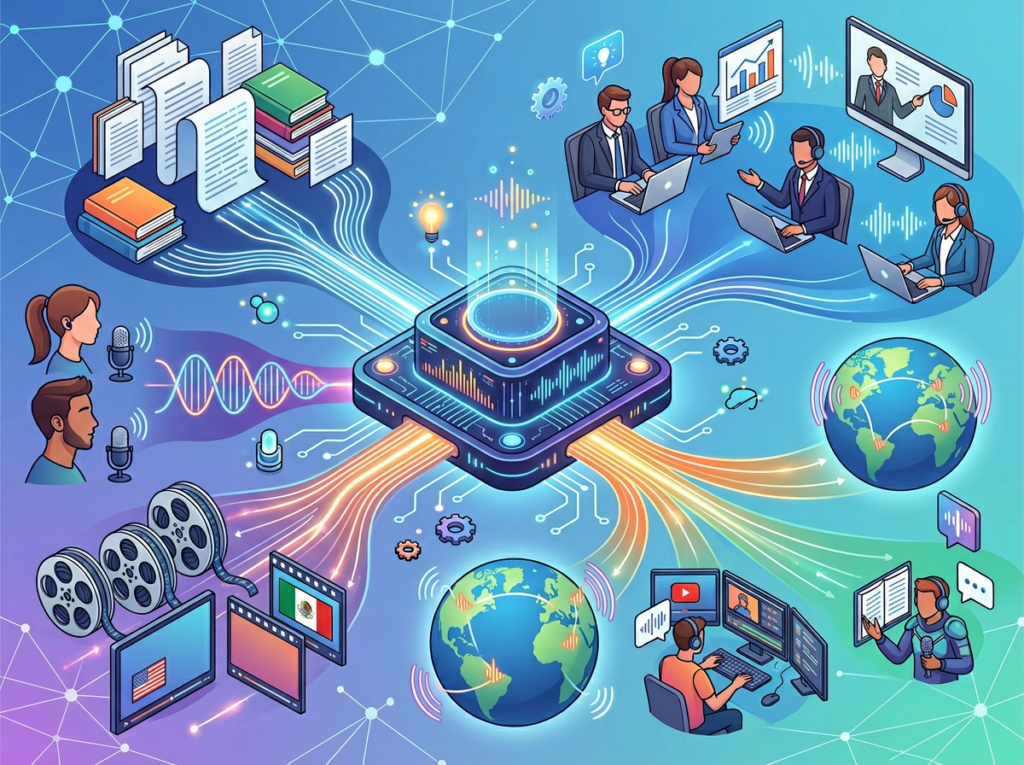
In 2026, American small businesses don’t need enterprise budgets to build professional-grade voice production systems. The tools exist. The workflows are achievable. The ROI is measurable within the first 30 days.
The real question isn’t whether an AI voice generator for business is worth the investment — it’s whether you’re going to keep treating voice production as an ad-hoc founder task or build it into a system your whole team can run.
Solo DX thinking says: start with one process, systemize it this week, and let your team own it. For content-producing US small businesses, voice production is the right place to start. It’s visible, it’s high-cost under traditional approaches, and it’s one of the fastest workflows to systemize with AI.
Pick one asset type — a product explainer, an onboarding walkthrough, a weekly YouTube intro — and build the ElevenLabs workflow around it. Document it. Train two people. Run it three times. By the end of the month, you’ll have a repeatable system and a clear picture of what to systemize next.
Get the full breakdown of ElevenLabs’ capabilities and see which plan fits your team’s content volume. The investment is measured in weeks. The payoff compounds for years.
Leave a Reply