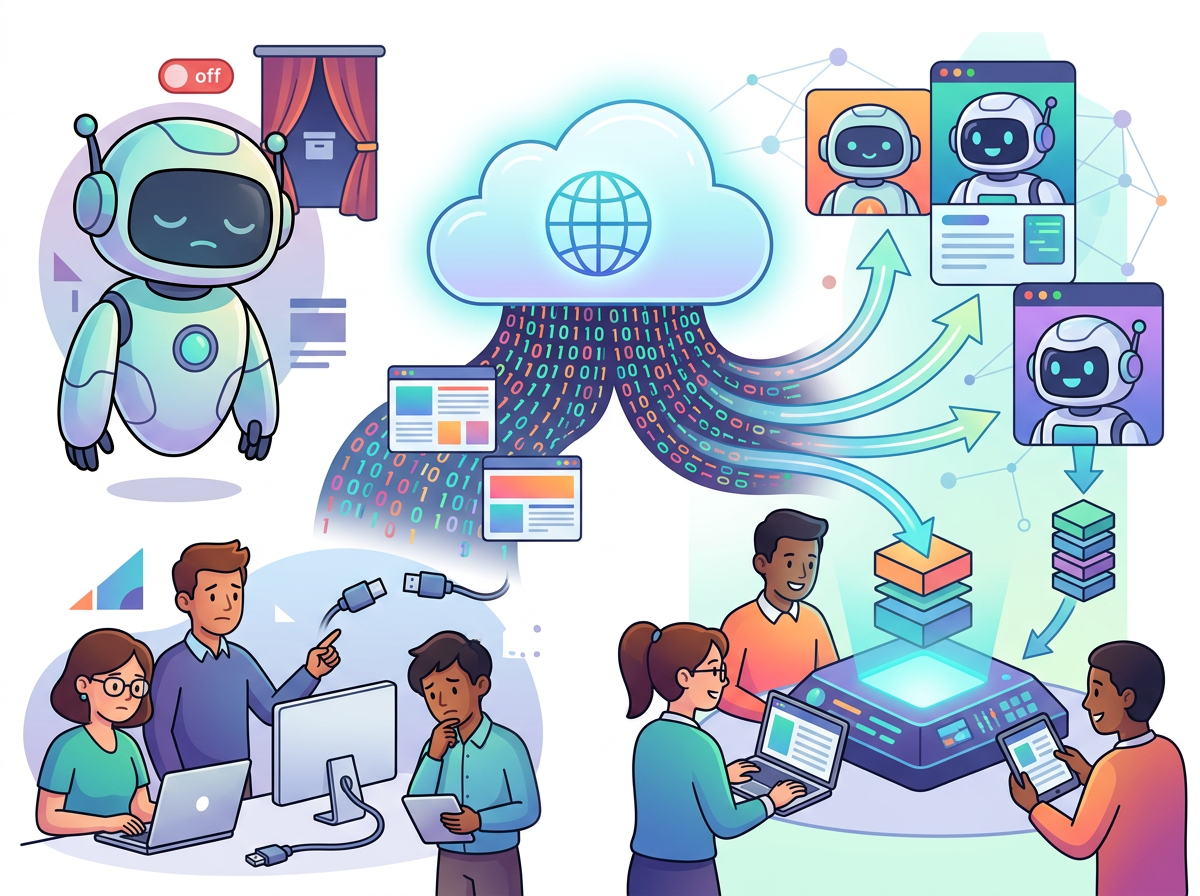
Reworkd AI is gone — but the replacement tools for ai web scraping for small business are better, cheaper, and built to last.
In early 2025, thousands of US small businesses received a message that stopped their data operations cold. Reworkd AI — a Y Combinator-backed platform that had become a go-to solution for no-code web scraping and AI-driven data extraction — announced it was shutting down its product on February 6, 2025.
For lean teams already stretched thin, this was the kind of disruption that costs real money. If you had been using Reworkd to monitor competitor pricing, pull lead lists, scrape regulatory filings, or feed a business intelligence dashboard, you suddenly needed a replacement — fast.
This isn’t just a story about one tool going dark. It’s a window into how fragile data operations become when small teams rely on a single platform without a systemization strategy behind it. In 2026, American small businesses managing between 3 and 15 people face an uncomfortable truth: knowledge and workflows that live only in one tool are a liability, not an asset.
The good news is that the shutdown of Reworkd actually coincided with a maturation of the AI web scraping market. The tools that have emerged or expanded since 2025 are more capable, more stable, and — critically — better designed for small teams that need reliable data pipelines without a dedicated engineering hire.
This guide is for founders, operations leads, and small team managers who want to understand what Reworkd was, why it shut down, and most importantly, which alternatives have the operational depth to replace it in 2026. Unlike typical “tool list” articles that skip the hard part, we’ll walk through each option with the Solo DX lens: which tool helps you build a repeatable, systemized data workflow — not just a one-off scrape.
Traditional approaches to data collection — hiring a freelance developer to build custom scrapers, paying a data services firm, or assigning an employee to manual research — routinely cost US small businesses $5,000 to $15,000 per project in labor alone, at $75–$150/hour for skilled work. The AI alternatives covered here run at $0–$99/month with minimal setup time. That delta matters enormously for teams operating without an operations budget.
For a curated comparison of current AI web scraping tools rated for small business use, see the full Reworkd AI review and alternatives guide on AI Plaza.
What Was Reworkd AI? A Solo DX Retrospective
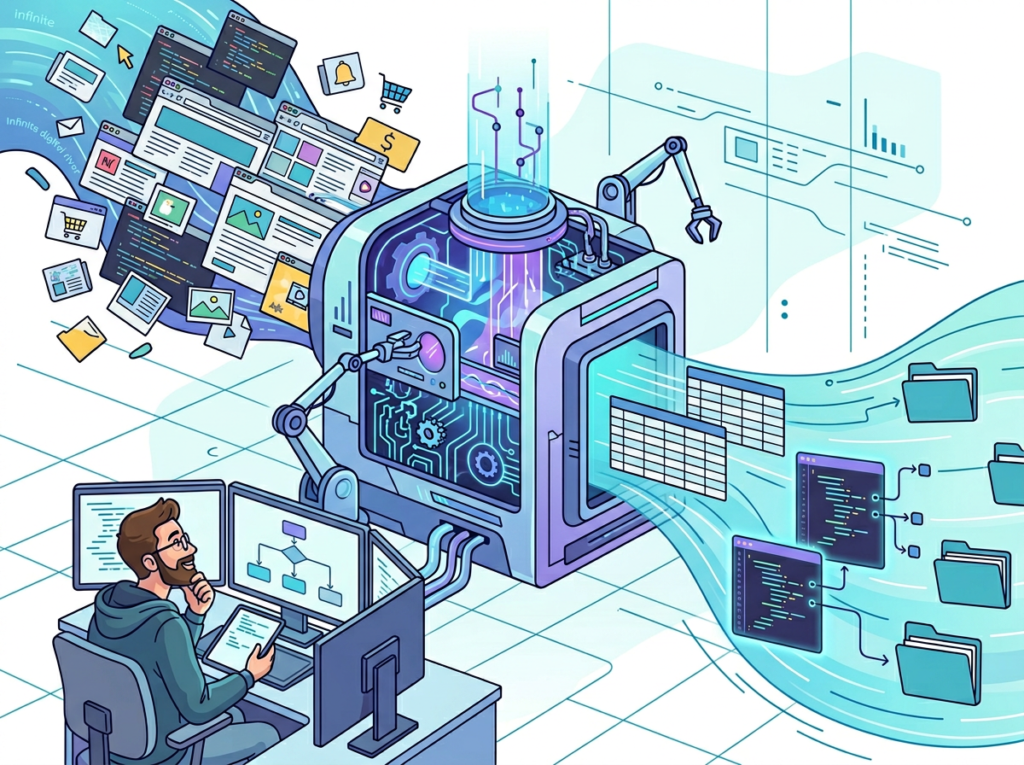
To understand why the shutdown matters and which alternatives truly fill the gap, it helps to understand what Reworkd actually did — and what made it different from older scraping tools.
Reworkd was an end-to-end AI web data extraction platform. You gave it a URL and a plain-English objective (“extract all job titles and contact info from this page”), and its AI agent handled the rest: analyzing the page structure, generating extraction code, running the scraper, and delivering clean, structured output in JSON or CSV. The key innovation was its “self-healing” capability — when a website’s layout changed, the agent could detect the shift and adapt, rather than simply breaking as traditional scrapers do.
For a full breakdown of what Reworkd AI offered before its shutdown, including its original pricing tiers and feature set, the AI Plaza detail page preserves the historical record and links to verified successor tools.
What made Reworkd compelling for Solo DX purposes — small-scale digital transformation led by US founders without an operations manager — was precisely this intelligence layer. Traditional scraping tools like older versions of Octoparse or import.io required technical configuration that put them out of reach for non-developers. Reworkd lowered that barrier dramatically.
The platform had drawn investment and endorsement from Paul Graham, Nat Friedman, and Daniel Gross — credibility that helped attract small business users who needed a trustworthy solution. Its case studies documented real results: one fashion startup reduced engineering time spent on scraper maintenance from 40 hours per month to near zero.
So why did it shut down? The company has not published a detailed post-mortem, but the pattern is familiar in early-stage SaaS: a product that gained traction as a consumer-facing agent tool (AgentGPT, Reworkd’s precursor) pivoted to enterprise web scraping, and the economics of that market — high infrastructure costs, aggressive competition from Apify and Browse AI, and the challenge of converting SMB users to paid plans — proved difficult to sustain.
The Solo DX lesson here is this: no data workflow is systemized if it depends on a single vendor’s survival. The teams that transitioned smoothly were those who had documented their scraping objectives, maintained exports of their data, and treated their data pipeline as a process — not a product feature.
That documentation habit is the difference between a one-week disruption and a three-month operational crisis.
Why AI-Driven Data Collection Is Non-Negotiable
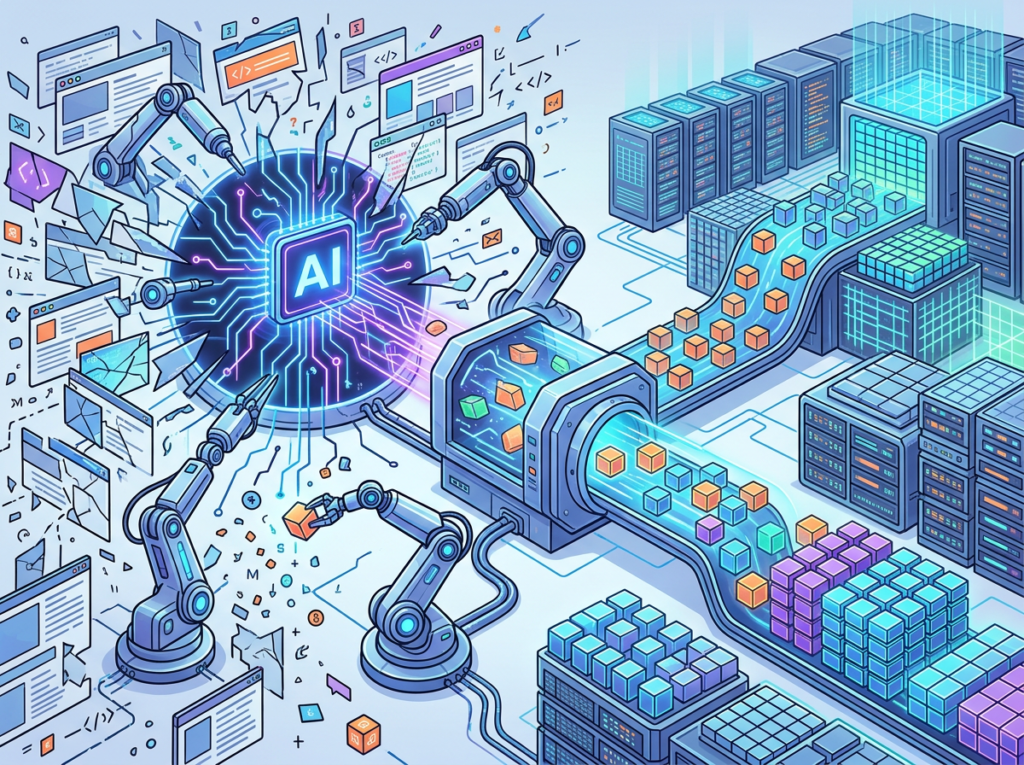
Problem 1: Research and competitive monitoring is eating founder time.
The average US small business founder spends 6–10 hours per week on information-gathering tasks — tracking competitors, monitoring pricing, pulling contact data, reviewing industry news. At a conservative $75/hour opportunity cost, that’s $22,500 to $37,500 per year in founder attention that could go toward sales, product, or operations.
Problem 2: Manual data collection doesn’t scale.
When you hire your third or fifth employee, you cannot hand them a sticky note that says “check these 12 competitor websites every week.” You need a documented, automated process. Teams that skip this step experience what operations consultants call “re-onboarding from scratch” every time a key person leaves — and with US employee turnover running above 40% in many sectors, that’s a frequent cost.
Problem 3: Data quality is inconsistent without AI oversight.
Human-collected data contains errors, gaps, and format inconsistencies that compound over time. AI-driven extraction with structured output schemas eliminates most of this variation, making your downstream analysis and reporting far more reliable.
The cost comparison is straightforward. Manual data collection or custom-built scrapers: $5,000–$15,000 per project in US labor. AI web scraping tools: $0–$99/month, setup in hours. For a team of five managing even basic competitive intelligence, the ROI of switching to an AI-driven workflow pays for itself within the first month. To see how today’s top tools stack up, compare AI web scraping options on AI Plaza.
As noted in this breakdown of AI-powered web data approaches, the shift toward agentic AI for data work is accelerating — with the AI agent market projected to exceed $42 billion by 2030. Small teams that build these workflows now will have a compounding advantage over those that wait.
For a curated comparison of current AI web scraping tools rated for small business use, see the full Reworkd AI review and alternatives guide on AI Plaza.
How the Best Reworkd Alternatives Enable Solo DX for Teams
Bardeen — Best for Full Workflow Automation Beyond Scraping
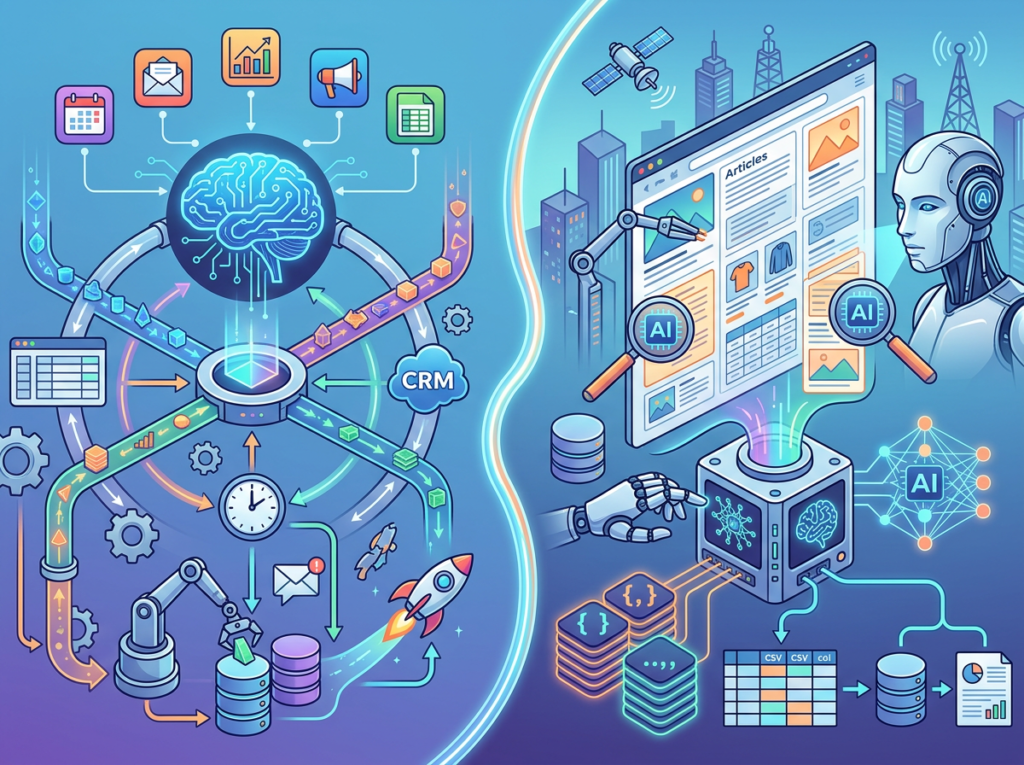
Where Browse AI and Thunderbit focus on data extraction, Bardeen positions itself as a full workflow automation platform that happens to include web scraping. Think of it as a no-code tool that connects scraping, data processing, and downstream actions in a single automated sequence.
Key capabilities for Solo DX:
- “Playbooks” (pre-built automations) for lead generation, CRM enrichment, research workflows
- Native integrations with Salesforce, HubSpot, Notion, Slack, Gmail, Google Sheets
- AI Magic Actions: describe what you want to happen in plain English, and Bardeen generates the automation
- Runs automations in the background on a schedule — no active browser session required
ROI for a Miami SaaS startup: A 6-person sales team was manually enriching CRM leads from LinkedIn and company websites, averaging 12 minutes per lead. Bardeen’s automated enrichment playbook brought that to under 1 minute per lead — saving approximately $18,000/year at $60/hour across 500 annual leads.
Pricing: Free plan for basic use; paid plans from $10/month (individual) to $20/month (team features). One of the most affordable options for teams that need automation beyond pure scraping.
Bardeen’s strength is workflow depth. If your use case involves not just collecting data but acting on it — updating a CRM, sending a Slack alert, creating a Notion entry — Bardeen handles the full chain without duct-taping multiple tools together.
PhantomBuster — Best for Lead Generation and Sales Workflows
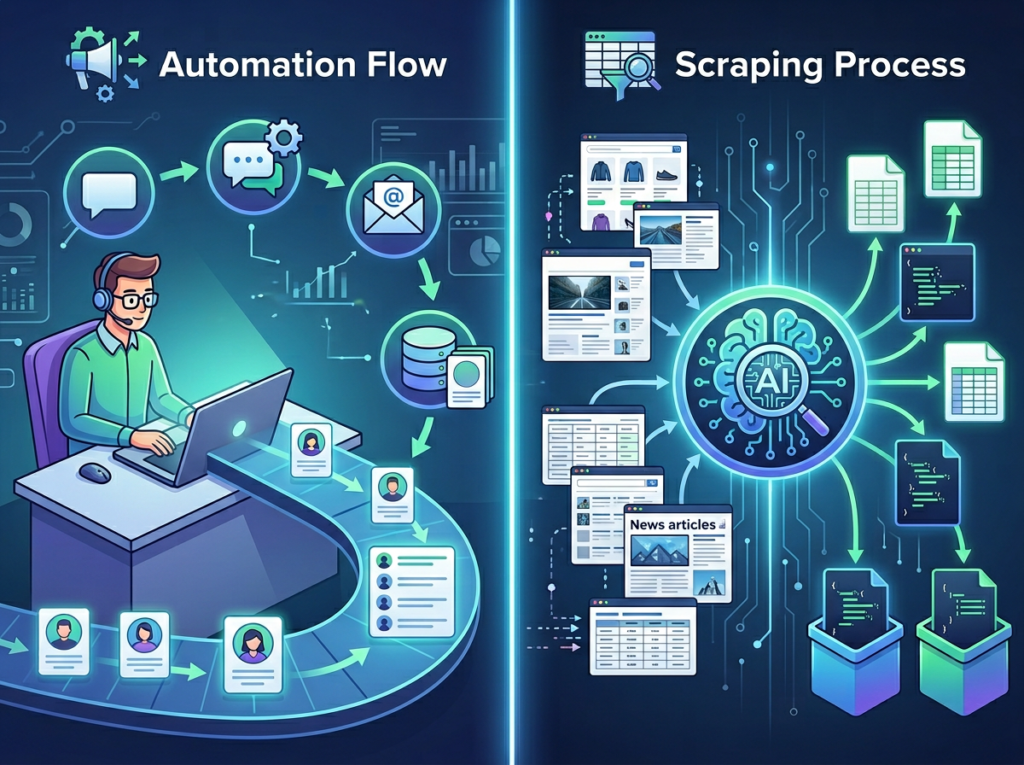
PhantomBuster is purpose-built for lead generation automation, particularly from LinkedIn, Twitter/X, and other social platforms. If Reworkd’s primary use case for your team was building prospecting lists or enriching contact data, PhantomBuster is the most direct successor.
Key capabilities for Solo DX:
- LinkedIn automation: connect requests, profile scraping, company data extraction, Sales Navigator integration
- “Phantoms” (pre-built agents) for 50+ platforms including Instagram, Twitter, Google Maps, Product Hunt
- Lead enrichment: automatically append email addresses, company data, and job titles to scraped lists
- Export directly to HubSpot, Salesforce, Pipedrive, or CSV
ROI for a Chicago consulting firm: A 4-person business development team was manually building prospect lists from LinkedIn, averaging 3 hours per list of 100 contacts. PhantomBuster’s LinkedIn scraper built the same list in 8 minutes — saving approximately $9,360/year on prospecting labor alone.
Pricing: Free trial; paid plans from $56/month (2 hours of execution time/day) to $128/month (unlimited execution). Higher cost than Browse AI but justified for teams with high-volume lead generation needs.
The important caveat: PhantomBuster operates in a gray area with LinkedIn’s terms of service, as does any scraping of that platform. US teams should review current platform policies and consider the risk profile for their specific use case.
Common Pitfalls When Migrating from Reworkd
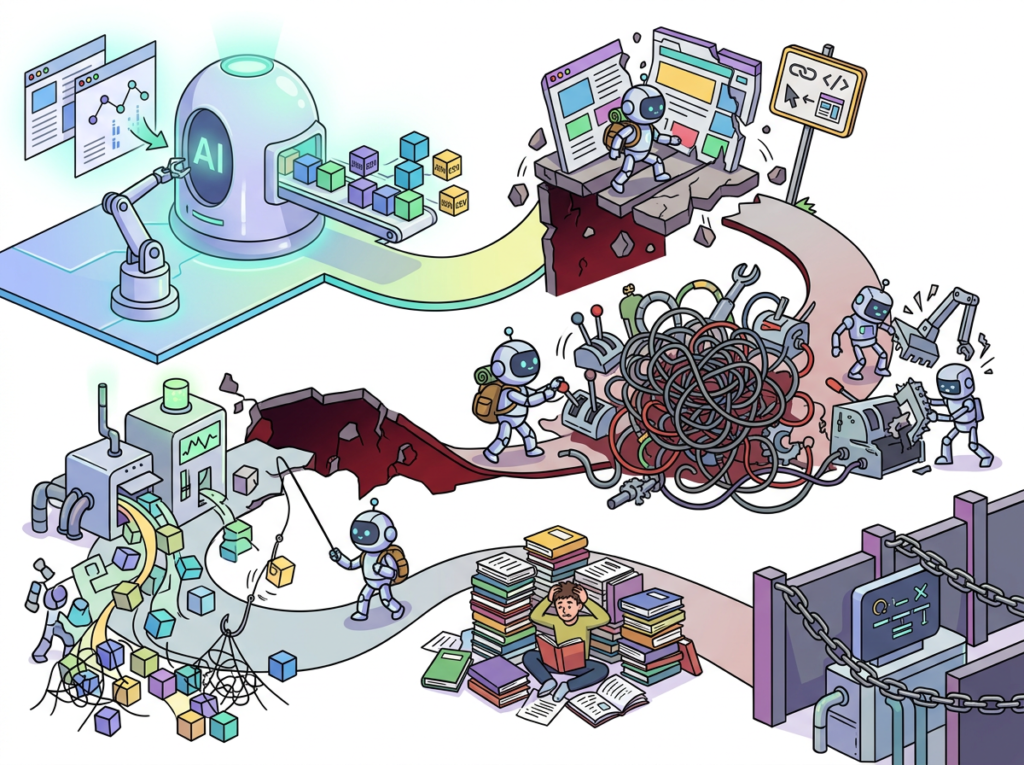
Mistake 1: Rebuilding the same undocumented workflow in a new tool.
If your Reworkd setup was not documented — meaning nobody on your team could rebuild it from written instructions — you have an opportunity to fix that in the migration. Every new scraping workflow should have a one-page SOP: what data is collected, from which sources, on what schedule, who reviews it, and what happens with the output. Explore the AI Plaza tool directory for workflow templates and migration guides.
Mistake 2: Choosing the most technically impressive tool instead of the most operationally suitable one.
Reworkd’s AI agent architecture was genuinely impressive — but many small teams were using it for tasks that Browse AI’s simpler monitoring robots handle just as reliably at lower cost. Match tool complexity to actual need.
Mistake 3: Treating data collection as a one-person task.
The most resilient small team data workflows involve at least two people who understand how to operate the tooling. Single points of knowledge failure are the operational equivalent of storing your only backup on one hard drive.
As this overview of agentic AI platforms illustrates, the underlying agent technology powering these tools continues to mature rapidly — which means the workflows you document today should be reviewed and updated at least quarterly as platform capabilities evolve. For historical context on how AI-powered D2D and data workflows were positioned before the shutdown, this archived post from Reworkd’s own blog shows the direction the product was heading.
For a curated comparison of current AI web scraping tools rated for small business use, see the full Reworkd AI review and alternatives guide on AI Plaza.
FAQs for Businesses Evaluating Reworkd Alternatives

What exactly happened to Reworkd AI? Reworkd announced the discontinuation of its product effective February 6, 2025. The company has not published a detailed explanation, but the shutdown followed a pivot from the earlier AgentGPT product toward enterprise web scraping. Users should treat the reworkd.ai domain as inactive for all practical purposes.
Can I still access my data from Reworkd? Data exports should have been completed before the shutdown deadline. If you have historical exports, they remain usable. For migrating existing scraping configurations to a new platform, you will need to recreate your extractors from scratch — the configurations are not portable across tools.
What’s the difference between AI Efficiency tools and Solo DX tools? AI Efficiency tools help individual contributors do their current tasks faster — a better writing assistant, a faster image tool. Solo DX tools help small teams build systems — documented, repeatable workflows that survive personnel changes and scale as the team grows. The tools in this article are evaluated as Solo DX solutions, not just individual productivity boosters.
Is AI web scraping legal for small businesses in the US? Generally yes, for publicly accessible data. The legal landscape involves several considerations: the Computer Fraud and Abuse Act covers unauthorized access, the hiQ v. LinkedIn case established important precedents around public data, and individual platform terms of service may prohibit automated access. Consult legal counsel for specific use cases, particularly those involving personal data subject to state privacy laws (CCPA, etc.).
Which tool is easiest to set up for a non-technical founder? Browse AI and Thunderbit are the most accessible for non-technical users. Browse AI’s training interface requires no code; Thunderbit’s AI-generated field suggestions require essentially no configuration at all. Both can have a working data collection workflow running within 2 hours of signup.
Conclusion
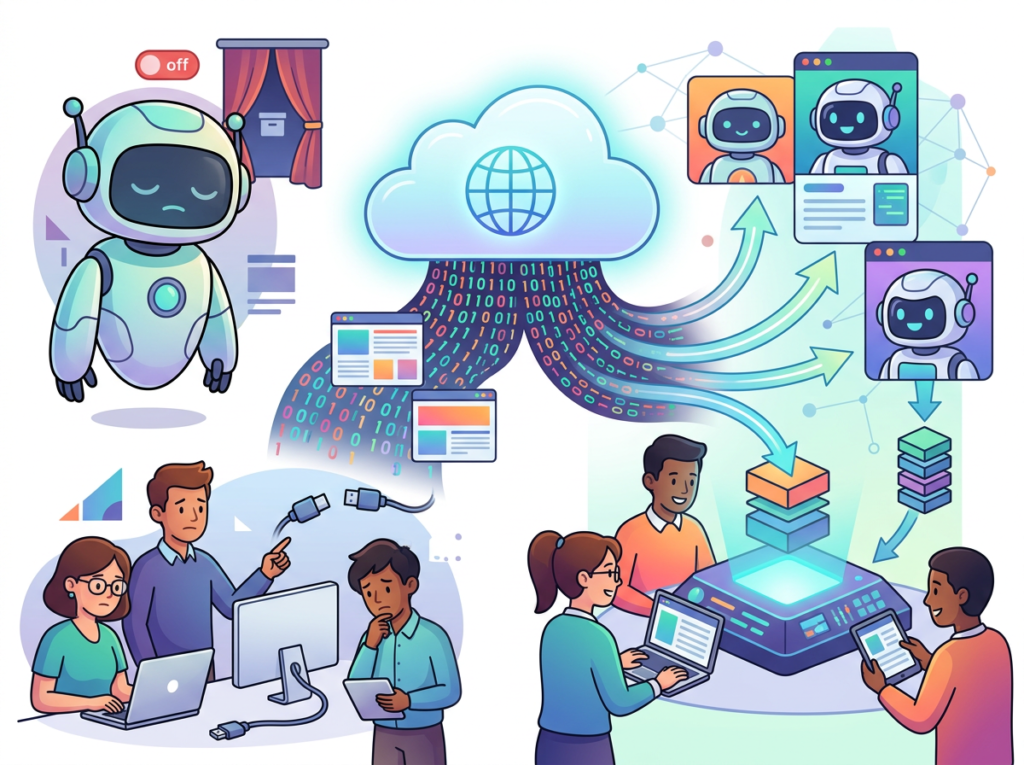
Reworkd AI’s shutdown is a reminder that Solo DX — small-scale digital transformation for US teams — requires something more durable than a dependency on any single platform. The teams that navigated the transition most smoothly weren’t necessarily the most technical. They were the most organized: their workflows were documented, their data was exported, and their processes were designed to survive vendor changes.
In 2026, American small businesses managing 3 to 15 people don’t need enterprise-level scraping infrastructure to run competitive intelligence, lead generation, and operational monitoring workflows. Browse AI, Thunderbit, Bardeen, and PhantomBuster collectively cover the full range of use cases that Reworkd served — often at lower cost and with better integration support for non-technical teams.
The window to act is now. Every week your team spends on manual data collection is a week of compounding operational debt. Start with one workflow — your most time-consuming recurring research task — document it, automate it with one of the tools above, and measure the time recovered. That single systemized process is the foundation of a scalable, resilient data operation.
For a curated comparison of current AI web scraping tools rated for small business use, see the full Reworkd AI review and alternatives guide on AI Plaza.
Leave a Reply