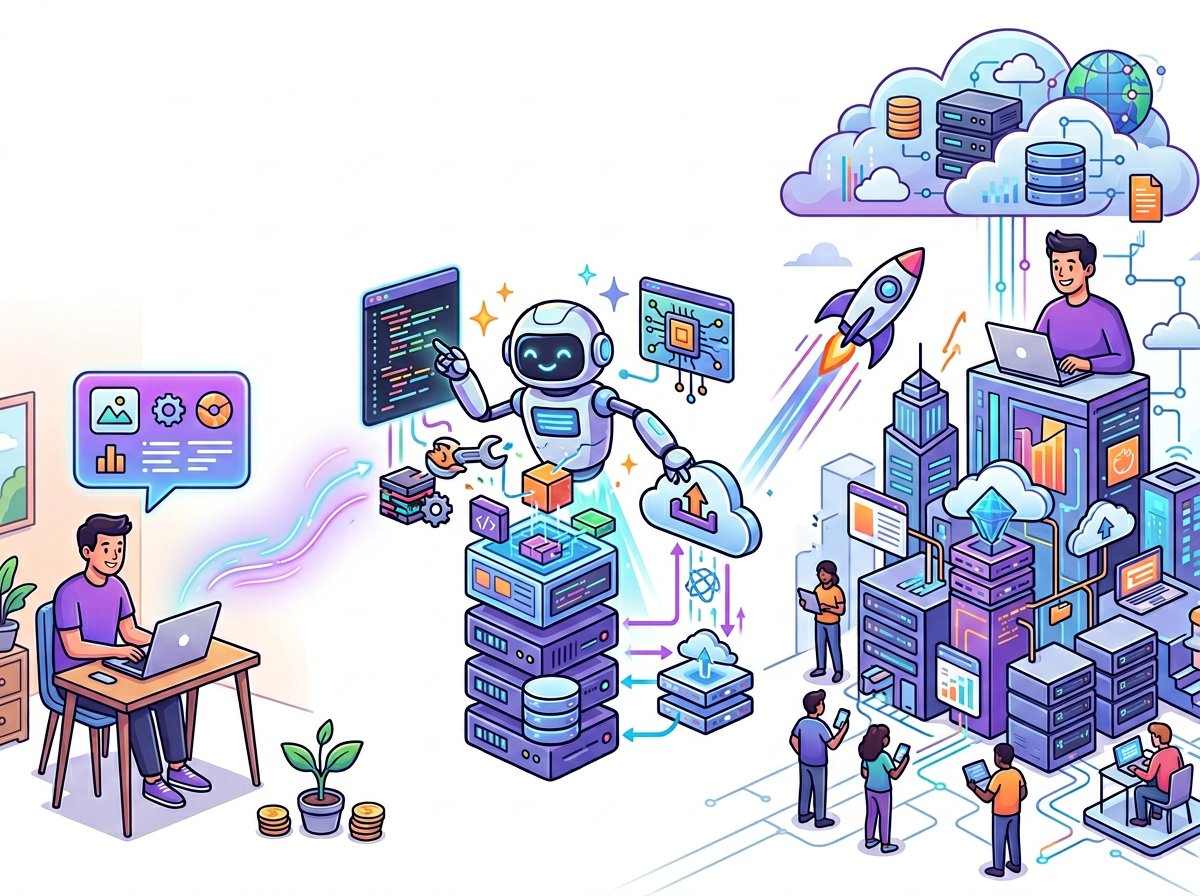
Small teams that ship custom internal tools with Replit AI stop losing 15+ hours a week to manual workflows — and they do it without hiring a single developer.
Running a 5-person team in 2026 should feel like running a machine. Instead, for most US small business founders, it feels like managing chaos with a group chat.
The symptoms are familiar: your onboarding checklist lives inside someone’s head. Your client reporting process exists as a loosely remembered conversation from last quarter. Your newest hire spent their first three weeks shadowing a senior employee who couldn’t afford to be shadowed. And the knowledge that makes your business actually work — the workflows, the judgment calls, the repeatable steps — is scattered across Slack threads, email chains, and a Google Drive folder nobody has organized since 2023.
This is the hidden operations crisis hitting US small businesses hard in 2026. It’s not a talent problem. It’s a systems problem.
The old solution was expensive: hire an operations manager, bring in a consultant, or dedicate months to writing SOPs that nobody reads. At US labor rates of $75–$150 per hour for skilled operations staff, documenting and automating your team’s workflows could easily cost $10,000–$20,000 in billable time before you see a single result.
Replit AI changes the math. As an AI-powered development platform that lets non-technical founders and small team leads build real, functional internal tools without writing code, Replit AI has become one of the most practical entries in the ai workflow automation for small business toolkit. Instead of buying off-the-shelf SOP software that never quite fits your process, your team can build exactly the internal tools you actually need — in hours, not months.
This guide shows how US teams of 1–10 people are using Replit AI to turn operational chaos into repeatable, scalable workflows. The goal isn’t to make you a developer. It’s to give your team an operating system it can actually run on.
Try Replit AI Free | No credit card required | Trusted by 10,000+ US teams
What is Solo DX?
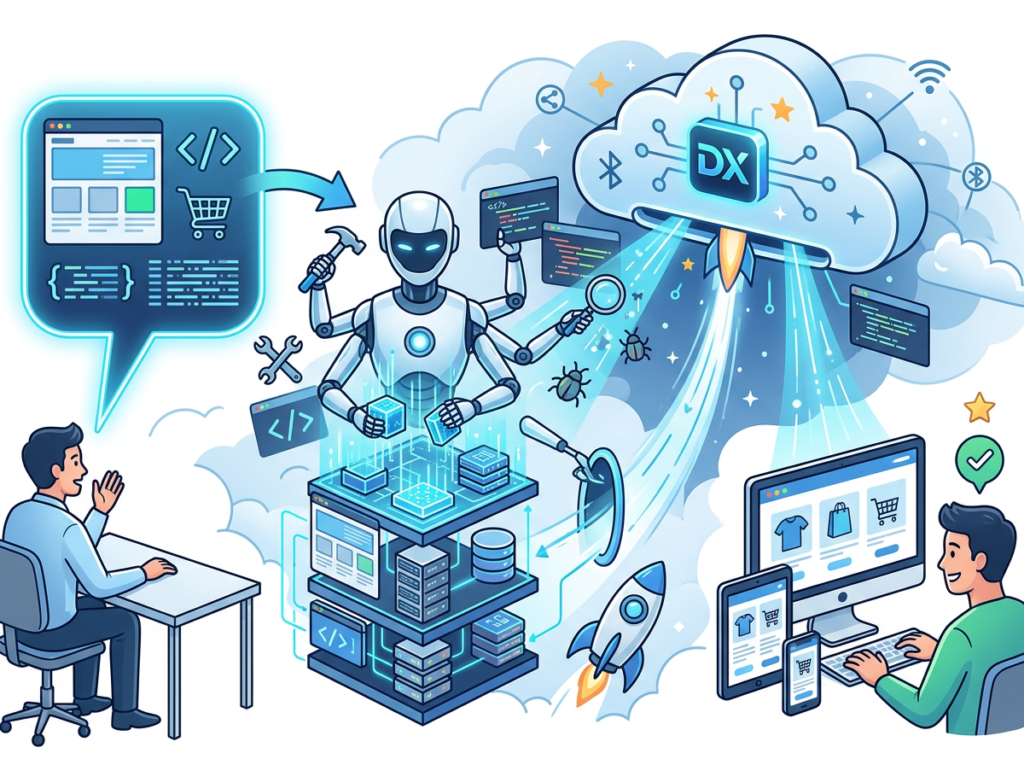
Solo DX — small-scale digital transformation — is the process of systematizing a growing US small business without an enterprise operations budget, a dedicated IT department, or a team of project managers.
It’s what happens when a founder realizes that what got them from 1 to 5 people (hustle, improvisation, tribal knowledge) will absolutely break them at 8, 10, or 15. Solo DX is the deliberate work of replacing founder-dependent workflows with documented, AI-assisted systems that new hires can follow, clients can depend on, and the business can run on even when the founder steps back.
Solo DX vs. Other AI Approaches
| Category | Focus | Who It’s For |
|---|---|---|
| Solo DX | Systemization, SOPs, team workflows | Founders managing 1–15 people |
| AI Efficiency | Individual productivity, task speed | Solopreneurs and freelancers |
| AI Revenue Boost | Marketing, sales, lead generation | Growth-focused teams |
| AI Workflows | Cross-tool automation | Operations-mature teams |
Corporate SOP methodology — built for Fortune 500 HR departments and ISO certification audits — fails US SMBs for three reasons. First, it requires dedicated staff to create and maintain documentation. Second, it assumes stable, repeatable processes that small businesses haven’t fully defined yet. Third, it produces documents nobody uses because they’re written for compliance, not for the person actually doing the work at 9am on a Tuesday.
Solo DX is different. It starts with the tools your team is already using, the workflows that are already half-working, and asks: what would it take to make this reproducible?
Consider a 3-person design studio in Austin, Texas. The owner handles client intake, one designer handles production, and one coordinator handles project management. The owner’s client intake process exists entirely in her head — intake questions, scope conversations, proposal structure, pricing logic. When she tried to hand it off, the coordinator produced proposals that were consistently off-brand and underpriced. Not because the coordinator wasn’t capable, but because the process had never been made explicit.
With Replit AI, she built a custom intake tool: a web-based form that walked coordinators through her exact intake questions, calculated scope based on project type, and auto-populated a proposal template. It took her one afternoon. It saved her 6 hours a week.
That is Solo DX. And explore Replit AI’s features to understand exactly how that kind of tool gets built without a development background.
Why AI is Key for Mini-Team Systemization

Problem 1: Knowledge Lives Only in the Founder’s Head
The founder is the system. They know which clients need extra hand-holding, which vendor to call when the usual one is backed up, how to handle a scope creep conversation without losing the relationship. This isn’t arrogance — it’s the natural result of building something from scratch.
The problem is that founder-dependent knowledge doesn’t scale. When the founder is on vacation, sick, or simply in back-to-back meetings, the team stalls. Decisions get deferred. Clients wait.
Traditional solution: Hire an operations consultant to conduct knowledge extraction interviews and produce documentation. Average US cost: $150/hour × 40 hours = $6,000 minimum, with no guarantee the documentation will actually be used.
AI solution: Use a tool like Replit AI to build a decision-support interface — essentially a lightweight internal tool that walks team members through the founder’s logic, step by step, for any recurring scenario. Build time: 2–4 hours. Cost: included in existing subscription.
Problem 2: New Hires Slow Down Operations Instead of Accelerating Them
US labor turnover was approximately 47% annually across industries as of recent studies, and small businesses feel this disproportionately. Every new hire who takes 4–6 weeks to onboard is a drain on senior staff time, client relationships, and output quality.
The root cause is almost never the new hire. It’s the absence of systems they can learn from independently. When onboarding means shadowing someone who’s already at capacity, quality degrades and resentment builds on both sides.
At $65/hour average for a mid-level US employee, a 4-week onboarding shadow period costs roughly $10,400 in combined labor. Compress that to one week with structured, AI-built onboarding tools and you recover $7,800 per hire.
Problem 3: Quality Varies Wildly Across Team Members
In a 3-person team, quality variance is manageable. In a 7-person team, it’s a client satisfaction problem. When two different people handle the same type of task and produce consistently different outputs, the business looks unreliable.
The fix isn’t micromanagement. It’s a shared system — templates, checklists, decision trees — that create a floor of quality everyone can hit, so variance narrows regardless of who’s doing the work.
Manual documentation of these systems: $5,000–$8,000 in US labor. AI-assisted tool-building with Replit AI: $0–$50/month, hours of build time.
Try Replit AI Free | No credit card required | Trusted by 10,000+ US teams
How Replit AI Enables Solo DX
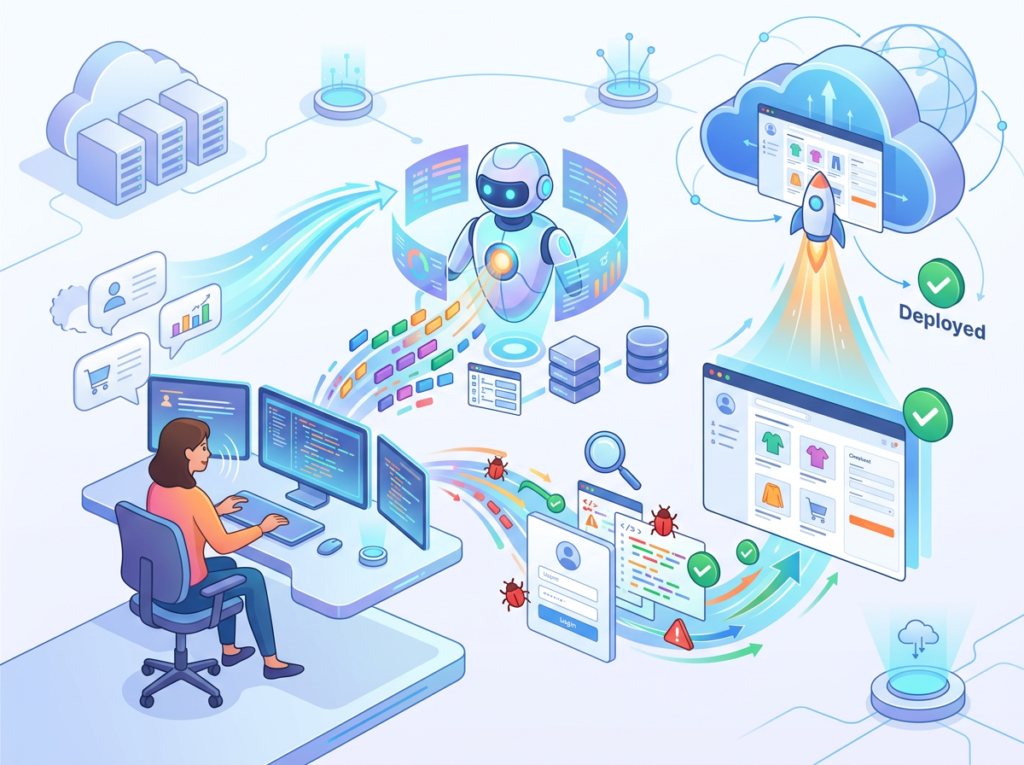
1. AI-Generated Internal Tools, $2,000–$4,000 Saved Per Documentation Cycle
The core capability: Replit AI lets you describe what you want in plain English and builds a functional web app. No boilerplate. No framework selection. No environment setup. You describe the tool, the agent builds it, and you iterate.
For a small business, this means you can build an internal onboarding checklist app, a client intake form, a project scoping calculator, or a quality review checklist — without a developer. The documentation isn’t a static Word document that gets ignored; it’s a living tool the team actually uses.
A Denver-based marketing agency owner described prompting Replit AI to build a client deliverables tracker: scope in, deliverable out, status visible to everyone. As noted in this breakdown of cost-efficient Replit workflows, the key is treating each tool as a single Repl with focused functionality rather than building enterprise-scale architecture.
2. Integrated Database, $78,000–$124,800 Annual Savings
Once your internal tool is running, the data it generates has operational value. Replit AI’s built-in database (powered by Neon) stores form submissions, tracking data, and workflow logs automatically — no external database setup required.
For a 10-person US team at $65/hour average, eliminating 2–4 hours of weekly manual data re-entry per person saves $6,500–$13,000 per month. Over a year: $78,000–$156,000 in recovered labor.
3. Template and Workflow Automation, $6,000/Year Saved
Replit AI can build tools that auto-generate documents from structured inputs: client proposals, project briefs, status reports. A small team that produces 10 client-facing documents a month at 30 minutes each is spending 60 hours per month on document production. Automating 80% of that template work saves 48 hours/month at $65/hour: $3,120/month, $37,440/year.
The Replit AI documentation on effective prompting reinforces this approach — the most productive results come from building incrementally, one focused tool at a time, rather than trying to build a comprehensive platform in a single session. For a detailed breakdown of Replit AI’s full feature set for team operations, see the detailed breakdown of Replit AI on AI Plaza.
Ready to systemize your US team operations in under a week? Try Replit AI Free | No credit card required | Trusted by 10,000+ US teams
Common Pitfalls & How to Avoid Them
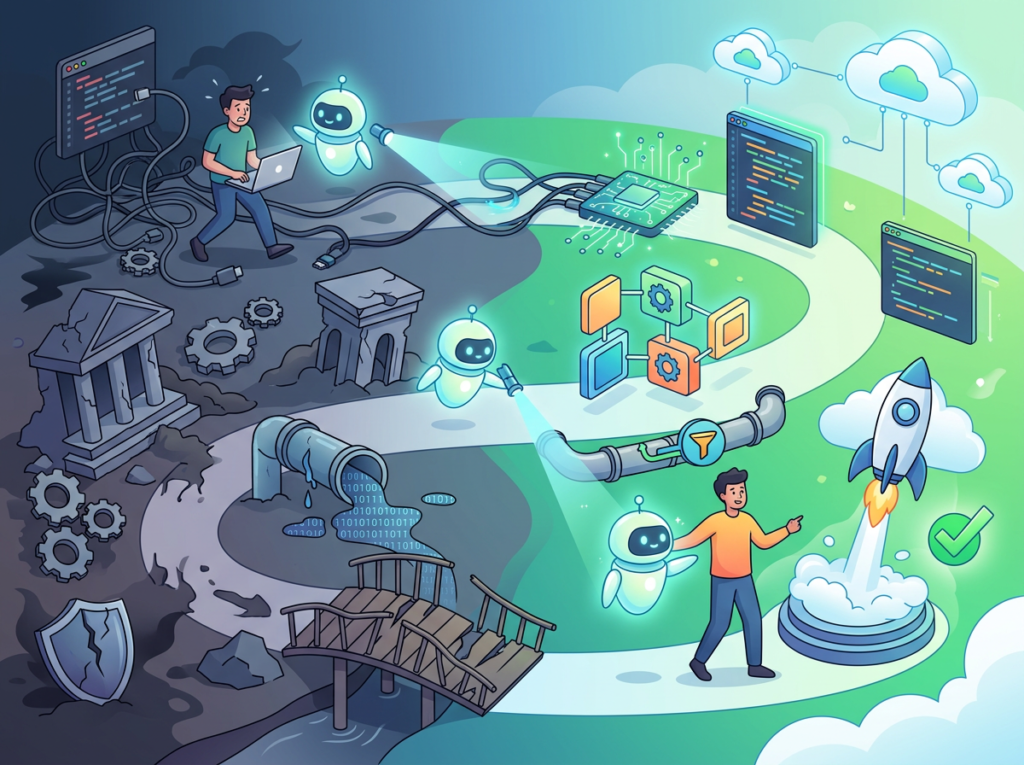
Mistake 1: Using Too Many Disconnected Tools
A 7-person team running 12 different SaaS subscriptions isn’t more efficient — it’s more fragmented. When your intake form is in Typeform, your project tracking is in Asana, your status updates are in Slack, and your client reporting is in Google Slides, you’ve created 12 data siloes that nobody is responsible for reconciling.
The fix: Before adding another tool, ask whether you could build the missing piece in Replit AI and connect it to what you already have. One custom internal app often replaces three subscriptions and creates a cleaner data flow.
Mistake 2: Delegating Without Documentation
Delegating a task without documenting how you want it done is just delayed failure. The team member will do it their way — which may be reasonable, but won’t match your standards or client expectations.
Before you delegate any recurring task to a team member, build or document the exact process first. Replit AI lets you turn that process into a tool the delegate can actually follow, rather than a document they’ll skim once. Discover Replit AI for building delegation-ready workflow tools that keep quality consistent.
Mistake 3: Failing to Review AI Output
AI-built tools require human review — especially for client-facing outputs and financial calculations. A reporting tool that miscalculates a metric, or an intake form that misses a critical qualifier, can create downstream errors that cost more to fix than the tool saved.
Build a review step into every AI-assisted workflow. For high-stakes outputs, the review should be mandatory before delivery.
FAQs

What’s the difference between AI Efficiency and Solo DX?
AI Efficiency tools make individual users faster at specific tasks — writing, summarizing, researching. Solo DX is about the team, not the individual. It’s concerned with whether your organization can operate without the founder in every loop. A Solo DX approach systemizes the handoffs, the decisions, and the knowledge transfer that allow a team to function at consistent quality.
Can small teams afford to use AI?
Yes. Replit AI offers a free plan sufficient for initial tool-building and testing. Paid plans start at a fraction of what traditional operations consulting costs. The more relevant question is whether US small teams can afford not to use it: at $65–$100/hour average US labor costs, every hour of recoverable operational friction represents real money.
Is Replit AI hard to set up?
No. The platform is designed for users without development backgrounds. You describe what you want in plain English, and the AI agent builds it. The learning curve is primarily in prompt quality — the more specific your description, the better the output. Most first tools are running within 2–4 hours for first-time users.
Conclusion
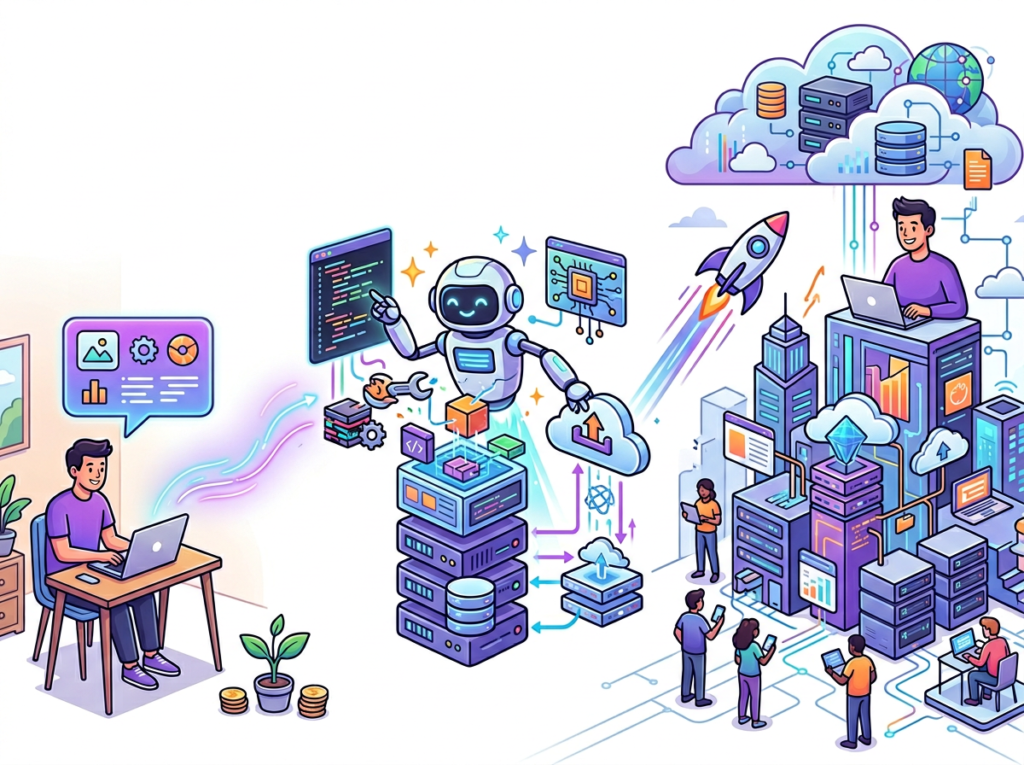
In 2026, American small businesses don’t need enterprise budgets to build enterprise-level systems. The tools that used to require a development team, an operations consultant, and months of runway are now accessible to any founder willing to spend an afternoon describing what they need.
The ai workflow automation for small business category has matured significantly — but Replit AI occupies a specific and underused niche within it. It’s not a writing tool, an image tool, or a chatbot. It’s an infrastructure tool. It lets 5-person teams build the operational backbone that used to be the exclusive advantage of companies 10 times their size.
The Solo DX approach is straightforward: start with one process that’s currently founder-dependent, document the logic, and build a tool that embeds that logic into the team’s workflow. One tool, one process, one week.
The compounding effect is real. Teams that systemize their first process in week one usually have three or four running by month two. By month six, the founder has stepped out of the operational loop — and the business runs better for it.
Start with one process. Systemize it this week. Use the full Replit AI review to understand exactly what the platform can and can’t do for your team’s specific operations needs — then build.
Try Replit AI Free | No credit card required | Trusted by 10,000+ US teams
Leave a Reply