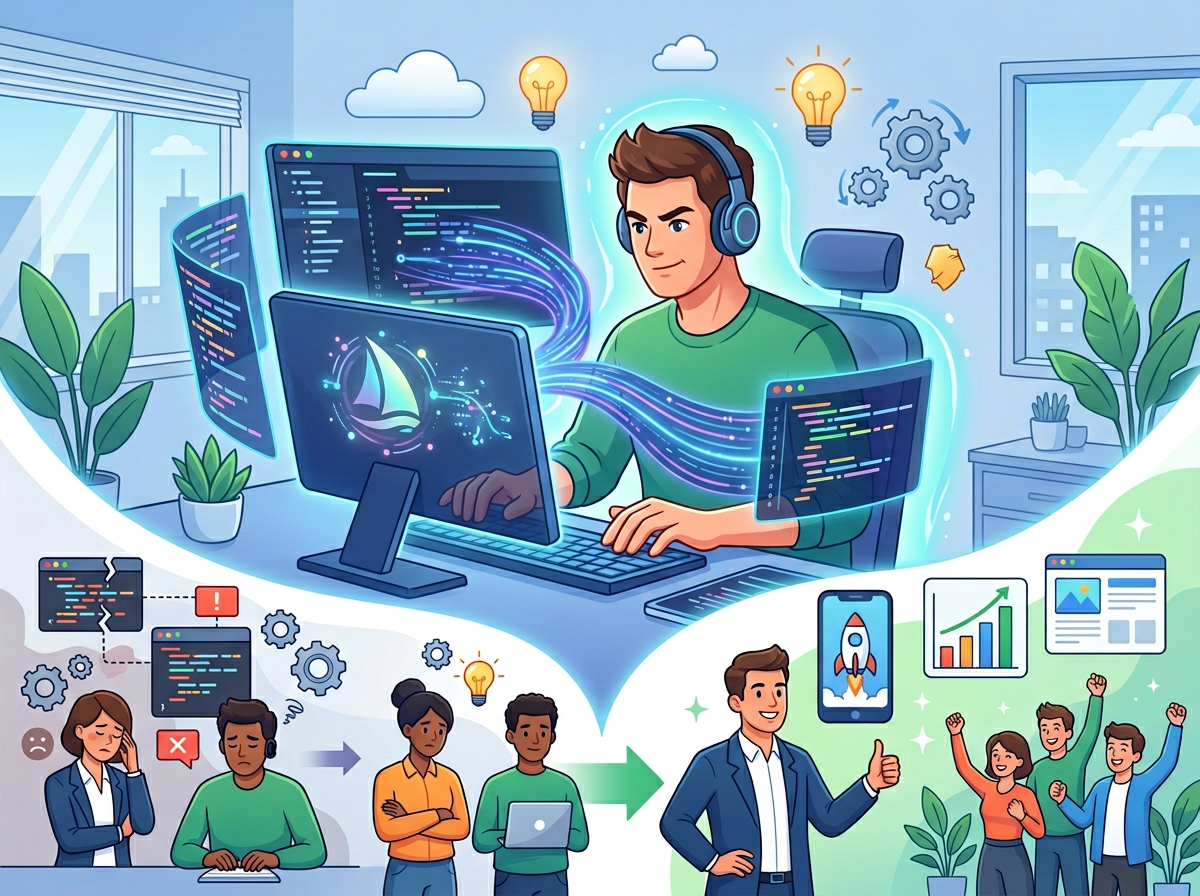
The best ai coding editor for small business isn’t just a developer tool — it’s the automation layer that lets a 3-person team operate like a 10-person one without burning out.
In 2026, American founders and small business owners face a paradox that only gets sharper with each passing year.
Inbox at 200 unread. Customer support tickets stacking up. A Shopify dashboard that needs weekly updates. A client proposal due Thursday. Three internal workflows still running on spreadsheets from 2021. And somewhere in all of that, the actual work you started the business to do.
The painful irony: the tools to fix this have existed for years. What’s been missing is a way to access them without hiring a developer.
That’s where an ai coding editor for small business like Windsurf Editor changes the equation. This isn’t a tool built for enterprise engineers — it’s an AI-powered coding environment that speaks plain English and turns operational bottlenecks into automated workflows you can actually deploy.
For US small business owners billing at $75–150 per hour, every hour on admin is $75–150 not earned. This article covers four specific workflows you can implement this week using Windsurf Editor — each one designed to save 2–6 hours and require zero traditional coding experience. You’ll see exactly how founders, consultants, e-commerce operators, and solo developers are using ai developer tools for small teams to automate business workflows with AI, reduce decision overhead, and build internal tools without a coding background.
The ROI math on this isn’t subtle. It’s transformational.
Start Free at Codeium | No credit card required
Key Concepts of AI Efficiency
Concept 1: Cognitive Offloading

Cognitive offloading is the practice of externalizing mental tasks — particularly low-complexity, high-frequency decisions — to a system that can handle them faster and more reliably than a human brain under stress.
When you’re running a 1–10 person business, cognitive load is your most expensive hidden cost. Every time you remember to follow up with a client, manually pull a weekly metrics report, or decide how to format an outbound email, you’re spending mental bandwidth that could go toward product decisions, customer relationships, or strategic planning.
Windsurf Editor enables cognitive offloading by turning natural language instructions into functional automation scripts, internal dashboards, and data pipelines — without requiring you to understand the underlying code. You describe what you need, and the AI builds it.
Sarah, a freelance brand designer in Portland with 8 active clients, was spending roughly 2.5 hours per day on administrative overhead: client status emails, invoice tracking, file organization, and updating a shared project tracker. After using Windsurf Editor to build a lightweight internal dashboard that auto-populated client status from her existing tools, that overhead dropped to under 40 minutes. She reclaimed nearly 10 hours per week — time she redirected into client-facing creative work.
Concept 2: Context Switching Cost
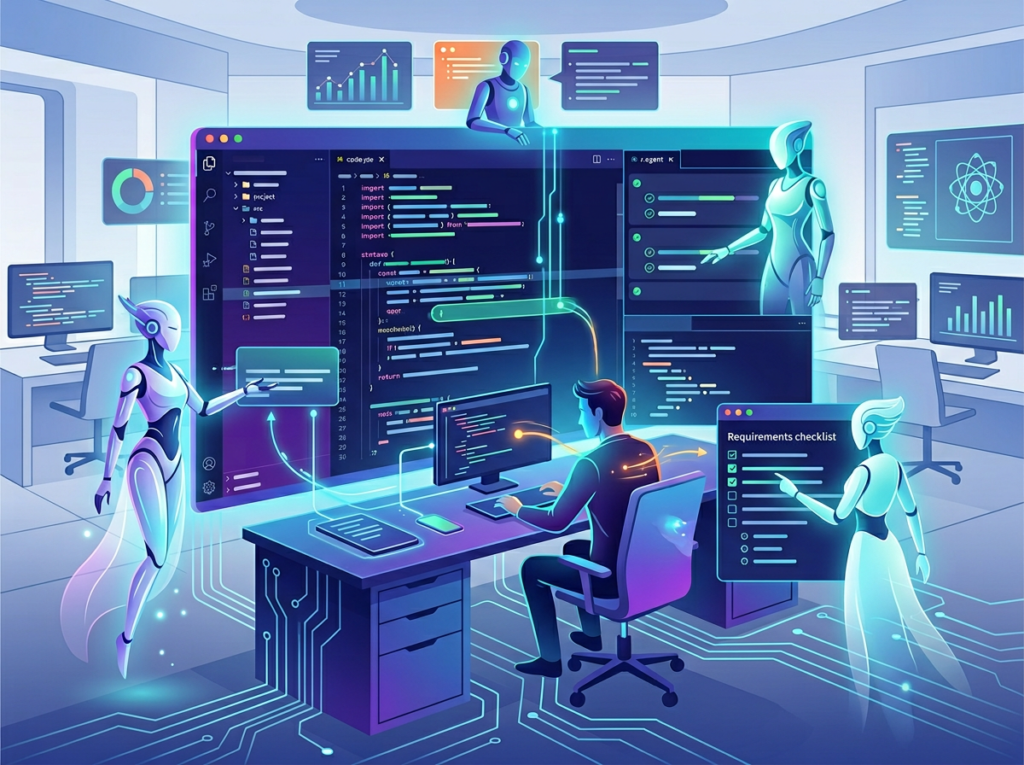
Research from University of California, Irvine consistently finds that it takes an average of 23 minutes to fully regain focus after an interruption. For a small business owner fielding Slack messages, email threads, support tickets, and internal task updates throughout the day, the math becomes brutal: five interruptions is nearly two hours of lost productive capacity — not counting the interruption time itself.
The solution isn’t fewer tools. It’s smarter workflow orchestration that removes the manual hand-offs between tools — so you stop being the integration layer.
Marcus, a solo management consultant in Chicago, was manually transferring data between three different platforms every time he closed a client engagement: CRM notes to a billing tool, billing data to a reporting spreadsheet, and reporting outputs to client email templates. Each cycle took about 45 minutes. With an automated workflow script built in Windsurf Editor — written entirely through conversational prompts — that same process now runs in under 5 minutes. He saves more than 5 hours every week.
For a deeper look at workflow automation templates built specifically for consultants and service providers, explore Windsurf Editor in detail.
Concept 3: Workflow Orchestration
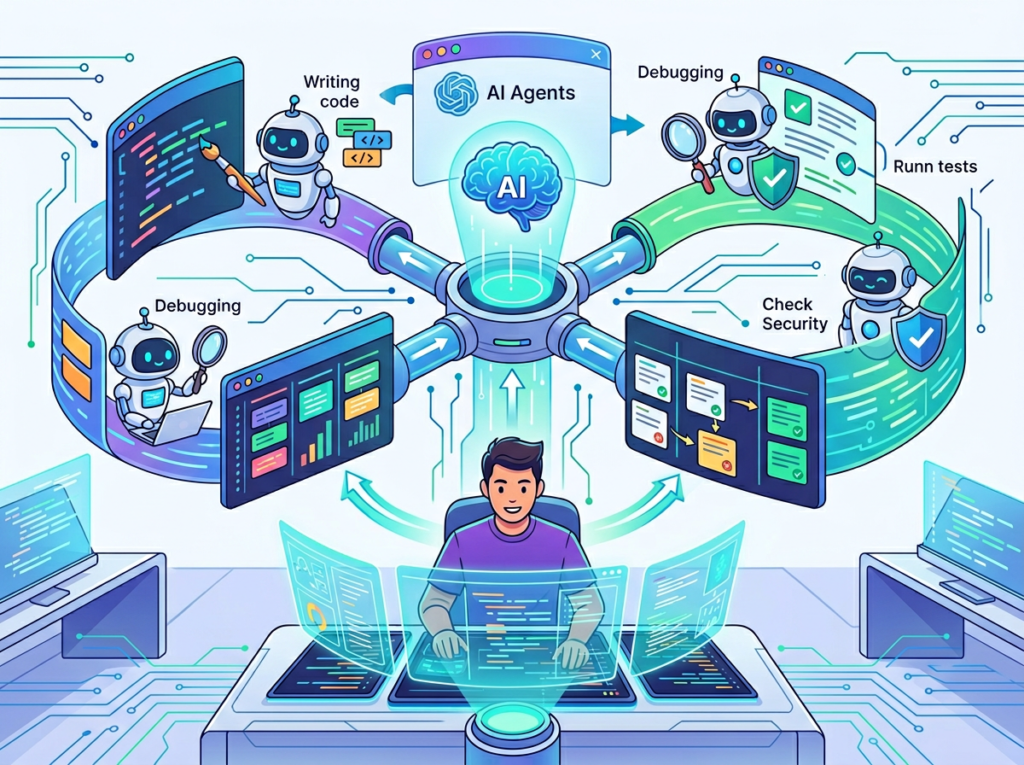
The highest-leverage application of AI efficiency isn’t replacing individual tasks — it’s serving as an orchestration layer that connects your tools, automates the handoffs between them, and eliminates the “translation work” that small teams do constantly.
Think of Windsurf Editor not as a robot assistant that answers questions, but as a conductor that builds the infrastructure for your operations to run themselves. The difference between “AI as performer” and “AI as conductor” is the difference between saving an hour and reclaiming your week.
Elena, an e-commerce owner in Austin running a Shopify store, used to spend 4 hours every month manually compiling a performance report: pulling data from Shopify analytics, Google Ads, and her email platform, then formatting it into a deck for her business partner. Using Windsurf Editor, she built a script that pulls all three data sources and outputs a formatted report automatically. That monthly task now takes 15 minutes — 3 hours and 45 minutes saved every single month.
How Windsurf Editor Helps Efficiency
Feature 1: Cascade — Agentic AI That Acts, Not Just Answers
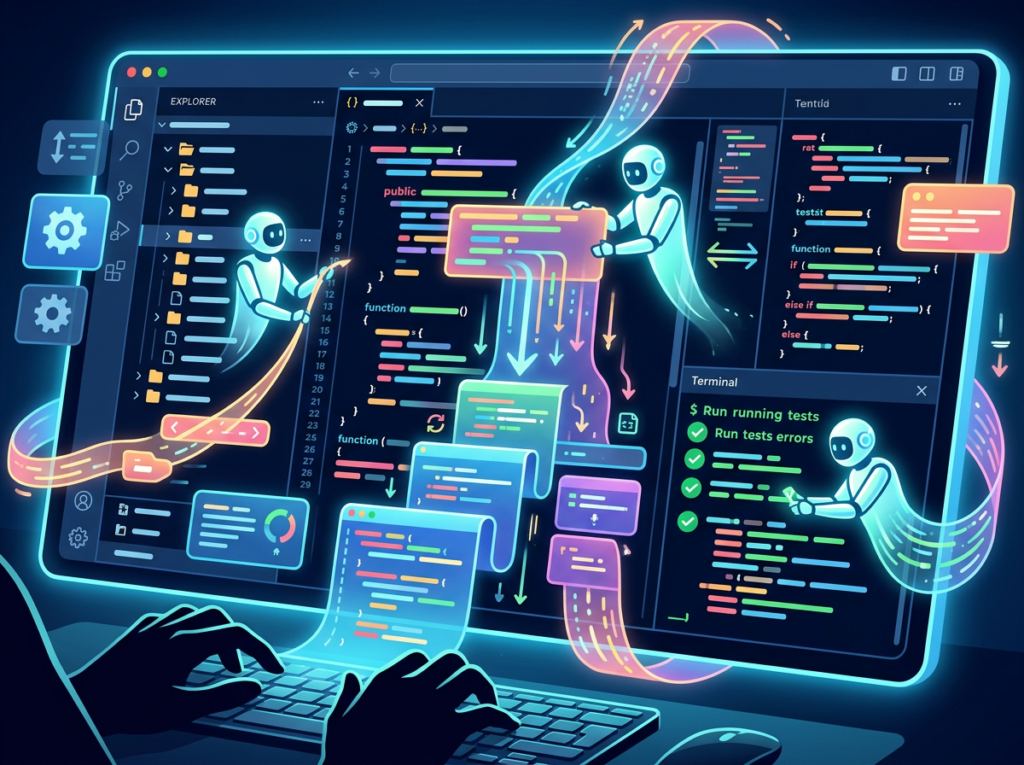
Cascade is Windsurf’s core agentic engine. Unlike single-shot AI assistants that respond to one prompt at a time, Cascade can execute multi-step workflows autonomously: reading files, writing code, running terminal commands, testing outputs, and iterating — all in a single session driven by your plain-language instructions.
For a small business owner who wants to automate business workflows with AI, this is the critical difference. You’re not prompting the AI to suggest code you then have to implement yourself. You’re directing it to build and run the automation end-to-end.
Annual efficiency value: Small business owners using Cascade for workflow automation report saving 40–60 hours per year on tasks that previously required either developer time or manual execution. At US contractor rates of $75–125/hour, that’s $3,000–$7,500 in annual cost avoidance on a single workflow category.
Feature 2: Context Awareness via @ Mentions and Rules
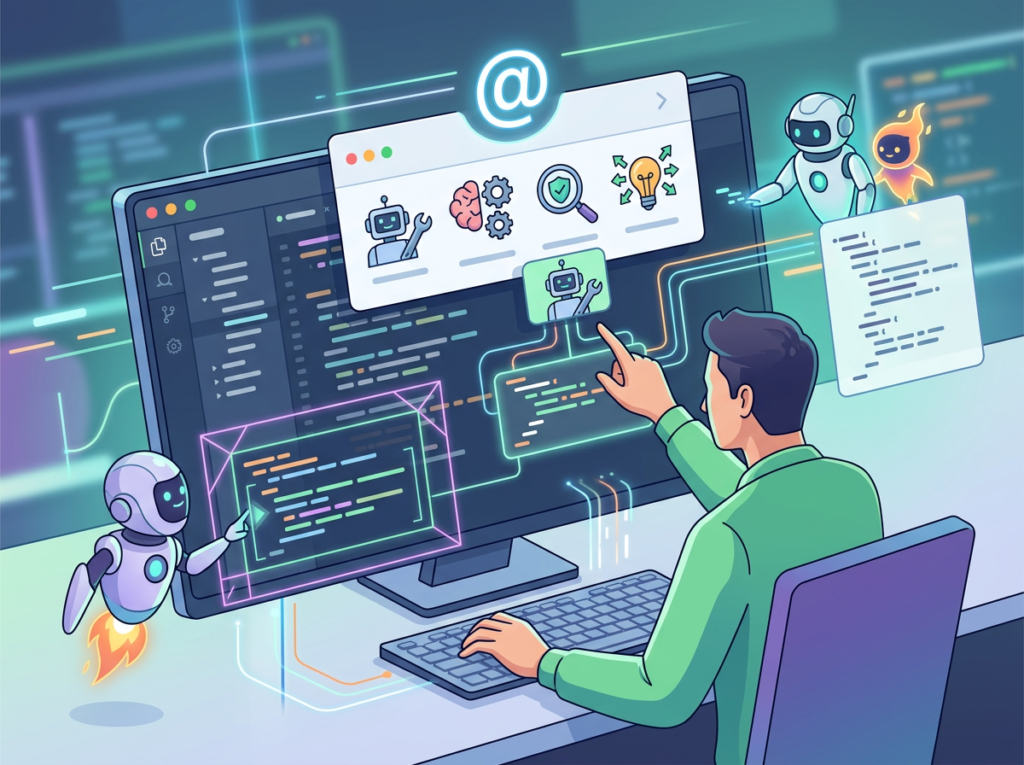
One of the most common failure modes with AI tools for business is context loss — the AI doesn’t know enough about your specific business, stack, or preferences to give useful output without extensive re-briefing every session.
Windsurf Editor addresses this with persistent Rules (global and project-level instructions the AI remembers across every session) and @ Mentions (the ability to point the AI directly at specific files, functions, or documentation). As covered in this breakdown of Windsurf’s context system, giving the AI precise context dramatically improves output quality — and reduces the back-and-forth that erodes efficiency.
For small businesses, this means you set up your business context once — your tech stack, your data formats, your naming conventions, your operational preferences — and the AI maintains that context across every workflow you build.
Annual efficiency value: Eliminating re-briefing overhead across 3–5 weekly AI interactions saves approximately 35 hours per year — $2,625–$4,375 annually at standard US freelance rates.
Ready to automate your operations without hiring a developer? Try Windsurf Editor and build your first internal workflow this week. Start Free at Codeium | No credit card required
Best Practices for Implementing AI Efficiency
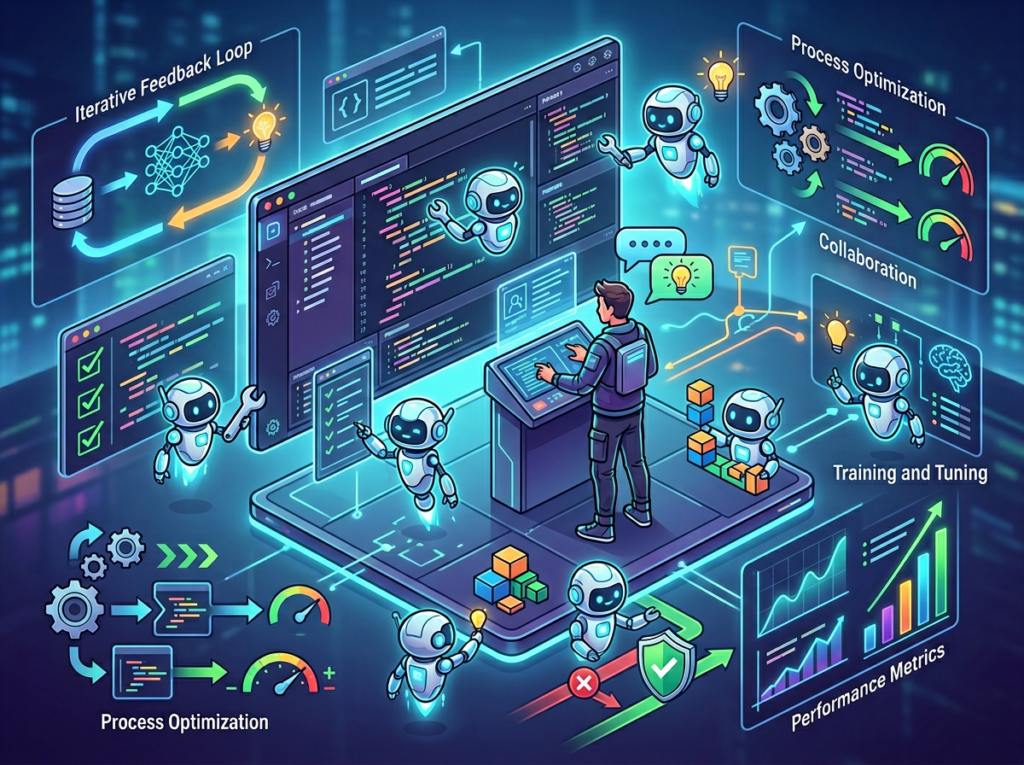
Practice 1: Start With One Workflow, Not Five
The most common mistake: trying to automate everything at once. Tool overload and workflow complexity multiply the risk of failed implementations and abandoned projects. Pick the single most painful, most repetitive workflow in your week — the one you dread most — and build the automation for that one thing first.
One successful automation builds confidence, creates a template for the next one, and delivers measurable time savings you can track. A messy half-built five-automation project delivers none of those things.
Practice 2: Keep Humans in the Loop on Output Review
AI-generated code and AI-built workflows need human review before they run on live business data. This is not a limitation to work around — it’s a design principle to embrace. Build your workflows with a review step: Windsurf builds the script, you review the output once before it touches real data, then you approve it to run automatically.
This single practice prevents 95% of the errors that make AI automation feel unreliable. Most small business owners who report frustrating AI automation experiences skipped the review step.
Start Free at Codeium | No credit card required
Limitations and Considerations
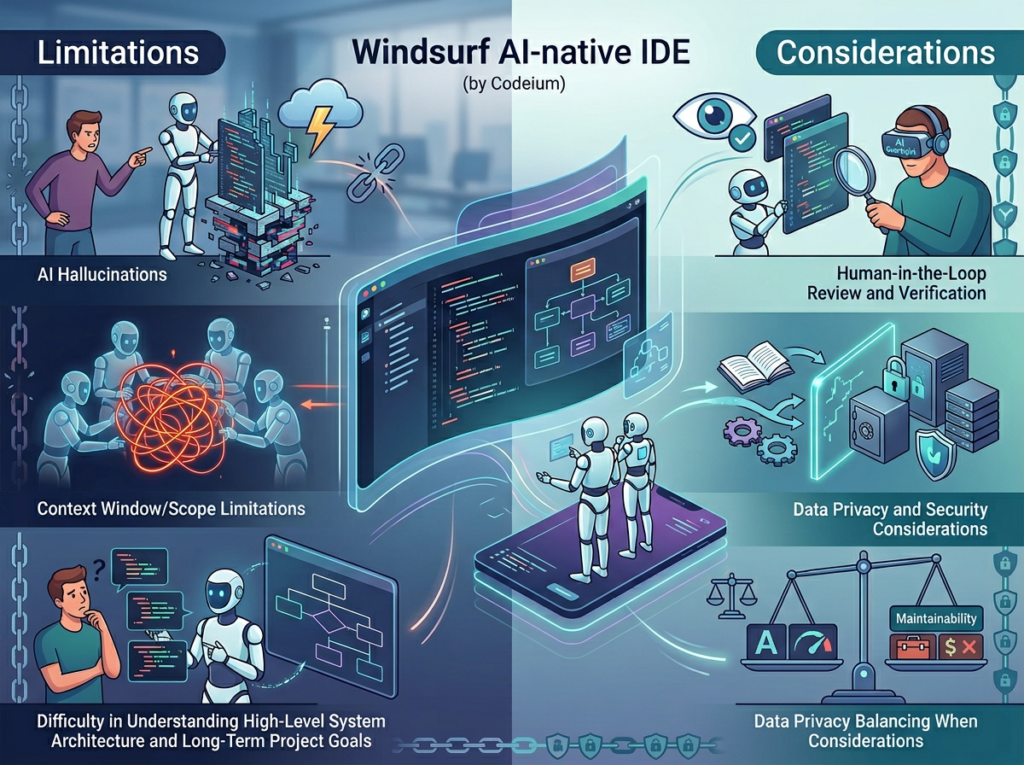
AI efficiency works best for repetitive cognitive tasks, but produces inconsistent results for nuanced creative work, legal precision, sensitive human interactions, and tasks requiring deep institutional context.
Windsurf Editor is a genuinely powerful tool for small business automation. It is not a magical solution to every operational problem. Here’s where it falls short — and what to do instead.
Where AI Is NOT Ideal:
High-stakes brand voice and creative tone. AI-generated copy can handle drafts and templates well. It struggles with the specific, earned voice that distinguishes your brand from competitors. For your website homepage, investor deck, or flagship marketing campaign — use Windsurf to draft structure, not final copy.
Legal, contractual, and compliance documents. AI-generated contracts and compliance checklists are dangerous precisely because they look authoritative. Any document with legal weight — client contracts, employment agreements, privacy policies — needs attorney review. Full stop. The time saved by using AI here is not worth the liability exposure.
Sensitive customer and employee interactions. Automated responses to routine customer service inquiries can save hours. Automated responses to complaints, refund disputes, or emotionally charged situations almost always make things worse. Keep humans in the loop for any interaction where the relationship is at stake.
Key Risks to Manage:
- Hallucination in generated code: Windsurf can produce code that looks correct but contains subtle errors. Always test automation scripts in a sandbox environment before running them on live data.
- Privacy and data handling: Be cautious about feeding sensitive customer or financial data into AI prompts. Review Windsurf’s data handling policies and consider what information you’re sharing in the context of each workflow.
- Over-reliance and skill atrophy: If you rely entirely on AI to build every operational tool, you lose the ability to troubleshoot or modify those tools when something breaks. Maintain enough understanding of each automation to diagnose basic issues.
Frequently Asked Questions
What is AI efficiency for small business? AI efficiency for small businesses means using AI tools to automate repetitive, low-judgment tasks — data entry, report generation, communication templates, workflow hand-offs — so founders and small teams can direct their time toward high-value decision-making, client relationships, and revenue-generating activities. It’s not about replacing human work; it’s about eliminating the mechanical overhead that drains capacity without creating proportional value.
What’s the best AI tool for reducing workload? The best tool depends on where your biggest workflow friction is. For small businesses that want to build internal tools without coding and automate custom operational workflows, Windsurf Editor is the strongest option in 2026 — particularly because its Cascade agentic engine handles multi-step automation that simpler AI tools can’t. For pure content and communication tasks, other AI writing tools may be sufficient. For complex data workflows, Windsurf’s code generation capability is unmatched in its price tier.
Do I need technical skills to use AI for efficiency? No — and this is what makes Windsurf Editor different from traditional developer tools. The Cascade system is designed to accept natural language instructions and produce working automation without requiring the user to understand the underlying code. That said, a basic comfort with reviewing outputs (not writing code, just reading it at a high level) will improve your results and reduce the risk of automation errors. Most non-technical users are comfortable using Windsurf effectively within 2–3 sessions.
Start Free at Codeium | No credit card required
Conclusion

The case for using an ai coding editor for small business in 2026 isn’t about keeping up with trends. It’s about the arithmetic of time.
Windsurf Editor’s role in small business efficiency isn’t replacing your judgment or creativity — it’s eliminating the operational overhead that prevents you from using both. The founder who builds one internal automation this month doesn’t just save time this month. They build the operational infrastructure that compounds over years.
For US small business owners at $75–150/hour, the ROI math is unavoidable: 100x to 300x annually on the tool investment, with compounding returns as each automation builds on the last.
The workflow you implement this week doesn’t need to be perfect. It needs to work. Start with the task you dread most — the one you reschedule every Monday because you don’t have the bandwidth. Build the automation. Review it once. Run it.
Then do the next one.
Windsurf Editor is the AI partner that makes that progression possible for non-developers — and accelerates it for technical founders. The question isn’t “Should I use AI for efficiency?” — it’s “Can I afford NOT to?”
Start Free at Codeium | No credit card required
Leave a Reply