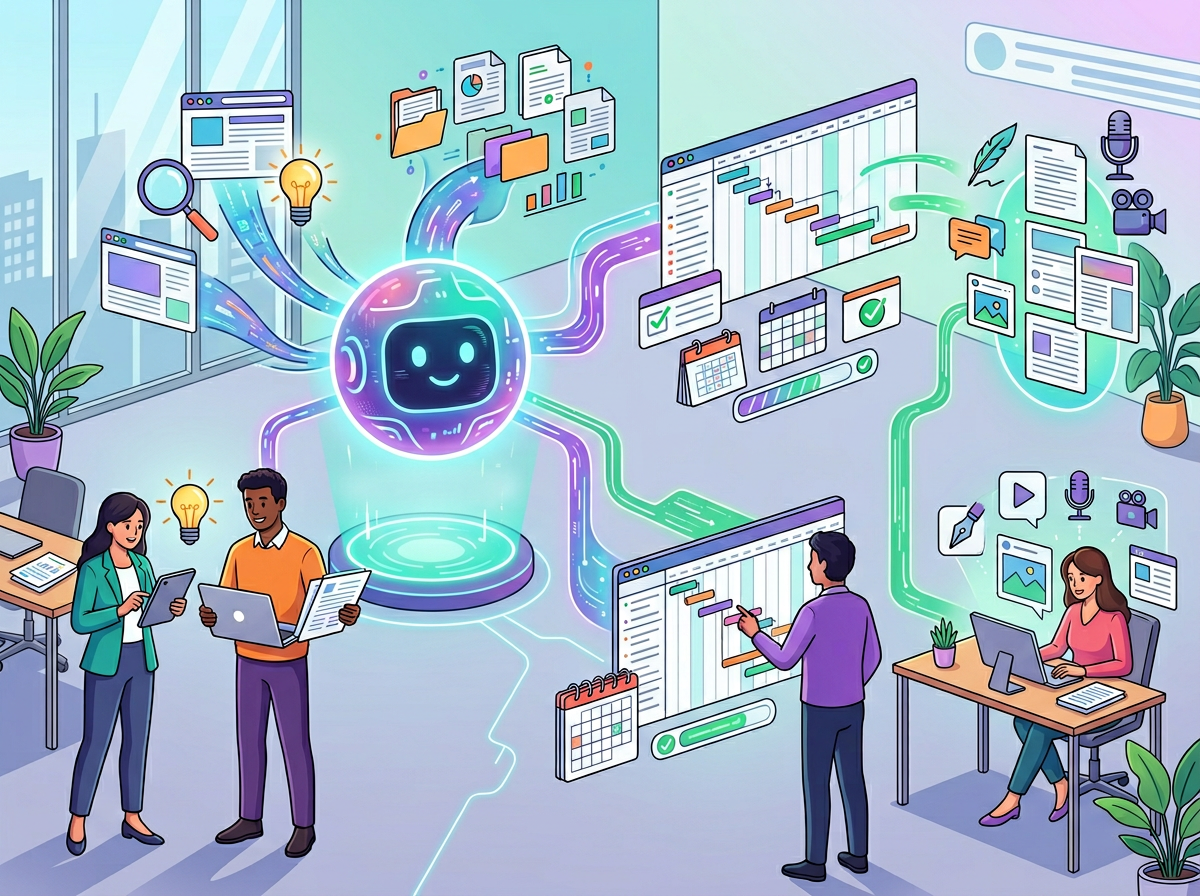
AI research automation for small business is how lean US teams now compete on intelligence — without adding headcount or enterprise-level tooling budgets.
In 2026, the average 5-person US team is losing 12–18 hours every week to fragmented research, duplicated information gathering, and manual context-switching between tools. A founder in Denver opens eight browser tabs to prep for a client call. A marketing lead in Chicago re-researches competitor pricing her colleague compiled last month but saved nowhere findable. A project manager in Austin spends 40 minutes in Slack archaeology to surface a single data point.
This is the knowledge chaos that defines the early-scaling phase for American small businesses — and it has a direct dollar cost. At US market rates of $65–$85 per hour for skilled knowledge workers, 12–18 wasted weekly hours translate to $780–$1,530 in lost productivity per employee. For a 5-person team, that’s over $375,000 in annual operational drag.
The problem isn’t effort. It’s that most small team workflows were built for a solo founder and never systematized for a growing team. Knowledge lives in individual heads, bookmarked tabs, and buried Slack threads — with no repeatable process for gathering, synthesizing, and distributing business intelligence.
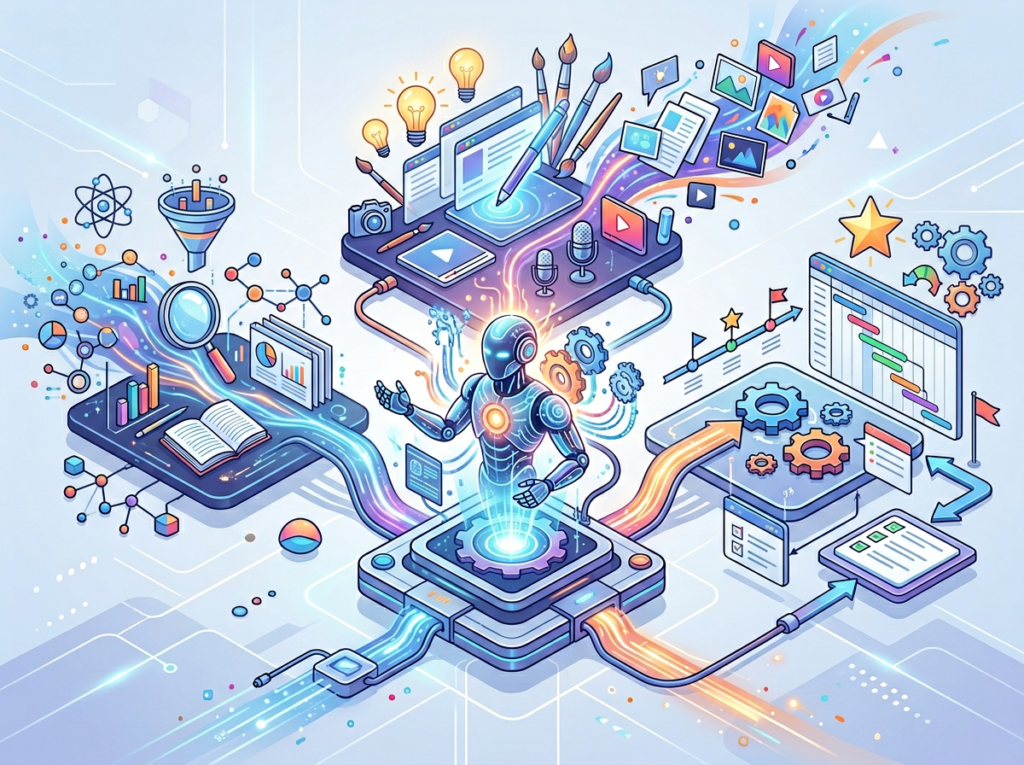
Genspark AI Browser was built to solve exactly this. Unlike productivity tools that organize information you’ve already gathered, Genspark automates the gathering itself. Its Super Agent autonomously browses multiple sources, synthesizes findings into structured reports, and surfaces competitive intelligence in minutes — inside a single browser environment your whole team can align around.
Traditional competitive research and documentation can cost $5,000 or more in US labor per project cycle. AI-assisted research automation brings that cost below $600. This guide shows exactly how Genspark AI Browser enables that transformation for lean US teams.
Get the full breakdown of Genspark AI Browser and start systematizing your team’s research operations this week.
What is Solo DX?

Solo DX — Small-Scale Digital Transformation — describes the systems-building work US founders and team leads undertake when moving from solo operator to managing a growing team. It’s not enterprise digital transformation or a six-month IT consulting engagement. It’s the unglamorous, high-leverage work of turning founder intuition into documented, repeatable processes that a 3- to 10-person team can follow consistently.
The distinction matters because corporate systemization frameworks don’t translate to small teams. Enterprise SOP methodologies assume dedicated operations staff, months of documentation cycles, and workflow tools costing thousands per seat. For a 4-person design studio in Austin or a 7-person SaaS startup in Denver, those approaches create more overhead than they solve.
Solo DX vs. Other AI Categories
| Category | Focus | Team Size | Primary Outcome |
|---|---|---|---|
| Solo DX | Systemization & repeatability | 1–15 people | Consistent operations |
| AI Efficiency | Task speed & automation | Individual | Hours saved per task |
| AI Revenue Boost | Sales & growth tools | Any | Revenue increase |
| AI Workflows | Process automation | Any | Reduced manual steps |
Solo DX sits at the intersection of all of these, but with a specific lens: building the operational backbone that lets a small team scale without breaking.
Consider a 3-person marketing consultancy in Austin. Before Solo DX, the founder runs every client kickoff from memory — which questions to ask, which competitor benchmarks to pull, which reporting format each client prefers. None of it is written down. When she brings on a second strategist, that person spends three weeks making mistakes the founder would never make, because the knowledge exists only in the founder’s head.
After adopting a Solo DX approach with AI-powered research and documentation tools, the Austin consultancy builds a repeatable client onboarding workflow: a structured competitive research template, an AI-generated briefing process, and a shared knowledge base that every new hire can access on day one. Onboarding time drops from three weeks to four days.
That’s the core promise of Solo DX. You can explore Genspark AI Browser’s features to understand how this tool directly enables this kind of systemization — automating the research and synthesis work that typically requires the most founder time and produces the least documentation.
Why solo operators struggle when teams grow:
Most US founders built their early businesses on personal relationships, industry knowledge, and hustle. Those assets don’t scale past 2-3 people. The businesses that survive the transition to small teams are the ones that convert personal knowledge into shared systems early — before the operational chaos becomes a hiring and retention problem.
Get the full breakdown of Genspark AI Browser and start systematizing your team’s research operations this week.
Why AI is Key for Mini-Team Systemization
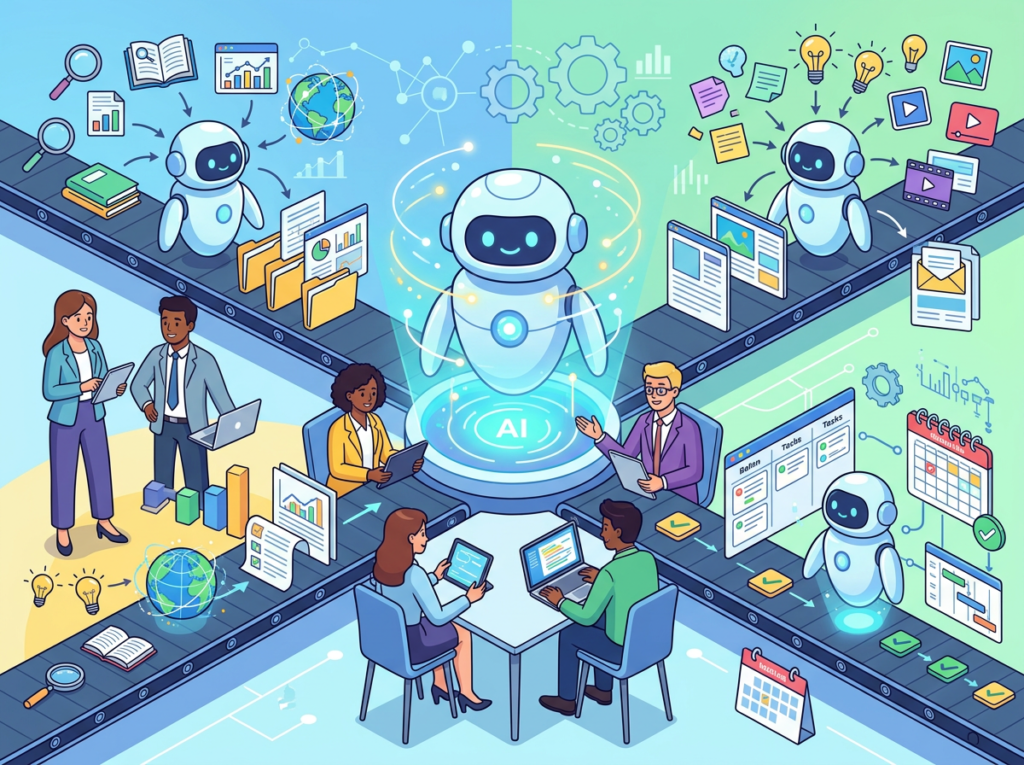
Problem 1: Knowledge Lives in the Founder’s Head
The most dangerous operational risk for a US small business isn’t a competitive threat or a market downturn — it’s key-person dependency. A single team member holds all the institutional knowledge, makes all the judgment calls, and becomes a bottleneck for every new hire and every new process.
US knowledge workers spend an average of 2.5 hours per day searching for information they’ve previously accessed. For a founder with a fully-loaded cost of $100/hour, that’s $62,500 per year in knowledge-retrieval overhead. AI research automation addresses this directly: when an AI tool can autonomously gather, synthesize, and store competitive intelligence, that knowledge stops living in one person’s browser history and starts living in a shared, searchable format.
Problem 2: New Hires Slow Down Operations
US private sector voluntary turnover runs at approximately 47% annually across service industries, meaning most small businesses are effectively retraining their entire team every two years. Each new hire who takes 3–5 weeks to reach full productivity costs $7,500–$28,000 in fully-loaded onboarding expenses.
The fastest lever for reducing that cost is documentation — but documentation is what small teams never have time to build. AI-assisted synthesis compresses the cycle dramatically: instead of asking a founder to spend 20 hours writing research SOPs, the AI handles synthesis and the founder reviews a structured output in 90 minutes.
Problem 3: Quality Varies Across Team Members
When six people research six different ways, six different quality levels reach clients or inform decisions. Inconsistency compounds with every new hire. Teams that standardize research with AI tooling produce consistently higher-quality outputs because the AI applies the same depth, structure, and source criteria every time.
The Cost Reality
Manual competitive research and documentation for a single business process typically requires 30–60 hours of skilled labor. At $75/hour, one documentation cycle costs $2,250–$4,500. AI-assisted research automation compresses that to 4–8 hours of review work, bringing effective cost below $600 — an 80%+ reduction per cycle.
Get the full breakdown of Genspark AI Browser and start systematizing your team’s research operations this week.
How Genspark AI Browser Enables Solo DX
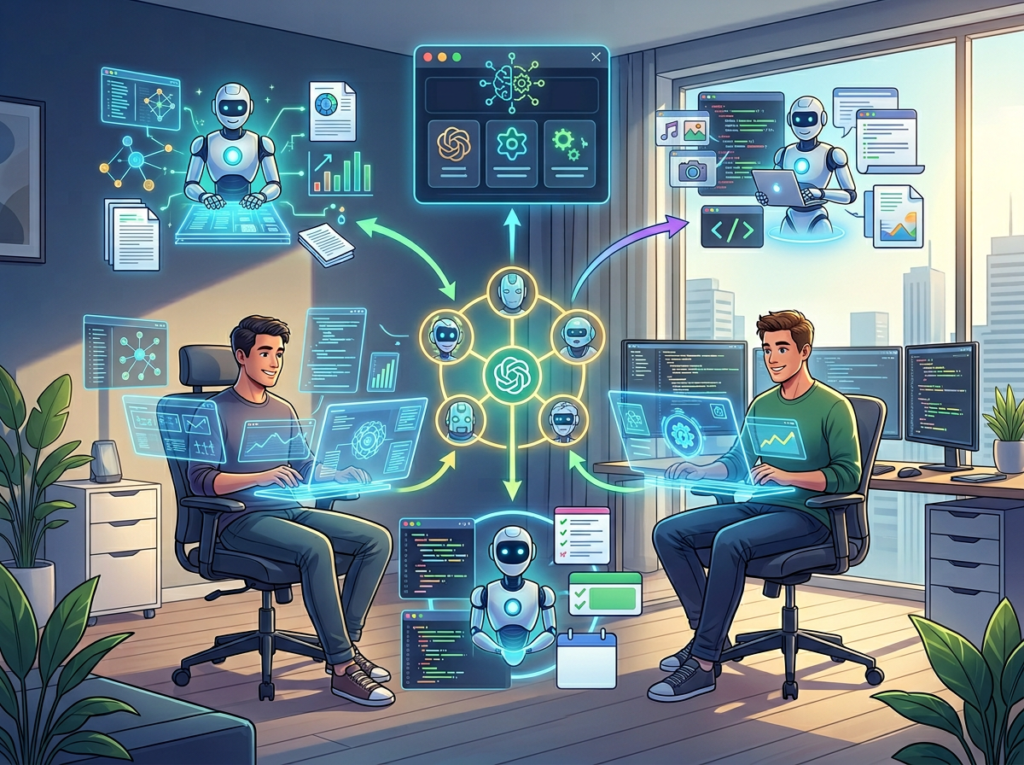
1. Autonomous Research Synthesis to $2,000–$4,000 Saved Per Research Cycle
The Super Agent doesn’t just search — it orchestrates. When you assign a research task (“compile a competitive landscape for US project management software used by teams under 20 people”), Genspark autonomously visits relevant sources, extracts structured data, cross-references findings, and returns a formatted report with sourced claims. What typically takes a US knowledge worker 6–8 hours at $75/hour costs $450–$600 in labor. The same task takes Genspark 8–12 minutes.
For a small business running 4–6 competitive research cycles per month, that translates to $2,000–$4,000 in monthly labor savings — roughly $24,000 to $48,000 annually — by systematizing a research function that previously relied on individual team members working in disconnected browser environments.
2. Mixture-of-Agents Intelligence to Better Decisions, Fewer Mistakes
Rather than routing every query through a single AI model, Genspark runs a Mixture-of-Agents system blending GPT-4o, Claude, and Gemini, then applies a reflection step to surface the most accurate synthesized answer. For US small businesses making market entry, pricing, or vendor decisions on limited information, this multi-model approach materially reduces the risk of acting on a single model’s blind spots.
Reducing fact-checking time by 2 hours per research project saves $150 per project at $75/hour — an additional $7,200 annually for teams running one project per week.
3. Sparkpages and Shareable Research Reports to institutional Knowledge That Persists
One of the most costly aspects of small team research is that findings disappear after the meeting. A team member researches a vendor, presents in Slack, adds context verbally — and three months later nobody can reconstruct the original analysis.
Genspark’s Sparkpages generate dynamic, structured research summaries shareable as live links. Every output becomes a persistent, accessible artifact — the foundation of the shared knowledge base that Solo DX requires. Eliminating duplicative re-research saves 3–5 hours weekly, worth $11,700–$19,500 annually per team member at US market rates.
See how Genspark AI Browser works before your next competitive research cycle — the setup takes under 5 minutes and the first autonomous research task typically takes less than 10.
Common Pitfalls & How to Avoid Them
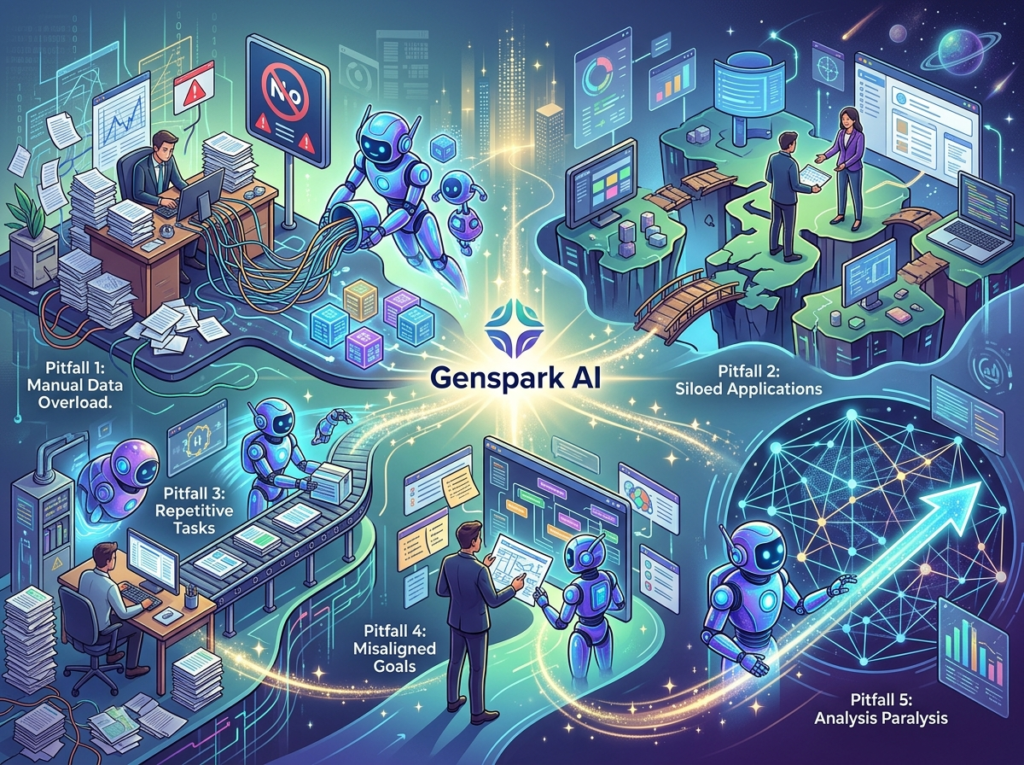
Pitfall 1: Using Too Many Disconnected Tools
The average US small business uses 8–15 SaaS tools, but most teams have never audited whether those tools actually talk to each other. A common failure mode is adopting Genspark AI Browser for research while keeping a separate tool for note-taking, another for documentation, and another for project management — with no automated handoffs between them.
How to avoid it: Audit your current research-to-documentation workflow before deploying Genspark. Map the 3–5 steps from “research starts” to “insight is findable by the whole team.” Then use Genspark’s MCP integrations to eliminate the manual handoff steps. The goal is a pipeline, not a collection of independent tools.
Pitfall 2: Delegating Without Documentation
Some founders adopt AI research automation and immediately delegate all research tasks to the agent — without documenting the research criteria, quality standards, or formatting requirements. The result is technically completed research that doesn’t match the team’s actual needs.
How to avoid it: Before running any autonomous research task at scale, spend 30 minutes writing a clear research brief template: what sources matter, what questions need to be answered, what format the output should take, and what quality signals indicate a good result. Treat the AI like a high-capability team member who needs clear, structured direction to produce excellent work.
Pitfall 3: Failing to Review AI Output
AI research synthesis is accurate and well-structured, but not infallible. Teams that treat Genspark outputs as finished products without review cycles introduce errors into their knowledge base and client-facing materials. The fact-checking feature inside Genspark’s slide creation tool exists precisely because even multi-model synthesis can surface outdated or uncorroborated data points.
How to avoid it: Build a 15–20 minute human review step into every AI research workflow. Treat AI output as a well-prepared first draft, not a final product. Use Genspark’s built-in fact-check functionality for any output that will be client-facing or used to inform significant business decisions. You can learn more about Genspark AI Browser’s quality controls in the full feature breakdown.
FAQs
What’s the difference between AI Efficiency and Solo DX?
AI Efficiency refers to tools that make individual tasks faster — an AI writing assistant that speeds up email drafting, or an AI scheduler that reduces calendar management time. Solo DX refers to the systematic transformation of how a team operates — building the research infrastructure, documentation standards, and repeatable workflows that allow a 5-person team to operate with the consistency and institutional memory of a 20-person team. AI Efficiency is a task-level improvement; Solo DX is an organizational-level transformation.
Can small teams afford to use AI research tools?
Yes. Genspark AI Browser is currently available at no cost — there are no subscription tiers, credit systems, or paywalled features for the core browser and Super Agent functionality. At zero direct cost, the ROI calculation for US small teams is straightforward: any research time saved (at $65–$85/hour US market rates) translates directly to reclaimed founder and team capacity. Even 30 minutes of daily research time saved per team member creates meaningful annual impact.
Is Genspark AI Browser hard to set up?
No. Setup takes under 5 minutes — download the browser, create a free account, and the Super Agent is immediately available. Building a solid research brief template takes another 30–60 minutes. MCP integrations for Notion, Slack, or GitHub add 15–30 minutes more. Most small teams are running functional automated research workflows within their first business day.
Get the full breakdown of Genspark AI Browser and start systematizing your team’s research operations this week.
Conclusion
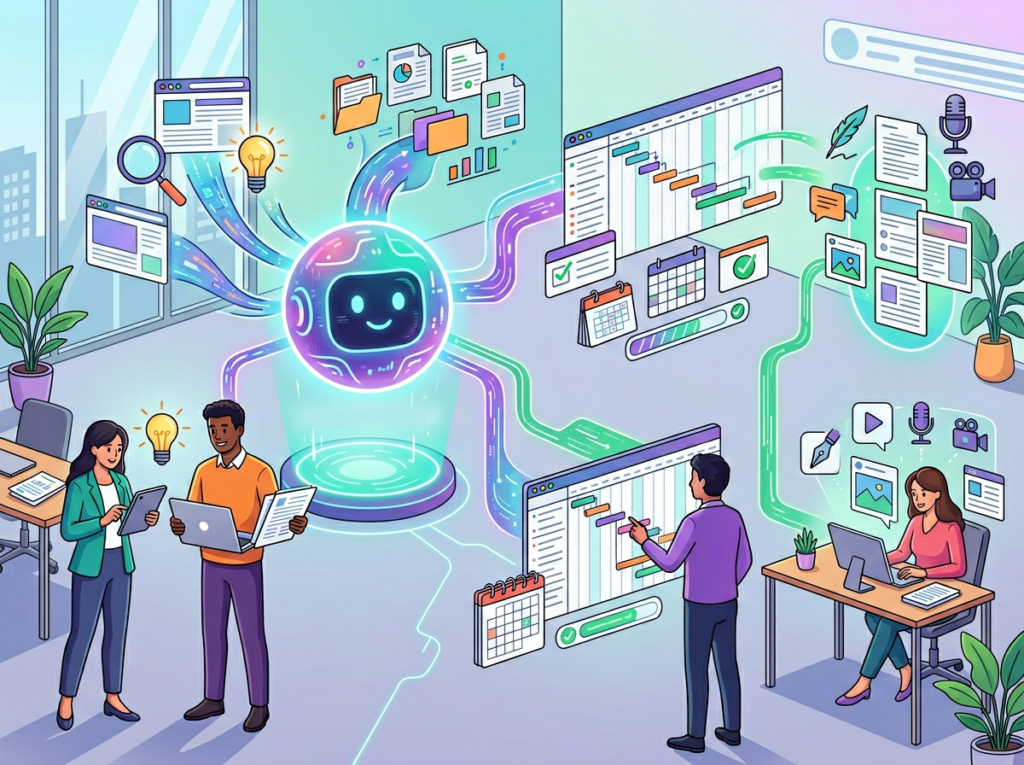
In 2026, US small businesses don’t need enterprise budgets to build enterprise-level research infrastructure. The gap between a well-resourced 50-person company and a lean 5-person team used to be measured in research staff and information systems. That gap is now measured in workflow design.
Genspark AI Browser brings autonomous research synthesis, multi-model intelligence, and shareable knowledge artifacts to US small teams at no cost — removing the primary financial barrier that previously made systematic research the exclusive domain of larger organizations. The operational leverage is real: teams that systematize their research workflows reclaim 10–20 hours of productive time monthly, reduce onboarding costs by 40–60%, and build a knowledge base that compounds in value as the team grows.
The bottleneck for most US small teams isn’t ambition — it’s the absence of repeatable systems. AI research automation for small business doesn’t replace your team’s judgment. It removes the operational drag that prevents your team from applying that judgment consistently.
Start with one research process. Map it, automate it with Genspark’s Super Agent, build a brief template, and run it for 30 days. The compounding effect — better decisions, faster onboarding, fewer duplicated efforts — becomes visible within the first month.
Get the full breakdown of Genspark AI Browser and start systematizing your team’s research operations this week.
Leave a Reply