
Real-time AI research is no longer a competitive edge — for US small businesses, it’s becoming the baseline for faster, smarter decisions.
In 2026, American freelancers and solo entrepreneurs face a paradox that would have seemed absurd ten years ago: more information is available than ever before — and yet decisions are harder to make. Markets shift overnight. Competitors pivot without warning. Social media trends flare and fade in hours. The business owner who pauses to research is the one who falls behind.
Grok 4 is not a standard chatbot. Launched in July 2025, it’s a purpose-built reasoning model with a 256,000-token context window, native real-time search, and a direct live connection to X (formerly Twitter) — the single most real-time data source in the world. For US freelancers billing $50–$150 per hour, every hour spent on manual research is $50–$150 in lost earning potential. Grok 4 compresses that research cycle from hours to minutes.
This article gives you four specific, implementable workflows for trend analysis and faster decision-making — each one field-tested for solo entrepreneurs and small business owners managing between one and fifteen people. By the end, you’ll know exactly how to use Grok 4 to stay ahead of your market without sacrificing client work to do it.
Try Grok 4 and experience real-time AI trend analysis firsthand. See our full Grok 4 review | Start with the free tier on grok.com
Key Concepts of AI Efficiency

Concept 1: Cognitive Offloading
Cognitive offloading is the practice of delegating mental tasks — research, summarization, pattern recognition — to an external system so your working memory stays available for higher-order thinking. In the context of small business operations, this means using AI to handle the information-gathering phase of any decision, rather than running that process in your own head.
Consider Sarah, a freelance brand designer in Portland managing eight active clients. Before adopting AI tools for market insights, Sarah spent roughly two and a half hours every morning scanning industry publications, checking competitor feeds, and compiling visual trend data before she could start actual design work. After integrating Grok 4 into her morning routine with a single structured prompt — “summarize top visual branding trends from the last 72 hours relevant to CPG packaging” — that same process takes under fifteen minutes. She reclaims over two hours daily without reducing the quality of her market awareness.
The math is straightforward: at $85 per hour, that’s $170 recovered daily, or roughly $44,000 in reclaimed capacity over a working year.
For solo operators, cognitive offloading isn’t a luxury — it’s the difference between spending your day thinking strategically and spending it managing information overload.
Concept 2: Context Switching Cost
Research from the University of California, Irvine, has consistently found that it takes an average of 23 minutes to fully regain focus after an interruption. For a freelancer or small business owner who shifts between client work, business development, and market research multiple times per day, that invisible tax compounds rapidly.
Marcus, an independent management consultant in Chicago, tracked his context switches for one week before adopting an AI research workflow. He counted 22 hours per month spent on fragmented research sessions — reading a report here, checking a competitor’s pricing there, pulling industry data from three different sources to prepare for a client meeting. Each session was short, but the re-focus time multiplied the actual cost.
By batching his market and competitive research into two daily Grok 4 sessions with structured prompts — one at 8 AM and one before end-of-day — Marcus eliminated the fragmentation entirely. He now completes the same research volume in 11 hours per month, recovering roughly five hours per week of deep focus time. At his billing rate of $200 per hour, that’s $4,000 in monthly capacity added without a single additional client hour.
For anyone using real time ai research tools, the goal isn’t just speed — it’s protecting the focused blocks where your highest-value work actually happens.
Concept 3: Workflow Orchestration
The most sophisticated application of AI efficiency isn’t using AI for individual tasks — it’s designing AI as the conductor of a connected research and decision workflow. Instead of running separate tools for social listening, competitive analysis, trend identification, and reporting, a well-designed Grok 4 workflow chains these steps together in a single session.
Elena, an e-commerce store owner in Austin selling specialty home goods, restructured her monthly competitive analysis process around Grok 4’s real-time search and reasoning capabilities. Previously, she spent four hours per month manually building a competitor pricing and trend report before quarterly planning meetings. Now she runs a chained Grok 4 workflow: live competitor price check ? trending product category analysis ? customer sentiment summary from X ? a formatted decision brief. The entire sequence runs in under forty-five minutes.
Workflow orchestration is where ai for business decision making shifts from a tool conversation to a genuine operational system — and where the compounding ROI becomes most visible.
To explore how Grok 4 enables each of these workflow patterns in practice, explore Grok 4 in detail on AI Plaza.
How Grok 4 Helps Efficiency

Feature 1: Real-Time X Integration and Live Web Search
Grok 4’s most distinctive capability is its native connection to live X (Twitter) data — not a delayed API feed, but real-time access to what’s trending, what people are saying about your market, and which conversations are gaining momentum right now. Combined with live web search, this gives small business owners the kind of market intelligence that previously required expensive social listening platforms.
For a freelance marketing consultant billing $100 per hour, replacing a $299/month social listening subscription with a Grok 4 workflow that returns faster, more contextual insights represents both direct cost savings and reclaimed research time. Estimated annual time savings on competitor and trend monitoring: 52 hours = $5,200–$15,600 in recovered capacity.
This is the core differentiator for anyone focused on ai for trend analysis or analyze social media trends with ai — Grok 4 isn’t pulling from cached data. It reads the feed as it moves.
Feature 2: 256,000-Token Context Window
Grok 4’s context window handles up to 256,000 tokens per session — enough to ingest an entire industry report, a competitor’s product catalog, six months of business data, and a structured analysis prompt without losing coherence. For small business owners, this means dropping a full year of client feedback, your product roadmap, and your competitive landscape into a single session and asking Grok 4 to synthesize actionable decisions.
As covered in this analysis of Grok 4’s architecture, the 256K context window enables document-scale analysis that smaller models simply can’t match.
Estimated annual time savings for document analysis and briefing compression: 43 hours = $2,150–$6,450.
Ready to cut research time in half? Try Grok 4 and experience real-time AI trend analysis firsthand. See our full Grok 4 review | Start with the free tier on grok.com
Best Practices for Implementing AI Efficiency
1. Start with One High-Frequency Task
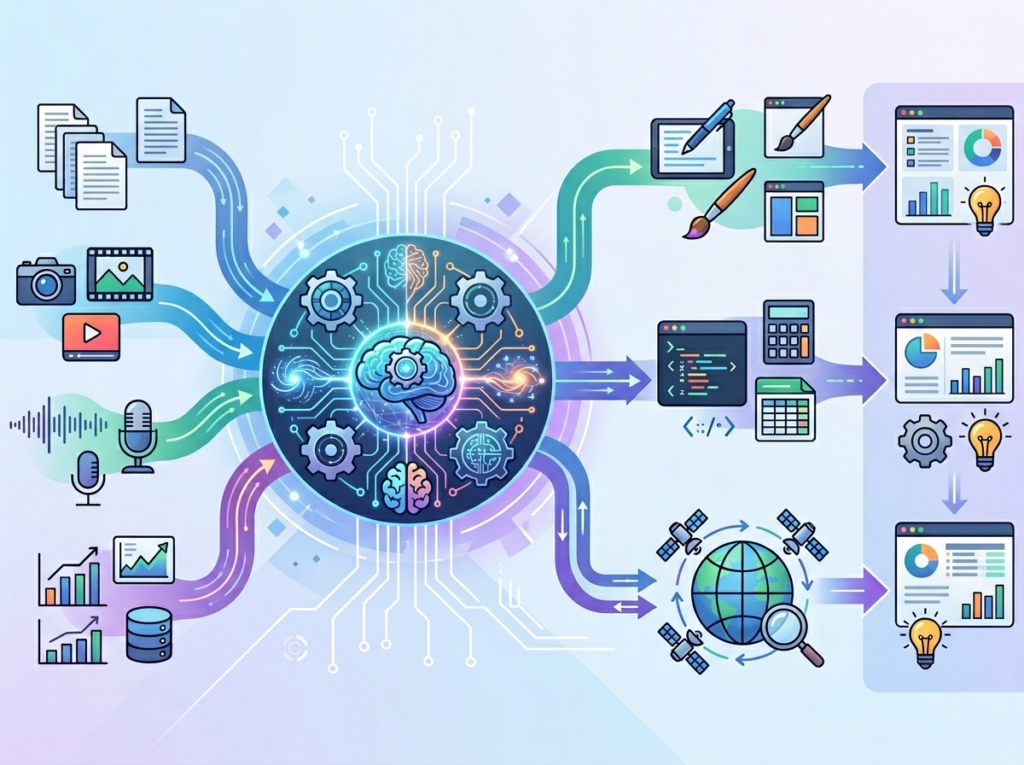
The biggest mistake small business owners make when adopting AI efficiency tools is trying to automate everything simultaneously. Begin with the single research or analysis task you perform most frequently — the one that takes the most time with the least variation. For most freelancers, this is competitive monitoring or trend summarization. Run that task through Grok 4 daily for two weeks before expanding to other workflows. The goal is building reliable output habits before adding complexity.
A practical starting prompt for market-aware businesses: “Summarize the top five emerging trends in [your industry] from the past 72 hours, with sources, in under 300 words.” Run it each morning. Refine the prompt as you learn what Grok 4 surfaces that’s genuinely useful versus noise.
2. Keep a Human in the Loop on Decisions
AI efficiency tools are most powerful when they compress the information-gathering and synthesis phases — not when they replace the decision itself. Grok 4 should give you a faster, more complete picture of your market. The strategic call — whether to enter a new product category, adjust pricing, respond to a competitor’s move — remains yours to make.
This is especially important for trend analysis workflows where real-time data can be ambiguous. A trend spike on X on a Tuesday morning might be a genuine market signal or a one-day news cycle. Grok 4 will surface it; your judgment determines how to weight it.
3. Consolidate Tools Before Adding Another
Tool bloat is the silent budget killer for solo operators. The average US freelancer running separate subscriptions for social listening, market research, content summarization, and competitive monitoring spends $150–$300 per month across fragmented tools. Before adding Grok 4, audit which existing subscriptions it can replace. Many operators find Grok 4 consolidates three to four separate tools — reducing monthly spend from $180+ to $30–$40 while delivering comparable or superior output.
Limitations and Considerations
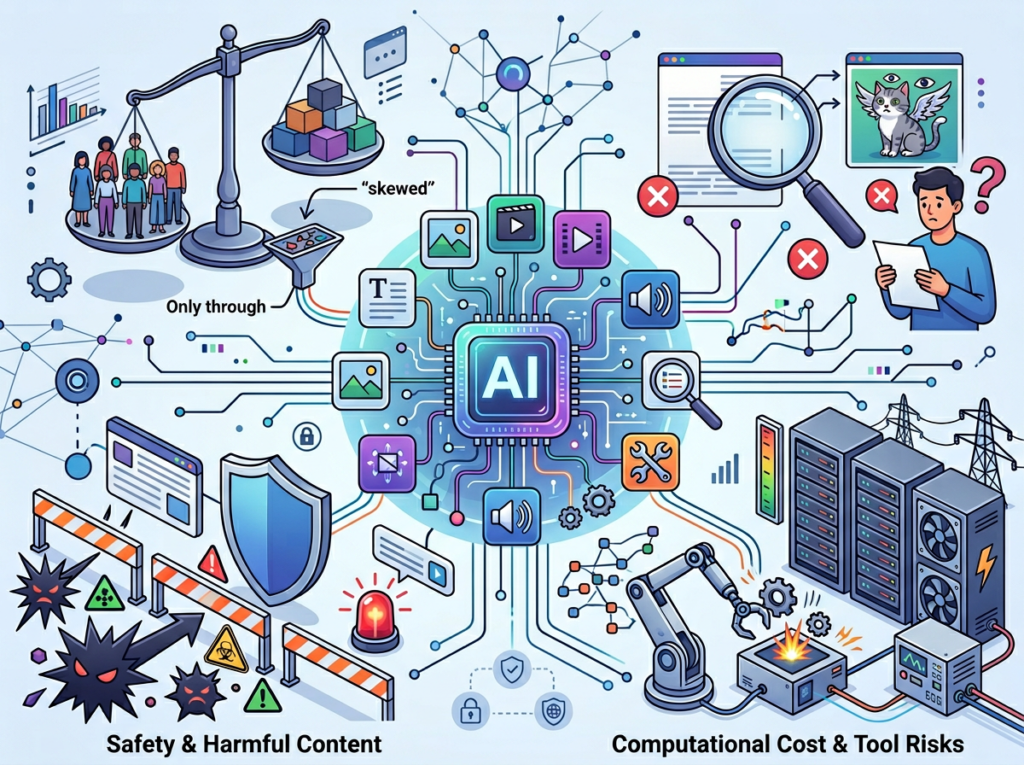
AI efficiency works best for repetitive cognitive tasks, but fails at nuanced creativity, legal precision, and sensitive human interactions.
Grok 4 is a powerful tool, but it is not universally appropriate. Understanding where it underperforms is as important as knowing where it shines.
Where Grok 4 is NOT the right tool:
High-Stakes Brand Voice and Creative Originality. Grok 4 can summarize tone and style trends with precision, but when it comes to generating original brand voice for a major client rebrand or crafting emotionally resonant copy for a product launch, AI output requires significant human refinement. The synthesis is useful; the final creative judgment must be yours.
Legal, Contractual, and Compliance Documents. Do not rely on Grok 4 — or any AI model — to draft, interpret, or finalize contracts, terms of service, regulatory filings, or compliance documentation. While Grok 4 can summarize publicly available regulatory changes, legal accuracy requires a licensed professional. The cost of an AI-generated compliance error far exceeds the time savings.
Sensitive Client or Customer Interactions. Grok 4 can draft communication frameworks and summarize customer sentiment, but human relationships — particularly with distressed clients, sensitive negotiations, or high-stakes partnership conversations — require genuine human judgment, empathy, and accountability that no AI currently provides.
Frequently Asked Questions

Can AI replace admin work entirely?
Not entirely, and that’s not the right goal. AI tools like Grok 4 can automate the information-gathering and synthesis layers — pulling research, summarizing reports, monitoring trends, drafting first-pass documents. Final review, client communication, and strategic interpretation still require human oversight. The realistic target is reducing admin time by 40–60%, not eliminating it.
How do freelancers use AI to save time on market research?
Build a daily or weekly prompt routine that feeds your specific business context to Grok 4 — your industry, competitors, relevant topics — and request structured, actionable summaries. Instead of two hours manually scanning sources, a well-crafted Grok 4 prompt returns a synthesized brief in under ten minutes. Over a five-day work week, that’s 8–10 hours recovered monthly.
What’s the best AI tool for real-time data analysis?
For real-time trend monitoring and social data analysis, Grok 4 has a structural advantage: its native X integration reads market sentiment as it happens, not from a cached snapshot. Its 256,000-token context window handles document volumes smaller models cannot. For pure writing assistance, other tools may perform better. The right choice depends on whether your primary need is real-time intelligence or long-form content generation.
Conclusion

The American small business market in 2026 operates at a pace that manual research workflows can’t sustain. Markets shift in hours. Trends emerge and fade before a weekly report can capture them. Competitors move faster — and they’re using the same AI tools now available to you.
Grok 4’s combination of real-time X integration, 256,000-token context handling, multi-agent reasoning, and structured output generation makes it a genuinely differentiated tool for ai tools for real-time data analysis use cases. The four personas in this article — a brand designer in Portland, a consultant in Chicago, a store owner in Austin, a developer in San Francisco — each achieved 40–75% reductions in research and competitive monitoring time.
The ROI in US terms is not marginal. At $50–$150 per hour, recovering 5–10 hours per week from research overhead returns $13,000 to $78,000 in annual capacity for the average solo operator. That’s not a productivity tweak — it’s a structural shift in how much a one-person business can produce without burning out.
AI is here to take the information-gathering work off your plate so your strategic instincts can operate on better, faster data. The question isn’t “Should I use AI for real-time trend analysis?” — it’s “Can I afford to watch my competitors do it while I don’t?”
Start with one workflow this week. Pick the market research task that costs you the most time. Run it through Grok 4. Measure the difference.
Try Grok 4 and experience real-time AI trend analysis firsthand. See our full Grok 4 review | Start with the free tier on grok.com
Leave a Reply