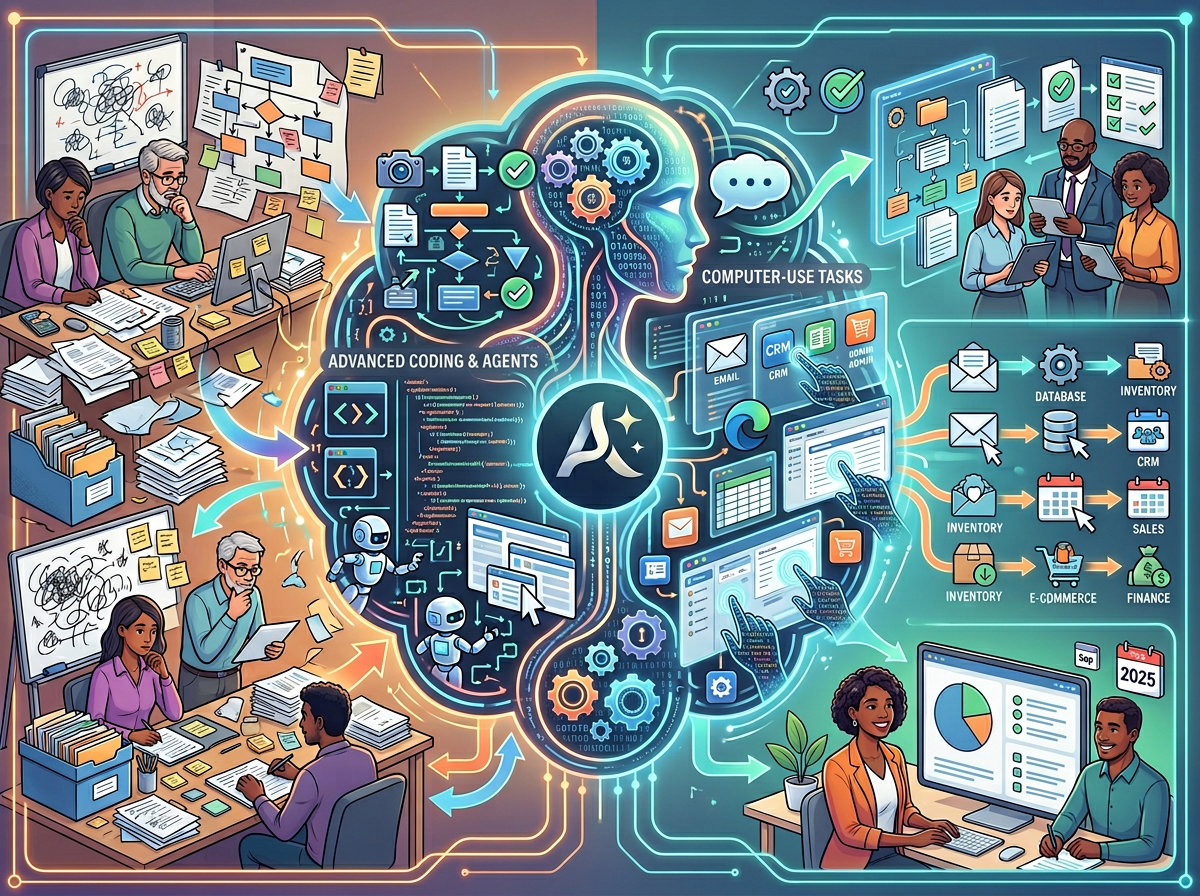
Scaling past 3 people exposes every process your team never documented — and ai sop automation for small business is the fastest way to close that gap.
There’s a moment every US small business founder recognizes. You’ve hired your third or fourth person, and suddenly the question isn’t “Can we do the work?” — it’s “Why does everyone do the work differently?”
In 2026, this is the defining operational crisis for American small businesses. Knowledge lives in Slack threads. Onboarding means shadowing you for two weeks. Client deliverables vary in quality depending on who handled them. And you’re the only person who actually knows how all the pieces fit together. Meanwhile, your competitors — some with no more resources than you have — are running tighter, faster, and more consistently. The difference is almost never budget. It’s systems.
This isn’t a staffing problem. It’s a documentation problem — and it’s costing US small teams real money. According to industry research, replacing a single employee costs between 50% and 200% of their annual salary. With US annual turnover rates hovering near 47% in service sectors, the average 5-person team is constantly rebuilding institutional knowledge from scratch. Every new hire restarts the learning curve. Every departure takes undocumented process knowledge with them. And every week that passes without systemization makes the problem harder to solve.
The instinctive response is to hire more people — an office manager, an operations coordinator, someone whose job is to “figure out the systems.” But for most US small businesses, that hire is a $60,000–$80,000 annual commitment before the first SOP gets written. And even when it works, it creates a new single point of failure: now the systems live in one employee’s head instead of the founder’s.
Traditional SOP development isn’t the answer either. Hiring a consultant or operations manager to document your workflows can cost $5,000–$15,000 in US labor, and the output is often a static document nobody reads six months later. The formats are wrong for small teams. The maintenance overhead is too high. And the results rarely reflect the informal, adaptive way that real small businesses actually operate.
Claude Sonnet 4.5 changes this equation entirely. As an AI workflow automation layer that sits across your existing tools, it helps US founders systemize knowledge, build repeatable processes, and onboard new hires in days instead of weeks — without enterprise budgets or dedicated operations staff. This guide breaks down exactly how small US teams are using Claude Sonnet 4.5 as a system-building ally in 2026, with quantified outcomes across four real-world team roles. Whether you’re running a 3-person agency in Austin or a 12-person service firm in New York, the sop automation tools available today make professional-grade systemization accessible at any budget.
Join 10,000+ US small teams using Claude Sonnet 4.5 to eliminate operational chaos. See How It Works
What is Solo DX?
Solo DX — small-scale digital transformation — refers to the process of systemizing a business’s core operations without a dedicated operations team. It’s led by founders or team leads who are managing growth but don’t have the headcount to hire an ops manager, a process consultant, or a dedicated trainer.
In the US context, Solo DX is the space between “just me” and “we need enterprise software.” It’s where most American small businesses actually live: teams of 1 to 15 people, juggling client work, internal operations, and growth simultaneously, without the budget or bandwidth to formalize any of it properly.
Solo DX vs. Other Operational Categories:
| Category | Team Size | Focus | Budget Range |
|---|---|---|---|
| Solo DX | 1–15 people | Systemization without ops staff | $0–$500/mo |
| AI Efficiency | 1–5 people | Individual productivity | $0–$100/mo |
| Enterprise Ops | 50+ people | Cross-department workflows | $50,000+/yr |
| AI Revenue Boost | Any | Sales and revenue systems | Varies |
Corporate SOP methods fail for US small businesses for a straightforward reason: they’re designed for companies with dedicated process owners who have the time to maintain documentation, run training cycles, and update procedures when workflows evolve. A 5-person agency in Austin doesn’t have that. Their “operations manager” is also the account lead, the finance person, and the one who fixes the printer.
Consider a 3-person design studio based in Denver. Their onboarding process for a new designer consisted of a 40-page Google Doc that hadn’t been updated in 18 months, a Loom video library nobody could navigate, and two weeks of informal Slack Q&A with the founder. The result: every designer delivered slightly different work, client revision rounds were increasing, and the founder was spending 6 hours per week answering the same procedural questions.
Solo DX with Claude Sonnet 4.5 changed this by treating AI not as a productivity tool but as a systemization layer — one that converts institutional knowledge into structured, living documentation that actually gets used.
Why AI is Key for Mini-Team Systemization
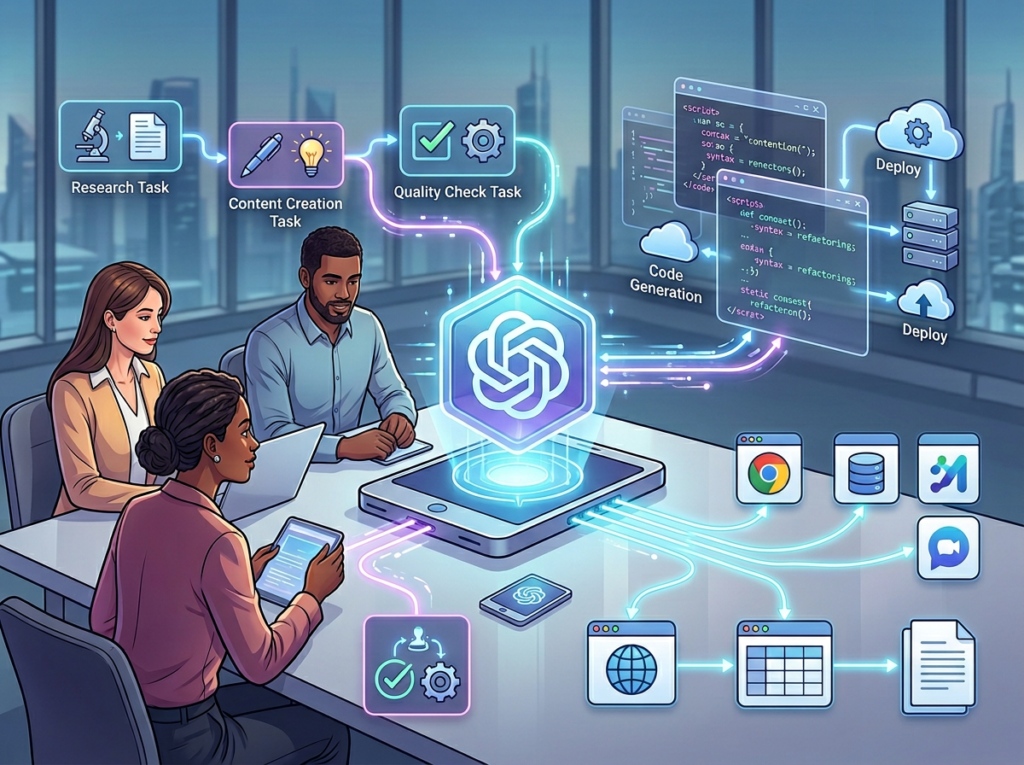
Problem 1: Knowledge Lives Only in the Founder’s Head
The average US founder spends 15–20 hours per week answering questions that could be handled by documented processes. At $75–$150 per hour in equivalent labor value, that’s $56,000–$156,000 in annual founder time tied up in knowledge transfer. AI-assisted SOP generation converts verbal or informal processes into structured documentation in hours, not weeks — at $0–$20 in subscription costs per document cycle.
Problem 2: New Hires Slow Down Operations
US labor turnover in service businesses sits near 47% annually, which means most small teams are perpetually onboarding. The typical US small business spends 3–6 weeks getting a new hire to independent productivity. With structured AI-generated SOPs, onboarding time compresses to 5–10 days in organizations that have tested this approach. That’s 2–4 weeks of billable capacity recovered per hire.
Problem 3: Quality Varies Across Team Members
When process knowledge is informal, output quality depends on individual interpretation. For a 6-person marketing agency in Chicago, this meant client reports varied so significantly in format and depth that clients began requesting specific team members — creating a bottleneck that capped growth. AI workflow automation eliminates this by making the best version of a process the default version for every team member, regardless of their tenure or experience level. The result is a team where a new hire in week 2 produces work that meets the same standard as a senior employee in year 3.
The Cost Reality in 2026
| Approach | Time | Cost (USD) | Maintenance |
|---|---|---|---|
| Manual SOP consultant | 4–8 weeks | $5,000–$15,000 | Static; outdates quickly |
| Internal team documentation | 2–4 weeks | $3,000–$8,000 in labor | Inconsistent |
| AI-assisted with Claude Sonnet 4.5 | Hours | $0–$20/cycle | Dynamic; easy to update |
As noted in this technical breakdown of Claude Sonnet 4.5’s capabilities, the model is designed to maintain focus across complex, multi-step tasks for extended periods — which maps directly to the sustained, iterative work of building business documentation systems.
Join 10,000+ US small teams using Claude Sonnet 4.5 to eliminate operational chaos. See How It Works
How Claude Sonnet 4.5 Enables Solo DX
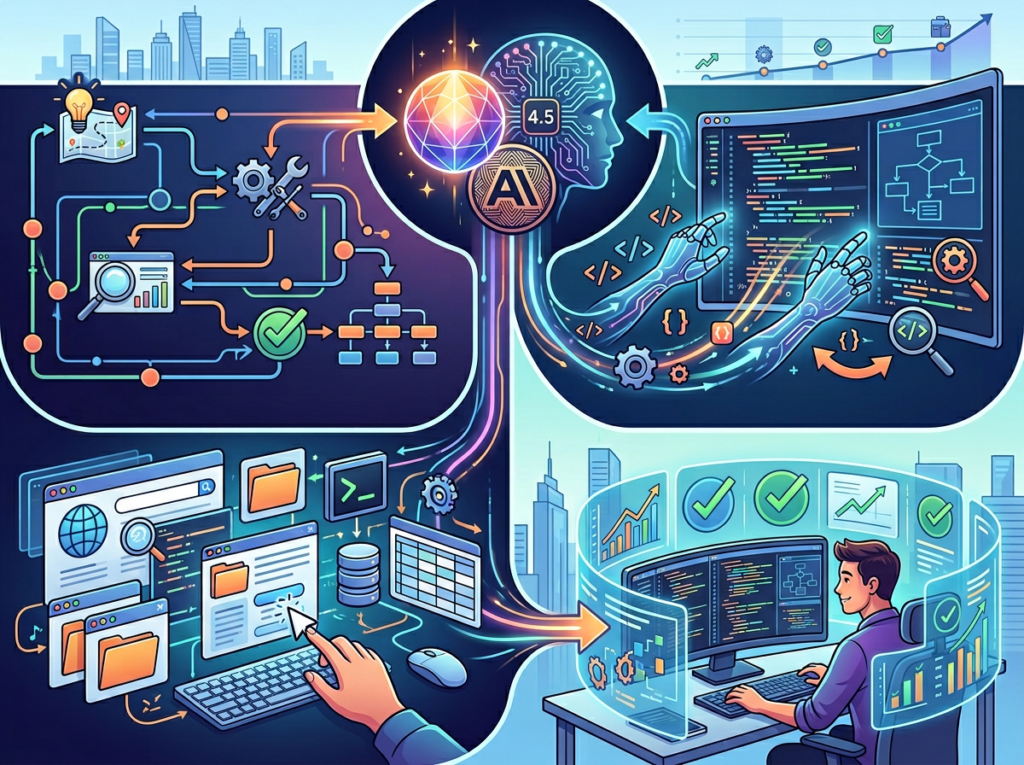
Feature 1: AI-Generated SOPs
Claude Sonnet 4.5 can take a voice memo, a rough process description, or even a Slack thread and convert it into a structured, step-by-step SOP with decision trees, role assignments, and exception handling. For a 4-person legal services firm in Washington D.C., this replaced a $2,400 quarterly documentation project that had previously been outsourced. The team now generates and updates SOPs internally in under 2 hours per process, saving approximately $2,000 per documentation cycle.
Feature 2: Workspace Memory and Context Retention
Claude Sonnet 4.5’s extended context capability means it can hold your entire operations manual in working memory during a session — reviewing cross-dependencies, identifying gaps, and flagging contradictions between different processes. For teams where a single operations error can mean a lost client, this kind of systematic review has measurable value. Teams billing at $100/hour who recover just 3 hours per week from reduced procedural confusion save approximately $15,600 annually.
Feature 3: Template Automation
Claude Sonnet 4.5 generates reusable templates for recurring deliverables — client reports, onboarding checklists, project kick-off agendas, weekly team syncs. For a 7-person consulting firm in Atlanta that previously spent 3 hours per week per team member assembling recurring documents from scratch, template automation saves approximately $6,000–$9,000 annually across the team.
These aren’t theoretical estimates. They reflect the kind of operational math that US small business founders calculate when deciding where AI actually earns its subscription cost. The full Claude Sonnet 4.5 review on AI Plaza covers API pricing and implementation details for teams evaluating the economics.
Ready to systemize your US team operations in under a week? Try Claude Sonnet 4.5 Free | No credit card required | Trusted by 10,000+ US teams
Use Cases by Team Role
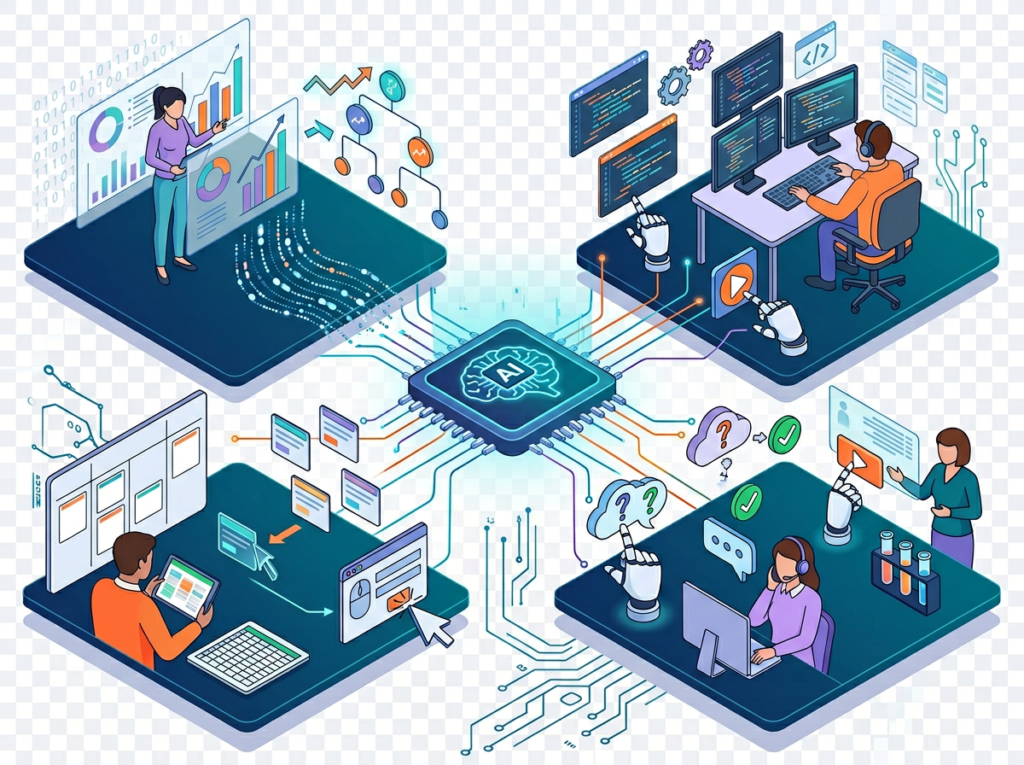
Persona 1:Startup Founder Juggling 3 Departments (San Francisco, CA)
Old Workflow: Maria runs a 6-person SaaS startup in San Francisco. As CEO, head of sales, and de facto HR manager, she was the single source of truth for every process. New hires spent their first week Slacking her 15–20 questions per day. Client onboarding varied based on which account manager handled it. Sales proposals were assembled differently each time.
AI-Powered Workflow: Maria used Claude Sonnet 4.5 to run a 3-day documentation sprint. She described each core process verbally, Claude generated structured SOPs, and she reviewed and approved them. Client onboarding became a 12-step checklist. Sales proposals got a locked template. New hire orientation became a self-serve module with embedded Q&A.
Quantified Results: Onboarding time dropped from 2 weeks to 4 days. Maria reclaimed 12 hours per week in procedural answering. At her effective hourly rate of $200, that’s $124,800 in annual time value recovered. Client satisfaction scores increased 22% in the first quarter after standardization.
Maria: “I kept saying I’d document everything ‘when things slow down.’ Claude forced me to realize that things don’t slow down — you just build the systems and move.”
Persona 2: Executive Assistant Onboarding Remote Staff (Miami, FL)
Old Workflow: James is the EA for a 9-person financial advisory firm in Miami. Each time a new junior advisor joined, James spent 3 full days in orientation — walking through compliance procedures, client communication protocols, and software access workflows. With turnover at 40% annually, this was consuming weeks of his productive capacity.
AI-Powered Workflow: James loaded the firm’s compliance documents, communication guidelines, and tool access procedures into Claude Sonnet 4.5 and used it to generate a structured onboarding playbook with role-specific modules. New hires now complete an AI-supported self-guided orientation in 1.5 days, with James doing a 2-hour live review at the end instead of 3 days of hand-holding.
Quantified Results: James recovered 60+ hours per year in onboarding time. At the firm’s $85/hour blended staff rate, that’s $5,100 in direct labor savings annually — plus a measurable improvement in new hire confidence scores on 30-day surveys. Compliance errors in the first 90 days dropped by 34%.
James: “The playbook isn’t just a document. It’s a living system. When a regulation changes, I update one section in Claude and it propagates to everything downstream.”
Persona 3: Trainer Documenting Internal Knowledge (New York, NY)
Old Workflow: Robert is the head of operations for a 12-person e-commerce brand based in New York. As the person who knew every fulfillment process, return procedure, and vendor relationship, he was a single point of failure. When he took a 10-day vacation, operations degraded noticeably. His boss described it as “organized chaos without Robert.”
AI-Powered Workflow: Robert used Claude Sonnet 4.5 over 4 weeks to systematically document every process he managed — starting with the highest-risk procedures. He narrated each workflow, Claude generated the SOP, and Robert refined it. By the end, the company had a 47-process operations manual that any team member could navigate independently.
Quantified Results: Robert’s second vacation showed measurably better outcomes — zero escalations that required his remote involvement. The team estimates that reducing founder/lead dependency in operations is worth approximately $30,000–$40,000 in annual risk mitigation value. Robert also freed 5 hours per week previously spent on ad hoc training. The full breakdown of Claude Sonnet 4.5 covers the extended-context features that made a 47-process documentation sprint practical.
Robert: “I stopped being the bottleneck. That’s not a small thing — it’s the whole point of having a team.”
Join 10,000+ US small teams using Claude Sonnet 4.5 to eliminate operational chaos. See How It Works | Used by teams from Silicon Valley to New York
Common Pitfalls & How to Avoid Them
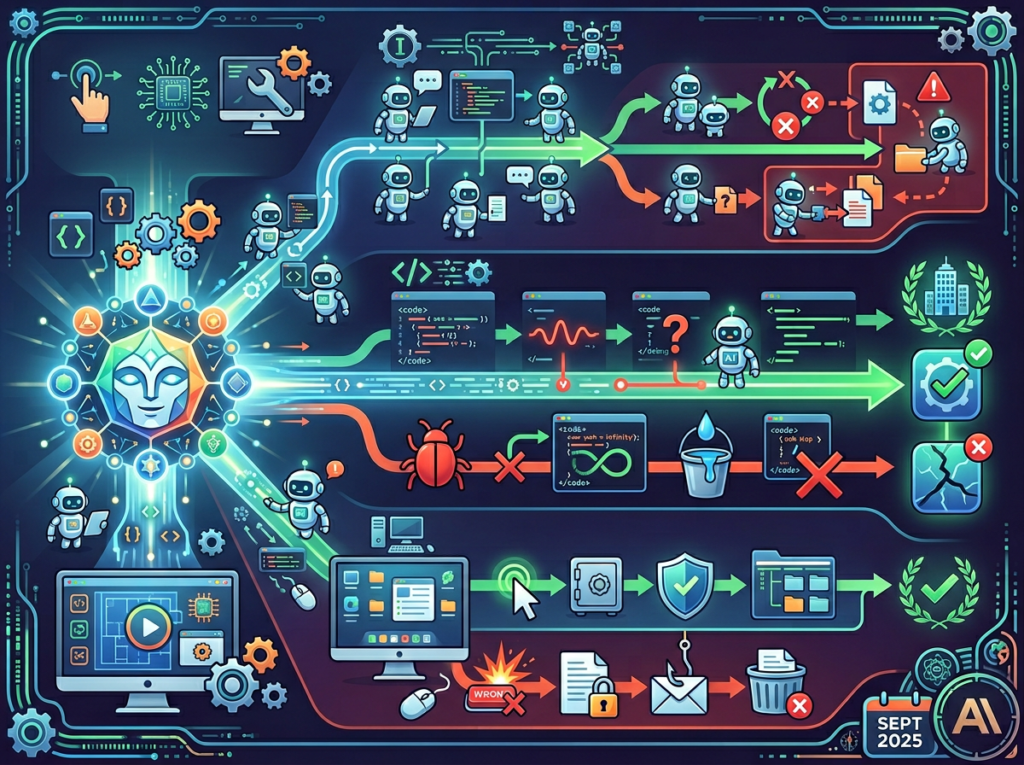
Pitfall 1: Using Too Many Disconnected Tools
Many small teams approach systemization by adding tools — a project manager here, a wiki there, an AI assistant somewhere else. The result is a fragmented knowledge base that nobody actually uses. The fix: pick one primary documentation home and route everything through it. Claude Sonnet 4.5 works most effectively when your documentation exists in a single, structured environment it can reference consistently.
Pitfall 2: Delegating Without Documentation
Delegation without documentation isn’t delegation — it’s hope. When a team lead assigns a process to a new hire without a written SOP, they’re creating a dependency on that individual rather than the system. Before delegating any recurring task, generate a Claude-assisted SOP first. This takes 30–60 minutes and eliminates weeks of rework downstream. For teams that want to explore Claude Sonnet 4.5’s documentation generation features, this is often the highest-ROI starting point.
Pitfall 3: Over-Relying on Slack and Email for Knowledge
US small teams default to Slack and email for process communication because it’s fast. But speed in the short term creates confusion in the long term — critical process knowledge disappears into thread history, new hires can’t find it, and institutional memory degrades with every team change. The discipline is to capture any process decision that happens in Slack and immediately convert it into a structured SOP. Claude Sonnet 4.5 makes this fast enough that the behavior actually sticks.
For teams using Claude as an ai documentation tool, the integration into existing workflows is more straightforward than most founders expect — making adoption friction lower than with purpose-built SOP platforms.
FAQs

What’s the difference between AI Efficiency and Solo DX?
AI Efficiency tools are designed to make individual contributors more productive — faster writing, better task management, smarter scheduling. Solo DX tools are designed to make teams more consistent — standardized workflows, documented processes, scalable onboarding. The distinction matters because a team of 8 people with high individual efficiency but no shared systems is still operationally chaotic.
Can small teams afford to use AI?
Claude Sonnet 4.5 is priced at $3 per million input tokens and $15 per million output tokens via API. For teams using it through the Claude.ai interface, Pro plans start at $20 per user per month. For most US small businesses, the break-even on a single well-documented SOP occurs within the first week of using it — given the labor costs it replaces.
Is Claude Sonnet 4.5 hard to set up?
For non-technical teams, the Claude.ai web interface requires no setup beyond account creation. For teams that want to integrate Claude Sonnet 4.5 into their existing tools via API, basic implementation typically takes a developer 2–4 hours. Most US small business founders start with the web interface and move to API integration once they’ve validated their use case.
Conclusion
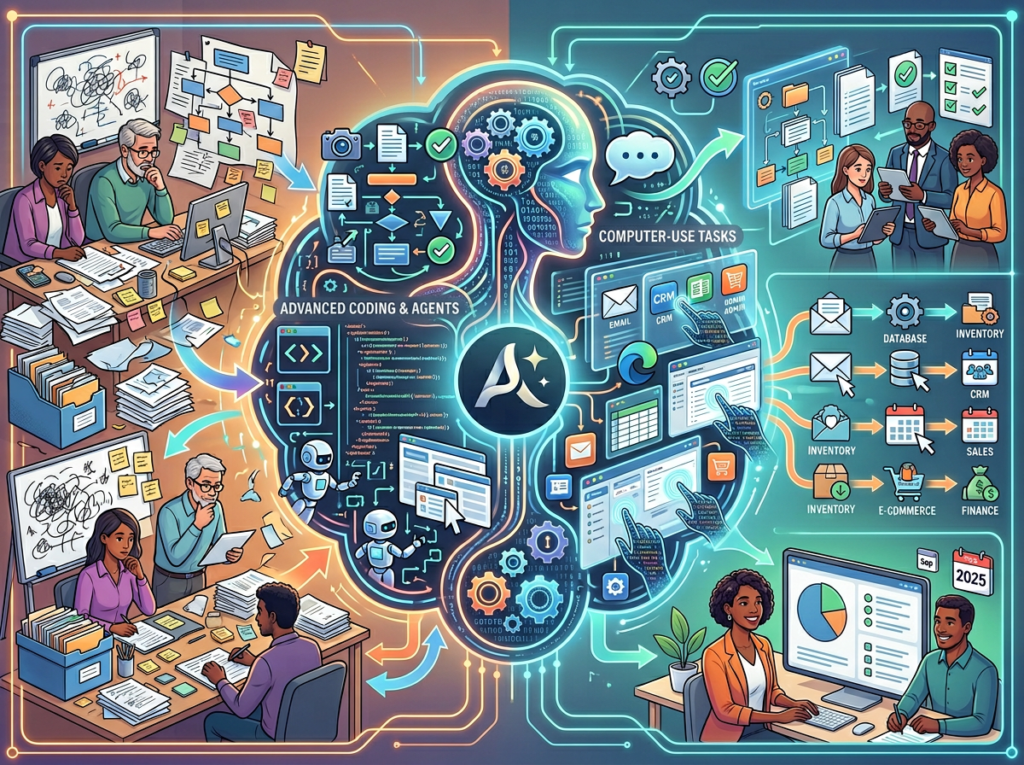
In 2026, American small businesses don’t need enterprise budgets to build enterprise-level systems. The tools exist. The cost barriers are gone. What’s missing for most US teams is the framework for thinking about systemization as a deliberate project rather than something that happens eventually.
Solo DX with Claude Sonnet 4.5 gives small teams a practical path: start with one high-friction process, document it with AI assistance, deploy it, and measure what changes. The ROI on that first SOP — typically 10–15 hours of recovered time per week at US labor rates — funds everything that follows.
The ai sop automation for small business opportunity is not theoretical. It’s happening right now in 5-person agencies in Austin, 8-person e-commerce brands in Denver, and 12-person service firms in Chicago. The teams getting ahead of this in 2026 are the ones that will stop rebuilding institutional knowledge from scratch every time someone new joins.
Start with one process. Systemize it this week. The full Claude Sonnet 4.5 feature breakdown is the best starting point for US teams evaluating where to begin.
Leave a Reply