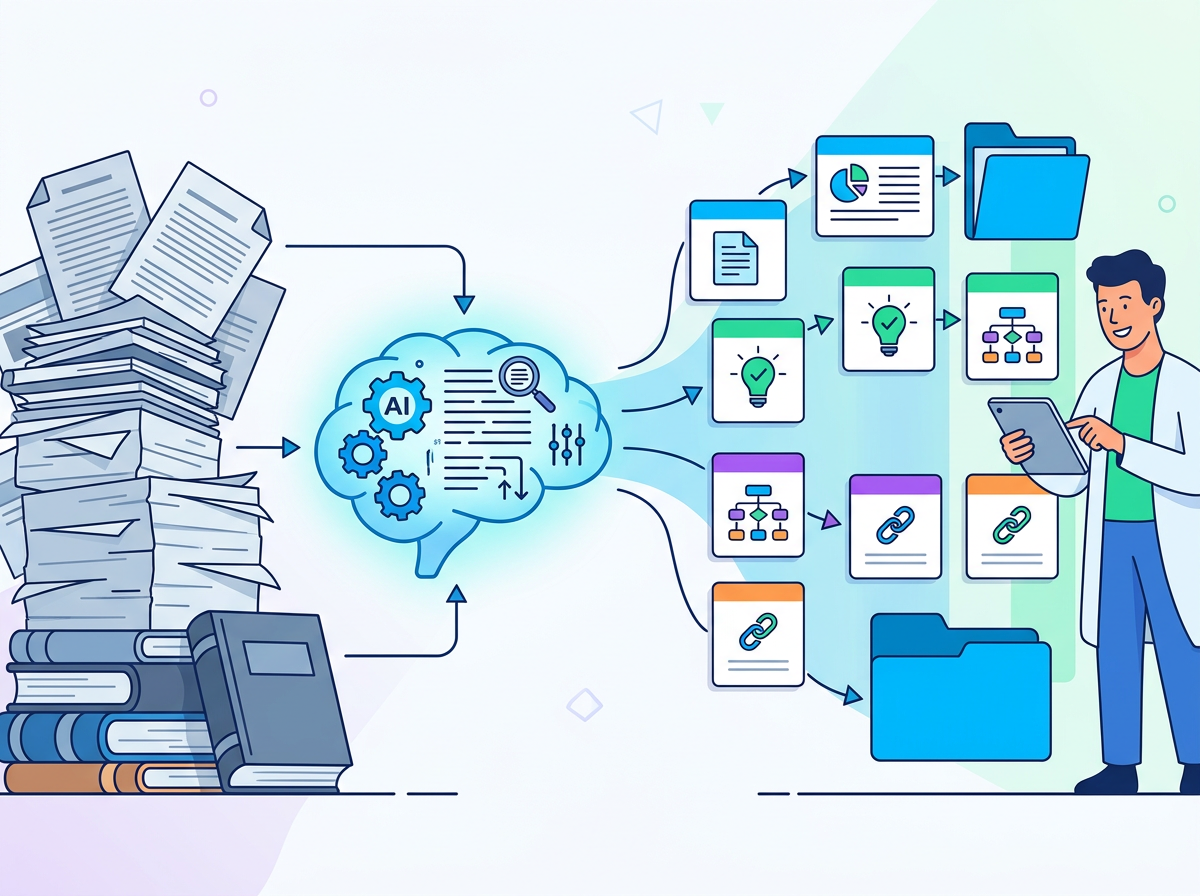
The fastest-growing teams in America aren’t reading less — they’re reading smarter, and Scholarcy is the AI research summarizer making that shift possible.
American professionals are buried in reading. Market reports. Academic studies. Legal briefs. Policy white papers. Industry analyses. For small business owners, consultants, researchers, and freelancers scaling their operations in 2026, the volume of information that demands attention has never been higher — and the hours available to absorb it have never felt shorter.
The problem isn’t access to information. It’s the cost of processing it.
Knowledge work in the United States is expensive. The average US knowledge worker earns between $50 and $120 per hour in fully loaded labor costs. When a researcher spends four hours manually summarizing a 60-page white paper, or a consultant reads through 15 academic studies to prep a client brief, that’s $200 to $480 in labor — for a single task. Multiply that across a 5-person team doing it weekly, and you’re looking at $5,000 or more in annual labor just for document digestion.
Most small teams don’t solve this problem — they absorb it. Knowledge lives in someone’s head. New hires spend weeks getting up to speed by reading from scratch. Quality varies because each person summarizes differently. And the founder or team lead becomes the de facto filter for every document, creating a bottleneck that slows everything down.
This is the hidden scalability problem that enterprise organizations solved with dedicated research operations teams. US small businesses and freelancers — operating in what we call the Solo DX model — don’t have that luxury.
That’s where Scholarcy enters. Unlike generic AI writing tools that help you produce content, Scholarcy is purpose-built as an ai research summarizer: it ingests research papers, articles, reports, and long-form documents and extracts the key findings, arguments, definitions, and references automatically. It’s not a replacement for critical thinking — it’s the assistant that does the heavy lifting so your critical thinking can operate at a higher level.
For US small teams in 2026, that’s not a productivity perk. It’s a competitive necessity.
Get the full Scholarcy breakdown and start building your team’s knowledge infrastructure today.
What is Solo DX?

Solo DX — short for Small-Scale Digital Transformation — is the operational philosophy that helps US founders and small team leads build enterprise-grade systems without enterprise-grade headcount or budgets.
The term emerged from a practical reality: the digital transformation strategies designed for Fortune 500 companies simply don’t translate to businesses with 1 to 15 people. Corporate DX initiatives involve dedicated IT departments, change management consultants, multi-year roadmaps, and seven-figure budgets. They’re designed for organizations with the infrastructure to absorb disruption. Small US businesses don’t have that infrastructure — and most don’t have the time to build it the traditional way.
Solo DX reframes the question. Instead of asking “how do we transform our organization?”, it asks “how do we build one repeatable system this week, using tools that cost less than a business lunch?”
Corporate SOP frameworks fail for US small businesses for three reasons. First, they assume dedicated process owners — people whose entire job is to document and maintain procedures. Second, they assume stable, well-resourced IT environments. Third, they’re designed to document processes that already work at scale, not to help small teams figure out what their processes should be in the first place.
Solo DX flips that sequence. You start with a working process — even an imperfect one — and use AI to document, systematize, and refine it. The documentation doesn’t come after the process is perfect. It comes alongside it, evolving in real time.
Consider a 3-person design studio in Austin, Texas. The founder, Marco, is the only person who knows how to scope client projects, price retainer packages, and deliver final files in the correct format. When he hired two junior designers, he spent three weeks onboarding them verbally. Clients complained about inconsistent deliverables. Junior designers were afraid to make decisions without checking with Marco first.
Solo DX would have Marco use an ai research summarizer to pull the key frameworks from his industry’s best practice guides, then build internal reference documents his team could use independently. The bottleneck doesn’t disappear overnight — but it shrinks with every document that gets out of his head and into the system.
Explore Scholarcy’s features to see how it fits into a Solo DX knowledge infrastructure for your team.
Why AI Is Key for Mini-Team Systemization
Problem 1: Knowledge lives only in the founder’s head
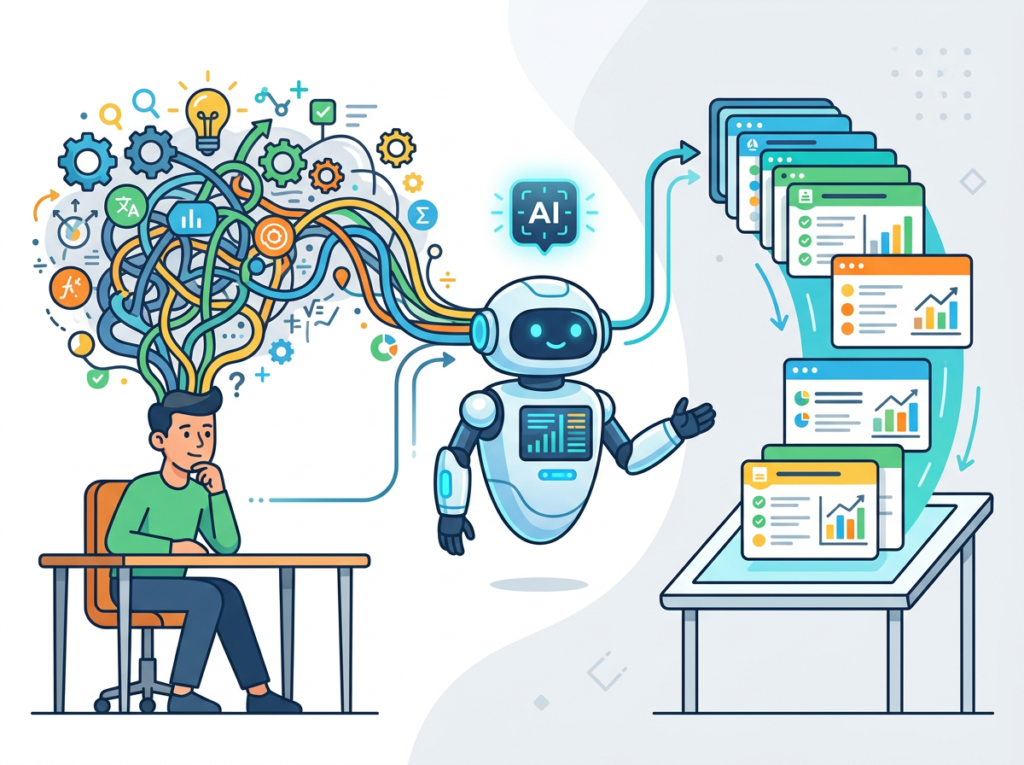
This is the most common and most damaging bottleneck in American small businesses. The founder knows which vendors are reliable, which contract clauses matter, which client communication styles work. None of that knowledge is written down. When the founder is unavailable — or when they finally hire someone — that institutional knowledge either transfers slowly through verbal explanation or doesn’t transfer at all.
The cost isn’t hypothetical. US employee turnover averages around 47% annually across industries. Re-training a replacement costs 50% to 200% of that employee’s annual salary — meaning a $60,000-per-year employee costs $30,000 to $120,000 to replace when you factor in lost productivity and training time.
AI research summarization tools like Scholarcy allow teams to rapidly convert external research — industry best practices, regulatory guidance, competitor analyses — into internal reference materials. That knowledge becomes part of the team’s documented infrastructure instead of living in someone’s browser bookmarks.
Problem 2: New hires slow operations down before they speed them up
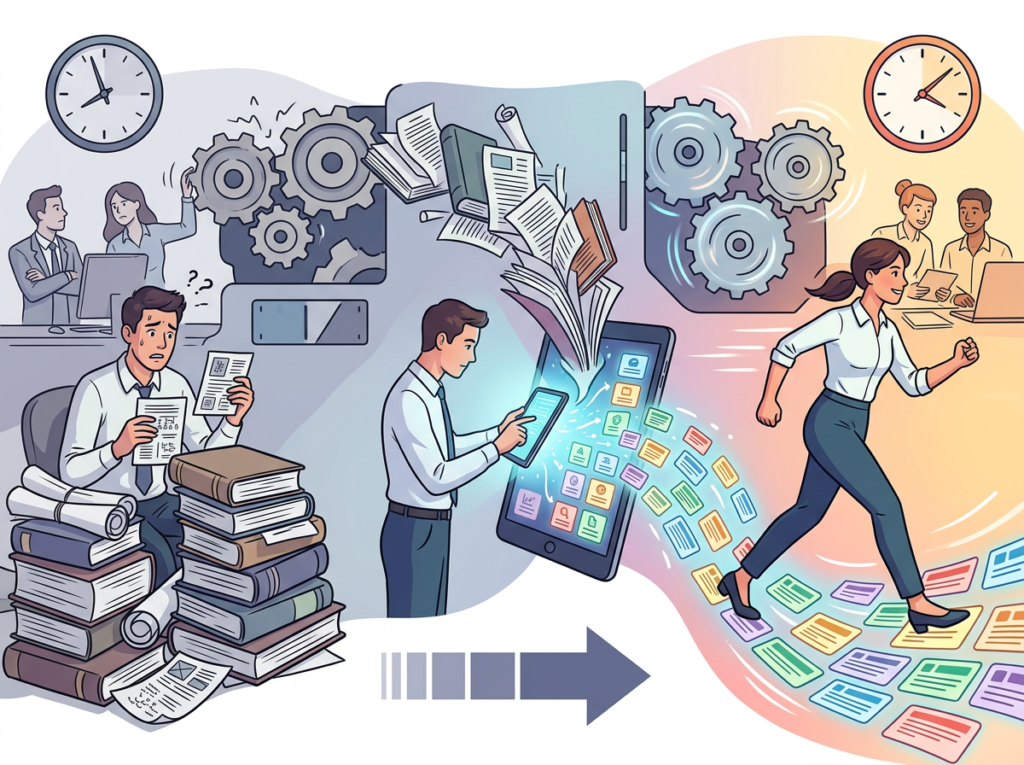
The onboarding tax is real and expensive. A new hire at a 5-person US startup typically takes 3 to 6 months to reach full productivity. During that ramp period, they’re pulling attention from existing team members — asking questions, requesting document reviews, needing supervision on client work.
Teams that have systematized their knowledge — reference documents, research summaries, process guides — cut this ramp period dramatically. When a new hire can independently access well-organized summaries of the key research, tools, and processes that govern their role, they don’t need to interrupt the founder every hour.
The math is clear: if a new marketing hire at a Denver-based SaaS startup earns $65,000 per year and takes 4 months to ramp instead of 6, that 2-month acceleration is worth approximately $10,800 in productive labor. Across two or three hires per year, that’s $20,000 to $30,000 in recovered productivity annually.
Problem 3: Quality varies across team members because everyone reads differently
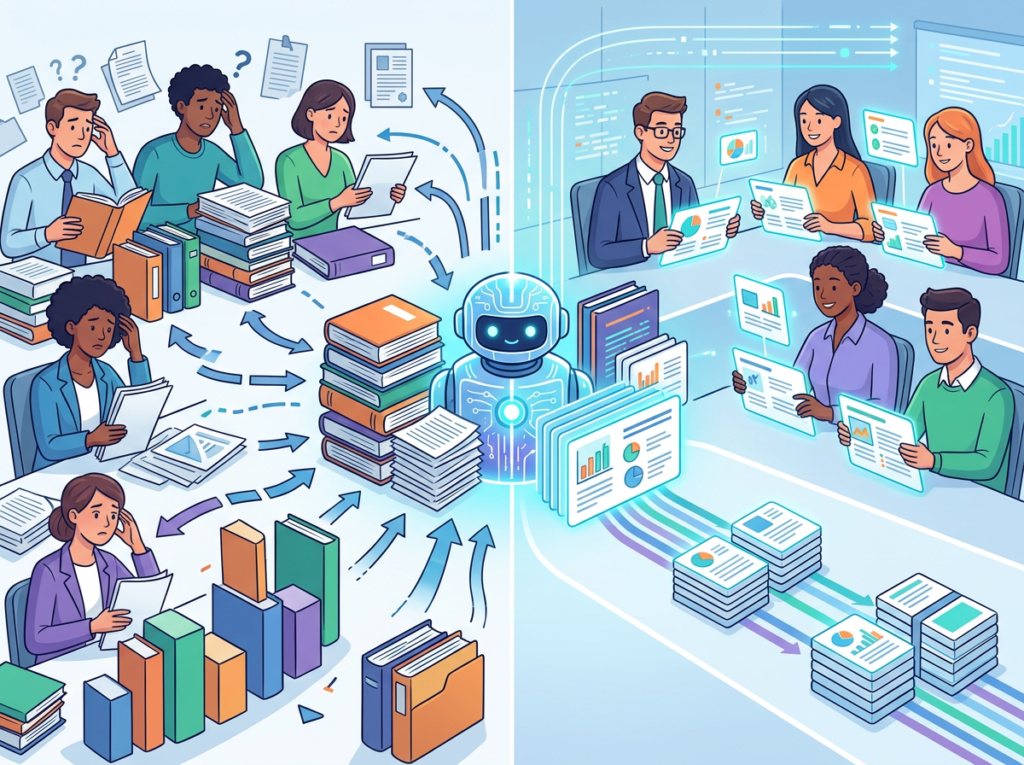
When 5 people read the same 40-page industry report, they walk away with 5 different interpretations of what matters. One person focuses on the data. Another focuses on the case studies. A third focuses on the executive summary and misses the caveats in the appendix. That variation in comprehension produces variation in output quality — which produces variation in client results.
AI-powered summarization creates a consistent starting point. When the tool extracts the key findings, methodology, and conclusions from a document, every team member starts from the same structured summary. The interpretation still varies — and should — but the baseline is shared.
Get the full Scholarcy breakdown and start building your team’s knowledge infrastructure today.
Use Cases by Team Role
Persona 1: US Startup Founder Juggling 3 Departments

Maria runs a 6-person health tech startup building patient engagement software. She’s simultaneously managing product development, sales, and regulatory compliance — and she’s the only person who has read the FDA guidance documents, clinical research papers, and competitive intelligence reports that inform their product decisions.
Old workflow: Maria reads 3–5 documents per week, takes handwritten notes, and verbally briefs her team in 30-minute meetings. Her notes aren’t searchable. Her team can’t reference them asynchronously. When a sales call requires regulatory context, they wait for Maria.
AI-powered workflow: Maria uploads regulatory documents and research papers to Scholarcy at the start of each week. The tool generates structured summaries with key findings, citations, and relevant figures. She reviews the summaries (20 minutes vs. 3 hours of reading), approves them, and they’re added to the team’s shared knowledge library in Notion. Sales, product, and compliance team members can now access the same foundational knowledge independently.
Results: Maria recovers 6–8 hours per week. Her team’s regulatory questions drop by 60%. A new product manager onboards in 3 weeks instead of 7.
Maria says: “I used to be the human search engine for our entire company. Now the search engine actually searches.”
Quantified ROI: 7 hours/week × $150/hour (founder rate) × 50 weeks = $52,500/year recovered in founder bandwidth
Persona 2: Trainer Documenting Internal Knowledge
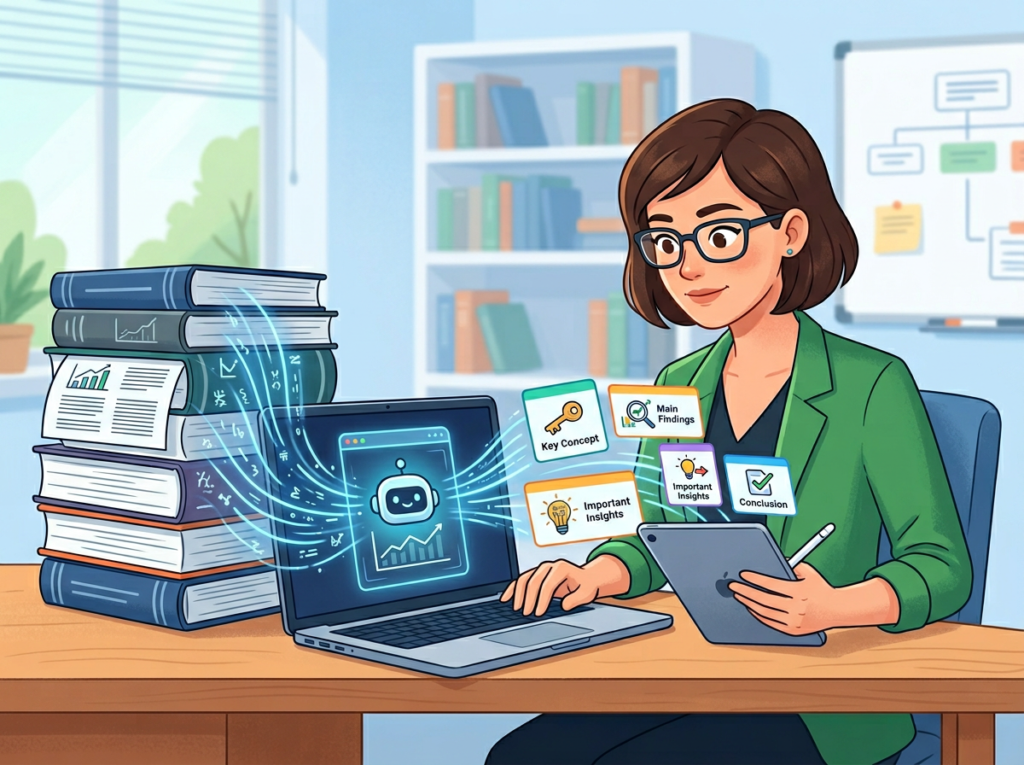
Robert is the sole learning and development specialist at a 12-person professional services firm. He monitors and summarizes dozens of regulatory changes, industry developments, and professional standards documents per month — a task that takes 15 hours and produces emails most team members skim or ignore.
AI-powered workflow: Robert uses Scholarcy to generate initial summaries, which he reviews and annotates in 3–4 hours rather than 15. He formats the approved summaries into a weekly internal newsletter and a searchable Notion knowledge base. Team members engage with structured, scannable content rather than long emails.
Results: Team engagement with internal knowledge materials increases by 55%. Robert’s monthly research summarization time drops from 15 hours to 5 hours.
Robert says: “I went from being the person who reads everything so no one else has to, to being the person who makes sure everyone actually does.”
Quantified ROI: 10 hours/month recovered × $75/hour × 12 months = $9,000/year in L&D labor savings
Discover Scholarcy and see which use case fits your team’s current bottleneck.
Join 10,000+ US small teams using Scholarcy to eliminate research overload. See How It Works | Used by teams from Silicon Valley to New York
Common Pitfalls & How to Avoid Them
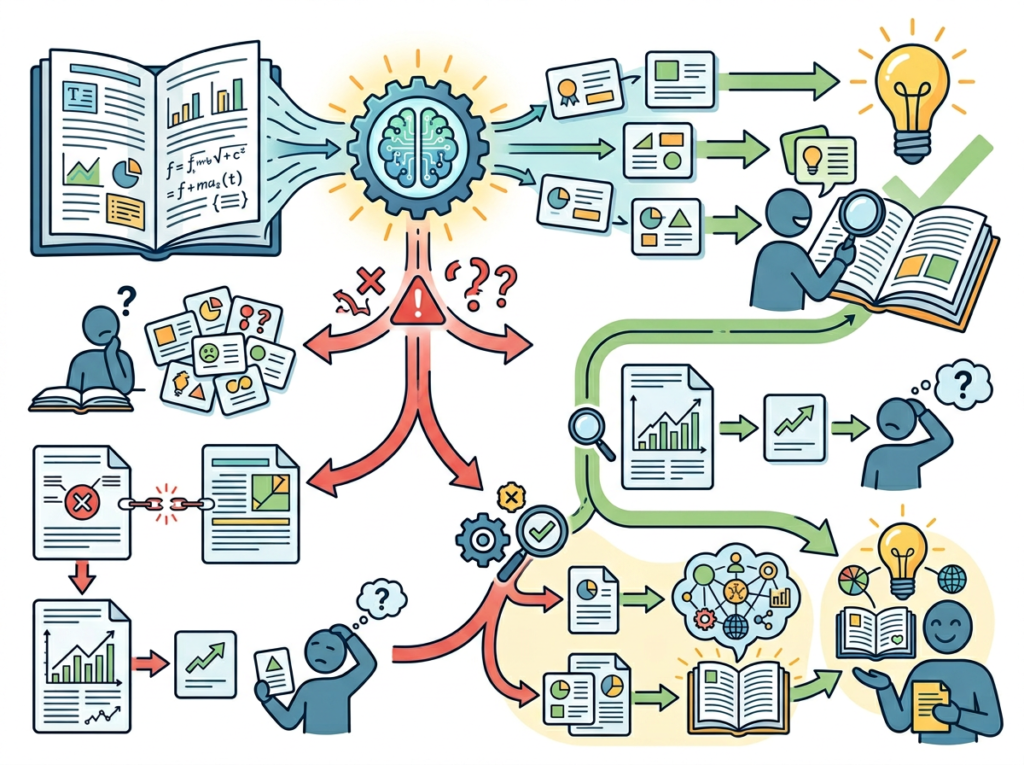
Pitfall 1: Using too many disconnected summarization tools
The temptation to test every AI tool that hits Product Hunt is real — especially for tech-forward small business founders. But using 3 different summarization tools simultaneously creates fragmentation. Summaries live in different places. Team members use different tools for different document types. The result is a knowledge infrastructure as disorganized as the problem you were trying to solve.
The fix: Choose one primary AI research summarizer and build your team’s workflow around it. Scholarcy is designed to handle diverse document types — PDFs, web articles, Word documents — so there’s rarely a need for a secondary tool in the same category.
Pitfall 2: Delegating summarization without reviewing output
AI-generated summaries are starting points, not finished products. Teams that route Scholarcy output directly into client deliverables or critical internal documents without human review create liability and accuracy risks. This is especially true in regulated industries — healthcare, finance, legal — where a mischaracterized finding can have serious consequences. As covered in this study tips breakdown, even the most efficient summarization workflow requires active critical engagement with the output.
The fix: Establish a review step. Assign a team member to spot-check AI summaries against source material before they’re added to the knowledge base. This takes 10–15 minutes per document and is far faster than the alternative of reading the full document.
Pitfall 3: Failing to maintain the knowledge library
The most common reason AI-powered knowledge systems fail in US small businesses isn’t the technology — it’s governance. Teams build a library of summaries in Month 1, then stop updating it. Within 90 days it’s stale; within a year, it’s abandoned.
The fix: Assign a single owner for the knowledge library. Build a monthly “research digest” ritual — a recurring calendar block where someone uploads new documents to Scholarcy, reviews the summaries, and updates the knowledge base.
See the full Scholarcy review for a detailed breakdown of how to structure these workflows from day one.
FAQs
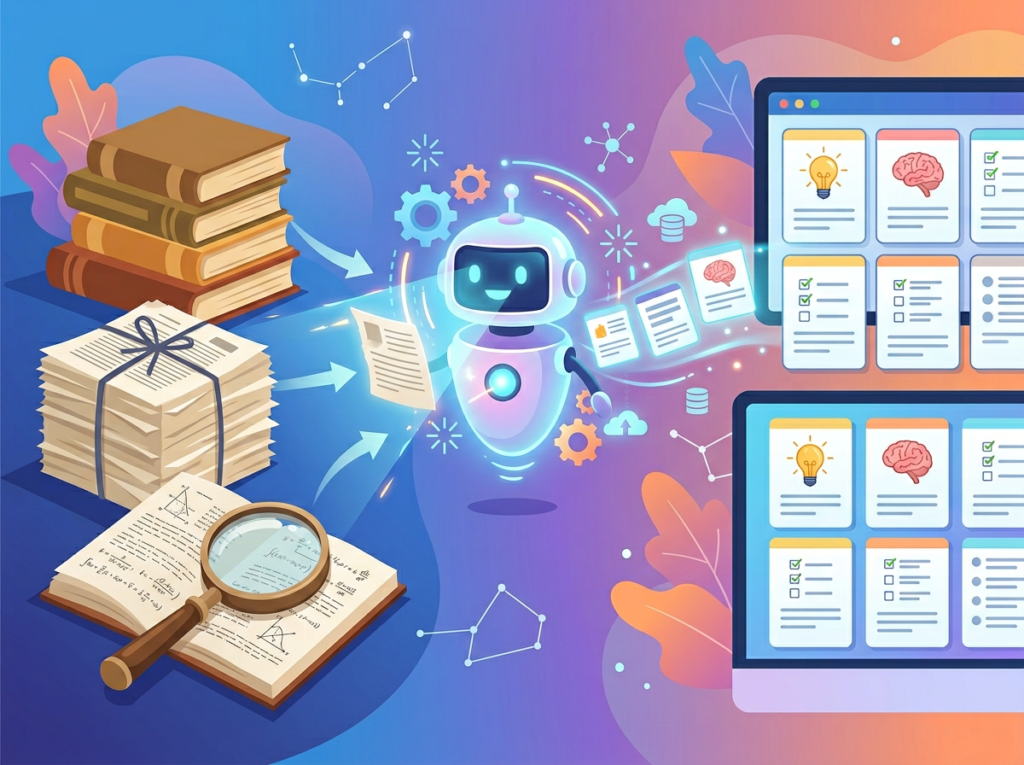
What’s the difference between AI Efficiency and Solo DX?
AI Efficiency tools are designed to help individuals work faster — writing emails more quickly, generating first drafts, automating repetitive tasks. Solo DX is focused on team-level systemization: building the knowledge infrastructure, documented processes, and shared workflows that allow a small team to operate consistently without constant founder intervention. Both are valuable; they serve different goals.
Can small teams afford to use AI research tools?
Yes — and the better question is whether they can afford not to. Scholarcy’s subscription starts at around $10/month for individual users and offers institutional pricing for teams. When a single team member saves 3 hours per week in reading time at $75/hour fully loaded labor cost, that’s $225 per week — or $11,700 per year — in recovered productivity. The ROI calculation for most US small teams is immediate.
Is Scholarcy hard to set up?
No. Scholarcy is designed for users who aren’t technically sophisticated. You upload a document — PDF, Word, or URL — and it generates a summary within seconds to minutes depending on document length. There’s no API integration required for basic use. For teams wanting to integrate Scholarcy into a larger workflow (e.g., automatic processing via API or Zapier), setup takes a few hours with basic technical knowledge.
Get the full Scholarcy breakdown and start building your team’s knowledge infrastructure today.
Conclusion
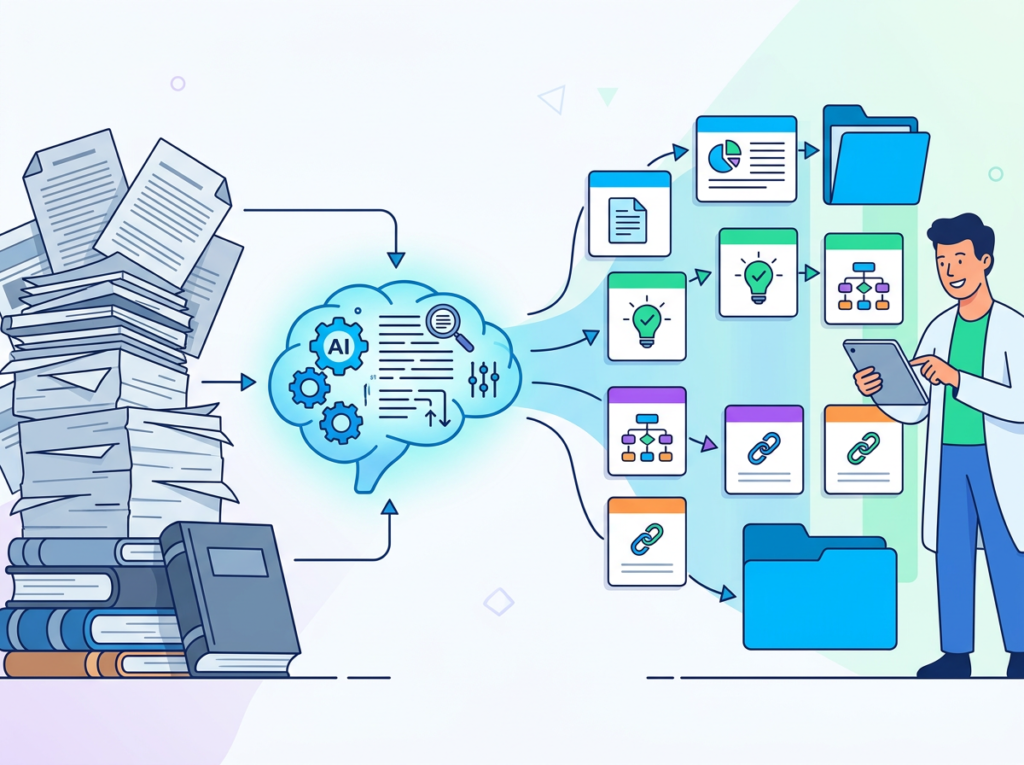
In 2026, American small businesses don’t need enterprise budgets to build enterprise-level research operations. The same ai research summarizer capabilities that large organizations spend tens of thousands of dollars implementing through dedicated research teams are now accessible to a 3-person consulting firm in Denver or a 7-person health tech startup in San Francisco — for less than the cost of a monthly business lunch.
The competitive advantage in knowledge work is no longer who reads the most. It’s who builds the systems that make reading scalable.
Scholarcy transforms the passive, bottlenecking act of document reading into an active, structured, team-shareable knowledge asset. It doesn’t replace the human judgment your team brings — it removes the friction that prevents your team from applying that judgment at scale.
The Solo DX principle applies here as it does everywhere: start with one process. Pick the single document type your team processes most frequently — market research reports, academic papers, regulatory guidance, client intake documents — and build a Scholarcy-powered summarization workflow around it this week. Get that one system working and trusted. Then expand.
By the end of the quarter, you’ll have replaced dozens of hours of manual reading with a searchable, shared intelligence library that every team member can use independently.
Get the full Scholarcy breakdown and start building your team’s knowledge infrastructure today.
Leave a Reply