
Runway Gen-4 AI video gives small teams a production edge that used to cost $10,000+ per campaign — and most US founders still don’t know it exists.
If you run a small business in 2026 and you’re still outsourcing marketing video to agencies, you’re leaving serious money on the table. Across the US, small teams between 2 and 10 people are drowning in content demands — social clips, product demos, email campaigns, and brand explainers — while agency quotes start at $3,000 per video and freelancers take weeks to deliver.
The problem isn’t budget. It’s workflow.
Knowledge about your brand, your voice, your visual identity — it lives in the founder’s head, in scattered Slack threads, or in a Google Drive folder nobody can navigate. When you add contractors or a small in-house team, video quality becomes unpredictable. One week your Instagram reel looks polished, the next it’s off-brand and underperforming.
This is the exact chaos that Runway Gen-4 AI video was built to help solve — not just as a creative tool, but as a systemization lever for US small businesses ready to produce consistent, scalable marketing content.
Unlike traditional video production where a 60-second brand video costs $5,000–$15,000 in US labor (directors, editors, motion designers billing at $75–$150/hour), Runway Gen-4 enables teams of any size to generate cinematic marketing video from text prompts and reference images — in minutes, not weeks.
In this guide, you’ll learn exactly how to implement Runway Gen-4 as part of a repeatable marketing video workflow, what kind of ROI US small teams are seeing, and how this tool fits the Solo DX model of small-scale digital transformation. Whether you’re in Austin managing a 4-person marketing team or scaling a remote operation from Denver, this approach works.
Get the full breakdown of Runway Gen-4 and start building your video production system today.
What is Solo DX?
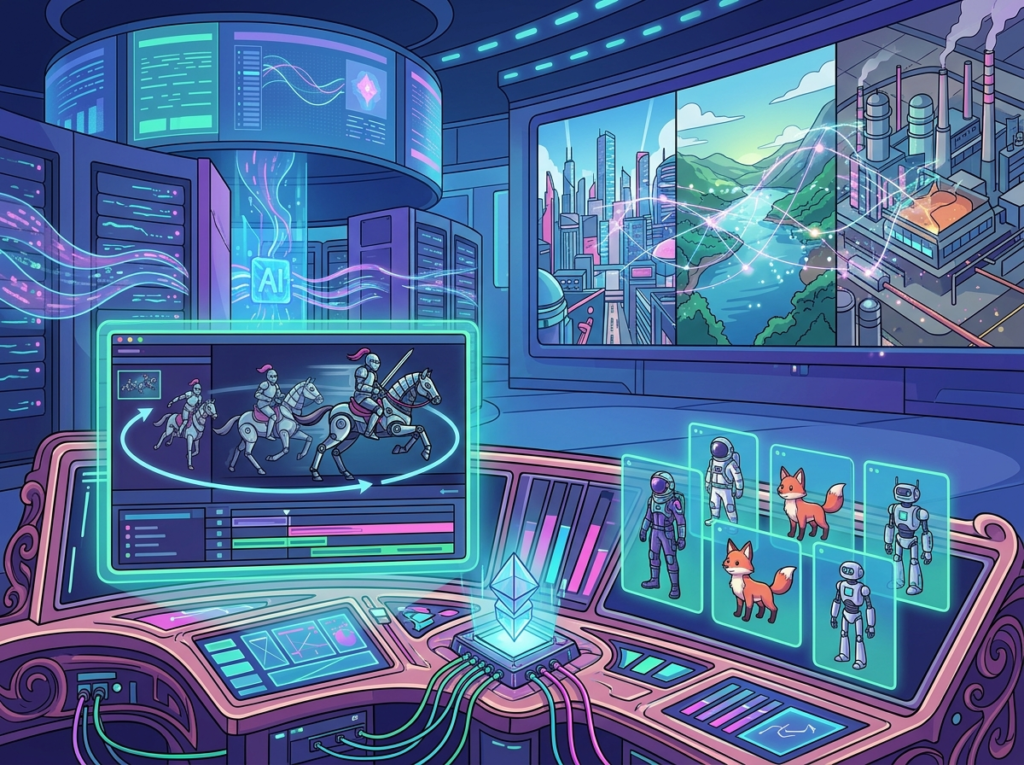
Solo DX — small-scale digital transformation — is the operational philosophy behind how modern US founders systematize their businesses without hiring an operations manager or paying for enterprise software. It’s not about doing more. It’s about building repeatable systems that work even when you’re not in the room.
Corporate systemization methods fail small teams for a simple reason: they’re built for headcount that US SMBs don’t have. A 200-person company can dedicate a team to SOPs, onboarding documentation, and brand standards. A 6-person team in Chicago cannot. They need tools that replace entire operational departments — not add to them.
Solo DX vs. Other Categories
| Category | Focus | Who It’s For |
|---|---|---|
| AI Efficiency | Saving individual time | Solo operators |
| AI Revenue Boost | Driving top-line growth | Sales-focused teams |
| AI Workflows | Automating task sequences | Operations leads |
| Solo DX | Systemizing the whole business | Founders managing 2–15 people |
Consider a 3-person design studio in Austin. The founder, Maya, is the sole decision-maker on brand voice, visual direction, and client communication standards. When she brought on two junior designers, they produced content that looked nothing like her portfolio work. Each deliverable required hours of revisions. Maya wasn’t struggling with creativity — she was struggling with system transfer.
Solo DX solves that. Instead of writing a brand manual that nobody reads, Maya needed a tool that could encode her aesthetic standards into a repeatable production process. That’s where Runway Gen-4 enters the picture.
By anchoring video generation to consistent reference images — a brand’s color palette, a standard character or spokesperson, a signature visual style — Runway Gen-4 doesn’t just create video. It creates reproducible video that any team member can generate without sacrificing brand integrity.
That’s Solo DX in practice: one founder’s taste, systematized into a scalable output pipeline.
Get the full breakdown of Runway Gen-4 and start building your video production system today.
Why AI is Key for Mini-Team Video Marketing

Problem 1: Video Production Knowledge Lives Only in the Founder
The founder knows exactly what the brand should look and feel like. But that knowledge is tacit — it lives in their eye, not in a document. When they’re not involved in every review cycle, quality drops. US agencies charge $150/hour for creative direction that founders are currently providing for free, as an invisible tax on their time.
AI solution: Runway Gen-4’s dual-input system — combining a reference image with a text motion prompt — acts as a visual encoding mechanism. The reference image pins brand identity. The prompt controls motion. Once a small team builds a library of approved reference frames, any team member can generate on-brand video without creative oversight.
Problem 2: New Hires Can’t Reproduce Brand Standards
US labor turnover sits at 47% annually across service industries, and onboarding a new marketing hire to produce video content that matches established brand standards takes 3–6 weeks under traditional methods. Every week of ramp-up costs roughly $2,400–$4,800 in billable hours lost.
AI solution: A Runway Gen-4 prompt library functions as an executable brand standard. Instead of handing a new hire a style guide and hoping, you hand them a reference folder and a set of validated prompts. They’re producing on-brand content in days, not weeks.
Problem 3: Quality Varies Across Team Members
A 5-person marketing team with two content creators and three generalists will produce wildly inconsistent video output without a shared production system. The cost of inconsistency isn’t just aesthetic — it erodes brand trust and requires expensive revision cycles.
The Cost Reality:
| Method | Cost | Time to Publish |
|---|---|---|
| Agency-produced video | $3,000–$15,000/video | 3–6 weeks |
| Freelance video editor | $75–$150/hour, 15–40 hours | 1–3 weeks |
| In-house, unstructured | $2,000+ in staff hours | 1–2 weeks |
| Runway Gen-4 (AI-assisted) | $35–$95/month subscription | Hours |
The math is unambiguous. For a 10-person team producing four marketing videos per month, switching from agency production to an AI-assisted Runway Gen-4 workflow saves $9,000–$48,000 annually — and compresses production timelines from weeks to hours.
How Runway Gen-4 Enables Solo DX

Feature 1: Reference-Anchored Visual Consistency
What it does: Gen-4’s dual-input system accepts a reference image plus a text prompt. The image pins character, environment, and visual identity; the prompt directs motion. Unlike earlier models that produced unpredictable outputs, Gen-4’s scene memory keeps brand elements consistent across multiple clips.
Solo DX value: A small business can create one “brand reference image” — featuring brand colors, a spokesperson, or a signature environment — and generate unlimited video variations from it. Every team member draws from the same visual anchor. No creative director required.
ROI: Eliminating creative direction overhead for a 5-person team producing 3 videos/month saves approximately $2,700–$5,400 per month in freelance and agency costs ($900–$1,800/video creative direction fee × 3).
Feature 2: Text-to-Video Campaign Drafts in Minutes
What it does: Small business owners without video production skills can describe a marketing scenario in plain language — “A customer opening a package in a bright kitchen, smiling, looking at camera” — and Runway Gen-4 generates a cinematic 5–10 second clip at 720p. Upscaling to 4K is available natively.
Solo DX value: Non-technical team members can produce marketing draft videos independently. The founder reviews final cuts, not rough creative directions. This inverts the traditional video production bottleneck.
ROI: Converting 4 hours of founder review time per video to 30 minutes of review (after AI draft generation) saves $300–$600 per video at a $75–$150/hour opportunity cost. Across 48 videos annually, that’s $14,400–$28,800 saved per year.
Feature 3: Multi-Format Output for Omnichannel Distribution
What it does: Runway Gen-4 supports multiple aspect ratios — 16:9 for YouTube and desktop, 9:16 for Instagram Reels and TikTok, 1:1 for LinkedIn and Facebook. One generation session can produce platform-ready variants without additional editing software.
Solo DX value: A single campaign brief generates content for every channel simultaneously. The team doesn’t need separate social media production workflows — one Runway Gen-4 session outputs everything.
ROI: Eliminating separate social format production saves approximately $6,000–$12,000 annually for a team producing monthly multi-platform campaigns ($500–$1,000/month in editing and reformatting costs).
Explore Runway Gen-4’s features to see how these capabilities map to your specific marketing stack.
Ready to cut your video production costs by 70% or more in under a week? Try Runway Gen-4 Free | No credit card required for basic access | Trusted by 10,000+ US creative and marketing teams
Common Pitfalls & How to Avoid Them
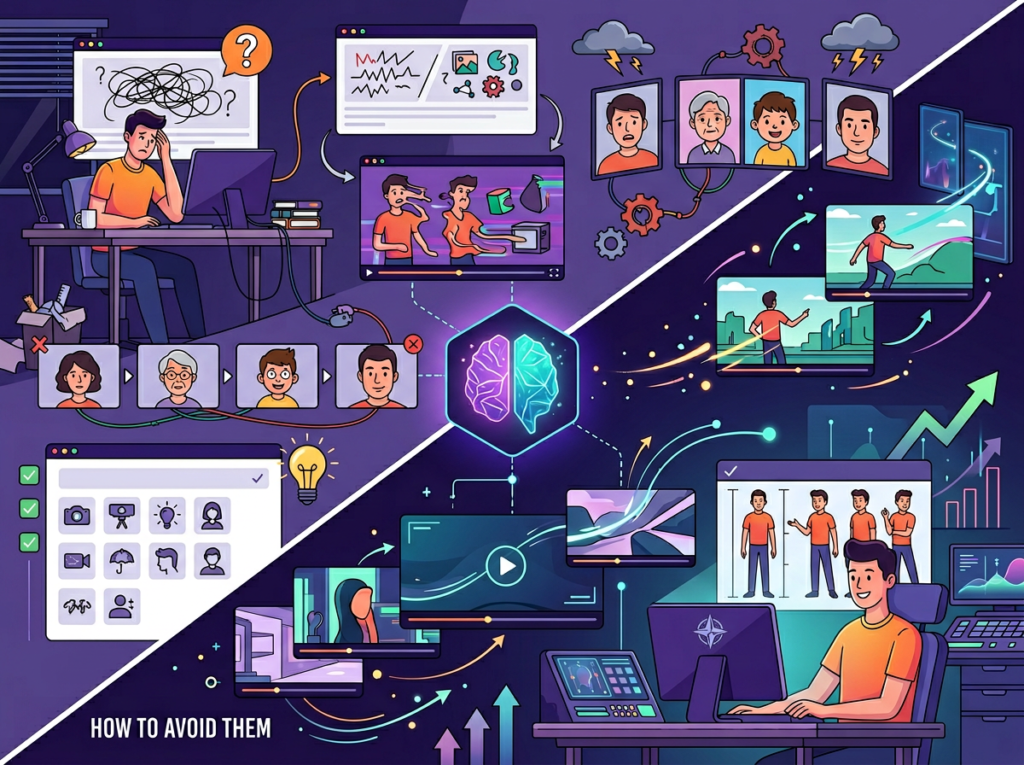
Pitfall 1: Using Gen-4 Without a Reference Image System
Many teams treat Runway Gen-4 as a pure text-to-video tool and skip reference images entirely. The result is creative outputs that drift in visual style from clip to clip. Without anchoring your prompts to approved reference frames, you’re producing variety when you need consistency.
Fix: Build a brand reference folder before your first production session. Create 6–12 approved images covering your key campaign scenarios. Every video generation starts from a reference image — no exceptions.
Pitfall 2: Skipping the Review Protocol
Teams excited about production speed skip quality review steps. The result: off-brand clips get published, first or last frames occasionally glitch, and client-facing content goes out with subtle visual artifacts. The speed advantage disappears when revisions hit after publication.
Fix: Build a 5-point pre-publish review checklist: brand color accuracy, character consistency, motion naturalness, first/last frame stability, and audio alignment (Runway outputs silent video — sync audio separately).
Pitfall 3: Keeping the System in One Person’s Head
If only one team member knows how to use Runway Gen-4, you haven’t built a system — you’ve built a dependency. When that person takes PTO or leaves, production stops. This is the same founder-dependency problem Solo DX exists to solve.
Fix: Document your reference folder structure, prompt library, and review protocol in a shared team resource. Run two team members through the full production workflow before considering it “deployed.” Refer to the discover Runway Gen-4 overview to frame how capabilities map to your specific team roles.
Get the full breakdown of Runway Gen-4 and start building your video production system today.
FAQs

What’s the difference between AI Efficiency and Solo DX?
AI Efficiency focuses on saving individual time — automating a task faster for one person. Solo DX is broader: it’s about encoding how your business operates into repeatable systems that any team member can execute. An AI Efficiency tool saves you an hour. A Solo DX approach saves your team thousands of hours annually and makes your business less dependent on any one person’s knowledge.
Can small teams afford Runway Gen-4?
Runway’s subscription plans start at approximately $15/month for basic access and scale to $95/month for professional tiers with higher generation volume and priority processing. For a team spending $3,000+/month on video production through agencies or freelancers, the ROI calculation is immediate. Even at the professional tier, the annual cost ($1,140) replaces a single agency video project. As covered in this Runway overview, Gen-4 Turbo in particular balances speed and quality for professional marketing output.
Is Runway Gen-4 hard to set up for a non-technical team?
No. The core interface is a web-based dashboard — no installation, no coding, no API keys. The workflow for a new user is: upload reference image ? write prompt ? select aspect ratio ? generate. Most marketing team members are producing first drafts within their first session. The higher-leverage work is building your reference image library and prompt templates, which takes 2–4 hours upfront and pays dividends for every future production session.
Conclusion

In 2026, American small businesses don’t need enterprise budgets to produce enterprise-quality marketing video. Runway Gen-4 AI video closes the gap between what a 5-person team can produce and what a $200,000 annual production budget used to buy.
The teams winning with this tool aren’t treating it as a creative experiment. They’re treating it as a system — a scalable video production infrastructure with consistent inputs (reference images, validated prompts) that produces consistent outputs (on-brand marketing clips) without requiring a creative director, video editor, or agency account manager.
That’s the Solo DX principle applied to marketing: take the founder’s vision, encode it into a repeatable process, and let any team member execute at the same quality level.
Start with one campaign type. Build your reference folder this week. Write three validated prompts. Generate your first five clips. The first hour of setup creates a system that compounds for every video you’ll ever produce.
Your competitors are still paying agencies $5,000 per video. You don’t have to.
Get the full breakdown of Runway Gen-4 and start building your video production system today.
Leave a Reply