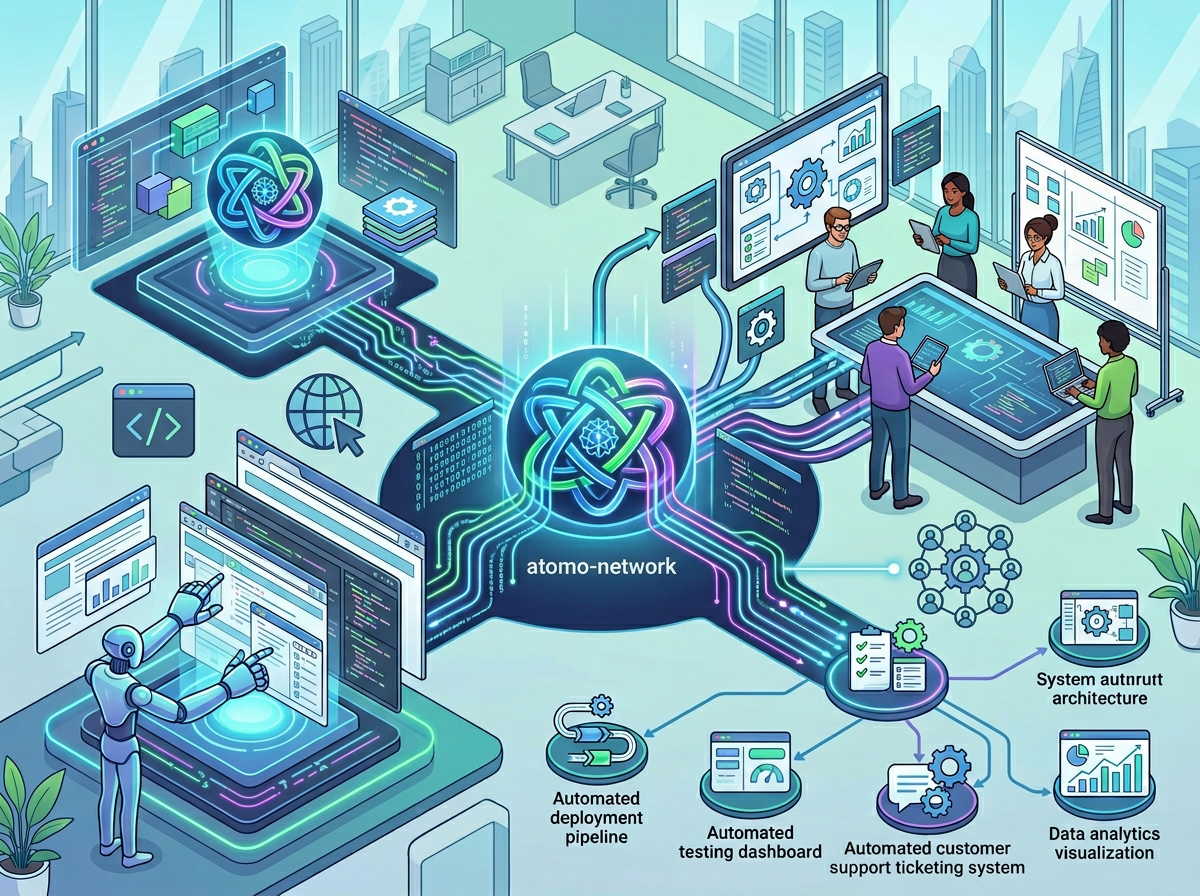
AI coding for business automation is no longer an engineer-only advantage — small teams that deploy it now will outpace competitors still writing SOPs by hand.
There is a moment every US small business founder recognizes. It arrives somewhere between employee three and employee eight. Slack threads pile up. Onboarding takes three weeks because the process exists only inside your head. A client deliverable slips because the team member who “knew how that worked” just quit. You spend Sunday afternoon rewriting instructions you wrote six months ago — and you still are not sure they will be followed correctly on Monday.
This is not a hiring problem. It is a systems problem. And in 2026, it is exactly the problem that AI coding tools are solving for US small teams.
Qwen3-Coder is an open-source AI coding model developed by Alibaba’s Qwen team, designed for agentic programming and complex automation workflows. But what the developer-focused guides miss entirely is the business case: small teams with zero engineering background are using tools built on Qwen3-Coder to create internal automations, document workflows, build custom internal tools, and scale operations without adding headcount.
Traditional documentation and internal tooling in the US market costs real money. A fractional operations consultant runs $100–$150 per hour. A custom internal tool built by a US freelance developer starts at $5,000. A formal onboarding program at an HR firm can cost $3,000 or more per new hire. AI coding for business automation changes the math entirely. For $0–$20 per month in subscription costs, a non-technical founder can now generate, test, and deploy simple internal automations in hours rather than weeks.
This guide is written specifically for US founders and team leads managing one to ten people who want to automate repetitive workflows and reduce manual operational work — without adding an engineer to the payroll. You will learn what Qwen3-Coder actually does, how it fits into a Solo DX system-building approach, and exactly how four different US small team profiles have used it to save thousands of dollars in labor annually.
Learn more about Qwen3-Coder and take the first step toward an operations layer your team can actually rely on — without adding a single full-time employee.
What Is Solo DX?
Solo DX — Small-Scale Digital Transformation — is the operational philosophy behind how AI Plaza covers AI tools for small US businesses. It is not enterprise digital transformation repackaged into a smaller box. It is a fundamentally different approach built around one reality: most US small businesses under fifteen people do not have an operations manager, a systems analyst, or a dedicated engineer. The founder is all three, plus head of sales.
Corporate SOP methodologies were designed for organizations with dedicated process documentation teams, internal wikis managed by full-time employees, and months of implementation runway. They fail for US SMBs because they require time and staffing that does not exist. A three-person design studio in Austin does not have a “process improvement sprint.” They have client work due on Friday.
Solo DX recognizes this and asks a different question: what is the minimum viable system that prevents knowledge from living exclusively in one person’s head?
| Framework | Who It Is For | Staffing Needed | Time to Implement |
|---|---|---|---|
| Enterprise Digital Transformation | 50+ person companies | Full operations team | 6–18 months |
| AI Efficiency | Solo operators | Founder only | Days |
| Solo DX | Teams of 1–15 | No ops manager needed | 1–4 weeks |
| AI Workflows | Technical teams | Developer or ops lead | Weeks |
Qwen3-Coder fits the Solo DX framework because it enables a non-technical founder to build automation without writing production code from scratch. The model’s agentic capabilities — its ability to plan, generate, and debug code autonomously — mean a founder can describe a workflow in plain English and receive a working automation script they can actually deploy.
For example, a three-person design studio in Austin recently used Qwen3-Coder (via the Qwen Code CLI) to build a custom client intake form that auto-populated their project management tool, sent a Slack notification to the assigned designer, and logged the project to a shared Airtable sheet — all in one afternoon. Previously, this process required three manual steps from two different team members and produced inconsistent results. After automation, it was one click and zero manual work.
That is Solo DX in practice: small, targeted, high-ROI automation that does not require a developer or a six-month implementation plan. To understand how this model specifically enables that workflow, explore Qwen3-Coder’s features and see how it stacks up for non-technical deployment.
Why AI Is Key for Mini-Team Systemization
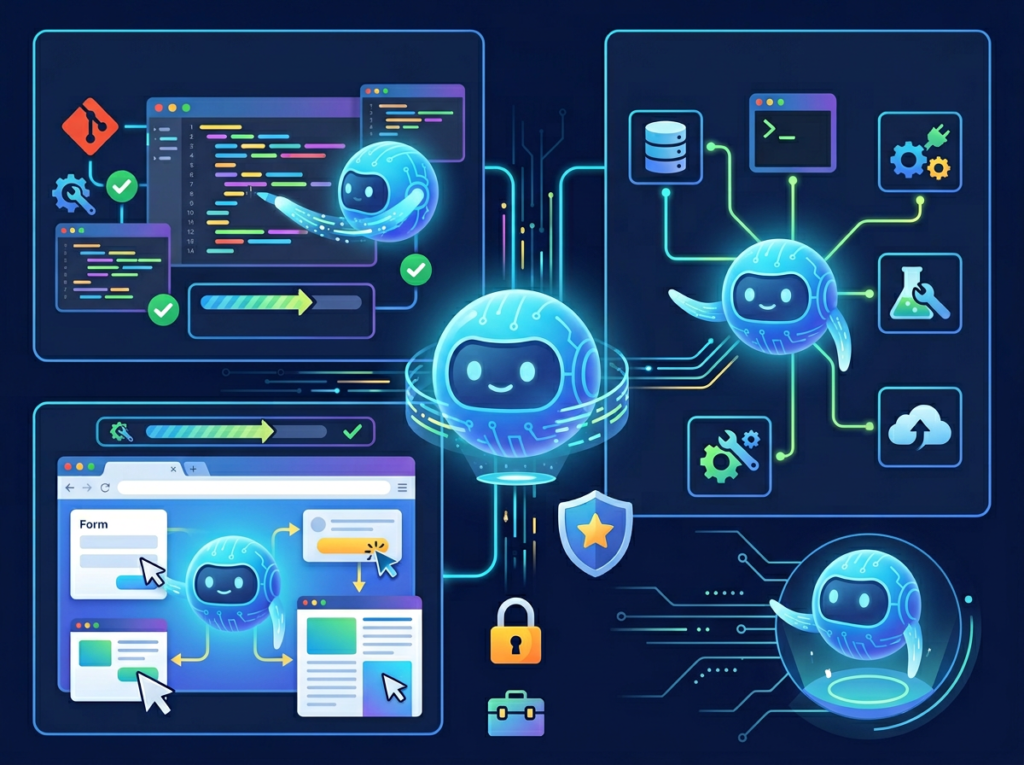
Problem 1: Knowledge lives only in the founder’s head.
When a US team is two or three people, informal knowledge transfer works. The founder explains things verbally. Everyone is in the same Slack channel. Context is shared by proximity. By the time a team reaches six or eight people — especially on remote or hybrid setups — this system collapses. A new hire in Denver has no reliable way to understand how the Chicago-based founder handles edge cases in client billing. A contractor in Miami cannot find the onboarding checklist because it does not exist as a document; it exists as muscle memory.
AI coding tools can generate structured documentation from verbal descriptions, turn existing Slack threads into SOPs, and produce internal reference guides in a fraction of the time it would take a founder to write them manually. At US labor rates of $50–$100 per hour for a skilled operations generalist, even one documentation cycle can cost $2,000–$4,000 in labor. AI-assisted documentation brings that cost to near zero.
Problem 2: New hires slow down operations instead of accelerating them.
US labor turnover hit 47% across service industries in recent years, meaning most small teams are constantly onboarding someone. Each new hire without a documented onboarding process costs the business time — typically two to four weeks of productivity drag as founders and senior team members answer the same questions repeatedly.
AI coding tools can build custom onboarding automation: a script that provisions accounts, sends welcome materials, generates a personalized first-week checklist, and pings the right Slack channel at the right time. At US labor costs, eliminating two weeks of onboarding overhead per new hire is worth $2,500–$5,000 annually for a team that adds two or three people per year.
Problem 3: Quality varies across team members.
Without enforced workflows, the same task gets done four different ways by four different people. A marketing team in San Francisco producing weekly client reports has one team member who uses a template, two who work from memory, and one who improvises a new format each week. Clients notice. Revisions accumulate. Quality becomes a moving target.
Automation addresses this at the source. Instead of hoping team members follow a process, the process is built into the tool. A form submission triggers an automation. A checklist is generated automatically. An output template is enforced by the system, not by a manager.
The Cost Reality for US Small Businesses
| Approach | Time Required | Cost in US Labor |
|---|---|---|
| Manual SOP documentation | 3–5 days | $2,400–$4,000 |
| Custom internal tool (freelancer) | 2–4 weeks | $5,000–$15,000 |
| Onboarding program design (HR firm) | 1–2 weeks | $3,000–$6,000 |
| AI-assisted automation with Qwen3-Coder | 2–8 hours | $0–$20 (subscription) |
How Qwen3-Coder Enables Solo DX

1. AI-Generated Internal Tools and Automation Scripts, $5,000–$15,000 saved per project
The most impactful use of Qwen3-Coder for small teams is building the kind of lightweight internal tools that used to require a freelance developer. Client intake automations, invoice generation scripts, report aggregators, Slack notification bots, CSV processing pipelines — a founder who can describe what they want in plain English can now generate a working first draft in minutes using the Qwen Code CLI.
A US marketing agency that previously paid a developer $7,500 to build a custom client report aggregator can now generate a functionally equivalent script in an afternoon and iterate on it internally. The agency keeps the developer budget. The tool gets built faster. Quality is the same or better.
2. Workflow Documentation at Scale ? $2,000 saved per documentation cycle
Qwen3-Coder’s 256K-token context window means it can ingest entire Slack thread exports, email chains, or meeting transcripts and produce structured SOP drafts. A founder pastes in a month of messy back-and-forth on how the team handles client escalations — the model returns a clean, numbered, role-assigned workflow document ready for the team wiki.
At US consultant rates of $75–$100 per hour, a single documentation cycle that would take a fractional ops consultant twenty to thirty hours now takes a founder two to three hours of prompt iteration and review. That is $2,000–$3,000 returned directly to margin.
3. Automated Onboarding and Knowledge Transfer Systems ? $9,360+ annually saved
Teams that onboard two to three new hires per year at an average two-week productivity drag cost themselves roughly $9,360 annually (two weeks × 2.5 hires × $72/hour blended rate). Qwen3-Coder can generate the automation scripts that provision accounts, generate role-specific onboarding checklists, and send structured first-week task lists — cutting onboarding drag from two weeks to two to three days.
4. Template and Reporting Automation ? $6,000/year saved
Recurring reporting tasks — weekly status updates, client performance summaries, internal KPI dashboards — are some of the highest-ROI automation targets for small teams. A team member spending two hours per week on manual reporting is costing the business $7,200 annually at $72/hour. An automation script that pulls data, formats it into a template, and sends the report reduces that to fifteen minutes of review. The savings compound every week.
See how Qwen3-Coder works across these automation categories and review the full feature set for non-technical deployment.
Ready to systemize your US team operations in under a week? Try Qwen3-Coder Free | No credit card required | Trusted by growing US teams building internal tools without engineers
Common Pitfalls and How to Avoid Them
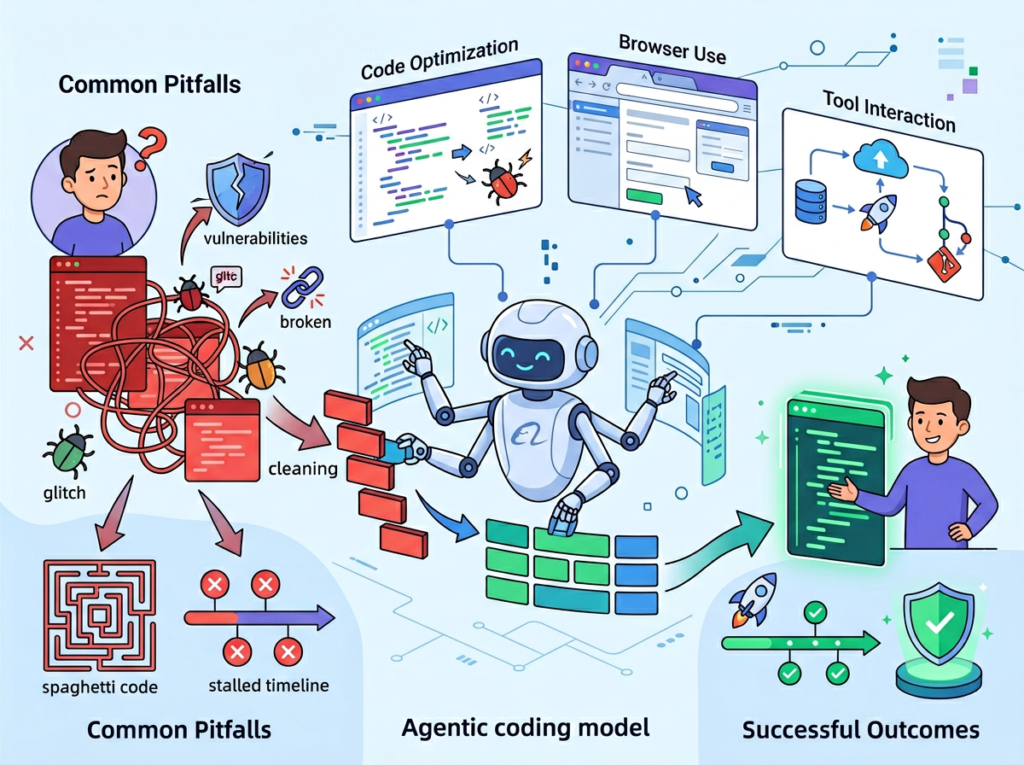
Mistake 1: Using too many disconnected tools
A Chicago operations lead recently described using five different AI tools for different parts of her workflow — one for documentation, one for automation scripts, one for client communications, one for scheduling, and one for reporting. None of them talked to each other. Her team spent more time managing tools than managing work.
Fix: Start with one automation target. Use Qwen3-Coder to solve that problem completely before adding another tool. Integration complexity grows faster than most small teams anticipate.
Mistake 2: Delegating without documentation
AI-generated automations do not manage themselves. A San Francisco founder handed off a Qwen3-Coder-built script to a team member without documenting what the script did, what triggers it, or how to modify it. When the team member left, the automation became a black box nobody would touch.
Fix: Every automation should have a one-page plain-English description of what it does, what inputs it expects, and who owns it. Qwen3-Coder can generate this documentation automatically when you include it in the initial prompt.
Mistake 3: Failing to review AI output
Qwen3-Coder is designed for agentic coding, meaning it will make decisions autonomously to complete a task. As noted in this complete guide, the model’s autonomous planning capabilities are powerful but require human review before deployment in any business-critical workflow.
Fix: Treat every AI-generated script as a first draft, not a finished product. Run it in a test environment. Review the logic against your actual workflow. Have a second team member read it before it touches live data.
Mistake 4: Over-relying on Slack and email for knowledge transfer
Slack and email are searchable, not findable. When critical process information lives in a thread from eight months ago, it is effectively lost. AI tools cannot compensate for a culture where knowledge is communicated verbally or buried in message history.
Fix: Use Qwen3-Coder to convert existing Slack threads and email chains into structured documentation before building any automation on top of them. Automating a broken or undocumented process produces a faster broken process.
See a detailed breakdown of Qwen3-Coder including its context window capabilities and how they support large-scale documentation extraction.
FAQs

What is the difference between AI Efficiency and Solo DX?
AI Efficiency tools are designed for solo operators — a single freelancer or one-person business optimizing their own output. Solo DX tools are designed for small teams where the challenge is not individual productivity but shared systems: consistent processes that multiple people follow reliably. Qwen3-Coder addresses the Solo DX problem: building the automation infrastructure that makes a team operate predictably at scale.
Can small teams afford to use AI?
Yes. Qwen3-Coder is open-source and available through multiple cloud-hosted APIs at low cost. For most US small business automation use cases, monthly costs run $0–$20. Compare this to the $5,000+ cost of a freelance developer for equivalent custom tooling, or the $100–$150/hour rate of a fractional operations consultant.
Is Qwen3-Coder hard to set up?
For non-technical founders, the easiest access point is through hosted API platforms that provide a chat or prompt interface. The Qwen Code CLI requires Node.js and some command-line familiarity, but the initial setup is a thirty-minute process for anyone comfortable installing software. For teams that want zero setup, several no-code platforms now offer Qwen3-Coder integrations that can be configured through a visual interface.
Learn more about Qwen3-Coder and take the first step toward an operations layer your team can actually rely on — without adding a single full-time employee.
Conclusion
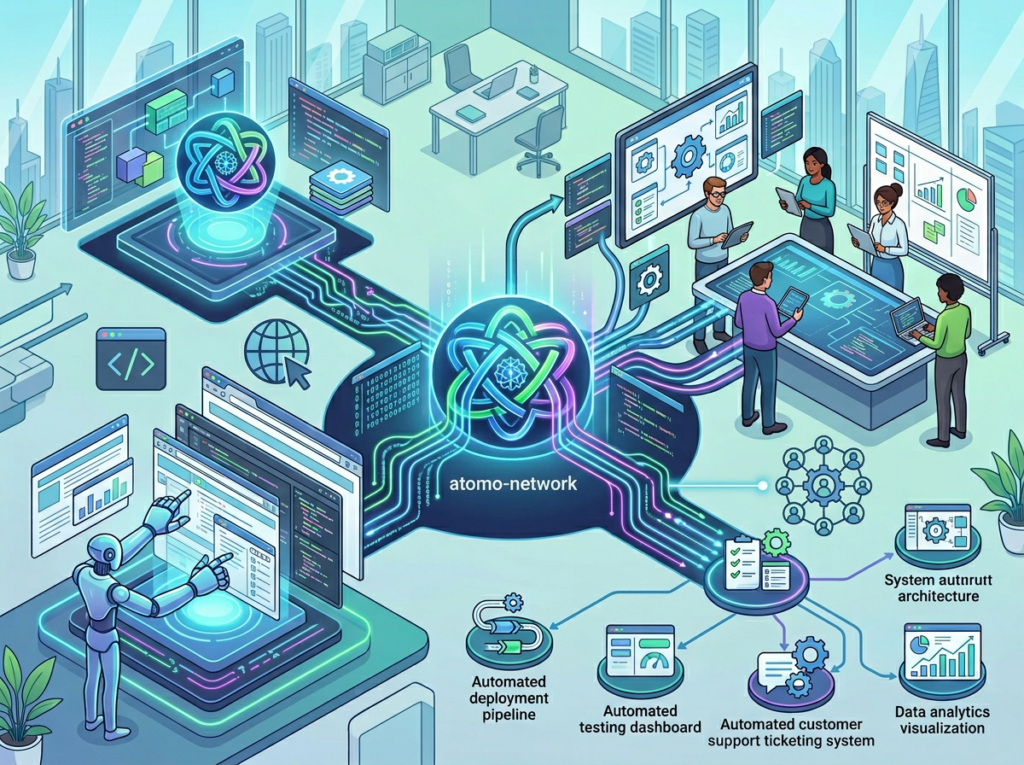
In 2026, American small businesses do not need enterprise budgets to build enterprise-level systems. The operational gap that used to separate a five-person team from a fifty-person organization — structured workflows, consistent onboarding, automated reporting, documented SOPs — is now closeable in days rather than quarters.
Qwen3-Coder represents a specific kind of advantage for US small teams: a tool powerful enough to handle real automation complexity, accessible enough to be deployed by a non-technical founder, and affordable enough to make the ROI calculation obvious. The four personas in this guide — Maria in San Francisco, James in Miami, Aisha in Austin, Robert in New York — each recovered $5,000 to $26,000 in annual value from a single automation investment.
The Solo DX principle is this: you do not need to systemize everything at once. You need to systemize the one process that is currently breaking your team. Start with client onboarding, or weekly reporting, or new hire provisioning. Build one automation. Get it working. Let it run for thirty days.
Then build the next one.
Learn more about Qwen3-Coder and take the first step toward an operations layer your team can actually rely on — without adding a single full-time employee.
Leave a Reply