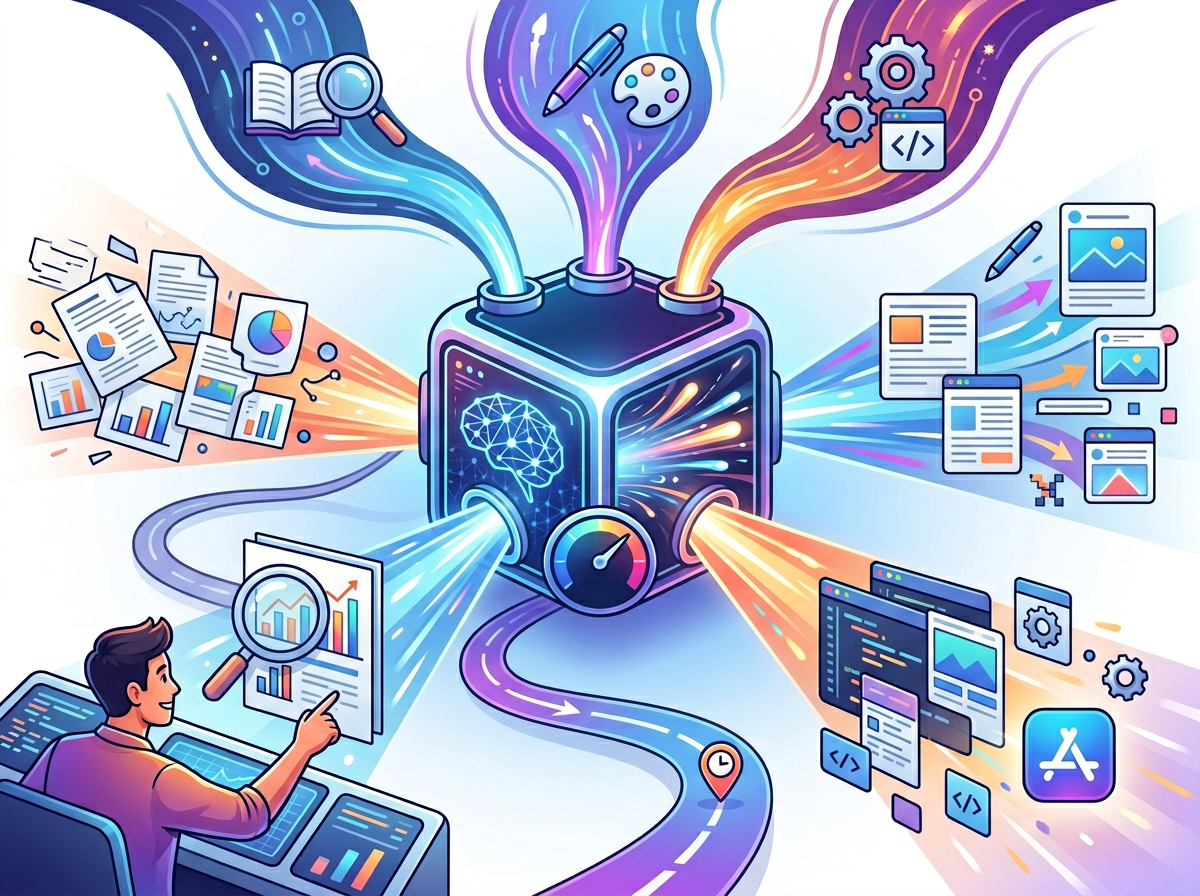
The fastest small businesses in 2026 don’t research harder — they use AI tools for research and analysis to reclaim hours every week.
In 2026, American freelancers and solo entrepreneurs face a paradox that no productivity system has fully solved.
Your inbox has 200 unread messages. Three clients need competitive analysis by Friday. You promised yourself you’d research that new pricing strategy, but it’s Thursday afternoon and you’ve spent six hours just gathering raw information. The decision that should take thirty minutes keeps getting pushed back because the research groundwork takes all day.
You’re not inefficient. You’re just doing research the old way.
For US freelancers billing at $50–$150 per hour, every hour spent manually crawling browser tabs, cross-referencing sources, and stitching together market intelligence is $50–$150 not earned. Multiply that by the five to eight hours most solo operators lose each week to information gathering, and you’re looking at $13,000–$62,400 in unrealized annual earnings — just from research overhead.
This article focuses on one tool built specifically for that problem: Genspark AI. Unlike general-purpose chatbots, Genspark deploys autonomous research agents that gather, cross-check, and synthesize information from dozens of sources simultaneously. Think of it less as a search engine and more as a research partner who reads everything before speaking.
By the end of this article, you’ll have four specific AI research workflows you can implement this week, each designed to save two to five hours — without sacrificing depth or accuracy.
Try Genspark AI free and experience AI research automation firsthand.Start Free at Genspark.ai | No credit card required
Key Concepts of AI Research Efficiency
Concept 1: The Information Synthesis Problem
The average freelance consultant or small business owner doesn’t struggle to find information. They struggle to synthesize it fast enough to be useful.
When a client asks for a competitive landscape overview, the bottleneck isn’t locating competitor websites — it’s reading twelve sources, extracting the relevant data points, and organizing them into something coherent enough to act on. That synthesis step alone typically takes three to five hours for a thorough analysis.
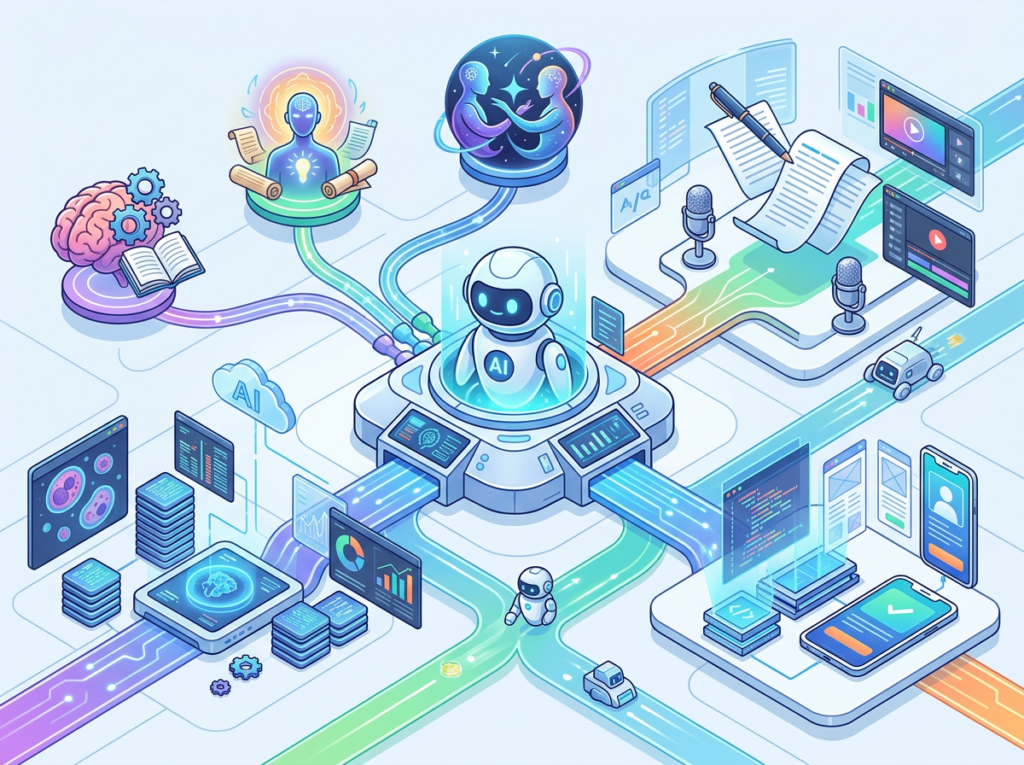
AI research automation eliminates most of that synthesis time. Genspark’s Super Agent, for example, can process hundreds of sources simultaneously, identify relevant patterns, and deliver a structured report with citations — in minutes, not hours.
Scenario: Sarah, a freelance brand strategist in Portland, used to spend three hours per client preparing competitive research decks. After integrating AI research automation into her workflow, that preparation dropped to forty-five minutes. Her effective billing capacity increased by roughly 2.5 hours per client engagement — and she works with eight clients monthly.
For advanced cognitive offloading strategies and workflow templates tailored to solo researchers, explore Genspark AI in detail.
Concept 2: The Context-Switching Cost of Manual Research
Research isn’t a single task — it’s a chain of micro-interruptions. You open a tab to check a statistic, get pulled into an article, lose your thread, spend twenty minutes rebuilding your mental model of where you were. Cognitive science research consistently shows it takes an average of 23 minutes to fully refocus after an interruption.
Manual research is essentially a continuous interruption engine. Every new source is a potential derailment. AI research automation collapses that chain into a single prompt-and-review workflow, keeping you in the decision-making seat rather than the data-collection seat.
Scenario: Marcus, an independent management consultant in Chicago, tracked his research-related interruptions for two weeks. He counted forty-two context switches per day on heavy research days. After implementing AI-assisted research, that dropped to fewer than ten. He estimates five hours per week returned to billable strategic work — at his rate of $125/hour, that’s over $32,000 in additional annual capacity.
Concept 3: Tiered Research Automation
Not all research tasks are equally suitable for automation. The most effective solo operators treat AI research tools as an orchestration layer rather than a replacement for judgment. They automate three tiers of research work:
- Tier 1 — Aggregation: Gathering raw data, tracking mentions, compiling sources. Fully automatable. This is where AI tools for market research shine most reliably.
- Tier 2 — Synthesis: Identifying patterns, summarizing findings, structuring reports. Highly automatable with human review at the end.
- Tier 3 — Interpretation: Drawing strategic conclusions, making recommendations, assessing risk. This is where your expertise lives. AI supports but doesn’t replace this tier.
Scenario: Elena, an e-commerce owner in Austin, restructured her monthly competitor analysis using this tiered model. By automating Tiers 1 and 2, she reclaimed four hours per month that she now dedicates entirely to Tier 3 — the strategic interpretation that actually moves her business forward.
Understanding these three concepts sets the foundation for using Genspark AI the right way: as a thinking amplifier, not a thinking replacement.
Try Genspark AI free and experience AI research automation firsthand.Start Free at Genspark.ai | No credit card required
How Genspark AI Helps Research Efficiency
Feature 1: Super Agent with Mixture-of-Agents (MoA) Research
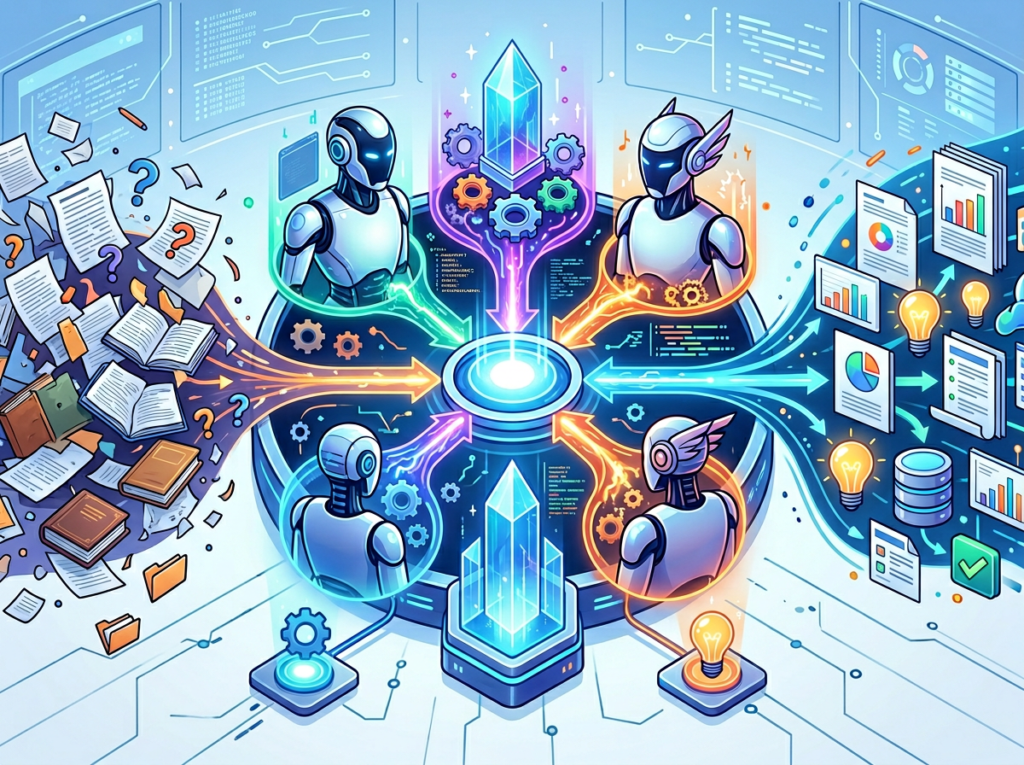
Genspark’s Super Agent doesn’t rely on a single AI model to answer research questions. Instead, it routes tasks across multiple specialized models — including reasoning models that cross-check each other’s outputs before delivering results. This multi-model fact-checking approach is particularly valuable for business research, where a single model hallucinating a statistic can lead to a bad decision.
When you submit a research prompt — say, “analyze the competitive pricing landscape for project management SaaS under $50/month” — the Super Agent searches multiple sources, reads them in full, identifies conflicts, and assembles a structured report. Users report turnaround times of three to eight minutes for research tasks that would otherwise require two to four hours of manual work.
Annual time saved (estimated): 90–120 hours for a solo operator doing weekly competitive or market research.
ROI in USD: At $75/hour, that’s $6,750–$9,000 in reclaimed capacity annually.
Feature 2: Deep Research Reports with Citations
Genspark’s Deep Research feature produces structured Sparkpages — interactive mini-reports that include sources, follow-up queries, and an embedded AI copilot you can interrogate for deeper analysis. Unlike a ChatGPT answer, a Sparkpage is designed to be a shareable, verifiable deliverable — suitable for sending to a client or presenting in a strategy meeting.
For freelancers whose value proposition includes research-backed recommendations, this feature directly reduces the time between client brief and deliverable delivery. One user documented building a full 50-page competitive intelligence report in 25 minutes using multi-step prompts — work that would have taken the better part of a day manually.
Annual time saved (estimated): 60–80 hours for consultants and analysts delivering regular research deliverables.
ROI in USD: At $100/hour blended rate, that’s $6,000–$8,000 annually.
To see Genspark’s Deep Research and Sparkpage features in action with detailed workflow examples, see our full Genspark AI review.
Feature 3: AI Browser and Web Automation
Genspark includes a browser-based AI sidebar that can summarize any page, extract data from websites, and automate repetitive browsing tasks in real time. For small business owners who regularly monitor competitor websites, track industry news, or gather pricing data, this eliminates the manual tab-crawling that fragments attention throughout the workday.
The browser extension lets you ask questions about any page you’re currently viewing — a pricing table, a competitor’s product announcement, an industry report — and get instant synthesis without leaving the page or opening a new tool.
Annual time saved (estimated): 35–50 hours for business owners doing regular competitive monitoring.
ROI in USD: At $50–$100/hour, that’s $1,750–$5,000 annually.
Combined estimated ROI: A solo operator billing at $75/hour who fully integrates these four features could reclaim 230–315 hours annually — representing $17,250–$23,625 in earning capacity. Against a Genspark Plus subscription at roughly $19.99/month ($240/year), that’s a 70x–98x return on investment.
Ready to stop spending half your day on research?Try Genspark AI free and experience AI research automation firsthand.Start Free at Genspark.ai | No credit card required
Use Cases: Small Business & Freelancer Research Workflows
Persona 1: Jessica — Freelance Brand Designer, Portland, OR
The challenge: Jessica runs a solo brand design studio and works with eight clients simultaneously. Before each project, she spends three hours on competitive research — analyzing competitors’ visual identities, reviewing market positioning, and gathering reference material. That’s 24 hours per month of non-billable overhead.
The old workflow: Google searches across twelve to fifteen tabs, manual screenshots for mood boards, a private Notion doc where she stitches together notes. Each research session is interrupted four to six times before she has a usable brief.
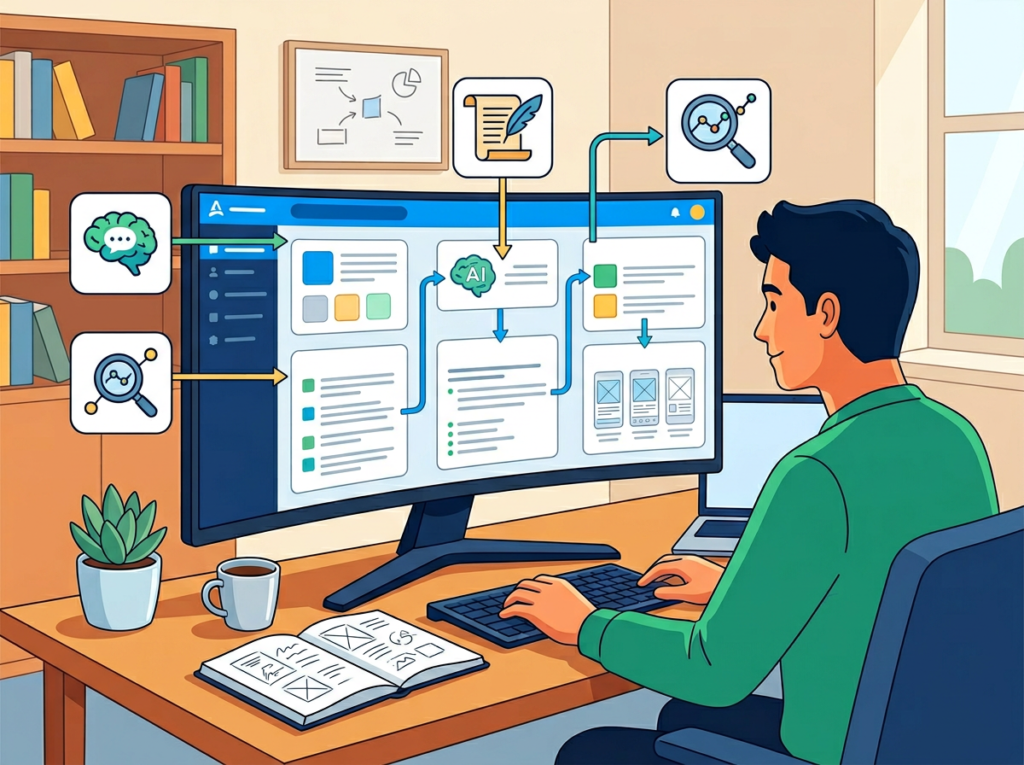
The AI-enhanced workflow: Jessica now opens Genspark, prompts the Super Agent with her client’s industry and competitive set, and receives a structured competitive landscape report with visual examples and positioning summaries in under ten minutes. She uses the Deep Research feature for clients in unfamiliar markets. Total research time per project: forty-five minutes.
Persona 2: David — Independent Management Consultant, Chicago, IL
The challenge: David’s consulting practice is built on delivering actionable market intelligence. Before every client engagement, he spends a full week on research groundwork — industry reports, competitor benchmarking, regulatory landscape scanning. His research overhead runs to 22 hours per month, most of it low-value information aggregation.
The old workflow: Paid database access, manual LinkedIn research, a system of color-coded spreadsheets that takes two hours to update after every major industry development.
The AI-enhanced workflow: David now uses Genspark’s Deep Research for industry landscape scanning, AI Sheets for competitive benchmarking tables, and the browser agent for real-time news aggregation. As noted in this hands-on breakdown of Genspark’s research capabilities, the data analysis features return structured, visualized reports that are presentation-ready without manual reformatting.
Persona 3: Alex — Solo SaaS Developer, San Francisco, CA
The challenge: Alex is building a B2B SaaS product solo. Research isn’t a weekly task — it’s a constant background need: competitive intelligence, pricing benchmarks, technical documentation, ICP (ideal customer profile) research, and market sizing. He was spending nine hours per week on research that directly fed product decisions.
The old workflow: Perplexity for quick lookups, manual Twitter/LinkedIn scanning for market signals, spreadsheet-based competitive tracking he updated sporadically. Research was reactive, not systematic — which meant important signals often got missed.
The AI-enhanced workflow: Alex now uses Genspark as his primary automate information gathering with AI layer. The Super Agent conducts weekly competitive sweeps on autopilot using saved prompt templates. Deep Research handles technical documentation synthesis. The AI browser sidebar summarizes blog posts and product announcements as he encounters them, so nothing gets lost in a “read later” pile.
For workflow templates and implementation guides matched to your specific business type, learn more about Genspark AI on AI Plaza.
Streamline your research workflow starting today.Join millions of freelancers and entrepreneurs using Genspark AI. Start Free at Genspark.ai
Best Practices for Implementing AI Research Automation
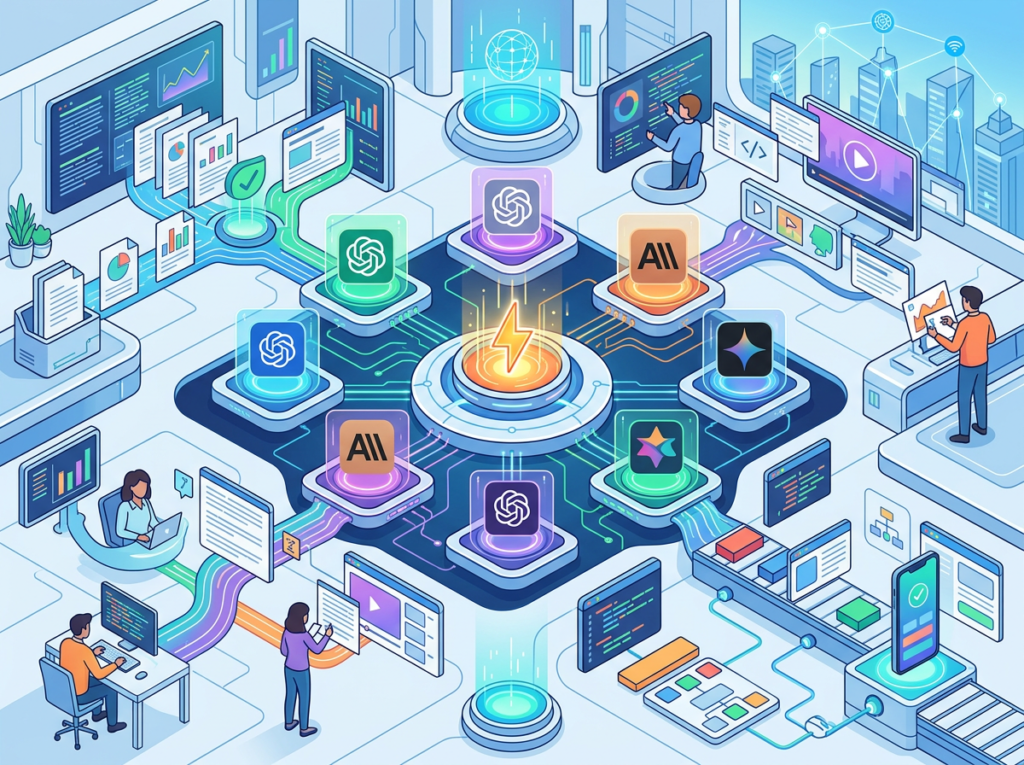
Maintain human oversight at the interpretation tier. AI research tools excel at aggregation and synthesis (Tiers 1 and 2 from the framework above). They are not reliable at strategic interpretation, risk assessment, or nuanced judgment calls about your specific business context. Always treat AI research outputs as a starting point for your thinking, not a finished recommendation. A two-minute review pass to verify key claims is not optional — it’s the quality layer that separates effective AI research from sloppy AI research.
Audit your tool stack before adding Genspark. Many solo operators are paying for overlapping subscriptions — a standalone research tool, a presentation builder, an image generator, and a separate AI chat tool. Genspark consolidates research, slides, documents, images, and web browsing into one platform. Before subscribing, list your current research-adjacent tools and identify which subscriptions Genspark would replace. One user eliminated three tools totaling $129/month and replaced them with a single $19.99/month Genspark subscription.
Build a prompt library from day one. The fastest way to make AI research automation sustainable is to save your most effective prompts as reusable templates. When you find a prompt structure that consistently delivers useful competitive analysis or market summaries, save it immediately. A library of fifteen to twenty refined prompts will save you more time over six months than any other practice.
Limitations and Considerations
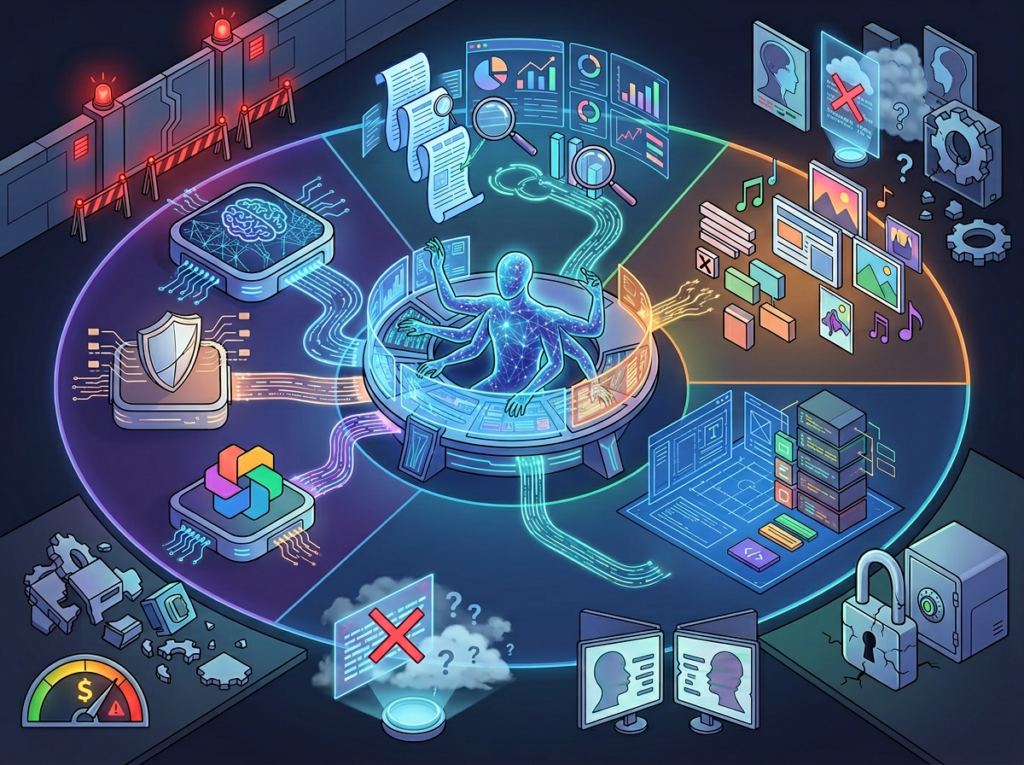
Credit consumption on complex tasks. Genspark operates on a credit-based pricing model, and certain advanced features — particularly AI video generation and extensive Deep Research runs — consume credits quickly. For budget-conscious solo operators, it’s worth auditing which features actually deliver ROI versus which ones are impressive demos. Market research reports, competitive analysis, and document synthesis are high-value uses. AI video generation is generally not worth the credit cost for most small business workflows.
Limited CRM and operational integrations. If your research workflow requires tight integration with a CRM, project management system, or sales pipeline, Genspark’s integration depth is currently more limited than specialized platforms like Lindy. Genspark excels at research-to-deliverable workflows; it is not a full workflow automation platform.
No substitute for domain expertise. Genspark can tell you what competitors are charging, what the market is saying, and what trends are emerging. It cannot tell you whether those insights are strategically relevant to your specific situation, client relationship, or business model. The more specialized your domain, the more your judgment matters in interpreting AI research outputs.
Privacy considerations. Genspark holds SOC 2 Type II and ISO 27001 certifications and maintains a zero data retention policy, meaning your research inputs are not used to train their models. For solo operators handling client information, this is a non-trivial advantage over less enterprise-grade AI tools — but review their current privacy terms before inputting sensitive client data.
Try Genspark AI free and experience AI research automation firsthand.Start Free at Genspark.ai | No credit card required
Frequently Asked Questions
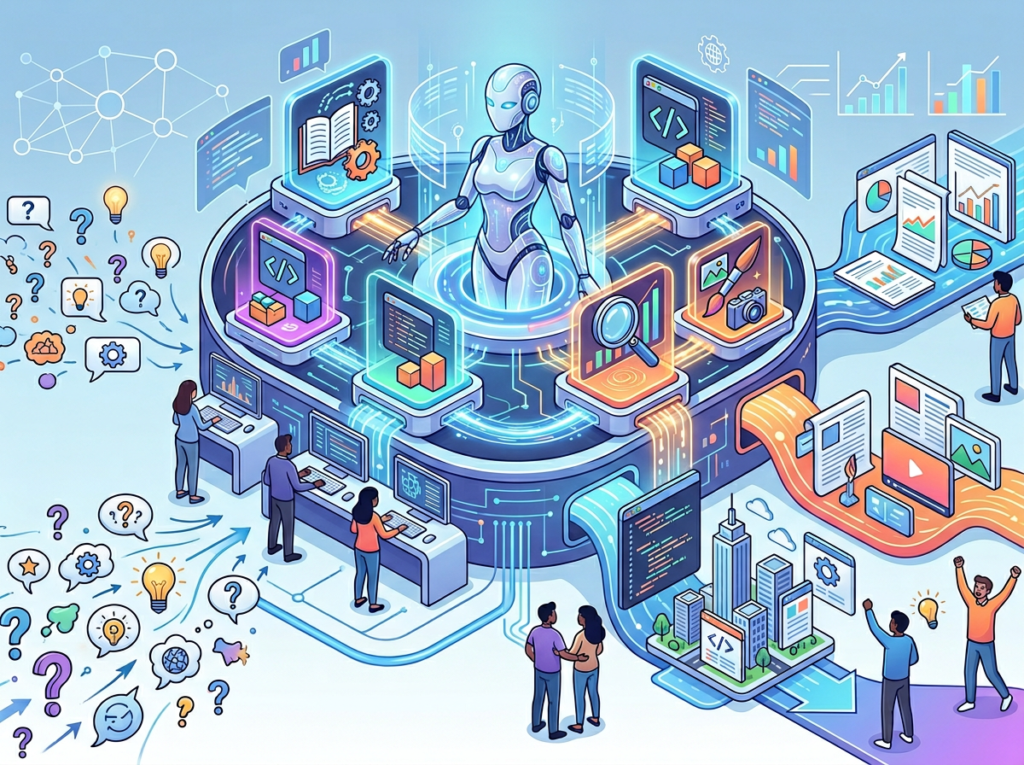
How do freelancers use AI to automate information gathering?
The most effective approach is to identify the three to five research tasks that recur most frequently, then build a standard prompt template for each one in a tool like Genspark. Common workflows include: weekly competitive monitoring sweeps, client industry briefings before discovery calls, pricing benchmark reports, and market trend digests. Each of these can be converted from a multi-hour manual task into a fifteen-to-thirty-minute AI-assisted workflow.
What’s the best AI competitive analysis tool for small businesses?
For small businesses focused primarily on research, analysis, and deliverable creation, Genspark AI is one of the strongest options in 2026 due to its multi-source research capabilities, structured Sparkpage outputs, and integrated document/slide generation. For businesses that need tighter CRM or operational workflow integration, platforms like Lindy may be a better fit. The right choice depends on whether your primary bottleneck is information gathering or operational workflow execution.
Do I need technical skills to use Genspark for business research?
No. Genspark is designed for plain-language interaction — you describe what you need in natural language, and the agent handles source selection, synthesis, and formatting. There is no workflow configuration, API setup, or prompt engineering required to get started. The primary skill involved is learning to write clear, specific research prompts — something most professionals develop naturally within a few sessions.
Conclusion
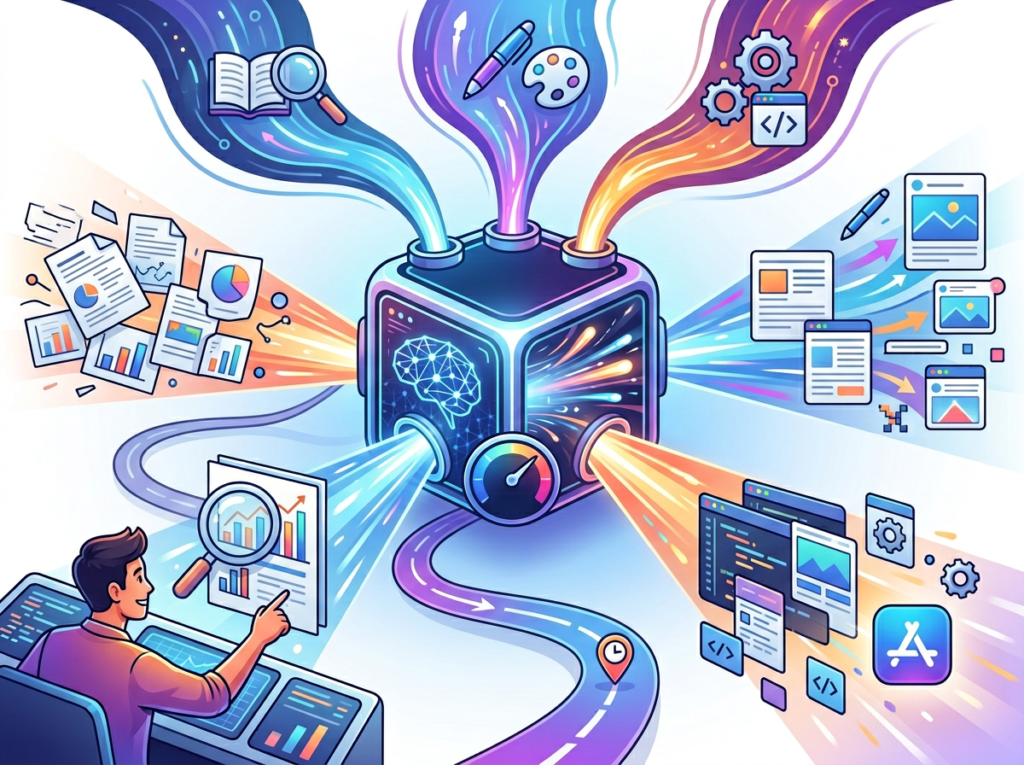
The research problem facing solo entrepreneurs and freelancers in 2026 is not a discipline problem. It’s a tooling problem.
What’s been missing is a way to get from question to structured answer without spending a half-day crawling browser tabs. Genspark AI addresses the core use case of ai tools for research and analysis not by replacing your judgment, but by eliminating the time cost of information gathering. Its Super Agent, Deep Research, and Sparkpage architecture handle the work that consumes solo operators most: competitive analysis, market intelligence, client briefing preparation, and trend monitoring.
The ROI math is direct. A solo operator who recovers five hours per week from AI research automation — at a conservative $75/hour rate — is looking at a $19,500 annual impact against a $240/year subscription. That’s an 81x return. Those five hours come back to the highest-value part of your work: the strategic thinking and client relationships that no AI agent can replace.
The question isn’t “Should I use AI tools for research and analysis?” It’s “Can I afford to keep doing research the old way?”
Try Genspark AI free and experience AI research automation firsthand.Start Free at Genspark.ai | No credit card required
Leave a Reply