Conclusion / First View
If you’re running a small business or working as a solo developer who needs AI assistance for programming tasks, your choice between Cline and Qwen3-Coder depends on how you actually work. Cline excels as an agentic coding assistant that can autonomously execute tasks across your development environment—reading files, making edits, running tests, and even browsing documentation. It’s built for developers who want an AI pair programmer that can handle multi-step workflows without constant supervision. Qwen3-Coder, meanwhile, is a powerful language model optimized for code generation and understanding, offering exceptional performance in generating code snippets, explaining complex logic, and supporting multiple programming languages. However, it lacks the autonomous execution capabilities that make Cline distinctive. For small teams that need an AI to actually perform coding work end-to-end, Cline offers more practical value. For those who need intelligent code suggestions and explanations within existing workflows, Qwen3-Coder provides strong foundational capabilities. Neither tool eliminates the need for developer judgment, and both require you to verify outputs before deployment.
Introduction: Why This Comparison Matters

Choosing between AI coding tools has become increasingly confusing for small business owners and solo developers. The market promises autonomous coding agents, intelligent pair programmers, and tools that can supposedly handle entire development workflows. Yet most comparisons focus on benchmark performance or technical specifications rather than addressing the practical question: which tool actually helps you ship better software faster given your constraints?
This comparison exists to cut through that noise and help you make a practical decision about Cline vs Qwen3-Coder for programming tasks. The distinction matters because these tools represent fundamentally different approaches to AI-assisted development. Cline operates as an agentic AI coding workflow tool that can independently navigate your codebase, execute commands, and manage multi-file changes. Qwen3-Coder functions as a highly capable code generation model that excels at understanding and producing code but requires you to orchestrate the actual implementation steps. For small businesses where developer time is scarce and technical debt accumulates quickly, understanding which tool fits your actual working style determines whether AI becomes a productivity multiplier or just another subscription that sits unused.
Who This Comparison Is Best For

This comparison directly addresses developers and small business operators who face specific, recurring pain points in their software development process. You’re likely reading this because you’re overwhelmed by maintenance tasks, struggling to keep up with feature requests, or trying to determine whether investing time in AI coding tools will actually reduce your workload or just create new dependencies.
The typical reader operates in one of several common situations. You might be a solo founder building a SaaS product while simultaneously handling customer support, marketing, and business development. Your programming time is fragmented across evenings and weekends, and you need tools that can handle routine tasks without requiring constant supervision. Alternatively, you might manage a small development team where everyone wears multiple hats—your frontend developer also handles deployments, your backend engineer writes documentation, and nobody has time for code reviews that should happen but don’t. In this context, you’re seeking AI coding agents for developers that can absorb some of the cognitive load without introducing quality risks.
A common mistake in this situation is choosing AI tools based on what venture-backed startups or large engineering organizations use. Those teams have different constraints—they prioritize cutting-edge capabilities and can absorb the learning curve of complex toolchains. Small businesses need tools that provide immediate value without requiring extensive configuration or specialized knowledge. Another frequent error is treating AI coding tools as complete replacements for developer judgment rather than as assistants that handle well-defined subtasks. This leads to disappointment when the AI produces code that technically runs but doesn’t align with your business logic or architectural decisions.

Consider the freelance developer who maintains multiple client projects across different technology stacks. Each client has specific coding standards, deployment processes, and integration requirements. This developer needs an AI that can quickly context-switch between projects, understand existing code patterns, and generate solutions that fit established conventions. Or consider the technical co-founder who’s strong in one programming language but occasionally needs to work in another language for specific integrations or client requirements. This person benefits from an AI that can explain unfamiliar syntax, suggest idiomatic approaches, and catch common mistakes before they become bugs.
The real value of comparing Cline vs Qwen3-Coder for programming emerges when you recognize that your bottleneck isn’t just writing code—it’s the entire cycle of understanding requirements, implementing changes, testing functionality, and deploying updates. Tool-driven software development means choosing AI that fits where you actually spend time, not just which tool scores highest on coding benchmarks.
Why Each AI Fits That Need
Cline: Agentic Execution for End-to-End Workflows
Cline positions itself as an autonomous coding agent that can execute complex, multi-step programming tasks with minimal human intervention. Unlike traditional code completion tools, Cline can read your entire project structure, navigate between files, execute terminal commands, and even browse documentation to inform its decisions. This makes it particularly valuable for small businesses where developers need to delegate not just code generation but entire workflows.
The learning curve for Cline requires upfront investment but pays dividends in reduced context-switching. You define tasks in natural language, and Cline translates those instructions into a series of actions: opening relevant files, making coordinated changes across multiple locations, running tests to verify functionality, and reporting results. For a solo developer maintaining several projects, this means you can describe what needs to happen and trust the agent to handle implementation details while you focus on higher-level decisions.
From a thinking support perspective, Cline excels at maintaining context across extended coding sessions. When you’re debugging a complex issue that spans frontend logic, backend API calls, and database queries, Cline can trace the execution path and identify where things break without you manually jumping between files. This reduces the cognitive load of holding multiple system states in your head simultaneously.

Integration capabilities represent Cline’s strongest advantage. It works within your existing development environment—typically VS Code—and can interact with your version control system, terminal, and file structure. This means it fits into established workflows rather than requiring you to adopt new tools or processes. For a small business already using Git for version control and continuous integration for deployments, Cline becomes another team member who understands the full stack.
The business result Cline supports best is shipping features faster without sacrificing quality. When you need to implement a new API endpoint that requires database migrations, service layer changes, and frontend updates, Cline can orchestrate all those steps instead of requiring you to manually coordinate each piece. This particularly benefits businesses where opportunity cost matters—time spent on routine implementation is time not spent on customer development or strategic planning.
Qwen3-Coder: Powerful Code Intelligence Without Execution
Qwen3-Coder approaches AI-assisted programming from a different angle. Rather than autonomously executing tasks, it provides exceptional code understanding and generation capabilities that you integrate into your existing workflow. The model demonstrates strong performance across multiple programming languages and can generate complex code structures, explain intricate logic, and suggest optimizations based on best practices.
The learning curve for Qwen3-Coder is gentler because it operates more like an enhanced autocomplete than an autonomous agent. You maintain full control over what gets implemented, when, and how. This appeals to developers who want AI assistance without ceding control over the actual execution. You ask questions, receive code suggestions, and decide which recommendations to accept.
For thinking support, Qwen3-Coder shines in explanatory capabilities. When you encounter unfamiliar code—inheriting a legacy project or working with a library you haven’t used before—Qwen3-Coder can break down what’s happening line by line. This makes it valuable for solo developers who occasionally work outside their primary expertise area. The model can explain not just what code does but why specific patterns exist and what trade-offs they represent.
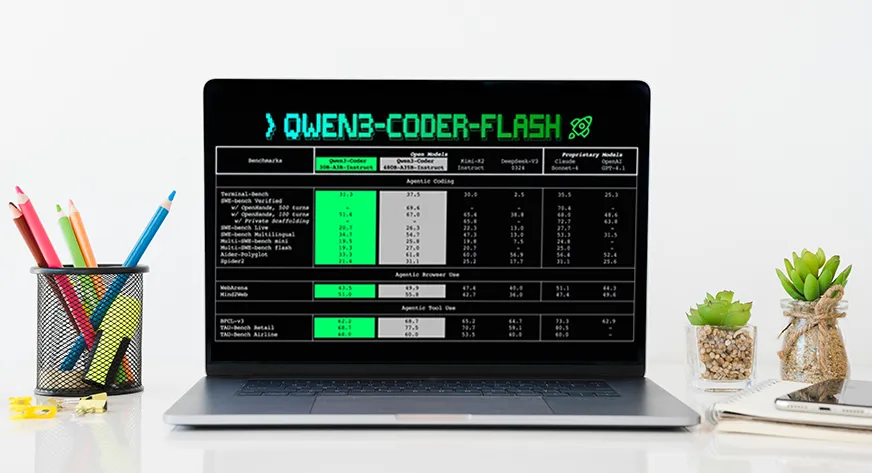
Tool compatibility depends on how you access Qwen3-Coder. Various implementations exist through API integrations, IDE extensions, or chat interfaces. This flexibility means you can adapt it to your preferred working style, whether that’s inline suggestions while typing or a separate chat window for deeper exploration. However, this also means Qwen3-Coder doesn’t automatically integrate with your development environment the way Cline does—you’re responsible for moving code from suggestions into your actual files.
The business result Qwen3-Coder supports best is reducing the time spent researching and learning new approaches. When you need to implement functionality in an unfamiliar domain—maybe you’re a Python developer who needs to write some Go for a client integration—Qwen3-Coder can generate working examples and explain idioms faster than reading documentation. This makes it particularly valuable for consultants and agencies that frequently encounter new technical requirements across different projects.
Both tools assume you have foundational programming knowledge and the judgment to evaluate AI-generated code. Neither eliminates the need for code review, testing, or understanding your business logic. The key difference lies in execution model: Cline handles implementation as an autonomous agent, while Qwen3-Coder provides intelligent suggestions that you manually incorporate.
Who Should Choose Another AI

Not every programming situation benefits from either Cline or Qwen3-Coder. Understanding when to look elsewhere prevents wasted time and budget on tools that don’t match your actual needs.
If your business requires highly deterministic, rule-based outputs where variability creates risk, neither AI is appropriate. Consider financial calculations, compliance reporting, or safety-critical systems where every line of code must follow exact specifications and undergo formal verification. These scenarios need static analysis tools, linters with strict rulesets, and potentially formal methods rather than AI that makes probabilistic suggestions. The inherent variability in AI-generated code—even when technically correct—introduces risk in domains where consistency matters more than flexibility.
Organizations with extremely low technical literacy also face challenges with both tools. If nobody on your team can read code or evaluate whether an AI’s suggestions align with best practices, you’ll struggle to use either Cline or Qwen3-Coder effectively. These tools augment developer capabilities but don’t replace the need for programming knowledge. A better approach in this situation might be no-code platforms or hiring a developer who can both build and evaluate AI-assisted implementations.
Industry-specific or highly vertical solutions often require AI trained on domain-specific patterns that general-purpose coding models don’t capture. If you’re building medical device software, aerospace systems, or other specialized applications, you need tools trained on your industry’s standards and regulations. Both Cline and Qwen3-Coder excel at general programming tasks but lack the depth in specialized domains that vertical-specific AI or traditional development tools provide.

Teams that prioritize complete transparency and explainability in every code change may find AI-assisted programming frustrating. While both tools can explain their outputs, the underlying decision process remains somewhat opaque. If your organization requires full traceability of why specific implementation choices were made—common in government contracting or regulated industries—traditional development methods with extensive documentation may better serve your needs.
Finally, if your primary bottleneck isn’t coding but rather requirements gathering, stakeholder communication, or business strategy, investing in AI coding tools addresses the wrong problem. Many small businesses struggle not because developers can’t write code fast enough but because priorities constantly shift, requirements remain unclear, or customer needs haven’t been validated. In these cases, tools for product management, customer research, or business analysis deliver more value than coding assistance.
Use Cases by Business Goal
Productivity

Programming productivity in small businesses means shipping features without expanding headcount. Both Cline and Qwen3-Coder address productivity challenges but through different mechanisms.
Cline enhances productivity by handling repetitive multi-step tasks that require coordination across files. Consider building an internal dashboard that displays data from your database. This involves creating database queries, building API endpoints, implementing frontend components, and connecting everything together. Cline can execute all these steps autonomously once you describe the requirement. You review the results rather than manually implementing each piece, reducing a multi-hour task to minutes of oversight. This particularly benefits teams where developers spend significant time on internal tools that support operations but don’t directly generate revenue.
Qwen3-Coder boosts productivity through faster code generation and reduced context-switching during research. When you need to implement functionality using an unfamiliar library or framework, Qwen3-Coder can generate working examples that you adapt to your needs. This eliminates the cycle of reading documentation, trying implementation, debugging, consulting Stack Overflow, and iterating. For a solo developer juggling multiple responsibilities, saving thirty minutes here and an hour there accumulates into meaningful time savings across a week.
However, Qwen3-Coder requires you to orchestrate the implementation. You still manually create files, paste code, run tests, and coordinate changes across your codebase. The productivity gain comes from better suggestions, not reduced manual work. This makes it less effective for routine tasks where the implementation steps are clear but tedious.
For small businesses optimizing developer productivity, Cline delivers more impact when you have well-defined patterns that repeat across projects. Building similar API endpoints, setting up standard authentication flows, or implementing common UI components become fast because Cline learns your patterns. Qwen3-Coder provides more value when you frequently encounter novel problems that require research and learning—working with new APIs, exploring unfamiliar languages, or understanding legacy code.
Both tools help reduce the cognitive load of holding multiple system states in memory while coding. This matters for solo developers who can’t easily collaborate with teammates when stuck. Rather than mentally tracing execution paths across files, you can ask either AI to map dependencies or explain data flow.
? Learn more about AI-driven productivity gains: AI Efficiency
Revenue / Marketing
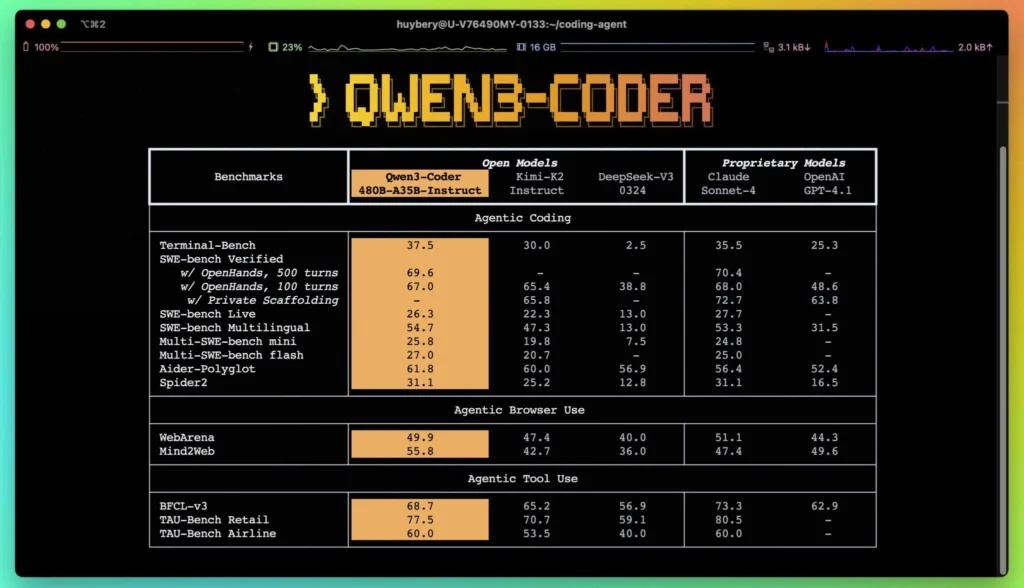
AI coding tools might seem distant from revenue generation, but they directly impact how quickly small businesses can respond to market opportunities and customer needs.
For Cline, revenue impact comes through faster feature deployment. When a potential customer requests specific functionality before signing a contract, Cline can help you build that proof-of-concept or MVP feature in hours instead of days. This responsiveness often determines whether you win deals, especially when competing against larger vendors with more resources. The ability to rapidly customize your product for specific customer needs—without expanding your team—creates competitive advantage.
Consider a SaaS business that needs to build integrations with customer tools to close deals. Each integration involves API authentication, data mapping, error handling, and testing. Cline can implement standard integration patterns autonomously, letting you focus on business logic specific to each customer. This expands your total addressable market without proportionally increasing development costs.
The marketing dimension appears in developer tools or technical products where code examples and SDKs drive adoption. Cline can help maintain client libraries across multiple programming languages, ensuring each has consistent functionality and up-to-date examples. This removes a common bottleneck where small teams support only one or two languages well, limiting their market reach.
Qwen3-Coder contributes to revenue through improved technical content creation. Documentation, tutorials, and code samples influence whether developers choose your product over alternatives. Qwen3-Coder can generate clear code examples, explain complex concepts in accessible language, and create sample applications that demonstrate your product’s value. For small businesses where the founder or solo developer must also write documentation, this significantly reduces the time from feature completion to market-ready documentation.
Both tools help small businesses punch above their weight class by appearing more resourced than they are. Prospects judge technical sophistication partly by documentation quality, API completeness, and responsiveness to feature requests. AI coding assistance helps maintain these signals without requiring multiple full-time developers.
The limitation for both tools in revenue contexts is that they can’t make strategic product decisions. They won’t tell you which features to build, which customer segments to target, or how to price your offerings. You still need market insight and business judgment. The AI handles implementation once you’ve decided what matters.
Trade-offs differ between the tools. Cline’s autonomous execution means faster time-to-market for standard features, but you risk shipping functionality that technically works but doesn’t match customer mental models. Qwen3-Coder gives you more control during implementation, reducing this risk, but requires more manual work to achieve the same speed.
? Explore AI strategies for revenue growth: AI Revenue Boost
AI Comparison Table + Explanation
| Axis | Cline | Qwen3-Coder |
|---|---|---|
| Ease of Use | Moderate learning curve; requires understanding of agentic workflows and trust in autonomous execution. Once configured, handles complex tasks with minimal input. | Easier initial adoption; works like enhanced code completion. Requires more manual orchestration for multi-step tasks. |
| Best For | Solo developers and small teams that need end-to-end feature implementation with minimal supervision. Ideal for projects with repetitive patterns. | Developers who want intelligent code suggestions and explanations while maintaining full control over implementation. Suited for learning new languages or frameworks. |
| Strengths | Autonomous multi-file editing, terminal execution, context maintenance across extended sessions, integration with existing development environment. | Strong code generation across languages, excellent explanatory capabilities, flexible integration options, lower risk of unexpected changes. |
| Limitations | Requires trust in AI decisions; reviewing autonomous changes takes time; may produce technically correct code that doesn’t match business intent; dependency risk if workflows optimize around tool capabilities. | No autonomous execution; requires manual implementation of suggestions; doesn’t integrate deeply with development environment; user must coordinate multi-step workflows. |
| Pricing Perception | Typically requires subscription or API costs; value increases with usage frequency. Justifiable for full-time developers but may not suit occasional users. | Varies by implementation; API access possible at various price points. Can be cost-effective for occasional use. |
The comparison reveals that choosing between these tools depends primarily on your business maturity and development goals. Early-stage businesses where the founder writes all code often benefit more from Qwen3-Coder because it reduces the learning curve for unfamiliar technologies while keeping the founder in full control. As the business grows and patterns emerge, Cline’s autonomous execution becomes more valuable because it can replicate established patterns quickly.
Business goals also shift the calculation. If your primary objective is shipping customer-facing features rapidly, Cline’s end-to-end execution provides clear advantage. If you’re focused on building internal expertise and understanding your codebase deeply, Qwen3-Coder’s explanatory approach supports long-term knowledge building even though individual tasks take longer.
Risk tolerance matters significantly. Conservative organizations that prioritize predictability over speed will favor Qwen3-Coder’s manual implementation model. Aggressive growth-focused businesses willing to accept some revision cycles will leverage Cline’s speed despite occasional misalignment between AI output and business intent.
FAQs

Can Cline replace a human developer for small business needs?
No, Cline cannot replace human developers, but it can significantly amplify a solo developer’s output. The tool excels at implementing well-defined patterns and handling routine coding tasks autonomously, which means one developer can accomplish what previously required a small team. However, Cline cannot make strategic architectural decisions, evaluate business trade-offs, communicate with customers to understand requirements, or exercise judgment about edge cases and security implications. Small businesses still need at least one technical person who understands code and can evaluate whether Cline’s autonomous implementations align with business goals. Think of Cline as an exceptionally fast junior developer who requires oversight rather than a complete replacement for technical expertise.
Which AI is better for learning new programming languages: Cline or Qwen3-Coder?
Qwen3-Coder provides superior support for learning new programming languages because its explanatory capabilities help you understand not just what code does but why specific patterns exist in that language. When encountering unfamiliar syntax or idioms, Qwen3-Coder can break down concepts step by step and suggest idiomatic approaches that help you internalize language conventions. Cline can generate correct code in various languages, but its autonomous execution means you might not deeply understand what it produces. For learning purposes, the manual implementation Qwen3-Coder requires actually benefits you because typing and adapting code suggestions reinforces understanding better than reviewing autonomous changes.
How do these tools handle proprietary or legacy codebases?
Both tools can work with proprietary and legacy code, though with different limitations. Cline operates within your development environment and can read your entire codebase to understand context, making it effective for navigating complex legacy systems and making coordinated changes across multiple files. However, it may struggle with undocumented business logic or non-standard architectural patterns. Qwen3-Coder can explain legacy code effectively, helping you understand what previous developers built, but cannot autonomously refactor or modernize it—you must implement suggested improvements manually. For legacy systems, having both tools available provides complementary benefits: Qwen3-Coder for understanding and documentation, Cline for implementing refactoring once you’ve decided on the approach.
Are there security risks with autonomous coding AI like Cline?
Yes, autonomous coding tools introduce security considerations that manual code generation doesn’t. Cline can execute terminal commands and make file changes, which means improper configuration or malicious prompts could potentially cause harm. Responsible use requires understanding what permissions you grant, reviewing changes before committing them to production, and never running Cline with elevated privileges on production systems. The security risk isn’t fundamentally different from hiring a contractor—you need to verify their work and limit their access appropriately. Both Cline and Qwen3-Coder can also inadvertently suggest code with security vulnerabilities if you don’t explicitly prompt for secure implementations. No AI coding tool eliminates the need for security review, testing, and following security best practices.
Next Steps

Ready to improve your development workflow with AI? Explore these resources:
- Compare AI – Discover detailed comparisons of AI tools across different use cases
- AI Efficiency – Learn strategies for maximizing productivity with AI coding assistants
- AI Revenue Boost – Understand how AI tools directly impact business growth and customer acquisition
- Solo DX – Build systematic development processes that scale without expanding headcount
- AI Workflows – Implement proven workflows that integrate AI tools into your existing development practices
Leave a Reply