
Introduction
It’s 2026, and the typical startup founder juggles at least fifteen different roles before breakfast. Customer support tickets pile up while you’re debugging code, invoices need sending while you’re on sales calls, and somewhere between Slack notifications and Zoom meetings, you’re supposed to be growing a business. Sound familiar?
The entrepreneur’s dilemma hasn’t changed much over the years, but the solution has. While your competitors drown in support queues and hire expensive customer service teams they can’t afford, smart businesses are turning to ai customer support automation for small business to handle the heavy lifting. This isn’t about replacing human connection—it’s about freeing yourself from repetitive questions so you can focus on what actually moves the needle.
Enter Intercom AI, a platform that’s revolutionizing how small businesses, startups, and solo entrepreneurs handle customer interactions. Instead of waiting hours (or days) to respond to customer inquiries, businesses using Intercom AI are resolving 46% of support conversations automatically, with resolution rates climbing as high as 70% for companies with robust knowledge bases. That’s not just impressive—it’s transformative for resource-strapped teams.
In this comprehensive guide, we’ll explore how Intercom AI tackles the customer support challenge head-on, automating workflows that used to consume entire workdays. Whether you’re a technical founder managing support tickets between product sprints, or a solo consultant who needs to be available 24/7 without actually being available 24/7, this article will show you exactly how AI-powered customer service can reclaim your time, improve customer satisfaction, and scale your support operations without scaling your headcount.
Key Concepts of AI Customer Support Automation
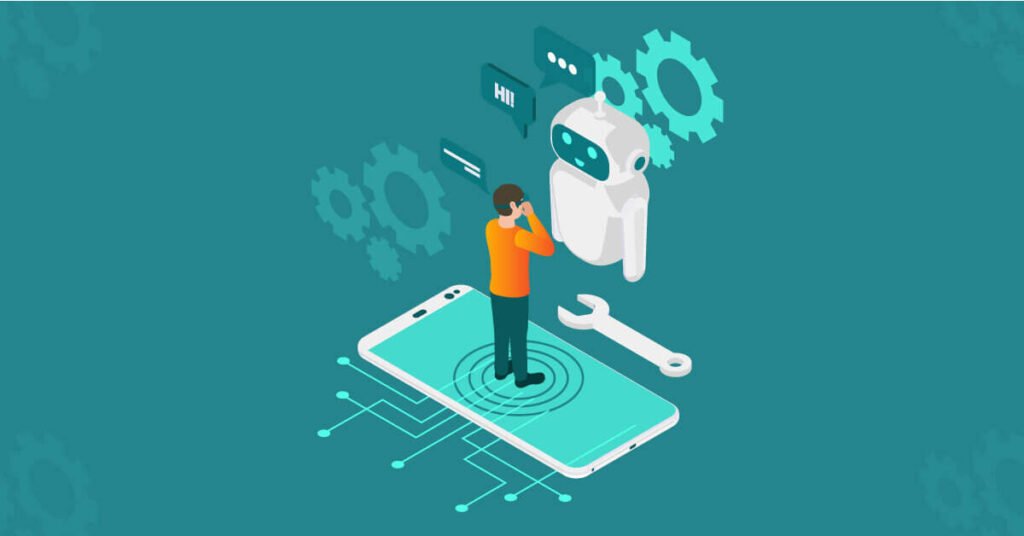
Before diving into Intercom AI’s specific capabilities, let’s establish the foundational concepts that make ai customer support automation for small business more than just a buzzword. Understanding these principles will help you evaluate any AI support tool and deploy it effectively.
Cognitive Offloading in Customer Support

Cognitive offloading is the process of transferring mental tasks to external systems—and in customer support, this is revolutionary. Every time you answer “What’s your refund policy?” for the hundredth time, you’re burning cognitive calories that could be spent on strategic thinking, product development, or actual problem-solving for complex customer issues.
For small business owners, cognitive offloading through ai chatbot for small business support means your brain isn’t the primary repository for FAQs, product specs, or troubleshooting steps. Instead, AI handles the repetitive pattern-matching while you focus on edge cases and relationship-building. A SaaS founder we spoke with reported that implementing AI support freed up approximately 12 hours per week—time previously spent answering the same billing questions over and over.
The real power emerges when you consider the compounding effect. If your AI system resolves even 40% of incoming queries automatically, that’s 40% more brain space for innovation, strategic partnerships, or simply getting a full night’s sleep. For solo entrepreneurs running lean operations, this cognitive breathing room can mean the difference between burnout and sustainable growth.
Context Switching Cost in Support Workflows

Research shows that it takes an average of 23 minutes to fully regain focus after an interruption. For startup founders and small business owners handling customer support alongside everything else, those interruptions are constant. You’re writing code, ding—new support ticket. You’re in a strategy session, buzz—urgent customer question. Each switch carries a hidden tax on your productivity.
Automated customer service with ai eliminates most of these context switches by creating an intelligent buffer between customers and your attention. When customers reach out, AI immediately engages, resolves what it can, and only escalates truly complex issues that require human judgment. This means you’re not constantly pulled out of deep work to answer “How do I reset my password?”
The mathematics of context switching become especially brutal for multi-tasking founders. If you’re interrupted ten times per day by support requests (a modest estimate for growing businesses), that’s potentially 3-4 hours of lost productive time—not from answering the questions, but from the switching itself. By reducing those interruptions by 50-70% through AI automation, you’re essentially reclaiming half your workday.
How Intercom AI Helps Efficiency

Intercom AI isn’t just another chatbot slapped onto your website. It’s a comprehensive ai customer support automation for small business platform built on a sophisticated AI agent called Fin, designed specifically to handle the complexities of real customer conversations. Let’s break down the key features that make it a powerhouse for business efficiency.
AI-Powered Resolution with Fin

At the core of Intercom AI sits Fin, an AI agent that resolves customer questions by drawing from your existing support content, help center articles, and connected knowledge bases. Unlike basic chatbots that follow rigid decision trees, Fin uses advanced language models to understand customer intent, search your knowledge base, and generate natural, helpful responses.
Here’s what makes this powerful: Fin doesn’t just match keywords. When a customer asks “I can’t log in and I’ve tried everything,” Fin understands this likely involves password issues, account lockouts, or browser problems. It cross-references your documentation, considers context from previous interactions, and provides a comprehensive troubleshooting path—all in seconds.
Real-world scenario: A fintech startup using Intercom AI reported that Fin handles 63% of their support volume automatically. Their most common queries—password resets, transaction inquiries, and basic account questions—get resolved instantly, while their human team focuses on complex cases like disputed charges or integration issues. The result? Their support team of three handles the volume that would typically require seven people.
The business impact extends beyond just time savings. Customers receive instant responses 24/7, satisfaction scores increase because people don’t wait in queues, and your support team experiences less burnout from repetitive questions. For ai live chat for business, this immediate, accurate responsiveness becomes a competitive advantage.
Seamless Human Handoff and Collaboration
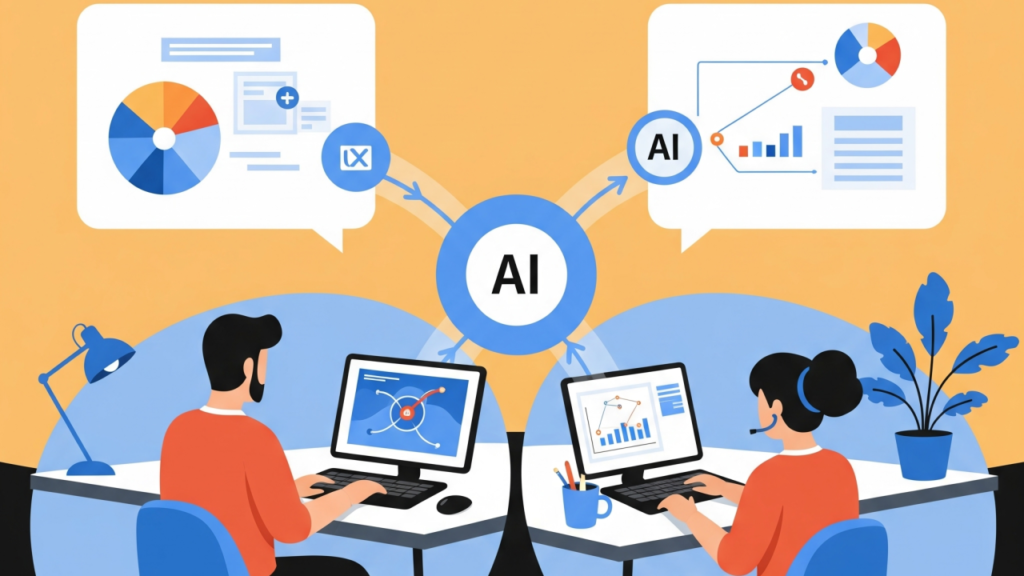
The magic of effective automated customer service with ai isn’t eliminating humans—it’s optimizing when humans get involved. Intercom AI excels at this through intelligent conversation routing. When Fin encounters a query it can’t confidently resolve, it seamlessly transfers the conversation to a human agent along with full context of what’s been discussed.
This handoff isn’t jarring for customers. They don’t need to repeat themselves. The human agent sees the entire conversation history, what Fin attempted, and any relevant customer data pulled from your CRM. It’s like having a brilliant assistant who handles the preliminary work and briefs you before you step in.
How it drives results: A SaaS company managing 500+ support conversations monthly found that human agents using Intercom AI resolve tickets 35% faster because they’re not starting from zero. The AI has already gathered information, attempted first-level troubleshooting, and identified the core issue. Agents jump straight to solving rather than diagnosing.
For solo entrepreneurs and small teams, this collaborative approach is crucial. You’re not choosing between AI or human support—you’re building a system where both work together, each doing what they do best.
Workflow Automation and Smart Triggers

Beyond conversational AI, Intercom provides robust workflow automation that reduces support workload with ai through intelligent triggers and actions. You can create custom bots that proactively reach out based on user behavior, automatically route conversations based on topic or urgency, or trigger internal notifications when high-value customers need attention.
For example, you might set up a workflow where:
- New users who haven’t completed onboarding after 48 hours receive an automated check-in
- Customers who mention “cancel” or “refund” are immediately escalated to your retention team
- Common feature requests automatically create tickets in your product management system
- After-hours inquiries get acknowledged instantly with expected response times
Usage scenario: An online course creator uses Intercom’s workflow automation to handle the entire student onboarding journey. When someone purchases a course, automated messages guide them through account setup, introduce key features, and proactively answer common questions. This automation handles what used to be 40+ manual touchpoints per student, scaling their business from 100 to 1,000 students without additional support staff.
These workflows transform customer support workflow automation from a reactive fire drill into a proactive, systematic operation. You’re not just responding to problems—you’re preventing them.
Use Cases: Small Business & Freelancer Efficiency
Theory is helpful, but real transformation happens when you see how ai customer support automation for small business works in practice. Let’s explore four distinct personas and how Intercom AI revolutionizes their daily operations.
Creative Freelancer: Design Studio Owner
Meet Sarah, a freelance graphic designer who evolved into running a small agency with two contractors. She handles 20-30 client projects monthly, but customer communication was consuming 15+ hours per week—responding to revision requests, explaining process details, sharing file access, and answering the same onboarding questions repeatedly.
Old workflow: Sarah checked email constantly throughout the day, interrupting creative work to answer questions like “How do I download final files?” or “What file formats do you deliver?” Each interruption cost 20+ minutes of refocused creative time. Evening hours were spent catching up on support emails, leaving little energy for actual design work or business development.
New AI-enhanced workflow: Sarah implemented Intercom AI with a comprehensive knowledge base covering her services, processes, file delivery, payment terms, and common design questions. Fin now handles:
- Onboarding new clients with automated welcome sequences
- Answering process questions by referencing her documented workflows
- Providing file access instructions and technical troubleshooting
- Scheduling revision discussions during her designated consultation blocks
Results: Sarah reduced support time from 15 hours to 4 hours weekly. Clients receive instant responses to common questions 24/7, improving satisfaction even though Sarah herself is less “always on.” The reclaimed 11 hours go toward actual billable design work and landing two additional clients monthly.
“With Intercom AI, I automated 3 hours of weekly client communication that was purely repetitive. Now I only engage when it’s actually about creative decisions, which is what clients really value anyway.”
E-Commerce Owner: Sustainable Fashion Brand

Meet Priya, who runs an online sustainable clothing store. With 300-500 orders monthly, customer support around sizing, shipping, returns, and product care was drowning her small team. She needed to scale support without hiring, especially during peak seasons when volume doubled.
Old workflow: Priya and one part-time assistant manually answered 40-60 support emails daily about sizing charts, shipping timelines, return policies, and fabric care. During product launches or holiday seasons, they fell days behind, resulting in poor reviews citing “unresponsive customer service.” Cart abandonment ran high because sizing questions went unanswered.
New AI-enhanced workflow: Priya implemented Intercom with Fin trained on comprehensive product information:
- Interactive sizing guide with Fin answering fit questions based on product data
- Real-time order tracking through Shopify integration
- Automated return initiation and policy explanations
- Proactive post-purchase care instructions and upselling
- Live chat on product pages reducing pre-purchase uncertainty
Results: Fin resolves 68% of support inquiries automatically, primarily sizing questions, shipping updates, and policy clarifications. Human support time dropped from 25 hours weekly to 9 hours, focused exclusively on complex issues like damaged items or custom requests. Cart abandonment decreased 22% because pre-purchase questions get instant answers. Customer satisfaction scores increased from 3.8 to 4.6 stars.
“The AI handles every ‘Where’s my order?’ and ‘Will this fit?’ question instantly. We’ve doubled our order volume with the same tiny support team, and customers are happier because they’re never waiting.”
Streamline your workflow with smart automation. Start free with Intercom AI ? https://www.intercom.com/
Best Practices for Implementing AI Efficiency
Maintain Human-in-the-Loop Oversight

Automated customer service with ai should augment, not replace, human judgment—especially in early implementation. Set up Intercom so team members receive notifications when Fin handles conversations, at least initially. Review resolved conversations weekly to identify:
- Questions Fin struggles with consistently (needs better documentation)
- Responses that are technically correct but miss emotional context
- New question patterns that should be added to your knowledge base
- Opportunities to improve handoff triggers
This oversight loop creates continuous improvement. You’re not just deploying AI and hoping for the best—you’re actively training it to better represent your brand voice and handle your specific customer base.
For sensitive topics like refunds, account cancellations, or complaints, configure immediate human escalation. AI excels at information delivery but may miss the relationship-preservation nuances that keep customers loyal through difficult situations.
Avoid Tool Overload and Platform Sprawl

One temptation when discovering saas customer support tools is accumulating multiple solutions—separate platforms for chat, email, knowledge base, CRM, and ticketing. This creates the very fragmentation you’re trying to solve.
Intercom’s strength is consolidation. Use it as your central support hub and integrate other essential tools (payment processors, shipping systems, CRMs) rather than running parallel support systems. Every additional platform your team needs to monitor dilutes focus and creates gaps where customers fall through.
Before adding any new tool, ask: “Can Intercom already do this, or integrate with something that does?” The answer is often yes. Fewer platforms mean less context switching, lower subscription costs, and easier training for team members.
Track Metrics That Matter

Implementing AI support without measuring impact is like flying blind. Establish baseline metrics before deployment and track them monthly:
Volume metrics:
- Total support conversations
- Percentage resolved by AI vs. humans
- Resolution time (AI vs. human)
Quality metrics:
- Customer satisfaction scores (CSAT)
- First response time
- Resolution rate (% of issues fully solved)
Business metrics:
- Support costs per conversation
- Team hours spent on support weekly
- Revenue per support team member
These numbers tell the real story. You might discover Fin resolves 50% of volume but your team’s time savings is only 25%—indicating humans are spending more time on the remaining complex issues. That’s still positive, but knowing the details helps you optimize further.
Track customer feedback specifically about AI interactions. Are people frustrated by Fin, or do they appreciate instant responses? This qualitative data guides tone and capability adjustments.
Limitations and Considerations

While ai customer support automation for small business delivers impressive results, honest assessment of limitations prevents disappointment and misuse. Here’s where AI support tools like Intercom still need human partnership.
Privacy, Security, and Compliance Risks
Ai helpdesk software for startups processes customer data, creating potential privacy obligations. Ensure you understand:
- Where conversation data is stored and processed
- Whether AI training uses your customer interactions
- Compliance requirements for your industry (HIPAA, GDPR, CCPA)
- Data retention policies and deletion procedures
Intercom provides enterprise-grade security, but you’re responsible for configuring it correctly. Don’t train AI on sensitive information like health records, financial details, or legal matters without proper safeguards. Some conversations should never touch AI systems.
Be transparent with customers about AI usage. Many regions require disclosure when they’re interacting with automated systems rather than humans. Intercom makes this easy, but it’s your responsibility to comply.
Over-Reliance and Skill Atrophy
A subtle risk of effective automation is team members losing touch with customer pain points. When AI resolves 70% of conversations, your human team only sees the complex 30%. This can create blind spots about emerging product issues, common customer frustrations, or opportunities for improvement.
Combat this by having team members regularly review AI-resolved conversations, not just escalations. Maintain direct customer interaction channels like occasional support shifts for product managers and founders. The best product insights often come from front-line support—don’t let AI completely insulate you from this valuable feedback.
There’s also the hallucination risk inherent to AI language models. While Intercom’s Fin is specifically designed to pull from your knowledge base rather than generate creative responses, no AI is perfect. Periodic audits of AI responses catch occasions where the system might confidently provide incorrect information. The human review loop mentioned in best practices isn’t optional—it’s essential risk mitigation.
FAQs
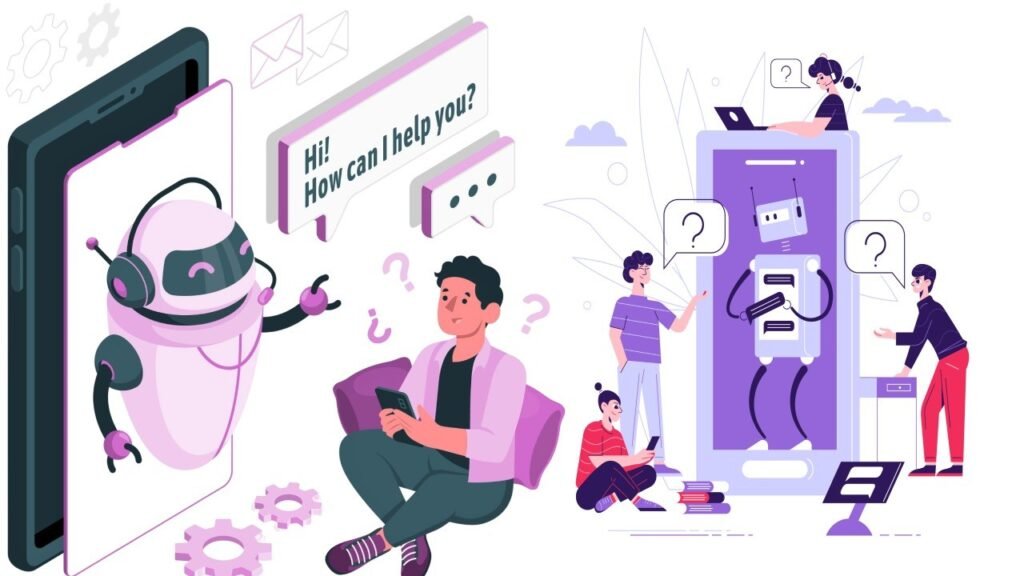
What is AI efficiency for small business?
AI efficiency for small business refers to using artificial intelligence tools to automate repetitive tasks, reduce manual workload, and optimize operations without expanding headcount. In customer support specifically, this means AI chatbots and agents handling routine inquiries, automating workflows like ticket routing and follow-ups, and providing instant responses to common questions. The goal is reclaiming human time for high-value activities like strategy, relationship building, and complex problem-solving while maintaining or improving customer satisfaction through faster, consistent service.
Can AI replace admin work in customer support?
AI can automate significant portions of administrative support work but rarely replaces it entirely. For routine tasks—answering FAQs, providing order status updates, scheduling follow-ups, and basic troubleshooting—modern AI platforms like Intercom achieve 50-70% automation rates. However, complex issues requiring judgment, emotional intelligence, policy exceptions, or creative problem-solving still need human involvement. Think of AI as eliminating the repetitive 60-70% of support work, allowing humans to focus their full attention on the meaningful 30-40% that drives customer loyalty and provides business insights.
How do freelancers use AI to save time on customer support?
Freelancers and solo entrepreneurs use AI support tools to create the impression of a larger team while working independently. They build knowledge bases with common client questions, service processes, and deliverable information, then use AI chatbots to provide instant answers 24/7. This eliminates the constant email interruptions that fragment focus during billable work. AI also handles appointment scheduling, initial lead qualification, and proactive client communication during projects. Many freelancers report reclaiming 10-15 hours weekly by automating repetitive client interactions, allowing them to take on more clients without working longer hours.
Conclusion
The case for ai customer support automation for small business in 2026 isn’t hypothetical—it’s empirical. Businesses using Intercom AI are measurably reclaiming time, improving customer satisfaction, and scaling support operations without proportional cost increases. This isn’t about chasing the latest tech trend; it’s about competitive survival in an environment where customer expectations for instant, accurate responses are non-negotiable.
What makes Intercom AI particularly valuable for startups, solo entrepreneurs, and small business owners isn’t just the automation—it’s the intelligence behind it. Fin doesn’t simply deflect customers to help articles; it understands context, provides personalized responses, and knows when human expertise is needed. This nuanced approach preserves the relationship quality that small businesses rely on while eliminating the repetitive workload that drains resources.
Remember that AI is augmentation, not replacement. The goal isn’t removing humans from customer support—it’s removing humans from repetitive tasks so they can focus on complex problems, relationship building, and strategic improvements. The most successful implementations treat AI as a tireless team member handling the routine while humans tackle the exceptional.
As you consider implementing customer support automation, start with realistic expectations and a phased approach. You won’t automate 100% of support overnight, and you shouldn’t try. Begin with your most common, straightforward inquiries. Build a solid knowledge base. Configure intelligent escalation. Monitor results. Iterate based on data. This methodical approach delivers sustainable results without disrupting existing operations or alienating customers.
The businesses thriving in 2026 aren’t the ones with the largest support teams—they’re the ones using intelligent systems to do more with less. Intercom AI provides the infrastructure to join them. The question isn’t whether to adopt AI support automation, but how quickly you can implement it before your competition does.
Next Steps

Ready to transform your customer support operations? Explore these resources to continue your AI efficiency journey:
- Compare AI – Evaluate different AI customer support platforms side-by-side to find the perfect fit for your business needs and budget.
- AI Revenue Boost – Discover how AI tools beyond customer support can drive revenue growth through sales automation and marketing optimization.
- Solo DX – Learn digital transformation strategies specifically designed for solo entrepreneurs and small teams maximizing impact with minimal resources.
- AI Workflows – Explore ready-to-implement AI workflow templates for customer support, sales, operations, and more business functions.
Start your free trial with Intercom AI today ? https://www.intercom.com/
Leave a Reply