Small teams using ai video editing for small teams are closing the content gap against larger brands — and CapCut AI is the engine behind that shift.
If you’re running a small team in 2026, you already know the content treadmill. Your competitors are posting three Reels before lunch. Your TikTok queue is empty. The video your designer spent four hours editing last week got 200 views and the one your intern threw together in 20 minutes went semi-viral. There’s no logic to it — or so it seems.
Here’s the reality: the fastest-growing US small businesses in the content economy aren’t winning because they have bigger budgets. They’re winning because they’ve built repeatable, AI-assisted systems that eliminate the bottlenecks between idea and published video. That’s what this guide is about.
For founders, startup operators, and small marketing teams managing 1–10 people across cities like Austin, Denver, San Francisco, and Miami, the pressure to produce consistent short-form video content is relentless. Social media algorithms reward frequency and quality — two things that are nearly impossible to maintain manually when your team is also handling client work, operations, and growth.
The old approach — hiring a dedicated video editor, contracting a freelance agency, or dumping everything on a single overworked team member — runs $5,000 to $15,000 per month in US labor costs alone. For most small teams, that math doesn’t work.
CapCut AI changes the math. Built for the era of short-form social content, CapCut AI helps small US teams produce polished, on-brand marketing videos in a fraction of the time — without enterprise budgets or specialized editing skills. It’s not just a faster editing tool; it’s a system for turning raw content into published, optimized videos at a pace that keeps you competitive.
This guide breaks down exactly how CapCut AI enables what we call Solo DX — small-scale digital transformation — for US-based teams who are done doing things the slow, manual way.
What is Solo DX?
Solo DX stands for Solo Digital Transformation — a term that describes the process of small US business founders and team leaders building scalable, systemized operations without the luxury of a dedicated operations department.
Unlike enterprise digital transformation, which involves IT departments, consultants, and six-figure implementation budgets, Solo DX is lean by design. It’s what happens when a five-person startup in Chicago decides they’re tired of every process living in someone’s head and starts building repeatable workflows using accessible AI tools.
How Solo DX Differs from Other AI Use Cases
| Category | Focus | Team Size | Goal |
|---|---|---|---|
| AI Efficiency | Automating individual tasks | 1–3 people | Save hours per week |
| Solo DX | Systemizing team operations | 3–10 people | Build scalable workflows |
| AI Revenue Boost | Increasing sales/leads | Any size | Drive growth |
| AI Workflows | Connecting tools and automations | Technical teams | Process integration |
Solo DX sits at the intersection of operations and growth. It’s not just about saving time — it’s about making your team capable of producing consistent, high-quality outputs even as people join, leave, or shift roles.
Traditional corporate approaches to systemization — SOPs written by operations managers, training programs developed by HR — fail US small businesses for a simple reason: they assume you have the time, budget, and staff to build infrastructure before you need it. Most small teams don’t. They’re building the plane while flying it.
A Real Example: A 3-Person Design Studio in Austin
Consider a three-person creative studio in Austin producing short-form video ads for local e-commerce brands. Their workflow was chaotic: the founder handled client briefs and final approvals, one team member shot and rough-cut footage, and a part-time contractor handled captions and music. Every video took four to six hours of combined labor. When the contractor left, the whole system collapsed.
Solo DX, applied through a tool like CapCut AI, means building a video production workflow so clearly defined and AI-assisted that it runs reliably regardless of who’s doing the work. You can explore CapCut AI’s features to understand how it fits into exactly this kind of systemization strategy.
The goal of Solo DX isn’t perfection — it’s consistency. Consistent outputs, consistent quality, consistent posting frequency. That’s what drives growth for small US teams in the content economy.
Why AI is Key for Mini-Team Systemization
Three problems kill content consistency for small US teams. AI solves all three — if you use the right tools.
Problem 1: Knowledge Lives Only in the Founder’s Head

In most small US teams, the “system” for creating marketing videos is an informal mental model that exists only in the founder’s or lead creator’s head. They know which aspect ratios work for each platform. They know the brand’s color palette and preferred music style. They know which hooks perform. When they’re unavailable, output drops or quality suffers.
AI tools like CapCut AI externalize that knowledge. Brand kits, style templates, and AI-generated editing presets turn subjective preferences into repeatable parameters anyone on the team can apply. The workflow stops depending on any one person’s expertise.
Problem 2: Quality Varies Across Team Members
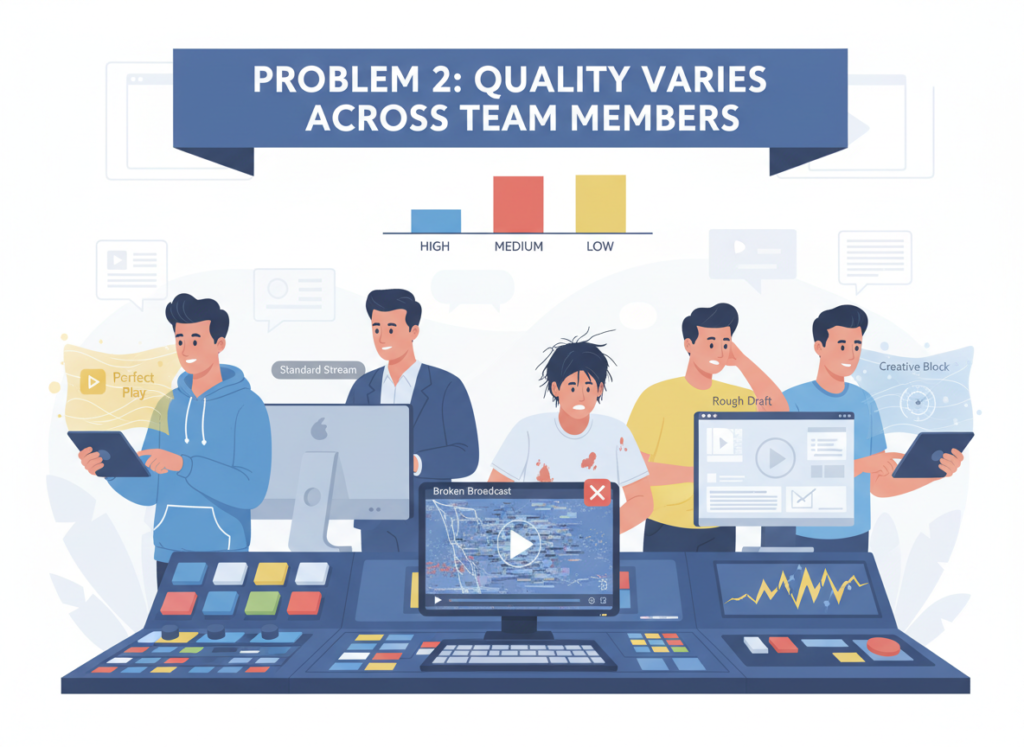
When five people on a small team each approach video editing differently, you get five different versions of your brand. Inconsistency in captions, pacing, color grading, and aspect ratios signals amateurishness to audiences — and to the algorithms that decide whether to promote your content.
The Cost Reality
Building a manual video production system — style guides, editing SOPs, training documentation — takes a US small business 40 to 80 hours of staff time. At $75/hour average, that’s $3,000 to $6,000 in labor before a single video is published. And it still needs to be updated every time a platform changes its algorithm or format requirements.
AI-assisted systemization with tools like CapCut AI costs a fraction of that in both time and money. Short video automation tools that handle captioning, transitions, aspect ratio adjustments, and music syncing can reduce per-video production time by 60–80%. The math is not subtle.
As noted in this breakdown of CapCut’s core capabilities, even users with no formal editing experience can produce polished short-form content using the platform’s AI-assisted features — a critical advantage for small teams where not everyone is a trained editor.
For US teams producing social media content in 2026, the question isn’t whether to use AI for video production. It’s which AI tools are worth building your workflow around.
How CapCut AI Enables Solo DX for US Teams
CapCut AI is built for the content demands of 2026 — high-frequency, multi-platform, short-form video production at a scale that small teams can actually sustain. Here’s how its core features enable Solo DX.
Feature 1: AI Script-to-Video Generation

CapCut AI’s script-to-video feature converts a written brief or script into a structured video draft — complete with suggested clips, pacing, and text overlays. For small US teams producing marketing videos, product demos, or educational content for TikTok and Reels, this eliminates the blank-canvas problem that kills production momentum.
Estimated ROI: A team producing 20 videos per month that saves two hours per video at $60/hour saves $2,400 monthly — $28,800 annually — just on initial production setup.
Feature 2: AI Auto-Captions and Text Overlays
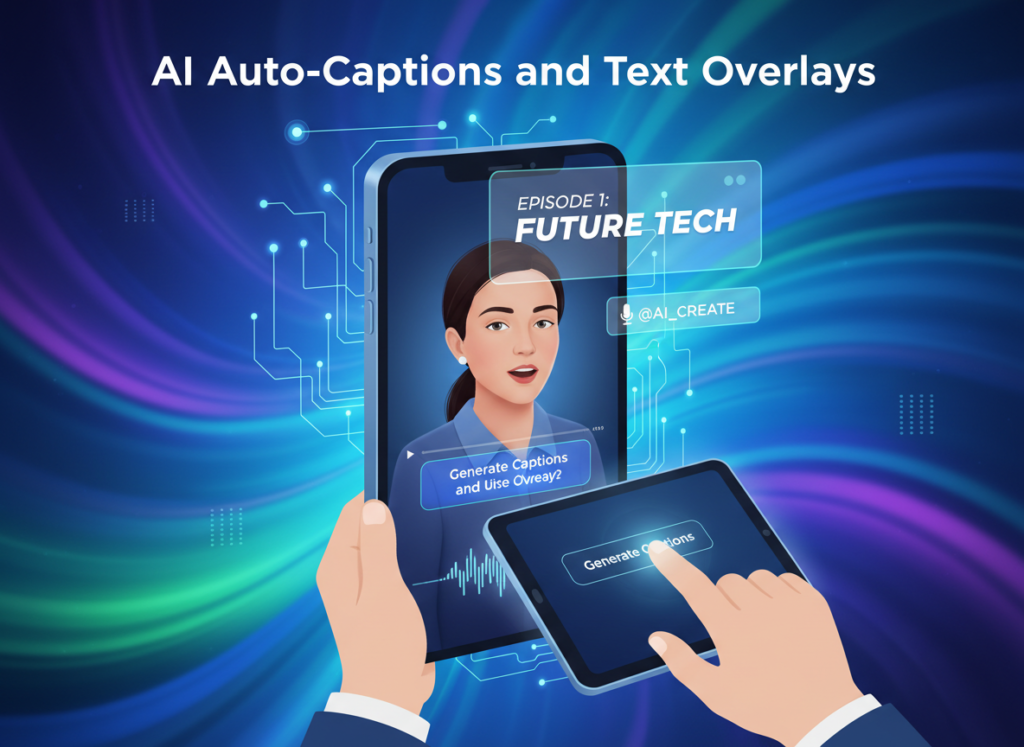
Manual captioning is one of the most time-consuming and error-prone parts of short-form video production. CapCut AI’s auto-caption feature generates accurate, time-synced captions in seconds, with customizable styles that match your brand.
For a team producing content for TikTok and Reels — where 85% of videos are watched without sound — this feature directly impacts engagement. Small teams using AI tools for TikTok and Reels that automate captioning report 30–40% reductions in post-production time.
Estimated ROI: At 10 hours saved per month at $65/hour, that’s $650/month — $7,800 annually.
Feature 3: Brand Kit and Template System
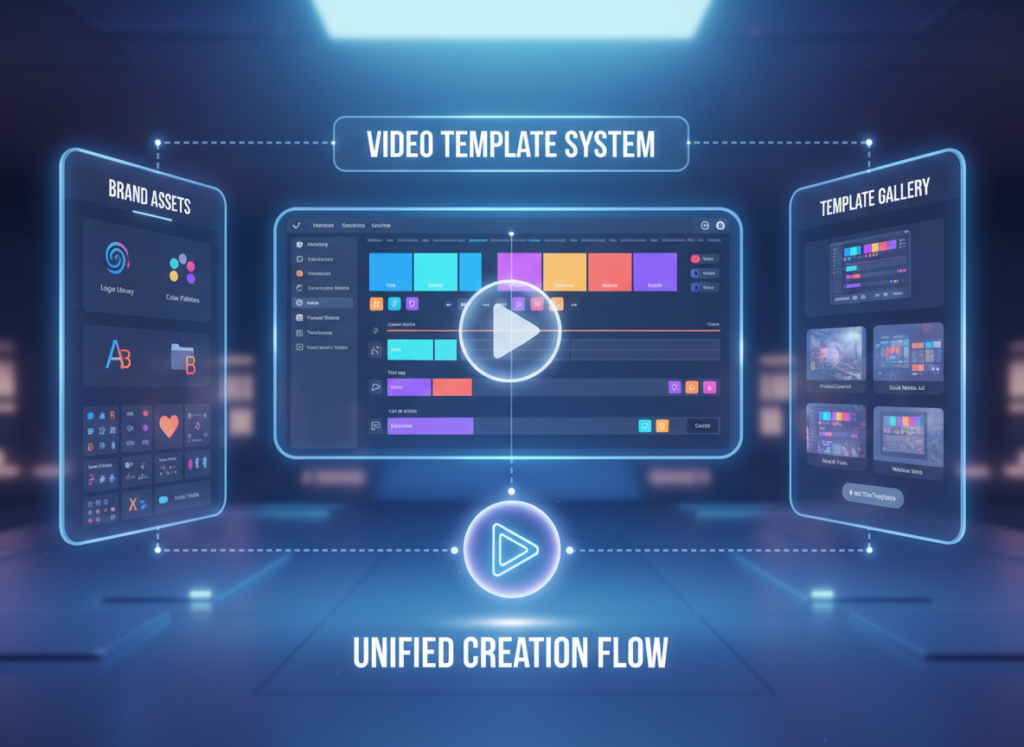
CapCut AI’s brand kit functionality lets teams lock in their visual identity — logo placement, color palette, font choices, transition styles — and apply it automatically across new video projects. This is the feature that makes Solo DX possible at the team level. New team members produce on-brand content from day one. Freelancers and contractors work within your system, not their own.
For US startups and small businesses creating marketing videos with AI, the brand kit effectively replaces weeks of style training with a five-minute setup. See how CapCut AI works for team-based content production to understand how the brand kit integrates with your existing social media strategy.
Estimated ROI: Eliminating two weeks of onboarding per new hire at $50/hour saves $4,000 per hire.
Ready to systemize your US team’s video production in under a week? Try CapCut AI Free | No credit card required | Trusted by 10,000+ US teams
Use Cases by Team Role
Persona 1: US Startup Founder Juggling 3 Departments, Maria, San Francisco

Old workflow: Maria runs a five-person DTC brand in San Francisco. She’s the de facto CMO, head of operations, and occasional video editor. Every week she spends six to eight hours rough-cutting product videos, writing captions manually, and reformatting content for different platforms. Content goes out inconsistently — sometimes twice a week, sometimes not at all.
AI-powered workflow: Maria sets up CapCut AI’s brand kit with her brand colors, logo placement, and preferred caption style. She creates three video templates for product showcases, behind-the-scenes content, and customer testimonials. Her team members can now produce on-brand videos independently. Maria’s personal weekly editing time drops from seven hours to under two.
Quantified results: 5 hours saved per week × $85/hour (her effective hourly rate) = $425/week, $22,100 annually. Posting frequency increases from 1.5x/week to 4x/week.
Maria’s take: “I stopped being the bottleneck. My team produces content I’m proud of without me touching every clip.”
Persona 2: Executive Assistant Onboarding Remote Staff, James, Miami

Old workflow: James supports a 7-person remote marketing agency in Miami. Every time a new contractor joins, James spends three to four days walking them through video formatting standards, caption styles, and platform-specific requirements — all verbally, via Slack, with no documented process.
AI-powered workflow: James builds a CapCut AI workspace with templates pre-loaded for each client account. New contractors get access, follow the templates, and produce client-ready content with minimal hand-holding. Onboarding time drops from three days to half a day.
Quantified results: 2.5 days saved per new hire × $55/hour × 8 hours = $1,100 per onboarding. With 8 hires per year, that’s $8,800 in annual savings.
James’s take: “New people produce client-ready content on day one. I don’t repeat myself anymore.”
According to this analysis of CapCut for small business growth, small businesses that standardize their video production process using CapCut’s template and brand features consistently report faster content output and more cohesive social media presence — two outcomes that directly drive follower growth and engagement.
You can discover CapCut AI’s full feature set and see how each of these workflows maps to the platform’s actual tools.
Join 10,000+ US small teams using CapCut AI to eliminate video production chaos. See How It Works | Used by teams from Silicon Valley to New York
Common Pitfalls & How to Avoid Them
Even with the right tools, small US teams routinely undermine their own video production systems. Here are the four most common mistakes — and how to avoid them.
Mistake 1: Using Too Many Disconnected Tools
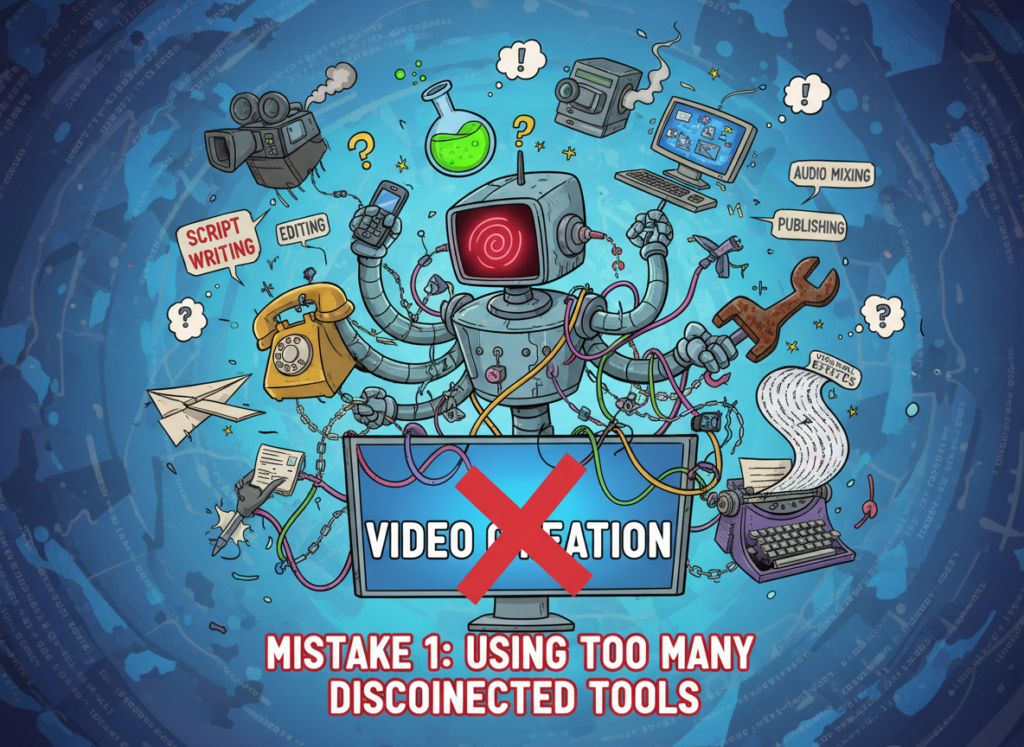
A common pattern: one tool for recording, a different tool for captioning, another for music, a fourth for export. Each handoff introduces friction, formatting inconsistencies, and opportunities for the process to break. Small teams that spread their create marketing videos with AI workflow across five separate platforms spend more time managing tools than making content.
The fix: consolidate your core video production workflow into a single platform. CapCut AI handles recording, editing, captioning, music, and multi-format export in one environment. That’s the system.
Mistake 2: Over-Relying on Slack and Email for Visual Knowledge
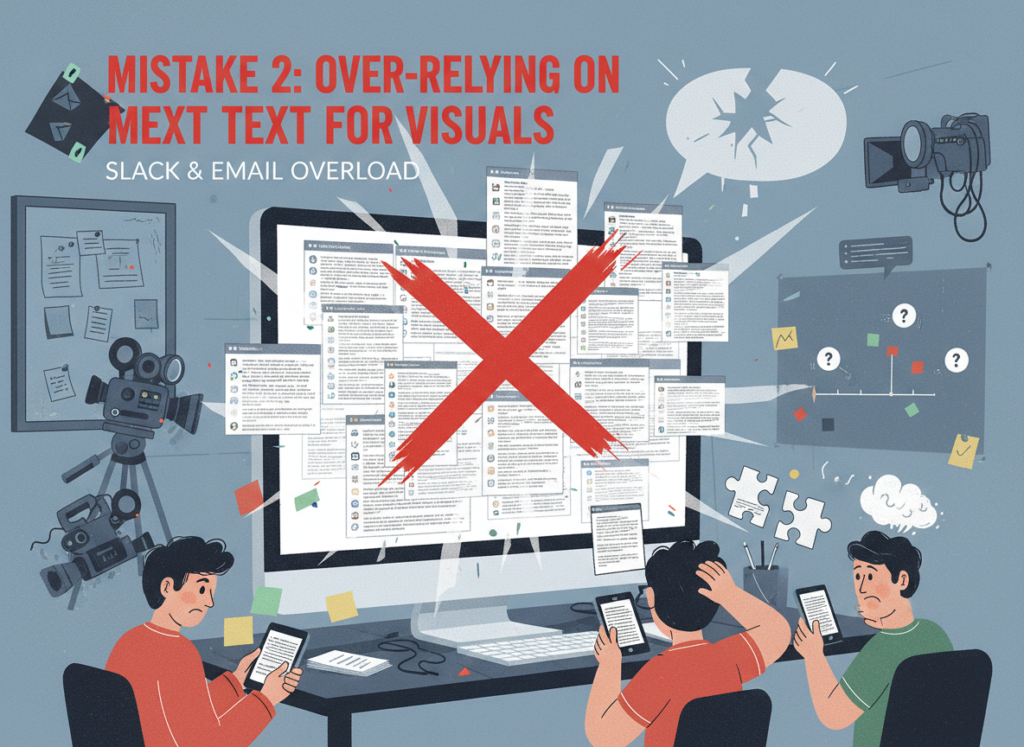
“The example video I sent you on Slack last month” is not a style guide. US small teams that store their video production standards in message threads and email chains create a fragile system that collapses the moment someone leaves or a thread gets buried.
The fix: your video standards live in your CapCut AI templates and brand kit — not in anyone’s inbox. As highlighted in this overview of CapCut’s platform capabilities, the platform’s template and preset system is specifically designed to make production standards persistent and shareable.
A detailed breakdown of CapCut AI covers how the brand kit and template system helps teams avoid exactly these pitfalls.
FAQs
What’s the difference between AI Efficiency and Solo DX?
AI Efficiency focuses on helping individuals save time on specific tasks — faster editing, automated captions, quicker exports. Solo DX is about team-level systemization: building workflows that produce consistent outputs regardless of which team member is doing the work. CapCut AI supports both, but its brand kit and template features are specifically designed for Solo DX.
Can small teams afford to use AI video tools?
Yes. CapCut AI offers free and paid tiers. Even at the paid subscription level — typically $8–$15/month per user — the cost is a fraction of the labor hours saved. A small team producing 20 videos per month that saves just 30 minutes per video at $60/hour saves $600/month against a subscription cost under $50/month.
Is CapCut AI hard to set up for a small team?
No. Most US small teams can configure a brand kit, create core templates, and train team members on the workflow in one to two days. The platform is designed for non-technical users. There’s no coding, no complex integrations, and no IT department required.
Conclusion
In 2026, American small businesses don’t need enterprise budgets to build enterprise-level video content systems. The tools exist. The workflows are proven. The only remaining question is whether you’re willing to invest two days building a system that saves you thousands of hours over the next year.
ai video editing for small teams is no longer a luxury — it’s the baseline for any US small team that wants to compete on social media without burning out its people or breaking its budget. CapCut AI gives small teams the short video automation tools, brand consistency, and multi-platform publishing capabilities that used to require a full production department.
The Solo DX approach is simple: start with one process. Pick your most frequently produced video format — product showcase, behind-the-scenes, client testimonial — and build a CapCut AI template around it this week. Get your team using that template. Measure the time saved. Then systemize the next format.
Small teams that build video production systems in 2026 will outpublish, outrank, and outgrow the ones still editing manually. The gap between them will widen every month.
Learn more about CapCut AI and start building your team’s video production system today.
Leave a Reply