
Small teams that still depend on freelancers and manual briefs for every visual are quietly falling behind — and ai image generation tools for small teams have become the operational equalizer.
If you’ve grown your US business from a one-person operation to a team of five, eight, or ten people, you’ve probably noticed that the chaos scales faster than the headcount. Marketing visuals pile up. Social posts get inconsistent. New hires spend their first week decoding a creative style guide that exists only in the founder’s head — or worse, in a disorganized Slack thread from 2023.
This is the defining tension for American small teams in 2026: the demand for high-quality marketing content has never been higher, but the infrastructure to produce it consistently — without hiring a full design team — is still out of reach for most growing businesses.
Remote work culture has only intensified the problem. Multi-state teams, async communication, and rotating contractors mean that brand consistency requires documentation, systems, and tools. Without them, every piece of visual content becomes a negotiation.
That’s where Nano Banana Pro enters the picture — not as another design app, but as a system-building ally for small teams that need to create marketing images with AI, automate repeatable workflows, and stop reinventing the wheel every time a new campaign goes live.
Unlike traditional design documentation — which can cost a small US business thousands of dollars in contractor hours and weeks of back-and-forth — Nano Banana Pro compresses that process into hours. This guide breaks down exactly how, with real use cases, role-by-role walkthroughs, and the numbers that matter to founders managing lean teams in the US market.
What is Solo DX?
Solo DX — short for Solo Digital Transformation — refers to the process of building operational systems inside a small US business without a dedicated operations manager, IT department, or enterprise budget. It’s the work of turning founder knowledge into repeatable team processes, and it’s one of the most overlooked growth levers available to American small businesses in 2026.
To be clear, Solo DX is distinct from other AI use categories:
| Category | Focus | Who It’s For |
|---|---|---|
| Solo DX | Building systems and workflows for a growing team | Founders scaling from 1–10 people |
| AI Efficiency | Speeding up individual tasks | Solo operators and individual contributors |
| AI Revenue Boost | Driving sales and conversions with AI | Marketing and sales teams |
| AI Workflows | Automating multi-step processes end-to-end | Operations managers and tech teams |
Solo DX occupies a unique space because it addresses the transition period — the painful, chaotic stretch when a business is too big to run on founder memory alone but too small to hire a systems architect.
Consider a real-world example: a three-person brand design studio in Austin, Texas. The founder handles client strategy. One designer creates deliverables. A second designer was hired six months ago. Six months in, the new hire is still producing work that doesn’t match the brand’s visual style — not because she isn’t talented, but because the studio’s style standards were never written down. They lived in the founder’s head and in years of unspoken creative feedback.
Corporate SOP methods don’t solve this problem for small US teams. They’re built for companies with HR departments and compliance requirements — the overhead alone would consume the entire week’s bandwidth for a three-person studio. What Solo DX requires is a lighter, faster approach to systemization: tools that can capture institutional knowledge, translate it into replicable templates, and make it accessible to every team member without a full implementation project.
That’s the gap that Nano Banana Pro is designed to fill — and why it’s become a go-to tool for US founders managing small creative and marketing teams. You can explore Nano Banana Pro’s features on AI Plaza to see how it maps to this systemization need.
Why AI is Key for Mini-Team Systemization
Three operational problems consistently break small US teams as they scale, and each one has a concrete AI solution. Understanding these problems — and their real dollar costs — is the foundation for making a smart decision about automated graphic design for startups.
Problem 1: Knowledge lives only in the founder’s head.
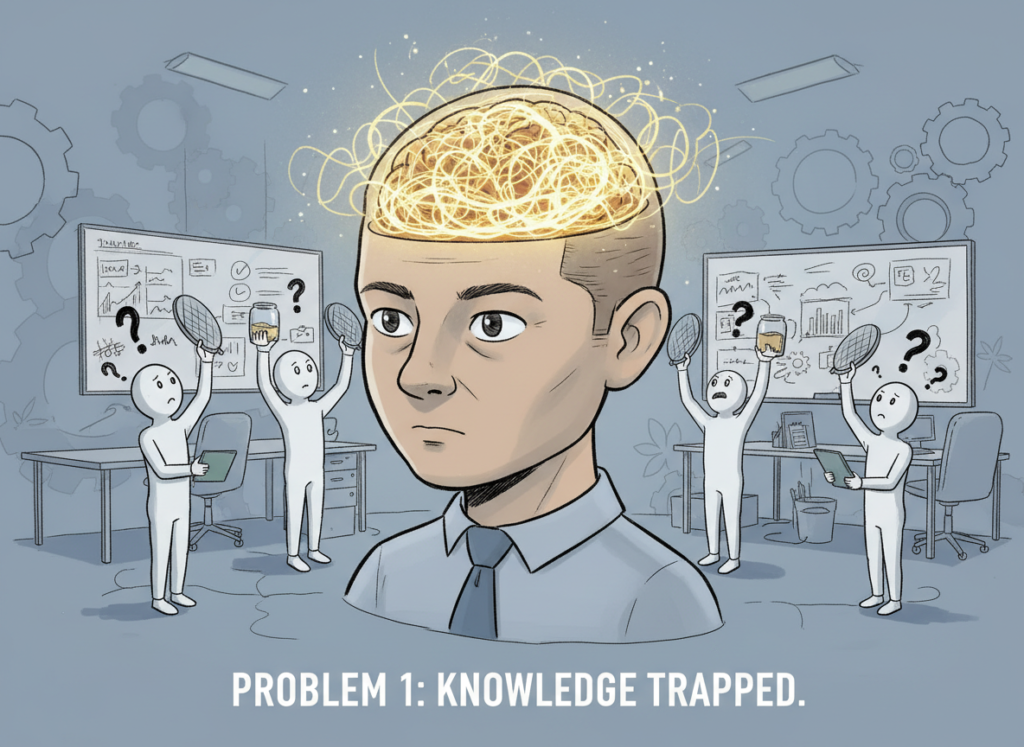
The most common scaling failure isn’t a talent gap — it’s a documentation gap. When the founder is the only person who knows the brand voice, the visual style, the client communication tone, and the approval process, every piece of output requires a founder review. Multiply that by ten deliverables a week and you get a founder who is a permanent bottleneck in their own business. According to SHRM, managers already spend 10 or more hours per new hire on direct training and supervision. At a conservative founder rate of $75–$100 per hour, that’s $750–$1,000 in opportunity cost before the new hire produces a single asset independently.
Problem 2: New hires slow down operations during ramp-up.
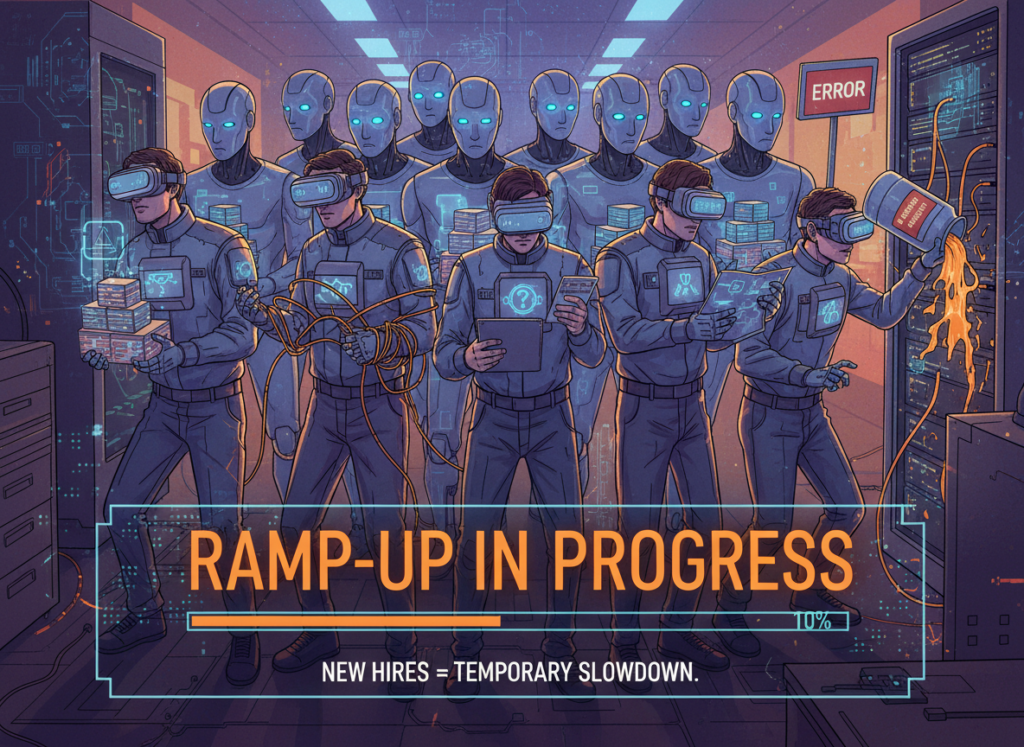
Research consistently shows that new employees operate at roughly 25% of full productivity during their first four weeks on the job, and it takes an average of 26 weeks — about six months — for a new hire to reach full contribution. For US small businesses where the average onboarding cost runs $600–$1,800 per hire in direct expenses alone (plus indirect costs from lost productivity), an undocumented workflow doesn’t just slow things down. It makes every hire an expensive experiment.
The US voluntary turnover rate currently sits around 13%, according to recent workforce research — meaning small teams are running this ramp-up cycle more often than they’d like to admit.
The cost reality:
Building this infrastructure manually — hiring a brand consultant to document visual standards, having a designer create master templates, and writing SOPs from scratch — typically costs a small US business $3,000–$6,000 in contractor and staff time, and takes two to four weeks. With AI tools for social media visuals and an AI-assisted workflow, the same foundation can be established in hours, with ongoing costs tied to a monthly subscription rather than a one-time consulting engagement.
How Nano Banana Pro Enables Solo DX
For small US teams producing marketing content, Nano Banana Pro addresses the Solo DX challenge through four core capabilities. Here’s how each one translates to operational value — and real dollar savings.
Feature 1: AI-Assisted Brand Style Templates

Instead of spending hours briefing a designer or creating a brand guide from scratch, Nano Banana Pro lets teams define their visual identity — color palettes, typography preferences, image style — and apply it consistently across all generated assets. Team members who aren’t experienced designers can produce on-brand graphics for social media, email headers, and ad creatives without requiring founder review on every single piece.
The time savings here are measurable. A small marketing team that previously spent two to three hours per week reformatting off-brand content or waiting for founder corrections can redirect that time to higher-value work. At $50–$75 per hour for a US marketing coordinator, that’s $400–$600 recovered per month, per team member.
Feature 2: Prompt Libraries and Workflow Memory

One of the most underappreciated features for small teams is the ability to save, share, and reuse successful prompts. In a team setting, this functions as a documented creative process — the institutional knowledge that previously existed only in the founder’s head becomes a shared resource. New hires can produce consistent results from day one because the “how” is already recorded.
This is particularly valuable for teams managing ai tools for social media visuals across multiple platforms. A new team member can pull an existing prompt library for Instagram carousel graphics, LinkedIn banners, or Facebook ad creatives and immediately produce work that matches existing brand standards — reducing the ramp-up period that currently costs US small businesses so much in lost productivity.
Feature 3: Collaborative Workspace

Nano Banana Pro’s team workspace allows multiple users to access the same brand assets, prompt libraries, and generated content. This solves the version control problem that plagues small US teams using Slack and Google Drive as their primary “systems” — no more hunting for the right logo file, no more off-brand one-offs from contractors who don’t have access to the latest templates.
For remote or multi-state teams — an increasingly common reality for US small businesses post-pandemic — this shared workspace functions as the single source of truth for all visual content. It’s small business visual content automation that doesn’t require a dedicated operations manager to maintain.
[Placeholder: Insert verified Nano Banana Pro user counts or growth metrics here if available from the vendor]
Ready to systemize your US team’s visual content production? Try Nano Banana Pro Free | No credit card required | See detailed breakdown of Nano Banana Pro on AI Plaza
Use Cases by Team Role
Understanding how Nano Banana Pro works in practice means following real team members through their actual workflows. Here are four personas that reflect the range of roles in a typical US small team.
Maria — Startup Founder Juggling 3 Departments
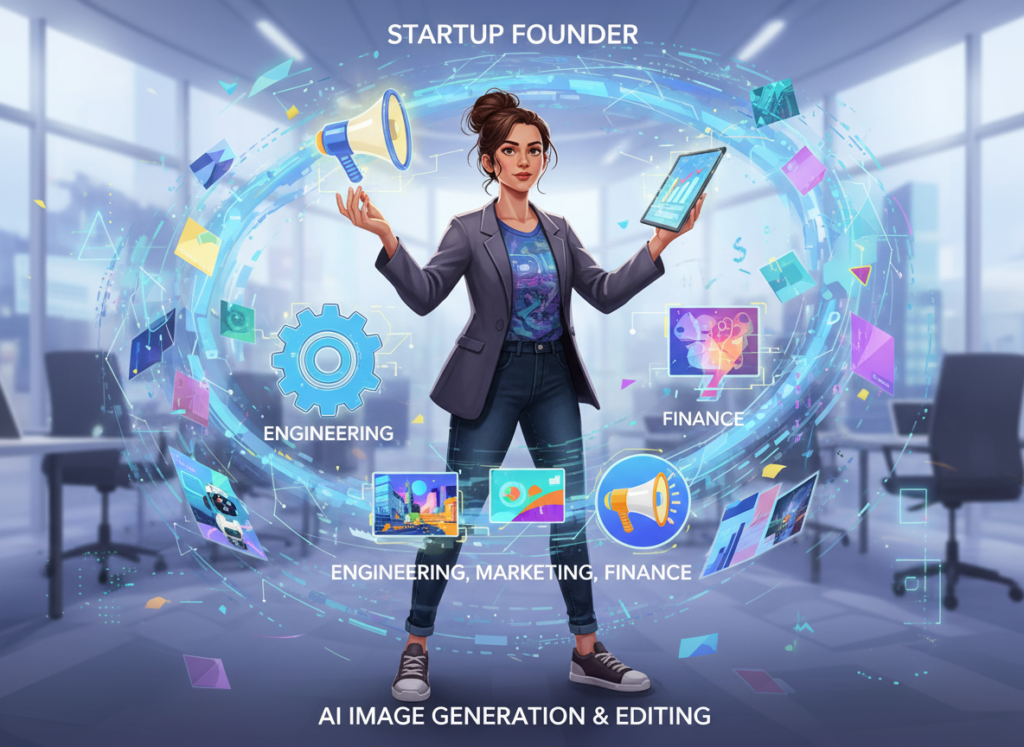
Old workflow: Maria runs a 7-person e-commerce startup. She’s the default creative director even though she has no design background. Every week, her team produces social content, product launch graphics, and email headers — and every week, Maria spends four to six hours reviewing, requesting revisions, and reformatting assets that don’t match the brand. She’s using expensive founder time to be a graphic design QA filter.
AI-powered workflow: Maria spends one afternoon setting up Nano Banana Pro’s brand template — uploading brand colors, defining image style preferences, and saving five core prompt templates for the content types her team produces most. She shares the workspace with her two content team members.
Results: The weekly revision cycle drops from four to six hours to under one. Maria redirects that time to customer acquisition. The brand consistency her team produces improves visibly within two weeks. At her implicit hourly rate of $150+ as a founder, recovering five hours per week translates to $3,000–$3,900 in monthly opportunity cost recaptured.
“I stopped being the bottleneck for content approvals. The templates do the QA for me.” — [Placeholder: Insert real verified quote from a Nano Banana Pro user or remove]
Robert — Trainer Documenting Internal Knowledge

Old workflow: Robert is the designated trainer for a 10-person SaaS sales team in New York. His training materials — slide decks, one-pagers, visual explainers — are perpetually out of date because updating them requires design skills he doesn’t have. He relies on a freelance designer who charges $85–$120 per hour and has a two-week turnaround.
AI-powered workflow: Robert uses Nano Banana Pro to create and update training visuals directly, without design intermediaries. When a product feature changes, he updates the relevant prompt and regenerates the graphic in minutes. As noted in this Nano Banana Pro prompting guide, teams that invest time in building structured prompt libraries early see the biggest long-term time returns — Robert’s case is a textbook example.
Results: Training material update cycles drop from two weeks and $200–$400 in freelancer fees to a same-day, zero-incremental-cost process. Robert estimates he updates training materials three to four times per quarter; the direct freelancer cost savings alone run $2,400–$6,400 annually.
“I finally own my own training materials. I can update them the day a feature ships.” — [Placeholder: Replace with verified quote]
Join US small teams using Nano Banana Pro to eliminate visual content bottlenecks. See How It Works | Trusted by small teams from Silicon Valley to New York Full Nano Banana Pro review on AI Plaza
Common Pitfalls & How to Avoid Them
Even with the right tool in place, small US teams frequently undermine their own AI content systems. Here are four mistakes to avoid.
Mistake 1: Using too many disconnected tools.
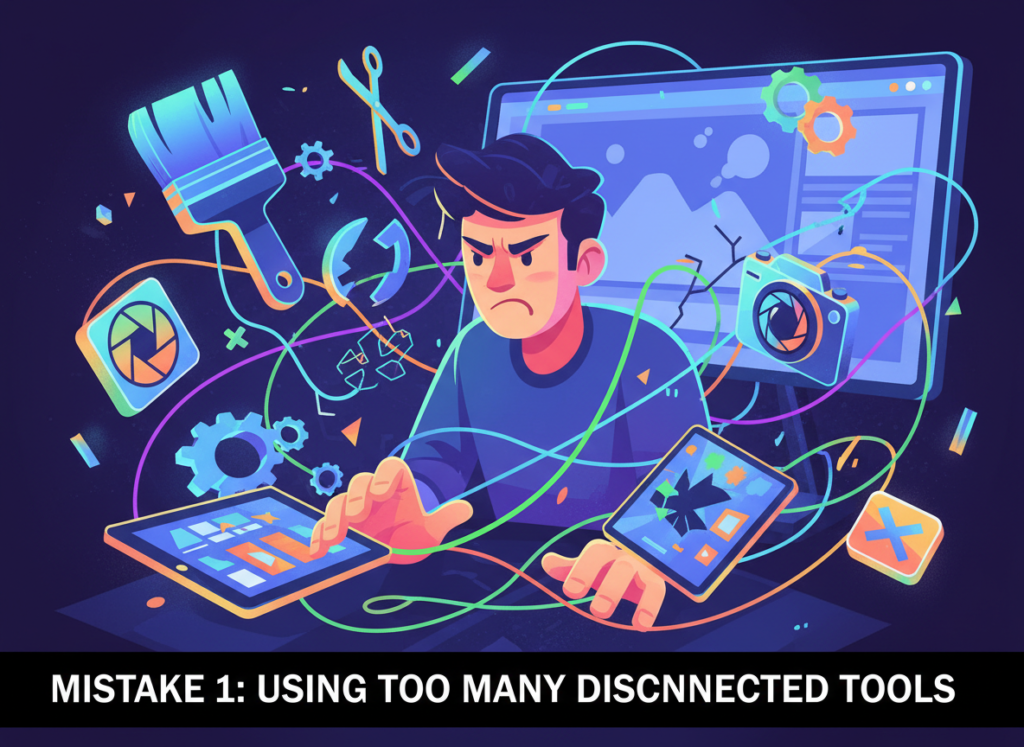
The most common failure pattern in AI design workflow software adoption is tool sprawl — one AI tool for image generation, another for resizing, a third for scheduling, and a fourth for brand asset storage. Every handoff between disconnected tools introduces friction, version control risk, and training burden. Before adding Nano Banana Pro to your stack, audit what you already have and identify what it can replace rather than supplement. Consolidation beats accumulation every time for teams of 1–10 people.
Mistake 2: Failing to review AI output.
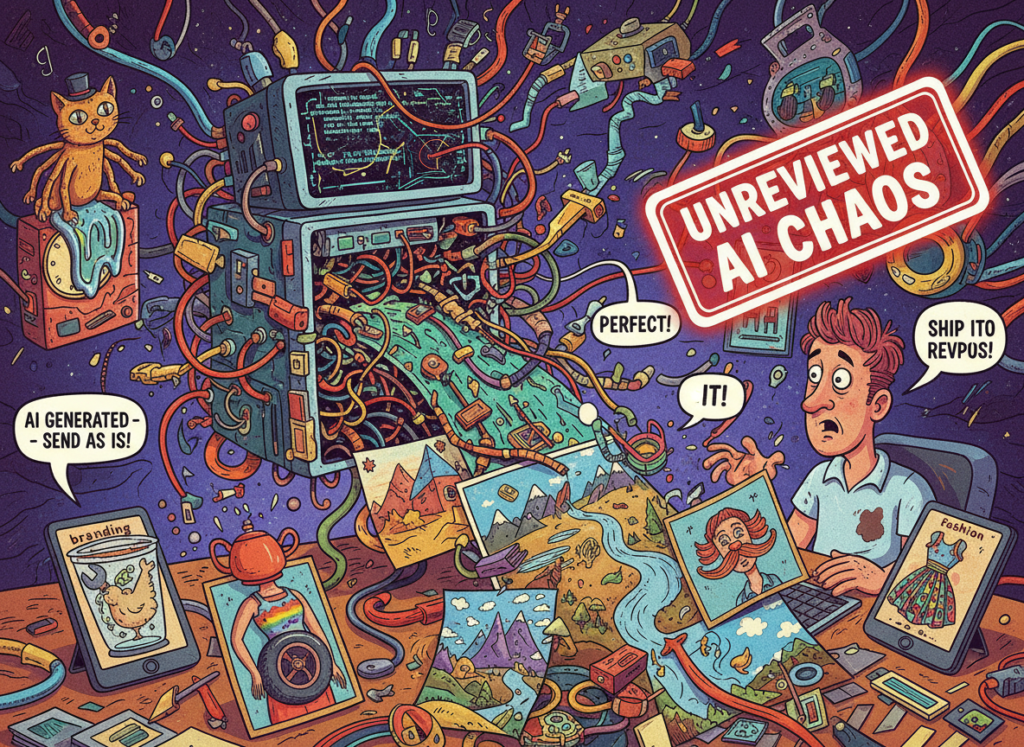
AI image generation tools for small teams are fast, but they’re not infallible. Generated images occasionally include visual artifacts, misaligned text, or brand inconsistencies — especially for complex compositions. Build a lightweight quality check into your workflow: a 60-second review before any AI-generated asset goes external is enough to catch the cases where human judgment is still required. As covered in this practical breakdown of Nano Banana Pro’s capabilities, even experienced users recommend a brief human review step as standard practice.
Mistake 3: Over-relying on Slack and email for creative knowledge.
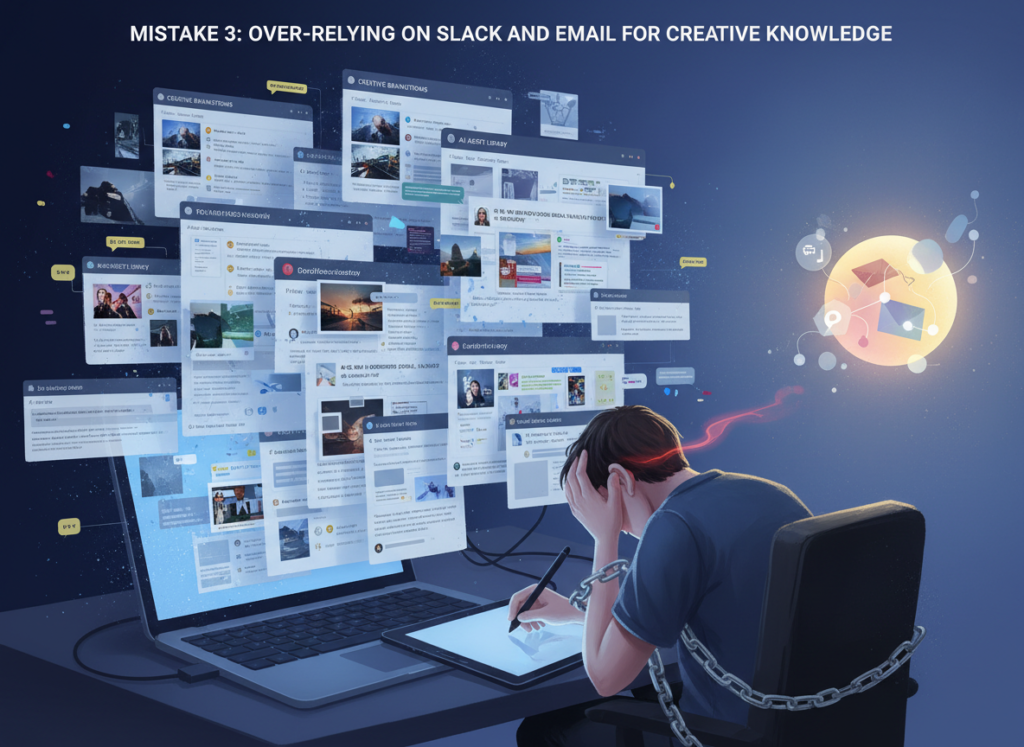
When feedback, brand standards, and revision requests live only in Slack threads and email chains, they disappear. Every new team member is starting from zero. AI design workflow software only delivers lasting value when it’s paired with a centralized, accessible home for institutional knowledge — which is exactly what Nano Banana Pro’s workspace is designed to be. Learn more about Nano Banana Pro and how its shared workspace functions as a team knowledge base for visual content.
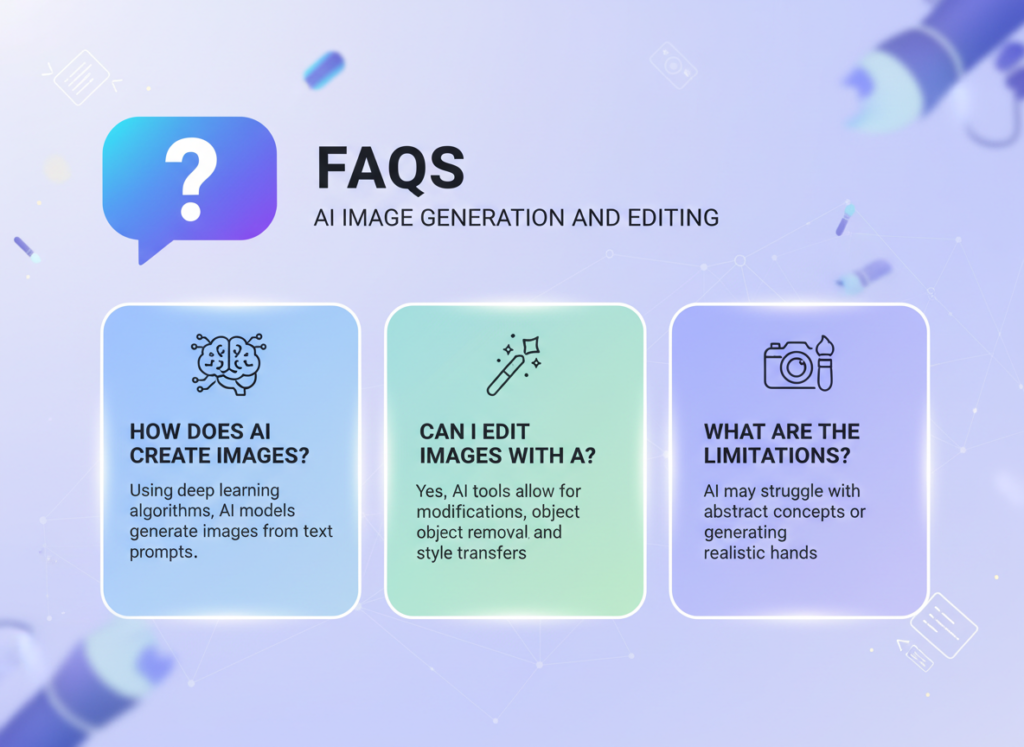
FAQs
What is Solo DX?
Solo DX — Solo Digital Transformation — refers to the process of building systems and repeatable workflows inside a small business without a dedicated operations team. It’s typically led by a founder or senior team member who is transitioning the business from informal processes to documented, scalable ones. The goal is to reduce dependence on individual knowledge and create consistency across the team.
Can small teams in the US afford AI design tools?
Yes — and the math strongly favors adoption. AI image generation tools typically cost $20–$100 per month for small team plans, compared to $85–$150 per hour for freelance graphic designers in major US markets. A single month’s subscription often costs less than two hours of a freelance designer’s time. For teams producing recurring social content, ad creatives, or client-facing materials, the ROI typically becomes positive in the first month of consistent use.
Is Nano Banana Pro hard to set up?
Initial setup takes two to four hours for a team lead who’s building out the brand configuration and prompt library. Day-to-day use is significantly faster — generating and customizing images typically takes five to fifteen minutes per asset once templates are established. Most small US teams reach a comfortable working rhythm within the first week.
Conclusion

In 2026, American small businesses don’t need enterprise budgets to build enterprise-level visual content systems. The tools that once required a full creative team — brand consistency, scalable content production, documented workflows — are now accessible to a five-person team in Austin or a seven-person operation in Chicago.
The Solo DX opportunity for US small teams is clear: stop rebuilding the wheel on every campaign, stop using founder time as a design QA filter, and stop letting institutional knowledge live in Slack threads that new hires can’t access. AI image generation tools for small teams like Nano Banana Pro give growing businesses the infrastructure to systemize visual content production without hiring operations managers or design departments they can’t yet afford.
Start with one process. Pick the content type your team produces most — social posts, ad creatives, email headers — and build a Nano Banana Pro template for it this week. Document the prompt, share it with your team, and measure how much review time you recover. That’s Solo DX in practice: one system at a time, built by the team, usable by everyone.
Discover Nano Banana Pro and start building your team’s visual content system today.
Leave a Reply