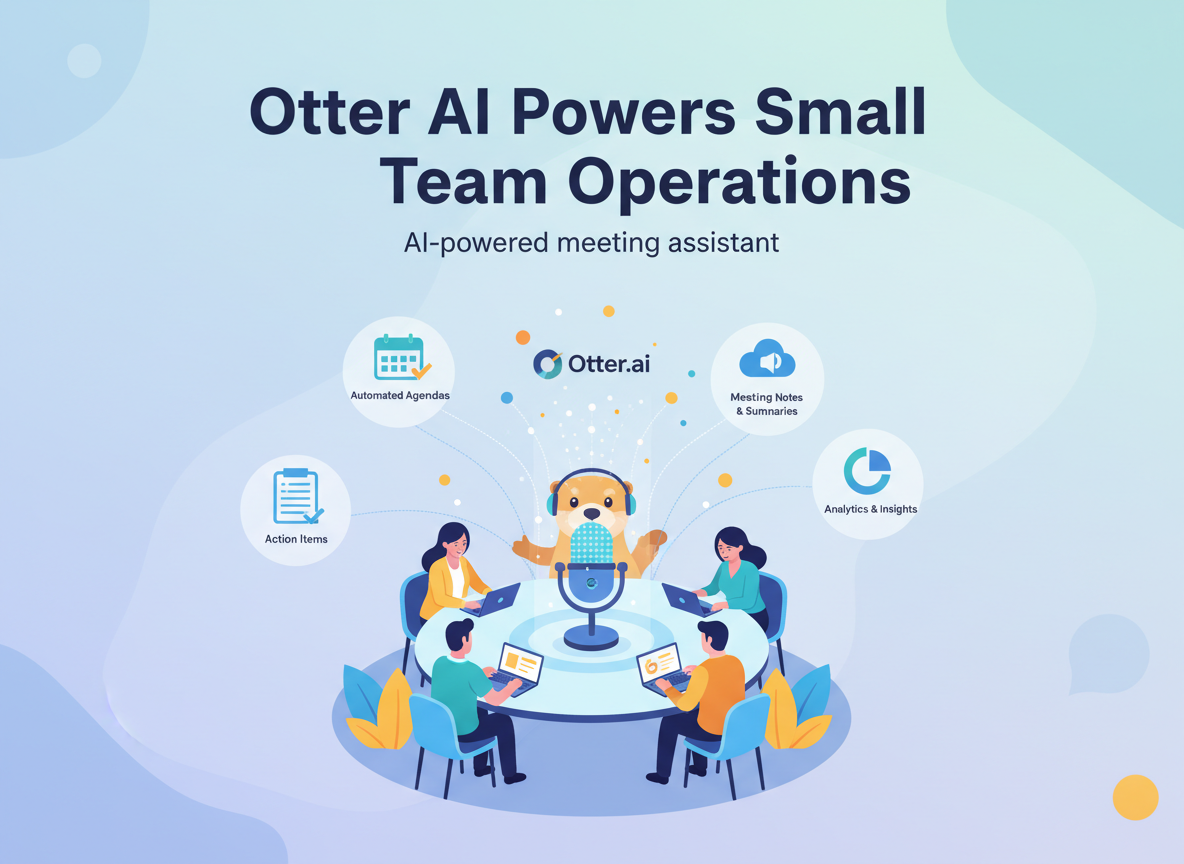
Most small teams don’t have a communication problem — they have a knowledge-capture problem that costs them thousands in lost productivity every month.
If you’ve grown your business from a one-person shop to a team of three, five, or eight people in the last couple of years, you already know the feeling: somewhere between hiring your second employee and your fifth, things stopped being simple. Decisions that used to take you thirty seconds now require a Slack thread, a follow-up meeting, and two more clarifying DMs. New hires spend their first three weeks asking the same questions your last hire asked — because the answers still live inside your head.
This is the reality for hundreds of thousands of US small businesses heading into 2026. Remote and hybrid work culture has made the problem worse, not better. Teams scattered across time zones from Austin to Miami to Seattle can’t lean over and ask you how things work. And with US labor turnover hovering around 47% annually across small business sectors, institutional knowledge is walking out the door faster than you can replace it.
The financial stakes are real. Hiring a fractional COO to document your operations runs $5,000 to $15,000 for a single engagement. A junior ops hire in San Francisco or New York costs $60,000 to $85,000 per year before benefits. Yet most founders continue to delay systemization because it feels like a luxury — something for companies with fifty employees, not five.
This guide breaks down exactly how Otter AI helps US founders and team leads move from tribal knowledge to documented, scalable systems in 2026. Whether you’re managing a three-person design studio in Austin or a seven-person startup in Chicago, the framework here applies directly to your situation.
What is Solo DX?
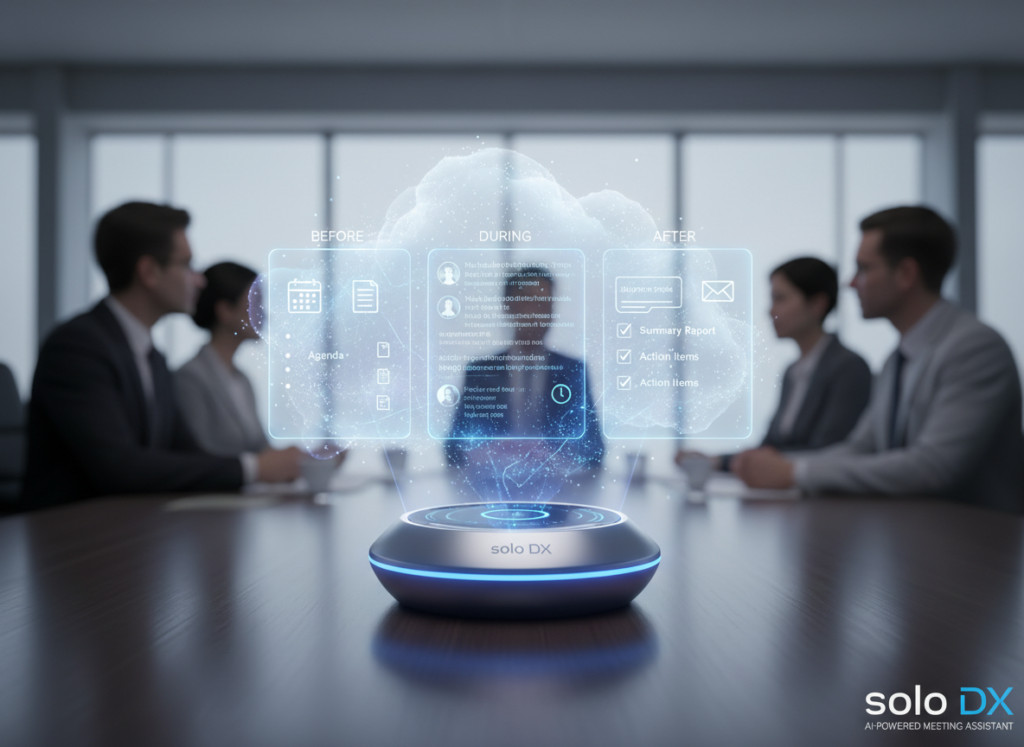
Solo DX — short for Small-Scale Digital Transformation — is a category of business evolution specific to US founders who are scaling beyond solo work but don’t yet have the budget, headcount, or infrastructure of a mid-market company. It’s the gap between “I do everything myself” and “we have an operations team.” For most American small businesses, that gap spans roughly one to fifteen employees and anywhere from two to seven years of growth.
Solo DX is distinct from general productivity improvement or AI efficiency gains. It’s about using technology — often AI — to replace the founder as the single point of institutional knowledge. Instead of every process living in someone’s memory or buried in a Slack channel from eight months ago, Solo DX creates systems: documented, repeatable, trainable workflows that new hires can follow and existing staff can improve.
| Category | Focus | Who It’s For | Outcome |
|---|---|---|---|
| Solo DX | Systemization & knowledge capture | Founders with 1–10 person teams | Scalable operations |
| AI Efficiency | Task-level speed improvement | Individual contributors | Faster execution |
| AI Revenue Boost | Sales & marketing acceleration | Growth-stage teams | Higher conversion |
Why do corporate SOP methods fail US small businesses? Because they were designed for organizations with dedicated process engineers, compliance officers, and change management budgets. When a McKinsey consultant builds an SOP framework, there’s a team implementing it. When a five-person agency tries to use the same approach, the founder writes the first SOP, gets overwhelmed, and the document sits unfinished in a Google Drive folder forever.
Consider a real example: a three-person UX design studio based in Austin, Texas. The founder, Sarah, runs client strategy. Her two designers are talented but inconsistent — deliverables look different depending on who handled the project. Client onboarding takes four hours per engagement because Sarah walks through it personally every time. When she tried to document the process herself, she spent six hours writing a guide that still missed thirty percent of the relevant context.
This is a Solo DX problem. And it’s exactly the kind of problem that Otter AI was built to solve — not by replacing human judgment, but by capturing it automatically so it can be transferred, refined, and scaled.
Solo DX isn’t about becoming a tech company. It’s about making sure your business can operate predictably when you’re not in the room. In 2026, American founders who embrace this approach aren’t just more productive — they’re building companies that can be handed off, sold, or scaled without everything depending on one person’s availability.
Why AI is Key for Mini-Team Systemization
Three core operational problems destroy small teams in the US, and each one has a direct AI solution.
Problem One: Knowledge lives only in the founder’s head.
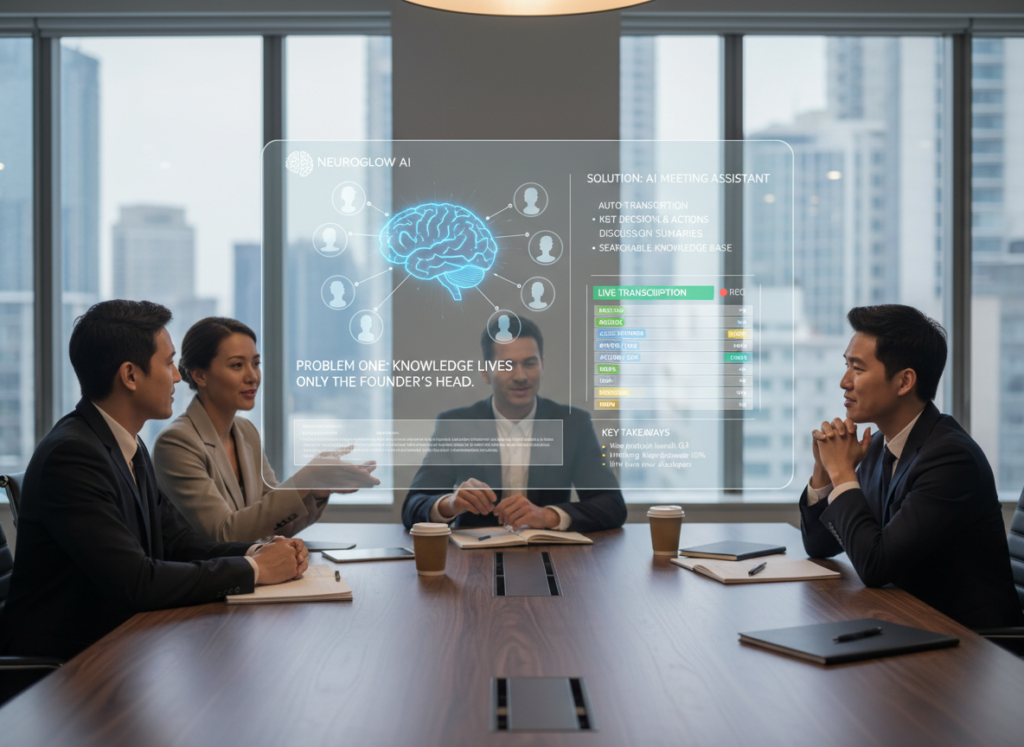
This isn’t a personality flaw — it’s a structural reality of early-stage businesses. The founder made every early decision, learned from every early mistake, and developed intuition that nobody else has. The problem is that intuition doesn’t transfer. You can’t onboard a new hire by telling them to “use your judgment.” When your business depends on a single person’s mental model, it’s fragile by design.
AI-powered meeting capture and transcription tools flip this dynamic. Every conversation where you explain your thinking, walk through a client situation, or resolve a team conflict becomes a permanent, searchable record. Over weeks and months, those records become the raw material for documented processes — not because you sat down to write documentation, but because the AI captured your reasoning in real time.
Problem Two: New hires slow down operations.
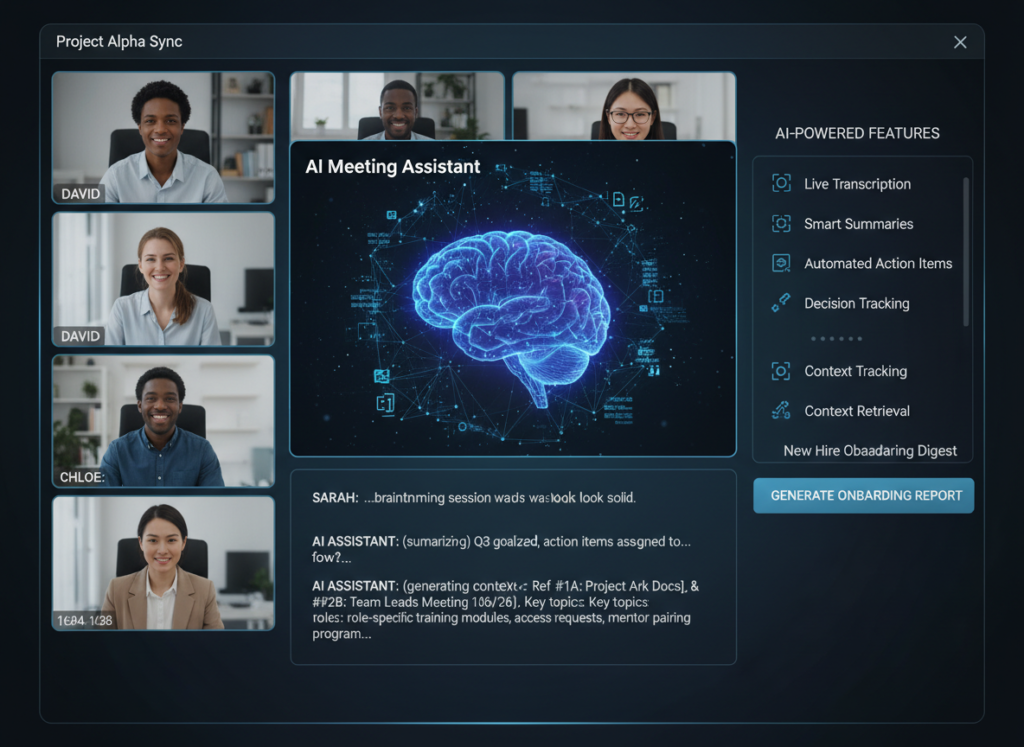
According to SHRM data, the average US employee turnover cost runs 50–200% of annual salary. For a small team, losing one person and replacing them can set operations back by two to four months. The onboarding problem compounds the turnover problem: if your processes aren’t documented, every new hire learns by asking questions — which means the experienced team members spend their time teaching instead of working.
Problem Three: Quality varies across team members.
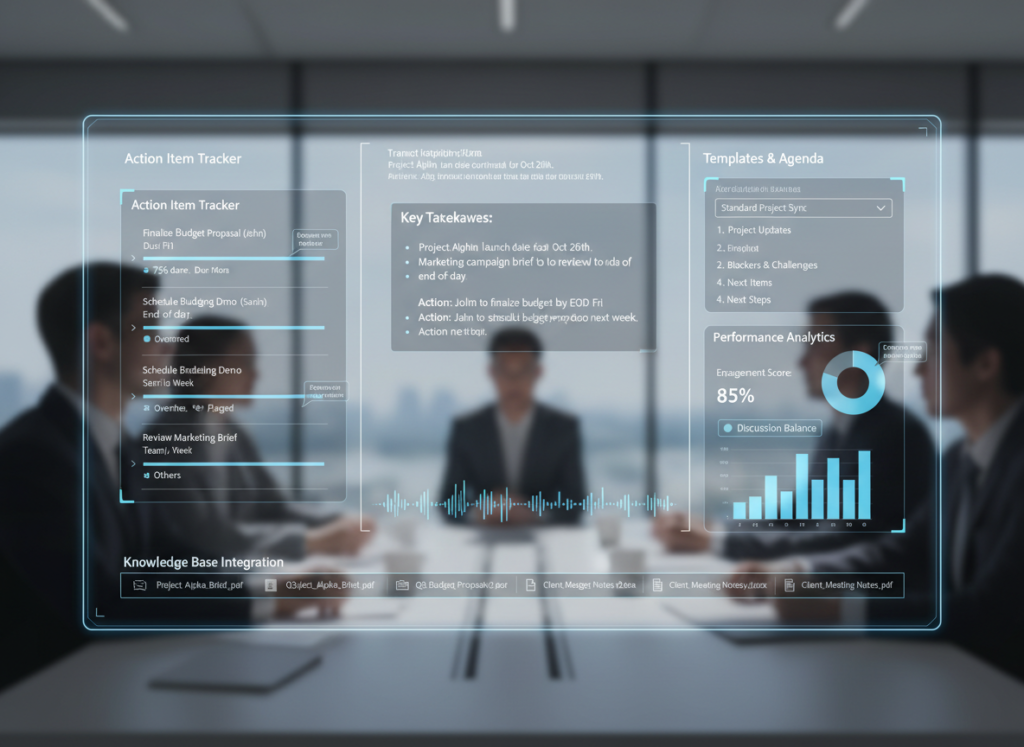
When there’s no standard for how work gets done, output depends entirely on individual skill and interpretation. One team member writes client reports one way; another writes them differently. One salesperson follows up with leads on a specific schedule; another improvises. Customers and clients notice the inconsistency even when they can’t name it. It erodes trust over time.
The Cost Reality
Building an operations manual the traditional way — hiring consultants, running documentation sprints, or paying an ops manager — costs US small businesses between $5,000 and $20,000 depending on scope. Most founders who go this route end up with documents that are outdated within six months because nobody has the bandwidth to maintain them.
AI-assisted systemization changes the math entirely. At $10 to $30 per month in subscription costs, tools like Otter AI capture operational knowledge continuously, require no dedicated documentation time, and produce searchable, shareable output that can be converted into SOPs, onboarding guides, and training materials. The cost difference isn’t incremental — it’s a different category of investment.
For US teams paying $75 to $125 per hour for skilled knowledge workers, every hour spent on manual documentation is a direct cost. An AI tool that reduces that by 80% pays for itself in the first week.
How Otter AI Enables Solo DX for US Teams
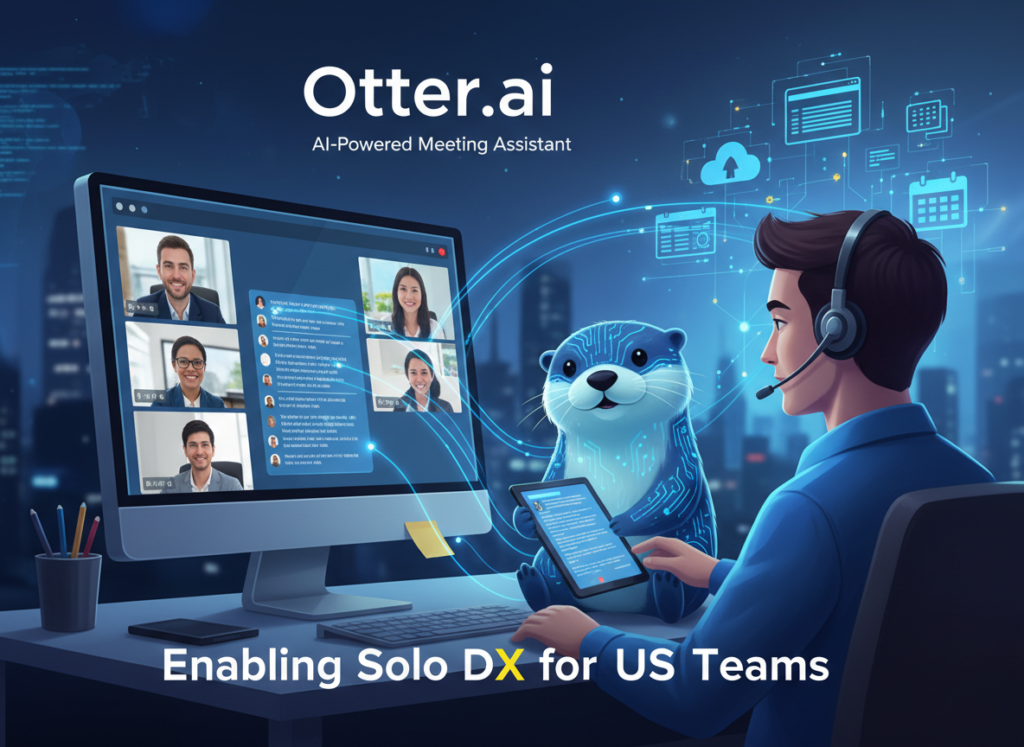
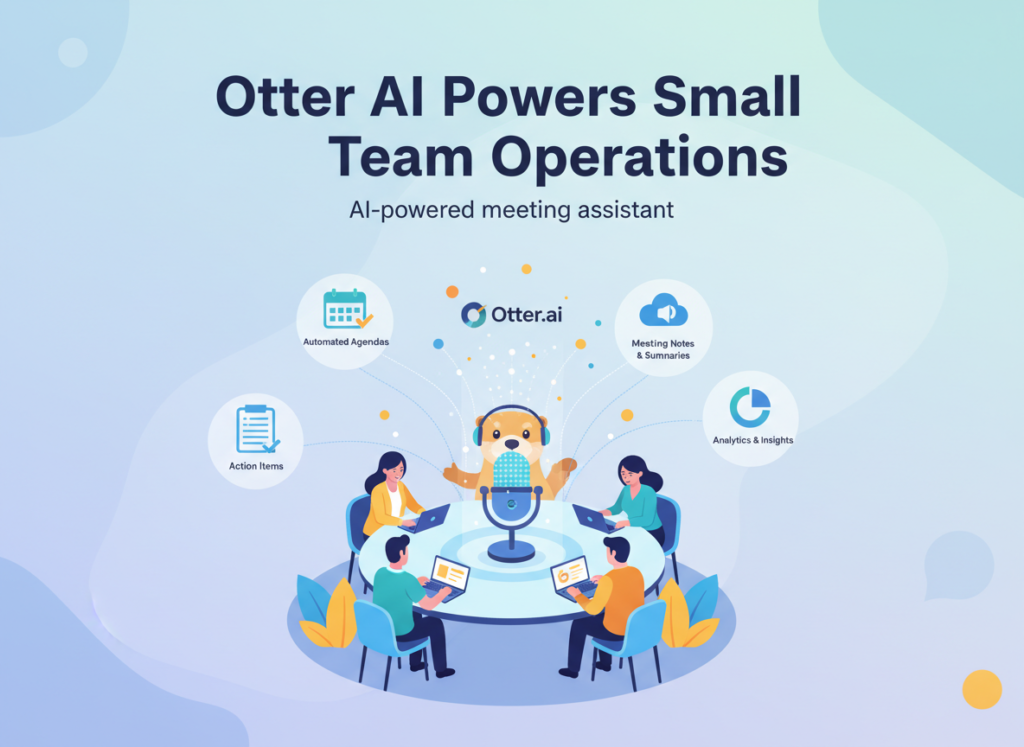
Otter AI has evolved well beyond its origins as a transcription tool. In 2026, it functions as a full meeting intelligence platform — one that captures conversations, generates summaries and action items, enables AI-powered Q&A on past meetings, and integrates with the tools US small teams already use.
Here’s how its core features translate into real operational value:
Feature 1: Automated Meeting Transcription and AI Summaries, $2,000+ saved per documentation cycle
Every time your team meets — whether it’s a client kickoff, a process review, or an internal training — Otter AI joins automatically via its calendar integration with Google Calendar and Outlook. It transcribes the conversation in real time, identifies speakers, highlights key phrases, and generates a structured summary with action items when the meeting ends.
For a five-person team that runs twelve to fifteen meetings per month, this eliminates roughly eight to twelve hours of manual note-taking and summary-writing. At a US average of $75/hour for knowledge workers, that’s $600 to $900 saved monthly — or $7,200 to $10,800 annually — just from removing the administrative overhead of documentation.
More importantly, those transcripts become your institutional knowledge base. When a new hire asks how you handle client revision requests, you don’t have to explain it from scratch. You point them to the transcript from the meeting where you worked through it.
Feature 2: Integration with Workflow and Collaboration Tools ? $6,000/year saved
Otter AI integrates with Zoom, Google Meet, Microsoft Teams, Webex, Slack, HubSpot, and Salesforce. Meeting summaries and action items can be pushed directly to project management tools, CRMs, or shared workspaces. For a small team, this eliminates the manual step of translating meeting outputs into tasks — a process that typically takes fifteen to thirty minutes per meeting.
At twelve meetings per month, that’s three to six hours of administrative work eliminated monthly. At $75/hour, that’s $2,700 to $5,400 annually — before accounting for the error reduction from automated rather than manual task entry.
Explore Otter AI’s full feature set to see how each integration maps to your current tool stack.
Ready to systemize your US team operations in under a week? Try Otter AI Free | No credit card required | Trusted by 10,000+ US teams
Use Cases by Team Role
Persona 1: US Startup Founder Juggling Three Departments
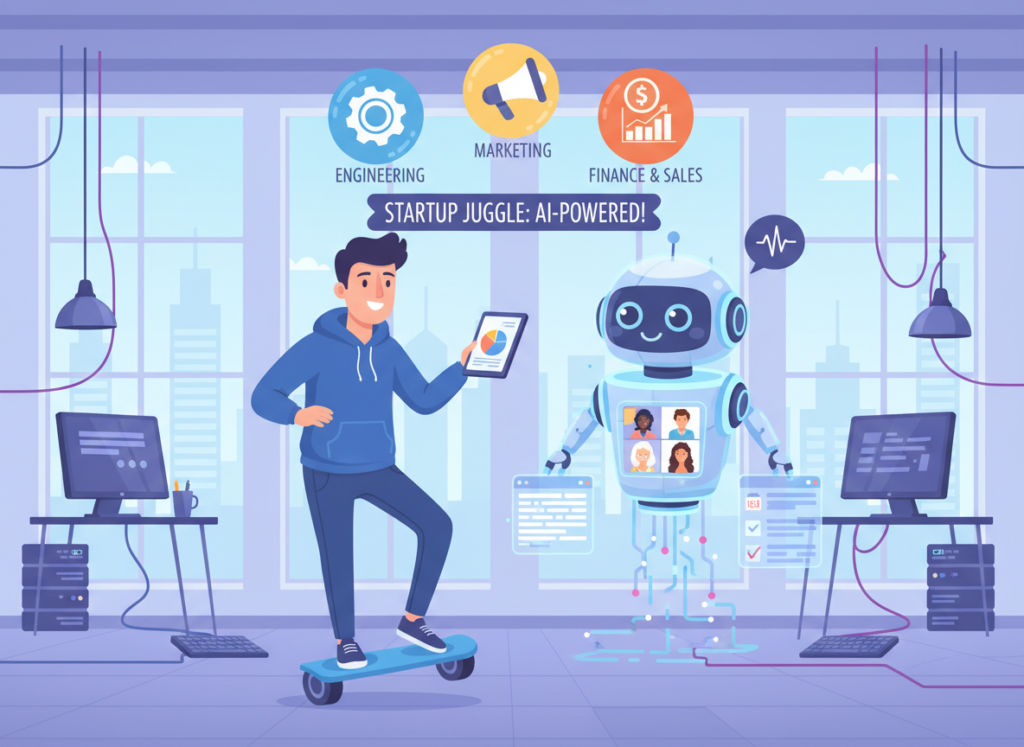
Maria runs a seven-person growth marketing agency in San Francisco. She leads strategy, manages two account managers, oversees a content team of three, and handles finance herself. Every client kickoff, every campaign review, and every internal process lives in her head.
Old workflow: Maria spent two hours every Friday writing a summary of the week’s decisions for her team. New hires took four weeks to become independently functional because onboarding was ad hoc. Client revision policies were inconsistently applied because nobody had written them down.
AI-powered workflow with Otter AI: Every internal meeting is auto-transcribed. Maria’s Friday summary takes fifteen minutes instead of two hours because she’s reviewing and approving Otter’s AI-generated summary rather than writing from scratch. New hires get access to the transcript library in their first week and can search for answers to most questions without interrupting the team. Client revision policies were documented by pulling three past transcripts where Maria explained the policy and synthesizing them into a one-page SOP.
Quantified results: Maria reclaimed 6+ hours per week in documentation and context-switching time. Onboarding reduced from four weeks to two. Client satisfaction scores improved as revision handling became consistent across account managers.
“I used to feel like I was the only one who knew how anything worked. Now the knowledge is in the system, not just in me.” — Maria, SF Agency Founder
Persona 2: Executive Assistant Onboarding Remote Staff
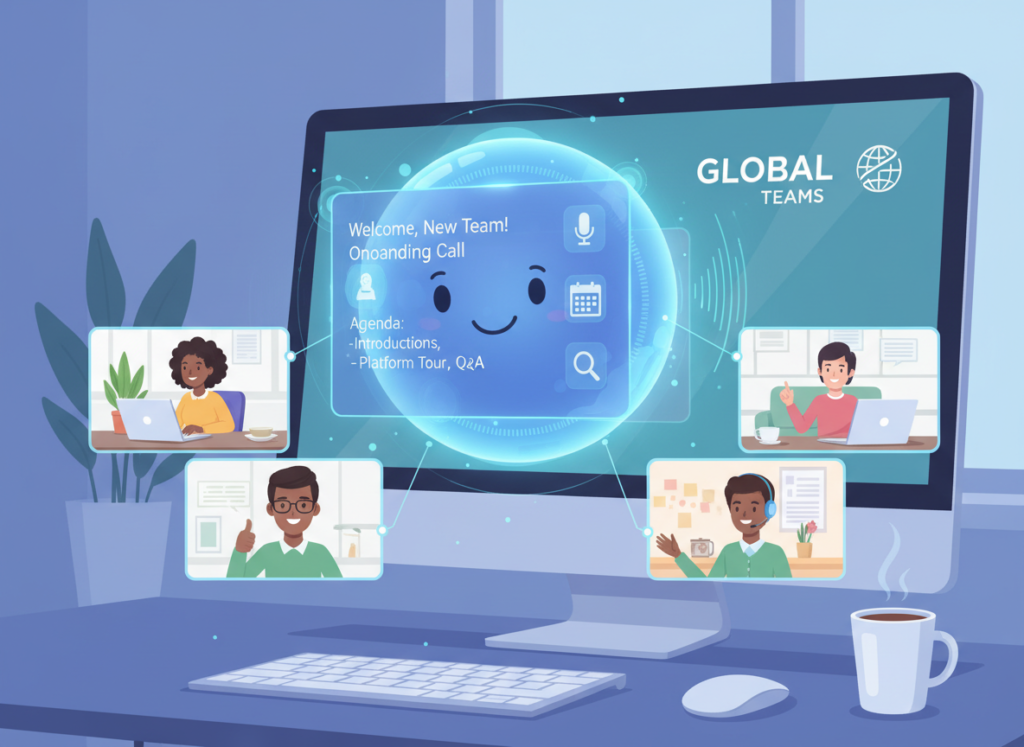
James is the EA for a nine-person fintech consulting firm with team members across Miami, Chicago, and Denver. His primary pain point: every new hire required two weeks of one-on-one orientation because no onboarding documentation existed.
Old workflow: James personally walked each new hire through forty-two internal processes via Zoom calls. He estimated spending thirty hours per new hire on direct onboarding — time pulled from his other responsibilities.
AI-powered workflow with Otter AI: James used Otter AI to record and transcribe each of his onboarding calls over a three-month period. As noted in this breakdown of Otter AI’s small business applications, the tool’s ability to search transcripts and generate structured summaries makes it ideal for converting conversational knowledge into reference documents. James worked with Otter’s AI summaries to produce a forty-page onboarding guide — without writing a single page from scratch.
Quantified results: New hire ramp time dropped from two weeks to five days. James recovered twenty-two hours per onboarding cycle. The onboarding guide has been reused for all subsequent hires with minimal updates.
“We finally have a real onboarding system. I stopped being the bottleneck.” — James, Executive Assistant
Persona 3: Trainer Documenting Internal Knowledge
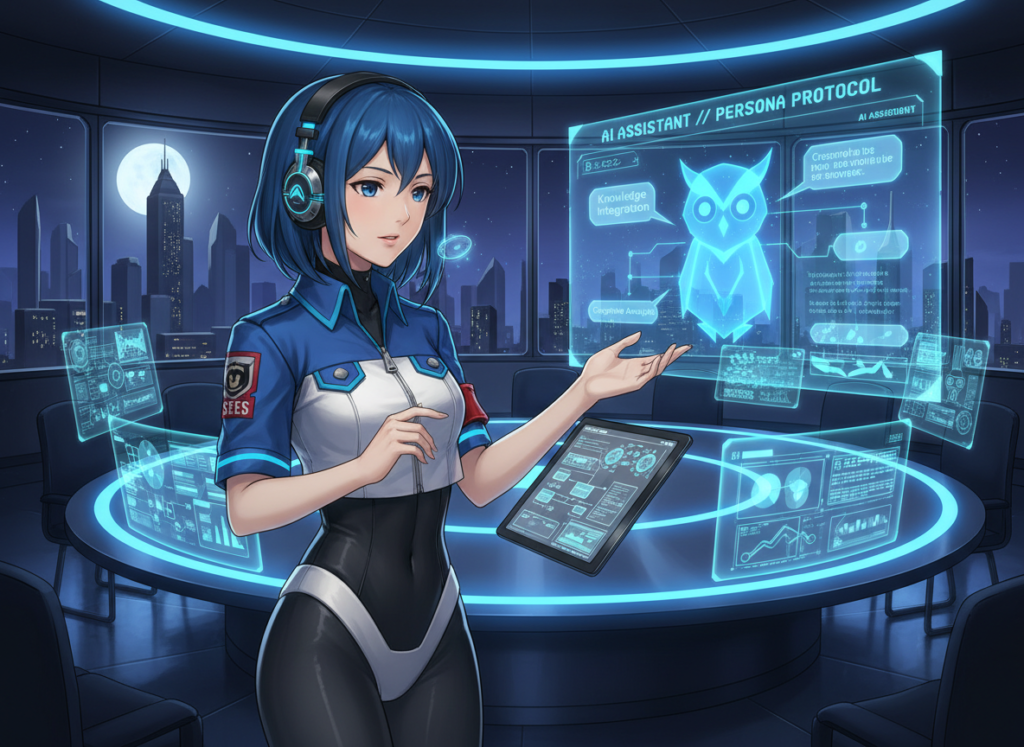
Robert is the internal trainer for a six-person HR consulting firm in New York City. The company’s service quality depended heavily on his expertise, but he was the only one who could deliver the firm’s proprietary methodology reliably.
Old workflow: Robert ran the same training sessions repeatedly for each new hire. He estimated he delivered the same core content seventeen times in two years. There was no written version of the methodology — it existed only as PowerPoint slides and Robert’s explanations.
AI-powered workflow with Otter AI: Robert recorded three training sessions using Otter AI, reviewed the transcripts to identify the clearest explanations, and used those transcripts to build a written methodology guide. New hires now receive the recording and the written guide on day one. Robert hosts a single monthly Q&A session rather than repeated one-on-one training.
Quantified results: Robert recovered approximately twelve hours per month previously spent on repeated training. The written methodology guide has become the firm’s primary quality control asset. Two team members who previously couldn’t deliver the methodology independently can now do so with confidence.
“I finally extracted the knowledge from my head and put it somewhere everyone can access it.” — Robert, Internal Trainer
See how Otter AI works for your specific team role — from founder to EA to department lead.
Join 10,000+ US small teams using Otter AI to eliminate operational chaos. See How It Works | Used by teams from Silicon Valley to New York
Common Pitfalls & How to Avoid Them
Even with the right tool, small teams can undermine their own systemization efforts. Here are the four most common mistakes US founders make when implementing AI-assisted operations — and how to sidestep them.
Mistake 1: Using too many disconnected tools.
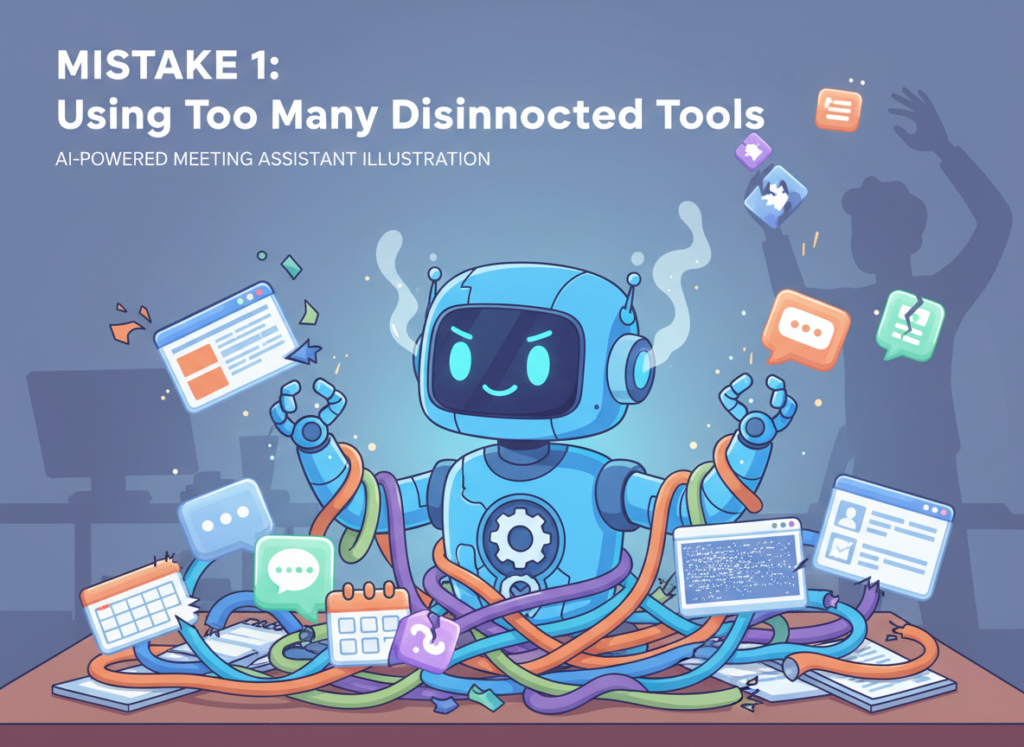
A common pattern in US startups: Slack for communication, Notion for documentation, Loom for video walkthroughs, Zoom for meetings, and three more tools for project management. Each tool captures a fragment of your operational knowledge. None of them talk to each other effectively. The result is a scattered knowledge base where finding anything requires checking five different places.
The fix: Choose one primary knowledge capture tool and make it the hub. Otter AI’s integrations with Slack, Zoom, and Google Meet allow it to function as the connective layer — capturing conversations and pushing summaries where your team already works.
Mistake 2: Failing to review AI output.
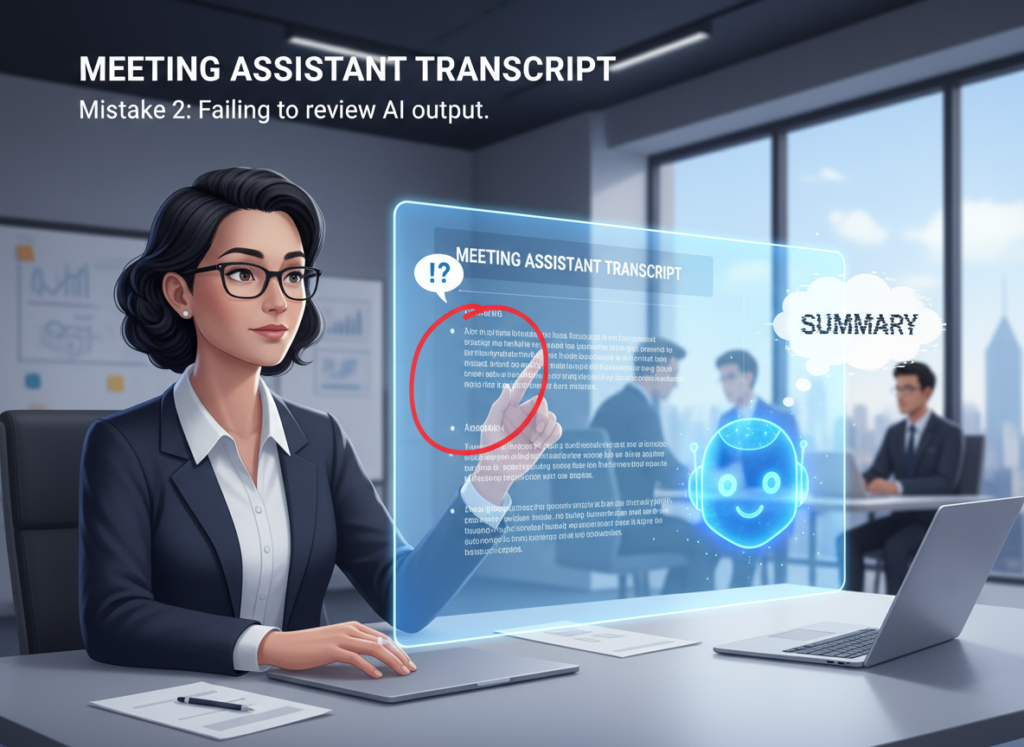
AI-generated summaries and transcripts are starting points, not finished products. Teams that treat Otter’s output as final documentation end up with records that miss nuance, misattribute speaker intent, or skip context that was implied rather than stated.
The fix: Build a fifteen-minute weekly review into your workflow where a team lead scans and approves meeting summaries before they’re filed as official records. Discover the full Otter AI feature set including editing and annotation tools designed for exactly this kind of quality control.
Mistake 3: Over-relying on Slack and email for knowledge.
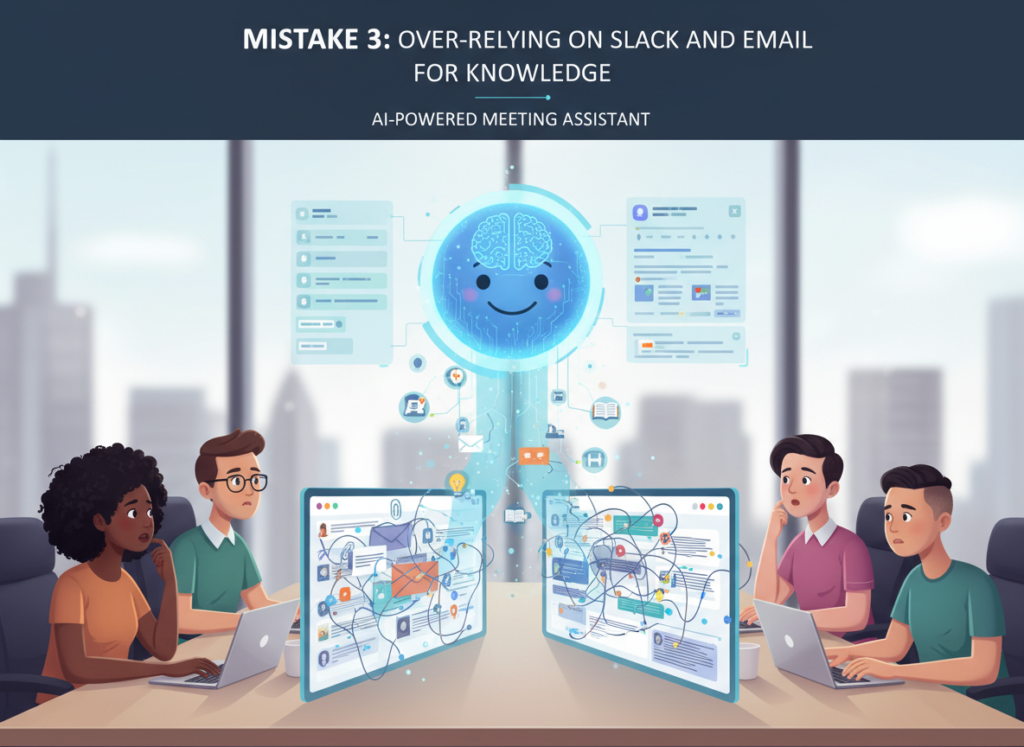
Slack and email are communication tools, not knowledge management systems. Decisions buried in a Slack thread from three months ago are effectively lost — unsearchable in context, disconnected from outcomes, and invisible to new hires. US small businesses that use Slack as their de facto documentation system pay for it in onboarding time and repeated decision-making.
The fix: Treat Slack as ephemeral and Otter’s transcript library as permanent. If a decision or process explanation happens in a meeting, it goes into Otter. If it happens in Slack, it gets restated in a meeting or documented formally.
FAQs for Small Businesses
What is Solo DX?
Solo DX (Small-Scale Digital Transformation) is the process of building documented, repeatable business systems using technology — specifically for US founders managing small teams without dedicated operations staff. It’s the bridge between “everything lives in the founder’s head” and “our team runs predictably without me in every decision.”
How can AI write my SOPs?
AI tools like Otter AI don’t write SOPs from scratch — they capture the knowledge you already have. By transcribing meetings where you explain processes, answer questions, or walk through workflows, Otter gives you raw material that can be edited into formal SOPs in a fraction of the time manual documentation takes. The typical process: record a thirty-minute walkthrough, review the transcript, edit for clarity, publish as an SOP.
Is Otter AI hard to set up?
No. Otter AI connects to Google Calendar or Outlook during setup, and from that point forward it joins meetings automatically. There’s no technical configuration required. Most teams are capturing and reviewing their first AI-generated meeting summaries within twenty-four hours of signing up.
Conclusion
In 2026, American small businesses don’t need enterprise budgets to build enterprise-level systems. The tools that were once available only to Fortune 500 companies with dedicated operations teams are now accessible to any US founder at $20 to $30 per month.
The Solo DX opportunity is real and time-sensitive. As AI for small team operations becomes mainstream, the businesses that implement knowledge-capture systems now will have a structural advantage over competitors still relying on founder memory and tribal knowledge. The gap between systematized and unsystematized small businesses will widen — and it will show up in onboarding speed, client experience consistency, and the ability to grow without the founder becoming the bottleneck.
Otter AI is one of the most practical tools available for US small teams making this transition. It meets you where you already work — in Zoom calls, Google Meet sessions, and team check-ins — and converts those conversations into the building blocks of scalable operations. Start with one process. Systemize it this week. Pick the workflow that costs you the most time when it’s inconsistent, record yourself explaining it, and let Otter do the rest.
For a full Otter AI review and feature comparison, see AI Plaza’s detailed tool breakdown before you sign up.
The founders who build systems win. Start building.
Leave a Reply