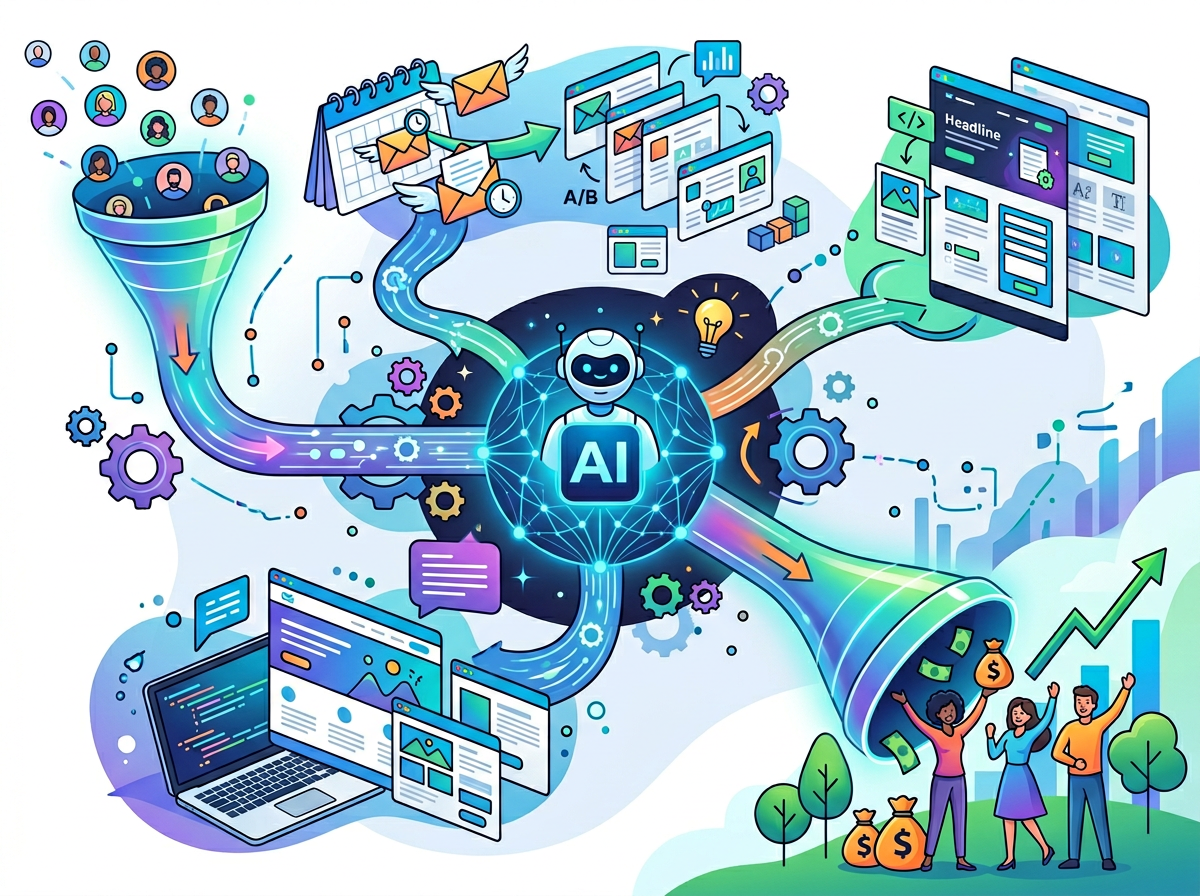
AI email marketing automation is no longer optional for US small businesses — it’s the difference between scaling with confidence and drowning in manual campaign work.
In 2026, running a small business in the US means competing with companies that have full marketing departments, dedicated email specialists, and six-figure advertising budgets. For founders managing 2 to 10 people across Austin, Denver, Miami, or Chicago, that gap feels impossible to close. Until AI changed the math.
Most growing US small businesses hit the same wall around year two or three. The owner is writing every email. Campaign schedules are kept in someone’s head. Follow-up sequences get abandoned when things get busy. A new team member joins and has no idea how leads are being nurtured. The sales funnel exists in theory — but in practice, it’s a leaky bucket held together by manual effort and good intentions.
This is the problem ai email marketing automation was built to solve. And in 2026, GetResponse AI has become one of the most capable platforms for US small teams that need to build real marketing systems without hiring a full marketing department.
Unlike traditional marketing agency retainers that run $3,000–$8,000 per month, or in-house marketing hires averaging $65,000–$85,000 annually in US labor costs, GetResponse AI puts automated campaign creation, lead nurturing, and funnel management within reach of a single founder or a lean team. You don’t need a marketing degree. You don’t need to be a copywriter. You need a system — and this platform builds it for you.
This review covers exactly how GetResponse AI works for US small business owners in 2026, with real workflow comparisons, quantified outcomes, and honest guidance on where the platform excels and where it has limits. If you’ve been managing email marketing manually or you’re evaluating marketing automation tools for a growing team, this guide gives you the full picture.
What Is Solo DX?
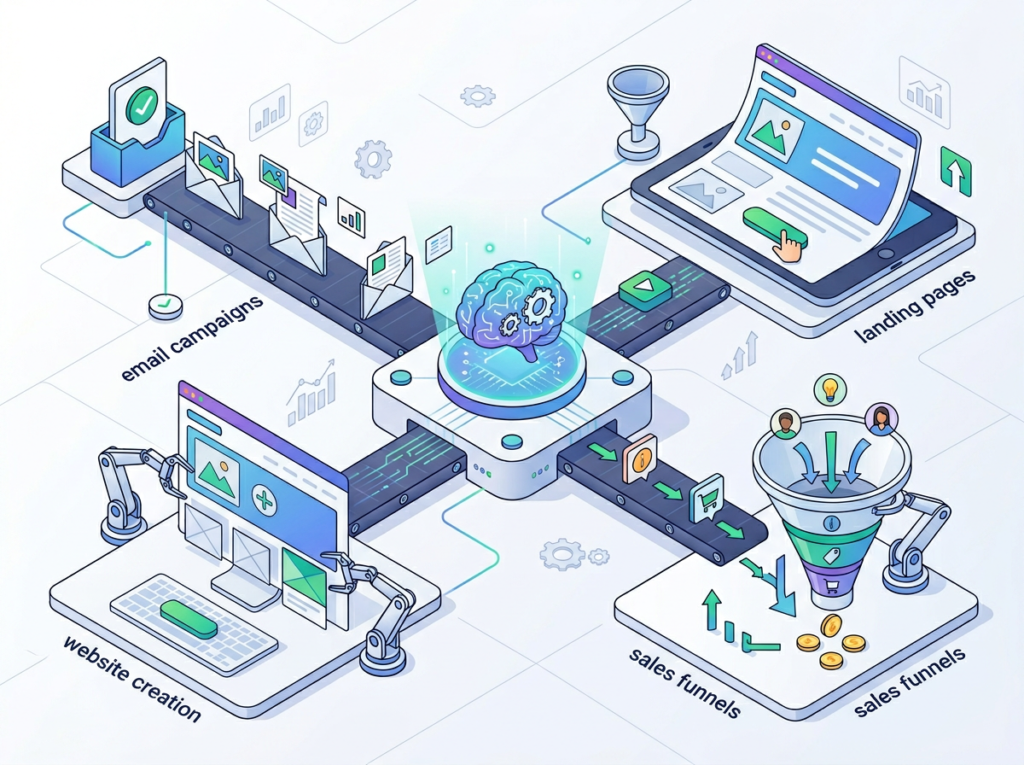
Solo DX — short for Small-Scale Digital Transformation — refers to the process by which US founders and small team leaders replace founder-dependent, memory-based operations with documented, automated, repeatable systems. It’s not about enterprise software. It’s not about adding more tools. It’s about building a business that can run with structure rather than chaos.
The term exists to distinguish this specific challenge from broader AI adoption trends. An enterprise deploying AI across 500 employees faces change management problems. A US startup with 4 people faces a different problem: the founder is the system. When they’re unavailable, the business slows down. When they want to delegate, there’s nothing documented to hand off.
Consider a 3-person design studio in Austin. The owner handles client onboarding, writes all follow-up emails, and manages the entire post-project feedback loop manually. There’s no documented email sequence for new leads. Every client gets a slightly different experience based on whoever has bandwidth that week. When a second team member tried to take over lead nurturing, conversions dropped 30% because the timing and tone were inconsistent.
Solo DX addresses this directly. The goal isn’t to automate everything — it’s to take the things that currently live in the founder’s head and turn them into systems that the whole team (or a tool like GetResponse AI) can execute consistently.
| Approach | Who It’s For | Focus |
|---|---|---|
| Solo DX | 1–10 person US teams | Systems, automation, delegation |
| AI Efficiency | Individual productivity | Personal output speed |
| Enterprise AI | 50+ person organizations | Scale, compliance, change management |
| General Automation | Tech-forward startups | Custom dev workflows |
Standard corporate SOP methods fail US SMBs because they assume you have an operations manager, a documentation team, and weeks of runway to build process libraries. Most founders have none of that. What they need is a platform that builds the system as they use it — and that’s exactly what GetResponse AI is designed to do for email and marketing automation.
The Solo DX framework treats marketing automation as an operational discipline, not just a marketing tactic. When your lead nurture sequences, campaign triggers, and follow-up workflows are documented and automated, your business has a marketing system — not just a marketing tool.
Join thousands of US small teams using GetResponse AI to eliminate manual marketing work. See How It Works
Why AI Is Key for Mini-Team Marketing Systemization
Problem 1: The founder is the entire marketing department.
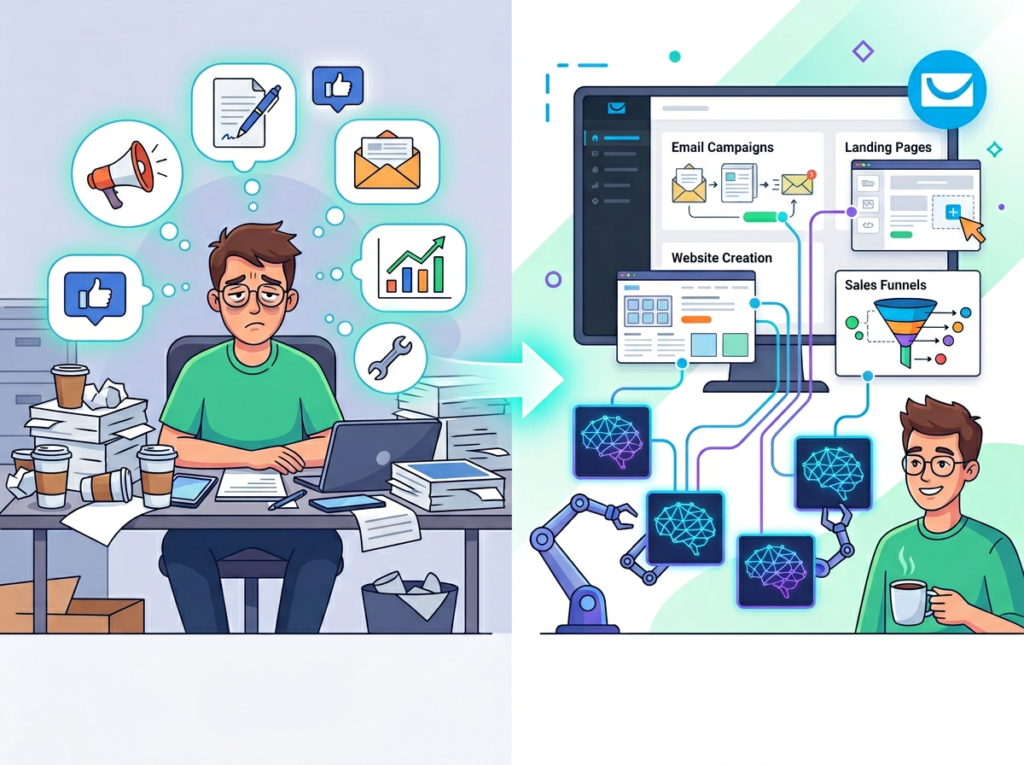
At most US businesses with under 10 employees, the owner writes the emails, decides when to send them, and personally follows up with leads. According to the US Bureau of Labor Statistics, small business owners spend an average of 20 hours per week on administrative and marketing tasks that could be automated. At a conservative $75/hour opportunity cost, that’s $78,000 per year in time value spent on repeatable tasks.
The deeper issue is that none of this knowledge gets captured. When the founder is sick, on vacation, or simply overwhelmed, the marketing machine stops. There’s no system — just a person doing things manually.
Problem 2: Labor turnover makes undocumented marketing unsustainable.
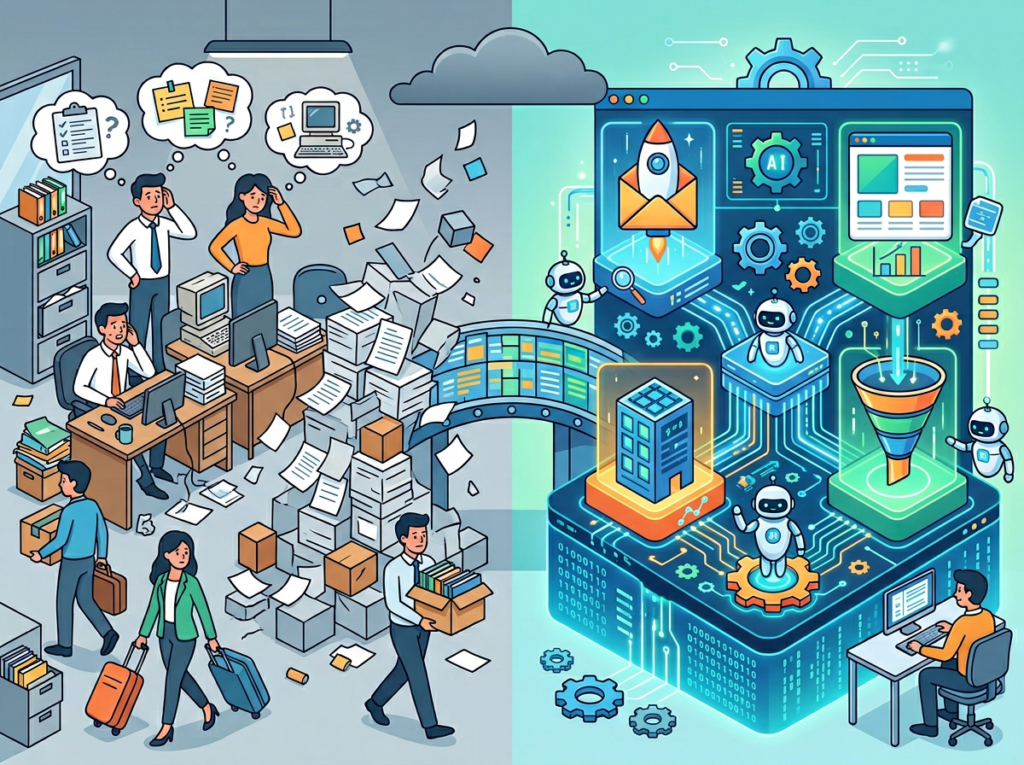
US annual employee turnover sits near 47% across small and mid-sized businesses. When a marketing coordinator or virtual assistant leaves, so does every undocumented campaign sequence they managed. Onboarding their replacement means rebuilding from scratch — at an average cost of $4,000–$7,000 per rehire when you factor in recruitment, training, and productivity lag.
AI email marketing automation converts that tribal knowledge into documented, reusable workflows. The automation platform holds the sequence logic, not the employee.
Problem 3: Inconsistent execution erodes trust and conversion.
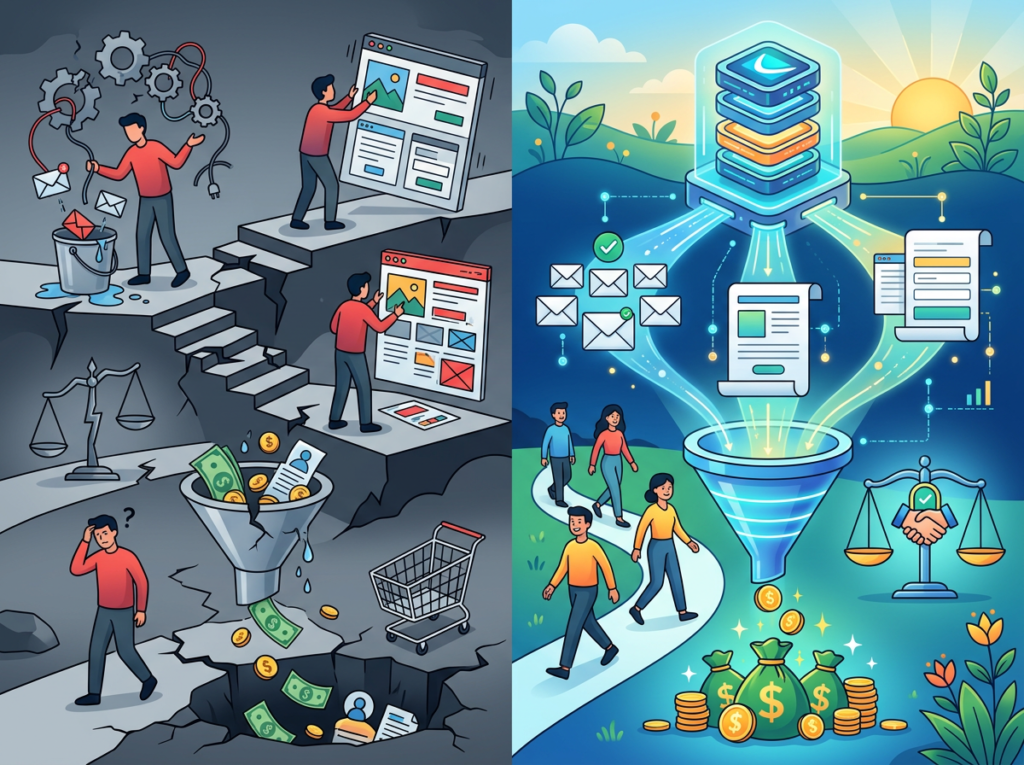
US small businesses with 3–10 people face a specific consistency problem. Different team members send emails at different times, with different tones, with varying follow-up intervals. Conversion rates are unpredictable because the process is unpredictable. Research consistently shows that consistent follow-up cadence increases B2B conversion rates by 30–50% compared to ad hoc outreach.
The Cost Reality
| Method | Annual Cost | Time Investment | Consistency |
|---|---|---|---|
| Manual email marketing | $65,000–$85,000 (US FTE) | 20+ hrs/week | Low |
| Marketing agency | $36,000–$96,000/year | 5+ hrs/week coordination | Medium |
| GetResponse AI | $228–$1,188/year | 2–4 hrs/week | High |
The math is straightforward. For US small teams, AI email marketing automation isn’t a luxury — it’s the only cost-effective path to running professional-grade campaigns without professional-grade headcount.
Join thousands of US small teams using GetResponse AI to eliminate manual marketing work. See How It Works
How GetResponse AI Enables Solo DX
1. AI Email Generator to $3,000+ Saved Per Campaign Cycle
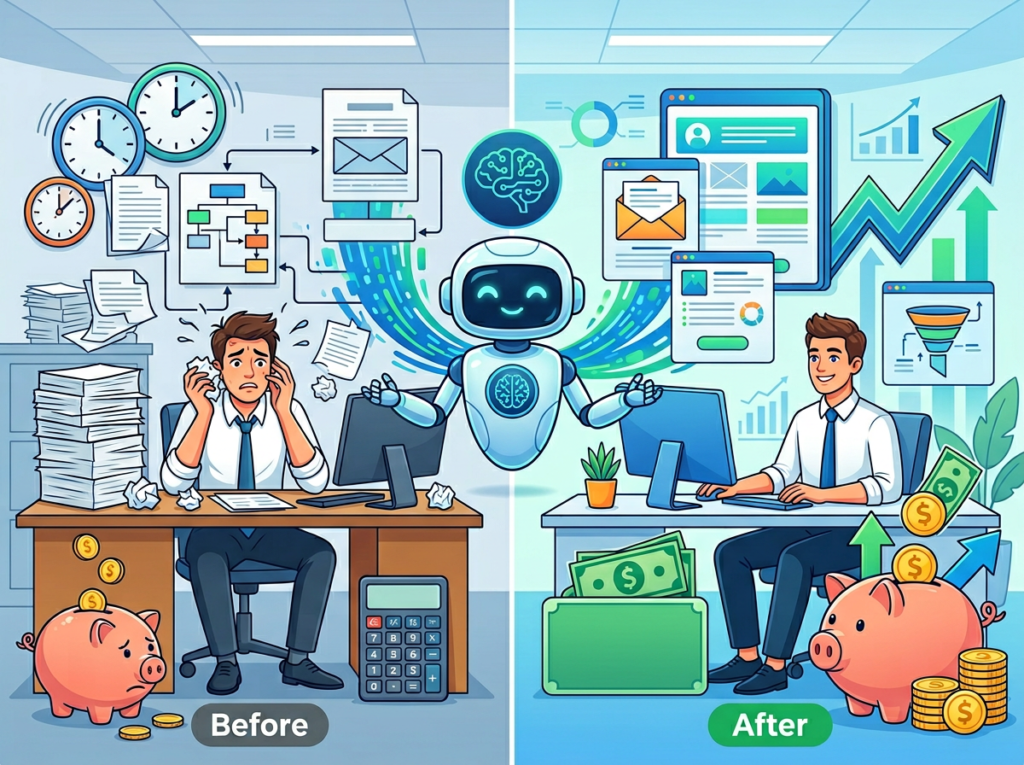
Writing effective email campaigns requires copywriting skill, subject line testing expertise, and timing intuition that most small business owners don’t have — and hiring for it costs $50–$100/hour in US freelance rates. GetResponse AI’s email generator produces full campaigns from a short brief: describe your offer, your audience, and your goal, and the AI drafts subject lines, body copy, and CTAs.
For a US e-commerce founder spending 6–8 hours writing a 5-email promotional sequence, the AI generator reduces that to under 45 minutes. At a $75/hour opportunity cost, that’s approximately $487–$637 saved per campaign — and most active businesses run 4–6 sequences per month.
The generator also produces subject line variations for A/B testing, which means small teams get testing capability that previously required a dedicated email marketing specialist.
2. Marketing Automation Builder to $78,000+ Annual Savings
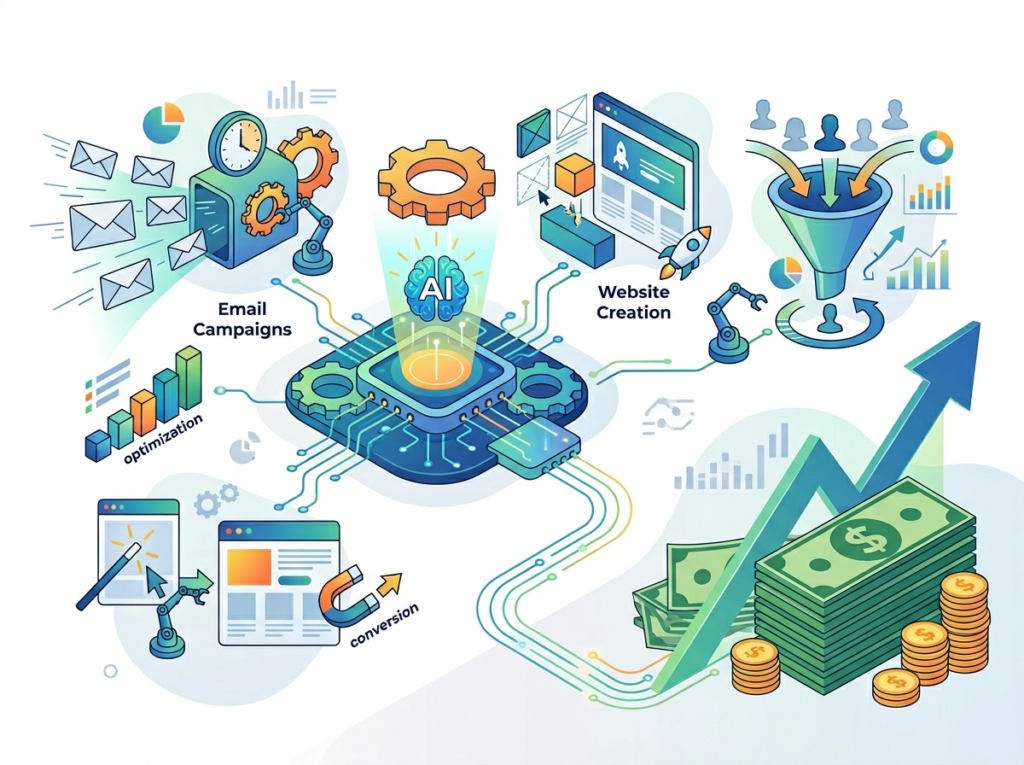
The automation workflow builder is where GetResponse AI earns its place as a marketing systemization tool rather than just an email platform. Visual automation flows let you map the entire customer journey: lead opts in ? receives welcome sequence to opens email 3 ? gets tagged as high-intent to receives offer email to doesn’t purchase ? enters re-engagement sequence.
For a US team that’s been handling this manually, the first time you build this workflow is the last time you ever manually manage it. The system runs whether you’re working or not — nights, weekends, holidays. That 24/7 operational continuity replaces work that would otherwise require a $65,000–$80,000 annual marketing coordinator.
The automation builder also handles behavioral triggers: cart abandonment, website visits, email engagement levels, and purchase history. For US e-commerce businesses especially, behavioral automation routinely recovers 15–25% of abandoned carts that would otherwise be lost revenue.
3. AI-Powered Lead Scoring and Segmentation to $9,360 Annually Saved
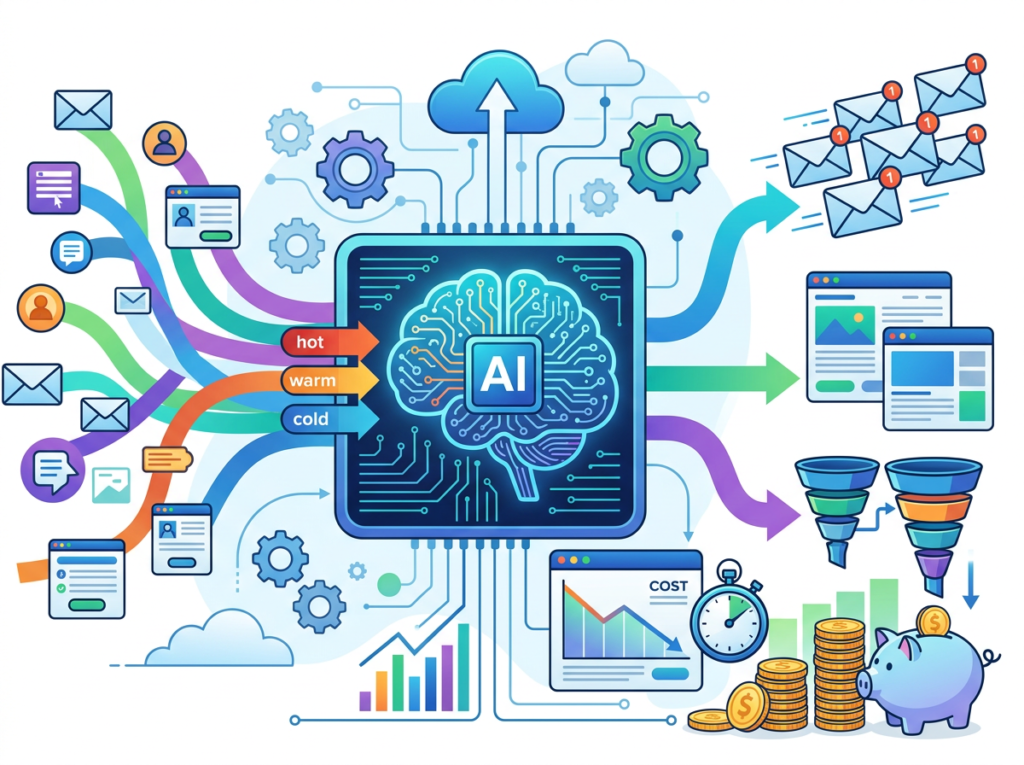
Knowing which leads to prioritize is a problem that costs US small teams enormous time and lost revenue. GetResponse AI’s segmentation engine automatically scores leads based on engagement behavior — opens, clicks, time-on-site, purchase history — and segments them into actionable groups.
Instead of manually reviewing who opened what email last week and deciding who to follow up with, the platform does that analysis continuously. A team of 3 saving just 3 hours per week on manual segmentation work saves 156 hours annually — approximately $9,360 at $60/hour in team labor costs.
Explore GetResponse AI’s features to see how the segmentation engine works across list sizes from 500 to 500,000 contacts.
Ready to build a real email marketing system for your US team in under a week? Try GetResponse AI Free | No credit card required | Trusted by 350,000+ businesses worldwide
Use Cases by Team Role
Jim — US Startup Founder, San Francisco

Old Workflow: Maria runs a 6-person SaaS startup in San Francisco. She handles product, sales, and marketing simultaneously. Every week she writes 2–3 emails manually, forgets to follow up with trial users who didn’t convert, and loses track of which leads received which messages. Onboarding emails go out inconsistently because she sends them herself.
AI-Powered Workflow: Maria built a 7-email trial user onboarding sequence in GetResponse AI in one afternoon. The sequence triggers automatically when a new user signs up, delivers value emails at days 1, 3, 5, and 7, and branches based on whether the user has activated key features. Non-activators receive a different message than power users. Converted trial users enter a separate post-purchase sequence.
Quantified Results: Onboarding sequence consistency increased trial-to-paid conversion from 12% to 19% within 90 days — a 58% improvement. At $89/month average contract value and 40 monthly trials, that improvement generates an additional $2,492/month, or $29,904 annually.
Maria’s take: “I used to think I needed to hire a marketing manager before I could run real campaigns. Turns out I needed the right tool.”
James — Executive Assistant, Miami

Old Workflow: James supports the founder of a 9-person Miami-based consulting firm. Onboarding new remote contractors means sending 8–12 manual emails over 3 weeks, with information scattered across Slack, email threads, and a Google Drive folder nobody updates consistently.
AI-Powered Workflow: James built an automated onboarding sequence in GetResponse AI that delivers structured information to new contractors over 21 days. Day 1 covers tools access. Day 3 covers communication norms. Day 7 covers client protocol. Each email is triggered automatically based on the contractor’s start date.
Quantified Results: Onboarding time dropped from 14 hours of manual coordination per new hire to under 2 hours. With 8 new contractors per year, that saves 96 hours — approximately $5,760 at $60/hour in coordinator labor. As noted in this platform comparison, automation consistency is one of GetResponse’s strongest differentiators for operational workflows beyond traditional marketing use cases.
James’s take: “New contractors now tell me our onboarding is smoother than companies 10 times our size. That’s because the system handles it, not me.”
Amy — Marketing Lead, Chicago
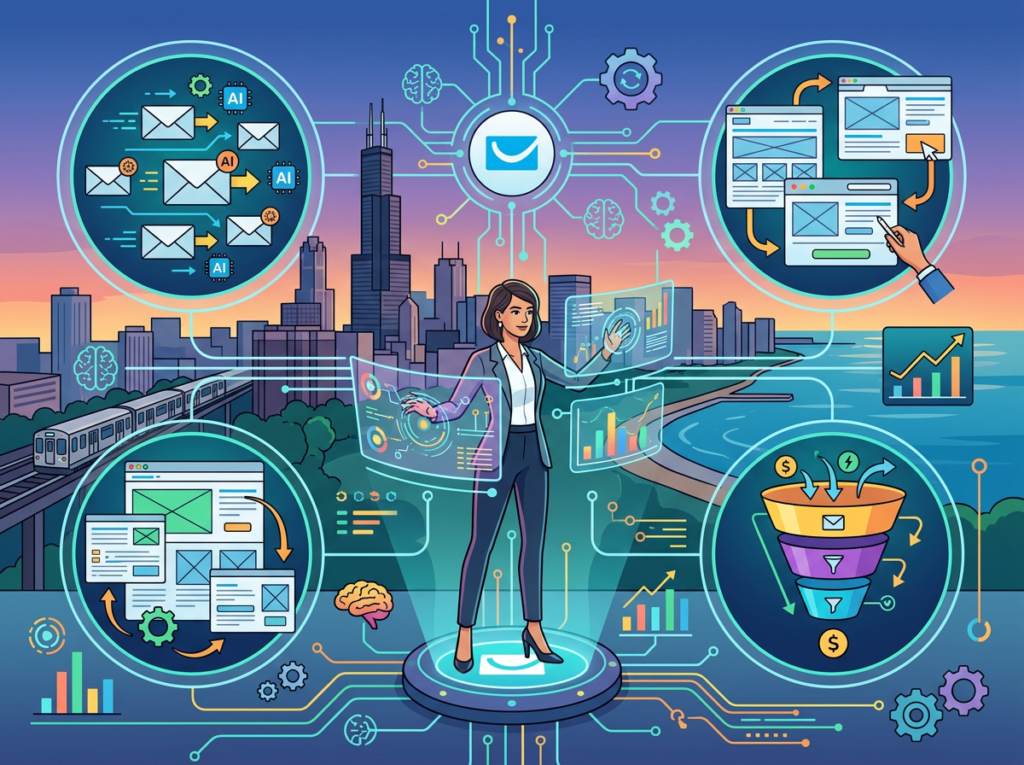
Old Workflow: Aisha manages marketing for a 5-person Chicago digital agency. Every month she manually assembles client performance reports, writes personalized emails for each client’s results, and sends updates on a different day each month depending on her workload. Clients frequently ask for status updates because they don’t know when to expect communication.
AI-Powered Workflow: Aisha built a monthly automated report distribution sequence that pulls campaign data, generates a templated performance summary using GetResponse AI’s content tools, and sends client updates on the same day every month. High-performing clients receive upsell content embedded in the report email. Underperforming clients receive a separate message with a strategy call offer.
Quantified Results: Aisha saved 11 hours per month on report coordination — $8,580 annually at $65/hour. Client retention improved from 71% to 84% year-over-year, attributed partly to more consistent communication. According to this independent review, GetResponse’s automation branching capabilities make it particularly strong for agencies managing multiple client workflows simultaneously.
Aisha’s take: “Clients stopped asking where their report was. That alone was worth the subscription.”
Join thousands of US small teams using GetResponse AI to eliminate manual marketing work. See How It Works | Trusted by businesses from Silicon Valley to New York
Common Pitfalls & How to Avoid Them
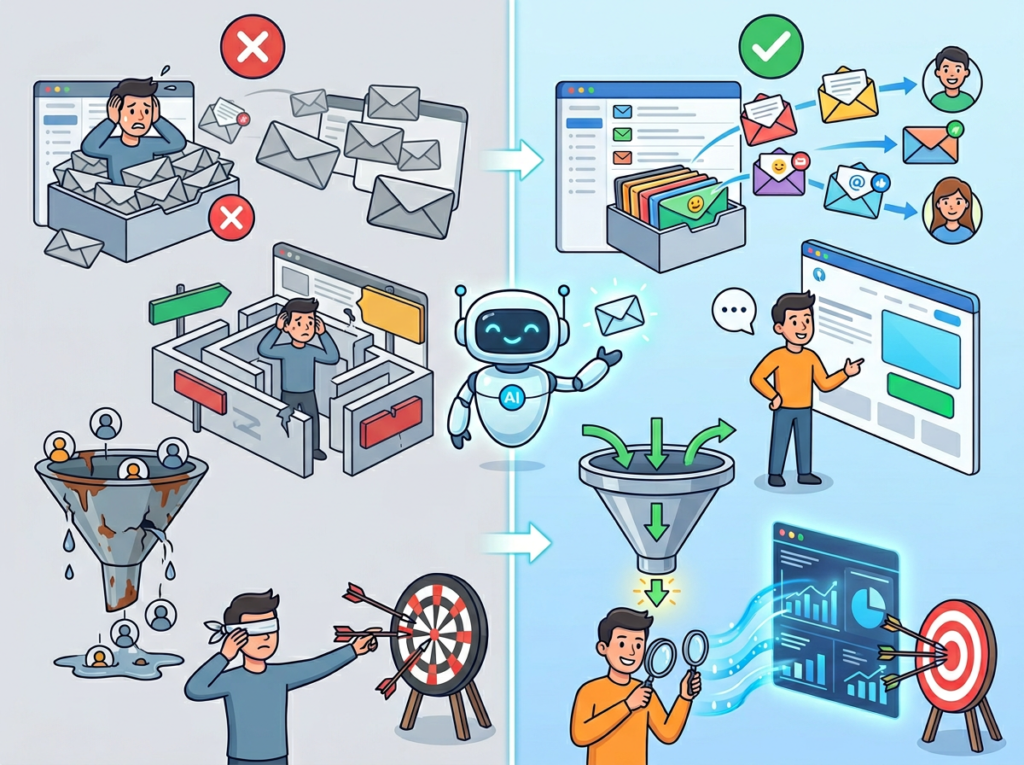
Pitfall 1: Building automations before cleaning the list.
Automating to a disorganized, unverified email list is the fastest way to damage deliverability and waste the platform’s capabilities. Before building any sequences, audit your existing contacts. Remove unengaged subscribers (no opens in 6+ months), verify email validity, and segment by source and behavior. GetResponse AI’s deliverability rate of 99% is only achievable when you’re working with a clean list.
Pitfall 2: Using too many disconnected tools.
The biggest drag on US small team efficiency isn’t the tools they’re missing — it’s the tools they’re already using that don’t connect. When email lives in one platform, lead capture in another, CRM data in a third, and landing pages in a fourth, your automation is only as strong as the weakest integration. GetResponse AI consolidates email, landing pages, automation, and basic CRM functionality in one platform — reducing the integration overhead that kills small team productivity. Learn more about GetResponse AI’s integrated approach before committing to a multi-tool stack.
Pitfall 3: Delegating email marketing without documenting the strategy.
If a team member takes over email campaign management without understanding the segmentation logic, audience intent, or sequence design decisions behind the automations, they’ll make changes that break the system. Before delegating, document the “why” behind your major automations — audience assumptions, conversion goals, branch logic rationale. This documentation takes 2 hours upfront and saves days of troubleshooting later. As noted in this analysis of GetResponse’s automation capabilities, the platform’s visual workflow builder makes it relatively straightforward to document sequence logic for team handoffs.
FAQs
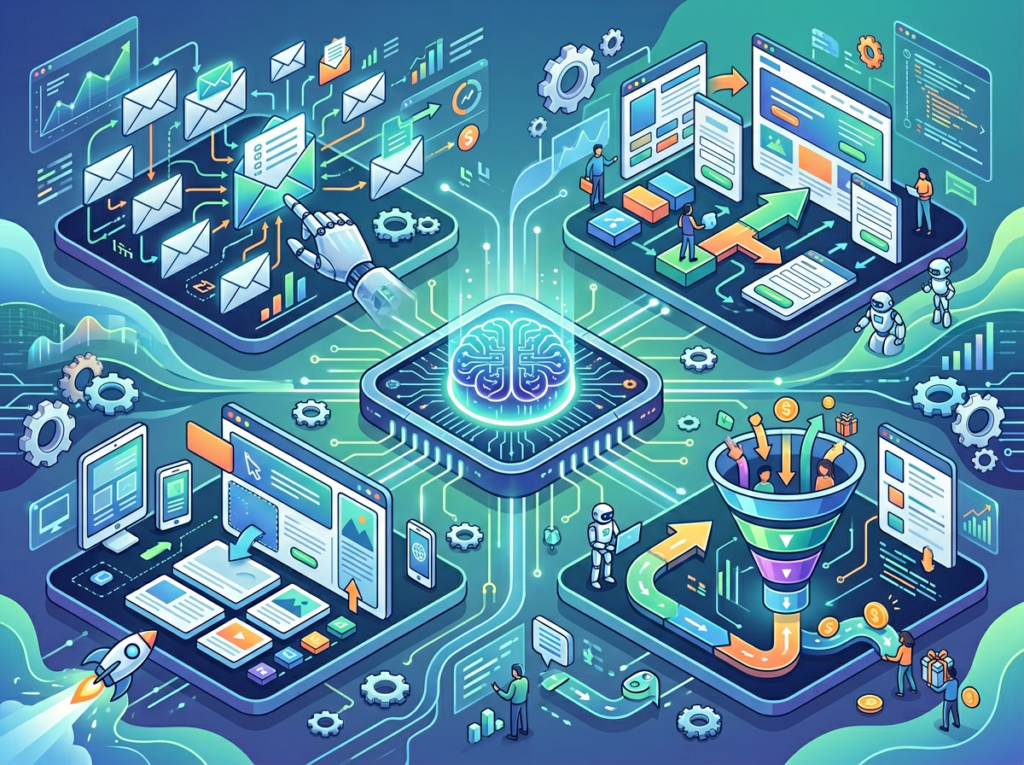
What is Solo DX?
Solo DX stands for Small-Scale Digital Transformation. It refers to the process of US founders and small team leaders replacing manual, founder-dependent workflows with documented, automated systems — without enterprise software budgets or operations managers.
How can AI write my email campaigns?
GetResponse AI’s email generator produces full campaign drafts from a brief description of your offer, audience, and goal. You provide the context; the AI generates subject lines, body copy, and CTAs. Most users review and adjust the output rather than writing from scratch, reducing campaign creation time by 70–85%.
What’s the difference between AI Efficiency and Solo DX?
AI Efficiency focuses on individual productivity — helping one person work faster. Solo DX focuses on team systemization — replacing founder-dependent processes with workflows that the whole team (or an automation platform) can execute consistently. Email marketing automation is a Solo DX play, not just an efficiency tool.
Is GetResponse AI hard to set up?
GetResponse AI is designed for non-technical users. The visual automation builder uses drag-and-drop logic, pre-built templates handle most common use cases, and the AI generator reduces the copywriting barrier significantly. Most US small teams can build and launch their first functional automation sequence within one business day.
Join thousands of US small teams using GetResponse AI to eliminate manual marketing work. See How It Works
Conclusion
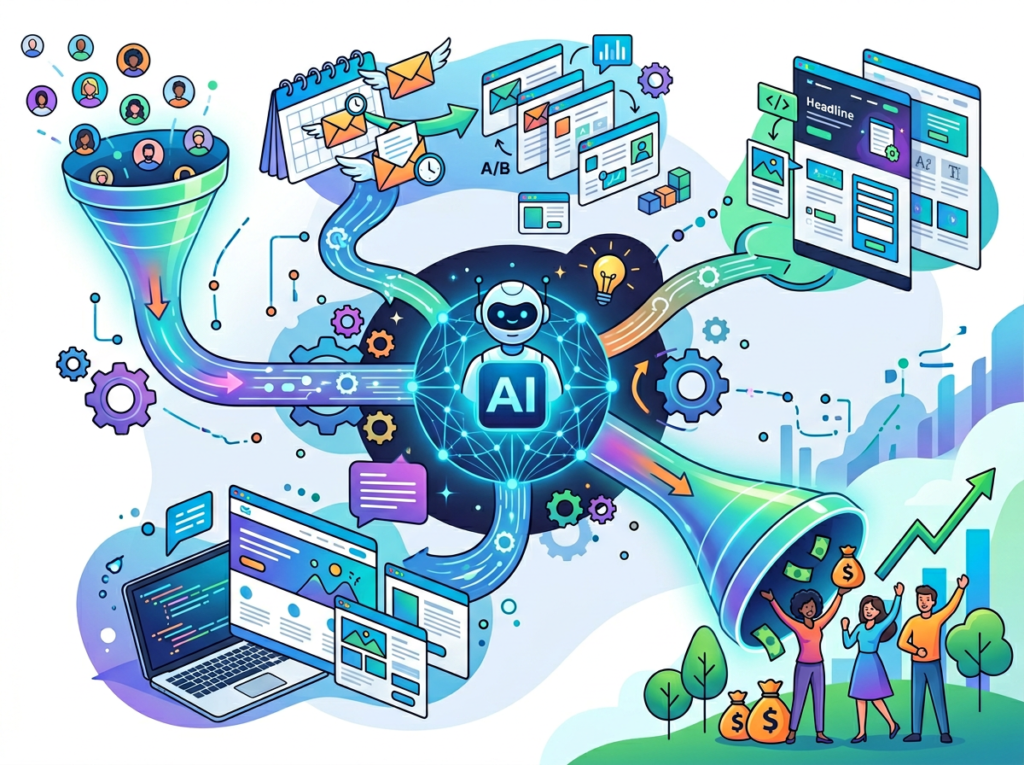
In 2026, American small businesses don’t need enterprise budgets to run enterprise-level marketing systems. They need the right platform and a willingness to replace manual effort with documented, automated workflows.
GetResponse AI delivers on the core promise of ai email marketing automation for US teams: consistent execution, scalable lead nurturing, and campaign creation that doesn’t require a marketing department. For founders currently spending 15–20 hours per week on email marketing tasks that should be running on autopilot, this platform represents a direct path to reclaiming that time — and generating better results in the process.
The Solo DX principle applies here directly. Start with one process. Your lead welcome sequence. Your trial user onboarding. Your monthly client update. Build it in GetResponse AI, document the logic, and let the platform run it. Then build the next one.
US small teams that treat marketing automation as an operational discipline — not just a marketing tactic — are the ones that scale without proportionally scaling their headcount. That’s the competitive advantage available to every small business owner willing to invest the time to build the system correctly from the start.
Get the full GetResponse AI breakdown and start building your first automated sequence this week.
Leave a Reply