Unleash your team’s creativity with AI that transforms ideas into stunning visuals instantly.
What is AI Magicx?
AI Magicx is an image generation tool that creates visual artwork from text descriptions. It allows users to produce a wide variety of digital images, including illustrations, paintings, and photorealistic scenes, based on written prompts. The system is designed to interpret natural language input and translate those concepts into unique visual outputs.
Users interact with AI Magicx primarily by entering detailed text prompts, which guide the artificial intelligence in generating the corresponding image. According to the team behind the official website, the tool employs advanced AI models to synthesize these visuals. The process involves the user providing a descriptive idea, and the AI then produces a new image that aims to match the provided description.
Key Findings
AI Integration: Seamlessly connects with existing business tools to enhance productivity and streamline operations.
Data Analysis: Processes vast datasets instantly to uncover actionable insights and drive informed strategic decision making.
Predictive Analytics: Forecasts market trends and customer behavior with high accuracy using advanced machine learning models.
Natural Language: Understands and generates human-like text for effortless communication and automated content creation across platforms.
Process Optimization: Identifies inefficiencies in workflows and recommends improvements to boost overall organizational performance significantly.
Custom Solutions: Tailors AI capabilities to specific business needs ensuring a perfect fit for unique challenges.
Real-time Insights: Delivers instant analytics and reports enabling quick responses to dynamic market changes and opportunities.
Security Features: Protects sensitive business data with enterprise-grade encryption and robust access control mechanisms.
Scalable Infrastructure: Grows effortlessly with your business demands maintaining consistent high performance under increasing workloads.
User Training: Provides comprehensive onboarding and resources to ensure teams adopt and leverage AI capabilities fully.
AI-powered employee profiles that build culture and connect teams.
What is GoProfiles?
GoProfiles is a customer data enrichment platform designed to help businesses automatically build detailed profiles of their customers. It connects to a company’s existing data sources to gather and consolidate information. The platform’s core capability is to analyze and structure this data, producing unified and enriched customer profiles that provide a comprehensive view of each individual.
Users typically interact with the system by integrating it with their internal databases, CRM systems, and other customer touchpoints. The platform processes this raw customer data as its primary input. It then employs automated processes to clean, match, and augment the information, outputting a single, enriched profile for each customer that includes verified attributes and insights. The team behind the official website develops and maintains this service.
Key Findings
Employee Directory: Connects teams with dynamic profiles showing skills, roles, and current projects instantly.
Talent Discovery: Surfaces internal experts by skill, project history, and interests to foster collaboration.
New Hire Onboarding: Accelerates integration with pre-filled profiles and team introductions from day one.
Company Announcements: Shares important news and celebrates milestones directly on employee profiles company-wide.
Team Insights: Provides analytics on team composition, skill gaps, and collaboration patterns for planning.
Integration Hub: Connects seamlessly with your existing HR, communication, and productivity tools automatically.
Privacy Controls: Manages data visibility with granular permissions for employees, managers, and administrators securely.
Employee Recognition: Enables peer-to-peer praise and rewards that are visible on individual profiles publicly.
Mobile Access: Allows employees to update profiles, find colleagues, and receive updates anywhere, anytime.
Customizable Profiles: Lets employees showcase personal milestones, volunteer work, and professional achievements uniquely.
Elevate your content from good to great with AI-powered precision and brand voice.
What is ContentLift by YAi?
ContentLift by YAi is a content and copywriting tool that uses artificial intelligence to assist with the creation of marketing and business text. It is designed to generate written material such as website copy, social media posts, and advertising content based on user instructions.
The tool operates primarily through a text-based interface where users provide descriptive prompts outlining their desired topic, tone, and format. The AI then processes this input to produce original written drafts. According to the team behind the official website, the system is built to help streamline the initial stages of content creation for various digital platforms.
Key Findings
Content Creation: Generates high-quality marketing copy and blog posts tailored to your brand voice instantly.
SEO Optimization: Enhances online visibility by integrating relevant keywords and meta descriptions into your content.
Brand Consistency: Maintains a uniform brand tone and style across all generated materials and communications.
Audience Targeting: Crafts personalized messaging for different customer segments to improve engagement and conversion rates.
Idea Generation: Overcomes creative blocks by suggesting fresh content topics and compelling angles for campaigns.
Workflow Integration: Seamlessly connects with popular CMS and marketing tools for a streamlined content production process.
Performance Analytics: Tracks content engagement metrics to provide actionable insights for future strategy improvements.
Plagiarism Check: Ensures all produced content is original and free from copyright issues automatically.
Multilingual Support: Creates and adapts content for global audiences in multiple languages with cultural nuance.
Cost Efficiency: Reduces the need for extensive freelance writers while scaling your content output significantly.
Your second brain for work: find anything instantly and connect the dots.
What is myReach?
myReach is a digital knowledge base application designed to help users consolidate and connect their personal and professional information. It functions as a centralized hub where individuals can store, organize, and retrieve various types of digital content. The tool enables users to save web links, documents, notes, contacts, and images into a private, searchable database. A core capability is creating visual networks of relationships between these saved items, allowing users to map connections and context within their stored knowledge.
According to the team behind the official website, users primarily interact with the system by adding content, often through a browser extension or mobile application. The AI within the system assists by automatically tagging content, suggesting relevant connections between different pieces of information, and powering a natural language search function. This allows users to query their personal database conversationally to quickly locate related items and discover insights from their accumulated data.
Key Findings
Personal Knowledge: Organizes all your information into a single, searchable, and interconnected digital brain.
Second Brain: Acts as your external memory, capturing and connecting ideas, documents, and conversations effortlessly.
Centralized Hub: Unifies notes, files, bookmarks, and contacts from all your apps into one secure place.
Instant Recall: Finds any saved piece of information in seconds using powerful semantic and keyword search.
AI Assistant: Answers your questions based on your personal data, providing context-aware insights and summaries.
Relationship Mapping: Automatically visualizes connections between people, projects, and topics to reveal hidden patterns.
Seamless Capture: Saves content from any website or application with a single click or shortcut.
Team Collaboration: Enables secure sharing of knowledge bases and collaborative spaces for projects and research.
Cross-Platform Sync: Keeps your data updated and accessible across all your devices, anywhere, anytime.
Data Security: Protects your private information with robust encryption and gives you full ownership control.
Your AI co-pilot for executing tasks, not just managing them.
What is HeyBoss AI Boss Mode?
HeyBoss AI Boss Mode is an AI personal assistant designed to execute complex, multi-step tasks from a single user command. It functions as an automated workflow engine that can coordinate various digital activities. The tool’s core capability is to take a high-level objective, break it down into subtasks, and manage their completion autonomously. This can involve writing and editing text, conducting web research, managing emails, or creating basic content drafts, effectively acting on a user’s behalf.
The system operates primarily through natural language text prompts provided by the user. A user instructs the AI with a goal, and the assistant then plans and executes the necessary steps to achieve it, producing completed work or summarized results. According to the team behind the official website, this “boss mode” allows the AI to work independently once given a directive, handling the orchestration of tools and information gathering without requiring continuous user input for each step.
Key Findings
AI Copilot: Acts as your intelligent assistant managing daily tasks and communications seamlessly.
Executive Decision: Provides data-driven insights and recommendations for critical business choices instantly.
Team Coordination: Orchestrates team workflows and project timelines to ensure optimal productivity always.
Voice Commands: Executes complex tasks and retrieves information through simple, natural spoken instructions directly.
Meeting Management: Schedules, agendas, and summarizes meetings automatically to save valuable executive time.
Priority Routing: Filters and directs communications based on urgency and relevance to you personally.
Performance Analytics: Tracks key metrics and generates detailed reports on business and team output.
Proactive Alerts: Monitors operations and notifies you of potential issues or opportunities immediately.
Seamless Integration: Connects with your existing business tools and software ecosystems without any disruption.
Custom Automation: Learns your preferences to build and run personalized workflows for your needs.
Automatically generate accurate, compliant alt text for every image.
What is AltText.ai?
AltText.ai is an AI-powered tool designed to generate descriptive text for images. Its core function is to automatically create accurate and contextually relevant alt text, which is the written description read by screen readers for visually impaired users. The tool analyzes image content to produce these textual descriptions, a process essential for digital accessibility and web compliance standards.
Users interact with the system primarily by uploading image files. The AI then processes the visual content, interpreting objects, scenes, text, and actions within the image. Based on this analysis, it outputs a concise written alt text description. The team behind the official website develops this technology to assist in making visual content accessible without requiring manual description from the user for every image.
Key Findings
Image Recognition: Analyzes uploaded photos to generate accurate descriptive text for accessibility needs.
Alt Text Generation: Creates descriptive captions automatically for images to improve website accessibility compliance.
SEO Optimization: Enhances image search rankings by providing relevant and keyword-rich alt text descriptions.
Bulk Processing: Handles large image libraries efficiently, saving time on manual alt text entry.
Accessibility Compliance: Helps meet WCAG guidelines by ensuring all visual content has descriptive text.
Ecommerce Integration: Connects directly with online store platforms to automate alt text for product images.
Customizable Outputs: Allows adjustment of tone and detail level to match specific brand voice requirements.
API Access: Enables seamless integration with existing content management systems and internal workflows directly.
Real-Time Analysis: Processes images instantly as they are uploaded to your website or platform.
Accuracy Assurance: Uses advanced AI models to provide highly precise and contextually relevant image descriptions.
Royalty-free AI music for every moment, instantly.
What is Mubert?
Mubert is an AI-powered platform designed to generate original music and soundscapes. Its core function is to produce royalty-free audio tracks in real time based on user instructions. The system can create continuous streams of music or discrete tracks suitable for various applications, from background ambiance to full musical compositions.
Users typically interact with Mubert by providing a text prompt describing the desired mood, genre, or activity. The AI, developed by the team behind the official website, processes this input to synthesize a unique piece of music. The output is an audio file that is dynamically generated and does not directly copy existing copyrighted works.
Key Findings
Music Generation: Creates unique, royalty-free background music instantly for any project or content need.
AI Composer: Generates endless, tailored music streams based on mood, genre, or activity parameters provided.
Royalty-Free Tracks: Offers a vast library of original music safe for commercial use without licensing worries.
Content Soundtracking: Automatically scores videos, podcasts, and presentations with dynamic music that matches the emotional tone.
Live Streaming: Provides non-stop, copyright-safe audio for broadcasts, ensuring platforms do not mute your live content.
Brand Audio: Crafts custom sonic identities and adaptive music loops that reinforce your company’s unique brand presence.
API Access: Integrates powerful music generation directly into your apps, products, or services via developer tools.
Mood Selection: Lets users input simple text descriptors to generate perfect matching music for any scenario.
Productivity Enhancement: Boosts focus and creativity in work environments with algorithmically designed ambient soundscapes.
Usage Analytics: Delivers insights on music consumption patterns to better understand audience engagement and preferences.
Small teams that learn faster than their competitors win — and in 2026, the best ai research tools make that gap measurable in hours and dollars.
There’s a moment every US small business founder knows. You’ve grown from a solo operator to a team of five or eight, and suddenly the chaos hits differently. Research is piling up in separate browser tabs. Your marketing lead is making decisions based on a competitor analysis that’s six months old. Your new hire in Denver is asking questions that already live in someone’s head in Chicago — but never made it into a shared document.
In 2026, knowledge fragmentation is the silent killer of small team momentum. The average US knowledge worker spends 2.5 hours per day searching for information, according to McKinsey — costing a 10-person team over $120,000 annually in lost productivity at US labor rates of $75–$100 per hour. Manual literature reviews and competitive research compound the problem further: a thorough market landscape analysis traditionally requires 15–20 hours of skilled labor at $5,000–$8,000 in consulting fees.
This is where AI research tools have moved from “nice to have” to operational necessity.
OpenRead is an AI-powered research platform that gives US small business teams access to over 300 million papers, reports, and documents — with built-in tools to summarize, interrogate, compare, and organize findings in a fraction of the traditional time. For founders managing 1–10 person teams, it functions not just as a research accelerator, but as a shared intelligence system: a living knowledge layer that helps your whole team make better decisions faster.
Unlike generic productivity apps that cost $5,000+ in US labor to implement properly, OpenRead’s paid plans start at $5–$20 per month. The ROI math is immediate and compelling.
This guide explains how OpenRead fits into the Solo DX framework — the small-scale digital transformation model built for US founders who are done running everything from memory and ready to build systems that scale.
What Is Solo DX?
Solo DX — Small-Scale Digital Transformation — describes the operational shift that happens when a US founder moves from doing everything themselves to building repeatable, AI-assisted systems that their growing team can actually run.
It’s not about enterprise software. It’s not about hiring an operations manager. It’s about using AI tools strategically to encode the founder’s knowledge, standardize team workflows, and reduce the decision-making bottlenecks that slow small businesses down at exactly the wrong moment.
Solo DX vs. Other AI Categories
Category
Who It’s For
Primary Goal
Solo DX
Founders scaling 1–10 person teams
Systemize knowledge and operations
AI Efficiency
Individual contributors
Speed up personal task execution
AI Revenue Boost
Sales and marketing leads
Drive pipeline and conversion
AI Workflows
Operations-oriented teams
Automate repetitive process steps
Most founders assume they have a productivity problem. Solo DX reframes it: the real problem is that institutional knowledge lives in the founder’s head and nowhere else. When your team of seven is making decisions based on incomplete information — or worse, asking you the same questions repeatedly — you don’t have a staffing problem. You have a knowledge infrastructure problem.
Corporate SOP methods fail US small businesses for a predictable reason: they were built for organizations with dedicated operations managers, legal review cycles, and six-month rollout windows. A three-person design studio in Austin can’t implement a Fortune 500 documentation system. But they can implement Solo DX.
Real example: A three-person brand strategy firm in Austin was spending eight hours per client engagement on competitor research and industry trend analysis. Each team member was pulling from different sources, creating inconsistent recommendations. With no shared research system, every client felt like starting from scratch. Solo DX applied here means using OpenRead to build a shared research workspace: a single intelligent layer where competitive analyses, industry papers, and strategic frameworks live — searchable, summarizable, and accessible to anyone on the team in minutes.
The core promise of Solo DX is simple: you shouldn’t have to be in every meeting, on every call, and in every document for your business to produce consistent, high-quality output.
Why AI Is Key for Mini-Team Systemization
Problem 1: Knowledge Lives in the Founder’s Head
In most 1–10 person US teams, the founder is the de facto research department. They track industry trends, monitor competitors, read relevant studies, and synthesize it all into strategy — then communicate fragments of that thinking in Slack messages, one-off emails, and ad hoc meetings.
This is functionally unmaintainable. When your team acts on secondhand founder knowledge, quality degrades. When you bring on a new hire, you start the knowledge transfer process from zero. When you’re out sick, decisions stall.
AI research tools break this bottleneck by making research a team-accessible system rather than a founder-exclusive function.
Problem 2: New Hires Slow Down Operations
US labor turnover sits at approximately 47% annually across industries. Every new hire represents weeks of knowledge transfer — which means every departing employee takes institutional intelligence with them. The average US cost of replacing an employee is $15,000–$25,000 when recruitment, onboarding, and productivity lag are included.
When your research processes are ad hoc and undocumented, new team members take 4–6 weeks to reach productive contribution. When those processes are systematized with AI tools — searchable workspaces, pre-built summaries, documented research frameworks — onboarding compresses to days.
Problem 3: Output Quality Varies Across Team Members
A small team without shared research infrastructure produces inconsistent output. Your senior content strategist in San Francisco and your junior analyst in Miami are building on different information bases, applying different standards, and delivering work that doesn’t feel like it came from the same company.
AI research tools create a consistent intelligence baseline across your entire team.
The Cost Reality
Approach
Time
Cost (US Labor at $75/hr)
Manual competitive research per project
15–20 hrs
$1,125–$1,500
Manual literature review per topic
10–15 hrs
$750–$1,125
AI-assisted research with OpenRead
1–3 hrs
$75–$225 + $5–$20/month subscription
For a team running 4–6 research-dependent projects per month, the annual savings from AI research tools approach $40,000–$80,000 in recovered labor hours — before accounting for the quality improvements that come with consistent, well-sourced team intelligence. This breakdown of OpenRead’s interactive research model provides useful context on how AI-powered paper interaction differs from traditional research workflows.
How OpenRead Enables Solo DX
Feature 1: Paper Espresso — AI-Generated Research Summaries
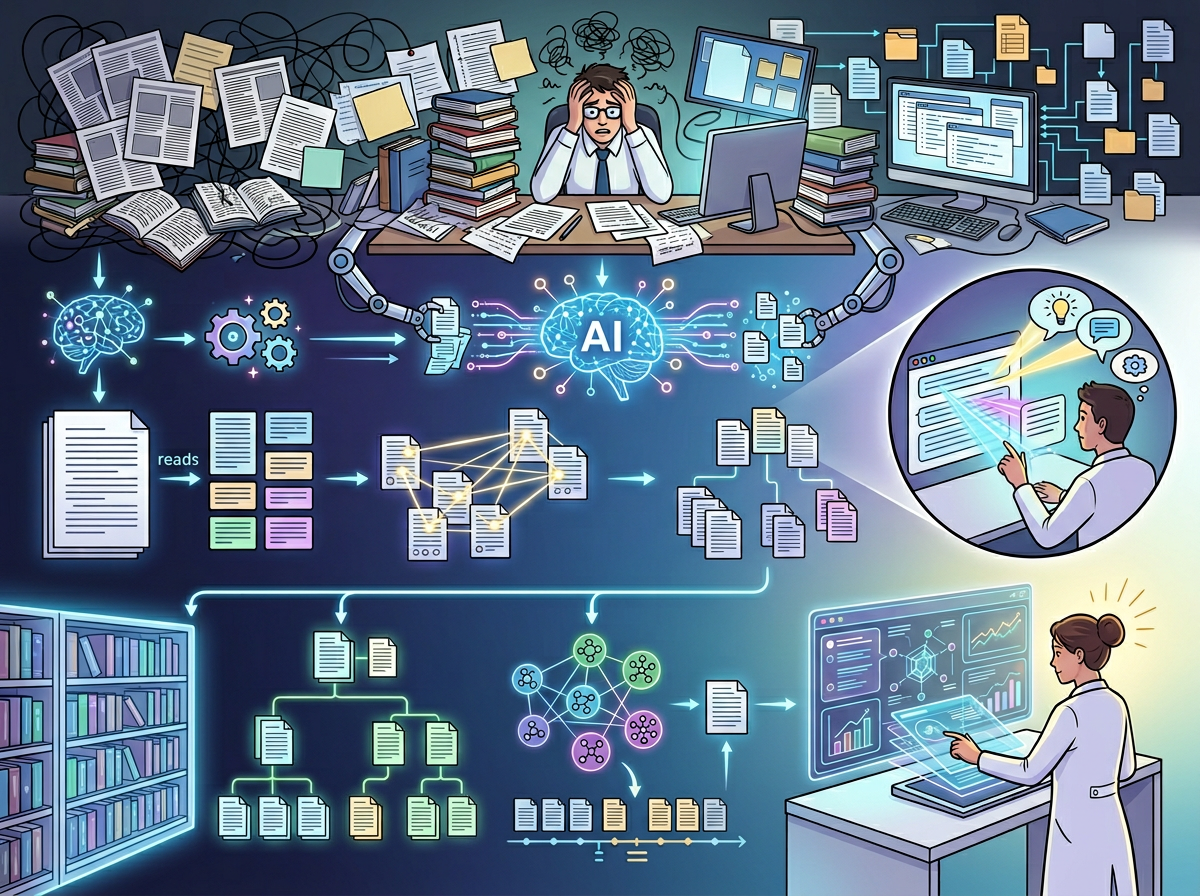
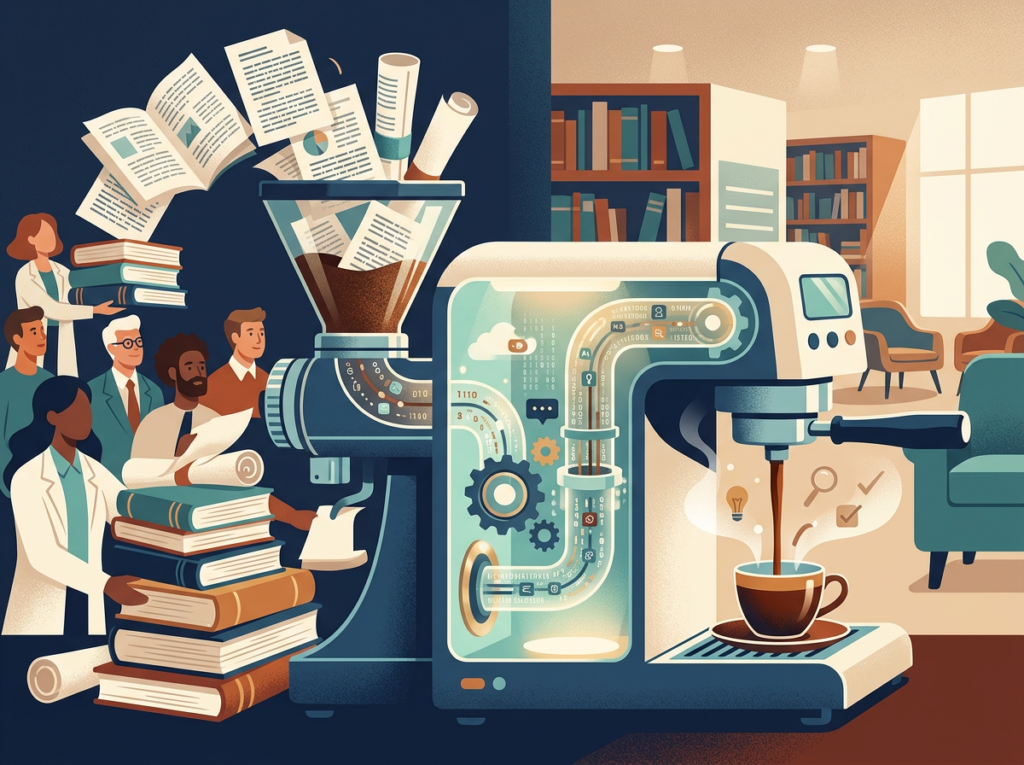
Paper Espresso is OpenRead’s flagship summarization engine. Upload a PDF, paste a URL, or select from over 300 million indexed papers, and Paper Espresso generates a structured breakdown: key findings, methodology, implications, and limitations — in minutes, not hours.
Solo DX application: Instead of assigning a team member to read 12 industry reports before a strategy session, a founder in Chicago can run Paper Espresso across all 12 documents, producing a synthesized briefing document in under an hour. That briefing becomes a reusable team asset — not a one-time email attachment.
ROI: At a US labor rate of $85/hour, replacing 12 hours of manual reading with 45 minutes of AI-assisted summarization saves $935 per research cycle. For a team running monthly strategy sessions, that’s $11,220 per year in recovered hours.
Feature 2: Paper Q&A via Oat — Conversational Knowledge Retrieval
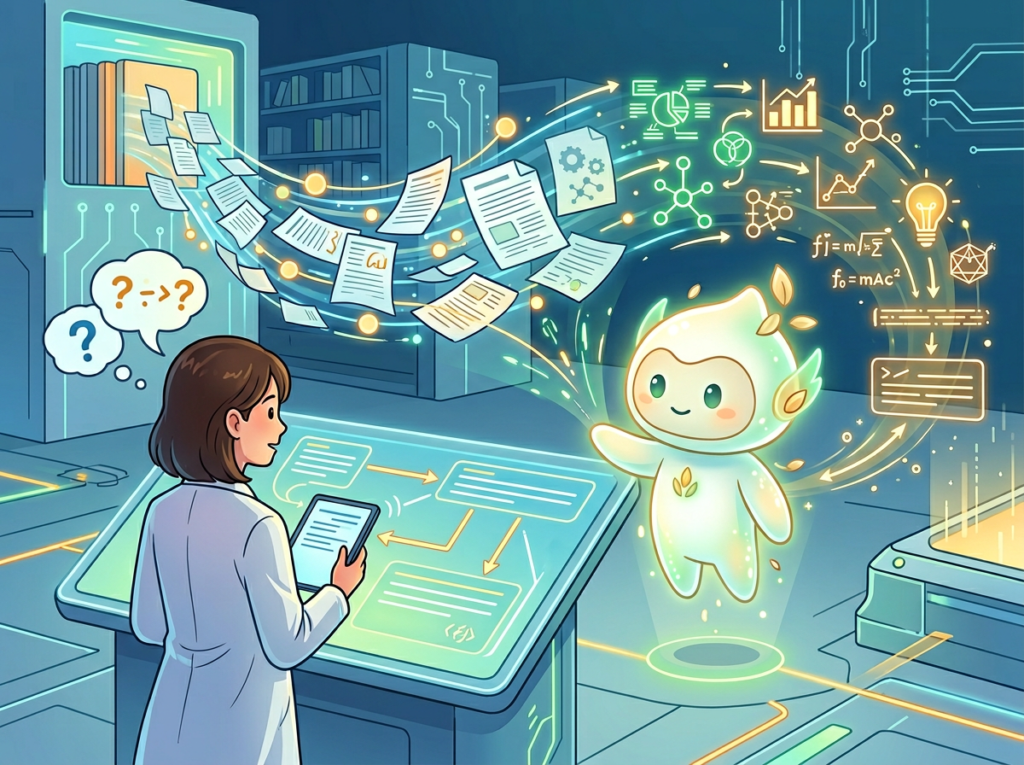
Oat, OpenRead’s AI assistant, lets team members ask direct questions about research documents and receive answers with source citations. Instead of skimming 40 pages to find one data point, a team member types a question and gets a referenced answer in seconds.
Solo DX application: A six-person consulting firm in Denver uses Oat to onboard new analysts. Instead of spending 20 hours reading the firm’s research library, new hires interact with documents conversationally — asking questions, getting cited answers, building context at their own pace.
ROI: Reducing analyst onboarding research time from 20 hours to 6 hours saves $1,190 per hire at $85/hour. With a 47% annual turnover rate in knowledge work, a 6-person team cycling through 2–3 researchers per year captures $2,380–$3,570 annually in onboarding efficiency.
Feature 3: Collaborative Research Workspaces
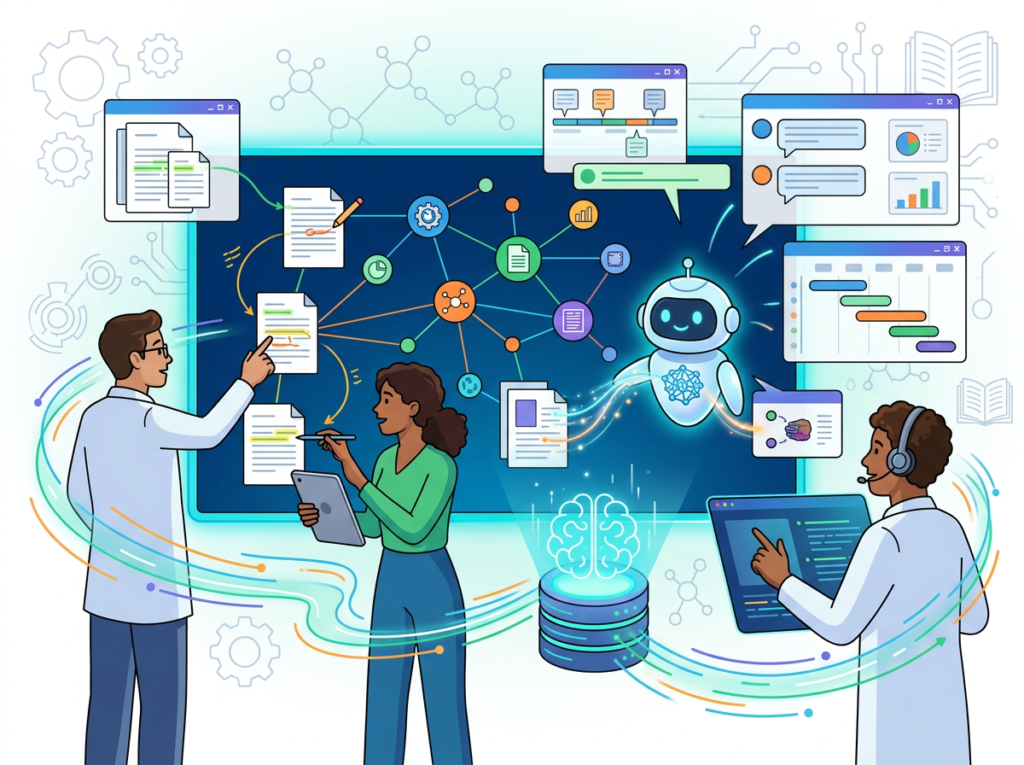
OpenRead supports real-time collaboration across team members — shared document libraries, joint annotation, and synchronized research threads. This converts individual research activities into team-accessible knowledge assets that persist beyond any single project.
Solo DX application: A New York-based PR agency creates a shared OpenRead workspace for each client vertical. Every team member working on a fintech client contributes to a shared research pool — articles, papers, competitor analyses — that any colleague can search, summarize, or reference in real time.
ROI: Eliminating duplicated research across a 4-person team (where each person independently finds 2–3 overlapping sources per project) saves 4–6 hours per project cycle. At $80/hour, that’s $320–$480 per project, or $15,360–$23,040 annually across a 40-project workload.
As explored in this OpenRead overview, these features work together to create a research infrastructure that scales with your team — not one that requires you to hire a dedicated researcher to manage.
Ready to systemize your US team’s research operations in under a week?Try OpenRead Free | No credit card required | Trusted by researchers and teams across the US
Use Cases by Team Role
1. Startup Founder Juggling 3 Departments — Maria, San Francisco
The situation: Maria runs a 7-person climate tech startup in San Francisco. She’s simultaneously managing investor relations, product development, and market positioning — all of which require current research on regulatory changes, competitor activity, and scientific developments in carbon capture.
Old workflow: Maria spent 6–8 hours per week scanning newsletters, downloading papers, and sharing Slack summaries that her team half-read. Research quality depended entirely on how much time she could carve out. New developments were routinely missed for 2–3 weeks.
OpenRead workflow: Maria sets up a shared OpenRead workspace with search alerts across her key topic areas. Paper Espresso auto-summarizes new relevant papers as they’re indexed. Her team reviews structured briefings in 15 minutes rather than reading raw documents. Oat answers ad hoc questions from team members without Maria’s involvement.
Results: Weekly research time drops from 7 hours to 90 minutes. Team decision confidence improves because everyone is working from the same current intelligence. Maria recovers 22 hours per month — equivalent to $2,750 in executive labor at her $125/hour consultant equivalent rate.
Maria:“I used to be the only person who actually read the research. Now it’s a team function. My product lead references papers I didn’t even know about.”
2. Research Analyst Building Competitive Intelligence — Robert, New York
The situation: Robert is a senior analyst at a 6-person strategy consultancy in New York. Each client engagement requires synthesizing 20–30 sources into a coherent competitive intelligence report — a process that was taking 20–25 hours per engagement and often produced duplicated effort when two consultants unknowingly researched the same source.
Old workflow: Robert and colleagues maintained separate research folders, emailed each other PDF links, and routinely duplicated work. Final synthesis required a 4-hour working session to reconcile different research threads into a single narrative.
OpenRead workspace: Robert creates shared client workspaces in OpenRead. All team members contribute to one research pool. Paper Compare generates structured cross-source analyses. Oat allows any team member to query the full document library conversationally. The 4-hour synthesis session is replaced by a 45-minute collaborative review.
Results: Per-engagement research time drops from 22 hours (distributed) to 10 hours. Duplicated effort is eliminated. The firm completes 20% more engagements per quarter without additional headcount. At $150/hour senior analyst rates, the per-engagement savings total $1,800 — or $21,600 per year across 12 annual client engagements. This review of OpenRead’s collaborative features provides additional context on how the platform handles multi-user research workflows.
Robert:“We stopped having the ‘wait, you read that too?’ conversation. Everything goes into the workspace, and everyone can search it.”
Join thousands of US small teams using OpenRead to build sharper research systems.See How It Works | Used by teams from Silicon Valley to New York
Common Pitfalls & How to Avoid Them
Mistake 1: Treating OpenRead as an Individual Tool Instead of a Team System
The single biggest waste of an AI research platform is using it in isolation. Founders who use OpenRead only for their own research get a personal efficiency boost. Teams that build shared workspaces with consistent naming conventions, organized document libraries, and collaborative annotation processes get a systemization return.
Fix: Assign one team member as the “workspace owner” in your first month. Define folder structures and document tagging conventions before everyone starts uploading. A 30-minute setup meeting prevents 6 months of disorganized research sprawl.
Mistake 2: Delegating Research Without Documenting the Output
AI-assisted research is only valuable if the insights survive beyond the project that generated them. Teams that run a Paper Espresso summary, act on the findings, and then let the document sit in a folder have extracted 20% of the available value. The remaining 80% is in reuse.
Fix: Build a lightweight “research log” in your OpenRead workspace — a running document that captures key findings, decision dates, and outcome notes. Future team members inherit a living knowledge base, not a pile of PDFs.
Mistake 3: Using AI Output Without Human Review
OpenRead’s AI tools are accurate and well-cited, but no AI system is infallible. Teams that treat AI-generated summaries as final truth — without spot-checking sources or applying domain judgment — risk building strategy on flawed foundations.
Fix: Build a two-step review into your research workflow: AI generates the first-pass synthesis, a team member with domain knowledge validates the key claims before the output is shared with stakeholders. This takes 20–30 minutes and catches 90% of edge cases. See the detailed breakdown of OpenRead for notes on how source citations are structured for easier human verification.
FAQs
What is Solo DX?
Solo DX (Small-Scale Digital Transformation) is the operational framework for US founders scaling 1–10 person teams. It focuses on using AI tools to encode founder knowledge, systemize repeatable processes, and reduce the operational bottlenecks that block team performance — without enterprise-level complexity or cost.
How can AI research tools help my team make better decisions?
AI research tools like OpenRead give every team member access to the same synthesized, current intelligence — regardless of seniority or time availability. When decisions are grounded in shared, well-sourced research rather than individual Googling or secondhand founder knowledge, both the quality and consistency of outcomes improve. Teams using shared AI research platforms report 30–40% reductions in decision latency.
What’s the difference between AI Efficiency and Solo DX?
AI Efficiency tools help individuals work faster on their personal tasks — writing, scheduling, data entry. Solo DX is specifically about team-level systemization: building shared knowledge infrastructure, standardizing workflows across roles, and reducing founder dependency. OpenRead operates at the team systemization level when deployed as a shared workspace.
Conclusion
In 2026, American small businesses don’t need enterprise budgets to build enterprise-level research systems. They need the right AI research tools, applied consistently, as a team rather than as individuals.
OpenRead gives US founders and team leads a practical path from research chaos to research infrastructure. Paper Espresso turns days of reading into hours of synthesis. Oat converts document libraries into searchable, conversational knowledge. Paper Compare turns multi-source confusion into clear, cited comparison. Collaborative workspaces turn individual research into shared team intelligence.
The Solo DX principle is simple: systems scale, people don’t. Every hour your team spends duplicating research, explaining things that should be documented, or making decisions on outdated information is an hour that could be recovered through intentional AI-assisted systemization.
Start with one research workflow. Pick your next competitive analysis, market overview, or industry briefing, and run it through OpenRead instead of manually. Measure the time saved. Then build from there.
The teams winning in 2026 aren’t necessarily the ones with the biggest budgets — they’re the ones who made their collective knowledge accessible, searchable, and reusable. That’s what good ai research tools actually deliver.
The teams that scale fastest in 2026 aren’t the ones with the biggest budgets — they’re the ones using ai research tools for business to turn scattered information into confident, repeatable decisions.
There’s a moment every US small team founder recognizes. You’ve hired your second or third person, and suddenly the work that used to live entirely in your head — the vendor comparisons, the market research, the “why we made this call” documentation — has no home. Decisions that took you twenty minutes now take two days because you have to re-justify them from scratch every time someone new joins the conversation.
In 2026, this is the operational bottleneck breaking American small businesses at the scale-up stage. Knowledge isn’t the problem. Access to knowledge — structured, searchable, shareable knowledge — is.
Remote work culture made it worse. Teams spread across Austin and Denver and Chicago are running in parallel but not in sync. A marketing lead in Miami reaches a conclusion through three hours of web research; a founder in San Francisco reaches the opposite conclusion two weeks later because nobody documented the first one. Slack threads disappear. Notion pages go stale. And every new hire starts from zero.
Consensus (consensus.app) is a different kind of AI research tool for business. Rather than generating content or automating tasks, it pulls evidence-backed answers directly from 200+ million peer-reviewed papers, synthesizes what the research actually says, and presents it with citations your team can verify and archive. Think of it as replacing “I heard somewhere that…” with “here’s what 47 studies actually show.”
Unlike building a traditional knowledge base — which can cost $5,000+ in US labor hours to create, maintain, and keep current — Consensus lets a team of three function with the research depth of a ten-person operation. It’s not about replacing expertise. It’s about making the expertise your team already has go further, faster.
This guide breaks down exactly how US small teams are using Consensus to make better decisions, onboard faster, and build research-backed systems that hold up as they grow.
What is Solo DX?
Solo DX stands for Small-Scale Digital Transformation — the process of building enterprise-grade operational systems without an enterprise budget, headcount, or IT department. It’s what happens when a US founder running a 1–10 person team decides to stop managing by memory and start managing by documented, repeatable process.
Solo DX sits in a different category from general AI efficiency or AI-powered productivity. Those approaches focus on doing individual tasks faster. Solo DX focuses on building the infrastructure that lets a growing team operate consistently, even when the founder isn’t in the room.
Here’s a simple comparison:
Category
Goal
Example
AI Efficiency
Speed up individual tasks
Drafting emails faster
AI Revenue Boost
Increase output or conversion
Automating outreach
Solo DX
Systemize team operations
Building decision frameworks a new hire can follow
Corporate SOP methods fail for US SMBs because they were designed for companies with dedicated operations managers, training departments, and six-month implementation cycles. A three-person design studio in Austin can’t afford to spend Q1 documenting processes — they have clients to serve.
What they can do is use AI research tools for business to compress the research-to-decision cycle: validate assumptions with evidence, document the rationale behind key choices, and build a searchable institutional memory that grows with the team.
Real example: A three-person UX consultancy in Austin was losing two to three hours per client engagement on competitive landscape research — each team member doing their own searches and arriving at slightly different conclusions. After integrating Consensus into their pre-project workflow, they standardized on a shared research protocol: one team member runs the relevant questions through Consensus, exports the findings, and the whole team operates from the same evidence base. Client kickoff prep dropped from three hours to 45 minutes.
That’s Solo DX in practice: not more tools, but better-structured tools that create consistency across a small team.
Problem 1: Knowledge lives only in the founder’s head
The founder knows why the company uses vendor A instead of vendor B. They know the three studies that informed the pricing strategy. They know what questions to ask before green-lighting a new initiative. But that knowledge is entirely non-transferable — until it gets documented.
AI research tools for business solve this by making knowledge searchable and auditable. When a decision is backed by evidence from Consensus, that evidence can be saved, shared, and referenced later. The founder isn’t the library anymore — the tool is.
Problem 2: Quality varies across team members
When three people research the same question independently, they rarely reach the same conclusion. One person searches Google. One asks ChatGPT. One relies on memory. The result is inconsistent outputs, internal debates, and rework.
Consensus addresses this by functioning as a shared research standard — a single, reliable source that surfaces what the evidence actually says rather than what any individual team member happens to recall or find first.
The cost reality is stark. A manual knowledge-building process — compiling research, documenting findings, maintaining references — can consume 100+ hours of US labor annually for a five-person team. At $75/hour average, that’s $7,500/year in research overhead that produces no direct output. Consensus Premium runs $8.99/month; the Teams plan is $9.99 per seat per month. Even at full team deployment, the math is straightforward.
Following best practices for evidence-based search matters significantly here: teams that frame research questions precisely — with context, scope, and a clear hypothesis — get dramatically more useful results than those running vague, keyword-style queries.
Data-driven decision making isn’t a luxury for US small teams in 2026. It’s the operational baseline that separates businesses that scale from businesses that stall.
How Consensus Enables Solo DX
Feature 1: Natural Language Research Queries to Faster, Better-Grounded Decisions
Instead of keyword searches that return inconsistent results, Consensus lets team members ask full questions in plain English: “Does remote work reduce team cohesion in small organizations?” or “What pricing models perform best for B2B SaaS under $50/month?” The tool searches across 200+ million peer-reviewed papers and returns cited, synthesized answers.
ROI estimate: A typical business decision requiring external research takes 3–6 hours of US team time when done manually — web searches, evaluating source quality, synthesizing findings, writing it up. Consensus compresses this to 20–40 minutes. For a team making four major research-backed decisions per month at $75/hour labor cost, that’s roughly $2,400–$4,800 in recovered labor annually per decision-maker on the team.
Feature 2: Consensus Meter for Hypothesis Validation
The Consensus Meter is the tool’s most distinctive feature for business teams. When you ask a yes/no question, Consensus shows the proportion of relevant studies that support, contradict, or are inconclusive on the claim — visually, with citations. For US small teams, this is a fast-track to confidence: instead of “I think this approach works,” you get “73% of relevant studies support this approach, here’s the breakdown.”
ROI estimate: Teams that validate strategic assumptions before committing budget reduce costly pivots. If a team avoids just one $5,000 initiative per year that would have failed due to faulty assumptions, the Consensus subscription pays for itself roughly 40 times over.
Feature 3: Teams Plan with Centralized Access to Consistent Research Infrastructure
The Consensus Teams plan ($9.99/seat/month) gives small teams shared access, centralized billing, and collaborative research capability. Every team member runs searches through the same evidence base, which means decisions across the team reference the same quality of source material.
ROI estimate: Eliminating research redundancy — where multiple team members independently research the same questions — can recover 5–10 hours per week across a five-person team. At $75/hour average, that’s $19,500–$39,000 in annual recovered labor for a team of five.
As noted in this breakdown of Consensus’s capabilities for researchers, the tool’s strength lies in surfacing both sides of a research question rather than returning cherry-picked results — a critical feature when team decisions need to hold up to scrutiny.
The cumulative picture: a five-person US team using Consensus consistently can recover $25,000–$45,000 in annual research and decision-making overhead. That’s not a technology investment — it’s an operational leverage play.
Ready to systemize your US team’s research and decision-making in under a week?Try Consensus Free | No credit card required | Trusted by researchers and teams across the US
Use Cases by Team Role
Persona 1: Startup Founder Juggling Strategy Across Departments
Maria, 34 — Founder, 6-person SaaS startup, San Francisco
Old workflow: Maria spent Sunday evenings compiling research for Monday strategy calls — pulling articles from Google, skimming industry reports, and trusting her own synthesis to represent “what the market says.” Her team made decisions based on her summary, which meant decisions were only as good as what she happened to find on a Sunday night.
AI-powered workflow: Maria now runs strategic questions through Consensus before major planning calls. She asks questions like “What growth levers are most effective for B2B SaaS teams under 10 employees?” and gets cited, synthesized answers her team can review directly. She saves key findings to a shared Notion page linked to the Consensus source — building a growing body of evidence that new hires can access from day one.
Quantified results: Research prep time for weekly strategy calls dropped from 4 hours to 45 minutes. At Maria’s estimated opportunity cost of $150/hour, that’s $4,875 recovered annually from strategy prep alone. Two major initiatives validated through Consensus avoided pivots that would have cost an estimated $15,000 in misdirected development time.
Maria’s take:“I stopped being the research bottleneck. Now my team can verify the assumptions behind any decision I make — which actually made them trust my calls more, not less.”
Persona 2: Executive Assistant Onboarding Remote Staff
Old workflow: James built onboarding materials from scratch for each new hire — compiling best practices from across the web, writing up internal rationale, and hoping new team members would absorb it all in two weeks. The materials were inconsistent, quickly outdated, and required James to update them manually whenever policy changed.
AI-powered workflow: James uses Consensus to build evidence-backed onboarding frameworks. For each core operational area — client communication, project scoping, deliverable standards — he runs the relevant questions through Consensus, documents the research findings, and attaches the citations to the team wiki. New hires don’t just see what the process is; they see why it’s structured that way, grounded in evidence rather than “James decided this.”
Quantified results: Average new hire ramp-up time dropped from 14 days to 8 days. At $80/hour fully-loaded cost for new staff, that’s $3,840 per hire in recovered productive capacity. With two new hires in 2026, that’s $7,680 in direct ROI from onboarding efficiency alone.
James’s take:“When new team members can see the research behind our processes, they stop second-guessing and start executing. It completely changed how fast people get up to speed.”
Persona 3: Marketing Lead Standardizing Research-Backed Content Strategy
Aisha, 31 — Head of Marketing, 5-person e-commerce brand, Denver
Old workflow: Aisha’s content decisions were largely intuition-driven. She’d pick topics based on what felt relevant, write briefs from personal research, and defend her choices in team reviews with vague references to “what I’ve been reading.” Results were inconsistent across quarters, and post-mortems rarely produced clear learnings.
AI-powered workflow: Aisha now validates content strategy hypotheses through Consensus before committing to production cycles. Before investing in a new content format or channel, she runs the relevant positioning questions — “Does long-form content outperform short-form for B2C purchase intent?” — and documents the evidence. Her editorial briefs now include a “research rationale” section linking to Consensus findings.
Quantified results: Content ROI improved significantly in the first quarter of using Consensus — not because production volume increased, but because topic selection became more evidence-based. Aisha estimates the shift eliminated two underperforming content investments per quarter worth approximately $4,000/quarter in wasted production budget.
Aisha’s take:“I can now walk into any budget review and show exactly why we made the content choices we did, with citations. That changed the conversation completely.”
Join growing US small teams using Consensus to eliminate research chaos and make faster, better-grounded decisions.See How It Works | Used by teams from Silicon Valley to New York
Common Pitfalls & How to Avoid Them
Pitfall 1: Using Consensus in isolation from other team tools
Consensus surfaces evidence, but that evidence needs a home. Teams that run searches and don’t document findings in a shared workspace (Notion, Confluence, Google Docs) end up with the same problem they started with: knowledge that disappears after the conversation ends. Fix: Build a simple research log — a shared document where Consensus findings get pasted with the original question, key conclusions, and the date. Ten minutes of documentation per research session creates months of institutional memory.
Pitfall 2: Delegating research without defining the question
AI research tools for business return better results when the question is specific. “Tell me about marketing” produces noise. “What messaging strategies most effectively drive B2B SaaS free-trial conversion for teams under 50 employees?” produces signal. Vague delegations lead to vague research, which leads to vague decisions. Fix: Require that any Consensus research task starts with a clearly defined question, written out before the search begins.
Pitfall 3: Accepting Consensus output without critical review
Consensus cites peer-reviewed research — but research quality varies, and study findings don’t always translate directly to your specific business context. A study on enterprise software adoption isn’t automatically applicable to a five-person consultancy. Fix: Treat Consensus findings as strong evidence, not final answers. Review the Consensus Meter scores, check citation dates, and apply team judgment to translate findings into context-specific decisions.
Solo DX (Small-Scale Digital Transformation) is the practice of building enterprise-grade operational systems — documented processes, evidence-backed decisions, consistent workflows — in a business run by 1–10 people. Unlike large-company digital transformation, Solo DX is designed to be implemented by the founder or a small ops team without external consultants or IT departments. The goal is to replace founder-dependent institutional knowledge with scalable, team-accessible systems.
How can AI research tools help my team make better decisions?
AI research tools for business like Consensus pull evidence from large databases of peer-reviewed studies and synthesize it into usable answers. Rather than relying on a single Google search or a team member’s memory, your decisions are backed by what the research actually shows — with citations your team can review and reference. Over time, building a library of research-backed decisions gives your organization an evidence base that compounds as the team grows.
What’s the difference between AI Efficiency and Solo DX?
AI Efficiency tools focus on speed: making individual tasks faster, automating repetitive actions, reducing time-on-task. Solo DX tools focus on systems: creating the infrastructure that makes a growing team operate consistently. You need both, but at different stages. If your team is inconsistent or losing institutional knowledge as it grows, Solo DX is the higher-leverage investment. According to an analysis of AI research tools for business, systematic evidence retrieval reduces decision error rates significantly compared to ad-hoc web research.
Conclusion
In 2026, American small businesses don’t need enterprise budgets to build enterprise-level decision-making infrastructure. The gap between a founder making calls on instinct and a team making calls on evidence isn’t a resources gap — it’s a systems gap.
Consensus closes that gap by giving US small teams access to the same evidence base that research institutions and large companies use, at a price point that makes sense for a five-person operation. The ai research tools for business that matter most aren’t the ones that generate the most content — they’re the ones that make your team’s decisions more reliable, more defensible, and more transferable to the next person who joins.
Solo DX is the operating model that turns that research capability into lasting infrastructure. Start with one decision framework: a recurring question your team researches repeatedly. Run it through Consensus. Document the findings. Link the evidence to your team wiki. That one system, built in an afternoon, will pay dividends every time a new hire needs to understand why your team does things the way it does.
The teams winning in the US market in 2026 aren’t the ones with the most information — they’re the ones with the best-organized evidence, and the systems to use it consistently.
HyperWrite AI vs Jenni AI is a decision that looks simple on the surface, but the wrong choice wastes both your time and your budget.
If you’re a freelance content creator or small business owner who needs a flexible AI writing assistant that works across emails, blog drafts, social copy, and client proposals — HyperWrite AI is the stronger fit. Its TypeAhead autocomplete, browser extension, and broad template library make it a practical everyday writing tool for non-academic, business-oriented workflows.
Jenni AI pulls ahead when your primary output is research papers, academic essays, citations, or structured literature reviews. It is purpose-built for academic writing and handles source management, in-text citations (in 2,600+ styles), and PDF-based research in ways HyperWrite simply wasn’t designed to do.
Choose HyperWrite AI if:
You run a small business and need general-purpose writing across multiple content types
You want an AI assistant embedded in your browser that helps across Gmail, LinkedIn, Google Docs, and CMS platforms
Speed and volume matter more than academic rigor
Jenni AI pulls ahead when:
You’re a student, grad student, or researcher writing papers with citations
You upload source PDFs and need the AI to generate content grounded in your actual research
You need APA, MLA, Chicago, or 2,600+ other citation formats auto-generated as you write
Neither is ideal if:
You need a full content marketing platform (look at Jasper or Copy.ai)
Your writing demands legal, medical, or compliance-grade accuracy
Budget is the primary constraint — both paid tiers cost more than simpler tools
In 2026, there are well over 100 AI writing tools on the market. Most of them claim to help you “write better, faster.” But feature lists don’t tell you whether an AI will actually save time in your specific workflow — or create new headaches.
The HyperWrite AI vs Jenni AI question is a perfect example of this problem. Both tools use large language models. Both offer AI autocomplete. Both target writers. But they are built for fundamentally different contexts, and choosing the wrong one based on a surface-level comparison can cost you hours of frustration.
Most existing comparisons of these two tools focus on surface-level feature checklists — who has more templates, whose autocomplete is faster. What those articles miss is the business and academic context that actually drives the decision. A freelancer in Denver managing six client accounts doesn’t have the same needs as a graduate student at UNC Chapel Hill finishing a thesis. Treating them as the same audience leads to generic recommendations that help no one.
This comparison focuses on practical decision-making. Not “which tool has more features” but “which tool fits your specific situation, workflow, and budget.” The hyperwrite vs jenni ai comparison question isn’t about which AI writes better sentences in the abstract — it’s about which one integrates into how you actually work and what you’re actually producing.
For US small businesses, the stakes are real. At $20–$45/month per tool, you’re spending $240–$540/year. That investment needs to reduce time on writing tasks, not add a learning curve that costs more than it saves. For students, the calculation is different: citation management and academic tone matter far more than general-purpose output volume.
Supporting keywords that reflect real search intent here — “best ai writing tools for students,” “ai writing assistant for essays,” and “ai tools for academic writing” — all point to users who need specific, context-aware guidance rather than another side-by-side feature grid.
Situation 1: The Solo Small Business Owner Who Writes Their Own Content
Pain: “I spend 8–10 hours a week writing emails, social posts, proposals, and blog drafts — and none of it comes naturally.”
Challenge: Hiring a copywriter runs $50–$100/hour in most US markets. That’s not sustainable for a 1–3 person operation. You need AI that reduces the time cost of writing across multiple formats.
Needs: A tool that works where you already work — in Gmail, in your browser, in Google Docs. Not a separate writing environment you have to open and manage separately.
Common mistake: Choosing an academic-focused tool like Jenni AI because it looks polished, then discovering it doesn’t help at all with business emails or LinkedIn posts.
Situation 2: The Graduate Student or Academic Researcher
Pain: “I can write my analysis, but managing citations and formatting references takes three times longer than it should.”
Challenge: Academic integrity requirements mean you can’t just paste AI-generated text. You need an assistant that works alongside your thinking, not a content generator.
Needs: Citation management in APA or MLA, PDF upload and source-grounded writing, and an autocomplete that maintains formal academic tone without pushing you toward plagiarism.
Common mistake: Using HyperWrite for academic papers and getting output that sounds like marketing copy — breezy, casual, and completely inappropriate for a journal submission.
Situation 3: The Online Course Creator or Knowledge Worker
Pain: “I need to produce long-form content — outlines, scripts, course modules — but the blank page is a constant bottleneck.”
Challenge: Long-form content takes consistent structure and sustained output. You need an AI that helps you maintain momentum, not just generate a few sentences.
Needs: Strong document editing environment, ability to iterate within a single document, and templates for structured content like outlines, scripts, or course frameworks.
Common mistake: Underestimating the learning curve for either tool. Both take 10–15 hours of real use before you understand how to get consistent results.
Real-world example: Marcus runs a three-person consulting firm in Atlanta. He writes his own proposals, client newsletters, and LinkedIn updates. He doesn’t write academic papers. He doesn’t need citation formatting. He needs something that speeds up the three hours a week he spends staring at blank email drafts. That person should not be paying for Jenni AI’s academic features.
HyperWrite AI is a general-purpose AI writing assistant built around flexibility. It uses GPT-4 and related models to power three core surfaces: a document editor, an AI chat interface (HyperChat), and a Chrome extension with its TypeAhead predictive text feature.
General-Purpose Usefulness: HyperWrite excels at drafting content across a wide range of formats — emails, blog posts, social media updates, product descriptions, and marketing copy. Its library of 500+ templates means you can start from a structured prompt rather than a blank page for almost any writing task. Explore HyperWrite AI in detail to see the full template breakdown and how these features work in business workflows.
Learning Curve: Most users report getting useful first drafts within their first session. The TypeAhead feature — which suggests completions as you pause while typing — requires almost no setup. The Chrome extension installs in minutes and works across Gmail, Google Docs, LinkedIn, Notion, and most web-based text editors.
Writing Adaptability: HyperWrite’s personalization engine learns your writing style over time. The more you use it, the more its suggestions align with your natural voice. This is particularly valuable for small business owners who want AI assistance that sounds like them, not like a generic content generator.
Integration & Tool Compatibility: The Chrome extension is HyperWrite’s biggest practical advantage over Jenni AI for business users. Instead of switching between apps, you get AI assistance embedded in whatever tool you’re already using. For a freelancer or small business owner who lives in their browser, this is a genuine workflow multiplier. See our full HyperWrite AI review for a breakdown of how the extension performs across different platforms.
Real-World Business Result: Small business owners using HyperWrite for routine writing tasks — emails, proposals, social posts — report time savings of 3–5 hours per week once they build a consistent workflow with the tool. At $50/hour opportunity cost, that’s $7,800–$13,000 in recovered productive time annually. As noted in this HyperWrite review, the tool performs well across practical writing tasks though it requires some iteration for more specialized content.
Pricing (US Market): Free plan (15 generations/month), Premium at $19.99/month, Ultra at $44.99/month.
Jenni AI: Strengths and Best-Fit Scenarios
Jenni AI is purpose-built for academic and research writing. It is not trying to be a general-purpose writing tool. That focus is both its greatest strength and its most important limitation.
Academic Writing Engine: Jenni’s core value proposition is that it integrates writing assistance with research management. You can upload your own PDF sources, and the AI generates content grounded in those specific documents — not just its general training data. This is a fundamental difference from HyperWrite’s approach and critical for academic integrity. See our full Jenni AI review to understand how the source-based generation feature works in practice.
Writing Tone and Academic Integrity: Jenni’s autocomplete maintains formal academic register by default — something HyperWrite doesn’t prioritize. For graduate students or researchers who need to maintain a scholarly voice throughout a 20-page paper, this consistency matters. That said, as noted in this analysis of both tools, both tools require careful human review, especially for factual accuracy in academic contexts.
AskJenni Feature: This allows you to query your uploaded PDFs directly — asking the AI to summarize key points, pull relevant quotes, or answer questions based on your source documents. For literature reviews and systematic reviews, this cuts research time significantly. According to this overview of Jenni AI’s academic features, the platform positions itself squarely in the academic writing space rather than general content creation.
Real-World Academic Result: Students using Jenni AI for research papers report writing time reductions of 30–40% on first drafts, primarily from the autocomplete and citation automation features. For a grad student juggling coursework, research, and teaching responsibilities, that time savings is substantial.
Pricing (US Market): Free plan (200 words/day), paid plans starting at approximately $12–$20/month depending on tier. Check jenni.ai directly for current pricing as tiers have evolved in 2026.
Comparative Summary:
HyperWrite generates faster across more content types and integrates directly into your browser workflow. Jenni produces more academically appropriate output with native citation support and source-grounded generation. Your choice depends less on which AI “writes better” and more on what you’re producing: business content or academic research. Learn more about Jenni AI to evaluate whether its academic focus matches your actual use case.
Who Should Choose Another AI Entirely
Need 1: High-Volume SEO Content Production
Why these AIs don’t fit: Neither HyperWrite nor Jenni is optimized for large-scale SEO content workflows. Jenni isn’t designed for it at all. HyperWrite can produce individual blog posts, but it lacks the keyword research integration, content briefs, and bulk generation features that SEO teams need.
Better alternative: Jasper AI, Surfer SEO with AI integration, or Copy.ai for teams producing 10+ pieces of optimized content per week.
Need 2: Real Academic Research Discovery
Why these AIs don’t fit: Jenni AI works with sources you upload — it doesn’t search databases of 100+ million academic papers. If you need AI to help you find and evaluate relevant literature rather than just write based on sources you already have, Jenni’s research capabilities are limited.
Better alternative: Elicit AI or Consensus for AI-powered literature search and synthesis across academic databases.
Need 3: Legal, Medical, or Compliance Writing
Why these AIs don’t fit: Both tools are generative language models without domain-specific training for regulated content. Output quality in legal or medical contexts requires expert human review regardless of which AI you use.
Better alternative: Industry-specific AI tools with compliance features, or AI used purely as a drafting aid with mandatory professional review.
Use Cases by Business Goal
Productivity: Internal Writing and Communication
Use Case: A freelance consultant needs to produce client-facing deliverables faster — weekly status updates, project proposals, and meeting summaries — without sacrificing quality.
Scenario: Current process takes 6 hours per week across 4 clients. Goal: reduce to under 3 hours without lowering quality.
HyperWrite AI Approach:
Strengths: The Chrome extension means you can draft emails and Google Docs content without switching apps. TypeAhead predicts continuations as you pause, reducing the friction of starting each writing task from scratch.
Process: Open Chrome extension ? Describe the document type ? HyperWrite suggests completions ? Edit to match client voice
Time to value: Most users see meaningful time savings within the first week of consistent use
Limitation: Output still requires editing for client-specific context; generic first drafts are common
Decision Criteria:
Choose HyperWrite AI if: You write across multiple formats and want AI embedded in your existing browser workflow
Choose Jenni AI if: Your client deliverables require citations, sourced data, or formal academic-style documentation
For more ways to reduce time on routine writing tasks, explore our AI efficiency strategies that apply across content types and team sizes.
Revenue & Marketing: Customer-Facing Content
Use Case: A small e-commerce business owner needs product descriptions, email sequences, and landing page copy without hiring a copywriter.
Scenario: Current process involves manually writing 10–15 product descriptions per week and a weekly promotional email. Goal: cut that time by 60%.
HyperWrite AI Approach:
Strengths: Strong template library for marketing copy formats — product descriptions, email subject lines, ad copy, and social posts. The AI adapts to your brand voice over time through its personalization engine.
Process: Select template type ? Input product details ? Review and edit generated copy ? Publish
Business impact: Small business owners report cutting copywriting time by 50–70% on standard product and promotional content
Limitation: First drafts often sound generic; budget time for brand voice editing
Jenni AI Approach:
Strengths: Better if your marketing involves thought leadership, case studies, or content that requires citing data sources and research
Process: Upload research and brand data ? Generate content grounded in your sources ? Edit for marketing tone
Business impact: Higher-quality outputs for content-heavy marketing like white papers or industry reports
Limitation: Not designed for fast-turnaround commercial copy; interface optimized for academic-style writing
Decision Criteria:
Choose HyperWrite AI if: Your marketing needs are primarily short-form commercial copy — emails, ads, product pages
Choose Jenni AI if: Your marketing strategy relies on research-backed long-form content like reports or case studies
To explore more ways AI can directly support revenue-generating activities, explore our AI revenue strategies for small businesses and freelancers.
Core feature — AI generates content from your PDFs
Template Library
500+ templates across business and creative formats
Limited templates; focused on academic document types
Plagiarism Checker
Built-in
Built-in (note: not a replacement for Turnitin)
Writing Tone Flexibility
High — adapts to casual, professional, marketing voices
Lower — defaults to formal academic register
Personalization
Learns your writing style over time
Adapts to your uploaded source documents
Mobile Access
Via browser extension on desktop; limited mobile
Web-accessible on mobile but not optimized
Free Plan
15 generations/month, 500 TypeAheads/day
200 words/day
Paid Plan Pricing (US)
Premium $19.99/month; Ultra $44.99/month
From ~$12–$20/month (check jenni.ai for current tiers)
Best Limitation
Generic first drafts need brand voice editing
Not useful for non-academic business writing
After-Table Context:
The right tool depends heavily on where you are in your work and what you’re producing.
For students and academics: Jenni AI is not just slightly better — it’s a fundamentally different category of tool. The citation automation and source-grounded generation solve problems that HyperWrite doesn’t even attempt to address. If you’re writing research papers, Jenni is the clearer choice.
For early-stage business owners: HyperWrite’s versatility and browser integration typically deliver faster return on investment. You get AI writing help across every context you already work in, without changing your workflow.
Cost-to-Value for US Market:
HyperWrite Premium: $19.99/month = $240/year. If it saves 3 hours/week at a $40/hour value rate, that’s $6,240/year in recovered time — a 26x return.
Jenni AI paid: ~$12–$20/month = $144–$240/year. For a grad student paying out of pocket, the citation automation alone — saving 2–3 hours per major paper across a semester — easily justifies the cost.
Both tools pay for themselves quickly when matched to the right use case. Neither is worth it when chosen for the wrong one.
Frequently Asked Questions
Is HyperWrite AI better than Jenni AI for small business writing?
For general small business writing — emails, proposals, marketing copy, social content — HyperWrite AI is the more practical choice. Its Chrome extension works across the tools small business owners already use, and its 500+ template library covers the most common business writing formats. Jenni AI is built for academic writing and citation management; applying it to business content produces outputs that tend toward overly formal, research-paper-style language. The HyperWrite AI vs Jenni AI decision for small businesses is straightforward: HyperWrite wins when academic features are irrelevant to your workflow.
Can Jenni AI help with non-academic writing like blog posts or emails?
Technically yes, but not well. Jenni AI can generate text for any format, but its design assumptions — formal academic tone, citation-first workflow, structured research documents — create friction when you’re writing a conversational email or a blog post aimed at general readers. Users who try to use Jenni for business content typically find the output needs heavy editing to remove the academic register. For non-academic writing, HyperWrite delivers more usable first drafts with less post-processing.
Do I need both HyperWrite AI and Jenni AI?
Most users don’t. The two tools serve distinct primary audiences. If you are exclusively a student or academic researcher, Jenni AI covers your needs well. If you are a small business owner, freelancer, or general content creator, HyperWrite AI is the more appropriate tool. The overlap scenario — someone doing both serious academic research and significant business writing — exists but is relatively uncommon. At a combined cost of roughly $40–$65/month, running both tools simultaneously is only worthwhile if you use each tool’s core features regularly enough to justify the separate subscription.