Encord Active is an open-source platform designed to evaluate and improve the quality of datasets used for training machine learning models. It enables users to systematically analyze their data, identify potential issues like label errors or imbalances, and curate higher-quality datasets. The tool focuses on computer vision applications, working with images and videos.
The platform operates by ingesting a user’s labeled dataset and automatically computing a range of metrics related to data and label quality. Users interact with it through a visual interface to explore these metrics, filter data based on specific criteria, and prioritize samples for review. The team behind the official website developed this system to help practitioners diagnose problems within their data before model training, aiming to build more reliable and performant AI models.
Key Findings
Data Quality: Identifies and fixes dataset issues to improve model accuracy and performance significantly.
Model Evaluation: Measures model performance across key metrics to pinpoint strengths and weaknesses clearly.
Visual Exploration: Interactively explores datasets and model predictions through intuitive charts and visual tools.
Automated Insights: Discovers hidden patterns and data issues automatically to accelerate the research cycle.
Active Learning: Prioritizes the most valuable data for labeling to optimize annotation budgets efficiently.
Collaboration Tools: Enables teams to share findings and annotations seamlessly within a unified platform.
Performance Monitoring: Tracks model degradation and data drift over time to maintain reliable deployments.
Workflow Integration: Connects directly with labeling tools and ML pipelines for a smooth process.
Comprehensive Reporting: Generates detailed reports on data health and model metrics for stakeholder review.
Customizable Dashboards: Builds tailored views to monitor specific project metrics and KPIs effectively.
Nuclino is a collaborative workspace application designed to create, organize, and share knowledge within teams. It functions as a unified platform where users can write documents, build internal wikis, manage projects, and develop structured knowledge bases. The tool consolidates information by allowing users to create interconnected pages containing text, tasks, files, and embedded content, aiming to centralize team knowledge.
Users primarily interact with Nuclino through a web-based editor or desktop applications. They create and edit pages in real time, often starting from templates or blank documents, and structure their content using a hierarchical system of workspaces, clusters, and items. The team behind the official website developed the system to facilitate synchronous editing and linking, producing a networked collection of living documents that serve as a team’s central information resource.
Key Findings
Team Collaboration: Enables real-time document editing and commenting for seamless remote teamwork integration.
Knowledge Organization: Structures information into interconnected workspaces and pages using intuitive visual relationship mapping.
AI Assistance: Generates summaries, suggests content, and answers questions directly within your collaborative workspace instantly.
Real-time Editing: Allows multiple users to edit documents simultaneously with live cursor presence and updates.
Visual Workspaces: Transforms complex projects into clear interactive boards, graphs, and lists for better overview.
Fast Search: Instantly locates any document or piece of information across your entire team’s workspace effortlessly.
Secure Access: Provides granular permission controls and secure encryption to protect sensitive company information reliably.
Integration Hub: Connects seamlessly with popular tools like Slack, Google Drive, and Figma without complex setup.
Project Tracking: Monitors task progress, deadlines, and ownership within documents to maintain clear project accountability.
Centralized Documentation: Serves as a single source of truth for all company processes, policies, and resources collectively.
AI coding for business automation is no longer an engineer-only advantage — small teams that deploy it now will outpace competitors still writing SOPs by hand.
There is a moment every US small business founder recognizes. It arrives somewhere between employee three and employee eight. Slack threads pile up. Onboarding takes three weeks because the process exists only inside your head. A client deliverable slips because the team member who “knew how that worked” just quit. You spend Sunday afternoon rewriting instructions you wrote six months ago — and you still are not sure they will be followed correctly on Monday.
This is not a hiring problem. It is a systems problem. And in 2026, it is exactly the problem that AI coding tools are solving for US small teams.
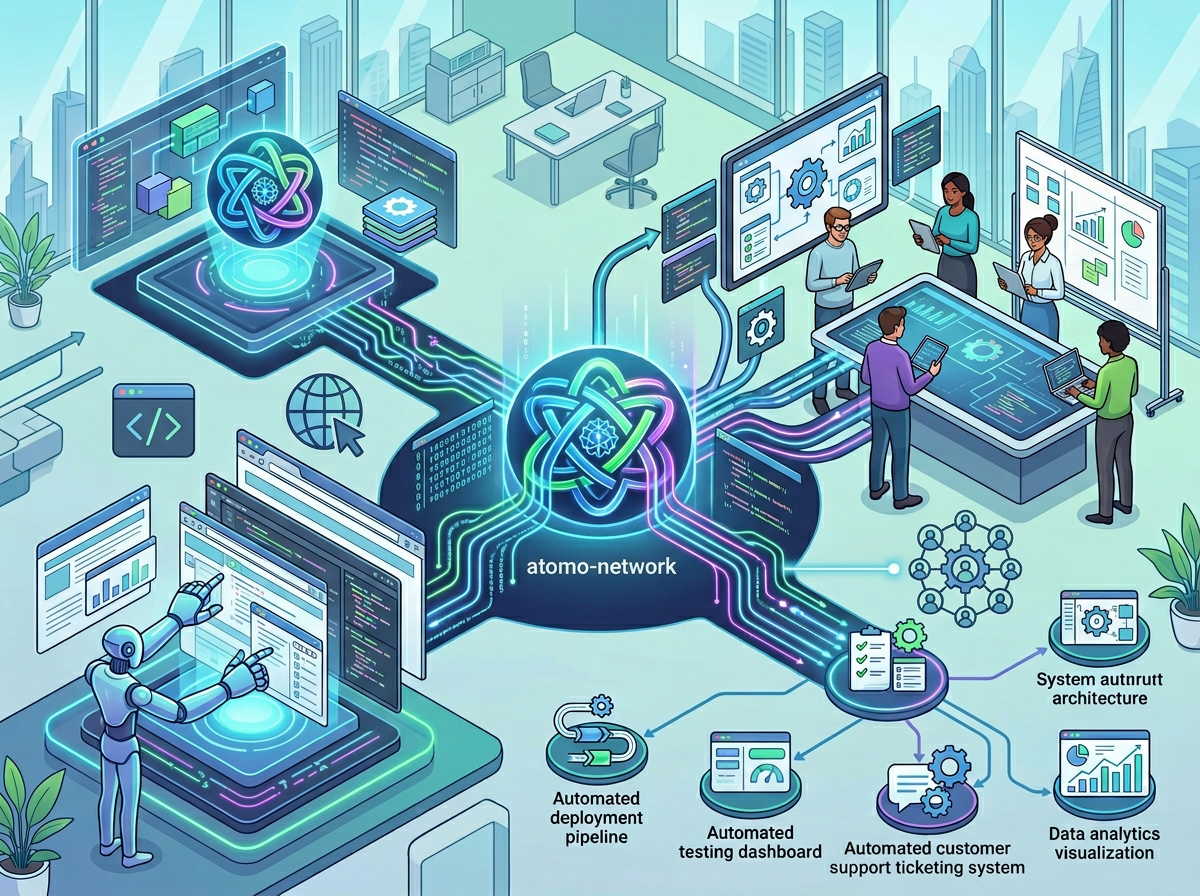
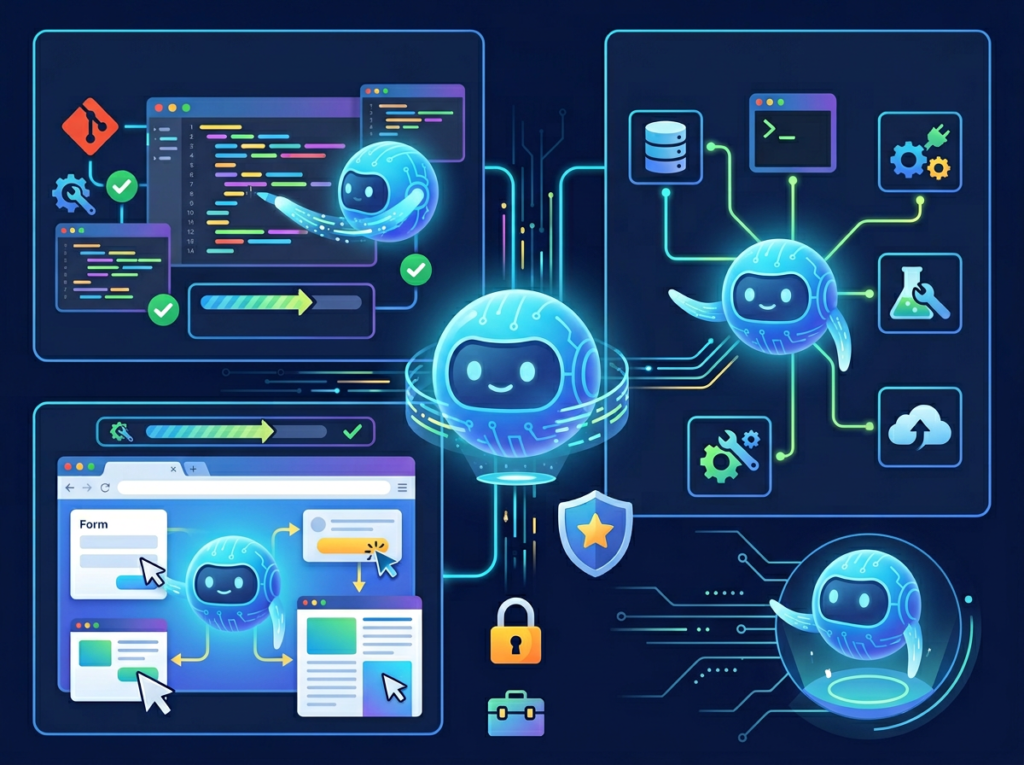
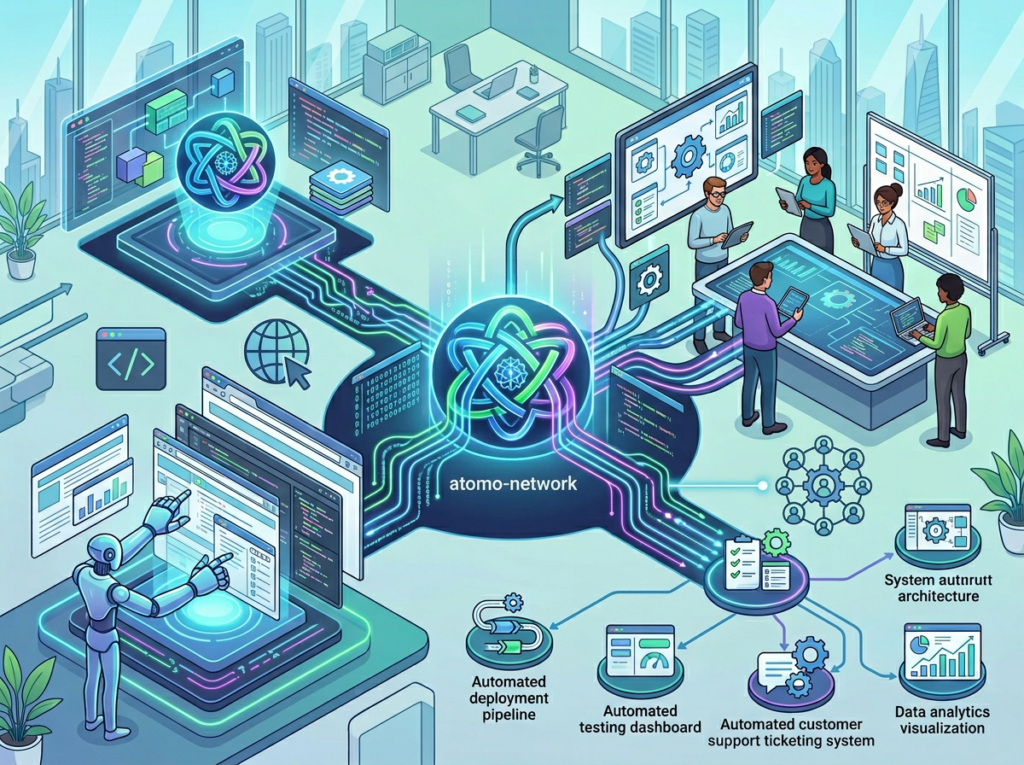
Qwen3-Coder is an open-source AI coding model developed by Alibaba’s Qwen team, designed for agentic programming and complex automation workflows. But what the developer-focused guides miss entirely is the business case: small teams with zero engineering background are using tools built on Qwen3-Coder to create internal automations, document workflows, build custom internal tools, and scale operations without adding headcount.
Traditional documentation and internal tooling in the US market costs real money. A fractional operations consultant runs $100–$150 per hour. A custom internal tool built by a US freelance developer starts at $5,000. A formal onboarding program at an HR firm can cost $3,000 or more per new hire. AI coding for business automation changes the math entirely. For $0–$20 per month in subscription costs, a non-technical founder can now generate, test, and deploy simple internal automations in hours rather than weeks.
This guide is written specifically for US founders and team leads managing one to ten people who want to automate repetitive workflows and reduce manual operational work — without adding an engineer to the payroll. You will learn what Qwen3-Coder actually does, how it fits into a Solo DX system-building approach, and exactly how four different US small team profiles have used it to save thousands of dollars in labor annually.
Learn more about Qwen3-Coder and take the first step toward an operations layer your team can actually rely on — without adding a single full-time employee.
What Is Solo DX?
Solo DX — Small-Scale Digital Transformation — is the operational philosophy behind how AI Plaza covers AI tools for small US businesses. It is not enterprise digital transformation repackaged into a smaller box. It is a fundamentally different approach built around one reality: most US small businesses under fifteen people do not have an operations manager, a systems analyst, or a dedicated engineer. The founder is all three, plus head of sales.
Corporate SOP methodologies were designed for organizations with dedicated process documentation teams, internal wikis managed by full-time employees, and months of implementation runway. They fail for US SMBs because they require time and staffing that does not exist. A three-person design studio in Austin does not have a “process improvement sprint.” They have client work due on Friday.
Solo DX recognizes this and asks a different question: what is the minimum viable system that prevents knowledge from living exclusively in one person’s head?
Framework
Who It Is For
Staffing Needed
Time to Implement
Enterprise Digital Transformation
50+ person companies
Full operations team
6–18 months
AI Efficiency
Solo operators
Founder only
Days
Solo DX
Teams of 1–15
No ops manager needed
1–4 weeks
AI Workflows
Technical teams
Developer or ops lead
Weeks
Qwen3-Coder fits the Solo DX framework because it enables a non-technical founder to build automation without writing production code from scratch. The model’s agentic capabilities — its ability to plan, generate, and debug code autonomously — mean a founder can describe a workflow in plain English and receive a working automation script they can actually deploy.
For example, a three-person design studio in Austin recently used Qwen3-Coder (via the Qwen Code CLI) to build a custom client intake form that auto-populated their project management tool, sent a Slack notification to the assigned designer, and logged the project to a shared Airtable sheet — all in one afternoon. Previously, this process required three manual steps from two different team members and produced inconsistent results. After automation, it was one click and zero manual work.
That is Solo DX in practice: small, targeted, high-ROI automation that does not require a developer or a six-month implementation plan. To understand how this model specifically enables that workflow, explore Qwen3-Coder’s features and see how it stacks up for non-technical deployment.
Why AI Is Key for Mini-Team Systemization
Problem 1: Knowledge lives only in the founder’s head.
When a US team is two or three people, informal knowledge transfer works. The founder explains things verbally. Everyone is in the same Slack channel. Context is shared by proximity. By the time a team reaches six or eight people — especially on remote or hybrid setups — this system collapses. A new hire in Denver has no reliable way to understand how the Chicago-based founder handles edge cases in client billing. A contractor in Miami cannot find the onboarding checklist because it does not exist as a document; it exists as muscle memory.
AI coding tools can generate structured documentation from verbal descriptions, turn existing Slack threads into SOPs, and produce internal reference guides in a fraction of the time it would take a founder to write them manually. At US labor rates of $50–$100 per hour for a skilled operations generalist, even one documentation cycle can cost $2,000–$4,000 in labor. AI-assisted documentation brings that cost to near zero.
Problem 2: New hires slow down operations instead of accelerating them.
US labor turnover hit 47% across service industries in recent years, meaning most small teams are constantly onboarding someone. Each new hire without a documented onboarding process costs the business time — typically two to four weeks of productivity drag as founders and senior team members answer the same questions repeatedly.
AI coding tools can build custom onboarding automation: a script that provisions accounts, sends welcome materials, generates a personalized first-week checklist, and pings the right Slack channel at the right time. At US labor costs, eliminating two weeks of onboarding overhead per new hire is worth $2,500–$5,000 annually for a team that adds two or three people per year.
Problem 3: Quality varies across team members.
Without enforced workflows, the same task gets done four different ways by four different people. A marketing team in San Francisco producing weekly client reports has one team member who uses a template, two who work from memory, and one who improvises a new format each week. Clients notice. Revisions accumulate. Quality becomes a moving target.
Automation addresses this at the source. Instead of hoping team members follow a process, the process is built into the tool. A form submission triggers an automation. A checklist is generated automatically. An output template is enforced by the system, not by a manager.
The Cost Reality for US Small Businesses
Approach
Time Required
Cost in US Labor
Manual SOP documentation
3–5 days
$2,400–$4,000
Custom internal tool (freelancer)
2–4 weeks
$5,000–$15,000
Onboarding program design (HR firm)
1–2 weeks
$3,000–$6,000
AI-assisted automation with Qwen3-Coder
2–8 hours
$0–$20 (subscription)
How Qwen3-Coder Enables Solo DX
1. AI-Generated Internal Tools and Automation Scripts, $5,000–$15,000 saved per project
The most impactful use of Qwen3-Coder for small teams is building the kind of lightweight internal tools that used to require a freelance developer. Client intake automations, invoice generation scripts, report aggregators, Slack notification bots, CSV processing pipelines — a founder who can describe what they want in plain English can now generate a working first draft in minutes using the Qwen Code CLI.
A US marketing agency that previously paid a developer $7,500 to build a custom client report aggregator can now generate a functionally equivalent script in an afternoon and iterate on it internally. The agency keeps the developer budget. The tool gets built faster. Quality is the same or better.
2. Workflow Documentation at Scale ? $2,000 saved per documentation cycle
Qwen3-Coder’s 256K-token context window means it can ingest entire Slack thread exports, email chains, or meeting transcripts and produce structured SOP drafts. A founder pastes in a month of messy back-and-forth on how the team handles client escalations — the model returns a clean, numbered, role-assigned workflow document ready for the team wiki.
At US consultant rates of $75–$100 per hour, a single documentation cycle that would take a fractional ops consultant twenty to thirty hours now takes a founder two to three hours of prompt iteration and review. That is $2,000–$3,000 returned directly to margin.
3. Automated Onboarding and Knowledge Transfer Systems ? $9,360+ annually saved
Teams that onboard two to three new hires per year at an average two-week productivity drag cost themselves roughly $9,360 annually (two weeks × 2.5 hires × $72/hour blended rate). Qwen3-Coder can generate the automation scripts that provision accounts, generate role-specific onboarding checklists, and send structured first-week task lists — cutting onboarding drag from two weeks to two to three days.
4. Template and Reporting Automation ? $6,000/year saved
Recurring reporting tasks — weekly status updates, client performance summaries, internal KPI dashboards — are some of the highest-ROI automation targets for small teams. A team member spending two hours per week on manual reporting is costing the business $7,200 annually at $72/hour. An automation script that pulls data, formats it into a template, and sends the report reduces that to fifteen minutes of review. The savings compound every week.
See how Qwen3-Coder works across these automation categories and review the full feature set for non-technical deployment.
Ready to systemize your US team operations in under a week?Try Qwen3-Coder Free | No credit card required | Trusted by growing US teams building internal tools without engineers
Common Pitfalls and How to Avoid Them
Mistake 1: Using too many disconnected tools
A Chicago operations lead recently described using five different AI tools for different parts of her workflow — one for documentation, one for automation scripts, one for client communications, one for scheduling, and one for reporting. None of them talked to each other. Her team spent more time managing tools than managing work.
Fix: Start with one automation target. Use Qwen3-Coder to solve that problem completely before adding another tool. Integration complexity grows faster than most small teams anticipate.
Mistake 2: Delegating without documentation
AI-generated automations do not manage themselves. A San Francisco founder handed off a Qwen3-Coder-built script to a team member without documenting what the script did, what triggers it, or how to modify it. When the team member left, the automation became a black box nobody would touch.
Fix: Every automation should have a one-page plain-English description of what it does, what inputs it expects, and who owns it. Qwen3-Coder can generate this documentation automatically when you include it in the initial prompt.
Mistake 3: Failing to review AI output
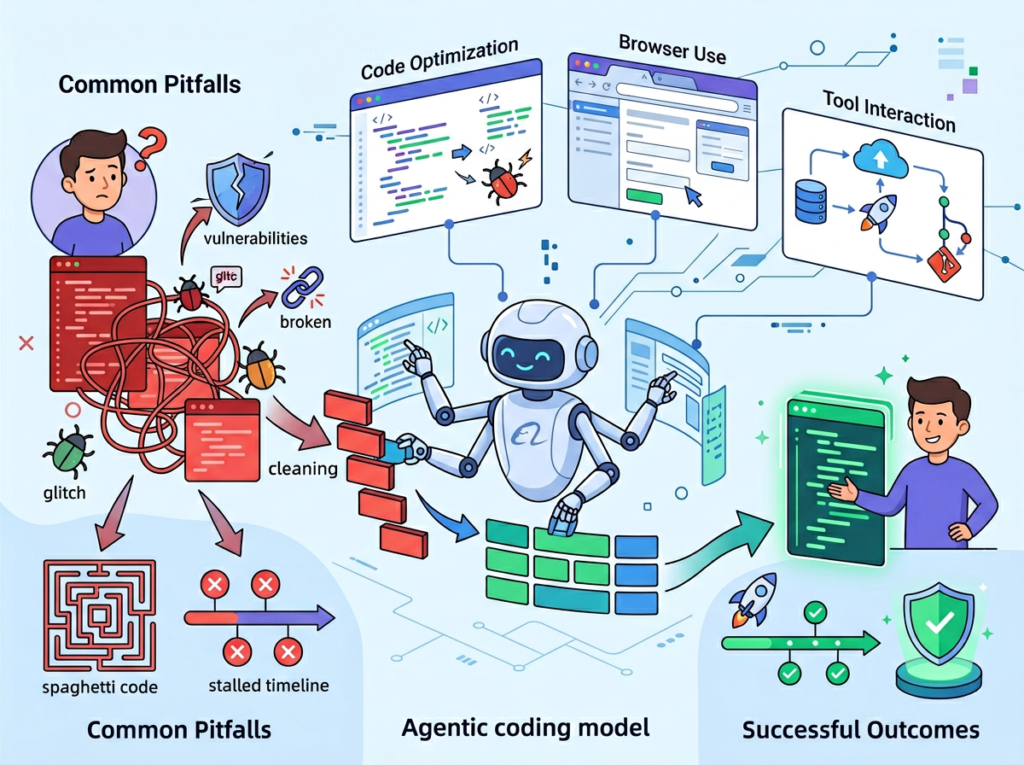
Qwen3-Coder is designed for agentic coding, meaning it will make decisions autonomously to complete a task. As noted in this complete guide, the model’s autonomous planning capabilities are powerful but require human review before deployment in any business-critical workflow.
Fix: Treat every AI-generated script as a first draft, not a finished product. Run it in a test environment. Review the logic against your actual workflow. Have a second team member read it before it touches live data.
Mistake 4: Over-relying on Slack and email for knowledge transfer
Slack and email are searchable, not findable. When critical process information lives in a thread from eight months ago, it is effectively lost. AI tools cannot compensate for a culture where knowledge is communicated verbally or buried in message history.
Fix: Use Qwen3-Coder to convert existing Slack threads and email chains into structured documentation before building any automation on top of them. Automating a broken or undocumented process produces a faster broken process.
What is the difference between AI Efficiency and Solo DX?
AI Efficiency tools are designed for solo operators — a single freelancer or one-person business optimizing their own output. Solo DX tools are designed for small teams where the challenge is not individual productivity but shared systems: consistent processes that multiple people follow reliably. Qwen3-Coder addresses the Solo DX problem: building the automation infrastructure that makes a team operate predictably at scale.
Can small teams afford to use AI?
Yes. Qwen3-Coder is open-source and available through multiple cloud-hosted APIs at low cost. For most US small business automation use cases, monthly costs run $0–$20. Compare this to the $5,000+ cost of a freelance developer for equivalent custom tooling, or the $100–$150/hour rate of a fractional operations consultant.
Is Qwen3-Coder hard to set up?
For non-technical founders, the easiest access point is through hosted API platforms that provide a chat or prompt interface. The Qwen Code CLI requires Node.js and some command-line familiarity, but the initial setup is a thirty-minute process for anyone comfortable installing software. For teams that want zero setup, several no-code platforms now offer Qwen3-Coder integrations that can be configured through a visual interface.
Learn more about Qwen3-Coder and take the first step toward an operations layer your team can actually rely on — without adding a single full-time employee.
Conclusion
In 2026, American small businesses do not need enterprise budgets to build enterprise-level systems. The operational gap that used to separate a five-person team from a fifty-person organization — structured workflows, consistent onboarding, automated reporting, documented SOPs — is now closeable in days rather than quarters.
Qwen3-Coder represents a specific kind of advantage for US small teams: a tool powerful enough to handle real automation complexity, accessible enough to be deployed by a non-technical founder, and affordable enough to make the ROI calculation obvious. The four personas in this guide — Maria in San Francisco, James in Miami, Aisha in Austin, Robert in New York — each recovered $5,000 to $26,000 in annual value from a single automation investment.
The Solo DX principle is this: you do not need to systemize everything at once. You need to systemize the one process that is currently breaking your team. Start with client onboarding, or weekly reporting, or new hire provisioning. Build one automation. Get it working. Let it run for thirty days.
Then build the next one.
Learn more about Qwen3-Coder and take the first step toward an operations layer your team can actually rely on — without adding a single full-time employee.
Circleback is an AI-powered tool designed to automatically transcribe spoken conversations and generate structured notes from meetings. Its core function is to capture audio from various sources, convert speech to text, and then analyze that text to produce summaries, highlight decisions, and extract action items. The tool can process inputs from live meetings, audio files, or video calls, creating organized written records without requiring manual note-taking.
Users typically interact with Circleback by connecting it to their calendar and conferencing platforms. The system joins scheduled meetings, records the audio, and processes it. Following the conversation, it provides a transcript alongside an AI-generated summary that outlines key discussion points and tasks. According to the team behind the official website, the tool aims to create accurate and searchable archives of verbal discussions.
Key Findings
Meeting Summaries: Condenses lengthy discussions into clear, actionable bullet points for easy team reference.
Follow-up Tracking: Automatically identifies and logs action items from conversations to ensure nothing gets missed.
Conversation Intelligence: Analyzes meeting patterns to provide insights on participation, sentiment, and key discussion topics.
Integration Hub: Connects seamlessly with your existing calendar, email, and project management tools for unified workflow.
Actionable Insights: Transforms raw conversation data into strategic recommendations for improving team communication and efficiency.
Security Compliance: Ensures enterprise-grade data protection with encryption and access controls for all your conversations.
Customizable Reports: Generates tailored analytics on meeting effectiveness and follow-through rates across teams and projects.
Voice Recognition: Accurately transcribes and attributes speech from multi-participant meetings in real-time with high precision.
Searchable Archive: Creates a permanently searchable repository of all meeting notes and decisions by topic or date.
Team Accountability: Clearly assigns and tracks ownership of action items from discussion to completion automatically.
Open-source investment research for everyone, powered by AI.
What is OpenBB?
OpenBB is an open-source investment research platform designed to aggregate and analyze financial market data. It provides a unified framework for accessing real-time and historical data from numerous sources, performing quantitative analysis, and building custom financial models. The platform enables the production of charts, reports, and datasets to support investment research and decision-making processes.
Users typically interact with OpenBB through a Python interface or a terminal application, providing commands or scripts to retrieve specific financial data or execute analytical functions. The system processes these inputs to deliver structured data outputs, visualizations, and computational results. The platform is developed by the team behind the official website, which maintains the core infrastructure and a hub for community-developed extensions.
Key Findings
Open Source: Provides transparent, customizable financial data analysis for investment research and strategy.
Market Intelligence: Delivers real-time global market data, news, and analytics for informed, timely decisions.
Portfolio Analytics: Offers deep performance insights and risk assessment tools to optimize investment portfolio health.
Research Terminal: Aggregates thousands of data sources into a single, unified platform for streamlined financial analysis.
Economic Calendar: Tracks major global economic events and indicators to anticipate potential market movements accurately.
Crypto Integration: Connects to major cryptocurrency exchanges for comprehensive digital asset data and portfolio tracking.
Technical Analysis: Equips users with advanced charting tools and indicators for detailed market trend examination.
Model Portfolios: Delivers professionally crafted, benchmarked investment strategies for both guidance and direct implementation.
Data Export: Enables seamless downloading of charts, tables, and reports into multiple common presentation formats.
API Access: Provides powerful developer tools to build custom applications and integrate data programmatically.
The first AGI for business, ready to solve your most complex strategic challenges.
What is Future AGI?
Future AGI is a platform designed for creating and training autonomous AI agents. It provides tools that allow users to define an agent’s objectives, knowledge base, and operational parameters. The system can then produce agents capable of executing multi-step tasks, such as conducting research, analyzing data, and managing workflows autonomously, based on their trained instructions.
Users interact with the platform primarily through a graphical interface, configuring their agents by providing text-based goals, granting access to specific data sources, and setting behavioral constraints. According to the team behind the official website, the trained agents operate independently to complete complex assignments, delivering results and taking actions within their defined scope. The platform focuses on moving beyond single prompts to develop persistent, goal-oriented AI assistants.
Key Findings
Future Intelligence: Learns continuously from data to predict trends and optimize business decisions with precision.
Adaptive Integration: Seamlessly connects with existing enterprise systems to enhance functionality without disrupting current operations.
Proactive Security: Monitors network activity around the clock to identify and neutralize threats before they escalate.
Autonomous Optimization: Analyzes operational workflows in real-time to streamline processes and reduce costs automatically.
Human Collaboration: Enhances team creativity and problem-solving by providing contextual insights and generating innovative ideas.
Scalable Architecture: Grows effortlessly with your business, handling increased data loads and user demands without performance loss.
Ethical Governance: Operates within a transparent framework of predefined ethical principles to ensure responsible AI deployment.
Predictive Analytics: Forecasts market shifts and customer behavior with high accuracy to inform strategic planning.
Natural Interaction: Communicates using intuitive language and understands complex queries to make information access effortless.
Continuous Evolution: Updates its own capabilities through secure learning loops, ensuring it never becomes technologically obsolete.
Turn customer reviews into actionable insights for your business.
What is Reviewly AI?
Reviewly AI is a sentiment analytics tool that processes and interprets textual feedback from customers. It analyzes written reviews, survey responses, and similar user-generated content to determine the emotional tone and opinions expressed within. The system categorizes sentiment, often as positive, negative, or neutral, and identifies key themes or topics mentioned in the text.
Users interact with the platform by providing batches of text data for analysis. According to the team behind the official website, the AI then processes this input to generate structured sentiment reports and visual summaries. The output provides an aggregated overview of customer attitudes, highlighting prevalent emotions and frequently discussed subjects without revealing individual respondent identities.
Key Findings
AI Reviews: Analyzes customer feedback instantly to uncover key insights and actionable trends.
Sentiment Analysis: Detects emotional tone and satisfaction levels across all review platforms and channels.
Competitor Benchmarking: Compares your product ratings against key market rivals for strategic positioning advantage.
Review Generation: Creates authentic customer testimonials based on product features to boost social proof.
Trend Identification: Highlights emerging product issues and praise patterns from vast review datasets.
Response Assistant: Drafts personalized, professional replies to customer reviews to enhance brand engagement.
Platform Aggregation: Collects and centralizes reviews from all major sites into a single dashboard.
Rating Optimization: Provides specific recommendations to improve your overall scores and public reputation.
Insight Reports: Delivers concise weekly summaries of review performance and customer sentiment shifts.
Review Monitoring: Alerts your team instantly to new critical feedback requiring urgent attention.
Turn text into stunning videos with AI voices in minutes.
What is Fliki AI?
Fliki AI is a text-to-video generation tool that converts written text into video content with synchronized audio. Its core function is to automate video creation by producing visuals and a voiceover based on a user’s script. The platform can generate videos featuring AI-created visuals, stock footage, or user-provided images, combined with AI-narrated audio in multiple languages and accents.
Users interact with the system primarily by providing a text script or a blog URL. The AI then processes this input to create a video sequence, matching scenes to the narrative and generating a corresponding voiceover. The output is a complete video file suitable for platforms like social media, marketing, or education. The tool is developed by the team behind the official website, which provides its public interface and services.
Key Findings
Video Creation: Transforms text into engaging videos with lifelike AI voices and rich media instantly.
Voice Cloning: Creates realistic custom voiceovers from short samples for personalized brand audio experiences.
Blog Conversion: Turns articles into shareable video content automatically expanding your content reach effortlessly.
Social Media: Generates short platform optimized clips to boost engagement and grow your audience daily.
Multilingual Support: Produces videos in over seventy five languages to connect with a global audience seamlessly.
AI Avatars: Features realistic presenters to deliver your message without needing actors or film crews.
Text Editing: Refines scripts with smart suggestions for clarity impact and perfect pacing every time.
Stock Library: Accesses millions of images video clips and music tracks to enhance projects instantly.
Custom Branding: Applies your logos colors and fonts consistently across all video content automatically.
Easy Sharing: Exports and publishes videos directly to major platforms and CMS with one click.
Nifty: Your AI teammate that handles the mundane so you can focus on the meaningful.
What is Nifty?
Nifty is a project management and workflow automation platform designed to help teams coordinate tasks, timelines, and communication. Its core capabilities include creating project roadmaps, managing tasks with lists or kanban boards, tracking time, facilitating team discussions, and storing shared documents. The system consolidates these functions to provide a centralized workspace for project execution.
Users interact with Nifty primarily through a web-based interface. Teams can initiate projects, break them down into actionable milestones and tasks, and automate workflow progress based on completion status. The platform processes this structured project data to generate visual timelines, progress reports, and automated updates, aiming to synchronize team objectives and output. According to its official website, Nifty is developed by Nifty Solutions, Inc.
Key Findings
AI Assistant: Handles customer inquiries and provides instant support around the clock daily.
Workflow Automation: Streamlines repetitive tasks to boost team productivity and efficiency significantly every day.
Data Analysis: Processes complex information to uncover actionable insights and trends for smarter decisions.
Meeting Scribe: Records, transcribes, and summarizes key points and action items from every discussion.
Content Creation: Generates marketing copy, reports, and emails quickly while maintaining a consistent brand voice.
Project Management: Organizes tasks, deadlines, and collaboration to keep teams aligned and projects on track.
Code Assistant: Helps developers write, debug, and explain code snippets across multiple programming languages efficiently.
Smart Scheduling: Coordinates calendars, finds optimal meeting times, and sends reminders to all participants automatically.
Knowledge Base: Answers employee questions by searching internal documents and providing precise, sourced information.
Performance Analytics: Tracks key metrics and generates visual reports to monitor progress and identify opportunities.
Turn audience data into interactive presentations instantly.
What is Sendsteps.ai?
Sendsteps.ai is a Presentation Slide Generator designed to help users create structured presentation decks automatically. The tool primarily uses artificial intelligence to produce slides from a user’s text prompt or basic topic description. It can generate outlines, write content, and format visual layouts to create a cohesive slide deck ready for presentation.
The system operates by having a user input a subject or a detailed prompt. The AI then analyzes this input to structure a complete presentation, including suggested titles, bullet points, and supporting visual elements. According to the official website, the team behind Sendsteps.ai developed this tool to streamline the initial creation process, transforming a simple idea into a formatted set of slides without manual design work.
Key Findings
Interactive Presentations: Engage any audience instantly with real-time polls, quizzes, and live Q&A sessions seamlessly.
Audience Participation: Turn passive listeners into active contributors through their own smartphones without any app downloads.
Content Creation: Generate professional presentations and speaker notes in seconds using advanced AI writing and design tools.
Data Analytics: Gather and visualize audience insights and feedback in real-time for immediate, actionable understanding post-event.
Ease Use: Start creating interactive presentations immediately with an intuitive, no-code platform requiring minimal training or setup.
Integration Flexibility: Connect smoothly with popular tools like PowerPoint, Google Slides, and major video conferencing platforms daily.
Security Compliance: Ensure your data and interactions are protected with enterprise-grade security and privacy standards consistently.
Custom Branding: Maintain your company’s identity with fully customizable themes, logos, and branded interaction screens throughout.
Reliable Support: Access dedicated customer success and technical support to ensure your events run smoothly every time.
Proven Impact: Increase audience engagement, retention, and overall meeting effectiveness with a platform trusted globally.