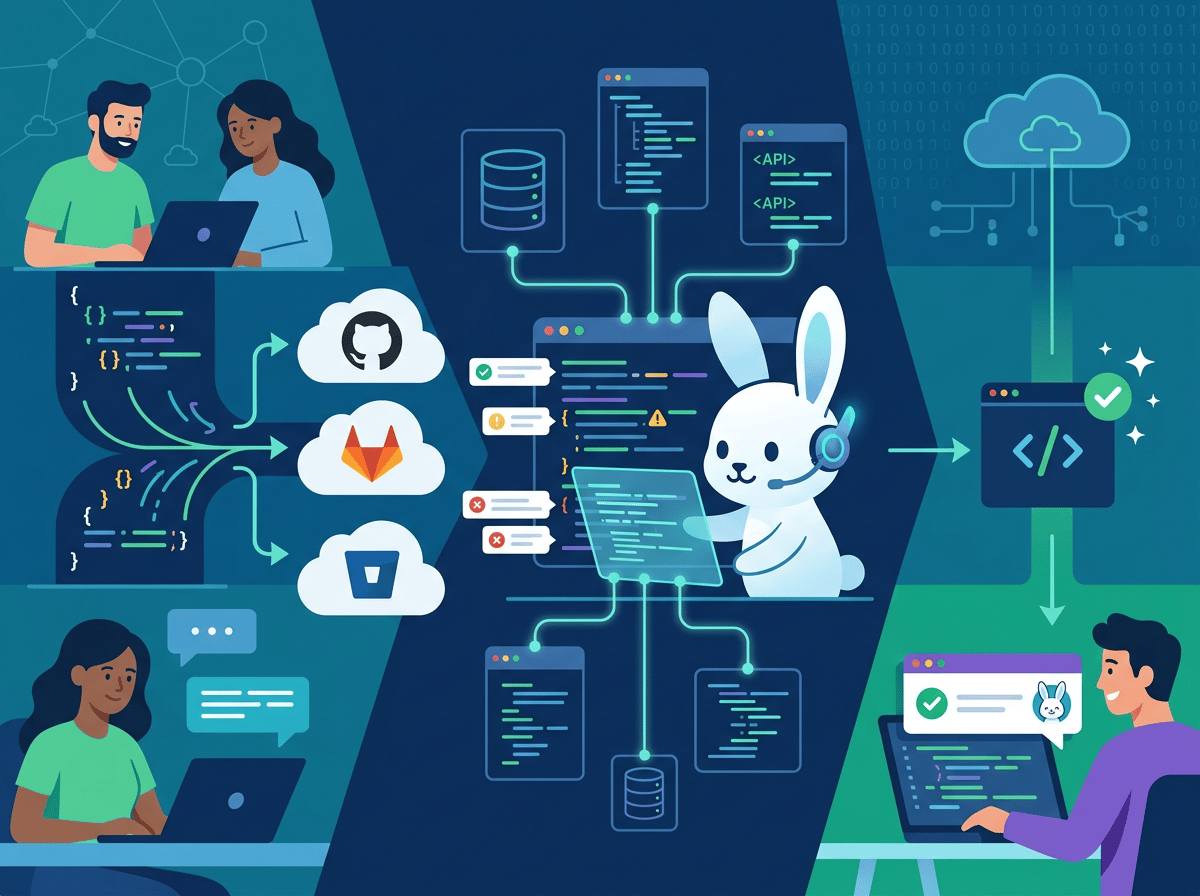
The best ai code review tools don’t slow your team down — they catch critical bugs before production while your engineers stay in flow state.
In 2026, American development teams face a painful contradiction. Shipping velocity has never been faster — CI/CD pipelines, cloud infrastructure, and AI coding assistants mean a small engineering team can push dozens of pull requests per week. But code review has not kept pace. Senior engineers are bottlenecks. Junior developers wait hours for feedback. Bugs that a thorough reviewer would catch in minutes slip into production and cost thousands to fix.
For US-based engineers and tech founders managing at $100–$200 per hour of engineering time, every hour spent on repetitive code review — checking style violations, logic errors, security antipatterns, and missing test coverage — is an hour not spent building. A startup team of five spending four hours each week on routine review overhead burns over $100,000 in annualized labor on work AI can handle automatically.
CodeRabbit is an AI-powered code review platform that integrates into GitHub and GitLab to review every pull request automatically. It reads your codebase for context, identifies bugs and security vulnerabilities, enforces code quality standards, and posts actionable inline comments — all before a human reviewer opens the PR. It functions as a tireless first-pass reviewer that handles mechanical grunt work so your team can focus on architecture, product decisions, and the subtle logic problems that genuinely require human expertise.
This article covers four specific workflows where CodeRabbit transforms code review from a bottleneck into a competitive advantage — with realistic ROI calculations based on US engineering rates, concrete before-and-after scenarios, and honest guidance on where AI review falls short. If your team merges more than ten pull requests per week, the question is no longer whether to adopt automated code review AI — it is how quickly you can implement it.
Try CodeRabbit free and see AI-powered pull request review in action. Start Free Trial | No credit card required
Key Concepts of AI-Powered Code Review
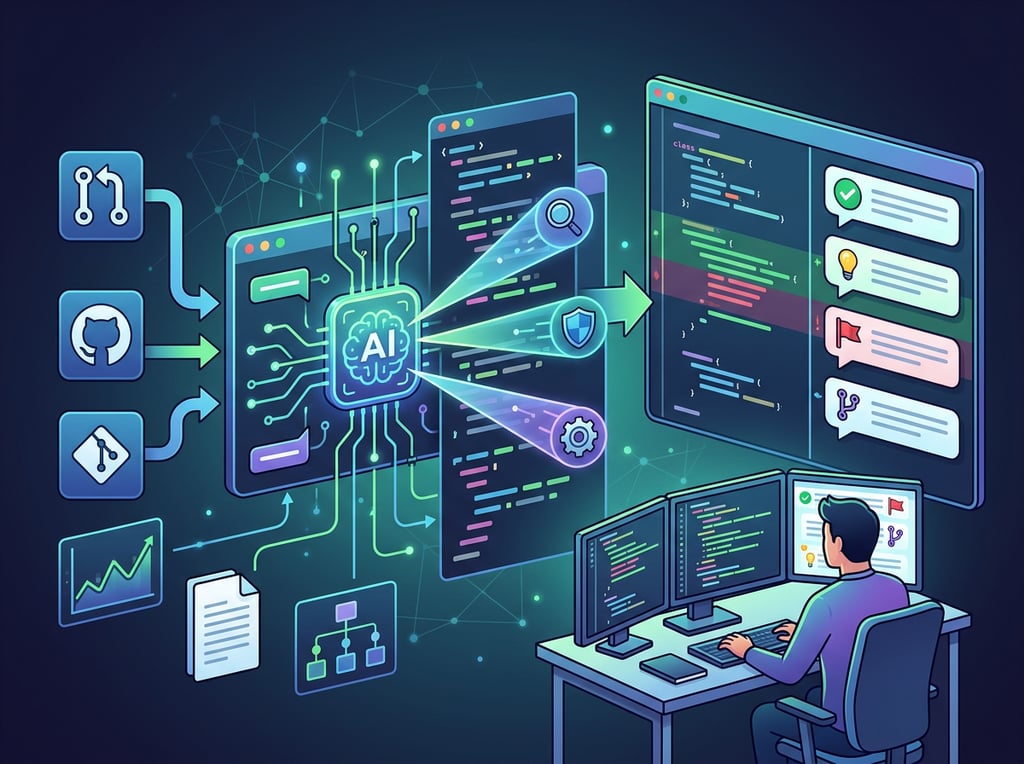
Concept 1: Review Latency and Its Compounding Cost
Code review latency — the time between a PR being opened and substantive feedback being delivered — is one of the most underestimated drains on engineering productivity. When a developer submits a pull request and waits two hours for a reviewer to respond, they context-switch to another task. When they eventually return to address feedback, they need 20–30 minutes to reload the mental context of what they were building. Multiply that across a team of five engineers averaging eight PRs each per week, and you have a compounding productivity drain that rarely shows up in sprint retrospectives but silently erodes throughput.
Consider Ryan, a senior backend engineer at a Series A startup in Seattle. Before adopting automated code review AI, Ryan spent an average of 12 hours per week on code review — roughly 30% of his work week. Of that time, approximately seven hours went to catching issues in clear, repeatable categories: unused variables, missing null checks, inconsistent error handling, and test functions that asserted nothing meaningful. These were not judgment calls — they were mechanical checks. At Ryan’s fully loaded rate of $90/hour, those seven hours represented $630 per week — $32,760 annually — spent on work AI now handles in seconds. For the full breakdown of how CodeRabbit approaches these review categories, explore CodeRabbit in detail.
Concept 2: Inconsistent Review Quality
Human reviewers are inconsistent by nature. A reviewer who is fully rested and uninterrupted will catch far more issues than the same reviewer on a Friday afternoon after a long sprint. Research into software defect rates consistently finds that review effectiveness varies based on reviewer load, time of day, and familiarity with the code area. Bugs that slip through rushed reviews cost an average of 4–6 times more to fix in production than they would have at the PR stage.
This inconsistency is especially acute for small teams where the same two or three engineers review each other’s code repeatedly. Familiarity breeds pattern blindness — reviewers unconsciously skim sections written by trusted teammates. AI review applies the same level of scrutiny to every PR, every time, without fatigue or familiarity bias.
Concept 3: Security and Compliance Review Overhead
For teams building B2B SaaS, fintech products, or anything that handles PII, security review is non-negotiable — but it is also expensive. A dedicated security review of a non-trivial PR by a qualified engineer can take 45–90 minutes. For startups that cannot afford a dedicated security engineer, this overhead either falls on senior developers (expensive), gets skipped (dangerous), or creates a separate review queue that becomes a deployment bottleneck.
AI-powered code review tools that include security scanning — checking for OWASP Top 10 vulnerabilities, insecure dependency patterns, exposed secrets, and injection risks — shift this burden from human reviewer time to automated analysis. As outlined in this breakdown of effective code review practices, structured, consistent review processes are the foundation of high-quality software delivery — and AI now provides that structure at zero marginal cost per review.
How CodeRabbit Helps Efficiency

Feature 1: Contextual PR Summarization
When a developer opens a pull request, the first thing a reviewer needs to do is understand what changed and why. For a PR touching 15 files across multiple modules, that orientation can take 10–20 minutes even for an experienced reviewer familiar with the codebase. CodeRabbit automatically generates a structured PR summary on every submission — describing what the change does, which components are affected, and flagging areas of elevated risk. This summary appears immediately in the PR, before any human reviewer has opened the tab.
For a team of five developers averaging 40 PRs per week, eliminating 10 minutes of orientation time per PR saves over 33 hours per month across the team. At a blended engineering rate of $80/hour, that is $2,640 per month — $31,680 annually — recovered from pure overhead. Annual time saved from this single feature alone: approximately 400 team-hours.
Feature 2: Inline Bug and Logic Error Detection
CodeRabbit reads the entire diff in context with the surrounding codebase and posts specific, actionable inline comments identifying bugs, logic errors, and quality issues. Unlike static analysis tools that flag violations against a fixed ruleset, CodeRabbit understands the intent of the code — it can identify cases where a function behaves differently from what its name implies, where error handling is inconsistent with patterns elsewhere in the codebase, or where a recent change introduces regression risk.
Teams that adopt automated code review AI consistently report 30–50% reductions in production bug rates within the first quarter. For a team spending an average of $8,000 per production incident, preventing two incidents per quarter represents $64,000 in annual savings. To see how these detection capabilities integrate with your existing GitHub or GitLab workflow, see our full CodeRabbit review.
Feature 3: Customizable Review Rules and Team Learning
CodeRabbit allows teams to configure custom review rules that reflect their specific standards — naming conventions, architectural patterns, testing requirements, and domain-specific antipatterns. Over time, the system learns from how the team responds to its comments: if engineers consistently dismiss certain suggestions, it adjusts. If a team has recurring issues with a particular pattern (say, improper error propagation in async functions), it can be configured to flag that pattern with elevated priority.
This means the review system improves as the team uses it, building institutional knowledge that survives engineer turnover. Teams that pair CodeRabbit with structured issue planning workflows — as explored in this guide to AI-assisted project planning — find that better-scoped issues lead to smaller, safer PRs that are faster to review end-to-end. Combined ROI across all four features for a five-person team at $80/hour blended rate: approximately $80,000–$120,000 annually against a subscription cost that starts at $12 per user per month.
Ready to eliminate code review bottlenecks? Try CodeRabbit free and see AI-powered pull request review in action. Start Free Trial | No credit card required
Best Practices for Implementing AI Code Review Automation
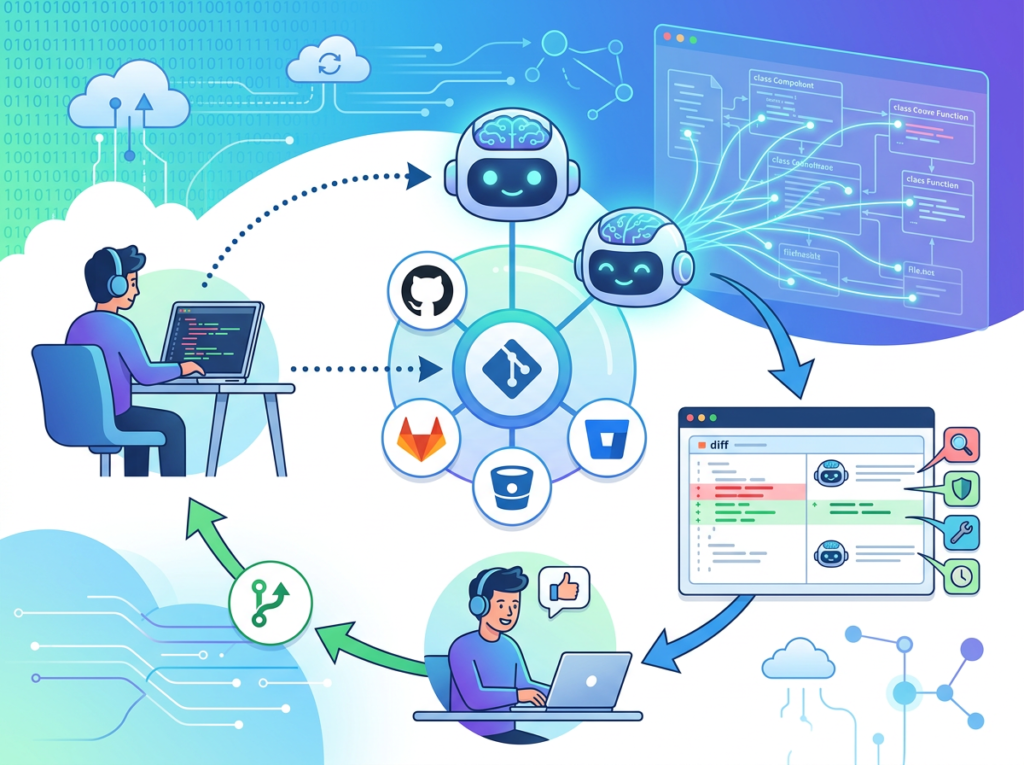
1. Start with Low-Stakes, High-Volume PR Types
Do not attempt to automate review for your most complex changes on day one. Identify the PR types highest in volume and lowest in architectural complexity — dependency updates, minor bug fixes, test additions, documentation changes — and let CodeRabbit handle first-pass review for those categories first. Build team familiarity before expanding to higher-stakes reviews. Most teams achieve enough confidence to go full-workflow within two weeks.
2. Configure Before You Deploy
CodeRabbit’s value increases significantly when configured to reflect your team’s actual standards. Before your first week, invest two to three hours setting up: review strictness level, custom rules for domain-specific patterns, languages and frameworks in use, and how security findings are surfaced. This upfront work prevents alert fatigue — the main reason teams stop trusting AI review comments.
3. Maintain Human Oversight on Architectural Changes
AI code review excels at the mechanical layer. It does not replace human judgment for decisions about service boundaries, data model design, API contract changes, or anything requiring product roadmap context. Define a clear policy: any PR that changes a public API, modifies a data schema, or touches authentication logic requires human sign-off regardless of AI review results.
4. Track Leading Indicators, Not Just Lagging Ones
Add leading indicators to your engineering metrics: average PR review latency, percentage of PRs requiring zero additional human review cycles, and frequency of AI comment dismissal by category. If engineers consistently dismiss a category of comments, either the configuration needs adjustment or the team needs to understand why those patterns matter.
Limitations and Considerations
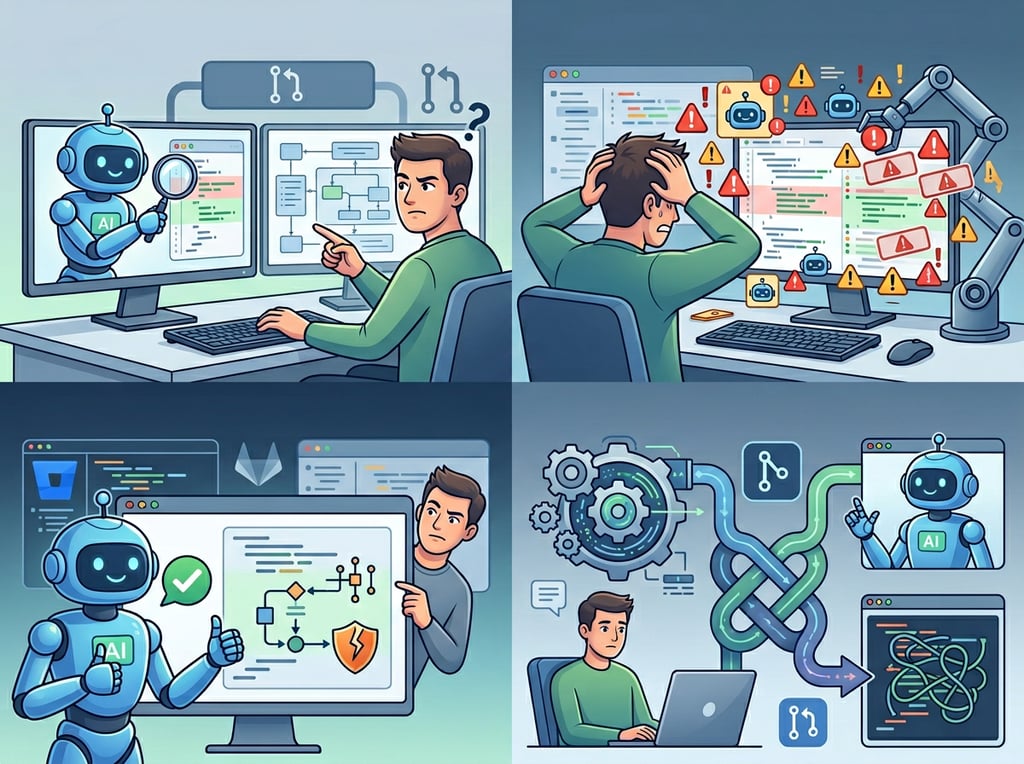
Where CodeRabbit Is NOT the Right Tool
Complex architectural review. When a PR restructures how services communicate or changes a fundamental data flow, the review question is not “does this code work?” but “should we be doing this at all?” That is a product and architecture conversation AI cannot evaluate.
Business logic validation. CodeRabbit can confirm that a function is syntactically correct and follows your style guide. It cannot tell you that a discount calculation is wrong because it misunderstands a business rule documented only in a Confluence page from 2023.
Nuanced team communication. Code review is also mentorship. A comment from a senior engineer to a junior developer carries relationship context that affects developer growth in ways AI cannot replicate. Use AI to eliminate mechanical overhead — not to replace human relationships.
Key risks to manage:
- False confidence. A PR with zero AI comments is not necessarily safe to merge. A clean AI review is not a substitute for human judgment on complex changes.
- Configuration drift. As your codebase evolves, CodeRabbit’s configuration must evolve with it. A setup tuned in Q1 may produce increasingly noisy comments by Q4 without maintenance.
- Junior developer over-reliance. Developers who receive most feedback from AI may develop a narrower understanding of good code than those mentored by experienced engineers who explain the “why.” Supplement AI review with regular human pairing sessions.
Try CodeRabbit free and see AI-powered pull request review in action. Start Free Trial | No credit card required
Frequently Asked Questions

How do developers use CodeRabbit to save time?
CodeRabbit connects to your GitHub or GitLab organization. From that point, every PR gets an automated review within minutes of submission. Authors see immediate feedback before a human reviewer is notified. Human reviewers open PRs that are already partially reviewed, reducing per-PR time by 40–60% on average.
What is the best AI tool for improving code quality?
For teams focused on pull request review automation, CodeRabbit is among the most purpose-built options available in 2026. It offers deep GitHub and GitLab integration, configurable review rules, security scanning, and PR summarization in a single platform designed around the code review workflow. Teams with enterprise compliance requirements or monorepo complexity should evaluate their options carefully, but CodeRabbit is a strong default for most teams.
Do I need technical skills to set up CodeRabbit?
Basic setup — connecting to your GitHub or GitLab organization — takes 10–15 minutes and requires admin access to the repository. No coding required. Advanced configuration uses a YAML file accessible to any developer comfortable with standard config formats. Non-technical founders can handle initial setup; deeper customization should involve a developer.
Conclusion
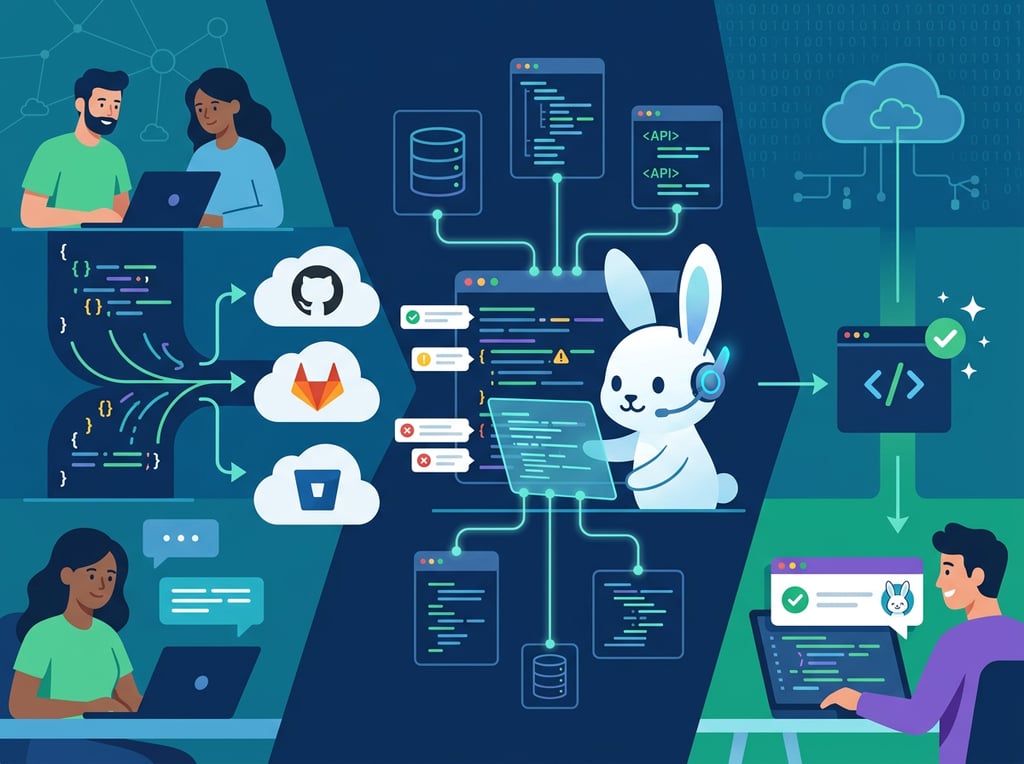
For US development teams shipping in 2026, the productivity math around ai code review tools is no longer ambiguous. The combination of AI-powered pull request review, automated security scanning, and instant PR summarization that CodeRabbit delivers addresses the most expensive inefficiency in modern software development: the gap between code submission and substantive feedback.
Senior engineers reclaim hours previously spent on mechanical review. Junior developers get immediate, actionable feedback. Security vulnerabilities are caught at the PR stage rather than in production. And the entire team ships with more confidence because review is consistent and fast — not dependent on who happens to be least busy when a PR lands.
The ROI for a five-person team is realistically $80,000–$120,000 in annual value against a subscription measured in hundreds of dollars. That is not a marginal efficiency gain — it is a structural change in how your team spends its most expensive resource: senior engineering time.
AI code review is not about replacing engineers. It is about ensuring they spend review time on problems that genuinely require their expertise. Start with one repository, run it for two weeks, and measure PR review latency before and after. The data will make the decision for you.
The question is not whether your team should automate code reviews with AI. It is whether you can afford another quarter without it.
Try CodeRabbit free and see AI-powered pull request review in action. Start Free Trial | No credit card required
Leave a Reply