
Businesses running on manual workflows are bleeding hours daily — and ai agent automation tools like Atoms are permanently closing that gap.
In 2026, American founders, operators, and solo entrepreneurs face a productivity paradox that no amount of hustle can solve alone. The inbox never hits zero. The client proposal is half-finished. The operations dashboard needs updating — again. You’re working harder than ever, but the backlog refuses to shrink.
The root problem isn’t effort. It’s architecture. Most small businesses are still running on human-powered workflows designed for teams twice their size — manually triggering each step, chasing each handoff, and making each micro-decision. For US-based operators billing $75–150 per hour, every hour spent on repetitive workflow management is $75–150 that doesn’t exist in your revenue column.
This is where ai agent automation tools change the equation. Rather than asking you to work longer, they rebuild the workflows themselves — deploying AI agents that research, plan, build, and execute on your behalf while you focus on the decisions only you can make.
Atoms is one of the most ambitious platforms in this category. Launched as an AI-powered product and operations builder, Atoms deploys a coordinated team of specialized AI agents — a Researcher, Architect, Product Manager, Engineer, SEO Specialist, and Data Analyst — that collaborate to validate your ideas, build working products, automate operations, and acquire customers. It is trusted by employees at Amazon, Microsoft, Samsung, Walmart, and Nvidia, and has earned 123,000 GitHub Stars and a #1 Product of the Day on Product Hunt.
This article delivers four specific automation workflows you can implement this week, each designed to reclaim 2–8 hours of manual work. For US operators managing growing businesses on lean teams, that time translates directly into revenue, growth, and sanity.
Try Atoms free and experience AI agent automation firsthand. Start Free | No credit card required
Key Concepts of AI Agent Automation

Concept 1: Multi-Agent Orchestration
Traditional AI tools are single-player. You ask, they answer. Multi-agent orchestration is categorically different — it deploys multiple specialized AI agents that divide labor, coordinate tasks, and hand off work to each other, just like a well-run team.
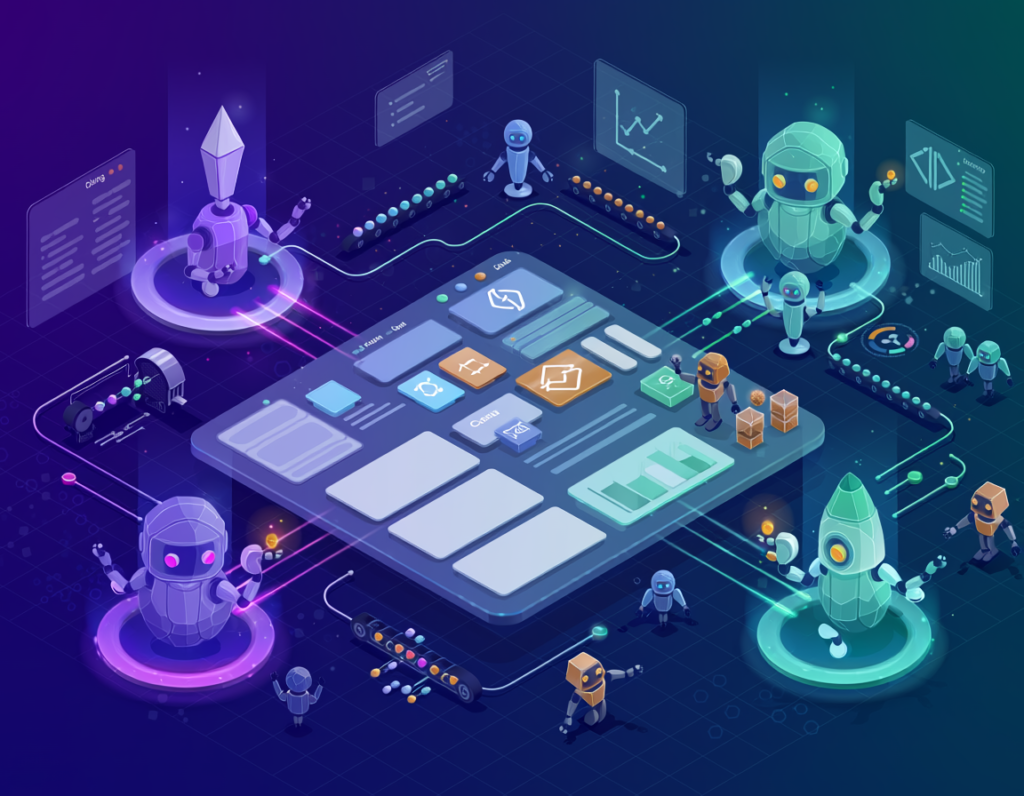
Atoms exemplifies this model. When you describe a goal, its Team Leader agent (Mike) coordinates the full execution: Iris conducts deep market research, Emma writes the product spec, Bob designs the architecture, Alex builds the application, Sarah handles SEO, and David analyzes performance data. No single agent has to do everything, and no human has to manage the handoffs.
Consider Sarah, a freelance brand designer in Portland with eight active clients. Before adopting multi-agent tools, she spent 12 hours per week on non-billable operations: researching competitors for client briefs, writing project documentation, and updating her portfolio site. With an orchestrated agent workflow, that overhead dropped to under 4 hours — an 8-hour weekly reclamation worth $600–1,200 at her billing rate.
For a deeper look at how multi-agent coordination translates into business outcomes, explore Atoms in detail.
Concept 2: Atomic Use Case Thinking
One of the most common mistakes businesses make when adopting automation is going too big too fast. They target their most complex workflow — the one that involves 14 stakeholders and three legacy systems — and wonder why implementation stalls.
The smarter approach is what practitioners call “atomic” thinking: decomposing large operational goals into small, self-contained automation units that can be prototyped in days rather than months. As noted in this analysis of atomic AI use cases, the businesses that build lasting AI capability start with focused, low-friction projects that validate assumptions before scaling.
Marcus, an independent management consultant in Chicago, applied this principle directly. Instead of automating his entire client delivery process at once, he started with one atomic unit: using an AI agent to generate first-draft research summaries from client intake forms. That single workflow saved him 6 hours per month. With that win established, he added a second unit (proposal drafting), then a third (performance reporting). Within a quarter, he had reclaimed 22 hours monthly — the equivalent of adding a part-time research assistant at zero marginal cost.
Concept 3: Context-Persistent Workflow Execution
Human workers carry context between tasks automatically — they remember what was decided in Monday’s meeting when they’re executing on Thursday. Most basic AI tools don’t. Each conversation resets the state, forcing users to re-explain everything from scratch.
Modern AI agent platforms solve this through persistent context and project memory. Atoms maintains awareness of your product, your goals, and your build history across sessions, allowing agents to pick up where they left off rather than requiring constant re-briefing. This isn’t a minor convenience — it’s the difference between a tool you use occasionally and a system that runs reliably without you.
Elena, a Shopify store owner in Austin managing 400+ SKUs, used to spend 5 hours every month manually re-briefing contractors and AI tools each time she needed product descriptions updated or SEO pages refreshed. Persistent agent context eliminated that re-briefing overhead entirely, recovering 60 hours annually.
How Atoms Helps Automate Tasks and Run Workflows
Capability 1: Deep Research and Market Validation (Iris Agent)
Before building anything, you need to know it’s worth building. Atoms’ Iris agent conducts deep market research autonomously — identifying demand signals, analyzing competitor positioning, finding underserved niches, and summarizing findings into actionable opportunity reports.
For US operators, this replaces hours of manual research that would otherwise require browsing forums, running keyword tools, and synthesizing scattered signals into a coherent picture.
Time impact: Operators who previously spent 4–6 hours per project on manual research validation report completing equivalent research in 30–45 minutes with Iris. At $100/hour, that’s $350–550 saved per research cycle — and most growing businesses run 2–4 research cycles per month.
Annual time saved: Approximately 52–104 hours = $5,200–$10,400 at mid-market hourly rates.
Capability 2: Full-Stack Product Building (Emma + Bob + Alex Agents)
This is where Atoms diverges most sharply from conventional workflow tools. The platform doesn’t just help you think about building something — it builds it. Emma writes the product spec, Bob designs the technical architecture, and Alex engineers the working application, complete with user authentication, database infrastructure, payment processing via Stripe, and scalable hosting on Atoms Cloud.
For operators without engineering teams, this collapses what would be a $15,000–$50,000 development engagement into hours of agent-directed execution. A working MVP that previously required a developer and 3–6 weeks can be live in a single session.
Time impact: Solo founders who previously outsourced MVP development report replacing months of contractor coordination with days of agent execution. The cost differential is substantial: contractor development at $100–200/hour for 120–240 hours versus Atoms’ platform subscription.
To see how these build capabilities work across different business types, see our full Atoms review.
Capability 3: SEO Automation (Sarah Agent)
Atoms’ Sarah agent automatically optimizes your application or website for search engine discoverability — analyzing your pages, implementing technical SEO improvements, and generating optimized content to drive organic traffic. For operators who know SEO matters but don’t have the bandwidth to execute it consistently, Sarah represents a compounding operational advantage.
Time impact: Businesses spending 3–5 hours per week on manual SEO tasks can delegate that work to Sarah, recovering 150–260 hours annually. At $75/hour, that’s $11,250–$19,500 recovered.
Ready to cut your operations overhead in half? Try Atoms free and experience AI agent automation firsthand. Start Free | No credit card required
Best Practices for Implementing AI Agent Automation
1. Start with One Atomic Workflow
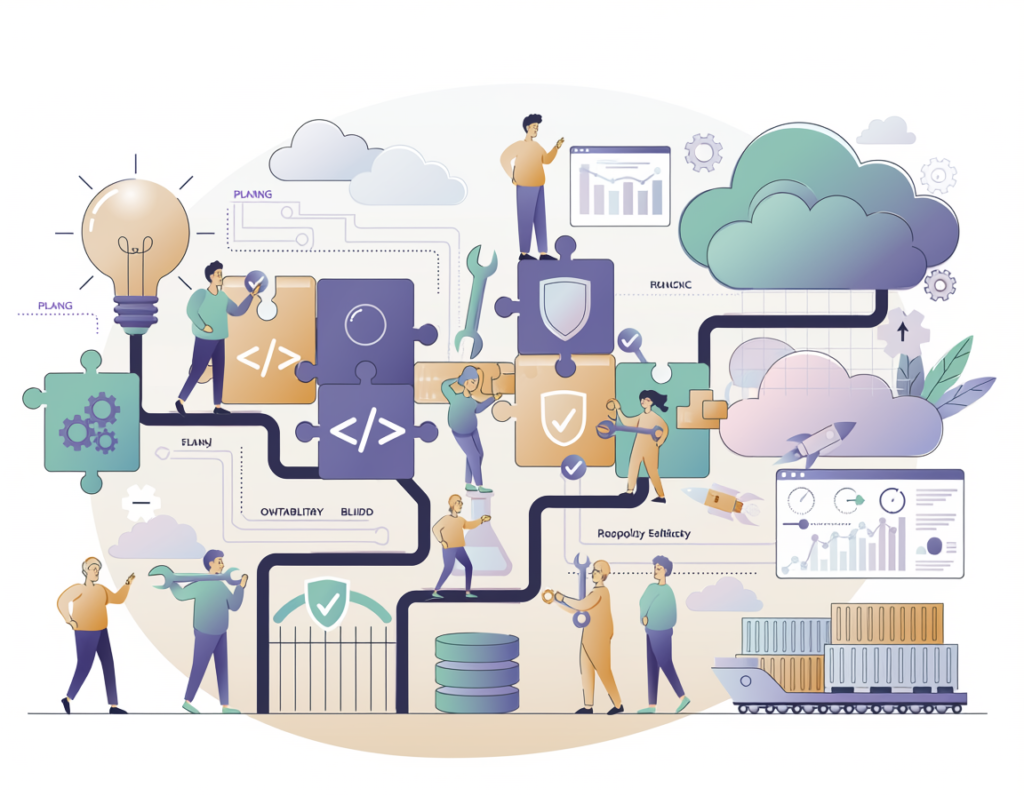
Resist the urge to automate everything at once. Choose a single, self-contained workflow — market research for a new project, SEO optimization for an existing page, or first-draft documentation — and run it fully through Atoms before expanding. Atomic implementation builds familiarity, surface errors early, and creates the credibility to expand. As outlined in Atoms’ own workflow documentation, building complex automation in small, confirmed steps consistently outperforms big-bang deployments.
Teams that start small and iterate see 3–5x better automation retention at 90 days than teams that attempt comprehensive implementation immediately.
2. Maintain Human Review on High-Stakes Outputs
Atoms is built with a “human-in-the-loop” philosophy — Mike (the Team Leader agent) explicitly requests your approval before major build decisions. Honor that design. Review agent outputs before they go to clients, before they go live, and before they get integrated into critical systems. AI agents eliminate the busywork layer; human judgment protects the brand layer.
Set a personal rule: anything that faces a client or affects revenue gets a human review pass before delivery.
3. Avoid Tool Proliferation
The average small business using 6–8 disconnected productivity tools spends $190–$340/month on fragmented software that doesn’t communicate. Atoms is designed as a consolidated platform covering research, building, SEO, analytics, and deployment in one environment. Before adding new tools to your stack, audit whether Atoms can cover that use case natively. Consolidating from 6 tools to 2 doesn’t just save money — it eliminates the coordination overhead between systems.
Typical savings: $130–$200/month in eliminated subscriptions + 3–4 hours/month in reduced tool-switching friction.
Limitations and Considerations

AI agent automation tools like Atoms excel at research, building, and optimization tasks — but they are not reliable substitutes for nuanced creative strategy, legal judgment, or sensitive human communication.
Understanding where Atoms (and AI agents generally) fall short is as important as understanding where they excel.
Complex Brand Voice and Creative Strategy: Atoms can generate landing page copy, product descriptions, and documentation efficiently. What it cannot do reliably is capture the precise voice of a high-touch brand or make the creative judgment calls that define differentiated positioning. For brand-critical communications — especially in industries where tone is a competitive moat — human creative direction is still irreplaceable. Use agents to generate the draft; use your judgment to make it yours.
Legal, Compliance, and Contractual Documents: No AI agent should produce contracts, terms of service, privacy policies, or compliance-sensitive documentation without human legal review. Agent outputs can be a useful starting point, but they carry material risk if used without expert oversight in legal contexts.
Sensitive Client and Customer Interactions: Relationship management — especially difficult conversations, complaint resolution, or high-value client negotiations — requires the kind of contextual empathy and judgment that agents cannot reliably replicate. Delegate the administrative layer; retain the relational layer.
Frequently Asked Questions
What are AI agent automation tools for small business?
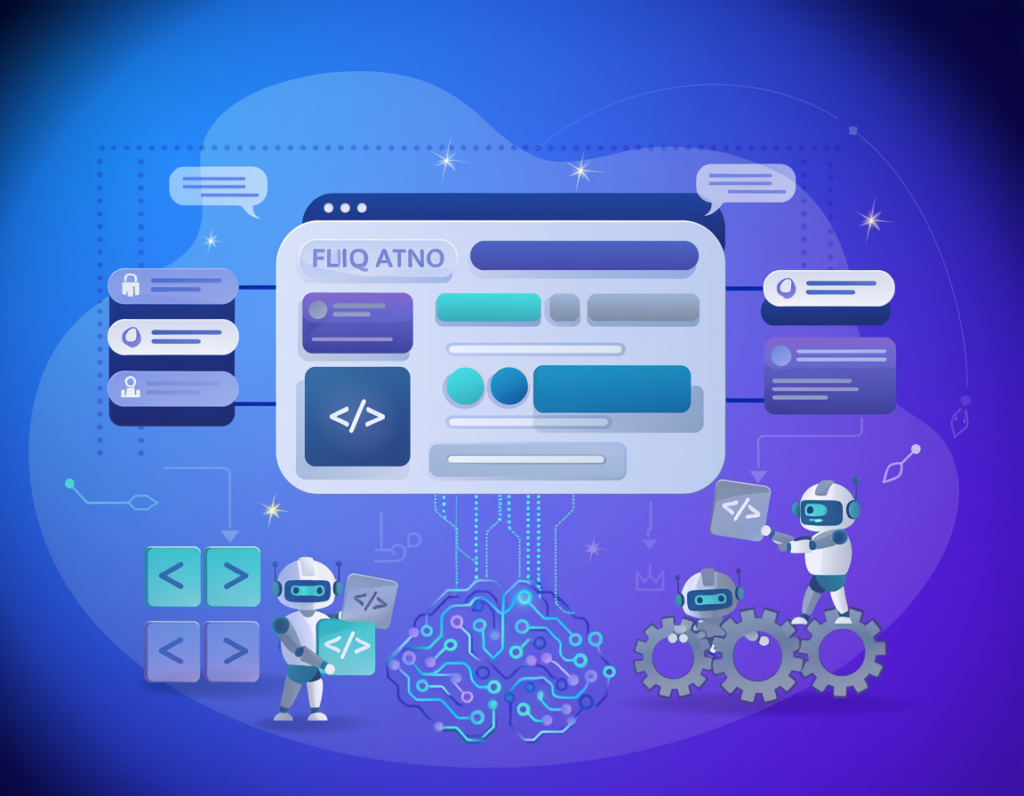
AI agent automation tools are platforms that deploy intelligent software agents to handle repetitive, research-intensive, or execution-heavy business tasks — from market research and product development to SEO and data analysis. Unlike basic AI chatbots, agent platforms like Atoms coordinate multiple specialized agents that divide labor and execute end-to-end workflows without requiring constant human input at each step. For small businesses, this creates the operational capacity of a multi-person team at a fraction of the cost.
What is the best AI tool for automating business workflows in 2026?
The right tool depends on your primary bottleneck. Atoms is the strongest option for founders and operators who need to build working products and automate operations simultaneously — its multi-agent team architecture makes it uniquely suited for businesses that are building and running at the same time. For pure workflow automation between existing apps, platforms like Zapier or Make serve a complementary role. Many operators run both: Atoms for product and content creation, a workflow tool for system-to-system automation.
Do I need technical skills to automate tasks with AI agents?
No. Atoms is specifically designed for non-technical users — you describe what you want in plain language and the agents handle implementation. The platform includes a visual editor for design adjustments and templates for common project types, making it accessible to operators with no coding background. That said, familiarity with your own business processes is essential: agents execute on the goals you define, so clear thinking about what you want to automate produces better results than vague instructions.
Conclusion

The case for ai agent automation tools in 2026 isn’t theoretical — it’s arithmetic. US-based founders, operators, and freelancers losing 8–20 hours per week to operational overhead are simultaneously losing $600–$3,000 in weekly billing capacity or strategic focus. That’s not a productivity problem. It’s a structural one.
Atoms addresses that structure directly. By deploying a coordinated team of specialized AI agents — each focused on a distinct operational domain — it transforms what would require a full support team into something a solo operator can run from a single platform. Research, product building, SEO, and data analysis executed by agents. Human energy reserved for strategy, relationships, and decisions that actually require you.
AI agent automation isn’t about replacing your judgment. It’s about making sure your judgment is what you’re actually spending your time on.
The path forward is concrete and low-risk: choose one workflow this week — market research for a new project, an SEO audit on your primary landing page, or a first-draft product spec — and run it through Atoms. Measure the time. Then expand from there.
For US operators willing to start small and iterate fast, the ROI isn’t 2x or 3x. It’s closer to 50x–100x annually once the compound effect of consistent automation builds. The question isn’t “Should I automate tasks with AI agents?” — it’s “Can I afford to keep doing them manually?”
Try Atoms free and experience AI agent automation firsthand. Start Free | No credit card required
Leave a Reply