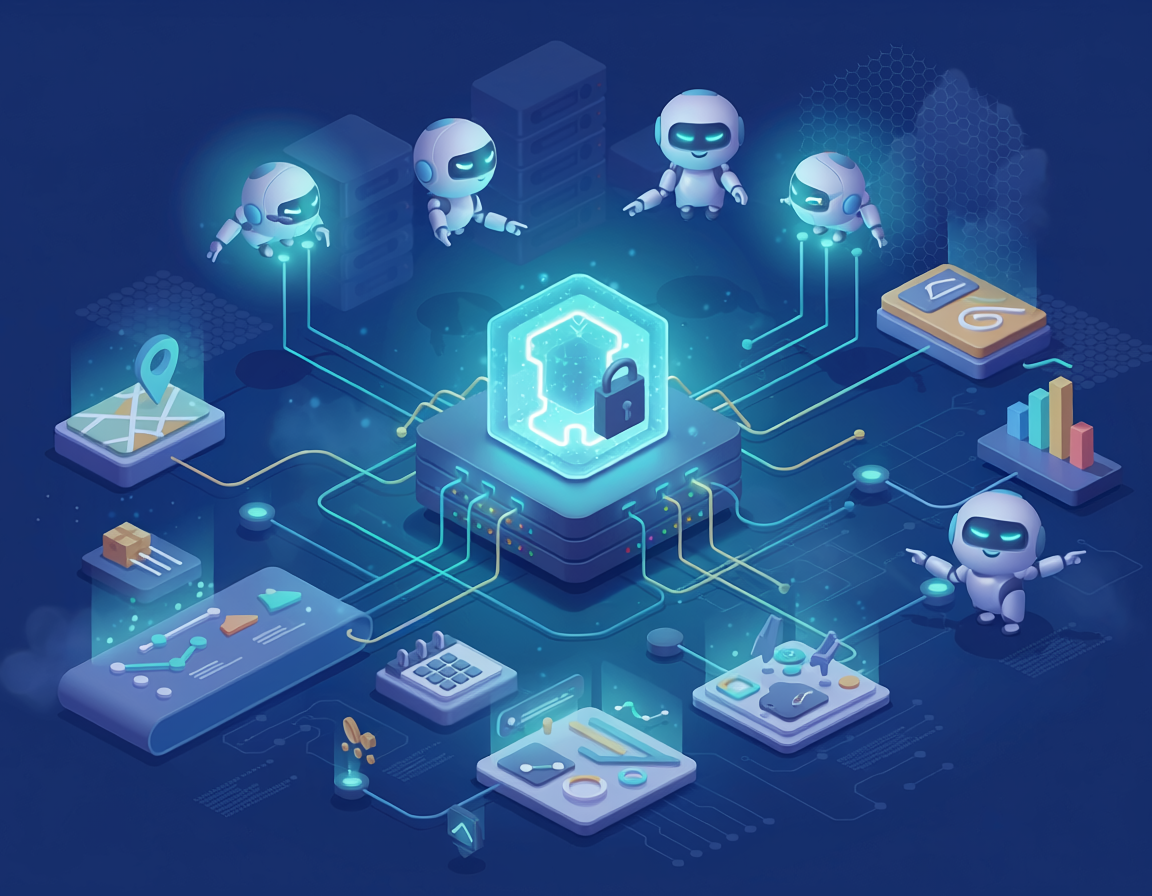
Most founders waste 20+ hours a week on manual API wiring — Jentic Mini hands those hours back by letting AI agents do the connecting.
In 2026, American founders, operators, and solo teams face a specific kind of operational drag that no productivity app has fully solved: the cost of connecting things. You want your AI agent to pull data from Notion, post a summary to Slack, update a CRM record, and fire off a customer email — and every single connection requires its own auth setup, its own credentials, its own glue code. For a 5-person team, that overhead quietly consumes entire workweeks.
The inbox isn’t the bottleneck anymore. Integration complexity is.
For US freelancers and small business operators billing $75–150/hour, every hour spent managing API credentials, debugging authentication flows, or writing bespoke connector scripts is $75–150 not earned — and compounding. A solo developer or operations lead who spends 10 hours a week on workflow plumbing is leaving $39,000 to $78,000 on the table annually.
Jentic Mini is built for this exact problem. It’s a free, self-hosted API execution layer that sits between your AI agents and the outside world — managing credentials, brokering requests, and enforcing permissions so your agents can actually do real work instead of getting stuck at the authentication door. With access to 10,000+ API integrations and a single-command install, it removes the glue code problem entirely.
This article covers four specific workflows where Jentic Mini delivers measurable time savings, the real business scenarios where it performs best, and the honest limits you should understand before you build on it. By the end, you’ll know exactly whether this tool belongs in your 2026 stack — and how to get it running this week.
Ready to stop writing glue code? Try Jentic Mini free — self-hosted, open source, and running in under five minutes. View on GitHub
Key Concepts of AI Agent Workflow Automation
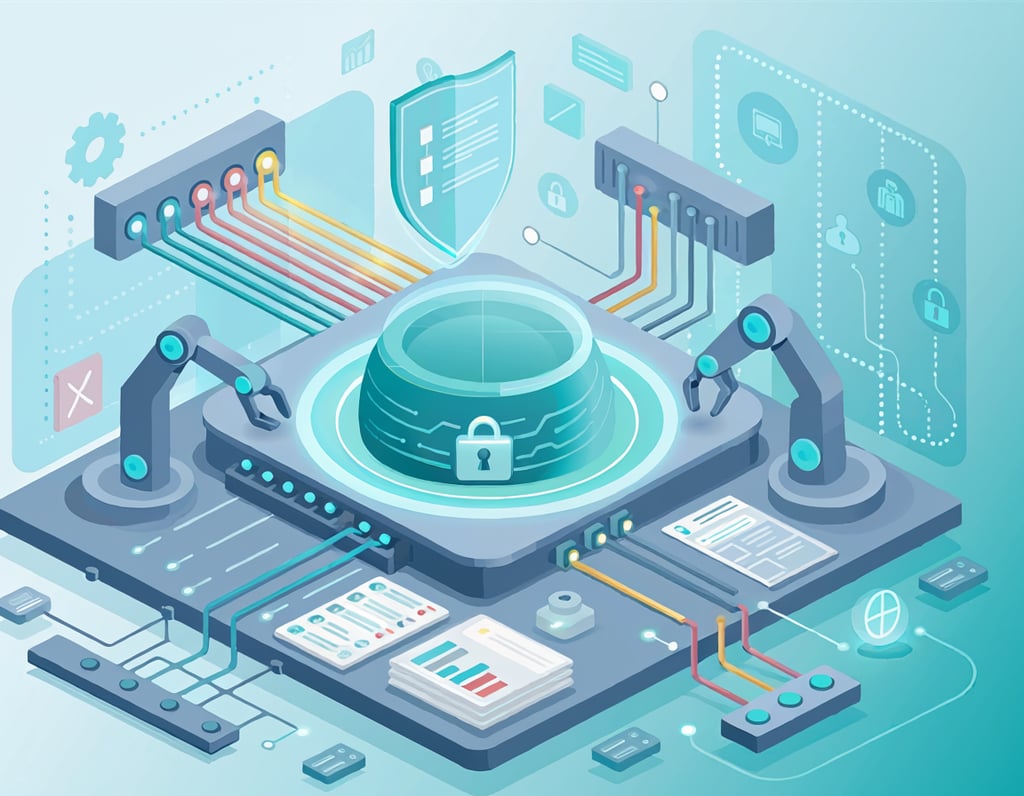
Concept 1: Credential Sprawl and the Secret Management Problem
Every API your business uses — Slack, HubSpot, Stripe, Notion, Google Calendar — requires its own credentials. OAuth tokens, API keys, and bearer tokens accumulate fast. Most small teams manage these inconsistently: some are hardcoded in scripts, some live in .env files, and some are stored in personal password managers that only one team member can access.
When you want an AI agent to execute tasks across these APIs, the credential problem becomes acute. Passing secrets directly to an agent is a security risk. Building a secure vault from scratch is an engineering project in itself.
Consider Marcus, an independent operations consultant in Chicago. Before adopting a structured API execution layer, he spent approximately 6 hours per week managing authentication setups, debugging expired tokens, and onboarding new tool integrations for client engagements. That’s 312 hours per year — time he was billing at $125/hour. The credential sprawl problem alone cost him $39,000 in capacity annually.
Jentic Mini solves this with an encrypted local credentials vault that injects secrets at execution time, never exposing them to the agent or returning them through the API.
Concept 2: Per-API Glue Code Accumulation
Every time a business adds a new SaaS tool, someone writes connector code. A webhook here, a transformation function there, a retry handler somewhere else. Over 18 months, a small but growing operation can accumulate hundreds of lines of custom integration code that nobody fully understands and everyone is afraid to touch.
This is the “glue code tax” — and it scales badly. Adding a new AI agent to your workflow means writing new connectors for every API that agent needs to touch.
The Jentic quickstart documentation captures this cleanly: the goal is for agents to discover, load, and execute APIs by intent — “send a Discord DM,” “search NYT,” “translate this text” — without per-API connector code. The catalog handles the spec mapping; your agent just describes what it wants done.
Elena, an e-commerce owner in Austin running a Shopify-plus-Klaviyo-plus-Gorgias stack, was spending 4 hours per month maintaining connector scripts between her tools. After moving to an agent-based execution layer, that maintenance overhead dropped to under 30 minutes. The catalog already knew how to talk to her tools.
For a deeper look at how Jentic Mini structures this execution layer, explore Jentic Mini in detail.
Concept 3: Agent Permission Sprawl
The flip side of giving AI agents more capability is giving them too much. An agent with unrestricted API access is a liability. If a workflow goes wrong — an agent misinterprets an instruction, a bug causes a loop — the blast radius of unconstrained permissions can be severe.
Effective ai agent workflow tools enforce scoped access: each agent gets exactly the permissions it needs for its specific function, and nothing more. The ability to revoke access instantly — a killswitch — is essential for any production deployment.
This is the governance layer that most “connect your AI to everything” tools skip entirely, prioritizing demo-ability over operational safety.
How Jentic Mini Helps Efficiency
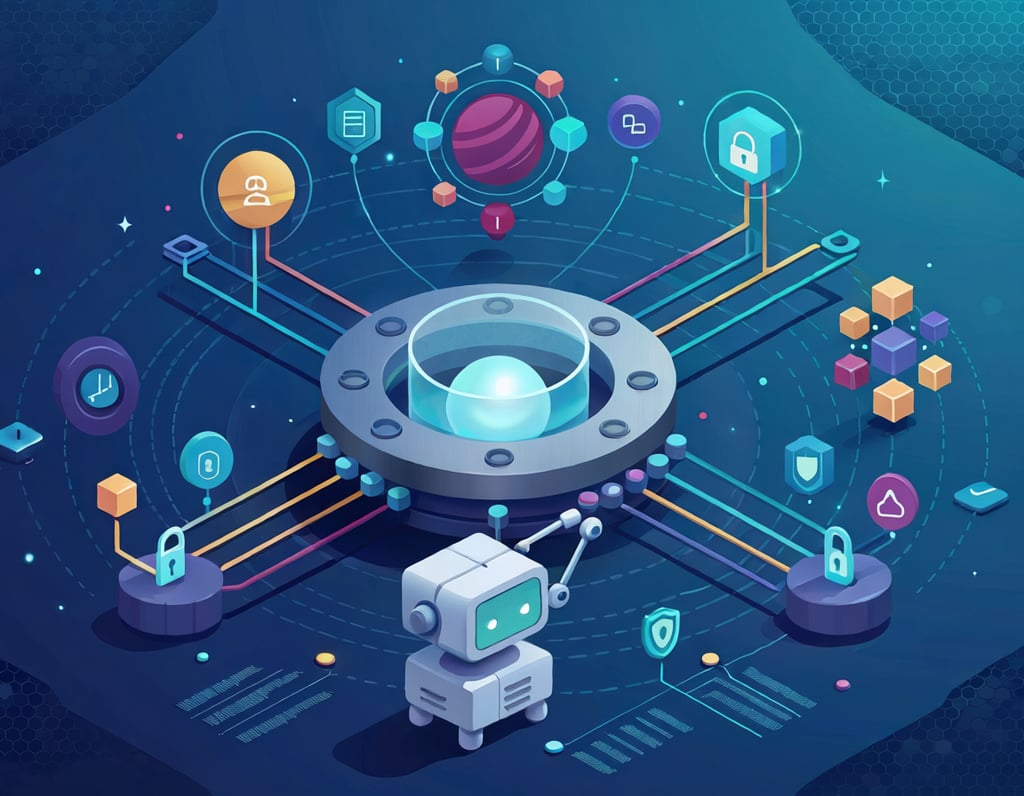
Feature 1: Encrypted Credentials Vault
What it does: API keys, OAuth tokens, and secrets are stored in an encrypted local vault. When an agent executes a workflow, credentials are injected at runtime — the agent never sees the raw secret, and secrets are never returned through the API response.
Why it matters for small teams: Most small businesses don’t have a dedicated security engineer. Credentials end up in Google Docs, shared Slack messages, or .env files committed to GitHub. One misconfiguration exposes your entire stack. The vault eliminates that risk without requiring any security infrastructure expertise.
Time savings estimate: Credential-related incidents — expired tokens, exposed secrets, onboarding new tools — typically consume 3–5 hours per month for a solo operator managing 5+ SaaS integrations. Eliminating this overhead saves approximately 36–60 hours annually.
Annual ROI: At $75–125/hour, that’s $2,700–$7,500 recovered in billable or product-building time.
Feature 2: Toolkit-Scoped Permissions and the Killswitch
What it does: Each AI agent gets its own “toolkit key” — a bundle of credentials and an access policy that defines exactly which APIs and workflows it can touch. Revoking an agent’s access is a single action.
Why it matters: As noted in this safety-focused breakdown of Jentic Mini’s agent governance approach, the ability to move AI agents from demo to production requires fine-grained permission control — without it, teams hesitate to deploy agents to real systems. The killswitch means you can iterate confidently.
Time savings estimate: Teams without scoped permissions spend significant time auditing what went wrong when agents behave unexpectedly. With toolkit-scoped access, the scope of any error is bounded. Estimate: 5–8 hours per month recovered in debugging and incident response for teams running 3+ agents.
Annual ROI: 60–96 hours annually = $4,500–$12,000 at standard US freelance rates.
Feature 3: 10,000+ API and Workflow Catalog
What it does: Jentic maintains a catalog of 1,044+ API specs and 380+ workflow sources (in the free Mini tier), curated and maintained by AI agents. Your agent searches the catalog by intent, loads the execution spec, and runs it — without you writing connector code.
Why it matters: This is the core value proposition for ai workflow automation. Instead of building and maintaining integrations, you describe what you want done. The catalog acts as a machine-readable map of the tools your agents can execute against.
Time savings estimate: For a developer or operator managing 8–12 SaaS integrations, building and maintaining custom connectors typically takes 8–12 hours per month. Catalog-based execution eliminates most of this.
Annual ROI: 96–144 hours annually = $7,200–$18,000 at developer rates.
To see how the full architecture supports business automation agents at scale, see our full Jentic Mini review.
Ready to stop writing glue code? Try Jentic Mini free — self-hosted, open source, and running in under five minutes. View on GitHub | No credit card required
Best Practices for Implementing AI Efficiency
Start with one high-repetition, low-stakes workflow. The worst thing you can do is try to automate your most complex or most sensitive process first. Start with something you do identically more than three times per week and that doesn’t touch customer-facing communications directly. Fulfillment status syncing, internal reporting pulls, and file organization are good candidates. Build confidence in the execution layer before expanding agent access.
Use toolkit-scoped permissions from day one. It’s tempting to give your first agent broad API access to get it working quickly. Resist this. The extra 20 minutes it takes to define a proper toolkit scope upfront will save you hours of incident response when something goes wrong — and something always goes wrong during the learning phase. Jentic Mini’s per-agent toolkit keys make scoping straightforward.
Build a human review step into any agent that touches outbound communications. AI agents are excellent at data retrieval, transformation, and routing. They are less reliable when generating customer-facing text from scratch under variable conditions. For any workflow that ends with an email, SMS, or external message, build in a review queue or template-lock the output format. Tools for operations automation work best when humans own the communication layer.
Limitations and Considerations

Where Jentic Mini is NOT the right solution:
Complex multi-conditional business logic. Jentic Mini excels at executing well-defined API workflows. If your process involves 10+ conditional branches, exceptions based on ambiguous business context, or requires human judgment at multiple decision points, an autonomous agent will struggle. Start with linear workflows before attempting multi-conditional ones.
Legal, compliance, or contractual workflows. Do not route contracts, compliance filings, or legally binding communications through an automated agent pipeline. The risk of a hallucinated value or a misrouted document is too high, and the consequences are not easily reversible. AI tools for operations automation are not a substitute for legal review.
Customer interactions requiring empathy or de-escalation. Agents are effective at routing support tickets and pulling account data, but they should not handle emotionally charged customer situations autonomously. A frustrated customer getting an automated response during a service outage is a retention risk. Keep humans in the loop for escalations.
Frequently Asked Questions

What are AI agent workflow tools, and how do they work for small businesses?
AI agent workflow tools let autonomous AI agents discover, connect to, and execute tasks across multiple APIs without manual intervention. For small businesses, this means workflows that previously required a human to move data between tools — updating CRM records, triggering email sequences, syncing fulfillment data — can run automatically whenever a triggering event occurs. The agent handles the API calls; you handle the decisions.
Can I automate tasks with AI agents without coding experience?
It depends on the tool. Jentic Mini is primarily developer-oriented — setup requires familiarity with Docker, command-line tools, and Python or TypeScript for the SDK. The MCP integration path (connecting to Claude Desktop, Cursor, or Windsurf) is more accessible for technical non-developers. If you have no technical background at all, you’ll benefit from working with a developer to configure initial workflows before running them autonomously.
What’s the difference between Jentic Mini and Jentic’s hosted platform?
Jentic Mini is the free, open-source, self-hosted version — ideal for developers building and testing agent workflows. The hosted platform adds semantic search (64% accuracy improvement over BM25), enterprise-grade security with SOC 2 compliance, scalable request brokering, and a full simulation sandbox. For production deployments handling sensitive data at scale, the hosted version is the safer choice.
Conclusion
The core inefficiency in most small business operations in 2026 isn’t the work itself — it’s the wiring between tools. Every API integration maintained manually, every credential managed insecurely, every multi-step workflow run by hand is a tax on your most valuable resource: focused working time.
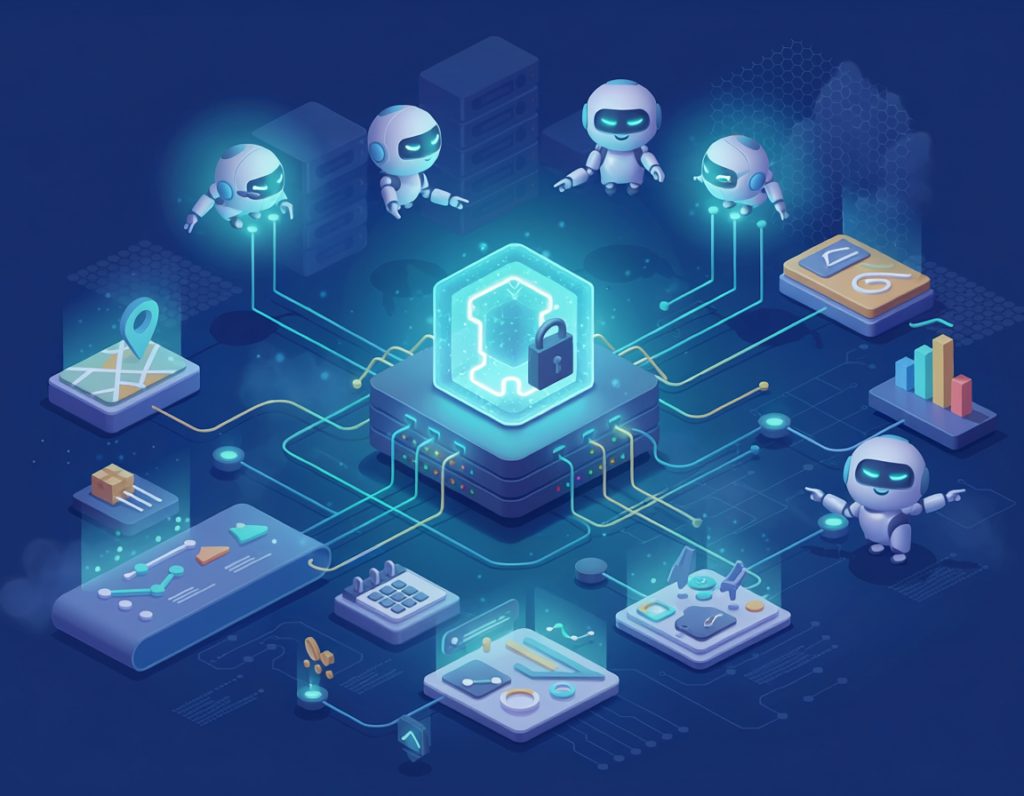
Jentic Mini addresses this at the infrastructure level. By providing a free, self-hosted execution layer with credential vaulting, scoped permissions, a 10,000+ API catalog, and a single killswitch for governance, it gives solo operators and small teams the foundation to run ai agent workflow tools in production — not just in demos.
The operators and developers getting the most value from this approach share a common trait: they automate tasks with AI agents incrementally, starting with one workflow, measuring the results, and expanding from there. They don’t try to automate everything at once. They use the recovered time to do higher-value work that compounds.
For US teams, the math is compelling. A single well-configured agent recovering 10 hours per month at $100/hour generates $12,000 in annual capacity. At zero licensing cost, the ROI ceiling is effectively determined by how much workflow overhead you’re willing to eliminate.
The question isn’t “Should I use AI for workflow automation?” It’s “How many hours of integration overhead am I willing to keep paying for?”
Ready to stop writing glue code? Try Jentic Mini free — self-hosted, open source, and running in under five minutes. View on GitHub
Leave a Reply