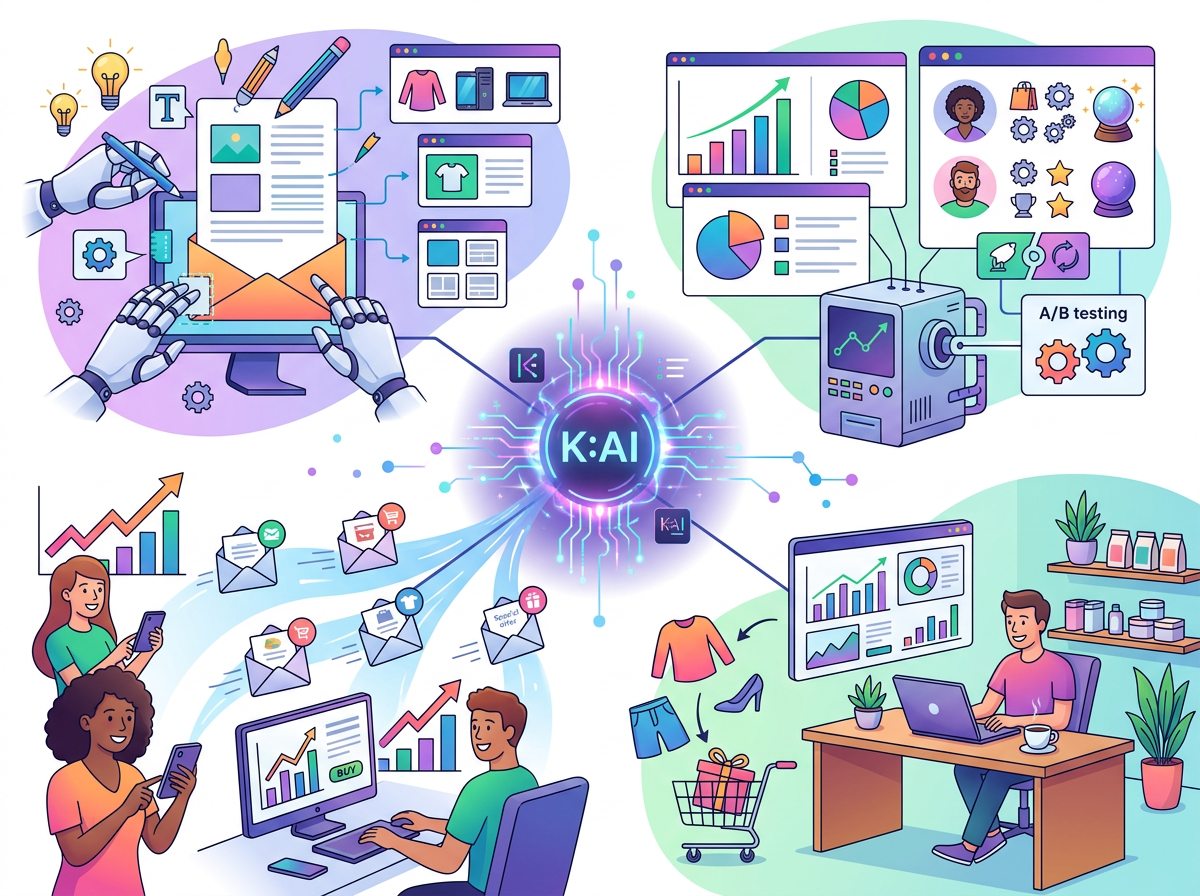
AI email marketing automation for small businesses is no longer optional — ecommerce founders who skip it are handing revenue to competitors who don’t.
In 2026, American ecommerce founders and small business marketers face a brutal paradox. Customers expect hyper-personalized email and SMS experiences — the kind that feel like a 1:1 conversation — yet the average solo operator is already stretched thin managing inventory, customer service, paid ads, and fulfillment. The marketing calendar doesn’t slow down for anyone.
The inbox reality is stark: promotional emails with generic messaging now average open rates under 20%, while behaviorally triggered, personalized campaigns routinely hit 40–55%. That gap is not about budget. It’s about automation intelligence.
This is where AI email marketing automation for small business fundamentally changes the math. Klaviyo AI is built specifically for ecommerce businesses — not enterprises with dedicated marketing ops teams, but Shopify store owners, DTC brands, and service-based businesses with a subscriber list and a growth goal.
For US-based ecommerce founders billing on their own time, every hour spent manually segmenting lists, A/B testing subject lines, or writing individual flow emails is an hour not spent on product development, customer acquisition, or the work that actually scales. At a conservative $75/hour opportunity cost, three hours of weekly marketing admin equals over $11,000 in annual lost productivity.
Klaviyo AI doesn’t replace your marketing judgment. It handles the repetitive cognitive work — the when, the who, and the what — so you can focus on the why. This guide covers four specific automation workflows you can implement this week, each designed to reduce manual marketing overhead by 3–6 hours while measurably improving campaign performance.
Whether you’re running a Shopify store, a subscription box, or a service business with an email list, these workflows are built for lean US teams operating at scale without the headcount.
Key Concepts of AI Email Marketing Automation
Concept 1: Behavioral Triggering vs. Scheduled Broadcasting
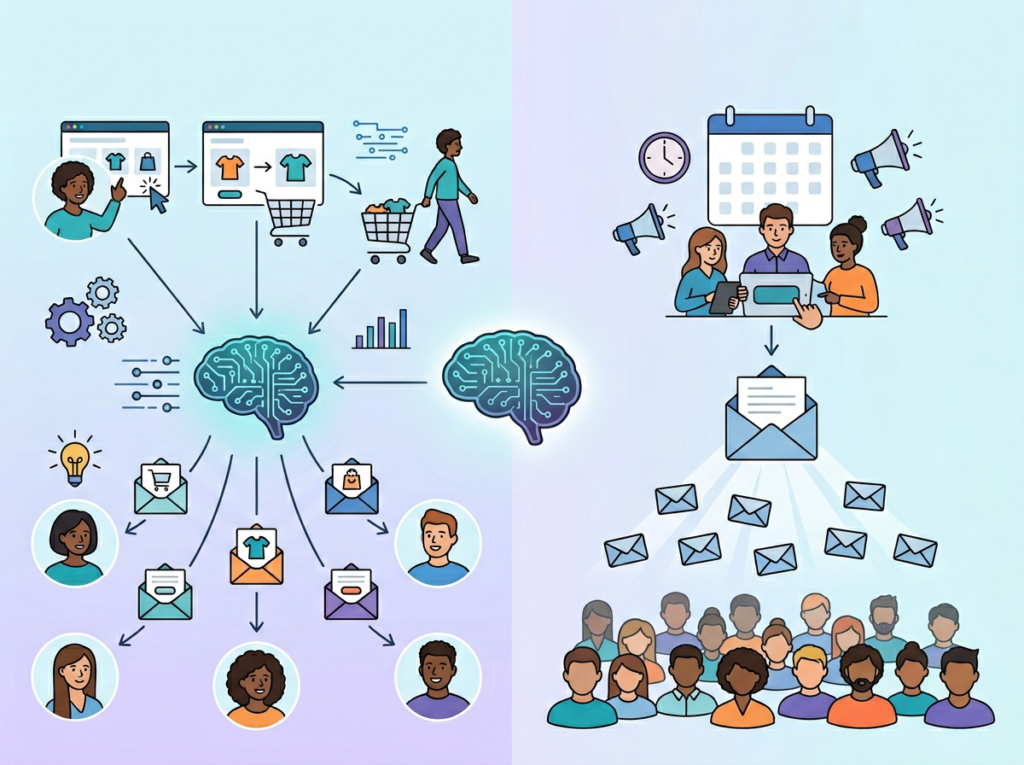
Traditional email marketing operates on a calendar: send a newsletter Tuesday, blast a promotion Friday. This approach treats your entire list as a single audience with identical needs and timing preferences.
Behavioral triggering flips this model. Instead of you deciding when to send, the customer’s actions decide. Klaviyo AI monitors real-time signals — a browse session on a specific product category, an abandoned cart at $89, a 90-day lapse in purchases — and automatically fires the right message at the right moment.
Consider Taylor, who runs a specialty coffee subscription from Nashville with 4,200 subscribers. Under a broadcast-only model, she was sending 8 campaigns per month and generating roughly $2,100 in email revenue. After switching to AI-powered behavioral flows, her monthly email revenue climbed to $4,800 — without increasing her sending frequency. The difference was relevance and timing, not volume.
Behavioral triggering alone can recover 15–25% of abandoned carts, re-engage 10–18% of lapsed customers, and increase repeat purchase rates by 20–30%, as outlined in this checklist for leveraging Klaviyo’s AI functions. For a store doing $300K in annual revenue, that math translates to $45,000–$90,000 in incremental annual revenue from automation alone.
Concept 2: Predictive Segmentation vs. Manual List Management
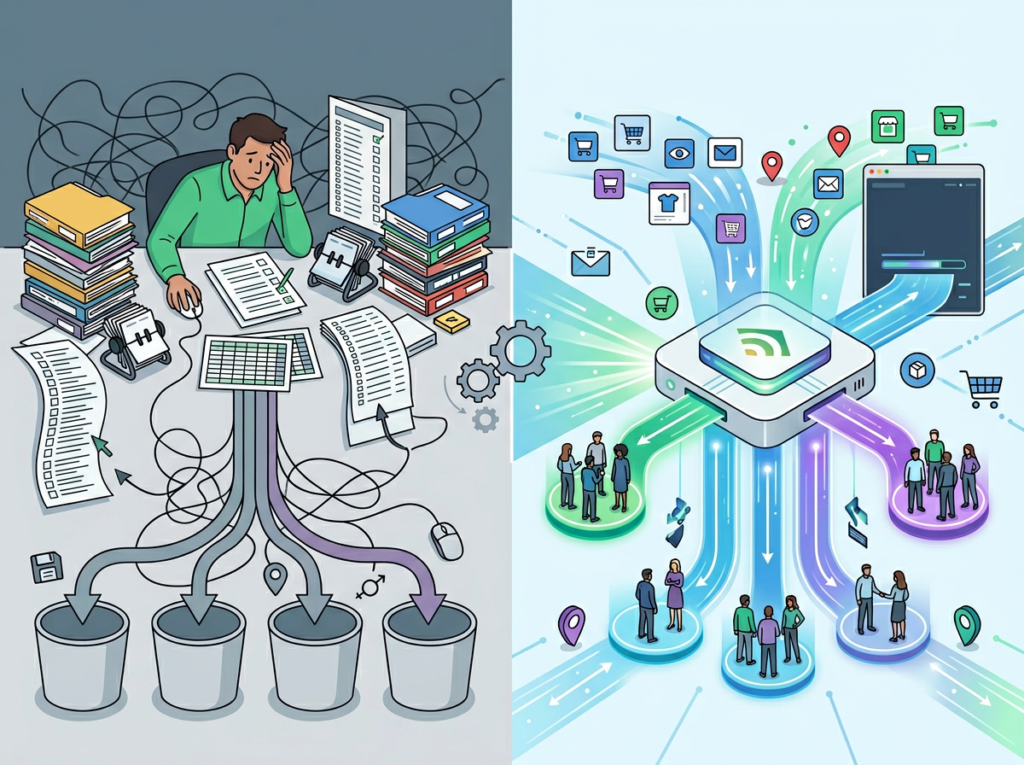
Manual segmentation is one of the most time-consuming tasks in email marketing. Defining rules, building lists, updating them when customer behavior changes, and managing overlapping audiences can consume 4–6 hours per week for a moderately active ecommerce sender.
Klaviyo’s AI-powered segmentation predicts customer behavior rather than just categorizing past behavior. It forecasts churn risk, expected next order date, predicted lifetime value, and spending potential. This means your segments are always current and always forward-looking, without manual maintenance.
Marcus, a solo operator running a home goods DTC brand out of Denver, used to spend Sunday evenings rebuilding his segment structure for the week ahead — roughly 5 hours of work he described as “necessary but soul-crushing.” After enabling Klaviyo’s predictive segments, his Sunday prep dropped to 45 minutes. The AI maintains his audience definitions continuously, surfacing at-risk customers before they churn and high-value buyers for loyalty campaigns before they drift.
To understand the full architecture of these predictive capabilities, explore Klaviyo AI in detail and see how its machine learning layer integrates with your store data.
Concept 3: Send-Time Optimization and the 23-Minute Problem
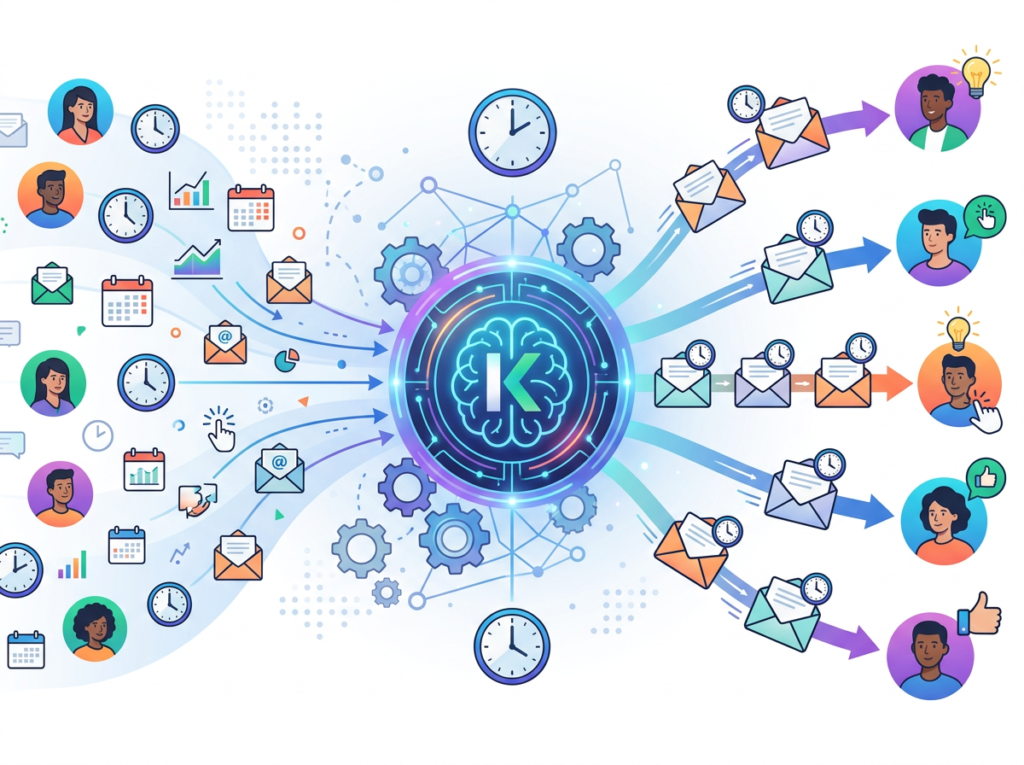
Research on workplace productivity has consistently found that recovering full focus after an interruption takes an average of 23 minutes. For email marketing, this translates directly: if you’re manually monitoring campaign performance, tweaking subject lines mid-send, and adjusting timing based on gut instinct, you’re creating constant context-switching overhead that compounds across weeks.
Klaviyo’s Smart Send Time AI eliminates this cognitive overhead entirely. The system analyzes your account’s historical open and click data to identify when each individual subscriber is most likely to engage, then schedules delivery accordingly. You approve the campaign once. The AI handles deployment precision for every contact on the list.
Elena, an Austin-based wellness brand owner with 11,000 subscribers, reclaimed an estimated 4 hours per month simply by removing her from the process of manually managing send schedules and post-send performance reviews. Her open rate lifted 8 percentage points within the first 60 days of enabling Smart Send Time — a result she attributes entirely to the AI, not her own adjustment.
Try Klaviyo AI free and see how much time you reclaim in the first 30 days., Start Free — No Credit Card Required
How Klaviyo AI Helps Efficiency
Feature 1: Flows AI — Build Automation Logic in Natural Language
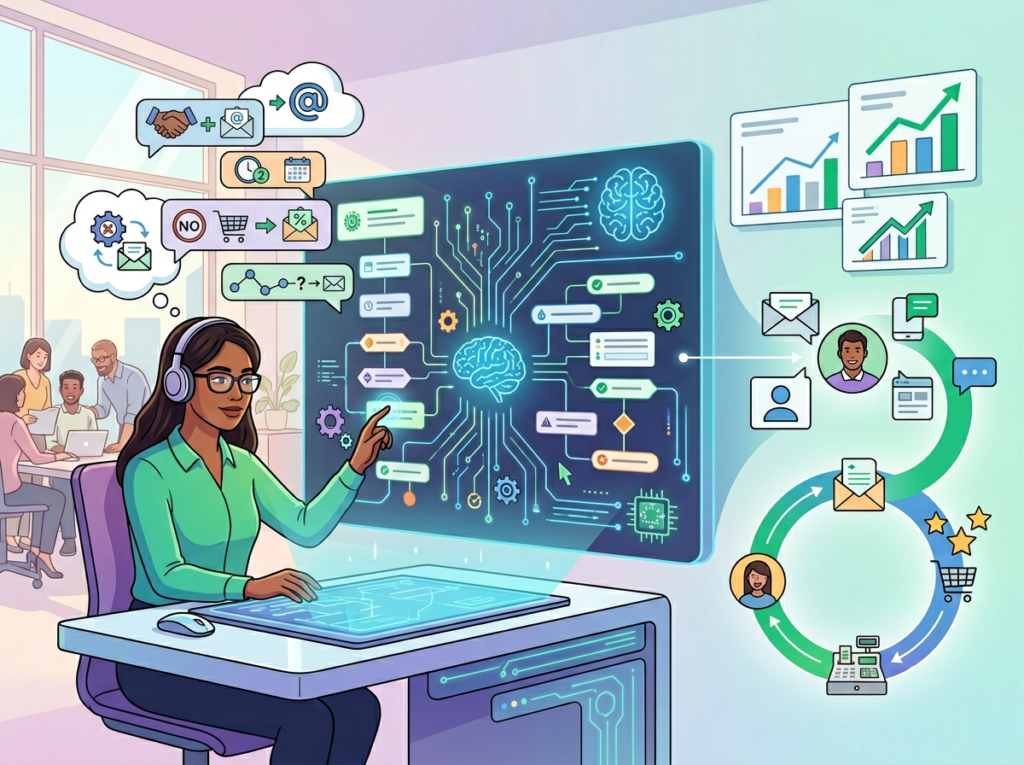
Building complex email and SMS flows in traditional platforms requires technical knowledge of conditional logic, branching rules, and trigger configurations. A sophisticated abandoned cart sequence with post-purchase upsell branches and win-back logic could take an experienced marketer 3–4 hours to architect correctly.
Klaviyo’s Flows AI lets you describe what you want in plain English: “Send an email to customers who purchased Product A but haven’t bought in 60 days, and follow up with an SMS if they don’t open within 48 hours.” The AI translates your intent into a fully built flow, ready to review and activate. According to this community analysis of Klaviyo AI applications, the shift from manual flow construction to natural language flow building represents one of the largest single time savings in the platform.
Annual time saved for a small business sending 8–12 flows: approximately 40 hours = $3,000–$6,000 at $75–$150/hour opportunity cost.
Feature 2: Segments AI — Natural Language Audience Creation
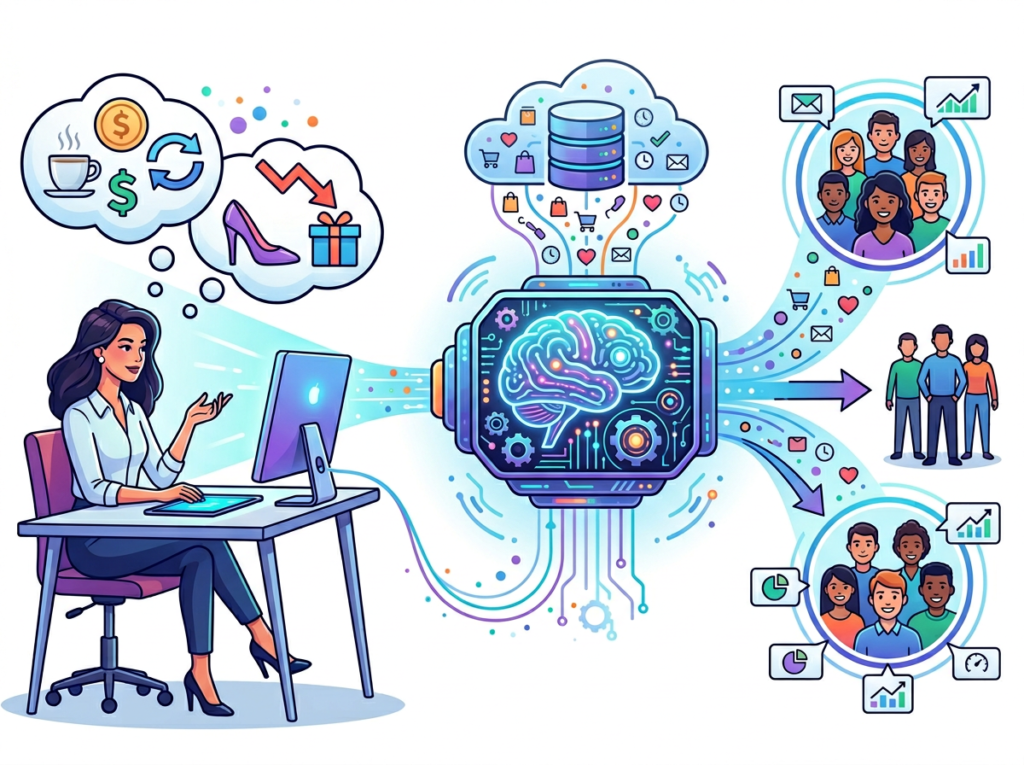
Gone is the process of stacking filter conditions, testing overlap, and manually refreshing audience definitions. Segments AI lets you type your audience criteria conversationally — “show me customers who spent over $200 in Q4 but haven’t purchased since” — and generates a live, self-updating segment definition instantly.
For ecommerce founders managing 15–30 active segments, this feature alone eliminates the most tedious recurring task in their marketing stack.
Annual time saved for active ecommerce marketers: approximately 52 hours = $3,900–$7,800.
Feature 3: AI-Powered Content Assistance and Subject Line Generation
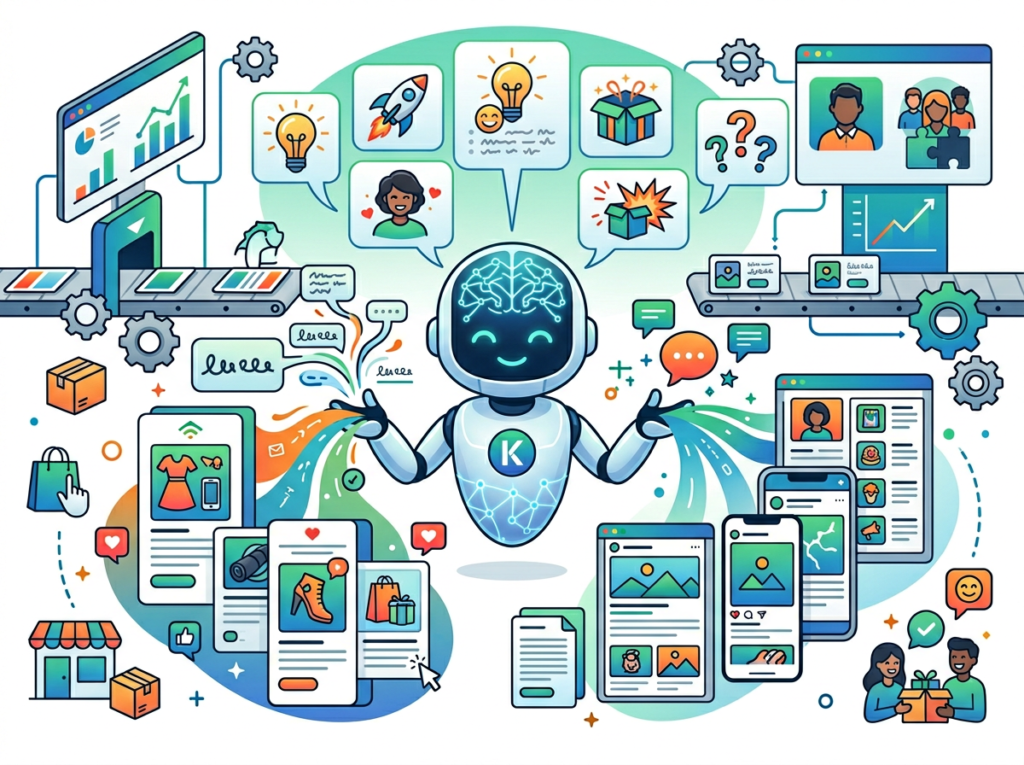
Klaviyo’s generative AI features assist with email copy drafts, subject line variations, and SMS message generation. Rather than starting from a blank canvas for every campaign, marketers work from AI-generated starting points tuned to their brand voice and historical engagement data.
Annual time saved: approximately 60 hours = $4,500–$9,000.
Combined annual efficiency ROI: $13,650–$27,300 in reclaimed productive time on Klaviyo’s starting plans — representing a 30x to 60x return on the platform investment for an active ecommerce business.
See our full Klaviyo AI review for a complete feature walkthrough with real workflow examples tested across ecommerce verticals.
Ready to automate your email marketing? Try Klaviyo AI free and see how much time you reclaim in the first 30 days., Start Free — No Credit Card Required
Use Cases: Small Business & Freelancer Efficiency
Persona 1: Jessica, DTC Skincare Brand Owner in Portland, OR

Store: 3-year-old Shopify store, $420K annual revenue, 8,200 subscribers, solo operator with one part-time contractor.
Old Workflow: Jessica spent approximately 12 hours per week on email marketing — 3 hours building and refreshing segments, 4 hours writing and scheduling campaigns, 2 hours on flow maintenance, and 3 hours reviewing analytics and making manual adjustments. Total: 624 hours annually, worth roughly $46,800 at her $75 opportunity cost.
AI-Enhanced Workflow with Klaviyo AI: After implementing Flows AI for her post-purchase and win-back sequences, Segments AI for predictive churn and VIP audiences, and Smart Send Time across all campaigns, Jessica’s weekly email time dropped to 4.5 hours — focused entirely on strategy and creative direction rather than operational execution. The AI handles list hygiene, flow optimization, and send scheduling autonomously.
Quantified Results: 7.5 hours/week reclaimed = 390 hours annually. At her $75 opportunity cost: $29,250 in annual productivity recovered. Her email revenue increased 34% in the first six months as behavioral flows replaced broadcast-only sending.
“I used to feel like I was running behind on email marketing constantly. Now the platform is doing the catching up for me. I just review what the AI built and hit approve.”
Persona 2: David, Independent eCommerce Consultant in Chicago, IL

Business: Freelance Klaviyo consultant managing 6 ecommerce client accounts, billing $120/hour.
Old Workflow: David’s monthly client deliverables included manual segment audits, flow documentation, campaign calendar management, and performance reporting — approximately 28 hours of monthly admin across his client base. At his billing rate, non-billable admin consumed $3,360 in monthly revenue potential.
AI-Enhanced Workflow: By deploying Klaviyo AI features systematically across client accounts — using Segments AI to eliminate manual list rebuilding and Flows AI to accelerate flow architecture — David reduced his admin overhead to 11 hours per month. He converted the reclaimed 17 hours into two additional billable client engagements.
Quantified Results: 17 hours/month reclaimed = 204 hours annually. $24,480 in additional annual billing capacity recovered. David also used the efficiency gains to develop a productized “Klaviyo AI Audit” service he sells at $1,800 per engagement.
“The AI does the grunt work now. I show up for strategy calls and creative direction. That’s what clients actually pay $120 an hour for.”
As noted in this breakdown of Klaviyo’s AI capabilities, predictive analytics and generative AI together represent the two highest-leverage automation layers for ecommerce marketers — a finding that matches David’s experience prioritizing those features first for client implementations.
Persona 3: Alex, Solo Founder Running a B2B SaaS with Email-Led Growth in San Francisco, CA

Business: Early-stage SaaS product with a 5,400-person email list used as primary acquisition channel. Alex handles all marketing personally while building the product.
Old Workflow: Despite not being a traditional ecommerce business, Alex used Klaviyo for behavioral onboarding sequences, trial conversion campaigns, and churn prevention. Manual sequence management, A/B test monitoring, and re-engagement campaign creation consumed roughly 10 hours per week.
AI-Enhanced Workflow: Flows AI accelerated the build of his trial-to-paid conversion sequence — a 9-step flow that previously took three weeks to architect was built in two days using natural language flow prompts. Segments AI maintained dynamic trial-expiry and engagement-tier segments automatically. AI-personalized A/B testing ran continuously without manual check-ins.
Quantified Results: Weekly marketing time dropped from 10 hours to 3 hours = 7 hours/week back into product development. 364 hours annually recovered. Trial-to-paid conversion rate improved 18% as the optimized flow replaced his manually managed sequence.
“I can’t afford to hire a marketing team. Klaviyo AI is the closest thing I have to one.”
For workflow templates specific to each of these use cases, learn more about Klaviyo AI and how its feature set maps to your business model.
Streamline your ecommerce marketing with intelligent automation. Join thousands of US small business owners using Klaviyo AI to scale without scaling headcount. Start Free Today
Best Practices for Implementing Klaviyo AI

Start With One Flow, Not the Entire Stack
The most common mistake new Klaviyo AI adopters make is attempting to rebuild their entire automation architecture simultaneously. The cognitive overhead of managing a complete migration while running a live business is significant, and errors in foundational flows can suppress revenue during the transition period.
Instead: identify your single highest-impact automation gap. For most ecommerce businesses, this is either abandoned cart recovery or post-purchase upsell. Use Flows AI to build that one sequence in your first week. Measure the results for 14 days, then expand.
Keep Human Review in the Approval Loop
Klaviyo AI generates flows, segments, and content drafts — but it doesn’t have strategic context about your brand voice, seasonal inventory decisions, or upcoming promotions. Build a weekly 30-minute review habit where you audit AI-generated outputs before they go live. This review process is not a bottleneck; it’s the quality gate that prevents automation errors from reaching customers at scale.
Track Hours Saved, Not Just Revenue Impact
Email revenue attribution is important, but efficiency gains are what compound over time. Keep a simple weekly log: how many hours did you spend on email marketing tasks this week? After 60 days of Klaviyo AI adoption, compare that baseline to your current workload. Most small business operators find a 40–60% reduction in email marketing time within the first 90 days.
Limitations and Considerations
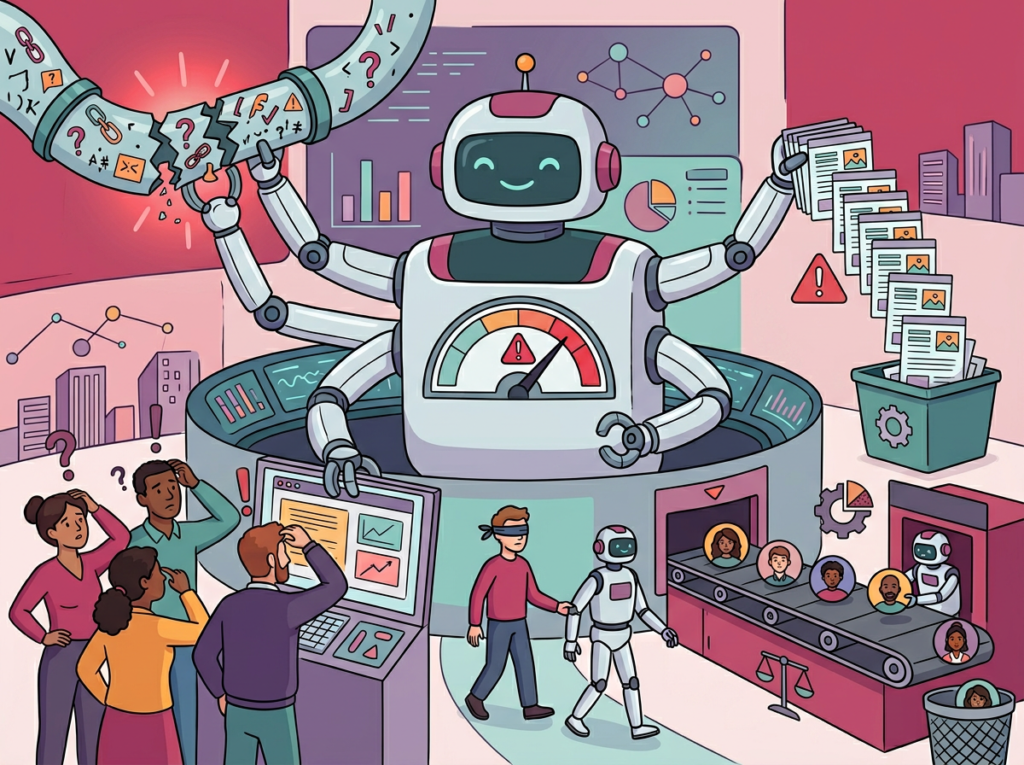
Brand Voice Nuance Requires Human Oversight
Klaviyo’s AI-generated content drafts are competent starting points, but they don’t carry your brand’s specific tone, inside references, or the earned intimacy of a founder-written email. For high-stakes sends — brand launches, crisis communications, personal milestone campaigns — treat AI drafts as a first draft requiring meaningful editing, not a final product. Sending AI-generated copy without review risks sounding generic in precisely the moments when authenticity matters most.
SMS Compliance Is Non-Negotiable
Klaviyo’s SMS AI features automate response suggestions and send optimization, but they don’t manage legal compliance on your behalf. TCPA regulations in the US require explicit opt-in consent, clear disclosure, and easy opt-out mechanisms for every SMS subscriber. If you’re expanding into AI-assisted SMS marketing, verify your compliance framework before scaling automated SMS campaigns. The efficiency gains from SMS automation are substantial — the legal exposure from non-compliant sends is greater.
Key Risks to Monitor:
- Hallucination in content drafts: AI-generated copy occasionally produces inaccurate product details or promotional claims. Always verify product-specific claims before approving automated content.
- Over-automation of relationship touchpoints: High-value customer relationships benefit from occasional human-written outreach. Don’t automate every customer interaction.
- Skill atrophy: Founders who offload all email strategy to AI risk losing the marketing judgment that makes automation decisions effective in the first place.
Frequently Asked Questions
What is AI email marketing automation for small business?
AI email marketing automation for small business refers to using machine learning and predictive analytics to automatically send personalized email and SMS messages based on customer behavior, purchase history, and engagement signals — without manual intervention for each campaign. Platforms like Klaviyo AI handle segmentation, send timing, content optimization, and flow management autonomously, allowing small business owners to run sophisticated marketing programs without a dedicated marketing team.
What’s the best AI tool for email marketing automation for ecommerce?
Klaviyo AI is the most purpose-built option for ecommerce businesses because it was architected specifically around ecommerce data models — Shopify, WooCommerce, BigCommerce, and custom stores. Its predictive analytics, product feed integration, and behavioral trigger library are designed for retail and DTC use cases in ways that general-purpose marketing automation platforms aren’t. For non-ecommerce businesses, alternatives like ActiveCampaign or HubSpot may be better fits.
Do I need technical skills to use Klaviyo AI for marketing automation?
No. Klaviyo’s AI features — Flows AI, Segments AI, Smart Send Time, content assistance — are all accessed through natural language interfaces or guided configuration steps. You describe what you want in plain English, and the AI builds it. Basic familiarity with your store’s data (products, customer lifecycle stages, purchase frequency) is more valuable than any technical knowledge.
Conclusion
AI email marketing automation for small business has crossed the threshold from competitive advantage to competitive necessity. In 2026, the gap between ecommerce founders who’ve automated their behavioral marketing and those still managing campaigns manually isn’t measured in feature sophistication — it’s measured in hours per week and dollars per month.
Klaviyo AI is not a magic solution that runs your marketing while you sleep. It is a genuinely powerful operational layer that handles the repetitive, data-intensive work of modern email and SMS marketing — segmentation, timing, flow logic, content optimization — so you can direct your attention toward strategy, product, and customer relationships.
For US ecommerce businesses operating at a $75–$150/hour opportunity cost, the efficiency math is clear. Reclaiming 6–10 hours of weekly marketing admin translates to $23,400–$78,000 in annual productivity value. Against Klaviyo’s starting plan costs, the ROI floor is roughly 30x — the ceiling, for actively growing stores, runs considerably higher.
The phased approach works best: start with one behavioral flow this week. Measure it for 14 days. Add a second workflow. Build from evidence, not ambition.
The question for US small business owners in 2026 isn’t “Should I use AI for email marketing automation?” It’s “Can I afford to keep doing this manually while my competitors don’t?”
Try Klaviyo AI free and see how much time you reclaim in the first 30 days., Start Free — No Credit Card Required
Leave a Reply