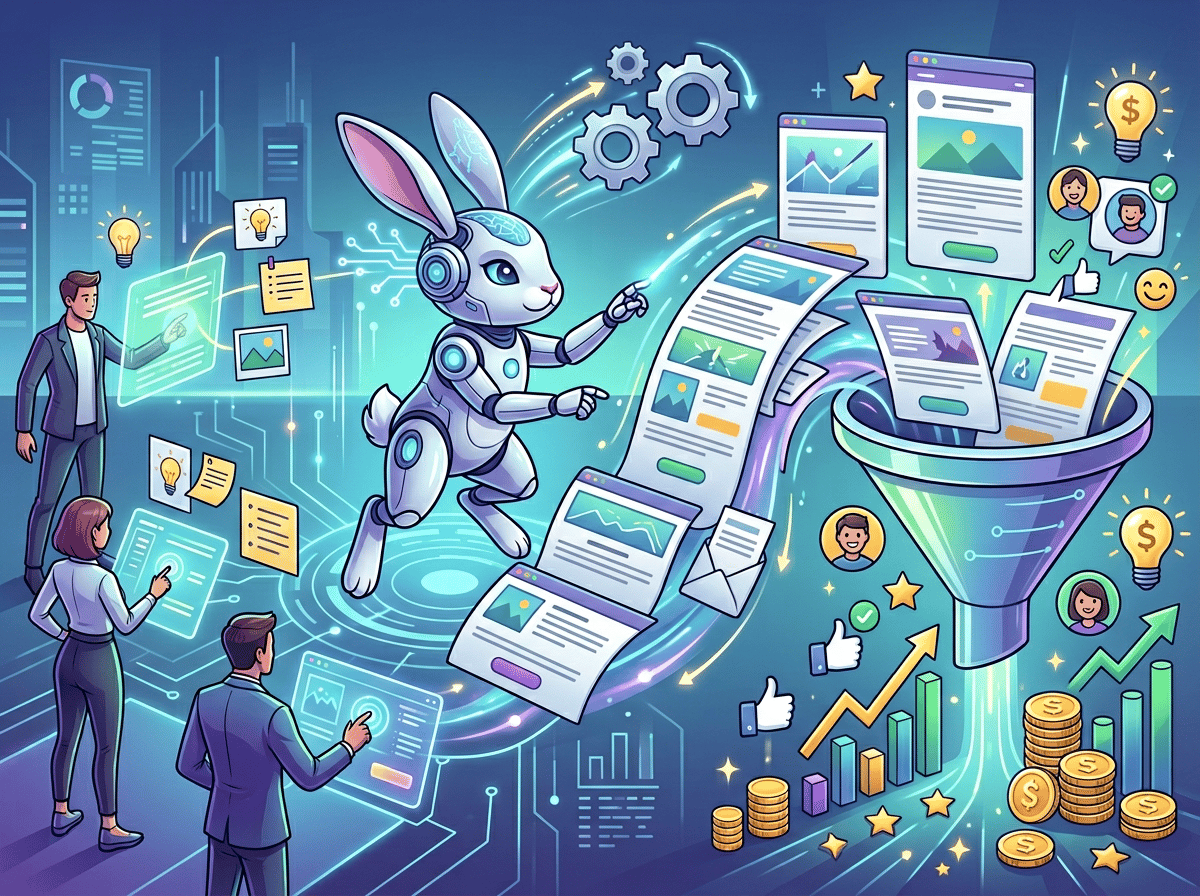
The best ai email marketing tools don’t just write faster — they eliminate the blank-page paralysis that keeps small business owners from emailing their list.
In 2026, American freelancers and solo entrepreneurs face a paradox that would have seemed absurd five years ago. They have more marketing channels available than at any point in history — social media, video, podcasts, paid ads — and yet email remains the single highest-ROI channel in their stack. The Direct Marketing Association has long benchmarked email ROI at roughly $42 for every dollar spent.
The problem isn’t knowing email matters. The problem is writing it.
Picture the scene: it’s Tuesday morning, your inbox is at 200 unread, you have three client deliverables due by Friday, and somewhere in the back of your mind you know you haven’t emailed your list in three weeks. The blank draft stares back at you. You type a subject line, delete it, type another one. Thirty minutes later you have four sentences and a creeping sense of guilt.
This is the friction that kills email marketing for solo operators. Not strategy. Not platform. Writing.
HoppyCopy was built specifically to remove that friction. Unlike general-purpose AI writers, it is designed for email from the ground up: over 60 email-specific templates, built-in spam checking, multi-step sequence planning, and competitor monitoring that tracks what top brands in your niche are sending. For US freelancers billing $50 to $150 per hour, every hour spent on a blank email draft is $50 to $150 of unbilled time. HoppyCopy turns that hour into fifteen minutes.
This guide covers four specific workflows you can implement this week, each capable of saving two to five hours of writing and editing time. You’ll also find honest assessments of where HoppyCopy falls short — because no AI email tool is a complete replacement for human judgment.
Try HoppyCopy free for 7 days and start generating campaigns in minutes. Start Free — No Credit Card Required
Key Concepts of AI Email Marketing
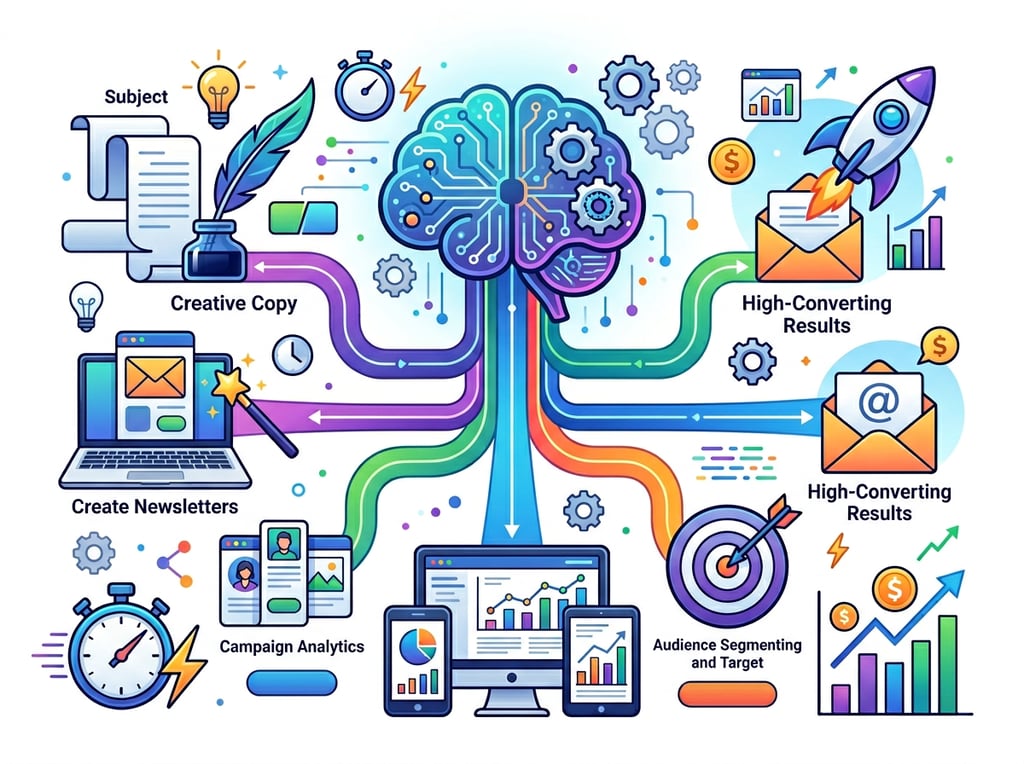
Concept 1: Template-Driven Copy Frameworks
The most persistent challenge in email marketing isn’t knowing what to say — it’s knowing how to structure it. Experienced copywriters rely on proven frameworks: the Problem-Agitate-Solution (PAS) model, the Soap Opera sequence for onboarding, the Seinfeld email for engagement. These aren’t just stylistic preferences; they’re patterns that have been tested across millions of sends.
AI email tools encode these frameworks directly into their generation logic. When HoppyCopy’s AI produces a promotional email using the AIDA (Attention, Interest, Desire, Action) structure, it isn’t guessing. It’s applying a documented framework to your specific product description and brand voice.
Consider Sarah, a freelance UX designer in Portland who sends a monthly newsletter to her 800-subscriber list of potential clients. Previously, drafting each email required 90 minutes of outlining, writing, and editing. After integrating an AI email tool with structured templates, she reduced that cycle to under 20 minutes — reclaiming roughly 70 minutes per newsletter send, or more than 14 hours annually from this single task alone.
To understand how HoppyCopy’s template library maps to these frameworks in practice, explore HoppyCopy in detail.
Concept 2: Subject Line Optimization at Scale
Research from various email platform studies consistently shows that subject lines account for 35 to 40 percent of open rate variance. For a solo operator with a 2,000-person list, the difference between a 20% open rate and a 30% open rate is 200 additional readers per send — readers who may become clients, referrers, or buyers.
Manually A/B testing subject lines requires either a large list or a long timeline. AI generation changes the math. Instead of writing one subject line and hoping, you can generate eight to twelve variations in under two minutes, review them, and select the strongest two for testing.
Marcus, an independent management consultant in Chicago billing $200/hour, found that systematically testing AI-generated subject lines improved his newsletter open rate from 19% to 31% over six months. At his send volume and conversion rate, that improvement translated to two additional discovery calls per quarter — worth roughly $3,000 in new business annually from a change that added zero writing time to his workflow.
Concept 3: Sequence Architecture Without the Spreadsheet
Email sequences — onboarding flows, sales sequences, re-engagement campaigns — are where email marketing gets genuinely complex. A five-email welcome sequence requires a logical narrative arc, consistent tone, clear CTAs at each stage, and deliberate pacing between sends.
Planning that architecture from scratch takes hours. AI tools with sequence-specific features can generate the full arc — subject lines, body copy, send timing, CTA logic — from a single brief. The human role shifts from architect to editor, which is faster and higher leverage.
As noted in this in-depth marketing breakdown, structured AI tools dramatically reduce the cognitive overhead of campaign planning without removing the creator’s voice from the final output. That’s the balance that distinguishes genuinely useful AI email tools from generic writing assistants that happen to produce email-shaped text.
How HoppyCopy Helps Your Email Campaigns
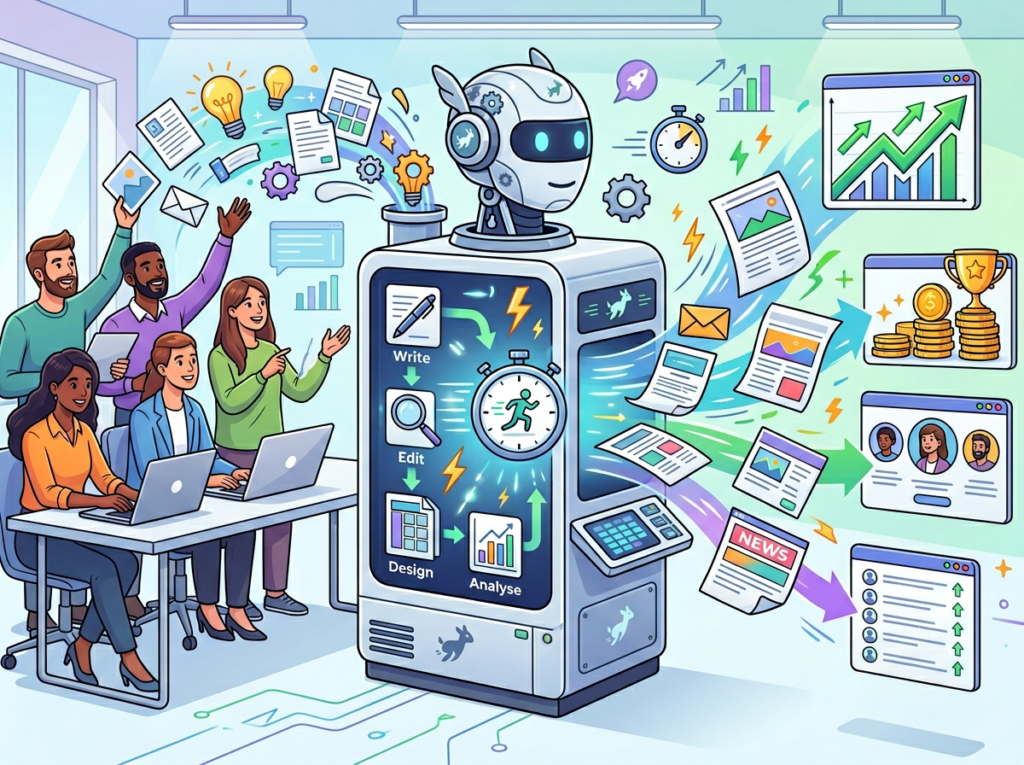
Feature 1: 60+ Email-Specific AI Templates
Where general-purpose AI writers give you a blank prompt and an empty output box, HoppyCopy provides over 60 templates mapped to specific email use cases: product launches, welcome sequences, re-engagement campaigns, cold outreach, newsletter digests, promotional emails, event announcements, and more.
Each template is structured around a proven copywriting framework. You fill in the brief — your product, audience, key benefit, and tone — and the AI produces a complete draft in your voice. The practical time savings are significant: users consistently report reducing first-draft writing time by 60 to 75%.
For a freelancer billing $75/hour who spends three hours per week on email copy, that reduction saves roughly $5,400 annually in reclaimed billable time — even if they spend half that recovered time on client work rather than email marketing.
Feature 2: Spam Checker and Deliverability Scoring
Writing a great email that lands in the promotions tab or spam folder is worse than writing a mediocre email that reaches the inbox. HoppyCopy includes a built-in spam checker that analyzes your draft against deliverability factors — trigger words, formatting issues, link density, subject line length — before you send.
This feature alone can meaningfully improve open rates for users who haven’t optimized their copy for deliverability. Industry benchmarks suggest spam filter avoidance can improve effective open rates by 8 to 15 percentage points for lists that have had deliverability issues.
Feature 3: Competitor Email Monitoring
One of HoppyCopy’s most distinctive features is its ability to monitor competitor email campaigns. Users can add brands to a watchlist and access examples of their email subject lines, cadence, and formatting — a form of competitive intelligence that typically requires subscribing to dozens of lists and manually cataloging what you receive.
This feature is particularly valuable for small business owners in competitive niches. Understanding when competitors run promotions, how they structure their sequences, and what subject line formulas they favor gives users actionable data they can apply directly to their own campaigns.
See our full HoppyCopy review for a detailed walkthrough of how the competitor monitoring dashboard works in practice.
Ready to stop staring at blank email drafts? Try HoppyCopy free for 7 days and start generating campaigns in minutes. Start Free — No Credit Card Required
Best Practices for Implementing AI Email Tools

Start with your highest-pain workflow, not your most ambitious one. The temptation is to overhaul your entire email program immediately. The better approach is to identify the single task that costs you the most time — usually either writing newsletter drafts or building sequences — and apply the tool there first. Get comfortable with the briefing process and editing rhythm before expanding.
Invest in brand voice training upfront. HoppyCopy’s Brand Memory feature allows you to upload brand guidelines, example emails, and style notes that the AI uses as context when generating copy. Users who take 30 to 60 minutes upfront to populate this feature consistently report output that requires significantly less editing than users who rely on prompt-level instructions alone. This investment pays dividends across every subsequent generation.
Maintain a human editing pass — always. AI email tools produce strong first drafts, not final copy. The editing pass is where your voice, your specific relationship with your list, and your contextual judgment replace generic AI formulations with language that sounds like you. Plan for 15 to 25 minutes of editing per email. If you’re skipping this step, your subscribers will notice.
Track what the AI is replacing, not just how fast you’re writing. The real ROI of ai email copywriting comes from measuring what you do with recovered time. If faster email creation simply means you produce more emails without improving list health or conversion, you haven’t gained much. Track open rates, click rates, and revenue per send before and after implementing the tool so you can measure actual impact rather than assumed efficiency.
Limitations and Considerations
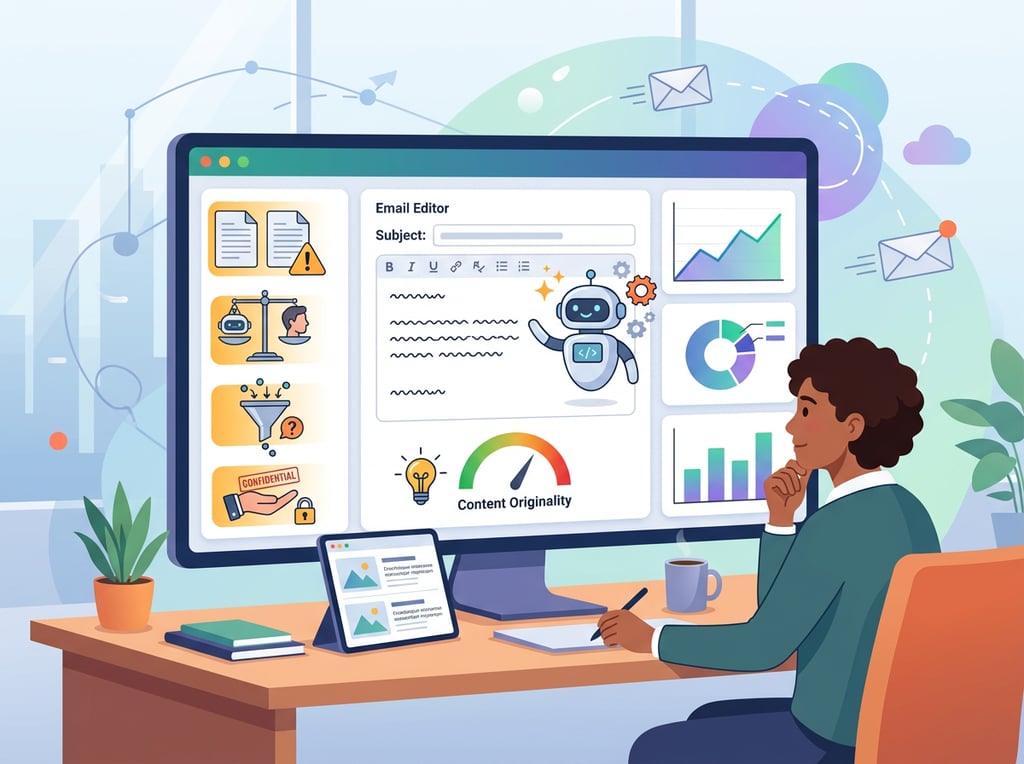
Output often skews formal and generic. Independent assessments of HoppyCopy consistently note that AI-generated drafts tend toward slightly formal, brand-safe language that may not match your list’s actual relationship with you. If your subscribers know you for a conversational, occasionally irreverent voice, the AI drafts will likely require meaningful editing — not just light cleanup. Budget editing time accordingly.
Competitor monitoring does not equal competitive strategy. Knowing what your competitors are sending is useful data. It is not a substitute for understanding why they’re sending it, what their customer research shows, or whether their tactics are actually working. Over-indexing on competitor emails risks producing “category average” content rather than differentiated messaging.
Not appropriate for compliance-sensitive industries. If your business operates in healthcare, financial services, legal services, or other regulated industries, AI-generated email copy requires careful legal review before deployment. The AI does not understand your specific compliance obligations and will produce copy that may inadvertently misstate benefits, omit required disclosures, or use prohibited language. Do not use AI email copy for regulated industries without attorney review.
Session timeouts can disrupt long drafting sessions. Multiple user reviews note that HoppyCopy can time out during extended work sessions, potentially losing unsaved work on longer sequences. Save drafts frequently and consider working in shorter sessions when building multi-email sequences.
The 7-day trial is a short evaluation window. Understanding whether the tool genuinely fits your workflow — especially for multi-step sequences — requires running at least two or three campaigns through it. Seven days may not be sufficient for complex use cases. Plan your trial period around a concrete campaign rather than exploratory testing.
As one detailed independent analysis notes, HoppyCopy is strongest when users focus on its email-specific differentiators — the template library, spam checker, and competitor monitoring — rather than treating it as a general AI writing tool.
Frequently Asked Questions

What is AI email marketing?
AI email marketing means using artificial intelligence to generate, optimize, and automate email campaigns. These tools produce email drafts, subject line variations, and multi-step sequences from a brief description of your product, audience, and goal — reducing first-draft writing time while still requiring human editing before sending.
Can AI tools replace email copywriters entirely?
Not reliably. AI tools excel at generating structured first drafts, but struggle with highly personal brand voices, regulated topics, and original messaging strategy. The most effective workflow keeps AI on draft generation and humans on editing, personalization, and judgment. For solo operators, think writing accelerator, not replacement.
How do freelancers use AI to save time on email marketing?
The highest-impact applications are newsletter drafting, sequence creation, and subject line testing. A typical workflow: brief the AI in three to five sentences, review the draft, and edit for 15 to 25 minutes. Most freelancers reduce email writing time by 50 to 75%, with the biggest gains on multi-email sequences.
Conclusion
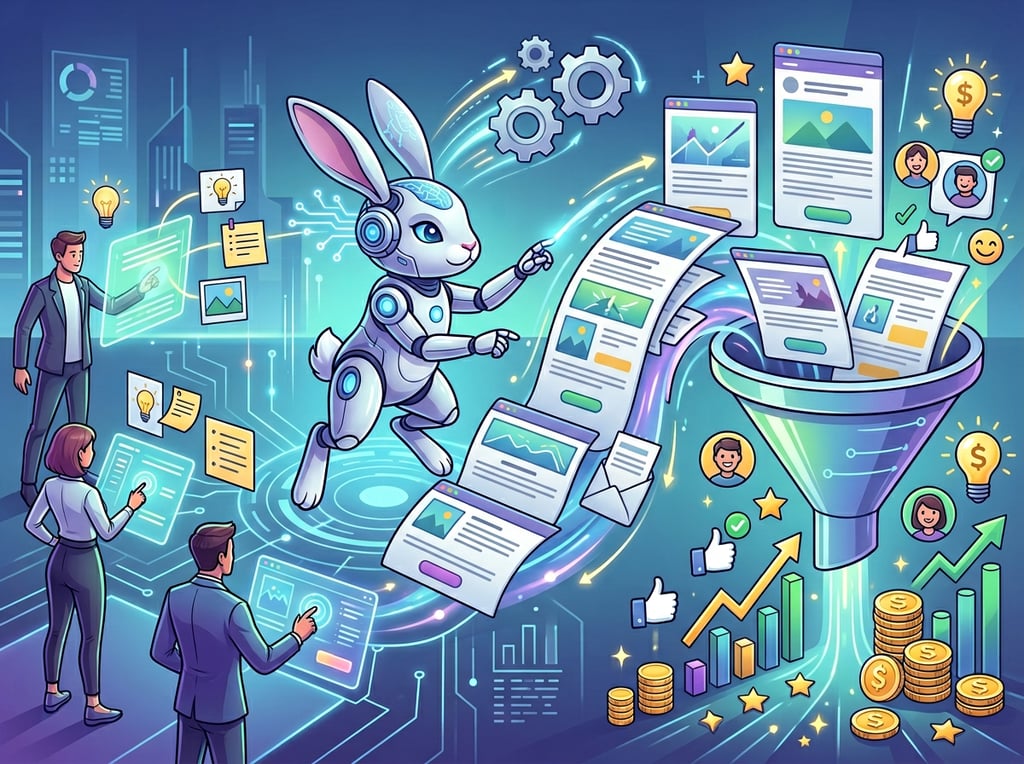
The core challenge of email marketing for solo operators has never been strategy — it’s been the sustained effort of writing consistently, week after week, while managing everything else a one-person business demands. AI email marketing tools like HoppyCopy address that specific friction: not by replacing your voice or your judgment, but by eliminating the blank-page barrier that causes most small business owners to skip sends, delay campaigns, and underinvest in their highest-ROI marketing channel.
For US freelancers and entrepreneurs billing $50 to $150 per hour, the math on email automation is unambiguous. HoppyCopy’s Starter plan runs approximately $29/month. If using it recovers six hours of writing time per month — a conservative estimate for active email marketers — the time value recaptured ranges from $174 to $522 monthly, representing a 6x to 18x monthly ROI before accounting for any improvement in email revenue performance.
The honest caveat: the tool works best for users who approach it as a draft accelerator, invest in brand voice setup, and maintain consistent editing discipline. It is not a “set it and forget it” solution, and users who skip the editing pass will produce recognizably AI-generated content that erodes list trust over time.
The question for US small business owners in 2026 is no longer whether to use AI email marketing tools. It’s whether you can afford to keep writing every email from scratch when your competitors are already not doing that.
Try HoppyCopy free for 7 days and start generating campaigns in minutes. Start Free — No Credit Card Required
Leave a Reply