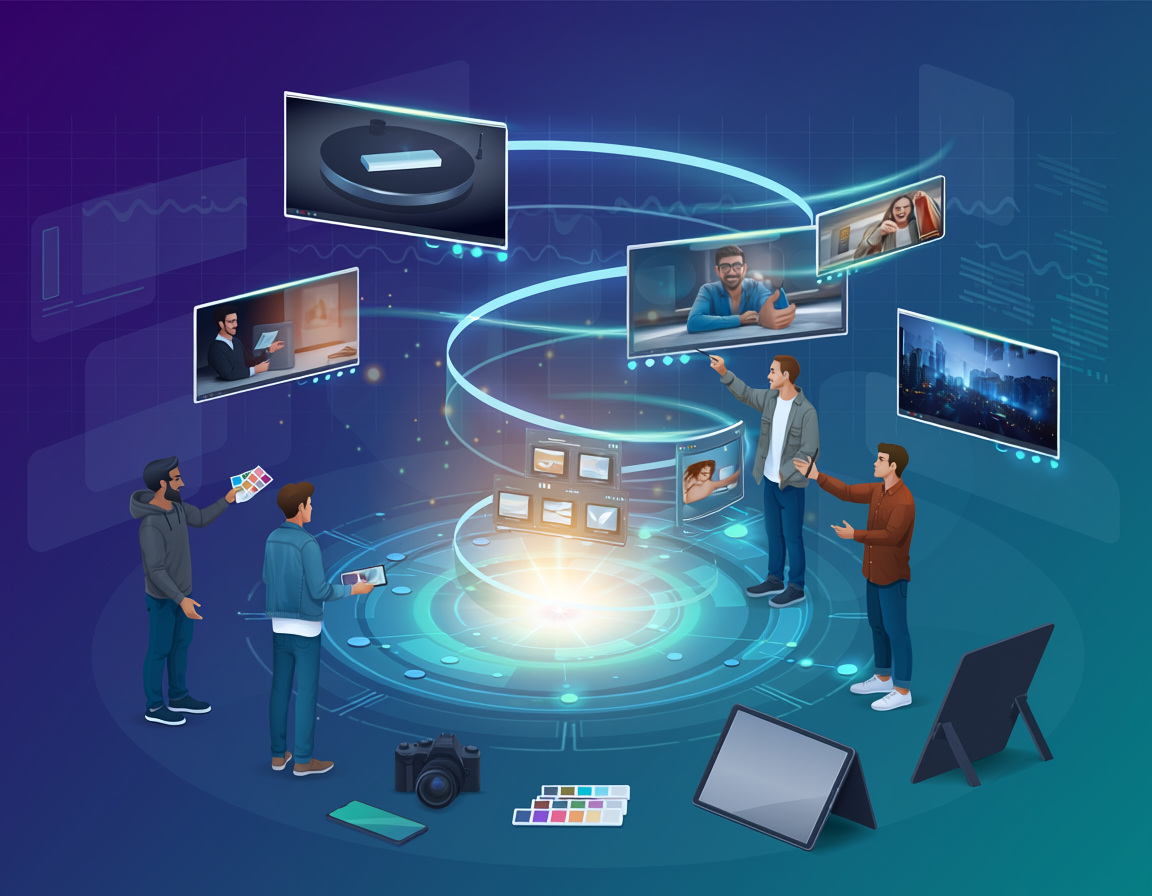
AI video generation tools have quietly erased the $10,000 production budget barrier — and Higgsfield is leading that shift for small business owners.
In 2026, American creators, marketers, and small business owners face a brutal content paradox. Video drives more engagement than any other format — 91% of businesses now use video as a marketing tool — yet traditional video production costs anywhere from $1,500 to $15,000 per finished minute. For solo entrepreneurs and lean marketing teams, that math has never worked.
The result: a two-tier content ecosystem where enterprise brands publish polished video campaigns weekly while small businesses make do with static posts, DIY smartphone footage, or no video at all. The visibility gap compounds every quarter.
Higgsfield was built to collapse that gap.
Unlike generic AI video tools that spit out robotic animations or stock-footage stitches, Higgsfield operates as a full creative studio — offering cinematic video generation, character consistency, trend-ready viral formats, and product marketing capabilities in a single platform. For US-based freelancers billing $50–150/hour, the efficiency proposition is immediate: every hour spent wrestling with Adobe Premiere or coordinating with video vendors is $50–150 in lost opportunity cost.
This article focuses specifically on how Higgsfield enables small businesses and solo marketers to create marketing videos and visual stories that compete with productions costing 10x more — without a production crew, without a six-figure budget, and without a film school degree.
You’ll walk away with four concrete workflows you can implement this week, a clear view of where the tool genuinely excels versus where it falls short, and real examples from US-based business owners who’ve rebuilt their content pipelines around AI video generation tools.
Join marketers and creators already using Higgsfield to compete at the enterprise level. Start Free Today
Key Concepts of AI Video Generation for Marketing
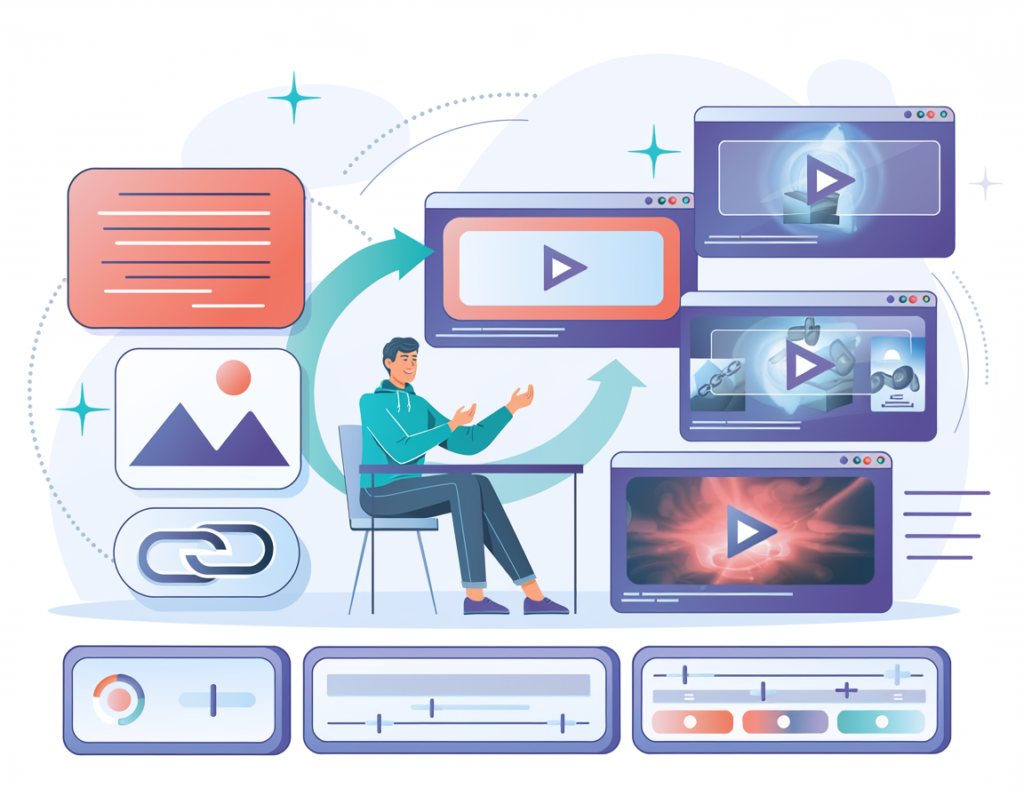
Concept 1: Prompt-to-Production Compression
AI video generation tools collapse this pipeline. With Higgsfield, a well-constructed prompt — combining subject, camera movement, lighting, and mood — generates a usable clip in under two minutes. The iterative cycle that used to take weeks now takes hours.
Consider Sofia, a freelance brand strategist in Denver who manages social content for eight small business clients. Before AI video, she spent 12 hours per week coordinating with video editors, sourcing footage licenses, and waiting on revision cycles. After integrating Higgsfield into her workflow, she produces first-draft video concepts in-house, cuts external vendor time by 70%, and has added video deliverables to three additional client packages.
That’s 8 hours per week reclaimed — roughly $400–$1,200 in billable equivalent time, weekly.
To understand the full range of Higgsfield’s video creation capabilities, explore Higgsfield in detail.
Concept 2: Model Selection as Creative Direction
One of the most important conceptual shifts for small business owners using AI video generation tools is understanding that different models produce meaningfully different outputs. This isn’t a setting — it’s a creative decision.
Higgsfield offers multiple underlying models optimized for different output types. As outlined in this walkthrough of Higgsfield’s video creation workflow, creators who need cinematic multi-shot continuity reach for WAN 2.6, those who need fast iteration for social content use Minimax Hailuo 02, and performance-driven content with dialogue uses Kling 2.6.
For Marcus, an independent marketing consultant in Nashville, this model-selection logic replaced an entire vendor selection process. He used to hire different freelancers for different video styles — lifestyle, explainer, testimonial. Now he selects models inside Higgsfield the same way he’d brief different directors.
Result: 6 hours per week saved across project coordination, brief writing, and revision management.
Concept 3: Format-First Thinking
The most efficient use of AI video tools starts not with “what do I want to say” but “what format am I making.” Higgsfield organizes creation around formats — Cinema Studio for cinematic clips, Marketing Studio for product and brand ads, Lipsync Studio for performance content, viral Apps for trend-ready social assets.
This format-first architecture matters enormously for marketers. Instead of approaching a blank canvas, you’re choosing a production workflow. The cognitive load drops from “how do I make a video?” to “which template serves this campaign?”
Elena, an e-commerce owner in Phoenix running a skincare brand on Shopify, describes the shift: she previously spent 15 hours monthly producing two video ads. After adopting Higgsfield’s format-first workflow, she produces six to eight short video assets per month in the same time window — a 3–4x output increase with no additional spend.
How Higgsfield Helps with Creative Video Content

Feature 1: Cinema Studio — Cinematic Quality for Brand Content
Cinema Studio is Higgsfield’s primary tool for marketers who need footage that feels filmed rather than auto-generated. The interface allows users to select specific cinematic camera moves — dolly-in, rack focus, crane lift — that match real production grammar.
For brand storytelling, this matters. A slow dolly into a product shot communicates intentionality and quality in a way a static image cannot. For US small businesses competing with larger brands on social media, cinematic motion is a credibility signal.
Practical workflow: Upload a product image, write a shot-description prompt (subject + camera move + lighting + mood), select a model, and generate. Iteration is fast — adjusting one variable at a time (prompt, model, frame reference) yields controlled, predictable variation.
Estimated time saving versus traditional production: 8–12 hours per video asset. At $75/hour freelance equivalent, that’s $600–$900 per asset recovered.
Feature 2: Marketing Studio — Direct-Response Video at Scale
Marketing Studio is purpose-built for paid advertising and product promotion. Users can generate ad-ready video from product images or links, with outputs structured for conversion — clean product focus, readable motion, CTA-compatible endings.
For Shopify owners, DTC brands, and freelancers managing paid social, this eliminates the bottleneck of video production for ad testing. Instead of producing two or three video variants per month, teams can test eight to twelve variations and let performance data drive creative decisions.
Annual time saved for a solo marketer producing weekly ad creative: approximately 52–78 hours, worth $2,600–$11,700 in freelance production equivalent.
Ready to start creating marketing videos without the production budget? Try Higgsfield free and build your first cinematic brand video today. Start Free at Higgsfield | No credit card required
Feature 3: Viral Apps — Trend-Ready Content for Social Media
Higgsfield’s Apps ecosystem is one of its most differentiated offerings for social media marketers. As detailed in this complete breakdown of Higgsfield’s viral app suite, each app functions as a self-contained creative engine: upload one photo, select a format, and receive a trend-optimized visual asset in seconds.
Apps include Style Snap for fashion and product try-on, Signboard for promotional billboard mockups, Glitter Sticker for shareable branded stickers, and Simlife for character-based lifestyle storytelling. Each mirrors a proven viral content format without requiring prompt engineering expertise.
For social media managers and content creators, this means producing trend-relevant assets in minutes rather than sourcing or creating them from scratch. A solo creator managing five brand accounts could realistically produce 30–40 trend-formatted assets per week with the Apps ecosystem alone.
Feature 4: Lipsync Studio — Performance Content Without Talent Budgets
Lipsync Studio generates synchronized speaking performance from uploaded images, enabling UGC-style ads, product explainers, and character-led content without hiring actors or recording studios.
For small businesses that want to add spokesperson-style video without the cost of talent — or for agencies creating UGC-format ads for clients — Lipsync Studio removes what has historically been the single most expensive line item in video production.
See our full Higgsfield review for a deeper breakdown of how each studio feature integrates into a complete marketing content workflow.
Build a video content pipeline that actually scales. Join marketers and creators already using Higgsfield to compete at the enterprise level. Start Free Today
Best Practices for Implementing AI Video in Your Marketing
Successfully adopting AI video generation tools for marketing requires a structured approach — not just access to the software. These four practices separate marketers who get consistent results from those who generate random clips they never actually use.
Start with one format, not the entire platform. Higgsfield offers Cinema Studio, Marketing Studio, Lipsync, viral Apps, and more. The temptation is to explore everything simultaneously. Resist it. Choose the single format most directly tied to your current marketing priority — if you run paid social ads, start with Marketing Studio; if you publish daily organic content, start with the viral Apps. Master one workflow before expanding.
Build a shot prompt library. Effective AI video generation is repeatable when prompts are documented. After you find a prompt structure that produces on-brand results — specific camera moves, lighting descriptors, mood language — save it as a template. Over time, you build a library of brand-specific prompt patterns that produce consistent visual output without starting from scratch every session.
Use generated video as concept, not always final delivery. Higgsfield outputs are strong enough for social media publishing in many cases, but for high-stakes campaigns — paid advertising, website hero videos, investor presentations — treat AI-generated clips as first drafts. A single pass through a mobile editing app (CapCut, DaVinci Resolve Mobile) typically gets the clip to finished quality.
Track which formats drive results. The efficiency gain from AI video is only meaningful if the content actually performs. Establish a simple tracking system: for each video format you publish, log impressions, click-through rate, and conversion contribution over 30 days. Within two months, your data will tell you which Higgsfield features produce the highest return, allowing you to focus time on what actually moves revenue.
Limitations and Considerations
AI video generation tools including Higgsfield produce impressive output across a wide range of marketing use cases — but honest adoption requires understanding where the technology currently falls short.
Text accuracy and product label precision remain inconsistent. AI video models still struggle with rendering readable text inside generated clips. For campaigns where product logos, packaging text, or branded typography need to be legible and accurate, generated footage will typically require additional compositing or design work. Creative professionals who’ve tested Higgsfield’s image features have noted that text rendering inside generated visuals frequently produces illegible or mangled results — a known limitation of current diffusion model architectures.
Prompt adherence isn’t guaranteed. Higgsfield’s “Enhance Prompt” features can introduce creative interpretation that diverges from the original brief. For a creative professional needing a specific location, prop, or product configuration, AI enhancement can work against precision. The practical fix: disable prompt enhancement when specificity matters more than style, and iterate with minimal, directive prompts.
Character and subject consistency across clips is limited. Maintaining a consistent human face or character across multiple generated clips — essential for serialized content or spokesperson-style video — is technically possible with Higgsfield’s character tools but requires deliberate workflow management. For brands that need tight visual continuity across a campaign, plan additional time for consistency passes.
Generated video shouldn’t replace high-stakes human creative judgment. Brand identity work, emotional storytelling for sensitive campaigns, and content requiring cultural nuance still benefit enormously from human creative direction. AI video tools accelerate execution — they don’t replace the strategic thinking that makes marketing work.
Privacy and usage rights: Check Higgsfield’s current terms regarding commercial usage rights for generated content before deploying in paid advertising campaigns. Terms in this space are evolving rapidly as of 2026.
Frequently Asked Questions

How do freelancers and solo marketers use Higgsfield to save time?
The most efficient use patterns center on replacing vendor coordination: using Higgsfield’s Marketing Studio to generate ad creative variations in-house rather than briefing external producers, using Cinema Studio to produce client concept visualizations during the pitch phase, and using viral Apps to maintain high-frequency social posting without a dedicated video editor.
What’s the learning curve for Higgsfield as a non-technical user?
Higgsfield is designed to be accessible without technical AI knowledge. The format-first interface — select a feature, upload an input, generate — removes the need for prompt engineering expertise. Most users report producing usable first outputs within their first 30-minute session. The deeper skill is learning which model produces which style of output, which takes one to two weeks of regular use.
How do I know which Higgsfield feature to start with?
Start with the feature closest to your most urgent marketing need. If you run paid ads, start with Marketing Studio. If you publish daily social content, start with the viral Apps. If you do client-facing creative concepting, start with Cinema Studio. Picking one workflow and mastering it before expanding is consistently more effective than exploring the full platform at once.
Conclusion
The narrative that great marketing video requires great production budgets has been permanently disrupted. In 2026, the constraint isn’t money or crew — it’s knowing which AI video generation tools to use and how to build repeatable workflows around them.
Higgsfield addresses both sides of that equation. The platform combines cinematic generation quality with format-specific workflows that guide non-technical users toward professional output — without requiring prompt engineering expertise or a film production background.
For US-based creators and small business owners, the ROI case is straightforward. Replacing even 50 hours per year of external video production with Higgsfield’s in-house capabilities recovers $2,500–$7,500 in freelance equivalent value at standard US rates. For content-forward businesses posting video daily, the multiplier is significantly higher.
The adoption path doesn’t require a platform-wide commitment. Pick one format — Marketing Studio for ad creative, viral Apps for social content, Cinema Studio for brand storytelling — implement it for 30 days, and measure the output against your previous baseline. The data will make the next step obvious.
AI video tools are no longer an experiment. They’re operational infrastructure for any business that takes content seriously. The question isn’t “Should I use AI video generation tools?” — it’s “How much longer can I afford to produce video without them?”
Join marketers and creators already using Higgsfield to compete at the enterprise level. Start Free Today
Leave a Reply