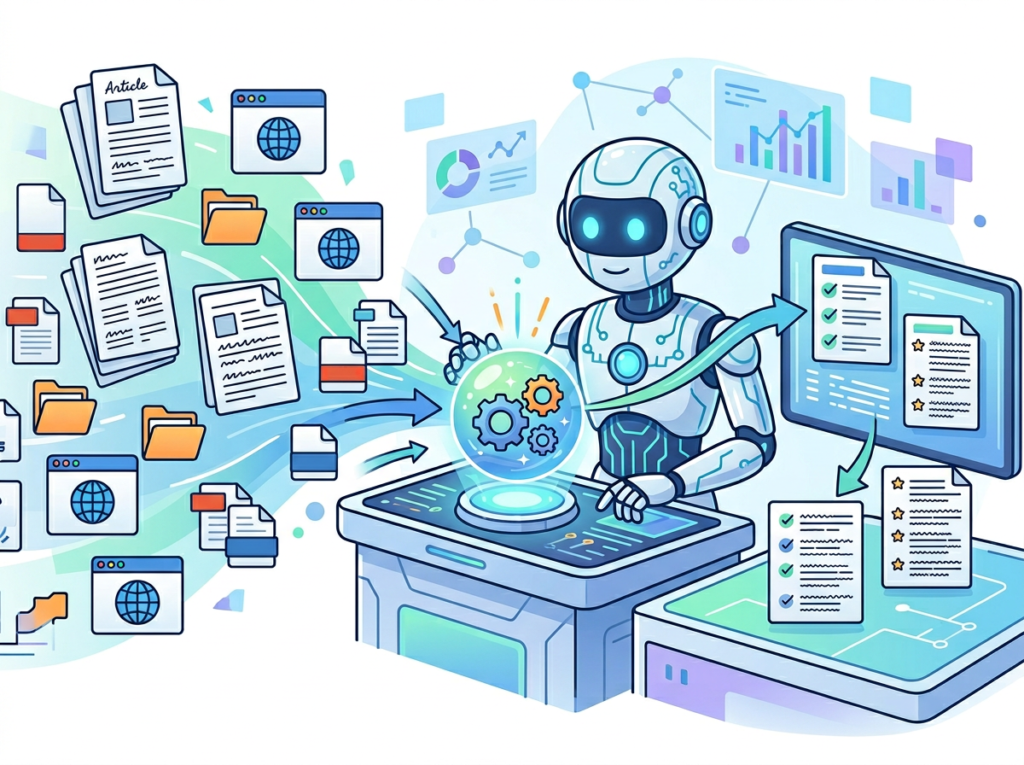
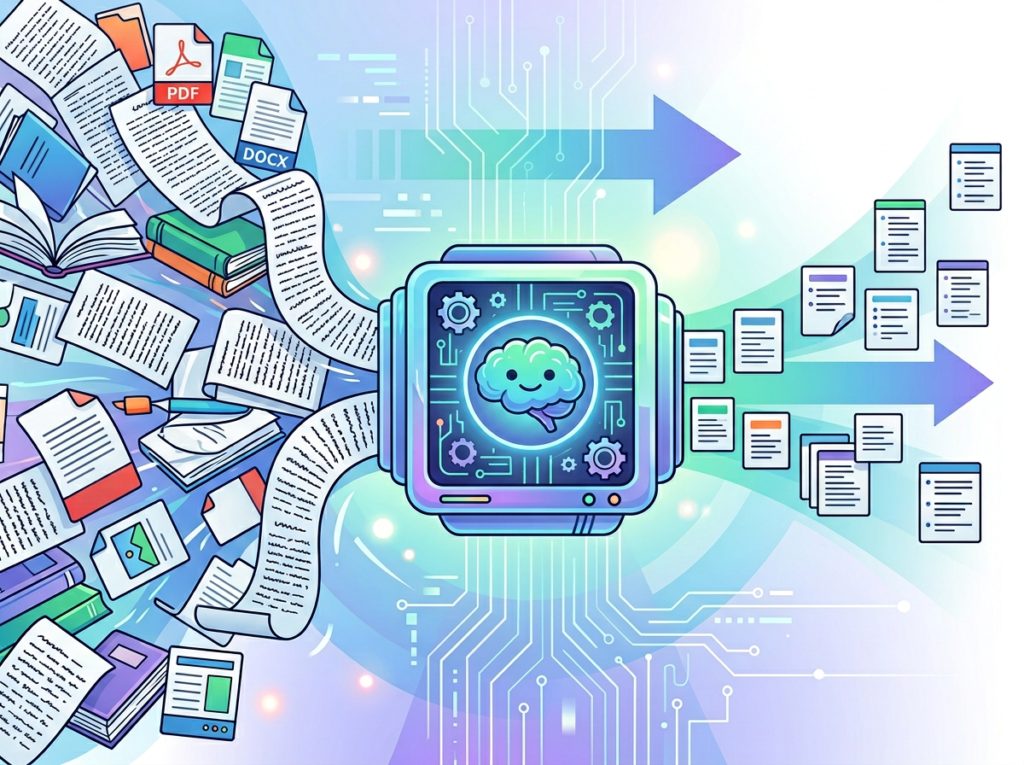
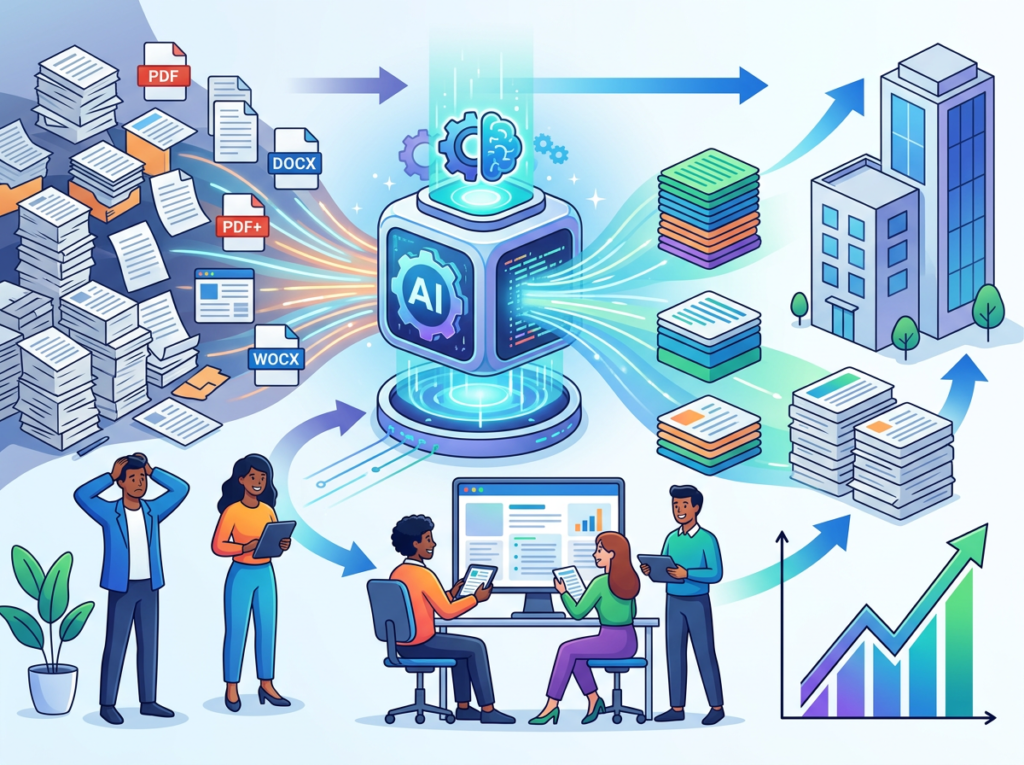
ChatGPT supercharged for business: more power, more control, less work.
What is Superpower ChatGPT?
Superpower ChatGPT is a browser extension that enhances the user interface and functionality of the official ChatGPT web application. It integrates directly into the ChatGPT interface to provide users with additional tools for managing conversations, refining prompts, and organizing outputs. The extension is designed to expand the core capabilities available within the standard ChatGPT environment.
Users interact with the tool through the augmented ChatGPT interface, primarily using text prompts as input. The extension then provides auxiliary functions around the AI’s responses, such as advanced formatting, export options, and conversation management features. The output remains the AI-generated text from ChatGPT, but presented and controlled with greater user flexibility. This software is developed by the team behind the official website.
Key Findings
Advanced Intelligence: Delivers superior conversational AI with deep contextual understanding and adaptive learning capabilities.
Unmatched Versatility: Handles diverse business tasks from creative writing to complex data analysis and coding assistance.
Seamless Integration: Connects effortlessly with popular business platforms and tools to enhance existing workflows and productivity.
Real-time Collaboration: Enables teams to brainstorm, edit, and develop ideas together in a shared interactive workspace.
Enhanced Security: Provides enterprise-grade data protection with robust encryption and strict privacy controls for all interactions.
Customizable Solutions: Tailors its functionality and knowledge base to meet your specific industry needs and company goals.
Continuous Learning: Evolves its responses and suggestions based on user feedback and the latest information available.
Instant Scalability: Effortlessly manages increasing volumes of queries and users without any degradation in performance or speed.
Proactive Insights: Analyzes patterns in your operations to anticipate needs and suggest actionable improvements and optimizations.
Reliable Support: Offers dedicated assistance and comprehensive resources to ensure smooth implementation and ongoing operational success.
Automated compliance for modern businesses, so you can focus on growth.
What is Secureframe?
Secureframe is a Risk Management & Compliance platform designed to help organizations automate the process of achieving and maintaining information security certifications. Its core function is to streamline compliance with standards such as SOC 2, ISO 27001, HIPAA, and GDPR. The platform centralizes evidence collection, continuously monitors security controls, and manages audit-related tasks to prepare for external assessments.
The system works by integrating with an organization’s existing cloud infrastructure and software tools. Users connect these services to the platform, which then automatically gathers data and generates evidence of compliance. Secureframe provides a dashboard where users can view their compliance status, identify gaps, and manage remediation activities. The platform is developed and maintained by the company Secureframe, as detailed on its official website.
Key Findings
Compliance Automation: Streamlines security audits and evidence collection for major regulatory frameworks continuously.
Risk Management: Identifies and prioritizes security vulnerabilities across your entire technology stack proactively.
Policy Centralization: Maintains and distributes up-to-date security policies to all employees from one dashboard.
Vendor Monitoring: Continuously assesses third-party vendor security risks and compliance status through automated integrations.
Audit Readiness: Generates real-time compliance reports and prepares necessary documentation for auditor reviews instantly.
Control Mapping: Automatically links your internal security controls to relevant regulatory requirements like SOC2.
Employee Training: Assigns and tracks mandatory security awareness training completion for your entire workforce efficiently.
Incident Response: Provides guided workflows and documentation tools to manage and report security incidents properly.
Integrations Hub: Connects seamlessly with cloud platforms, HR systems, and developer tools for unified data.
Real-time Monitoring: Continuously scans your infrastructure for configuration drifts and compliance gaps around the clock.
Your AI co-pilot for instant answers, content, and code.
What is Hedy AI?
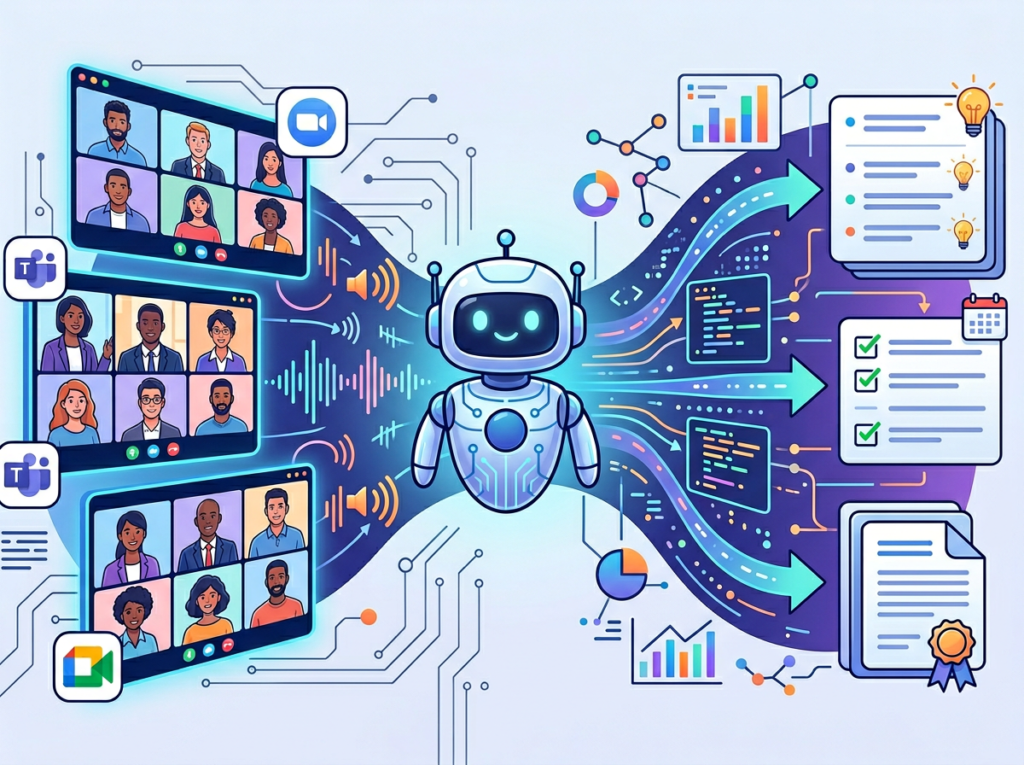
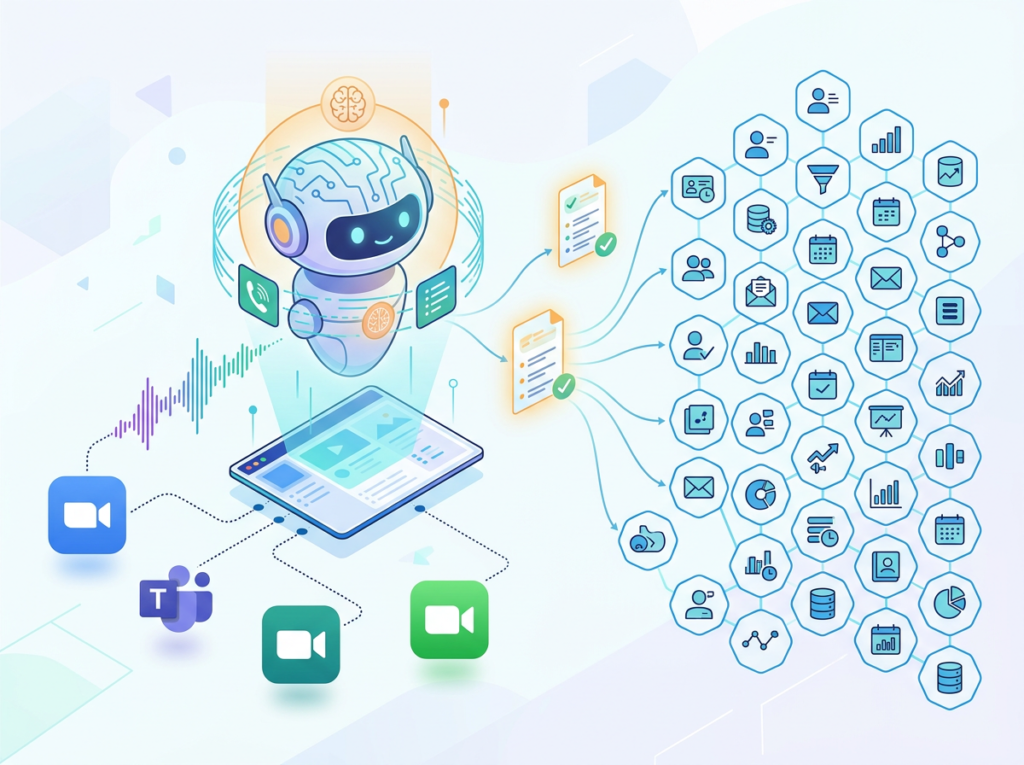
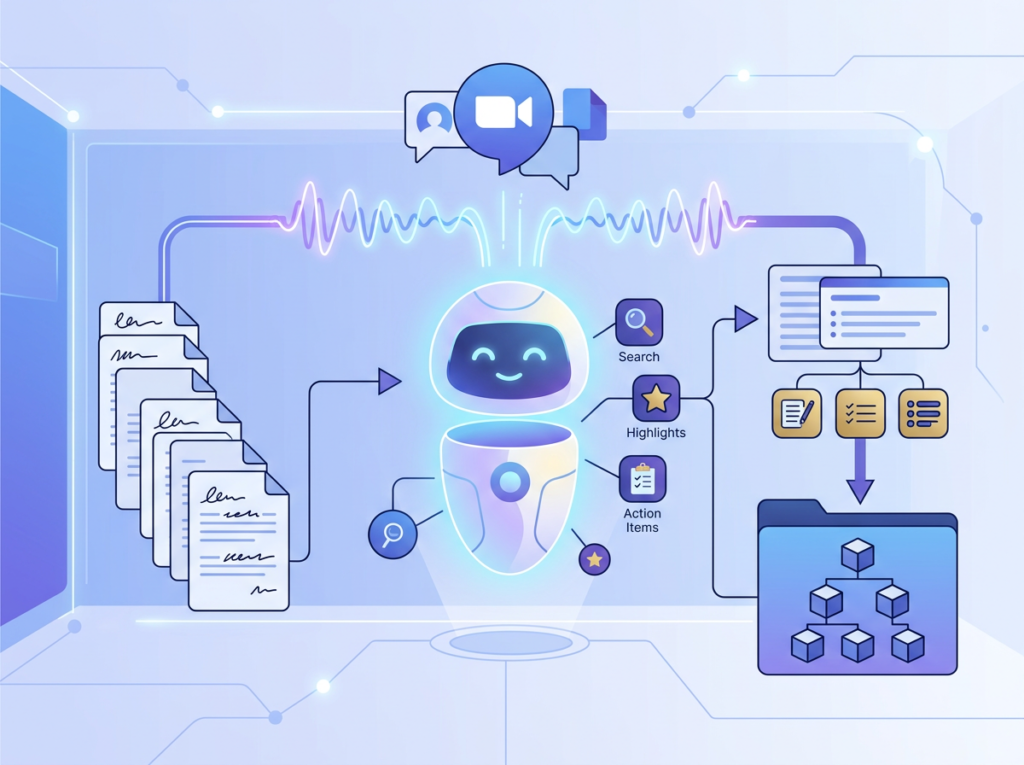
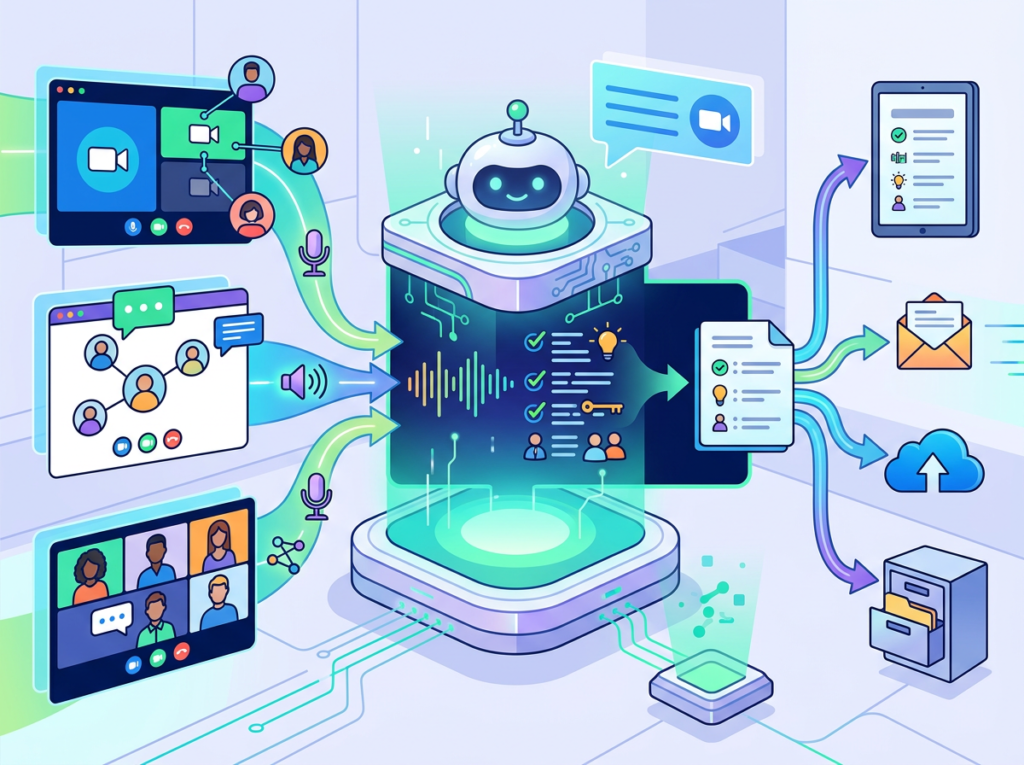
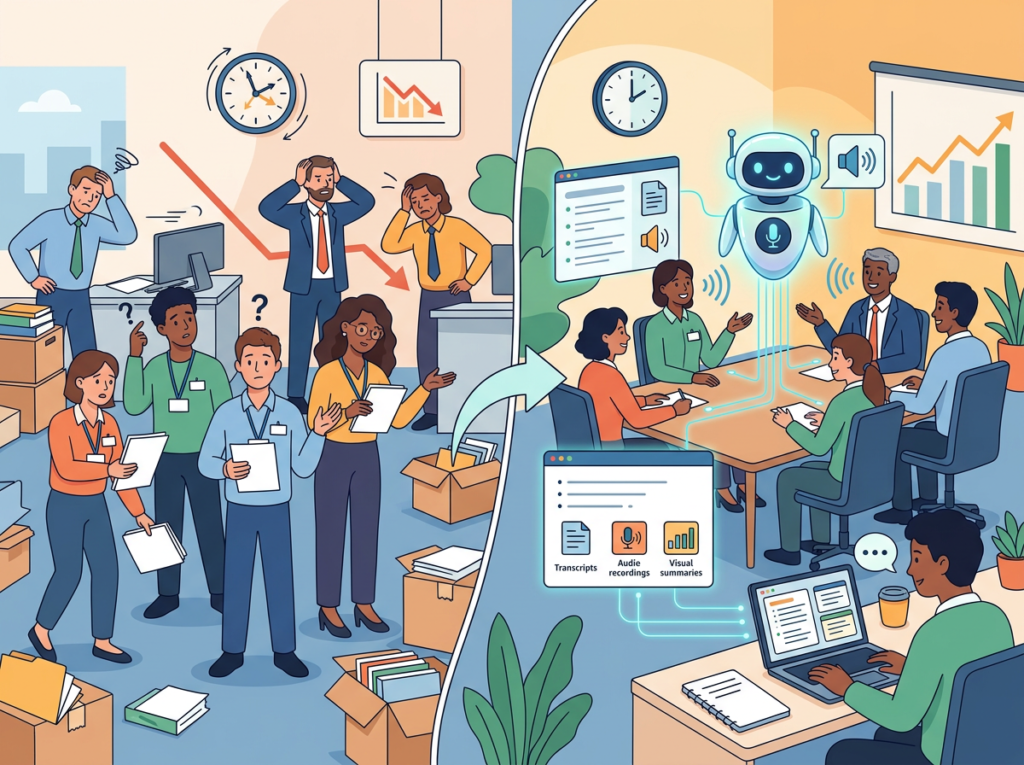
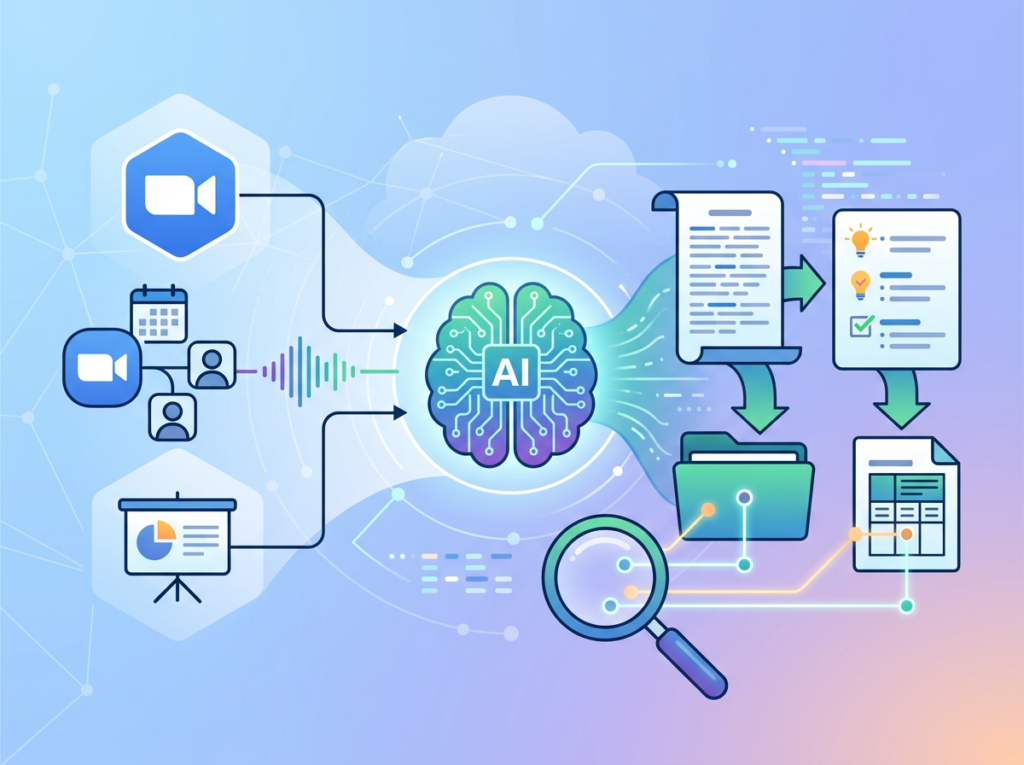
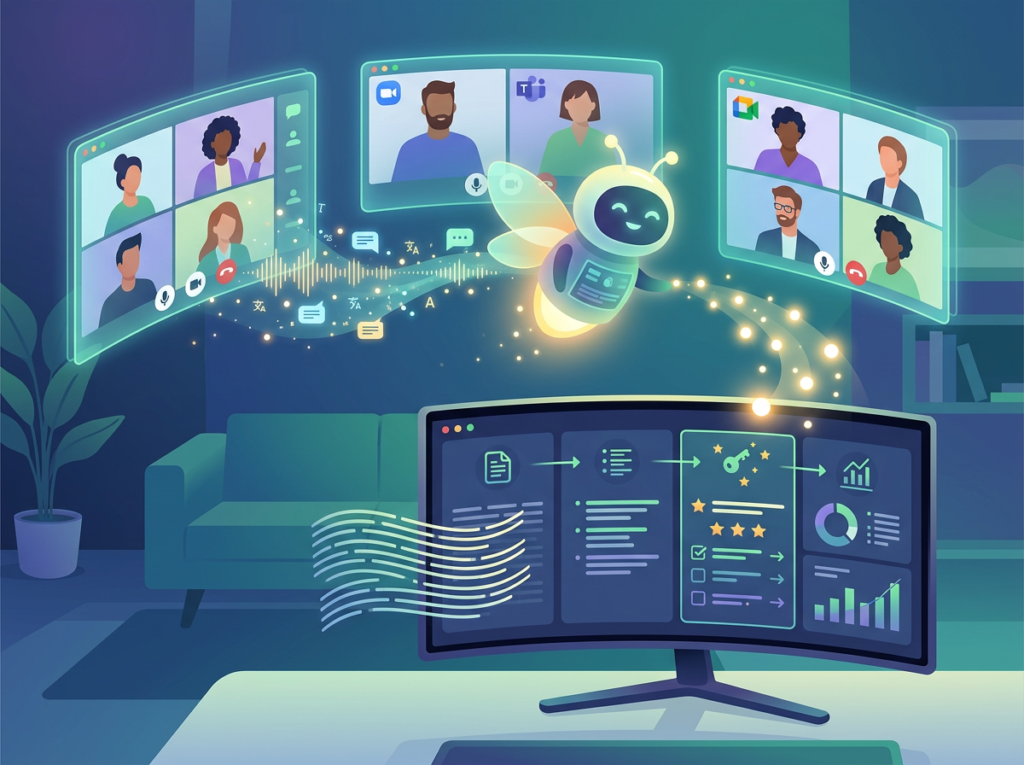
Hedy AI is an artificial intelligence tool designed to transcribe spoken language into written text and generate structured notes from conversations. Its core function is to accurately convert audio from meetings, interviews, and other discussions into a readable transcript. The tool can then analyze this text to produce summaries, highlight key points, and identify action items.
Users interact with Hedy AI primarily by providing audio or video recordings. The system processes this input using automated speech recognition and natural language processing. It outputs a verbatim transcript alongside organized notes, which are intended to distill the essential information from the conversation. According to the team behind the official website, the tool focuses on delivering these outputs efficiently to save users time on manual documentation.
Key Findings
Effortless Integration: Seamlessly connects with your existing software stack to boost productivity and data flow.
Intelligent Conversations: Understands context and nuance to deliver human-like, helpful dialogue across all customer interactions.
Proactive Insights: Analyzes patterns and data to predict trends and recommend actionable strategies before issues arise.
Secure Compliance: Adheres to global data security standards, ensuring all interactions and information remain protected and private.
Customizable Personalities: Adapts its tone and response style to perfectly match your company’s unique brand voice.
Multilingual Support: Communicates fluently in over fifty languages, breaking down barriers for global teams and customers.
Real-Time Analytics: Provides live dashboards and reports to track performance metrics and key engagement indicators instantly.
Automated Workflows: Orchestrates complex processes and tasks, freeing your team to focus on high-value strategic work.
Continuous Learning: Evolves and improves its responses based on every interaction, becoming more valuable over time.
Scalable Architecture: Grows effortlessly with your business, handling increased demand without compromising on speed or reliability.
Who is it for?
Entrepreneur
Business plan drafting
Competitor analysis report
Investor pitch refinement
Market trend summary
Weekly task automation
Marketing Manager
Campaign performance report
Social media content calendar
Customer persona development
Email newsletter drafting
Ad copy variations
Project Manager
Meeting minutes summarization
Project status update
Risk log documentation
Stakeholder communication draft
Post-mortem report outline
Pricing
Free @ $0/mo
Up to 5 hours per month
Understands conversations 30+ languages
Get summaries and meeting notes
Real-time AI insights during conversations
Pro @ $12.99/mo
Unlimited meeting length and sessions
Import and transcribe recordings from past conversations
Organize, connect, and chat across multiple sessions
Connect Hedy to other tools through Zapier and API
Transform your resume into a standout ATS-friendly document in minutes.
What is FlowCV?
FlowCV is a web-based application designed to help users create, format, and manage professional resumes and CVs. It functions as a digital resume builder, providing tools to input career information, select from various visual templates, and generate polished documents suitable for job applications. The system can produce formatted PDF documents that integrate text, layout, and design elements into a cohesive professional profile.
Users typically interact with FlowCV through an online editor, where they input their personal details, work experience, education, and skills into structured fields. The application then applies this data to a chosen template, allowing for real-time visual editing and customization. The final output is a formatted resume document. The team behind the official website develops and maintains this platform to streamline the resume creation process.
Key Findings
Resume Parsing: Extracts and organizes candidate information from uploaded documents with precision.
ATS Optimization: Formats resumes to pass through automated tracking systems without any formatting errors.
Skill Gap Analysis: Identifies missing competencies by comparing candidate profiles to specific job requirements.
Career Path Suggestions: Recommends personalized development steps and potential future roles for employee growth.
Interview Preparation: Generates likely questions and provides strong answer frameworks based on resume content.
Performance Tracking: Monitors employee skill development and career progression over time with clear metrics.
Custom Template Design: Creates professional, branded resume layouts tailored to different industries and roles.
Real Time Feedback: Offers instant suggestions on resume strength, keyword usage, and overall impact.
Data Driven Insights: Provides analytics on resume effectiveness and marketability compared to industry standards.
Integration Ready: Connects seamlessly with major HR platforms and applicant tracking systems for efficiency.
Who is it for?
HR Manager
Streamlining candidate screening
Creating onboarding documentation
Generating policy summaries
Automating interview scheduling
Drafting job descriptions
Startup Founder
Crafting investor pitch decks
Summarizing market research
Writing cold outreach emails
Preparing board meeting briefs
Developing brand messaging
Sales Representative
Personalizing client proposals
Summarizing product features
Following up after meetings
Preparing sales reports
Responding to RFPs
Pricing
Free @ $0/mo
One resume free forever
Unlimited PDF downloads
50+ customizable templates
Import content or start from scratch
Privacy-first and GDPR-compliant
No watermarks or branding
“`
**Analysis Note:** The provided text contains only information about FlowCV’s Free Plan. While the FAQ mentions that paid plans exist (e.g., “To save multiple versions at the same time… upgrade to a paid plan” and “using AI assistance requires an upgrade to a paid plan”), the actual pricing details, plan names, and features for paid tiers are **not included** in the Jina AI text provided.
To complete the full pricing extraction with all available plans (Free, Starter, Pro, Enterprise), you would need to provide the additional pricing section text from the FlowCV website that details the paid plan offerings and their respective features.
Transform your ideas into engaging content with a single click.
What is ContentIn?
ContentIn is an AI-powered tool designed to assist with the creation and management of social media and advertising content. Its core function is to generate written marketing materials, including posts, captions, and ad copy for various platforms. The tool can produce this text based on user-provided information, helping to streamline the initial drafting process for digital campaigns.
Users typically interact with ContentIn by providing text prompts or brief descriptions of their brand, target audience, and campaign goals. The AI then processes this input to generate relevant written content as output. According to the team behind the official website, the system is built to adapt its writing style to different social media channels and advertising formats, aiming to produce coherent and contextually appropriate marketing text.
Key Findings
AI Content: Generates high-quality blog posts and marketing copy in seconds, consistently.
SEO Optimization: Enhances search engine rankings by integrating targeted keywords and meta descriptions automatically.
Brand Voice: Maintains consistent tone and style across all content, reinforcing identity clearly.
Content Calendar: Plans and schedules posts across platforms, ensuring timely publication without delays.
Plagiarism Checker: Scans content for originality, guaranteeing unique output and protecting brand reputation always.
Multilingual Support: Creates and translates content into multiple languages, expanding global reach effectively.
Performance Analytics: Tracks engagement metrics and suggests improvements to boost content strategy results.
Team Collaboration: Allows multiple users to edit and approve content within a shared workspace.
Image Generation: Produces relevant visuals and graphics to complement written content, enhancing appeal instantly.
One-Click Publishing: Distributes finalized content directly to connected websites and social media channels seamlessly.
Who is it for?
Marketer
Campaign performance report
Social media content calendar
SEO keyword strategy document
Competitor analysis summary
Email newsletter copy
Content Creator
Blog post outline generation
Video script writing
Product description writing
Social media captions
Newsletter article drafting
Project Manager
Project status report
Meeting agenda and minutes
Risk assessment log
Stakeholder communication draft
Resource planning overview
Pricing
Essentials @ $15/mo
Unlimited post scheduling for one LinkedIn profile
Most small teams don’t have a reading problem — they have a knowledge retention problem that a smart AI text summarizer can permanently fix.
Something breaks when a US small business grows past three people. It doesn’t happen all at once — it sneaks up on founders through a hundred small frustrations. A contractor asks the same question a full-timer answered last month. A client report takes twice as long because the person who knew the template is out sick. A new hire spends their first two weeks decoding Slack threads instead of doing actual work.
This is the hidden tax of growing without systems. And in 2026, it’s hitting American small businesses harder than ever. Remote-first teams span time zones. Freelance contributors rotate in and out. Founders are managing three departments while still doing the work that used to be their entire job. Knowledge — the real kind, the strategic kind, the “how we do things here” kind — lives in people’s heads, not in documents anyone can find.
The financial cost is staggering. Replacing a single US employee costs between 50% and 200% of their annual salary. Miscommunication and poor knowledge transfer cost US businesses an estimated $37 billion per year. At the small team level — no HR department, no operations manager, no documentation team — the problem compounds fast.
Enter Resoomer. This AI content summarization tool was built for exactly this challenge: distilling long, complex documents, reports, articles, and research into clear, actionable summaries that teams can actually use. For a growing US small business, that means faster onboarding, tighter research workflows, and knowledge that finally escapes the founder’s inbox and becomes part of the system.
Unlike traditional documentation approaches that can run $5,000 or more in US labor just to produce a single process guide, Resoomer-powered workflows cost a fraction of that — and take hours, not weeks.
Solo DX — Small-Scale Digital Transformation — is the emerging operating model for US small teams that are past the solo-founder phase but not yet large enough to justify a dedicated operations function. It’s the gap between “I do everything myself” and “we have an ops manager.” It’s where most American small businesses live, and it’s where most scaling pain happens.
Traditional digital transformation is a corporate exercise. It involves consultants, lengthy discovery phases, six-figure software implementations, and rollout plans that take 18 months to complete. None of that applies to a seven-person marketing agency in Austin or a four-person SaaS startup in Denver. Solo DX is transformation at the speed and budget of a small team.
The key insight behind Solo DX is that small US teams don’t need enterprise-grade systems — they need repeatable, documented workflows that don’t depend on any single person. When Maria in San Francisco can hand off a client research brief to a new contractor and that contractor produces the same quality output, that’s Solo DX working. When a new hire can onboard themselves using documented SOPs rather than scheduling four hours of founder time, that’s the goal.
Solo DX vs. Other AI Categories:
Category
Focus
Typical Buyer
Timeline
Solo DX
Systemization & knowledge transfer
Founders managing 2–10 person teams
Immediate need
AI Efficiency
Task-level automation
Individual contributors
Short-term
AI Revenue Boost
Growth and acquisition
Sales and marketing leads
Medium-term
AI Workflows
End-to-end process automation
Operations teams
Long-term
Why do corporate SOP methods fail for US SMBs? Because they’re built for scale, not speed. A 50-page process manual written by a $150/hour consultant doesn’t help a three-person design studio. What helps is a concise, scannable document created in two hours that new team members can reference without booking a meeting.
Resoomer fits directly into this model. Rather than writing documentation from scratch, teams use it to explore Resoomer’s features for rapidly compressing existing knowledge — research reports, client briefs, industry publications, meeting transcripts — into structured, reusable summaries that become the raw material for team systems. A 40-page industry report becomes a two-page reference document. A competitor analysis becomes a three-paragraph brief. Knowledge that used to live in one person’s reading history becomes shared team intelligence.
Real Example: A three-person content studio in Austin, TX was spending 6–8 hours per client engagement just reading and synthesizing research before writing began. Using Resoomer to pre-process research inputs, they cut that phase to under 90 minutes — reclaiming 20+ billable hours per month across the team.
Problem 1: Knowledge lives only in the founder’s head.
The founder of a 6-person US e-commerce business knows which supplier has the best lead times, how to handle a charge-back dispute, what to say when a wholesale account goes quiet, and 200 other things that keep the business running. None of it is written down. When that founder takes a week off, or hires someone to take over a function, the transfer is painful and incomplete.
AI-assisted knowledge extraction changes this. Tools like Resoomer can summarize internal documents, meeting notes, and research that already exists — turning passive information into structured, shareable knowledge. The founder doesn’t have to write a manual from scratch; they feed the tool what already exists and the system does the compression work.
Problem 2: New hires slow operations down.
The US labor market is unforgiving for small teams. Annual turnover across US small businesses runs at roughly 47%, and each new hire requires meaningful ramp time. Employees with access to structured documentation onboard 40–60% faster than those who rely on shadow learning from colleagues.
For a small team billing $75–$150 per hour, every week of slow onboarding costs real money. A new account manager who takes four weeks to become productive instead of two weeks represents $3,000–$6,000 in lost output at conservative billing rates.
Problem 3: Output quality varies across team members.
Inconsistency is one of the most damaging costs in small team operations. When every team member synthesizes research differently or approaches a standard task using their own method, the variability creates rework, client friction, and reputation risk.
AI summarization tools establish a consistent input-processing layer. When all research runs through the same text summarization software before reaching the team, everyone works from the same quality and format of input — reducing variability at its source.
The Cost Reality:
Approach
Time Required
Labor Cost (est.)
Consistency
Manual research synthesis
6–10 hrs/project
$450–$1,500
Low
AI-assisted with Resoomer
30–90 min/project
$15–$50
High
Outsourced to contractor
3–5 hrs/project
$225–$750
Medium
For a US small team running 8–12 client projects per month, AI-assisted research synthesis can reclaim $4,000–$10,000 monthly in labor hours.
1. Multi-Format Document Summarization to $2,000+ Saved Per Research Cycle
Resoomer processes text across multiple input formats: direct paste, URL import, PDF upload, image scanning, and EPUB files. For a small US team that regularly consumes industry reports, academic papers, competitor content, and client-submitted documents, this means one consistent tool handles the entire document intake process.
A typical US B2B research cycle might involve 10–15 documents totaling 80,000–120,000 words. Reading and synthesizing that manually at $65/hour (mid-range knowledge worker rate) runs $1,500–$2,000 per cycle. Resoomer compresses that to a few hours of supervised AI processing, dropping the cost to under $100 while improving consistency.
The multi-language support (66 languages) is particularly relevant for US teams working with international suppliers, clients, or research sources. A product team in Chicago sourcing research from European markets doesn’t need a translator — they need a smart text summarization software that handles the compression regardless of source language.
2. Adjustable Summary Length to Workflow-Ready Outputs at Every Detail Level
One of Resoomer’s most practical features for team use is the ability to control summary length and reduction percentage. Teams can generate executive-level one-paragraph overviews for leadership, mid-depth summaries for account managers, and detailed summaries with highlighted key passages for subject-matter experts — all from the same source document.
This creates a knowledge distribution system without extra labor. One team member processes the source document; the tool generates outputs at multiple depth levels; different team roles get the version appropriate to their needs.
For a 5-person consulting firm in Denver that produces client briefing materials at three detail levels (executive summary, working brief, full analysis), this workflow eliminates the step where a junior researcher produces a long summary that a senior consultant then has to compress. Estimated time saved: 3–4 hours per client engagement, or roughly $9,360 annually at $75/hour for a team running two engagements per week.
3. Browser Extension for Real-Time Research to $6,000+/Year in Reclaimed Research Hours
Resoomer’s browser extension allows team members to summarize any web article or page with a single click, without leaving their current workflow. For US small teams that use content research as part of client services — content agencies, PR firms, market research shops, consulting practices — this eliminates the most friction-heavy part of the research process.
The workflow shift: instead of reading a full article to decide whether it’s relevant, team members skim the AI-generated summary, decide in 30 seconds, and move on. A researcher who evaluates 25–30 sources per day reclaims 60–90 minutes of reading time daily. At $50/hour, that’s $12,500–$18,750 in annual labor savings for one team member. Even at 50% efficiency capture, the savings exceed $6,000 per year.
As noted in this detailed breakdown of Resoomer’s capabilities, the browser extension maintains full access to summary length controls and analysis modes, making it as capable as the main platform interface.
Ready to systemize your US team’s research workflows in under a week?Try Resoomer Free | No credit card required | Trusted by teams across the US
Use Cases by Team Role
Persona 1: Startup Founder Juggling 3 Departments
Old Workflow: Maria runs a 6-person SaaS startup in San Francisco. Every Monday, she reviews 12–15 industry newsletters, two or three competitor announcements, and at least one analyst report before her team standup. It takes 2.5–3 hours. By the time the meeting starts, she’s summarized everything mentally — but none of it is documented, and her team only gets what she remembers to mention.
AI-Powered Workflow: Maria pastes newsletter URLs directly into Resoomer or uses the browser extension to process each one as she encounters it. By Sunday evening, she has 12 Resoomer-generated summaries exported to a shared Google Doc. Monday’s standup runs from a shared document instead of her memory. Team members can review context asynchronously before the call.
Quantified Results: Maria reclaims 8–10 hours per month of research synthesis time. At a conservative $150/hour opportunity cost for a founder, that’s $1,200–$1,500 per month, or $14,400–$18,000 annually. Strategic alignment improves because knowledge is now written down, not whispered at standup.
Maria’s take: “I used to be the bottleneck for every market update. Now the doc does the talking and I just add context where it matters.”
Persona 2: Marketing Lead Standardizing Client Research
Old Workflow: Aisha manages content strategy for an 8-person content agency in San Francisco. Each new client engagement starts with a research phase where team members independently read industry sources and produce briefs — which vary wildly in quality, depth, and format. Senior team members spend 2–3 hours per engagement reviewing and rewriting junior briefs before they’re usable.
AI-Powered Workflow: Aisha establishes a team protocol: all research sources get processed through Resoomer using a standard summary length setting before being shared. The output format is consistent. Senior review time drops from 2–3 hours to 30–45 minutes because the raw input is already structured. According to this analysis of Resoomer’s text processing capabilities, the tool’s NLP algorithms are particularly effective at extracting key ideas from argumentative and analytical texts — exactly the type of content that appears in industry research.
Quantified Results: Aisha’s team runs 10–12 client engagements per month. Saving 1.5–2.5 hours of senior review time per engagement = 15–30 hours monthly. At $85/hour for a senior content strategist, that’s $1,275–$2,550 per month, or $15,300–$30,600 annually. Brief quality consistency improves, reducing client revision requests by an estimated 25%.
Aisha’s take: “We stopped arguing about brief formats. The AI sets the baseline; everyone works from the same quality input.”
Persona 3: Trainer Documenting Internal Knowledge
Old Workflow: Robert is the in-house trainer at a 12-person financial services consulting firm in New York City. He’s responsible for keeping the team current on regulatory changes, industry trends, and new methodologies — which means reading dense government publications, legal briefs, and industry white papers. He spends 6–8 hours per week just keeping up with source material, and still can’t convert everything into usable training materials.
AI-Powered Workflow: Robert routes all incoming publications through Resoomer first. The tool’s ability to process PDFs and produce summaries at adjustable detail levels means Robert gets a layered view of each document — a one-paragraph executive summary to decide if it’s relevant, and a full detailed summary if it is. He reduces source reading time from 6–8 hours to 2–3 hours per week, and uses the exported summaries as first drafts of training briefs.
Quantified Results: Robert reclaims 3–5 hours per week, or 156–260 hours annually. At his $90/hour compensation rate, that represents $14,040–$23,400 in reclaimed productive capacity per year — redirected into actual training design rather than information processing. The tool reduces source text length by roughly half while preserving key ideas — a significant gain for high-volume readers like Robert. For a deeper look at how Resoomer handles educational and professional documents, this educator-focused review covers the core mechanics well.
Robert’s take: “I went from drowning in white papers to actually building the training content. The summarizer does the first pass; I do the thinking.”
Join thousands of US small teams using Resoomer to eliminate research overwhelm.See How It Works | Used by teams from Silicon Valley to New York
Common Pitfalls & How to Avoid Them
Mistake 1: Running Every Tool in Isolation
Many US small teams add Resoomer to a stack that already includes Slack, Notion, Google Drive, and three other productivity tools — without integrating them. The result is that Resoomer-generated summaries live in one place while the team’s actual work happens in another. Summaries don’t get referenced; knowledge doesn’t transfer.
Fix: Designate one system of record (typically Notion or Google Drive) as the destination for all Resoomer exports. Create a standard folder structure so summaries are findable. The tool only creates value when its outputs are embedded in workflows, not siloed in a separate app.
Mistake 2: Delegating Research Without Delegating the Process
Founders who hand off research to junior team members often skip the step of documenting how to use the summarization tool effectively. The team member produces inconsistent summaries because they’re guessing at the right settings, length, and format.
Fix: Create a one-page “Resoomer protocol” that specifies default summary length settings for different document types (short for news articles, detailed for analyst reports), output format requirements, and naming conventions for exported files. This takes 30 minutes once and saves hours of inconsistency going forward.
Mistake 3: Using Slack or Email as a Knowledge Store
This is the underlying disease that Solo DX is designed to cure. Even teams that use Resoomer effectively often let the summaries live in email threads or Slack channels, where they disappear within 48 hours of posting. Knowledge gets created and immediately lost.
Fix: Treat Resoomer exports the same way you’d treat any formal document. Every summary gets filed, named, and tagged — not shared as a Slack attachment and forgotten. Learn more about Resoomer and how teams use it to build durable knowledge systems rather than temporary information dumps.
FAQs
What is Solo DX? Solo DX stands for Small-Scale Digital Transformation. It describes the process of small US teams — typically 2–15 people — implementing AI-powered systems to create repeatable workflows, document institutional knowledge, and reduce operational dependence on any single person. Unlike enterprise digital transformation, Solo DX is fast, low-cost, and founder-led.
How can AI write my SOPs? AI tools can’t write SOPs from nothing — but they can dramatically accelerate the process. Feed an AI text summarizer like Resoomer your existing process notes, email threads, or reference documents, and it generates structured summaries that serve as SOP first drafts. A human then reviews and formats the output. A process that used to take 8–10 hours to document manually can be completed in 1–2 hours using this workflow.
What’s the difference between AI Efficiency and Solo DX? AI Efficiency focuses on individual-level task automation — making one person faster at specific tasks. Solo DX focuses on team-level systemization — creating documented, repeatable workflows that work regardless of who’s performing them. The goal of Solo DX isn’t speed for one person; it’s consistency and resilience across the whole team.
Can small teams afford to use AI? Yes. Resoomer’s free tier provides basic summarization capabilities with no account required. Paid plans start at approximately $9.90/month and provide 200 processing units per month — sufficient for a small team’s typical research volume. Compared to the cost of manual research synthesis ($50–$150/hour for US knowledge workers), the ROI is immediate and substantial.
Is Resoomer hard to set up? No. Resoomer requires no technical setup. Teams can start using it within minutes: copy-paste text into the interface, or install the browser extension in under 60 seconds. There’s no API configuration, no workflow automation to build, and no training required. For a US small team that needs a quick win on documentation and research, Resoomer is one of the lowest-friction tools available.
In 2026, American small businesses don’t need enterprise budgets to build enterprise-level systems. They need the right tools, applied consistently, to the right workflows.
The ai text summarizer category has matured to the point where tools like Resoomer deliver genuine operational value — not just faster reading, but a real shift in how teams capture, structure, and share knowledge. For US small teams that are scaling past the founder-does-everything phase, that shift is worth tens of thousands of dollars annually in reclaimed labor, faster onboarding, and reduced rework.
The Solo DX playbook is simple: identify the knowledge that lives in one person’s head or inbox, use Resoomer to compress and structure the source material, export the outputs into your team’s system of record, and build repeatable workflows around the result.
Start with one process — your client onboarding research, your weekly competitive intelligence review, your new hire reading list. Systemize it this week. Then do the next one.
The teams that win in 2026 aren’t the ones with the biggest budgets. They’re the ones that turn knowledge into systems before their competitors do.
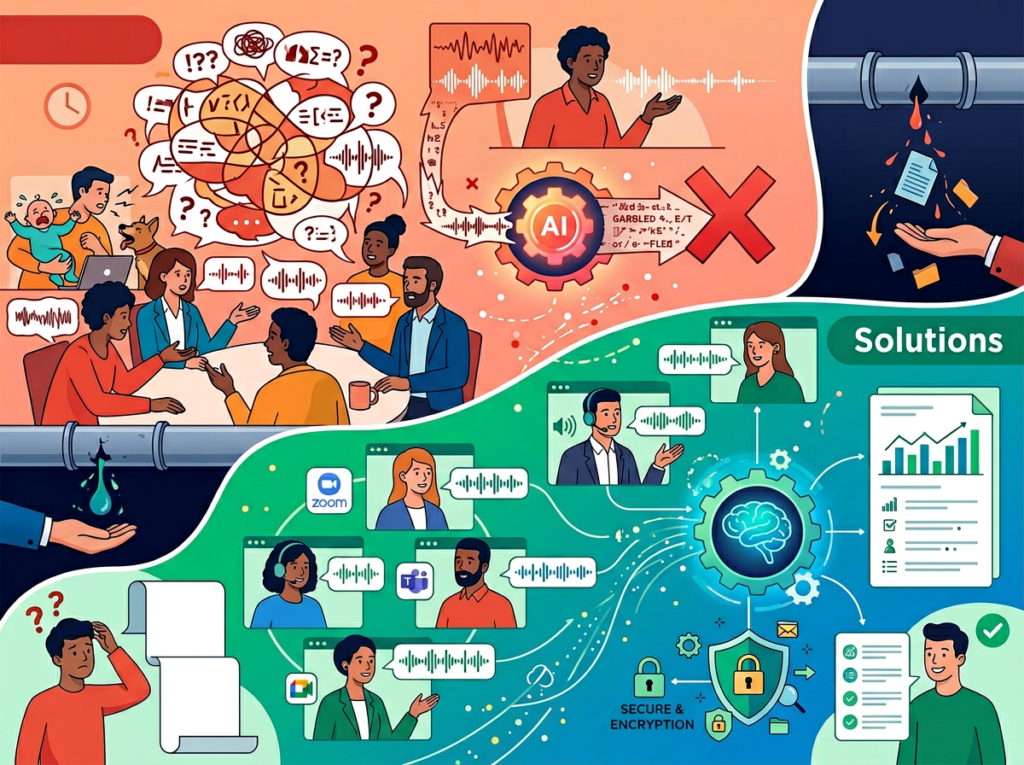
Most small teams don’t lose deals or miss deadlines because of bad strategy — they lose them because critical meeting decisions never make it into a system.
It starts the same way for almost every US small business that scales past five people. The founder remembers every decision from every call. The team assumes someone else took notes. Slack fills up with half-remembered action items. A new hire asks what was decided in last Tuesday’s product meeting, and the honest answer is: nobody’s sure.
In 2026, this isn’t a knowledge problem — it’s a systems problem. And it’s costing American small businesses more than they realize. At an average US labor rate of $65–$85 per hour for knowledge workers, a 10-person team that spends even one hour per week reconstructing meeting context is burning roughly $33,000–$44,000 annually on preventable chaos.
The remote work culture that exploded post-2020 made this worse. Teams now span San Francisco to Chicago to Miami. Meetings happen across time zones, platforms, and departments. Zoom calls replace hallway conversations. But the old problem — valuable information disappearing after the call ends — got bigger, not smaller.
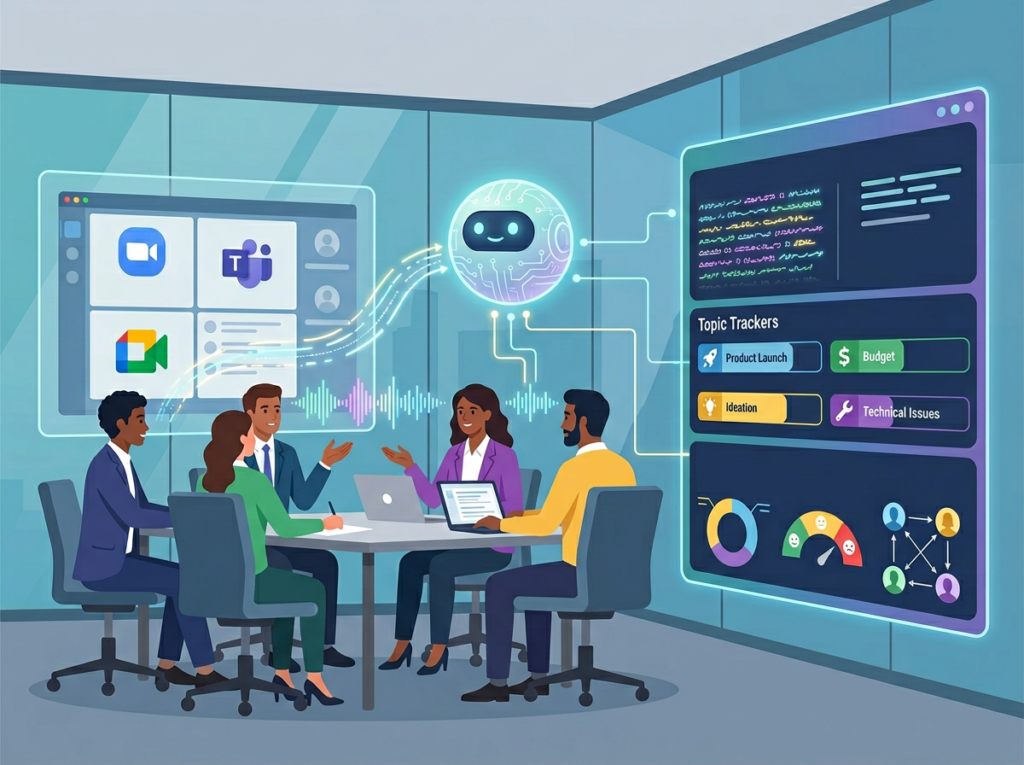
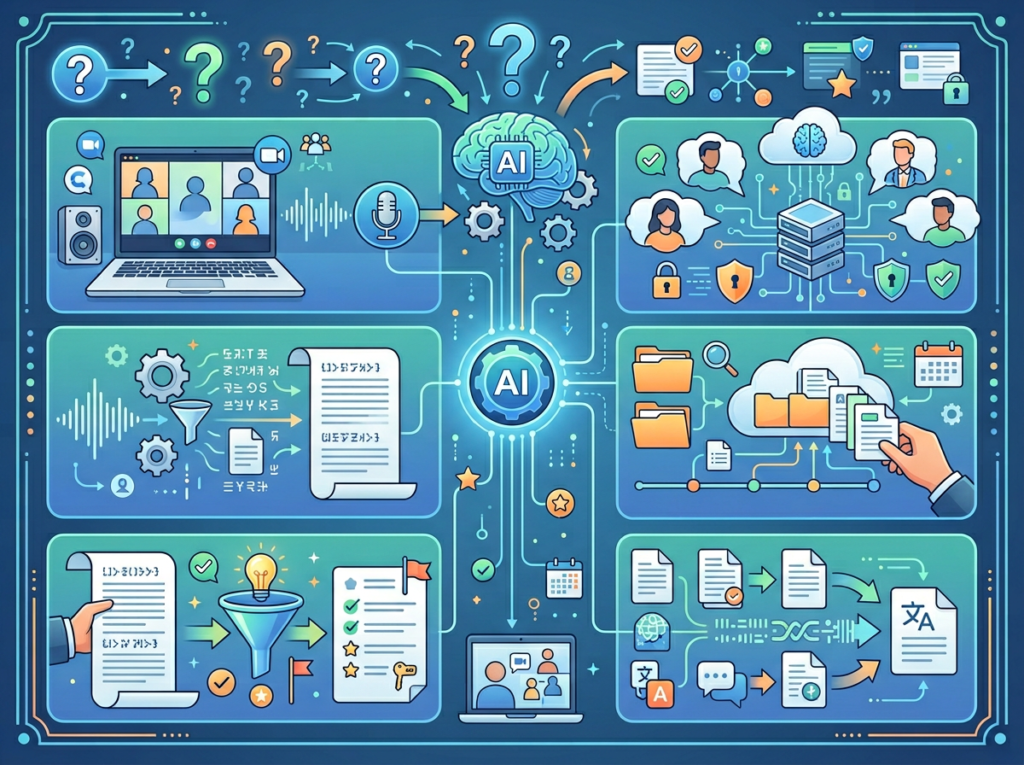
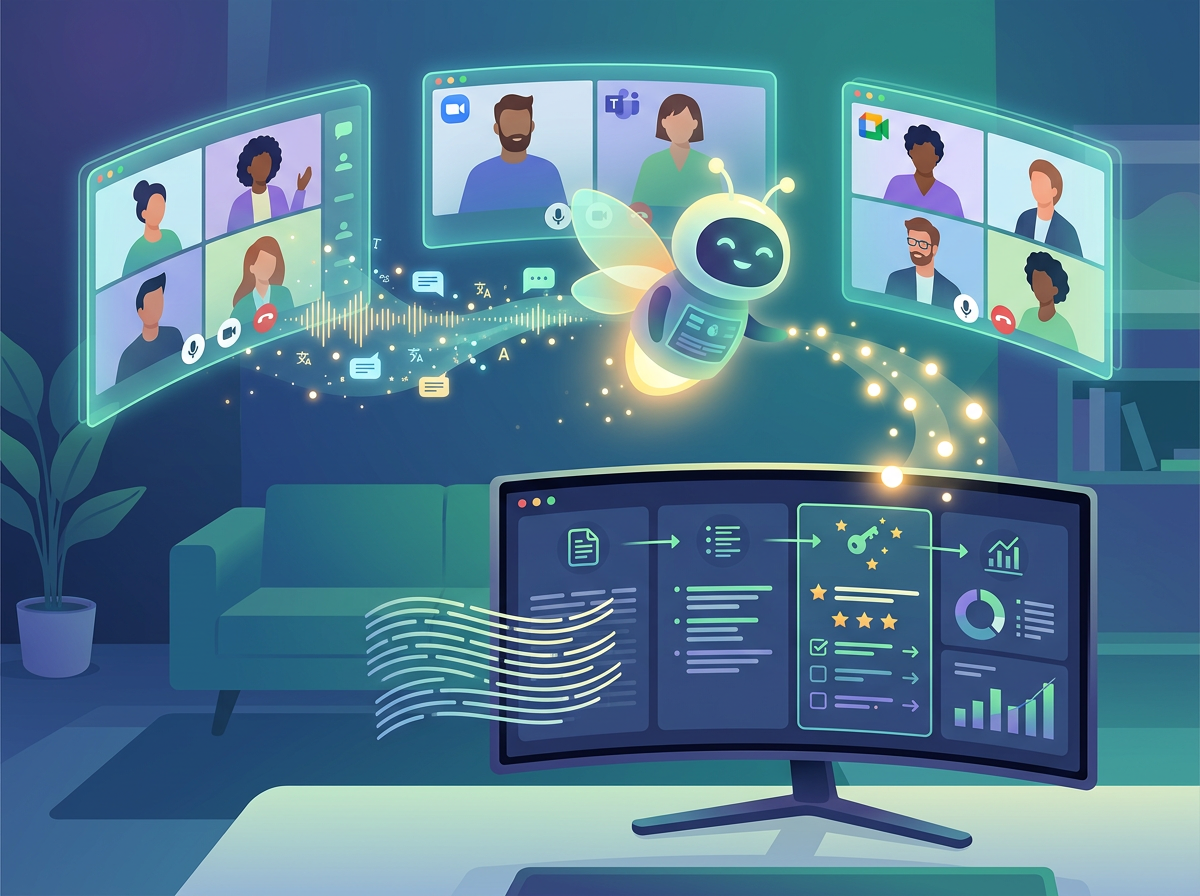
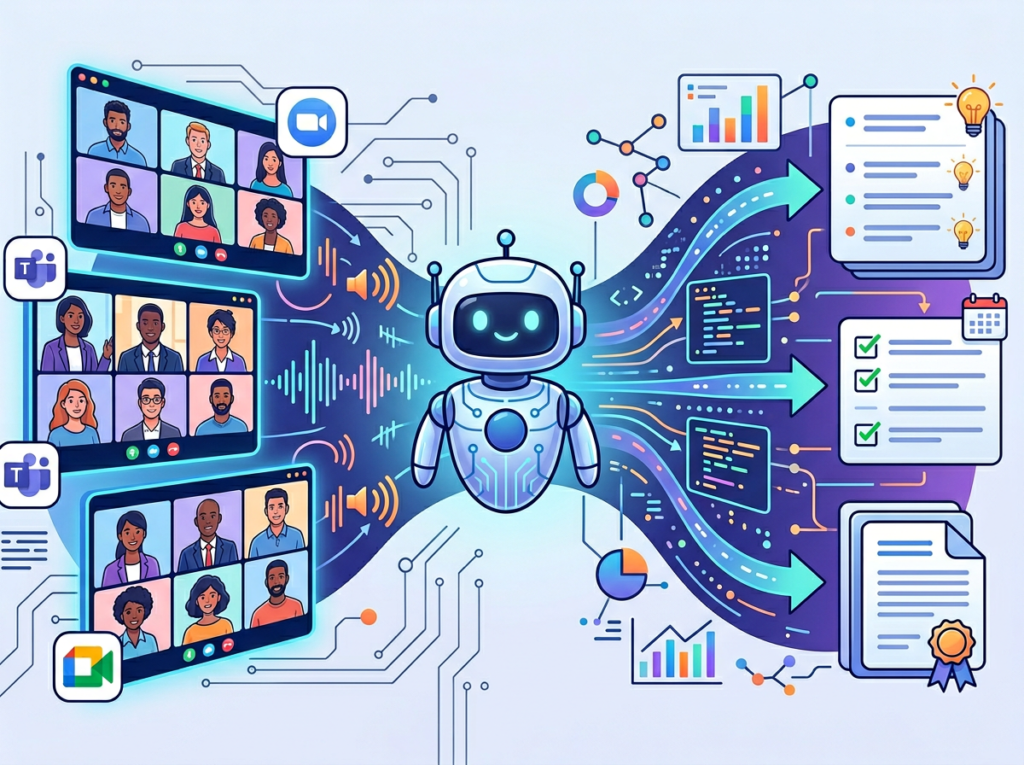
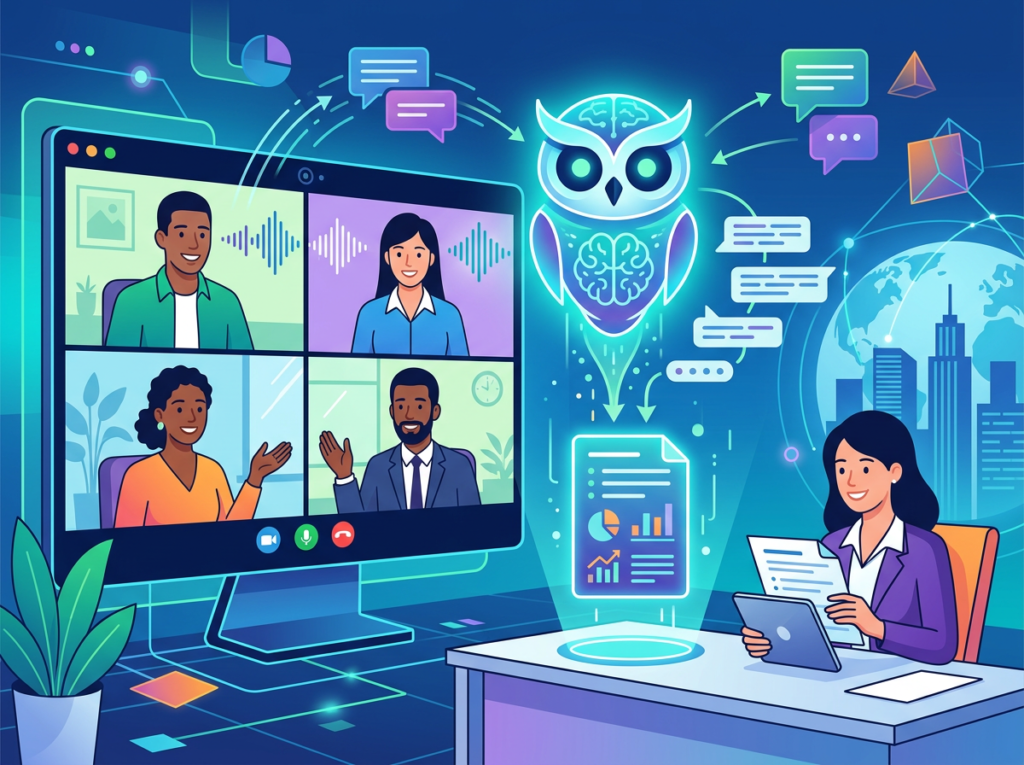
This is exactly where Fireflies AI enters the picture. Unlike generic note-taking apps that require human effort to maintain, Fireflies operates as a true AI meeting assistant: it joins your calls automatically, transcribes everything in real time, generates structured summaries, extracts action items, and makes every conversation searchable across your entire organization.
Unlike traditional documentation approaches — which can cost $5,000 or more in US labor to set up a basic knowledge capture system — Fireflies starts at $0 and can be running in under 10 minutes.
This guide walks through exactly how US small teams are using Fireflies to convert their meetings from time sinks into operational assets, with real workflows, quantified outcomes, and practical implementation advice.
Solo DX — short for Small-Scale Digital Transformation — is the operating category for US founders who have moved past the solo hustle and are now running a real team. You have 3–15 people. You’re past survival mode. But you’re not yet at the size where you can afford an operations manager, a chief of staff, or an enterprise software suite.
Solo DX describes the inflection point where your business stops scaling on founder memory and starts scaling on documented systems.
Category
Focus
Best For
AI Efficiency
Automate repetitive individual tasks
Solopreneurs, 1-person teams
Solo DX
Build repeatable team systems with AI
3–15 person US small teams
AI Revenue Boost
Use AI to grow top-line revenue
Sales-focused teams
AI Workflows
Integrate AI across existing tools
Operations-heavy teams
Most corporate SOP frameworks — ISO documentation, enterprise playbook systems, formal knowledge management platforms — were designed for companies with dedicated ops staff and compliance budgets. They fail for US small businesses because they require too much upfront labor to build and too much ongoing maintenance to sustain.
Solo DX takes a different approach: use AI to capture institutional knowledge as it’s naturally created, then make it retrievable and replicable without extra effort from the team.
Consider a 4-person design studio in Austin, Texas. The founder, creative director, and two client-facing designers are on four to six video calls per day. Decisions about scope, revision timelines, client preferences, and creative direction happen in those calls. Without a capture system, those decisions live in the founder’s memory — right up until the moment the founder takes a vacation, a key hire leaves, or the team doubles in size.
With Fireflies operating as the team’s AI meeting assistant, every call is automatically transcribed, summarized, and logged. The creative director can search “logo revision — client Apex Tech” and pull up the exact conversation from three weeks ago. New hires onboard against real call records, not vague tribal knowledge.
Problem 1: Knowledge Lives Only in the Founder’s Head
In the early days, founder memory is a feature, not a bug. The founder knows every client, every preference, every internal shortcut. But as the team grows, this becomes a single point of failure. When the founder is unavailable, the team stalls. When a key early employee leaves — and at US labor turnover rates hovering near 47% annually in knowledge work, they will leave — institutional knowledge walks out the door with them.
The cost isn’t just inconvenience. Replacing a mid-level knowledge worker costs an estimated 50–200% of their annual salary in recruiting, training, and lost productivity. For a $70,000 annual salary role, that’s $35,000–$140,000 per departure. Teams that have documented systems consistently report 40–60% faster onboarding and materially lower turnover-related costs.
Problem 2: New Hires Slow Down Operations
The standard US small business onboarding process is informal. New hires shadow experienced team members, ask questions that get answered differently each time, and spend weeks piecing together context that should have been documented months ago. A 2026 survey of US SMBs found that the average new hire takes 3–6 weeks to reach full productivity without structured onboarding materials — a period that costs roughly $4,000–$8,000 in lost output per hire.
AI meeting transcription changes this equation. When every client call, project kickoff, and internal discussion is logged and searchable, new hires can self-onboard against real institutional knowledge rather than relying on whoever happens to be available.
Problem 3: Quality Varies Across Team Members
Without standardized processes, output quality becomes person-dependent. One account manager runs exceptional client calls; another leaves clients confused. One developer follows a consistent deployment checklist; another improvises. This variation is invisible until a client complains or a mistake escalates.
The fix isn’t micromanagement — it’s documentation. Teams that capture and systematize their best practices see measurable quality improvements within 30–60 days of implementation. AI meeting tools make that capture automatic rather than aspirational.
The Cost Reality:
Manual documentation approach: $5,000–$15,000 in US labor to build a basic knowledge base from scratch
AI-assisted approach with Fireflies: Operational in under a week, starting at $0 on the free plan or $10–$19/user/month on paid tiers
1. Automatic Meeting Transcription and AI Summaries
Every meeting Fireflies joins — Zoom, Google Meet, Microsoft Teams, Webex, and 10+ other platforms — is automatically recorded, transcribed at over 90% accuracy across multiple languages, and summarized within minutes of the call ending.
The summary isn’t a raw transcript dump. Fireflies structures output into key decisions, action items, questions raised, and next steps — organized consistently across every call type. For a 10-person US team averaging 8 hours of meetings weekly, this eliminates approximately 3–5 hours of manual note-taking and summary writing per week.
At $65/hour average US knowledge worker cost, that’s $9,360–$15,600 recovered annually for a single 10-person team.
2. CRM and Tool Integrations (40+ Platforms)
Fireflies integrates natively with HubSpot, Salesforce, Slack, Notion, Asana, Trello, Monday.com, and 35+ other tools that US small teams already use. When a sales call ends, the transcript and action items automatically push to the relevant CRM deal. When a project meeting wraps, tasks sync to the project management tool.
For a US sales team averaging 20 client calls per week, eliminating manual CRM updates saves approximately 2–3 hours of administrative work per salesperson per week. At $75/hour for a mid-level US sales role, that’s $7,800–$11,700 recovered annually per rep.
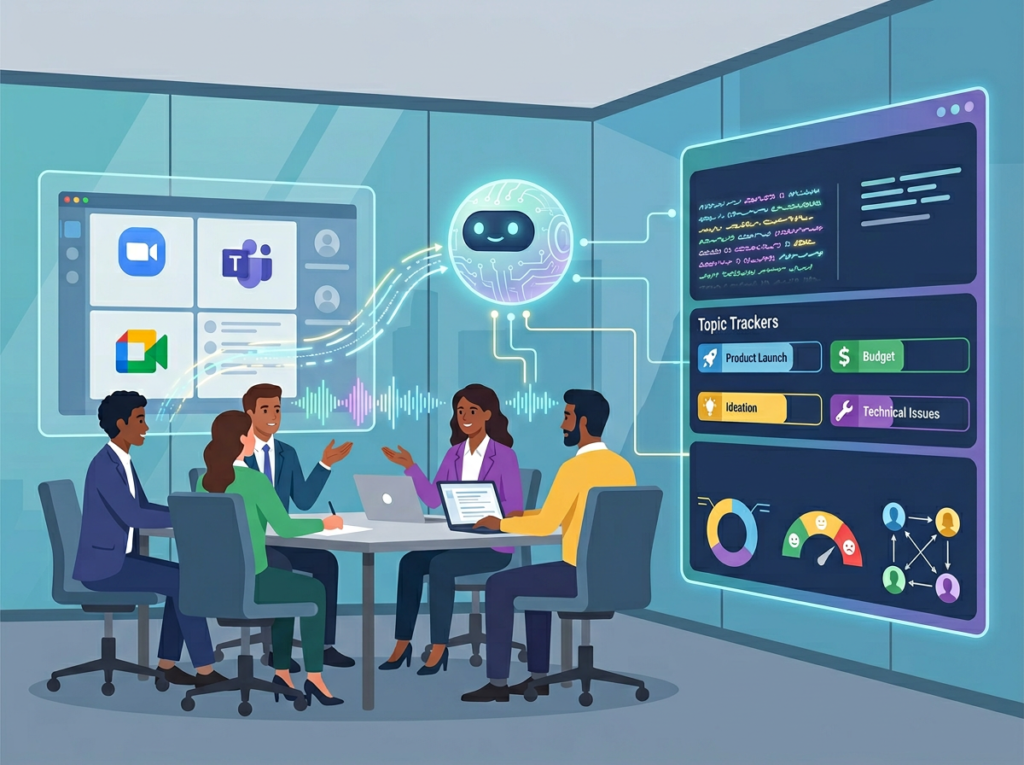
3. Topic Trackers and Conversation Analytics
Fireflies lets you define custom topics — competitor names, objection types, pricing signals, compliance phrases — and automatically flags every time those topics surface across all recorded meetings. For a Denver-based SaaS startup tracking competitive mentions across their sales calls, this turns 200 hours of recorded conversations into structured competitive intelligence without a dedicated analyst.
Conversation analytics surface talk-to-listen ratios, silence duration, sentiment scores, and speaker statistics — giving US team leads actionable coaching data without manual review.
Ready to systemize your US team’s meeting knowledge in under a week?Try Fireflies Free | No credit card required | Trusted by 3M+ users across US teams
Use Cases by Team Role
Persona 1: Startup Founder Juggling Three Departments
Old workflow: Maria, founder of a 7-person fintech startup in San Francisco, spent 45 minutes after every investor call writing up notes, extracting action items, and updating her CRM. With 12–15 calls per week across fundraising, client success, and product, she was spending 10–12 hours weekly on post-meeting admin.
AI-powered workflow: Fireflies joins every Maria’s calls automatically. Summaries land in her inbox within minutes of each call ending. Action items sync directly to Asana. HubSpot deal records update without manual entry. Maria reviews summaries in 5 minutes instead of writing them in 45.
Quantified results: Time recovered: 8–10 hours per week. At Maria’s founder-equivalent rate of $120/hour, that’s roughly $50,000–$62,400 in recovered productive time annually — time she now directs toward fundraising and product strategy.
Maria’s take: “I used to feel like I was working for my calendar. Now my calendar works for me. Every call is documented before I’ve even grabbed coffee.”
Persona 2: Executive Assistant Onboarding Remote Staff
Old workflow: James, EA at an 11-person Miami logistics consultancy, was responsible for onboarding new hires to client processes. Without recorded call history, onboarding meant scheduling hours of shadowing sessions and hoping new hires retained everything from informal briefings. Each new hire took 4–5 weeks to reach full productivity.
AI-powered workflow: James built an onboarding library using Fireflies’ searchable transcript database. New hires now study real client call recordings — filtered by client, topic, and outcome — before their first live interaction. James tagged 30 model calls across key client scenarios, creating a self-serve onboarding resource that didn’t exist before.
Quantified results: Onboarding time dropped from 4–5 weeks to 2 weeks. For a 6-person annual hiring rate at $55,000 average salary, the productivity acceleration is worth approximately $25,000–$30,000 annually in recovered output time.
James’s take: “New hires used to ask the same questions 10 times because there was nowhere to look. Now I point them to the recordings and they come back with smart questions, not basic ones.”
As noted in this detailed Fireflies implementation breakdown, the tool’s integration with platforms like Slack and Asana is where post-meeting automation compounds fastest for multi-platform teams.
Persona 3: Trainer Documenting Internal Knowledge
Old workflow: Robert ran sales training at an 8-person NYC-based B2B SaaS company. He held weekly coaching sessions and quarterly skills reviews. None of it was captured systematically. High performers’ techniques weren’t documented. When the top SDR left, the playbook left with him.
AI-powered workflow: Robert now records all coaching sessions, top-performer calls, and deal review meetings through Fireflies. He built a Playlist of the team’s best-performing calls — Fireflies’ Playlist feature lets you curate clips into sharable training libraries. New SDRs onboard against real winning calls, not role-played scenarios.
Quantified results: New SDR ramp time fell from 90 days to 45 days. With a 3-person annual SDR hiring rate and $80,000 average OTE, the ramp acceleration delivers roughly $32,000 in recovered quota attainment in year one.
Robert’s take: “I finally have a training library that doesn’t require me to rebuild it every time someone new joins. The calls are already there.”
According to this analysis of Fireflies’ productivity features, the Meeting Rules automation — pre-defining which meetings Fred joins automatically — is one of the most underused features that high-volume teams should configure first.
Join growing teams using Fireflies to turn every meeting into an operational asset.See How It Works | Used by teams from Silicon Valley to New York
Common Pitfalls & How to Avoid Them
Mistake 1: Treating Transcripts as Passive Archives
The most common Fireflies failure mode: teams turn on recording, let transcripts accumulate, and never build a retrieval habit. Transcripts sitting in a dashboard nobody opens are worth exactly nothing. The fix is to designate a weekly 15-minute “meeting intelligence review” — one team member scans the week’s AI summaries and flags action items that slipped through.
Mistake 2: Skipping Integration Setup
Fireflies delivers 30–40% of its ROI through integrations: pushing action items to Asana, logging call notes to HubSpot, notifying Slack channels when key topics are flagged. US teams that use Fireflies as a standalone recorder without connecting it to their existing stack are using a fraction of the tool’s value. Spend 30 minutes in the Integrations tab during initial setup.
Mistake 3: Letting Meeting Volume Grow Unchecked
Fireflies makes meeting documentation frictionless — which can inadvertently justify holding more meetings. The tool should reduce meeting overhead, not increase it. If your team is running more meetings because documentation is easier, you’ve inverted the benefit. Use Fireflies’ analytics to identify your longest, lowest-signal meetings and cut them first.
As this step-by-step Fireflies usage guide from the Fireflies team notes, configuring custom vocabulary during setup — adding your product names, industry terms, and client names — meaningfully improves transcription accuracy from day one.
FAQs
What’s the difference between AI Efficiency and Solo DX?
AI Efficiency focuses on automating repetitive tasks for individual contributors — things like email drafting, scheduling, and data formatting. Solo DX focuses on building team-level systems: documented workflows, institutional knowledge capture, and repeatable processes that scale beyond the founder. Fireflies fits firmly in the Solo DX category because its value compounds as team size grows.
Can small teams afford to use AI meeting tools?
Fireflies has a free plan that includes basic transcription for up to 800 minutes per seat per month — enough for many small US teams to evaluate the tool at zero cost. Paid plans start at approximately $10–$19/user/month. Given that a single recovered hour of US knowledge work at $65/hour recoups a month of subscription cost, the ROI case closes quickly.
Is Fireflies hard to set up?
No. Setup takes under 15 minutes for a basic configuration: connect your Google or Outlook calendar, set your meeting rules (which calls Fred should auto-join), and configure one integration. Most US teams are capturing their first meeting within the same business day they sign up.
In 2026, American small businesses don’t need enterprise budgets to build enterprise-level meeting intelligence systems. The infrastructure that Fortune 500 companies spent millions building — searchable knowledge bases, consistent meeting records, automated follow-up workflows — is now available to a 5-person team in Denver for the cost of a lunch.
Fireflies is one of the best-positioned ai meeting assistant tools for US small businesses because it removes friction at every stage: joining calls automatically, generating structured summaries without manual editing, and pushing outputs into the tools your team already uses. That’s the Solo DX model — AI doing the operational heavy lifting so founders and teams can focus on the work that actually moves the business forward.
The teams that will win the next phase of US small business growth aren’t the ones with the biggest budgets. They’re the ones that build the best systems. And you don’t need a 90-day transformation project to get there.
Start with one process. Pick the meeting type your team runs most often — client calls, weekly standups, project kickoffs — and let Fireflies own the documentation for one month. By the end of week four, you’ll have a searchable archive of institutional knowledge that would have taken $5,000+ in manual labor to build any other way.
Most small teams don’t lose deals or miss deadlines because of bad strategy — they lose them because critical meeting decisions never make it into a system.
It starts the same way for almost every US small business that scales past five people. The founder remembers every decision from every call. The team assumes someone else took notes. Slack fills up with half-remembered action items. A new hire asks what was decided in last Tuesday’s product meeting, and the honest answer is: nobody’s sure.
In 2026, this isn’t a knowledge problem — it’s a systems problem. And it’s costing American small businesses more than they realize. At an average US labor rate of $65–$85 per hour for knowledge workers, a 10-person team that spends even one hour per week reconstructing meeting context is burning roughly $33,000–$44,000 annually on preventable chaos.
The remote work culture that exploded post-2020 made this worse. Teams now span San Francisco to Chicago to Miami. Meetings happen across time zones, platforms, and departments. Zoom calls replace hallway conversations. But the old problem — valuable information disappearing after the call ends — got bigger, not smaller.
This is exactly where Fireflies AI enters the picture. Unlike generic note-taking apps that require human effort to maintain, Fireflies operates as a true AI meeting assistant: it joins your calls automatically, transcribes everything in real time, generates structured summaries, extracts action items, and makes every conversation searchable across your entire organization.
Unlike traditional documentation approaches — which can cost $5,000 or more in US labor to set up a basic knowledge capture system — Fireflies starts at $0 and can be running in under 10 minutes.
This guide walks through exactly how US small teams are using Fireflies to convert their meetings from time sinks into operational assets, with real workflows, quantified outcomes, and practical implementation advice.
Solo DX — short for Small-Scale Digital Transformation — is the operating category for US founders who have moved past the solo hustle and are now running a real team. You have 3–15 people. You’re past survival mode. But you’re not yet at the size where you can afford an operations manager, a chief of staff, or an enterprise software suite.
Solo DX describes the inflection point where your business stops scaling on founder memory and starts scaling on documented systems.
Category
Focus
Best For
AI Efficiency
Automate repetitive individual tasks
Solopreneurs, 1-person teams
Solo DX
Build repeatable team systems with AI
3–15 person US small teams
AI Revenue Boost
Use AI to grow top-line revenue
Sales-focused teams
AI Workflows
Integrate AI across existing tools
Operations-heavy teams
Most corporate SOP frameworks — ISO documentation, enterprise playbook systems, formal knowledge management platforms — were designed for companies with dedicated ops staff and compliance budgets. They fail for US small businesses because they require too much upfront labor to build and too much ongoing maintenance to sustain.
Solo DX takes a different approach: use AI to capture institutional knowledge as it’s naturally created, then make it retrievable and replicable without extra effort from the team.
Consider a 4-person design studio in Austin, Texas. The founder, creative director, and two client-facing designers are on four to six video calls per day. Decisions about scope, revision timelines, client preferences, and creative direction happen in those calls. Without a capture system, those decisions live in the founder’s memory — right up until the moment the founder takes a vacation, a key hire leaves, or the team doubles in size.
With Fireflies operating as the team’s AI meeting assistant, every call is automatically transcribed, summarized, and logged. The creative director can search “logo revision — client Apex Tech” and pull up the exact conversation from three weeks ago. New hires onboard against real call records, not vague tribal knowledge.
Problem 1: Knowledge Lives Only in the Founder’s Head
In the early days, founder memory is a feature, not a bug. The founder knows every client, every preference, every internal shortcut. But as the team grows, this becomes a single point of failure. When the founder is unavailable, the team stalls. When a key early employee leaves — and at US labor turnover rates hovering near 47% annually in knowledge work, they will leave — institutional knowledge walks out the door with them.
The cost isn’t just inconvenience. Replacing a mid-level knowledge worker costs an estimated 50–200% of their annual salary in recruiting, training, and lost productivity. For a $70,000 annual salary role, that’s $35,000–$140,000 per departure. Teams that have documented systems consistently report 40–60% faster onboarding and materially lower turnover-related costs.
Problem 2: New Hires Slow Down Operations
The standard US small business onboarding process is informal. New hires shadow experienced team members, ask questions that get answered differently each time, and spend weeks piecing together context that should have been documented months ago. A 2026 survey of US SMBs found that the average new hire takes 3–6 weeks to reach full productivity without structured onboarding materials — a period that costs roughly $4,000–$8,000 in lost output per hire.
AI meeting transcription changes this equation. When every client call, project kickoff, and internal discussion is logged and searchable, new hires can self-onboard against real institutional knowledge rather than relying on whoever happens to be available.
Problem 3: Quality Varies Across Team Members
Without standardized processes, output quality becomes person-dependent. One account manager runs exceptional client calls; another leaves clients confused. One developer follows a consistent deployment checklist; another improvises. This variation is invisible until a client complains or a mistake escalates.
The fix isn’t micromanagement — it’s documentation. Teams that capture and systematize their best practices see measurable quality improvements within 30–60 days of implementation. AI meeting tools make that capture automatic rather than aspirational.
The Cost Reality:
Manual documentation approach: $5,000–$15,000 in US labor to build a basic knowledge base from scratch
AI-assisted approach with Fireflies: Operational in under a week, starting at $0 on the free plan or $10–$19/user/month on paid tiers
1. Automatic Meeting Transcription and AI Summaries
Every meeting Fireflies joins — Zoom, Google Meet, Microsoft Teams, Webex, and 10+ other platforms — is automatically recorded, transcribed at over 90% accuracy across multiple languages, and summarized within minutes of the call ending.
The summary isn’t a raw transcript dump. Fireflies structures output into key decisions, action items, questions raised, and next steps — organized consistently across every call type. For a 10-person US team averaging 8 hours of meetings weekly, this eliminates approximately 3–5 hours of manual note-taking and summary writing per week.
At $65/hour average US knowledge worker cost, that’s $9,360–$15,600 recovered annually for a single 10-person team.
2. Searchable Meeting Intelligence
Fireflies builds a searchable database of every conversation your team has ever recorded. Search “pricing objection — enterprise clients” and pull every relevant moment across six months of sales calls. Search “delay — Acme project” and surface the exact meeting where scope creep was first flagged.
This converts meetings from ephemeral events into organizational memory. The practical impact for US small teams: less time spent hunting for context before follow-up calls, faster decision-making, and dramatically reduced “wait, what did we decide?” moments.
Teams using Fireflies’ Smart Search report reviewing hour-long calls in under five minutes — a 12x reduction in review time.
3. Topic Trackers and Conversation Analytics
Fireflies lets you define custom topics — competitor names, objection types, pricing signals, compliance phrases — and automatically flags every time those topics surface across all recorded meetings. For a Denver-based SaaS startup tracking competitive mentions across their sales calls, this turns 200 hours of recorded conversations into structured competitive intelligence without a dedicated analyst.
Conversation analytics surface talk-to-listen ratios, silence duration, sentiment scores, and speaker statistics — giving US team leads actionable coaching data without manual review.
Ready to systemize your US team’s meeting knowledge in under a week?Try Fireflies Free | No credit card required | Trusted by 3M+ users across US teams
Use Cases by Team Role
Persona 1: Startup Founder Juggling Three Departments
Old workflow: Maria, founder of a 7-person fintech startup in San Francisco, spent 45 minutes after every investor call writing up notes, extracting action items, and updating her CRM. With 12–15 calls per week across fundraising, client success, and product, she was spending 10–12 hours weekly on post-meeting admin.
AI-powered workflow: Fireflies joins every Maria’s calls automatically. Summaries land in her inbox within minutes of each call ending. Action items sync directly to Asana. HubSpot deal records update without manual entry. Maria reviews summaries in 5 minutes instead of writing them in 45.
Quantified results: Time recovered: 8–10 hours per week. At Maria’s founder-equivalent rate of $120/hour, that’s roughly $50,000–$62,400 in recovered productive time annually — time she now directs toward fundraising and product strategy.
Maria’s take: “I used to feel like I was working for my calendar. Now my calendar works for me. Every call is documented before I’ve even grabbed coffee.”
Persona 2: Executive Assistant Onboarding Remote Staff
Old workflow: James, EA at an 11-person Miami logistics consultancy, was responsible for onboarding new hires to client processes. Without recorded call history, onboarding meant scheduling hours of shadowing sessions and hoping new hires retained everything from informal briefings. Each new hire took 4–5 weeks to reach full productivity.
AI-powered workflow: James built an onboarding library using Fireflies’ searchable transcript database. New hires now study real client call recordings — filtered by client, topic, and outcome — before their first live interaction. James tagged 30 model calls across key client scenarios, creating a self-serve onboarding resource that didn’t exist before.
Quantified results: Onboarding time dropped from 4–5 weeks to 2 weeks. For a 6-person annual hiring rate at $55,000 average salary, the productivity acceleration is worth approximately $25,000–$30,000 annually in recovered output time.
James’s take: “New hires used to ask the same questions 10 times because there was nowhere to look. Now I point them to the recordings and they come back with smart questions, not basic ones.”
As noted in this detailed Fireflies implementation breakdown, the tool’s integration with platforms like Slack and Asana is where post-meeting automation compounds fastest for multi-platform teams.
Persona 3: Trainer Documenting Internal Knowledge
Old workflow: Robert ran sales training at an 8-person NYC-based B2B SaaS company. He held weekly coaching sessions and quarterly skills reviews. None of it was captured systematically. High performers’ techniques weren’t documented. When the top SDR left, the playbook left with him.
AI-powered workflow: Robert now records all coaching sessions, top-performer calls, and deal review meetings through Fireflies. He built a Playlist of the team’s best-performing calls — Fireflies’ Playlist feature lets you curate clips into sharable training libraries. New SDRs onboard against real winning calls, not role-played scenarios.
Quantified results: New SDR ramp time fell from 90 days to 45 days. With a 3-person annual SDR hiring rate and $80,000 average OTE, the ramp acceleration delivers roughly $32,000 in recovered quota attainment in year one.
Robert’s take: “I finally have a training library that doesn’t require me to rebuild it every time someone new joins. The calls are already there.”
According to this analysis of Fireflies’ productivity features, the Meeting Rules automation — pre-defining which meetings Fred joins automatically — is one of the most underused features that high-volume teams should configure first.
Join growing teams using Fireflies to turn every meeting into an operational asset.See How It Works | Used by teams from Silicon Valley to New York
Common Pitfalls & How to Avoid Them
Mistake 1: Treating Transcripts as Passive Archives
The most common Fireflies failure mode: teams turn on recording, let transcripts accumulate, and never build a retrieval habit. Transcripts sitting in a dashboard nobody opens are worth exactly nothing. The fix is to designate a weekly 15-minute “meeting intelligence review” — one team member scans the week’s AI summaries and flags action items that slipped through.
Mistake 2: Skipping Integration Setup
Fireflies delivers 30–40% of its ROI through integrations: pushing action items to Asana, logging call notes to HubSpot, notifying Slack channels when key topics are flagged. US teams that use Fireflies as a standalone recorder without connecting it to their existing stack are using a fraction of the tool’s value. Spend 30 minutes in the Integrations tab during initial setup.
Mistake 3: Letting Meeting Volume Grow Unchecked
Fireflies makes meeting documentation frictionless — which can inadvertently justify holding more meetings. The tool should reduce meeting overhead, not increase it. If your team is running more meetings because documentation is easier, you’ve inverted the benefit. Use Fireflies’ analytics to identify your longest, lowest-signal meetings and cut them first.
As this step-by-step Fireflies usage guide from the Fireflies team notes, configuring custom vocabulary during setup — adding your product names, industry terms, and client names — meaningfully improves transcription accuracy from day one.
Solo DX (Small-Scale Digital Transformation) is the practice of using AI tools to build repeatable, documented systems in small US businesses — typically 3–15 person teams — without an enterprise budget or dedicated operations staff. It’s designed for founders who need operational leverage without the overhead of a traditional ops function.
Can small teams afford to use AI meeting tools?
Fireflies has a free plan that includes basic transcription for up to 800 minutes per seat per month — enough for many small US teams to evaluate the tool at zero cost. Paid plans start at approximately $10–$19/user/month. Given that a single recovered hour of US knowledge work at $65/hour recoups a month of subscription cost, the ROI case closes quickly.
Is Fireflies hard to set up?
No. Setup takes under 15 minutes for a basic configuration: connect your Google or Outlook calendar, set your meeting rules (which calls Fred should auto-join), and configure one integration. Most US teams are capturing their first meeting within the same business day they sign up.
In 2026, American small businesses don’t need enterprise budgets to build enterprise-level meeting intelligence systems. The infrastructure that Fortune 500 companies spent millions building — searchable knowledge bases, consistent meeting records, automated follow-up workflows — is now available to a 5-person team in Denver for the cost of a lunch.
Fireflies is one of the best-positioned ai meeting assistant tools for US small businesses because it removes friction at every stage: joining calls automatically, generating structured summaries without manual editing, and pushing outputs into the tools your team already uses. That’s the Solo DX model — AI doing the operational heavy lifting so founders and teams can focus on the work that actually moves the business forward.
The teams that will win the next phase of US small business growth aren’t the ones with the biggest budgets. They’re the ones that build the best systems. And you don’t need a 90-day transformation project to get there.
Start with one process. Pick the meeting type your team runs most often — client calls, weekly standups, project kickoffs — and let Fireflies own the documentation for one month. By the end of week four, you’ll have a searchable archive of institutional knowledge that would have taken $5,000+ in manual labor to build any other way.
Polished AI communication coach for confident, clear, and effective speaking.
What is Poised?
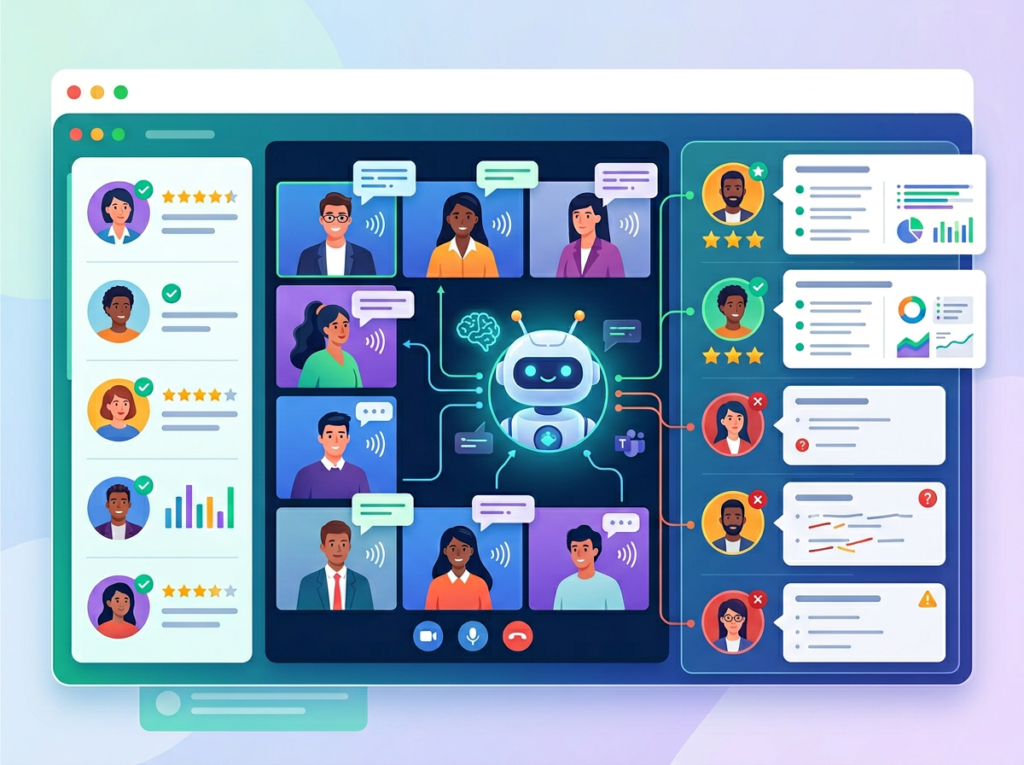
Poised is an AI-powered communication coach designed to analyze and provide feedback on spoken communication during virtual meetings. It operates as a desktop application that integrates with common video conferencing platforms. The tool listens to conversations in real-time and evaluates aspects such as speech clarity, pacing, use of filler words, and conversational balance. It provides users with private, on-screen suggestions and post-meeting summaries to help improve their communication effectiveness. The team behind Poised developed this system to function as an unobtrusive personal coach, offering data-driven insights derived from the user’s own speech patterns and meeting dynamics to foster more confident and impactful speaking habits.
Key Findings
Communication Coach: Provides real-time feedback on your speech clarity and confidence during virtual meetings.
Meeting Enhancer: Analyzes conversation dynamics to ensure balanced participation and more productive team discussions.
Presentation Polisher: Offers actionable insights to refine your delivery and strengthen your overall persuasive impact.
Confidence Builder: Gives private, instant suggestions to help you speak more authoritatively and reduce filler words.
Engagement Analyzer: Measures listener attention and provides tips to make your communication more captivating and effective.
Feedback Partner: Delivers objective, data-driven critiques of your speaking patterns to foster continuous personal improvement.
Clarity Improver: Identifies jargon and complex phrases, suggesting simpler alternatives for clearer understanding by all.
Team Unifier: Promotes inclusive dialogue by highlighting speaking time distribution and encouraging equitable participation.
Performance Tracker: Monitors your long-term progress across key metrics to visualize your communication skills development.
Productivity Booster: Streamlines meeting effectiveness by focusing discussions and reducing off-topic or redundant conversation segments.
Turn your imagination into stunning visuals with just a few words.
What is Dreamina?
Dreamina is an AI image generation tool designed to create visual artwork from user descriptions. It specializes in producing digital images and illustrations based on text prompts, allowing for the generation of diverse artistic styles and scenes. The system can also edit and modify existing images through AI-driven instructions.
Developed by the team behind CapCut, Dreamina operates primarily through a text-based interface. Users interact with the system by providing detailed written prompts that describe the desired image’s content, style, and composition. The AI then processes this text input to generate corresponding high-resolution visual artwork. The official platform for accessing this tool is https://dreamina.capcut.com/.
Key Findings
AI Creation: Generates stunning visuals and videos from simple text prompts in seconds.
Content Personalization: Tailors marketing materials to individual customer preferences for higher engagement rates.
Brand Consistency: Maintains uniform visual identity across all platforms with automated style guides.
Rapid Prototyping: Accelerates design iteration cycles from concept to final asset production quickly.
Team Collaboration: Enables seamless real-time editing and feedback sharing among distributed team members.
Cost Efficiency: Reduces external agency dependencies by handling creative needs internally with precision.