The most powerful open-source AI, now with vision and lightning-fast reasoning.
What is Seedream 4.5?
Seedream 4.5 is a multimodal AI model developed by the Chinese company Zhipu AI, a prominent entity in China’s AI landscape backed by Tsinghua University’s research pedigree. The model is built on a hybrid architecture that efficiently combines a Mixture of Experts (MoE) structure with a dense Transformer core, enabling it to scale effectively while managing computational costs. Its key capabilities include advanced text generation, complex code programming, sophisticated visual recognition, and seamless cross-modal understanding, such as interpreting images within a conversational context. The model primarily targets enterprise users and developers, with use cases spanning intelligent customer service, content creation, software development assistance, and data analysis. For businesses, its integration streamlines workflows by automating routine cognitive tasks and augmenting human decision-making with deep data insights. It is positioned as a versatile tool for digital transformation, similar in application scope to other enterprise AI solutions like those found on https://ai-plaza.io/ai/enterprise-ai-assistant. According to a technical analysis by MIT Technology Review, Zhipu AI’s work reflects China’s strategic push to develop competitive, homegrown foundation models.
Key Findings
Image Generation: Creates high-quality visuals from text prompts for marketing and design projects instantly.
Text Summarization: Condenses lengthy documents into concise summaries, saving valuable time for busy professionals efficiently.
Code Generation: Writes and debugs functional code in multiple programming languages to accelerate development cycles securely.
Content Creation: Produces original articles, blogs, and social media posts tailored to your brand voice perfectly.
Language Translation: Translates text between numerous languages with high accuracy for global communication and expansion.
Data Analysis: Interprets complex datasets to uncover trends and insights, supporting informed business decisions clearly.
Voice Synthesis: Generates natural-sounding speech from text for audiobooks, assistants, and customer service applications smoothly.
Task Automation: Streamlines repetitive administrative processes, freeing up employee time for more strategic work daily.
Research Assistance: Gathers and synthesizes information from vast sources to provide comprehensive reports and answers quickly.
Customer Interaction: Powers intelligent chatbots that provide instant, helpful support and improve overall user experience significantly.
Turn your ideas into stunning, branded visuals in seconds.
What is Ideogram 3.0?
Ideogram 3.0 is a state-of-the-art generative AI model developed by the company Ideogram AI, a team founded by former researchers and engineers from prominent organizations like Google Brain and the University of Toronto. The model is built on a novel diffusion architecture specifically engineered for advanced text rendering and coherent image generation, setting it apart in the crowded field of AI art tools. Its key capabilities include generating highly legible text within images (typography), producing photorealistic and artistic visuals from detailed prompts, and offering a unique “Magic Prompt” feature to enhance user inputs. This makes it particularly valuable for marketers, content creators, and designers who need to rapidly prototype concepts, create branded graphics with integrated logos and slogans, or produce visual content for social media and advertising. By integrating Ideogram 3.0 into creative workflows, businesses can significantly accelerate content production cycles and explore new avenues for visual branding. For teams comparing similar tools, a review of capabilities can be found at https://ai-plaza.io/ai/midjourney. According to a technical analysis by TechCrunch, Ideogram has successfully carved a niche by prioritizing reliable text generation, a historically challenging area for AI image models.
Key Findings
Text Generation: Creates original marketing copy and product descriptions with consistent brand voice.
Image Creation: Generates stunning, photorealistic images from simple text prompts for any marketing need.
Logo Design: Produces unique and professional logo concepts tailored to your specific company identity.
Brand Consistency: Maintains uniform visual style and tone across all generated images and text assets.
Rapid Prototyping: Accelerates design iteration by instantly visualizing concepts for campaigns and products.
Creative Inspiration: Overcomes creative blocks by providing unexpected and innovative visual ideas on demand.
Marketing Assets: Produces ready-to-use social media graphics, banners, and ad visuals in seconds.
Template Customization: Adapts provided design templates with new elements while preserving core layout structure.
Idea Visualization: Transforms abstract concepts and rough sketches into polished, presentable visual drafts.
Workflow Integration: Seamlessly connects with existing design and content pipelines through simple API calls.
The most capable, reliable, and human-centric AI assistant for business.
What is Claude 4?
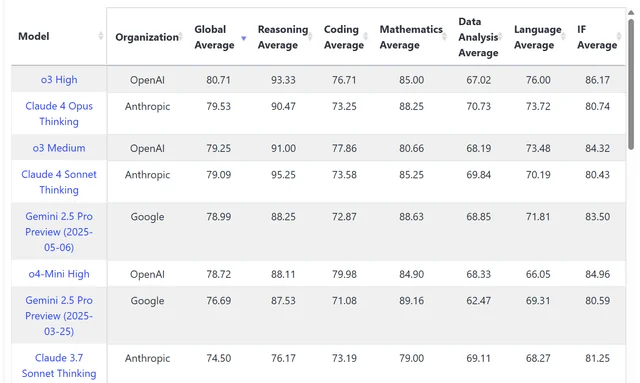
Claude 4 is a state-of-the-art AI model developed by Anthropic, an AI safety and research company founded by former OpenAI research executives. The model is built upon a transformer-based neural network architecture, designed with a focus on constitutional AI principles that guide its behavior toward being helpful, honest, and harmless. Its key capabilities include advanced reasoning, sophisticated content creation, complex code generation, and detailed analysis of long documents and uploaded files. This makes it particularly valuable for enterprise users, researchers, and developers tackling intricate tasks like technical documentation, legal contract review, and large-scale data synthesis. For businesses, Claude 4 integrates into workflows through its API, automating and enhancing knowledge-intensive processes. Its ability to process vast context windows allows for deeper analysis of internal documents, directly impacting productivity and decision-making. For a comparison with other enterprise-focused tools, you can review IBM Watson on AI Plaza at https://ai-plaza.io/ai/ibm-watson. A detailed technical overview of the model’s architecture and capabilities is available in Anthropic’s official research papers.
Key Findings
Advanced Reasoning: Handles complex business logic and nuanced analysis with exceptional depth and clarity.
Enterprise Security: Provides robust data protection with enterprise-grade encryption and strict access control policies.
Natural Conversations: Engages in fluid, contextual dialogue to understand and resolve intricate business inquiries seamlessly.
Creative Collaboration: Generates innovative ideas, drafts marketing copy, and brainstorms solutions alongside your human team.
Code Generation: Writes, debugs, and explains software code in multiple programming languages for technical projects.
Document Processing: Analyzes, summarizes, and extracts key information from lengthy reports, contracts, and uploaded files.
Task Automation: Streamlines repetitive workflows by scripting custom actions and integrating with business applications.
Multimodal Understanding: Interprets and discusses the content of images, charts, and technical diagrams provided.
Long Context: Maintains coherence and recall across very long documents, conversations, and complex project histories.
Custom Instructions: Adapts its tone, style, and responses based on your specific business guidelines and requirements.
Who is it for?
Marketer
Crafting campaign copy
Analyzing customer sentiment
Generating content ideas
Optimizing SEO descriptions
Translating marketing materials
Project Manager
Drafting project status reports
Identifying potential risks
Clarifying meeting action items
Creating a communication plan
Standardizing process documentation
Startup Founder
Refining investor pitch deck
Analyzing market competition
Drafting a partnership proposal
Brainstorming product features
Preparing for media interview
Pricing
Free @ $0
Free for everyone
Chat on web, iOS, Android, and on your desktop
Generate code and visualize data
Write, edit, and create content
Pro @ $17/month (annual subscription)
More usage than Free
Access Claude Code on the web and in your terminal
Access to unlimited projects to organize chats and documents
Connect Google Workspace: email, calendar, and docs
Max @ From $100/month per person
Choose 5x or 20x more usage than Pro
Higher output limits for all tasks
Early access to advanced Claude features
Priority access at high traffic times
Team Standard seat @ $20/month (annual billing)
All Claude features, plus more usage than Pro
Includes Claude Code and Cowork
Connect Microsoft 365, Slack, and more
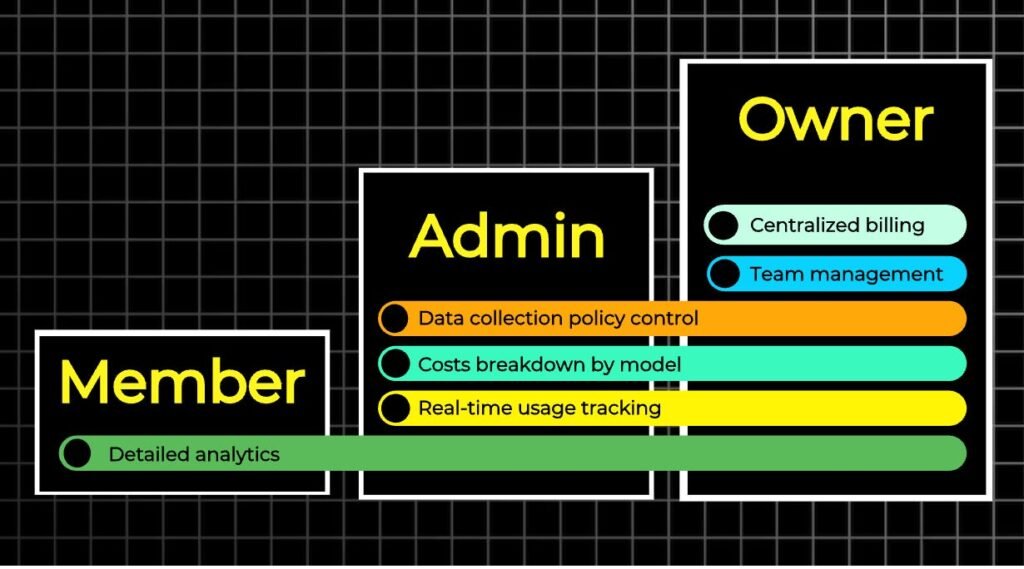
Central billing and administration
Team Premium seat @ $100/month (annual billing)
5x more usage than standard seats
Includes Claude Code and Cowork
Connect Microsoft 365, Slack, and more
Enterprise search across your organization
Enterprise @ Contact sales
Everything in Team, plus enhanced context window
Role-based access with fine grained permissioning
Audit logs and compliance API for observability and monitoring
HIPAA-ready offering available and network-level access control
Opus 4.5 Input @ $5/MTok
Most intelligent model for building agents and coding
Output @ $25/MTok
Prompt caching Write @ $6.25/MTok
Prompt caching Read @ $0.50/MTok
Sonnet 4.5 Input ? 200K tokens @ $3/MTok
Optimal balance of intelligence, cost, and speed
Input > 200K tokens @ $6/MTok
Output ? 200K tokens @ $15/MTok
Output > 200K tokens @ $22.50/MTok
Haiku 4.5 Input @ $1/MTok
Fastest, most cost-efficient model
Output @ $5/MTok
Prompt caching Write @ $1.25/MTok
Prompt caching Read @ $0.10/MTok
Opus 4.1 Input @ $15/MTok
Output @ $75/MTok
Prompt caching Write @ $18.75/MTok
Prompt caching Read @ $1.50/MTok
Sonnet 4 Input @ $3/MTok
Output @ $15/MTok
Prompt caching Write @ $3.75/MTok
Prompt caching Read @ $0.30/MTok
Opus 4 Input @ $15/MTok
Output @ $75/MTok
Prompt caching Write @ $18.75/MTok
Prompt caching Read @ $1.50/MTok
Haiku 3 Input @ $0.25/MTok
Output @ $1.25/MTok
Prompt caching Write @ $0.30/MTok
Prompt caching Read @ $0.03/MTok
Web search @ $10/1K searches
Give Claude access to the latest information from the web
Doesn’t include input and output tokens required to process requests
Code execution additional hours @ $0.05/hour per container
Run Python code in a sandboxed environment for advanced data analysis
If you’re running a small business or freelance operation and need AI help with coding—whether that’s building internal tools, automating workflows, or maintaining legacy systems—the choice between ChatGPT and Gemini depends less on “which is smarter” and more on how you work. ChatGPT (particularly GPT-4) excels at structured, step-by-step code generation with strong support for debugging and refactoring across popular languages. It’s ideal if you need consistent, explainable outputs and don’t mind working in a conversational interface with limited real-time data access. Gemini, on the other hand, integrates deeply with Google Workspace, offers multimodal context (analyzing screenshots, diagrams, or documents alongside code), and provides faster iteration when you’re working across multiple file types or need to reference visual materials. Neither tool is a complete replacement for a developer, and both struggle with highly specialized frameworks or proprietary codebases. The right choice hinges on whether you prioritize conversational depth and established prompt patterns (ChatGPT) or Google ecosystem integration and visual context handling (Gemini).
Introduction: Why This Comparison Matters
Small business owners and solo operators face a specific dilemma when evaluating AI programming assistants: most comparisons focus on theoretical capabilities or enterprise-scale deployments, not the practical realities of someone juggling customer work, operations, and limited technical bandwidth. The question isn’t whether ChatGPT or Gemini can write better Python—it’s which tool fits into your actual workflow when you need to fix a broken automation script at 10 PM, build a customer dashboard over the weekend, or explain legacy code you inherited from a contractor. The confusion deepens because both tools market themselves as general-purpose assistants, yet their strengths diverge sharply in real-world coding scenarios. ChatGPT has become synonymous with conversational AI and boasts extensive community knowledge around prompt engineering for code generation, while Gemini leverages Google’s infrastructure to offer tighter integration with Sheets, Docs, and Drive—critical for businesses already living in that ecosystem. This comparison cuts through the marketing to help you make a practical decision based on how you actually use AI for programming tasks, whether that’s writing new features, debugging production issues, or simply understanding what a script does before you run it. We’ll focus on the business outcomes these tools enable, not just their technical specs, because choosing the right AI programming assistant is ultimately about reducing cognitive load and shipping faster, not about picking the “best” model in a vacuum.
Who This Comparison Is Best For
This comparison is designed for small business owners, freelancers, and lean teams who need coding help but don’t have a dedicated development team on standby. You might be a solo consultant who built a business on no-code tools but now need custom integrations that Zapier can’t handle. Or you’re managing a five-person agency where everyone wears multiple hats, and the person who “knows some JavaScript” just left. You could be a product manager at a startup who needs to prototype features quickly or understand technical debt without hiring a full-time developer. The common thread is limited time, mixed skill levels, and unclear ROI on investing heavily in AI tools—you need something that works now, not something that requires weeks of onboarding or expensive API credits. Many people in this position make the mistake of choosing an AI based on hype or brand recognition, assuming that the “most popular” tool will automatically suit their needs. Others over-rely on AI without understanding its limitations, leading to broken code in production or wasted hours debugging AI-generated solutions that don’t account for edge cases. A third common mistake is treating AI as a replacement for learning fundamentals; while ChatGPT or Gemini can accelerate your work, they’re most effective when you can critically evaluate their outputs and understand when to override their suggestions. For example, a freelance graphic designer who occasionally needs to modify WordPress plugins will have different needs than a SaaS founder building a custom CRM. The designer benefits from an AI that can explain existing code and make small, safe modifications, while the founder needs something that can scaffold entire features and integrate with third-party APIs. If you’re constantly context-switching between marketing, sales, and technical work, you need an AI that minimizes setup time and integrates with tools you already use. If you’re working alone and can’t afford to break critical systems, you need an AI that emphasizes clarity and safe iteration over speed.
Why Each AI Fits That Need
ChatGPT fits small business coding needs primarily through its conversational interface and extensive ecosystem of shared prompts and workflows. Because it’s been widely adopted, there’s a massive community of developers who’ve documented effective prompt patterns for everything from debugging Python scripts to generating SQL queries. This means if you’re stuck, you can often find a tested approach someone else has already refined. ChatGPT excels at structured, step-by-step code generation—if you can clearly articulate what you need in natural language, it will break the problem into logical chunks and walk you through implementation. The learning curve is moderate; non-developers can get useful results with basic prompts, while technical users can leverage advanced techniques like few-shot examples or chain-of-thought reasoning to improve accuracy. For thinking support, ChatGPT shines when you need to understand why a piece of code works the way it does, explore alternative approaches, or refactor legacy code for readability. It’s less about tool compatibility and more about being a reliable, always-available coding partner that can handle the tedious parts of programming—boilerplate generation, syntax checking, and explaining error messages. The business result this supports best is reducing the cognitive overhead of switching into “developer mode,” especially if coding isn’t your primary role. A marketing consultant who needs to customize a Google Apps Script can ask ChatGPT to explain each line and suggest safer alternatives, turning a three-hour research session into a 20-minute conversation.
Gemini fits small business coding needs through its tight integration with Google Workspace and superior multimodal capabilities. If your business already runs on Google Sheets, Docs, and Drive, Gemini can directly reference those files in conversations, analyze spreadsheet data to generate appropriate scripts, or process screenshots of error messages to suggest fixes. The learning curve is similarly moderate, but the value proposition shifts—you’re not just getting a coding assistant, you’re getting one that understands the context of your existing work environment. Gemini’s multimodal context handling is a game-changer for visual learners or anyone working with UI mockups, system diagrams, or documentation that includes images. You can upload a screenshot of a dashboard you want to replicate and ask Gemini to generate the HTML/CSS, or show it an architecture diagram and ask for code that implements that flow. For thinking support, Gemini is particularly strong when you need to synthesize information across different formats—say, a Sheets dataset, a Docs specification, and a hand-drawn wireframe. Tool compatibility extends beyond Google Workspace; Gemini can work with standard languages and frameworks, but its real edge is in scenarios where you’re moving data between different Google services or building tools that live inside that ecosystem. The business result this supports best is speed-to-output for teams already invested in Google infrastructure. A small e-commerce business that tracks inventory in Sheets can ask Gemini to generate a script that automatically emails low-stock alerts, referencing the actual Sheet structure without needing to manually describe it.
Who Should Choose Another AI
Neither ChatGPT nor Gemini is ideal if your coding needs require highly deterministic, rule-based outputs where variability is a liability, not a feature. For example, if you’re building financial reporting tools that must comply with strict regulatory standards, or medical software where incorrect code could cause harm, you need specialized development tools with formal verification, not general-purpose LLMs. Similarly, if your work involves extremely niche or proprietary frameworks—say, legacy enterprise systems with undocumented APIs or highly customized internal platforms—these tools will struggle because they lack domain-specific training data. You’re better off investing in a developer familiar with that exact stack. If your business relies on code that must run with zero downtime and you lack the technical expertise to review AI-generated outputs, introducing these tools creates more risk than value; a small mistake in a production environment can cost more than hiring a professional. Additionally, if you need AI that can autonomously execute code, manage version control, or deploy changes without human oversight, neither ChatGPT nor Gemini is designed for that—you’re looking for agent-based systems or CI/CD pipelines, not conversational assistants. Finally, if you’re expecting these tools to completely replace learning how to code, you’ll be disappointed; they’re force multipliers for people who understand programming concepts, not replacements for foundational knowledge. A business owner who refuses to learn basic scripting will find themselves unable to debug AI-generated code when it inevitably breaks or doesn’t account for edge cases specific to their business.
Use Cases by Business Goal
Productivity
When it comes to internal productivity, ChatGPT and Gemini serve different optimization strategies. ChatGPT excels at generating one-off automation scripts for tasks like batch-renaming files, parsing CSV exports, or converting data between formats. If you need to build an internal dashboard that pulls data from multiple APIs and displays it in a web interface, ChatGPT can scaffold the entire project and explain each component, making it easy to modify later. The downside is that integration with your existing tools requires manual setup—you’ll copy code from ChatGPT into your local environment, then handle authentication, dependencies, and deployment yourself. Gemini, by contrast, is optimized for productivity within the Google ecosystem. Need to automatically generate weekly reports from a Google Sheet and post them to a Slack channel? Gemini can write the Apps Script, reference your actual Sheet columns by name, and even troubleshoot if the script fails by analyzing error screenshots. The trade-off is that this productivity boost is largely confined to Google Workspace; if your team uses Microsoft 365 or other platforms, that advantage evaporates. For small businesses already using Google tools, Gemini reduces the friction of moving between coding and your existing workflows. For those using a mixed stack or prioritizing long-term flexibility, ChatGPT’s ecosystem-agnostic approach may prove more valuable. Explore more ways AI can boost your operational efficiency at AI Efficiency.
Revenue / Marketing
For revenue-driving activities, the choice depends on whether you’re primarily generating marketing assets or building custom tools to support sales. ChatGPT is strong at creating code for marketing automation—landing page generators, email personalization scripts, or tools that scrape competitor pricing. It’s particularly useful when you need to combine copywriting and code, such as generating programmatic SEO pages where each template must follow strict brand guidelines while populating unique content from a database. The limitation is that ChatGPT doesn’t inherently understand your brand voice or existing marketing materials unless you explicitly provide that context in each conversation. Gemini’s multimodal capabilities shine here; you can upload brand guidelines as PDFs, reference campaign performance data from Sheets, and even analyze competitor screenshots to generate similar functionality. If your marketing workflow involves Google Analytics, Google Ads, or other Google Marketing Platform tools, Gemini can write scripts that directly integrate with those services, reducing the manual data export-import cycle. For example, a consultant selling digital products could use Gemini to build a script that pulls conversion data from Google Analytics, cross-references it with customer feedback in Sheets, and generates a formatted report in Docs—all without leaving the Google ecosystem. The trade-off is speed versus nuance: ChatGPT may require more prompt refinement to understand your specific use case, but it offers deeper conversational exploration of edge cases and alternative implementations. Learn how to systematically improve revenue outcomes with AI at AI Revenue Boost.
Systemization / Automation
When building long-term systems and workflows, the stability-versus-flexibility trade-off becomes critical. ChatGPT is better suited for automation that needs to work across multiple platforms or integrate with non-Google services. If you’re building a workflow that syncs data between Airtable, Stripe, and a custom database, ChatGPT can generate Python scripts or Node.js functions that handle authentication and error-checking for each service. Because it’s not tied to a specific ecosystem, the code tends to be more portable; if you switch CRMs or payment processors later, you can adapt the script without starting from scratch. The downside is that ChatGPT requires you to manage the entire execution environment—hosting, scheduling, logging, and monitoring are all your responsibility. Gemini, in contrast, is ideal for automation that lives entirely within Google Workspace. Google Apps Script runs directly in the cloud, requires no separate hosting, and can trigger based on events (like a new row added to Sheets or a file uploaded to Drive). For small businesses without dedicated DevOps resources, this managed execution environment is a huge advantage. The limitation is vendor lock-in; if you later decide to move away from Google Workspace, you’ll need to rebuild these automations from scratch. For businesses confident in their Google ecosystem commitment and prioritizing ease of deployment, Gemini reduces the operational burden. For those building for long-term flexibility or integrating with diverse third-party tools, ChatGPT’s platform-agnostic approach pays dividends. Discover systematic approaches to AI-driven workflow optimization at Solo DX.
AI Comparison Table + Explanation
Axis
ChatGPT
Gemini
Ease of Use
Conversational interface with extensive community documentation; moderate learning curve for non-developers
Intuitive for Google Workspace users; multimodal input lowers barrier for visual thinkers
Best For
Cross-platform automation, detailed code explanations, framework-agnostic development
Google ecosystem integration, visual context processing, rapid prototyping with existing Workspace data
Strengths
Strong step-by-step reasoning, large prompt library, consistent conversational depth
No native tool integration, requires manual environment setup, real-time data access limited
Primarily valuable within Google ecosystem, less community documentation for coding workflows
Pricing Perception
Free tier available; ChatGPT Plus ($20/month) for GPT-4 access; API usage billed separately
Free tier available; Gemini Advanced bundled with Google One AI Premium ($19.99/month); Apps Script free
The choice between these tools ultimately depends on your business’s technical maturity and strategic goals. If you’re in an exploratory phase—testing whether AI can meaningfully improve your coding productivity—start with whichever tool aligns with your existing infrastructure. Businesses already using Google Workspace should default to Gemini to minimize integration friction, while those using mixed platforms or prioritizing long-term portability should start with ChatGPT. As your needs mature, you may find yourself using both: ChatGPT for complex, multi-step problem-solving and learning new frameworks, Gemini for rapid iteration on Google-centric workflows. The key insight is that these tools aren’t mutually exclusive; they solve different parts of the coding workflow, and the “right” choice often shifts based on the specific task at hand.
How to Choose the Right AI
Choosing between ChatGPT and Gemini for programming tasks requires evaluating four decision checkpoints. First, consider your budget constraints. Both tools offer free tiers, but if you need consistent access to the most capable models, you’re looking at roughly $20/month for either ChatGPT Plus or Gemini Advanced. The difference is in what else you get: Gemini Advanced includes 2TB of Google storage and other Google One benefits, which may offset the cost if you were already considering that upgrade. ChatGPT Plus gives you priority access during high-traffic periods and faster response times, which matters if you’re working on tight deadlines. Second, evaluate time-to-output. If you need code that runs immediately within your existing Google Workspace setup, Gemini’s ability to reference your actual files dramatically reduces iteration time. If you’re building something custom that requires testing in a local environment anyway, ChatGPT’s more detailed explanations may save debugging time later. Third, assess your team’s technical skills honestly. Non-technical users often find Gemini’s visual context features more approachable—being able to show a screenshot of what you want built is easier than describing it in text. However, if someone on your team can write effective prompts and review code for logic errors, ChatGPT’s conversational depth becomes an advantage. Fourth, consider review and compliance needs. If your business has strict data handling requirements or industry-specific regulations, you need to understand where each AI processes data and what guarantees the provider offers. Neither tool is suitable for handling sensitive information without proper review protocols in place.
Common mistakes include choosing based on hype or brand recognition rather than actual workflow fit. Just because everyone is talking about ChatGPT doesn’t mean it’s the right tool for a business that lives in Google Workspace. Another mistake is using AI as a complete replacement for coding knowledge rather than a tool to amplify existing skills. AI-generated code requires human review to catch edge cases, security vulnerabilities, and business logic errors that the AI can’t anticipate without full context. Finally, many users fail to establish clear evaluation criteria before testing these tools, leading to vague impressions rather than data-driven decisions. A better approach is to identify three specific, representative tasks from your actual workflow and test both tools on those exact scenarios, measuring time spent, code quality, and how much manual cleanup was required. For structured approaches to building AI into your operations, explore AI Workflows.
FAQs
Is ChatGPT better than Gemini for small business coding? It depends entirely on your existing infrastructure and workflow patterns. ChatGPT is better if you need cross-platform compatibility, work with diverse frameworks, or value extensive community documentation and prompt libraries. Gemini is better if your business already runs on Google Workspace, you frequently need to reference spreadsheets or documents while coding, or you benefit from multimodal input like analyzing screenshots or diagrams. Neither is universally better; they optimize for different use cases. If you’re genuinely platform-agnostic and starting from scratch, ChatGPT has a slight edge due to broader community support and established patterns for coding tasks.
Which AI tool is easiest for non-technical users? For non-technical users, Gemini has a slight advantage due to its multimodal capabilities and Google Workspace integration. Being able to show a screenshot of what you want to build or reference an existing Google Sheet by name significantly lowers the barrier to getting useful results. However, both tools require some investment in learning how to write effective prompts and understand basic programming concepts. A non-technical user who takes time to learn prompt patterns for ChatGPT may ultimately get better results due to the larger community knowledge base. The easiest tool is whichever one aligns with your existing mental model and workflow habits.
Can these AI tools replace hiring a developer? No, but they can significantly reduce the need for hiring a developer for every small coding task. AI tools are best at handling well-defined, isolated problems—fixing a bug, generating a script, explaining legacy code. They struggle with complex architectural decisions, long-term maintainability, and domain-specific optimization that requires deep expertise. For small businesses, the value proposition is extending the capabilities of non-developers or reducing the workload on a single technical person, not eliminating the need for development skills entirely. If you’re building a core product or mission-critical system, invest in professional development talent. If you’re automating internal workflows or building tools that aren’t customer-facing, AI can handle much of the heavy lifting with proper oversight.
Next Steps
Ready to implement AI-powered coding assistance in your business operations? Start by exploring these resources to build a systematic approach:
Compare AI – Detailed comparisons of AI tools across different business use cases
AI Efficiency – Strategies for using AI to optimize internal operations and reduce manual work
AI Revenue Boost – How to leverage AI for customer-facing activities and revenue growth
Solo DX – Digital transformation approaches for solo operators and lean teams
AI Workflows – Step-by-step frameworks for integrating AI into your existing processes
You’ve successfully grown your business from a solo operation to a team of five, maybe eight people. You thought scaling would solve your problems, but instead, you’ve inherited new ones: missed deadlines because someone didn’t know the process, client deliverables that vary wildly in quality, and a nagging feeling that you’re still the bottleneck in every decision. Sound familiar?
In 2025, the gap between solo efficiency and team chaos has never been more apparent. When it was just you, everything lived in your head—client preferences, workflow shortcuts, quality standards. But now? Every new hire means re-explaining the same processes. Every project handoff risks miscommunication. Every client interaction reveals how little your team actually knows about your standards.
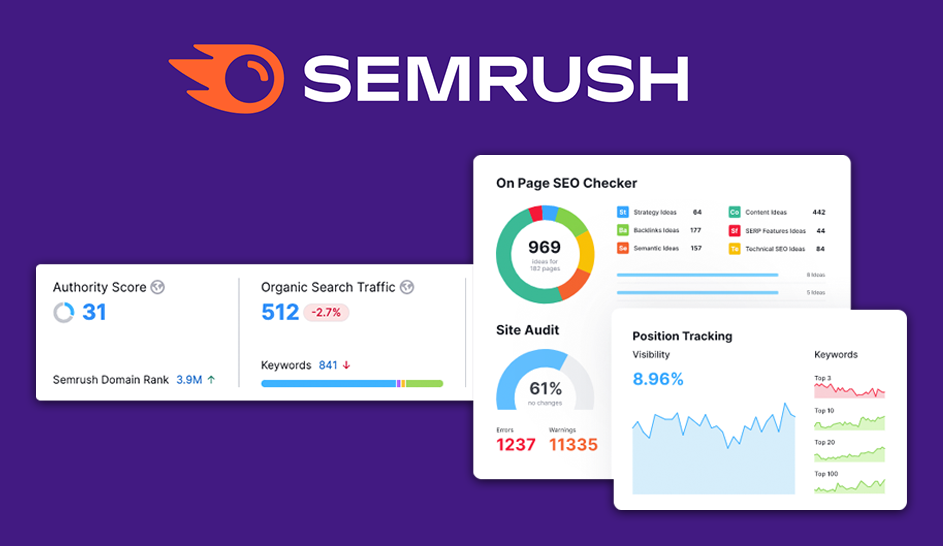
This is where AI for team operations becomes transformative. Semrush SEO Toolkit, traditionally known for its powerful search engine optimization capabilities, has evolved into an unexpected ally for small teams seeking systemization. Its AI-powered features don’t just optimize websites—they help founders document tribal knowledge, standardize workflows, and build the operational backbone that prevents team chaos. If your team has grown beyond solo work but still feels like you’re personally holding everything together, this article will show you how to systemize operations without hiring a COO or spending months writing SOPs manually.
What is Solo DX?
Solo DX represents small-scale digital transformation led by founders who’ve outgrown solo work but aren’t yet large enough for dedicated operations teams. It’s the messy middle ground between running everything yourself and having formal management layers. Unlike traditional digital transformation initiatives that require consultants and six-month timelines, Solo DX happens in small, founder-led increments—often late at night after the team has logged off.
The term distinguishes itself from our other AI categories in important ways. AI Efficiency focuses on personal productivity—how you as an individual can accomplish more with AI assistants. AI Revenue Boost targets growth activities like lead generation, sales automation, and customer acquisition. Solo DX sits between them: it’s about building systems that make your small team function predictably, even when you’re not directly involved in every task.
Consider a three-person design studio that recently hired their first account manager. Without Solo DX, the founder personally briefs the new hire on every client, explains brand guidelines verbally, and reviews all deliverables because “it’s faster than explaining the system.” With Solo DX, that founder uses AI to generate standardized client onboarding checklists, document brand specifications in searchable formats, and create quality control templates that the account manager can follow independently.
Solo DX acknowledges a fundamental truth: small teams don’t fail from lack of talent—they fail from lack of systems. When your business has 1-10 people, you can’t afford a full-time operations manager, process documentation specialist, or training coordinator. Yet without these functions, knowledge remains locked in the founder’s head, quality varies by who’s handling the work, and scaling feels impossible. Solo DX uses AI to fill this gap, enabling founders to build the operational infrastructure their growing teams desperately need without adding headcount or burning themselves out documenting every process manually.
The distinction matters because the problems Solo DX solves are neither personal productivity challenges nor growth marketing opportunities. They’re structural: how do we ensure consistent client experiences when three different people might handle the account? How do we onboard new team members without the founder spending two weeks in training mode? How do we capture the shortcuts and judgment calls that make work actually get done? These are systemization problems, and in 2025, AI has become the most practical tool small teams have for solving them.
Why AI is Key for Mini-Team Systemization
Small teams suffer from a documentation paradox: they need structured processes more than anyone, yet they’re least equipped to create them. The founder is too busy firefighting to write SOPs, and the team is too new to know what needs documenting. Meanwhile, critical knowledge exists only in scattered Slack messages, partially remembered verbal instructions, and the founder’s increasingly overwhelmed brain.
This creates three cascading problems that AI for small teams can systematically address:
Knowledge lives exclusively in the founder’s head. You know exactly how to handle a difficult client conversation, which vendors to prioritize, and why certain formatting details matter for brand consistency. Your team doesn’t. They make reasonable guesses, but those guesses create inconsistency. A customer receives slightly different service depending on who handles their request. A marketing asset gets published with the wrong tone because the designer didn’t know your brand voice preferences. These aren’t competence failures—they’re information access failures. The knowledge exists; it’s just trapped in one person’s experience and never systematized.
New hires create operational slowdowns instead of relief. Every founder hiring their second, third, or fifth employee expects breathing room. Instead, they discover that training consumes more time than the help provides—at least initially. Without documented workflows, onboarding becomes an oral tradition. You explain the client intake process verbally, answer follow-up questions via Slack, correct mistakes in real-time, and ultimately redo work that didn’t meet unwritten standards. The new hire feels frustrated by unclear expectations; you feel exhausted by constant interruptions. SOP automation would solve this, but who has time to write comprehensive training materials when you’re already underwater?
Quality and output vary dramatically across team members. Your best team member produces work that perfectly matches your standards—not because they’re more talented, but because they’ve absorbed your preferences through months of feedback. Your newer team members produce acceptable work that still requires your review and refinement. This quality inconsistency isn’t sustainable. Clients notice. Your reputation depends on consistent delivery, but achieving that traditionally requires either micromanagement (exhausting) or extensive written guidelines (time-consuming to create). Without systemize operations through documented standards, you’re perpetually trading quality for scalability.
AI fixes each problem by dramatically lowering the effort required to capture, organize, and disseminate operational knowledge. Where writing an SOP manually might take three hours of painful documentation work, AI can generate a first draft from a brief voice recording in minutes. Where creating training materials traditionally meant formatting documents and organizing information hierarchically, AI can structure your unorganized notes into searchable, actionable guides. Where answering the same question five times via Slack was your only option, AI can synthesize your past responses into a queryable knowledge base.
The transformation isn’t that AI makes documentation fun—it’s that AI removes the activation energy that prevented documentation from happening at all. Small teams know they need systems; they simply haven’t had the bandwidth to build them. AI changes that equation. Instead of choosing between serving clients and building infrastructure, founders can now do both. A thirty-minute AI-assisted session can generate workflow documentation that previously would have required days of focused writing. That shift from “impossible given our constraints” to “achievable this week” is why AI has become essential for mini-team systemization in 2025.
How Semrush SEO Toolkit Enables Solo DX
Semrush SEO Toolkit brings unexpected power to team operations through features designed for content intelligence but perfectly suited for workflow automation and knowledge management. Here’s how specific capabilities translate into operational improvements for small teams:
AI-Powered Content Templates for SOP Creation
Semrush’s SEO Writing Assistant and Content Marketing Platform include AI template generation that extends far beyond blog posts. Small teams use these features to create standardized operational documents—client reporting templates, project brief formats, quality control checklists, and onboarding guides. The process works like this: you input key requirements (what needs to be covered, what tone to use, what structure to follow), and the AI generates a comprehensive template that team members can follow consistently.
For example, a six-person marketing agency used Semrush to create twelve client reporting templates in three days—a task they’d postponed for six months because manual creation felt overwhelming. Each template included standard sections (campaign performance, insights, recommendations, next steps), placeholder text showing what information goes where, and formatting that matched their brand. New account managers could now generate consistent, professional reports without guessing at structure or asking the founder for examples.
The business benefit compounds over time. Templates don’t just save immediate effort—they encode best practices into repeatable formats. When your best team member discovers an effective way to brief designers or structure client kickoff calls, that knowledge becomes a template others can follow. Quality becomes less dependent on individual experience and more embedded in your operational systems.
Competitive Analysis Features as Process Documentation Tools
Semrush’s domain comparison and gap analysis tools reveal an unexpected application: documenting how your team should approach different business scenarios. Small teams use these features to analyze competitor strategies, then convert those insights into decision-making frameworks.
A boutique e-commerce consultancy discovered this accidentally. They regularly used Semrush to analyze client competitors, identifying keyword gaps and content opportunities. They realized the analysis process itself—how they evaluated domains, what metrics they prioritized, which insights mattered most—was valuable operational knowledge. Using Semrush’s reporting features, they documented their analysis methodology as a repeatable workflow. Now junior consultants follow the same systematic approach the founder developed, producing consistent strategic recommendations without constant supervision.
This transforms tribal knowledge into teachable process. Instead of explaining “how we analyze competitors” verbally to each new hire, the team simply shares the documented Semrush workflow. New consultants learn by doing, following the same steps experienced team members use, generating comparable insights regardless of experience level.
Keyword Research Tools for Internal Knowledge Organization
Semrush’s keyword research capabilities—designed to find search opportunities—work surprisingly well for organizing internal documentation. Small teams struggle with knowledge management because information lives everywhere: Slack threads, Google Docs, email chains, someone’s notes. When team members need answers, they don’t know where to look or even what to search for.
Forward-thinking teams use Semrush’s keyword clustering and search intent features to organize internal resources around the questions people actually ask. They identify common internal queries (“How do we handle refund requests?” “What’s our approval process for social posts?” “Where are brand assets stored?”), then structure documentation around those natural language searches. The result feels like internal SEO—team members can find answers quickly because content is organized around their actual needs, not arbitrary folder structures.
A seven-person SaaS company implemented this approach after their third support specialist asked the same onboarding questions. They analyzed Slack search patterns to identify repeated queries, used Semrush to understand search intent and related questions, then restructured their internal wiki around those natural information-seeking behaviors. Time spent searching for information dropped by 40%, and new hires became productive faster because answers were organized around questions they naturally asked.
Reporting Automation for Consistent Client Communication
Semrush’s automated reporting features help small teams maintain consistent client communication without manual effort. Teams create branded report templates that pull live data from Semrush dashboards—SEO performance, keyword rankings, backlink growth, competitive positioning—and automatically generate client-ready documents on scheduled intervals.
This matters more than it sounds. For small teams, inconsistent client communication is a major stress point. When the founder handles reporting, clients receive detailed, insightful updates. When team members handle it, quality varies. Some reports are thorough; others are rushed. Clients notice, and the founder ends up reviewing everything anyway.
Workflow automation through Semrush reporting solves this by standardizing what good looks like. The founder creates the template once, defining what metrics matter, what context to provide, what insights to highlight. From then on, team members use the template, and clients receive consistent communication regardless of who generates the report. The founder shifts from doing the work to designing the system—a crucial transition for scaling operations.
?? Ready to systemize your business? Try Semrush SEO Toolkit ? https://www.semrush.com/
The cumulative effect of these features is that Semrush—despite being positioned as an SEO tool—functions as Solo DX infrastructure. It helps small teams document processes, standardize outputs, organize knowledge, automate routine communications, and measure performance objectively. These capabilities matter because they address the core operational challenges that prevent small teams from scaling: inconsistent quality, knowledge trapped in the founder’s head, and lack of repeatable systems.
Use Cases by Team Role
Founder Juggling Three Departments
Sarah runs a twelve-person digital marketing agency but personally oversees creative, client services, and strategy. Before implementing AI for team operations through Semrush, her days consisted of constant context-switching: answering creative questions about brand guidelines, joining client calls because account managers weren’t confident handling objections, and reviewing every strategic recommendation before it went to clients.
Her old workflow meant being available from 8 AM until 7 PM for Slack questions, personally reviewing 80% of client deliverables, and spending weekends documenting processes she never had time to write during the week. Work quality was high when Sarah touched it, inconsistent when she didn’t. The agency couldn’t take on new clients because Sarah was the bottleneck in every department.
Using Semrush, Sarah systematized her departments one at a time. For creative, she used the SEO Writing Assistant to create brand voice templates for their top five clients, documenting tone, style preferences, formatting requirements, and quality standards. Designers and copywriters could now reference clear guidelines instead of asking Sarah to define “on-brand.” For client services, she built standardized reporting templates using Semrush’s automated reports—account managers could generate professional performance summaries without Sarah reviewing each one. For strategy, she documented her competitor analysis methodology using Semrush’s domain comparison tools, creating a repeatable workflow that junior strategists could follow.
The transformation took six weeks of incremental effort—thirty-minute sessions where Sarah documented one process at a time using AI assistance. Time saved exceeded twenty hours per week. More importantly, the agency could finally scale because quality no longer depended on Sarah’s direct involvement. As she described it:
“Before Semrush, I was the quality control for everything. Now our systems are the quality control, and I review exceptions rather than everything. We doubled our client capacity without me working more hours—we just built processes that work without constant supervision.”
Executive Assistant Onboarding New Staff
Marcus supports a seven-person consulting firm as their operations coordinator. His primary challenge: onboarding new consultants without formal training materials. Each time the firm hired someone, Marcus spent two weeks in constant training mode—explaining tools, client preferences, project workflows, and quality expectations through a combination of verbal briefings, screen shares, and reviewing work with detailed feedback.
The old approach meant every new hire received slightly different training depending on when they joined and what Marcus remembered to cover. Some consultants learned critical shortcuts early; others discovered them months later by accident. Client work quality varied significantly during the first ninety days because new hires simply didn’t know the firm’s standards and had no documented reference to check against.
Marcus transformed onboarding using Semrush as his systemization engine. He created a standardized onboarding checklist using Semrush’s content template features, documenting every tool, process, and expectation new consultants needed to master. He used Semrush’s keyword research functionality to identify common questions new hires asked during training, then organized onboarding materials around those natural queries. He built client brief templates showing exactly how to structure research, recommendations, and deliverables.
Most critically, he used Semrush’s position tracking and reporting features to create a ninety-day performance framework. New consultants could see exactly what success looked like—which skills to develop, what deliverables to master, how their work compared to firm standards. Instead of Marcus providing subjective feedback, consultants accessed objective benchmarks that clarified expectations.
The results were immediate. New consultant productivity improved 60% in the first thirty days because they had clear guidance instead of figuring things out through trial and error. Marcus reduced active training time from two weeks to four days of structured onboarding sessions, with ongoing questions answered through documented resources rather than constant Slack interruptions. As he explained:
“Before Notion AI and Semrush, I rewrote onboarding docs every month because processes changed and I never had time to maintain them. Now onboarding is versioned, updated systematically, and new hires can self-serve answers instead of interrupting me constantly. It’s the difference between chaos and actual systems.”
Marketing Lead Standardizing Client Reporting
Jennifer manages a four-person content marketing team serving B2B clients. Her persistent frustration: inconsistent client reporting. When Jennifer created reports, they were comprehensive, insight-driven, and tied campaign metrics to business outcomes. When her team created reports, quality varied wildly. Some were thorough but took six hours to produce; others were quick but superficial. Clients noticed the inconsistency and began requesting that Jennifer personally handle their accounts.
The old workflow involved Jennifer creating custom reports for each client monthly, pulling data from multiple sources, formatting everything manually, and writing narrative insights. It consumed twelve hours monthly per client. When she delegated reporting to team members, she spent almost as much time reviewing and correcting their work as doing it herself. The team wanted to help but lacked clear models of what great reporting looked like.
Jennifer used Semrush to solve this through radical standardization. She created five client reporting templates using Semrush’s automated reporting features—each designed for different client types (SaaS, e-commerce, B2B services, local business, content publishers). Each template pulled live data from Semrush dashboards: keyword rankings, organic traffic trends, backlink growth, competitive positioning, and content performance. She documented in each template exactly what insights to highlight, what context to provide, and what recommendations to make based on the data.
Team members could now generate client-ready reports in ninety minutes instead of six hours. More importantly, quality became consistent because the templates encoded Jennifer’s expertise. Every report included the same depth of analysis, similar narrative structure, and comparable strategic recommendations. Clients received better service because reports arrived on schedule with consistent quality, regardless of who produced them.
Jennifer’s time commitment shifted from doing twelve hours of reporting per client to spending thirty minutes reviewing team-generated reports for accuracy. As she described the change:
“Semrush didn’t just save time—it made my knowledge transferable. Instead of being the only person who could create great reports, I built a system that lets my entire team create great reports. That’s what SOP automation actually means for small teams.”
Want smoother operations with less stress? Start using Semrush SEO Toolkit ? https://www.semrush.com/
Common Pitfalls & How to Avoid Them
Using Too Many Disconnected Tools
Small teams often approach Solo DX by adopting every AI tool they encounter—one for writing, another for project management, a third for client communication, a fourth for documentation. This creates new problems: data scattered across platforms, team members unsure which tool to use for what purpose, and the founder spending time managing tools instead of using them productively.
The solution is to build AI around one or two core platforms that integrate with your existing workflow. If you’re already using Semrush for SEO work, extend it to operational documentation and client reporting rather than adding separate tools. Consolidation matters more than features. A simple system everyone actually uses beats a sophisticated system that creates confusion.
Delegating Without Documentation
Founders sometimes use AI to generate work products without creating the underlying systems that enable delegation. They’ll use AI to write client reports, create marketing content, or draft proposals—but they do this work themselves rather than building templates and processes their team can follow. This creates temporary relief but no lasting operational improvement.
The fix is to shift from “AI helps me work faster” to “AI helps me build systems my team can use.” When you use AI to create something, immediately ask: “How do I turn this into a template or process others can follow?” That mindset shift—from personal productivity to team systemization—is what separates AI Efficiency from genuine Solo DX.
Failing to Review AI Output
Teams sometimes implement AI-generated SOPs, templates, or workflows without testing them in real conditions or gathering feedback from the people who’ll actually use them. The result: systems that work in theory but fail in practice because they don’t account for edge cases, client-specific requirements, or workflow realities.
Build review loops into your systemization process. When you create an AI-assisted SOP, have a team member follow it for real work and report what’s missing, unclear, or impractical. Iterate based on actual usage, not theoretical completeness. AI generates excellent first drafts; human feedback creates systems that actually work.
FAQs
What is Solo DX?
Solo DX stands for small-scale digital transformation focused on systemizing team operations without formal management layers. It addresses the specific challenges founders face when they’ve grown beyond solo work but aren’t large enough for dedicated operations staff. Unlike AI Efficiency (personal productivity) or AI Revenue Boost (growth and sales), Solo DX targets operational infrastructure—documentation, standardization, knowledge management, and workflow consistency. It’s about building the systems that make your team function predictably, even when you’re not personally involved in every decision.
How can AI write my SOPs?
AI generates SOPs by converting your unstructured knowledge into organized, actionable documents. You provide the raw input—verbal explanations, recorded walkthroughs, bullet-point notes, or even transcripts of how you’ve explained the process to team members—and AI structures this into clear step-by-step procedures. Tools like Semrush’s content templates help standardize formatting and ensure completeness. The AI doesn’t create procedures from nothing; it captures and organizes the expertise you already have but haven’t had time to document formally. You’ll always need to review and refine AI-generated SOPs, but the initial draft happens in minutes rather than hours.
What’s the difference between AI Efficiency and Solo DX?
AI Efficiency focuses on personal productivity—how you as an individual can accomplish more through AI assistance. It’s about writing faster, managing your calendar more effectively, or conducting research more efficiently. Solo DX focuses on team operations—building systems that enable your entire team to work consistently and independently. If the benefit primarily helps you personally, it’s AI Efficiency. If it creates repeatable processes your team can follow without you, it’s Solo DX. Both matter, but they solve different problems at different business stages.
Conclusion
Systemizing team operations isn’t about eliminating human judgment or turning your business into an assembly line. It’s about capturing the knowledge, standards, and workflows that already exist in your head and making them accessible to your entire team. Solo DX through AI tools like Semrush SEO Toolkit enables small teams to build operational infrastructure that previously required dedicated staff, extensive documentation time, or expensive consultants.
The transformation from chaotic operations to systematic ones doesn’t happen overnight, but it also doesn’t require massive upfront investment. Start with your biggest pain point—inconsistent client reporting, unclear onboarding, scattered knowledge management—and use AI to systemize that one area. Build incrementally, letting each small system success create momentum for the next improvement.
In 2025, the competitive advantage for small teams isn’t just AI for team operations—it’s the operational maturity to use AI effectively for systemization rather than just individual productivity. Founders who build these systems now create businesses that can scale without burning out, hire without weeks of intensive training, and deliver consistent quality regardless of which team member handles the work. Solo DX isn’t just about saving time—it’s about creating a business that works without consuming you.
Next Steps
Ready to explore how AI can transform your business operations? Check out these resources:
Compare AI – Find the right AI tools for your specific business needs and team size
AI Efficiency – Discover how AI can boost your personal productivity and daily workflow
AI Revenue Boost – Learn strategies for using AI to drive growth and increase revenue
AI Workflows – Explore pre-built AI workflow templates you can implement immediately
If you’ve recently grown your team from one to five people and still feel like you’re the only one who knows how anything actually works, you’re experiencing the chaos that defines most small business growth in 2026. What worked brilliantly as a solopreneur—keeping everything in your head, pivoting on instinct, handling exceptions case-by-case—becomes a liability the moment you bring on your first team member.
The reality of AI for solo operations in 2026 isn’t about replacing human judgment. It’s about capturing the institutional knowledge that’s trapped in your brain and turning it into systems your team can actually follow. Every time someone asks “how do we handle this?” or “where’s that template?” or “what’s our process for…?” you’re losing time you could spend growing the business.
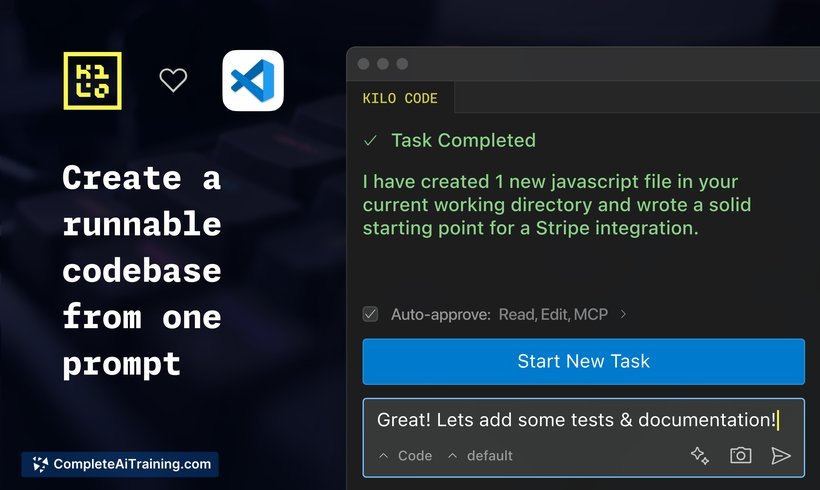
This is where Kilo Code enters the picture. Unlike traditional documentation tools that require manual effort to maintain, or AI assistants that only help with individual tasks, Kilo Code is built specifically for solo business automation AI—helping founders like you transform tribal knowledge into repeatable workflows. It doesn’t just answer questions; it builds the operational foundation your growing team desperately needs.
For solopreneurs, freelancers, and solo founders who’ve successfully grown beyond the one-person stage, 2026 represents a critical inflection point. You can either continue being the bottleneck for every decision, or you can leverage AI systemization for solopreneurs to create a business that functions smoothly whether you’re in the room or not. This article will show you exactly how Kilo Code makes that transformation possible.
What is Solo DX?
Solo DX—short for Solo Digital Transformation—represents the critical phase when a small business founder realizes they need operational systems but lacks the resources to hire a COO or operations manager. Unlike enterprise digital transformation, which involves consultants, change management teams, and six-month rollouts, Solo DX is scrappy, founder-led, and focused on immediate operational relief.
In 2026, Solo DX has become increasingly distinct from other AI adoption patterns we see in small businesses. It’s not the same as “AI Efficiency,” where individuals use AI to work faster on their own tasks—writing emails quicker, summarizing documents, or generating content. Solo DX isn’t about personal productivity; it’s about building systems that multiple people can follow consistently.
Similarly, Solo DX differs from “AI Revenue Boost” strategies, where founders deploy AI to increase sales, improve conversion rates, or scale customer acquisition. While revenue growth matters, Solo DX addresses a more fundamental problem: the operational chaos that prevents sustainable scaling. You can’t effectively pursue revenue growth when your team constantly interrupts you for basic decisions because nothing is documented.
Think of Solo DX as the bridge between solopreneur agility and small team structure. A three-person design studio that systemizes client onboarding using AI-generated checklists is practicing Solo DX. A freelancer who hires their first virtual assistant and uses AI workflow for solo founders to create standard operating procedures is implementing Solo DX. A consultant who brings on two junior team members and deploys AI to document their methodology is executing Solo DX.
The defining characteristic of Solo DX is that the founder remains the primary architect of systems, but AI handles the heavy lifting of creation, documentation, and knowledge management. You’re not hiring process consultants or building an operations department. You’re using AI tools for solo productivity to do what a full operations team would do—just at a scale and speed appropriate for a business of three to ten people.
What makes Solo DX particularly relevant in 2026 is the maturation of AI capabilities around context retention, workspace memory, and procedural documentation. Earlier AI tools could help with isolated tasks, but they couldn’t maintain the kind of institutional knowledge required for true systemization. Kilo Code and similar platforms now bridge that gap, making it possible for founders to build robust operational systems without operational expertise.
The goal of Solo DX isn’t perfection—it’s consistency. It’s ensuring that when someone joins your team or handles a client project, they’re working from documented processes rather than guessing. It’s creating enough structure that you can take a vacation without everything falling apart. It’s building a foundation for growth that doesn’t require you to personally train every new hire on every procedure.
Why AI is Key for Mini-Team Systemization
The transition from solo operation to small team reveals a painful truth: the knowledge that made you successful as a solopreneur is largely undocumented, unscalable, and trapped inside your head. In 2026, this knowledge gap represents the single biggest operational challenge for growing small businesses, and AI for personal operations management has emerged as the most practical solution.
Problem 1: The Founder’s Brain as Single Point of Failure
When you work alone, your brain serves as the company’s entire operations manual. You know which clients require specific communication styles, where to find that template you created last year, how to handle refund requests, which vendors to prioritize, and thousands of other micro-decisions that keep the business running. This works fine until you’re not available—or until you hire someone who doesn’t have access to this institutional knowledge.
Traditional solutions—writing comprehensive documentation manually or hiring someone to create an operations manual—fail for small businesses because they’re too time-intensive. Founders postpone documentation indefinitely because it feels like pure overhead with no immediate return. Meanwhile, every day without systems creates more dependency on the founder’s availability and memory.
AI tools for solo productivity solve this by making documentation creation nearly effortless. Instead of spending hours writing procedures, you can have a conversation with AI about how you handle a process, and it generates structured documentation. Kilo Code specifically excels at this by learning from your actual work patterns and automatically suggesting systemization opportunities. The AI doesn’t just wait for you to document processes—it identifies which workflows need documentation based on repetition and team questions.
Problem 2: New Hire Onboarding Grinds Everything to a Halt
Every founder who’s hired their second or third team member knows this pain: the first two weeks with a new person are less productive than working alone. You’re constantly interrupted with questions, you’re re-explaining things you’ve explained before, and your own work suffers while you bring someone up to speed.
The core issue isn’t that new hires ask too many questions—it’s that there’s no self-service knowledge base they can reference. Every question requires your direct attention because the answer exists only in your experience. This creates a cascading problem: you delay hiring because onboarding is painful, which means you stay overwhelmed, which makes you even more reluctant to bring on help.
AI systemization for solopreneurs transforms onboarding from a founder-intensive bottleneck into a largely self-directed process. Using Kilo Code, founders can generate comprehensive onboarding materials in hours instead of weeks. More importantly, the AI can answer new hire questions based on documented procedures, reducing interruptions by 60-70% in the first month. When questions arise that aren’t yet documented, the AI can prompt you to create that documentation immediately, continuously improving the system.
One founder of a boutique marketing agency reported that before implementing AI workflow for solo founders, each new hire required approximately 30 hours of their direct time in the first month. After building an AI-powered knowledge base with Kilo Code, that dropped to under 10 hours—and the quality of onboarding improved because documentation was more consistent than verbal explanations given while multitasking.
Problem 3: Quality and Consistency Vary Wildly Across Team Members
When processes exist only in the founder’s head, every team member develops their own interpretation of “how we do things here.” Client emails have different tones. Project deliverables follow different formats. Quality standards shift depending on who’s handling the work. This inconsistency damages your brand and creates additional quality control work for the founder.
The traditional solution—detailed style guides, template libraries, and regular review sessions—works for companies with HR departments and training budgets. For a founder managing three to seven people while also handling sales and delivery, maintaining this level of documentation manually is unrealistic.
Solo business automation AI addresses this by making consistency automatic rather than aspirational. Kilo Code can generate templates for every common workflow, suggest appropriate language based on context, and flag deviations from established procedures before they reach clients. More importantly, when you do make a change to how something should be done, AI can immediately update all related documentation and notify relevant team members.
This creates a self-reinforcing system where quality improves over time rather than degrading as the team grows. Each exception handled, each client question answered, each process refined gets captured and becomes part of the institutional knowledge. Instead of knowledge dissipating as it passes from founder to team members, it compounds and becomes more valuable.
The breakthrough in 2026 is that AI tools like Kilo Code don’t just help document existing processes—they actively identify gaps in your systems by analyzing where team members struggle, which questions get asked repeatedly, and where quality issues emerge. This proactive approach to systemization means you’re building operational excellence incrementally, based on real needs rather than theoretical best practices.
How Kilo Code Enables Solo DX
Kilo Code distinguishes itself in the AI for solo operations space by focusing specifically on the systemization challenges facing small teams. While many AI tools help individuals work faster, Kilo Code is architected around turning founder knowledge into team-accessible systems. Here’s how its core features address the real operational pain points of growing small businesses in 2026.
AI-Generated SOPs: From Founder Knowledge to Team Documentation
The most immediate value Kilo Code provides is transforming how standard operating procedures get created. Traditional SOP development requires extensive time investment—documenting each step, considering edge cases, formatting for clarity, and maintaining version control. For founders already stretched thin, this work gets perpetually postponed.
Kilo Code’s approach reverses this dynamic. Instead of writing SOPs from scratch, founders simply walk through a process while Kilo Code observes and documents. You can narrate what you’re doing as you handle a client onboarding, respond to a support request, or prepare a project deliverable, and the AI generates structured documentation in real-time.
The business benefit is profound: procedures that would take hours to document manually are captured in minutes. One content agency founder reported creating twelve comprehensive SOPs in three days using Kilo Code—documentation they’d been meaning to create for six months but never prioritized. Those SOPs immediately reduced team questions by 45% and improved consistency across client deliverables.
Real-world example: A founder running a small e-commerce operation needed to document her product photography workflow for a new team member. Instead of writing a manual, she simply photographed products while explaining her approach to Kilo Code. The AI generated a step-by-step SOP including equipment settings, lighting setup, composition guidelines, and editing specifications. When the new photographer started, they had professional documentation that would have taken the founder eight hours to create manually—it took twenty minutes with AI assistance.
Workspace Memory: Shared Context Across Projects
One of the most frustrating aspects of team growth is repeatedly providing the same context. A team member works on a client project, but doesn’t know the client’s preferences from previous work. Someone handles a support request without awareness of previous similar issues. Each time this happens, the founder must provide background—or the team member makes assumptions that create inconsistency.
Kilo Code’s workspace memory function solves this by maintaining persistent context across all projects, clients, and workflows. When anyone on the team accesses a client file or project, they automatically see relevant history, preferences, previous decisions, and important context without manually searching through emails or chat histories.
This feature enables true continuity in client relationships and project work. The AI doesn’t just remember facts—it understands patterns and relationships, so it can proactively surface relevant information. If you’re working on a proposal for a client who previously objected to certain pricing structures, Kilo Code flags that context before you send the proposal.
The business impact extends beyond avoiding mistakes. Workspace memory reduces the cognitive load on founders by eliminating the need to be the central repository of all institutional knowledge. Team members can work more independently because the context they need is accessible through AI rather than requiring founder intervention.
One consulting firm founder described the transformation: “Before Kilo Code, I was in every client conversation because I was the only one who remembered what we’d discussed in previous meetings. Now the AI maintains that context, and my team can handle 80% of client interactions independently. I’m involved in strategy, not information recall.”
Internal Chat Q&A: Reducing Communication Chaos
Slack and similar tools have made team communication easier, but they’ve also created new problems for small businesses. Important information gets buried in channels. The same questions get asked repeatedly because previous answers are hard to find. Founders spend hours each week answering questions they’ve answered before.
Kilo Code’s internal chat Q&A function acts as an intelligent knowledge layer on top of your team communication. When someone asks a question in your workspace, the AI first checks if there’s existing documentation, previous answers, or established procedures that address it. If so, it provides that answer immediately. If not, it routes the question to the appropriate person and then captures that answer for future reference.
This creates a self-improving knowledge base where every question strengthens your institutional memory. The founder’s time shifts from answering repetitive questions to refining answers that become permanent documentation. Over time, the percentage of questions the AI can answer autonomously increases, freeing founders to focus on growth rather than operations management.
The reduction in Slack chaos is immediate and measurable. Teams using Kilo Code typically see 50-60% fewer interruptions for routine questions within the first month. More importantly, answers are more consistent because they’re based on documented procedures rather than whoever happens to be available when the question is asked.
Business benefit example: A design studio founder was spending 90 minutes daily answering team questions about client preferences, file locations, approval processes, and tool usage. After implementing Kilo Code’s Q&A system, that dropped to 20 minutes daily—and those 20 minutes were spent refining procedures rather than repeatedly explaining the same things. The annual time savings approached 300 hours of founder time, redirected to business development.
Template Automation: Consistency Without Manual Enforcement
Every small business has templates they wish their team would use consistently—email responses, client proposals, project briefs, status updates, deliverable formats. The reality is that without automated enforcement, template usage is sporadic. Team members forget they exist, modify them inappropriately, or create their own versions, resulting in inconsistent client experience.
Kilo Code’s template automation makes consistency the default rather than requiring active effort. The AI recognizes workflow contexts and automatically suggests or applies appropriate templates. When a team member starts drafting a client proposal, Kilo Code loads your standard proposal template with relevant client information already populated. When someone needs to send a project status update, the AI provides the standard format and prompts for necessary information.
This automation extends beyond simple document templates. Kilo Code can template entire workflows—the sequence of steps, communications, deliverables, and handoffs that constitute a complete process. This ensures quality and consistency at the process level, not just the document level.
The business impact is most visible in client-facing communications. Brands remain consistent regardless of which team member is handling the interaction. New team members sound professional from day one because they’re working from proven templates rather than inventing communications from scratch. Quality control becomes less about fixing problems and more about refining templates that everyone uses.
Real-world impact: A virtual assistant agency struggled with inconsistent client communication across their team of six VAs. Some sent highly professional updates, others were too casual, and response times varied widely. Using Kilo Code’s template automation, they standardized all client communications. Client satisfaction scores increased by 23% in two months, and the founder’s time spent reviewing and correcting team communications dropped by 75%.
Ready to systemize your business? Try Kilo Code ? https://kilocode.ai/
Use Cases by Team Role
Understanding how AI workflow for solo founders applies across different roles helps clarify its practical value. Here are four real-world scenarios showing how Kilo Code transforms operations for different team positions in small businesses.
Meet Sarah, who runs a boutique PR firm with four team members. As founder, she’s simultaneously the creative director, account manager, and de facto operations manager. Her typical day involves client calls, reviewing team work, handling escalations, and trying to find time for business development. The problem: she’s the bottleneck for nearly every decision because processes exist only in her experience.
Old workflow: Team members constantly interrupted Sarah with questions: “How should we handle this media request?” “What’s our pricing for rush projects?” “How do we respond when clients miss deadlines?” Every interruption broke her focus, and she was essentially managing by exception all day. Projects stalled waiting for her input, and she worked evenings catching up on strategic work.
AI-powered version: Using Kilo Code, Sarah spent one week documenting her decision-making frameworks through conversational sessions with the AI. She talked through how she evaluates media opportunities, handles pricing discussions, manages difficult client situations, and makes resource allocation decisions. Kilo Code converted these conversations into decision trees and procedure documents.
Now when team members face decisions, they consult the AI-powered knowledge base first. Approximately 70% of questions are resolved without Sarah’s involvement because the documented frameworks provide clear guidance. For the 30% that require her input, Kilo Code captures her responses and incorporates them into future guidance, continuously improving the system.
Time saved: Sarah estimates she’s reclaimed 12-15 hours weekly that were previously spent answering routine questions. More importantly, she’s no longer the bottleneck—projects move forward without waiting for her availability.
Simulated quote: “Before Kilo Code, I couldn’t take a day off without everything piling up. Now the team operates smoothly because they have access to my decision-making process through AI. I’m building a business, not just creating a job for myself.”
Want smoother operations with less stress? Start using Kilo Code ? https://kilocode.ai/
Common Pitfalls & How to Avoid Them
Implementing AI systemization for solopreneurs isn’t automatic success. Founders commonly make mistakes that undermine the value of tools like Kilo Code. Understanding these pitfalls helps you avoid them.
Pitfall 1: Using Too Many Disconnected Tools
The temptation when discovering AI capabilities is to adopt multiple specialized tools—one for documentation, another for communication, a third for project management, each with its own AI features. This creates fragmentation where knowledge exists in silos, reducing the systemization benefit you’re trying to achieve.
Solution: Consolidate around a primary AI platform like Kilo Code that integrates multiple functions. It’s better to have 80% of your needs met by one system that maintains context across all activities than 100% served by five disconnected tools. The compound value of AI comes from its ability to learn patterns and maintain context across your entire operation—something impossible when knowledge is fragmented.
Pitfall 2: Delegating Without Documentation
Some founders treat AI systemization as permission to delegate without proper setup. They bring on team members, point them toward Kilo Code, and expect the AI to compensate for lack of documented expectations, quality standards, and procedures. This creates frustration for both the AI and the team member.
Solution: Think of AI as amplifying documentation, not replacing it. You still need to invest initial effort defining how things should be done. The difference is that with Kilo Code, this documentation effort is 5-10 times faster and more sustainable than manual approaches. Start by documenting your three most frequent workflows thoroughly, then expand systematically. AI makes this practical, but it doesn’t eliminate the need for initial knowledge capture.
Pitfall 3: Failing to Review AI Output
In their enthusiasm for automation, some founders treat AI-generated procedures and templates as final without human review. While Kilo Code produces high-quality output, it’s trained on your specific business context over time. Early outputs benefit from founder review and refinement.
Solution: Implement a feedback loop where AI-generated content gets reviewed before becoming official procedure. This doesn’t need to be onerous—quick reviews that refine and approve documentation ensure quality while teaching the AI your preferences. Over time, review becomes minimal because the system learns your standards. Think of the first month as training the AI on your business, not just implementing software.
FAQs
What is Solo DX?
Solo DX (Solo Digital Transformation) is the process of small business founders implementing operational systems and digital workflows without hiring dedicated operations staff. It’s characterized by founder-led systemization using AI tools to document procedures, create consistency, and enable team members to work independently. Unlike personal productivity improvements or revenue optimization, Solo DX specifically addresses the operational chaos that emerges when a business grows from solo founder to small team—typically three to ten people.
How can AI write my SOPs?
AI like Kilo Code creates SOPs by observing your work patterns and converting your explanations into structured documentation. You simply walk through a process while narrating what you’re doing and why, and the AI captures this as procedural documentation. It identifies steps, decision points, quality standards, and exception handling based on your explanation. The AI can also generate SOPs by analyzing how you’ve handled similar situations historically, identifying patterns in your decision-making. The result is documentation that would take hours to write manually but can be created in minutes with AI assistance—then refined based on your feedback.
Is Kilo Code hard to set up?
Kilo Code is designed specifically for founders who aren’t technical and don’t have IT support. Initial setup typically takes 1-3 hours and involves connecting your existing tools (email, project management, file storage) and having initial conversations with the AI about your business workflows. The system becomes more valuable over the first month as it learns your patterns and accumulates documented procedures. Most users report that the setup investment is recovered within the first week through time savings and reduced operational friction. Unlike traditional software implementations that require extensive training, Kilo Code is conversational—you interact with it naturally, and it learns from those interactions.
Conclusion
The transition from solopreneur to small team leader represents one of the most challenging phases of business growth. The operational systems that need to exist—documented procedures, consistent workflows, accessible knowledge bases, standardized quality controls—are precisely the systems small businesses lack resources to build traditionally. This creates a painful paradox: you need systems to scale effectively, but you can’t scale enough to afford traditional systemization approaches.
AI for solo operations, particularly through tools like Kilo Code, resolves this paradox by making robust systemization accessible at small business scale. The compound value isn’t just saved time, though that’s significant. It’s creating a business that functions smoothly without your constant involvement, where team members can work independently, where quality remains consistent, and where growth doesn’t exponentially increase your stress.
Solo DX isn’t about perfect systems or enterprise-grade processes. It’s about creating enough structure that you can focus on growth rather than constantly managing operations. It’s about building a business that serves you, rather than one that demands you be present for every decision.
The practical reality is that systemization through AI tools for solo productivity is no longer optional for growing small businesses in 2026. Your competitors who implement these systems operate more efficiently, scale more smoothly, and avoid the operational chaos that causes talented founders to burn out. The barrier isn’t technical capability or significant financial investment—it’s simply the decision to prioritize operational systems before they become a crisis.
Start small: document your three most common workflows using Kilo Code. Create systems for your most frequent team questions. Build templates for your most important client interactions. These initial wins create momentum and demonstrate value quickly, making continued systemization easier to justify and implement. Solo DX isn’t just about saving time—it’s about creating a business that works without burning you out.
Next Steps
Ready to explore more about AI-powered business transformation?
Compare AI – Discover and compare the best AI tools for your specific business needs
AI Efficiency – Learn how AI boosts personal productivity for solopreneurs
AI Revenue Boost – Explore strategies for using AI to accelerate business growth
AI Workflows – Find pre-built AI workflow templates for common business processes
Running a small business in 2026 means wearing a dozen hats simultaneously. You’re the strategist, the salesperson, the customer service representative, the accountant, and the content creator all rolled into one. The constant context switching drains your energy, fragments your focus, and leaves you working in your business instead of on it. For most entrepreneurs, the dream isn’t just growth—it’s reclaiming time and mental clarity.
The shift from manual workflows to AI-powered operations isn’t futuristic anymore. It’s happening right now, and it’s fundamentally changing how solo founders, freelancers, and small teams compete. The question is no longer whether to adopt AI tools, but which ones actually deliver measurable AI efficiency for small business operations without adding complexity or requiring technical expertise.
Enter Claude 4, Anthropic’s latest advancement in conversational AI. Unlike generic automation tools that demand extensive setup or specialized assistants that cost thousands monthly, Claude 4 offers an intelligent, adaptable partner that handles cognitive tasks across your entire workflow. From drafting client proposals to analyzing spreadsheets, from generating marketing copy to summarizing lengthy contracts, Claude 4 transforms hours of grunt work into minutes of guided interaction. This isn’t about replacing human judgment—it’s about offloading repetitive mental labor so you can focus on what truly requires your expertise and creativity.
For small business owners who’ve felt overwhelmed by the promise versus reality of AI, Claude 4 represents a turning point. It combines powerful language understanding with practical business applications, all accessible through simple conversation. No coding required. No complex integrations. Just natural language instructions that translate into completed tasks. This article explores how Claude 4 delivers real AI efficiency for small business operations, with concrete use cases, implementation strategies, and honest assessments of where it excels and where human touch remains essential.
Key Concepts of AI Efficiency
Before diving into how Claude 4 works, it’s important to understand the fundamental principles that make AI efficiency for small business transformative rather than just another tech trend. Three core concepts explain why delegating work to AI isn’t merely about speed—it’s about preserving your most valuable resource: cognitive capacity.
Cognitive Offloading: Preserving Mental Bandwidth
Every decision you make, every email you draft, every spreadsheet you review depletes your daily reservoir of mental energy. Psychologists call this “decision fatigue,” and it’s why even simple choices feel exhausting by day’s end. Cognitive offloading means transferring routine thinking tasks to an external system—in this case, AI—freeing your brain for strategic, creative, or relationship-focused work that genuinely requires human insight.
Consider a consultant who spends two hours each Monday organizing client notes from the previous week, categorizing action items, and drafting follow-up emails. With Claude 4 handling this cognitive offloading, those two hours return to strategic planning or business development. The consultant’s brain isn’t exhausted from administrative sorting before tackling high-value work. Instead of grinding through repetitive text processing, they arrive at creative problem-solving with full mental reserves.
This concept directly supports AI efficiency for small business because entrepreneurs have limited cognitive bandwidth compared to large organizations with specialized staff. When you’re the only person driving revenue, customer satisfaction, and product development, offloading routine cognitive tasks isn’t luxury—it’s survival.
Context Switching Cost: The Hidden Productivity Killer
Research shows that switching between different types of tasks can reduce productivity by up to 40%. Every time you jump from writing a blog post to answering an invoice question to updating your social media calendar, your brain needs time to reorient. These “switching costs” add up to hours of lost productivity weekly.
Small business owners experience extreme context switching because they manage diverse responsibilities without support teams. One moment you’re analyzing marketing metrics, the next you’re troubleshooting a customer complaint, then you’re back to finalizing a vendor contract. Each transition carries invisible overhead—the mental recalibration required to shift gears effectively.
Claude 4 reduces context switching costs by handling entire categories of work within a single interaction model. Instead of opening separate tools for writing, research, data analysis, and formatting, you work conversationally with one AI assistant that adapts to each task. Need to draft a client proposal, then immediately analyze last quarter’s expenses, then write three social posts? Claude 4 maintains context across all three without you needing to mentally reset or switch platforms. This streamlined workflow is central to achieving AI efficiency for small business where time fragmentation is a constant threat.
Workflow Orchestration: Connecting Discrete Tasks
Workflow orchestration means linking individual tasks into coherent processes. In traditional small business operations, you might research competitors manually, draft positioning copy in a document, create social media variants in a scheduling tool, then format everything for different platforms. Each step lives in isolation, requiring manual handoffs and reformatting.
With Claude 4, workflow orchestration becomes conversational. You can ask it to research three competitors, synthesize their messaging into a positioning framework, draft website copy based on that framework, then adapt it for LinkedIn and email campaigns—all in one extended interaction. The AI maintains context throughout, understanding how each output feeds into the next without you rebuilding context repeatedly.
For entrepreneurs managing limited resources, this orchestration capability transforms how work flows. Instead of juggling disconnected tools and manually transferring information between them, you guide a single intelligent system through complex, multi-step processes. The result is faster execution with fewer errors and less mental overhead. Workflow orchestration exemplifies how AI tools for entrepreneurs go beyond individual task automation to fundamentally redesign how work gets completed, making AI efficiency for small business not just achievable but sustainable.
Claude 4’s extended context window—capable of processing roughly 200,000 words in a single conversation—means it can hold entire projects in memory simultaneously. Upload a 50-page marketing strategy document, three months of customer feedback emails, and your competitor analysis spreadsheet, and Claude 4 can reference all of it when answering questions or generating new content.
How It Works: Instead of feeding information in small chunks or constantly reminding the AI about project details, you load comprehensive context once. Claude 4 then draws from this entire knowledge base to provide informed responses, draft documents that align with established guidelines, and maintain consistency across outputs.
Business Result: Eliminates repetitive context-setting and reduces errors from missing information. A freelance designer can upload their entire brand style guide, client briefs, and previous project feedback, then ask Claude 4 to generate new design concepts or client presentations that automatically incorporate all relevant constraints and preferences.
Realistic Usage Scenario: An e-commerce store owner uploads their complete product catalog, customer service scripts, and return policy documents at the start of the month. Throughout the month, when responding to customer inquiries or writing product descriptions, Claude 4 references this full context to maintain accurate, on-brand communication without the owner needing to look up details repeatedly. This reduces response time from 15 minutes per complex inquiry to under 3 minutes.
Natural Language Summarization: Instant Information Extraction
Small business owners drown in information: lengthy contracts, industry reports, email threads, meeting transcripts, and documentation. Reading everything thoroughly is impossible; skimming risks missing critical details. Claude 4’s natural language summarization cuts through information overload by distilling key points while maintaining accuracy.
How It Works: Upload or paste any text-heavy document—a 30-page partnership agreement, a 50-email thread about a project, or a quarterly industry report—and request a summary. Claude 4 identifies essential information, action items, risks, or opportunities based on what you specify matters most.
Business Result: Reclaims hours weekly spent on document review and enables faster, more informed decision-making. You absorb critical intelligence without sacrificing completeness or accuracy.
Realistic Usage Scenario: A tech startup founder receives a 40-page vendor contract from their cloud hosting provider. Instead of spending two hours parsing legal language or paying a lawyer for initial review, they upload it to Claude 4 with the instruction: “Summarize key terms, flag anything unusual compared to standard SaaS contracts, and highlight financial commitments.” Within minutes, they have a clear breakdown identifying three concerning clauses that warrant legal review, saving both time and unnecessary legal fees on routine sections.
Ideation, Rewriting, and Formatting: Creative and Editorial Assistance
Beyond information processing, Claude 4 excels at creative and editorial work: generating ideas, rewriting content for different audiences or tones, and formatting outputs to meet specific requirements. This reduces workload for entrepreneurs who need content but lack dedicated creative teams.
How It Works: Describe what you need—blog post ideas for next month, a formal version of a casual email, or reformatting a report into a presentation outline—and Claude 4 generates options. You refine through conversation until the output meets your standards.
Business Result: Accelerates content creation, improves communication quality, and maintains consistency across channels without hiring specialized staff. Small business productivity increases when one person can produce professional-grade content across multiple formats quickly.
Realistic Usage Scenario: A fitness coach needs to create a month’s worth of social media content promoting their online training program. They describe their target audience and key program benefits, and Claude 4 generates 30 post ideas with caption variations for Instagram, LinkedIn, and Facebook. The coach reviews, selects favorites, and requests refinements for 10 posts, receiving polished, platform-appropriate content in 45 minutes versus the four hours previously spent staring at blank screens trying to ideate from scratch. This exemplifies how AI workflows reduce creative friction while maintaining authentic voice.
Theory becomes actionable when grounded in real scenarios. Here are four distinct small business personas showing exactly how Claude 4 transforms daily operations, with before-and-after workflows that demonstrate tangible AI efficiency for small business improvements.
E-Commerce Owner: From Operational Chaos to Streamlined Systems
Profile: Maria runs an online store selling sustainable home goods with roughly 300 SKUs. She handles product sourcing, inventory management, customer service, marketing, and website content. Her biggest challenge is maintaining consistent communication across customer touchpoints while managing logistics.
Old Workflow (Manual):
Daily Customer Service (2 hours): Responds to 15-20 customer inquiries about shipping, returns, product specifications, and sustainability certifications. Each response requires looking up order details, checking inventory systems, and crafting individual replies. Inconsistent tone and occasional errors from rushing.
Weekly Content Creation (3 hours): Writes product descriptions for 5-8 new items, creates email newsletter promoting featured products, posts on Instagram and Facebook. Struggles with repetitive writing tasks and maintaining fresh messaging.
Monthly Inventory Review (4 hours): Manually reviews sales data in spreadsheet, identifies trending vs. slow-moving items, decides reorder quantities, and drafts order requests to suppliers with specifications.
New Workflow (AI-Enhanced with Claude 4):
Daily Customer Service (45 minutes): Uploads product catalog, shipping policies, and sustainability certifications to Claude 4 once. Daily, copies customer inquiries and requests template responses that incorporate correct product details, policies, and warm brand voice. Reviews for accuracy and personalizes where needed before sending. Consistent quality, faster turnaround.
Weekly Content Creation (1 hour): Provides Claude 4 with new product details and asks for descriptions emphasizing sustainability, functionality, and aesthetic appeal. Requests three email newsletter concepts, selects one, refines, and schedules. Generates social media caption variations for Instagram and Facebook from the same product information. Maintains cohesive messaging across channels efficiently.
Monthly Inventory Review (1.5 hours): Uploads sales spreadsheet to Claude 4 and requests: “Analyze sales trends, identify top 10 and bottom 10 performers, calculate recommended reorder quantities for A-category items based on 60-day sales velocity, and draft supplier order requests.” Reviews recommendations, adjusts based on qualitative factors (upcoming seasonality, new vendor feedback), and sends orders.
Impact: Maria reclaims 6+ hours weekly, which she reinvests in supplier relationship development and exploring wholesale opportunities. More strategically, consistent communication quality has reduced customer service friction—her return rate dropped 15% due to clearer product descriptions and more accurate customer guidance. Revenue increased 12% quarter-over-quarter as she launched products faster with high-quality content.
“Running an e-commerce business solo used to mean choosing between customer service quality and growth initiatives. Claude 4 eliminated that tradeoff. I’m responsive AND strategic now, which seemed impossible before.” — Maria L., E-Commerce Entrepreneur
Technical Founder: From Documentation Debt to Knowledge Accessibility
Profile: David is the solo technical founder of a B2B SaaS product serving freelance accountants. He handles product development, customer onboarding, support, and sales. His challenge is creating and maintaining documentation—user guides, API docs, troubleshooting resources—while building features. Documentation debt accumulates because writing feels like friction compared to coding.
Old Workflow (Manual):
User Documentation: Writes help articles sporadically when customers repeatedly ask the same questions. Each article takes 45-60 minutes of context switching from development work. Ends up with inconsistent formatting, incomplete coverage, and outdated instructions as features evolve.
Customer Support (1.5 hours daily): Answers technical questions via email and chat. Many questions repeat because documentation gaps force users to ask instead of self-serve. Responses vary in detail and clarity depending on David’s current cognitive state.
Feature Release Communications: Ships updates without comprehensive release notes because writing them feels tedious. Users discover features accidentally or through sporadic social posts, reducing adoption of valuable functionality.
New Workflow (AI-Enhanced with Claude 4):
User Documentation: After implementing features, David feeds Claude 4 his technical implementation notes (typically bulleted lists with code snippets) and requests: “Write a user-friendly help article explaining this feature’s purpose, how to use it step-by-step, common use cases, and troubleshooting tips. Use simple language for non-technical accountants.” Generates comprehensive documentation in 10 minutes versus 45-60 minutes of painful writing from scratch.
Customer Support (35 minutes daily): Uses Claude 4 to draft detailed responses to complex technical questions, ensuring consistent quality and completeness. For repetitive questions, creates standardized explanations via Claude 4 that get added to documentation, gradually reducing inquiry volume.
Feature Release Communications: Provides Claude 4 with feature implementation notes and asks for: “Draft release notes highlighting user benefits (not technical specs), write a LinkedIn announcement emphasizing value for freelance accountants, and create an email template for existing users.” Completes comprehensive release communication in 15 minutes, shipped same day as features.
Impact: Documentation coverage increased from approximately 40% to 85% of features within three months. Support inquiry volume decreased 30% as users found answers independently. David regained 8+ hours weekly previously lost to context switching between coding and writing, accelerating feature development pace by 25%. Customer satisfaction scores improved notably due to clearer communication and faster support resolution.
“As a technical founder, writing documentation felt like moving through molasses. Claude 4 translates my technical brain dumps into clear user guides instantly. I ship features AND explanations now, which my customers love.” — David K., SaaS Founder
The temptation when discovering powerful AI tools for entrepreneurs is to immediately delegate everything possible. Resist this urge. Instead, identify the 1-2 tasks that create the most friction in your current workflow—the ones you dread, procrastinate on, or that consume disproportionate time relative to their value.
For most small business owners, these high-impact candidates are: drafting client communications (proposals, emails, reports), content creation (blog posts, social media, newsletters), or information synthesis (summarizing research, organizing notes, analyzing data). Choose one or two, develop effective prompting patterns through experimentation, and measure the actual time savings before expanding.
Starting small allows you to learn Claude 4’s strengths and limitations in contexts you understand deeply. You’ll discover which types of instructions produce excellent first drafts versus which require extensive refinement. This foundation prevents frustration and builds confidence before applying AI to more complex or sensitive workflows.
Human-in-the-Loop: Review, Don’t Blindly Trust
AI efficiency doesn’t mean AI autonomy. Effective small business productivity with AI follows a human-in-the-loop model: AI generates, humans review, refine, and approve. Claude 4 produces high-quality outputs, but it doesn’t understand your specific business context, client relationships, or strategic nuances the way you do.
Always review AI-generated content before it reaches customers, partners, or public channels. Look for factual accuracy (especially with data or statistics), appropriate tone for the recipient, and alignment with your brand voice. Often, Claude 4 provides 85-95% of what you need, and your refinements add the final polish that makes output truly excellent rather than merely good.
This review step shouldn’t feel burdensome—it’s dramatically faster than creating from scratch. You’re editing and enhancing, not building from zero. The human-in-the-loop approach ensures quality while preserving the efficiency gains that make AI tools for entrepreneurs transformative.
FAQs
1. What is AI efficiency for small business?
AI efficiency for small business refers to using artificial intelligence tools to automate or augment routine cognitive tasks—writing, analysis, summarization, organization—so entrepreneurs can accomplish more with limited time and resources. It’s about offloading repetitive mental work to AI systems like Claude 4, allowing business owners to focus on strategy, relationships, and creative problem-solving that genuinely require human judgment. Unlike traditional automation focused on mechanical processes, AI efficiency targets knowledge work that previously demanded human attention but not necessarily human expertise.
2. Can AI replace admin work entirely?
AI can dramatically reduce administrative workload but rarely eliminates it entirely. Tasks like drafting emails, creating documents, organizing information, and basic data analysis can be largely automated with Claude 4 handling 70-90% of the effort. However, final review, decision-making, and context-specific judgment remain human responsibilities. Think of AI as reducing admin from “all day” to “couple hours weekly” rather than “zero.” The most realistic expectation is that AI transforms admin from a primary activity into a manageable overhead, freeing capacity for growth-focused work.
3. How do freelancers use AI to save time?
Freelancers use Claude 4 to handle proposal writing, client communication, project documentation, content creation, and research synthesis—all tasks that don’t directly generate revenue but consume significant time. A typical freelancer workflow involves using AI to draft initial client proposals from brief notes, generate project status updates automatically from task lists, create marketing content for their services, and summarize industry research to stay current. These applications reduce admin overhead from 8-12 hours weekly to 2-4 hours, creating space for additional billable client work or business development that drives income growth.
Conclusion
The promise of AI efficiency for small business has moved from theoretical possibility to practical reality in 2026. Claude 4 represents a significant leap forward—not because it can do everything, but because it does the right things exceptionally well: the repetitive cognitive tasks that drain entrepreneurial energy without requiring entrepreneurial judgment.
For solo founders, freelancers, and small teams competing against better-resourced rivals, Claude 4 offers leverage. It’s the difference between spending six hours weekly on admin and two hours. Between publishing content consistently and sporadically when time permits. Between drowning in email and maintaining thoughtful communication. These gains accumulate into strategic advantages: more clients served, faster product development, better work-life boundaries, and mental energy preserved for creative problem-solving.
Importantly, Claude 4 succeeds because it augments rather than replaces human intelligence. The most effective small business productivity approaches combine AI’s tireless processing with human discernment, creativity, and relationship skills. You remain the strategist, the decision-maker, and the face of your business. AI handles the scaffolding—the drafting, organizing, summarizing, and formatting that makes your ideas actionable but doesn’t define those ideas in the first place.
As you consider implementing AI workflows into your operations, remember that transformation happens incrementally, not overnight. Start with the tasks that frustrate you most. Learn how to prompt effectively through experimentation. Measure impact honestly. Expand usage as confidence builds. This phased approach ensures sustainable adoption rather than overwhelming complexity or disappointed expectations.
The entrepreneurs thriving in 2026’s competitive landscape aren’t necessarily the most technically sophisticated or best funded. Increasingly, they’re the ones who’ve learned to partner intelligently with AI tools for entrepreneurs—offloading cognitive overhead while keeping strategic control firmly in human hands. Claude 4 makes that partnership accessible, practical, and genuinely transformative for AI efficiency for small business operations.
Next Steps
Ready to experience AI efficiency firsthand? Explore these resources to deepen your understanding and expand your AI-powered capabilities:
Compare AI — Evaluate different AI tools to find the best fit for your specific business needs and workflows.
AI Revenue Boost — Discover how AI efficiency translates directly into revenue growth through capacity expansion and faster execution.
Solo DX — Learn frameworks for digital transformation as a solo entrepreneur, building sustainable systems around AI tools.
AI Workflows — Access templates and step-by-step guides for implementing Claude 4 into common small business processes.
Get Started with Claude 4: Visit https://www.anthropic.com/ to begin your free trial and start reclaiming hours weekly for the work that truly matters.
If you’re building software alone or with a small team, you’re probably already tired of hearing that “AI will change everything.” What you actually need to know is simpler: which coding assistant helps you ship faster without forcing you to rethink your entire workflow, and which one demands you adapt to its strengths before you see real value.
Cursor is an AI-first code editor built around conversational coding and deep codebase understanding. It excels when you need to refactor across multiple files, understand legacy code quickly, or generate entire features through natural language. GitHub Copilot integrates into your existing editor (VS Code, JetBrains, Neovim) and provides inline suggestions, chat, and CLI assistance. It’s strongest when you want incremental productivity gains without switching tools.
The real decision isn’t about which AI is “better”—it’s about whether you’re willing to change your editor for deeper AI integration (Cursor) or prefer staying in your current environment with lighter AI assistance (Copilot). Neither tool replaces architectural thinking, code review, or understanding your domain. Both have limitations: Cursor sometimes generates overly ambitious solutions that need significant refinement, while Copilot’s inline suggestions can interrupt flow if you’re not already comfortable with its cadence.
Introduction: Why This Comparison Matters
The promise of AI coding assistants is straightforward: write code faster, understand unfamiliar codebases quicker, and reduce the cognitive overhead of remembering syntax across multiple languages. The reality is messier. Both Cursor and GitHub Copilot can do these things, but they approach the problem differently enough that choosing the wrong one means either abandoning your current tooling or never fully leveraging the AI’s capabilities.
This confusion matters most when you’re working alone or with a small technical team. You don’t have time to experiment with every tool, and you can’t afford to get locked into a workflow that doesn’t match how your business actually builds software. If you’re maintaining client projects across multiple stacks, or if you’re a founder writing code between customer calls, the difference between “helpful” and “disruptive” AI assistance is the difference between shipping this week or next month.
This article cuts through the marketing and gives you a practical framework for choosing between Cursor vs GitHub Copilot for AI coding workflows and codebase navigation. You’ll understand which tool fits your actual development patterns, what trade-offs you’re making, and when the answer is neither of these tools. The goal isn’t to convince you that AI coding is revolutionary—it’s to help you decide which AI coding workflow actually supports the work you’re already doing.
Who This Comparison Is Best For
This comparison is written for people who write code as part of running a business, not as the business itself. You might be a solo founder building your own SaaS product, a freelance developer managing multiple client codebases, or a small agency owner who still writes code but also handles sales and operations. Your pain point isn’t “I need to learn the latest framework”—it’s “I need to ship features faster without hiring another developer yet.”
Common situations where this comparison matters:
You’re maintaining codebases you didn’t write. Maybe you inherited a client project, acquired a product, or took over from a contractor who’s no longer available. You need to understand what’s happening across dozens of files without spending days reading through every function. You’re looking for AI that can explain architectural decisions, trace function calls, and help you make changes confidently without breaking existing functionality.
You’re context-switching between multiple projects. Freelancers and small teams rarely work on one codebase for weeks at a time. You might be debugging a Python backend in the morning, updating a React frontend after lunch, and writing automation scripts before dinner. The cost isn’t writing individual functions—it’s remembering which patterns each project uses and where specific logic lives. You need AI that reduces the mental overhead of switching contexts.
You’re not a full-time developer, but you build things. Perhaps you’re a technical founder who also handles product, marketing, and customer support. Or you’re a designer who learned enough JavaScript to build prototypes. You can read code and understand logic, but you don’t have every API memorized. You need AI that helps you move faster without requiring you to become an expert in every tool you touch.
Common mistakes people in these situations make:
Choosing AI coding tools based on Twitter hype rather than testing them against your actual codebase. A tool that’s perfect for writing greenfield microservices might be terrible for maintaining a monolithic PHP application. Expecting AI to eliminate the need for understanding your domain or architecture—it won’t. Treating AI coding assistants as a replacement for proper version control, testing, or code review rather than a complement to those practices.
The people who benefit most from this comparison are those who recognize that AI coding tools are productivity multipliers, not replacements for thinking. If you’re hoping AI will let you skip learning your codebase or avoid making architectural decisions, neither Cursor nor Copilot will help you. But if you’re looking to reduce the friction between idea and implementation, one of these tools probably fits your workflow better than the other.
Why Each AI Fits That Need
Cursor: Deep Codebase Understanding Through Conversation
Cursor is a fork of VS Code rebuilt around conversational AI. Its core value isn’t inline autocomplete—it’s the ability to ask questions about your entire codebase and get answers that reference multiple files, trace dependencies, and explain how different parts of your system interact. When you’re trying to understand why a specific feature works the way it does, Cursor can generate explanations that connect frontend components to backend APIs to database schemas.
The learning curve is moderate. If you already use VS Code, Cursor feels immediately familiar because it preserves the same keybindings, extension system, and interface. The difference is that you’re now using Cmd+K to generate code or Cmd+L to chat with your codebase, rather than writing everything manually. The cognitive shift isn’t learning a new editor—it’s learning to describe what you want in natural language clearly enough that the AI generates useful output.
Where Cursor provides the most thinking support is in refactoring and feature expansion. You can highlight a function and ask “convert this to use async/await” or “add error handling for network timeouts” and get working code that maintains your existing patterns. You can describe a feature like “add user authentication with email verification” and Cursor will generate routes, database migrations, email templates, and frontend forms across multiple files. This doesn’t eliminate the need to review and test, but it dramatically reduces the time between concept and initial implementation.
Integration with your existing workflow depends on whether you’re willing to switch editors. Cursor doesn’t run as a plugin—it is the editor. This means you lose any custom VS Code forks or deeply integrated workflows that rely on specific editor modifications. But you gain native AI that understands your project structure, can read your entire codebase efficiently, and generates solutions that respect your existing architecture.
Business result this supports best: Getting new features shipped when you’re the only developer or when you need to move faster than your current team capacity allows. Cursor is strongest when the bottleneck is implementation speed, not strategic decision-making. If you know what you need to build but writing all the code manually would take days, Cursor can compress that timeline significantly.
GitHub Copilot: Incremental Assistance in Your Current Environment
GitHub Copilot integrates into your existing editor rather than replacing it. It provides inline suggestions as you type, a chat interface for asking questions, and CLI assistance for terminal commands. The core value is incremental productivity gains: writing boilerplate faster, getting API syntax right without checking documentation, and reducing the number of times you context-switch to Stack Overflow.
The learning curve is low. Copilot appears as suggestions while you code, similar to how autocomplete already works. You can accept suggestions with Tab, reject them by continuing to type, or ignore them entirely. There’s no requirement to change how you work—you simply get AI assistance layered on top of your existing process. The chat interface (Copilot Chat) is available when you need it, but you’re never forced to use it.
Thinking support from Copilot is best for individual functions and small code blocks. When you’re writing a specific algorithm, handling edge cases, or implementing a well-defined pattern, Copilot often suggests exactly what you were about to type. It’s less effective at large-scale refactoring or generating entire features because it doesn’t have the same deep understanding of your full codebase context that Cursor provides. You can ask Copilot Chat questions about your code, but the answers are typically focused on the files you have open, not your entire project.
Tool compatibility is Copilot’s strongest advantage. It works in VS Code, Visual Studio, JetBrains IDEs (IntelliJ, PyCharm, WebStorm), Neovim, and even provides command-line assistance through Copilot CLI. If you’ve invested years in customizing your development environment, you don’t lose that investment. You’re adding AI to your workflow, not replacing your workflow with AI.
Business result this supports best: Maintaining velocity across multiple projects and contexts without retraining yourself or your team on new tools. Copilot is strongest when you need reliable, consistent assistance that doesn’t disrupt your existing development patterns. If your bottleneck is remembering syntax across multiple languages or reducing time spent on repetitive code, Copilot delivers immediate value without requiring workflow changes.
Who Should Choose Another AI
Not every coding situation benefits from Cursor or GitHub Copilot. If your primary need is rule-based code generation—like converting API specifications into type-safe client libraries, generating database migrations from schema definitions, or maintaining strict compliance with internal coding standards—you’re better served by purpose-built code generators, linters, and static analysis tools. AI coding assistants introduce variability, which is exactly what you don’t want when correctness matters more than speed.
If you’re working in highly specialized or legacy languages with limited training data, both tools will struggle. Cursor and Copilot are trained primarily on popular open-source codebases, which means they excel at JavaScript, Python, TypeScript, Java, Go, and similar mainstream languages. If you’re maintaining COBOL, working in domain-specific languages, or using proprietary frameworks with little public documentation, AI suggestions will be unreliable at best and dangerously wrong at worst.
Teams with strict security or compliance requirements may not be able to use either tool. Both Cursor and Copilot send code snippets to external servers for processing. While both companies offer enterprise versions with additional security controls, if your codebase contains regulated data, proprietary algorithms, or classified information, the risk of external code transmission may be unacceptable regardless of contractual guarantees. In these cases, self-hosted AI solutions or no AI assistance at all may be your only options.
If your bottleneck isn’t writing code but understanding requirements, managing stakeholders, or making architectural decisions, AI coding assistants won’t solve your core problem. They help you write code faster—they don’t help you figure out what code to write. If you’re spending more time in meetings than in your editor, or if your biggest challenge is aligning technical decisions with business strategy, focus on those problems first. Adding AI to a fundamentally unclear product direction just means you’ll build the wrong thing faster.
Finally, if you’re still learning to code and don’t yet have strong fundamentals, relying too heavily on AI can prevent you from developing the pattern recognition and debugging instincts that make you effective. Copilot and Cursor are best used by people who already know what good code looks like and can evaluate whether AI-generated suggestions are correct, maintainable, and appropriate. Using these tools before you can confidently review their output means you’re likely to ship code you don’t fully understand, which creates long-term maintenance problems.
Use Cases by Business Goal
Productivity
Internal dashboards, workflow automation, and operational tooling
When you’re building internal tools—admin panels, reporting dashboards, data processing scripts—the primary goal is getting something working quickly rather than achieving perfect code elegance. These projects often involve repetitive patterns: CRUD operations, API integrations, data transformations, and basic UI layouts. Both Cursor and GitHub Copilot accelerate this work, but in different ways.
Cursor excels when you’re building an entire internal dashboard from scratch. You can describe the feature set in natural language (“build an admin panel with user management, activity logs, and export functionality”) and Cursor will generate routes, database models, frontend components, and API endpoints across multiple files. The output usually requires refinement—especially around edge cases, validation logic, and UI polish—but the initial scaffold can be ready in minutes instead of hours. This is particularly valuable when you’re the only person building internal tools and you need to ship something functional without spending days on boilerplate.
The trade-off is that Cursor’s generated code sometimes makes assumptions about your stack that don’t match your preferences. It might choose a state management library you don’t use, implement authentication in a way that doesn’t match your existing patterns, or generate database queries that work but aren’t optimized for your data volume. You’ll spend time aligning the generated code with your actual architecture.
GitHub Copilot is stronger for incremental improvements to existing internal tools. When you’re adding a new chart to a dashboard, updating an API endpoint, or writing a data transformation script, Copilot provides inline suggestions that match your existing patterns because it learns from the code you’ve already written in that file. It won’t generate an entire dashboard for you, but it will help you write individual functions faster and with fewer syntax errors.
The limitation is scope. If your internal tool requires coordination across many files—updating the database schema, modifying API routes, and adjusting frontend components—Copilot handles each piece well in isolation but doesn’t orchestrate the whole change. You’re still responsible for ensuring all the pieces connect correctly.
For automation scripts—Python scripts that process files, bash scripts that manage deployments, Node.js scripts that integrate APIs—both tools work well, but Copilot has a slight edge in terminals and command-line workflows through Copilot CLI. You can describe what you want to do in natural language and get executable commands. Cursor requires you to write scripts in the editor, which adds a small amount of friction when you’re working directly in the terminal.
Bottom line for productivity use cases: Choose Cursor when you’re building new internal tools from scratch and want to minimize the time from idea to working prototype. Choose Copilot when you’re iterating on existing tools and want faster, more accurate code completion without changing your editor. For rapid prototyping of internal automation, explore AI Efficiency strategies that combine these tools with no-code platforms and API integrations.
Revenue / Marketing
Copywriting, email campaigns, ad generation, and customer-facing content
This is where the distinction between coding assistants and general-purpose AI becomes important. Neither Cursor nor GitHub Copilot is designed for marketing copy, ad generation, or customer-facing writing. They’re both trained primarily on code, technical documentation, and developer-focused text. If your goal is writing email campaigns, generating landing page copy, or creating ad variations, tools like Claude, ChatGPT, or dedicated marketing AI platforms will serve you better.
That said, both Cursor and Copilot can help with the technical implementation of revenue-generating features. If you’re building e-commerce functionality, implementing payment processing, creating dynamic landing pages, or integrating with marketing automation APIs, you’re back in territory where coding assistants provide value.
Cursor is useful when you’re building customer-facing features that require coordination across multiple parts of your stack. For example, implementing a complete checkout flow involves frontend forms, validation logic, payment API integration, order processing, email notifications, and database updates. Cursor can generate the initial implementation across all these layers, which significantly reduces time-to-market for revenue features.
The trade-off is that customer-facing code requires more polish than internal tools. AI-generated checkout flows need thorough testing around edge cases, error handling, and user experience details that Cursor’s initial output often misses. You’ll spend considerable time refining the generated code to ensure it meets the reliability and quality standards your customers expect.
GitHub Copilot helps with incremental improvements to existing revenue features. When you’re adding a new payment method, updating pricing logic, or integrating with a new marketing platform API, Copilot speeds up the implementation by providing accurate inline suggestions. It won’t build your entire e-commerce system, but it will help you add features to it faster.
For embedding personalization, recommendation systems, or other AI features into your product to drive revenue, both tools can help with the integration code but won’t provide the AI models themselves. You’ll still need to use external APIs (OpenAI, Anthropic, etc.) or train custom models. Cursor and Copilot just make it easier to write the glue code that connects these services to your application.
Bottom line for revenue use cases: These tools help you ship revenue-generating features faster, but they don’t replace understanding what features your customers actually want. Speed of implementation matters, but choosing the wrong feature to build—even if you build it quickly—doesn’t generate revenue. For strategies on using AI to identify and implement high-value features, explore AI Revenue Boost approaches that combine market research, customer feedback, and rapid prototyping.
Systemization / Automation
Workflow tools, API integrations, scheduled jobs, and long-term system stability
Systemization is about building infrastructure that runs reliably without constant attention. This includes background jobs, API integrations, data synchronization, monitoring systems, and automation workflows. The code you write here needs to be maintainable, well-documented, and resilient to edge cases because you won’t be actively monitoring it every day.
Cursor can quickly scaffold these systems, but you’ll need to invest significant effort in hardening the generated code. When you ask Cursor to “create a job that syncs customer data from Stripe to our database every hour,” it will generate working code that handles the happy path. It probably won’t include comprehensive error handling, retry logic, monitoring, or graceful degradation when APIs are unavailable. These details matter enormously for systems that run unattended.
The value Cursor provides is reducing the initial implementation time. Getting from concept to working prototype can happen in minutes. But converting that prototype into production-grade automation requires careful review, testing, and enhancement. If you’re experienced enough to know what production-ready automation looks like, Cursor accelerates your work. If you’re not, you risk deploying fragile systems that break under real-world conditions.
GitHub Copilot is better suited for maintaining existing automation systems. When you’re updating an integration to handle a new API version, adding monitoring to an existing job, or fixing bugs in deployed automation, Copilot provides helpful suggestions that match your existing patterns. It won’t generate a complete system for you, but it makes the maintenance work faster and less error-prone.
For long-term stability, both tools have the same fundamental limitation: they generate code based on patterns in their training data, but they don’t understand your specific business context, data volumes, or failure modes. An API integration that works perfectly in development might fail in production when it encounters rate limits, network timeouts, or malformed data that your test environment never generated. AI helps you write the code faster—it doesn’t help you anticipate all the ways that code might fail.
Bottom line for systemization use cases: Use Cursor to build initial automation quickly, but budget time for hardening the output before deploying to production. Use Copilot to maintain and improve existing systems efficiently. For comprehensive strategies on building reliable business systems with AI assistance, explore Solo DX frameworks that combine AI code generation with proper testing, monitoring, and documentation practices.
AI Comparison Table + Explanation
Axis
Cursor
GitHub Copilot
Ease of Use
Moderate learning curve; requires switching to a new editor (forked VS Code). Once adopted, natural language coding feels intuitive.
Low learning curve; integrates into existing editor. Works as enhanced autocomplete with optional chat interface.
Best For
Building new features from scratch, understanding unfamiliar codebases, large-scale refactoring across multiple files.
Deep codebase understanding, multi-file generation, conversational coding interface, explains architectural patterns across your project.
Works in any supported editor, reliable inline suggestions, lower disruption to existing workflow, CLI assistance available.
Limitations
Requires editor switch (potential loss of custom tooling), generated code needs significant refinement, can be overconfident in complex refactoring suggestions.
Limited whole-codebase understanding, less effective at large-scale refactoring, chat answers typically focus on open files rather than entire project.
Pricing Perception
Premium positioning ($20/month as of 2025); value depends heavily on whether you’re frequently building new features or doing extensive refactoring.
More accessible ($10/month individual, $19/month business as of 2025); costs compound if you have a team, but each person can use their existing editor.
The choice between these tools ultimately depends on your business maturity and development patterns. If you’re in a phase where you’re rapidly building new features, prototyping product ideas, or frequently working with unfamiliar codebases, Cursor’s deeper AI integration provides more leverage. You’re paying for speed in going from concept to initial implementation.
If you’re in a phase where you’re maintaining existing products, making incremental improvements, and your workflow is already optimized around specific tools, GitHub Copilot provides better value. You’re paying for consistent productivity gains without disrupting what already works.
For many solo developers and small teams, the answer is situational rather than permanent. You might use Cursor for a month-long sprint to build a new product feature, then switch back to your customized editor with Copilot for ongoing maintenance. Both tools offer monthly pricing that makes this kind of flexibility reasonable.
The mistake to avoid is choosing based on which tool has more features or sounds more impressive. Choose based on which tool fits the actual work you need to do this month. If you’re not sure, the lower-friction option is Copilot—you can add it to your existing workflow, evaluate it for a month, and cancel if it doesn’t provide value. Switching to Cursor represents a bigger commitment because it requires changing editors, migrating extensions, and adapting to a new environment.
How to Choose the Right AI
Start with a decision checkpoint framework:
Budget consideration: If cost is a primary constraint, GitHub Copilot at $10/month individual provides more accessible entry. Cursor at $20/month makes sense when your bottleneck is feature delivery speed, not budget. For small teams, calculate total cost—four developers using Copilot Business ($76/month total) costs more than four developers using Cursor Pro ($80/month total), but Copilot doesn’t require workflow changes that might slow the team during transition.
Time-to-output expectation: If you need working code across multiple files within minutes—even if that code needs refinement—Cursor provides faster initial results. If you’re comfortable writing code at your current pace and want to eliminate friction and syntax errors, Copilot provides more consistent incremental gains. Cursor optimizes for sprint speed; Copilot optimizes for sustainable velocity.
Team technical skill level: More experienced developers get more value from both tools because they can evaluate AI suggestions critically. But the skill requirement differs: Cursor requires you to clearly articulate what you want in natural language and recognize when the AI misunderstood your intent. Copilot requires you to maintain coding flow while accepting or rejecting inline suggestions. If your team struggles with vague requirements, Cursor forces better specification. If your team is already efficient but wants fewer context switches, Copilot fits better.
Review and compliance needs: Both tools generate code that requires review, but Cursor’s multi-file generation creates larger review surfaces. If you have strict code review requirements, mandatory security scanning, or compliance obligations, Cursor’s ability to generate extensive code quickly can create review bottlenecks. Copilot’s incremental suggestions are easier to review in context as they’re generated. Neither tool eliminates the need for code review, testing, or security scanning.
FAQs
Which AI coding assistant is better for small businesses: Cursor or GitHub Copilot?
There’s no universal answer because “better” depends on what you’re optimizing for. If your small business is in a growth phase where you need to build new features quickly—launching products, testing markets, implementing customer requests—Cursor provides faster initial results because it can generate complete features across multiple files. If your business is in a maintenance phase where you’re improving existing products incrementally, fixing bugs, and optimizing performance, GitHub Copilot provides better value because it enhances your existing workflow without requiring you to change editors or retrain. Small businesses with limited technical resources often benefit more from Copilot initially because the learning curve is lower and it doesn’t disrupt existing processes, but businesses where the founder is technical and speed-to-market is critical may find Cursor’s deeper integration worth the transition cost.
Can AI coding tools actually replace developers, or do you still need coding knowledge?
AI coding tools don’t replace developers—they amplify developers. You still need to understand what you’re building, why you’re building it, and whether the code the AI generates is correct, secure, and maintainable. Both Cursor and Copilot generate code that requires review, testing, and often significant refinement. The value isn’t in replacing human judgment but in reducing the time spent on repetitive implementation work, syntax lookups, and boilerplate generation. If you’re not a developer and try to use these tools to build production software without coding knowledge, you’ll likely create systems that work in simple cases but fail unpredictably in real-world conditions. If you are a developer, these tools can make you significantly more productive by handling the mechanical aspects of coding while you focus on architecture, business logic, and quality.
Next Steps
Ready to implement AI into your development workflow? Here are the most relevant resources based on where you are:
Compare AI – Explore detailed comparisons of AI tools across different business use cases, from content creation to data analysis, to find the right combination of tools for your specific needs.
AI Efficiency – Learn strategies for using AI to automate repetitive tasks, build internal tools faster, and reduce the time you spend on operational work that doesn’t directly generate revenue.
AI Revenue Boost – Discover how to leverage AI for customer-facing features, personalization, and product improvements that directly impact your bottom line and competitive positioning.
Solo DX – Build sustainable development practices as a solo founder or small team, combining AI tools with proper testing, documentation, and system design to avoid creating technical debt.
AI Workflows – Get practical frameworks for integrating AI coding assistants into your daily development process without sacrificing code quality, security, or long-term maintainability.
First View: The Verdict for Professional Developers
If you’re a professional developer drowning in boilerplate code, context-switching between documentation tabs, or spending more time debugging than building, this ranking cuts through the AI coding assistant hype to show you what actually works in 2026.
GitHub Copilot remains the gold standard for developers who live in their IDE and want intelligent autocomplete that feels like pair programming with someone who’s read your entire codebase.
Cursor has emerged as the strongest choice for developers who want an AI-native IDE experience where the assistant understands your project architecture, not just individual files.
Tabnine delivers the best privacy-first option for enterprise teams who cannot send code to cloud models but still want meaningful productivity gains.
Here’s the reality: no single AI coding assistant fits every developer’s workflow, tech stack, or security requirements. A frontend developer building React components has fundamentally different needs than a backend engineer optimizing database queries or a DevOps specialist writing infrastructure-as-code. This ranking evaluates each tool based on how it performs in real development workflows, not feature checklists that look impressive in marketing materials but fall apart when you’re debugging a production incident at 2 AM.
Why AI Coding Assistant Rankings Matter Now
The AI coding assistant market has exploded from a handful of experimental tools in 2023 to over forty commercial products in 2026. Every major tech company now offers some form of AI-powered code completion, and new startups promise revolutionary productivity gains weekly. For professional developers, this abundance creates a genuine problem: how do you evaluate tools when everyone claims to boost productivity by 40-60%?
Traditional software reviews fail developers because they focus on feature comparisons rather than workflow integration. Knowing that a coding assistant supports Python, JavaScript, and Go tells you nothing about whether it will actually help you ship features faster. Understanding that a tool offers chat-based code generation doesn’t reveal whether those suggestions introduce subtle bugs that cost you hours of debugging time.
The real questions developers need answered are practical: Does this AI coding assistant 2026 tool understand my existing codebase context? Will it suggest code that passes my team’s code review standards? Can it help me learn unfamiliar APIs without breaking my flow? Does it work with my company’s security policies? These outcome-focused questions determine whether an AI coding tool delivers genuine value or becomes another distraction in an already overwhelming tooling ecosystem.
For professional developers and software engineers, productivity gains from AI coding assistants come from reducing context-switching, accelerating through boilerplate code, and getting intelligent suggestions that respect your project’s existing patterns. The wrong tool wastes time with irrelevant suggestions, creates security risks, or forces you to adapt your workflow to accommodate the AI rather than the AI adapting to you.
How We Ranked These AI Coding Tools
This ranking evaluates AI coding assistants based on criteria that matter to professional developers shipping production code, not marketing claims or theoretical capabilities.
Ease of adoption measures how quickly a developer can integrate the tool into their existing workflow without major disruptions. The best AI coding assistant for developers shouldn’t require you to switch IDEs, rewrite your build pipeline, or convince your security team to approve exceptions. We evaluated installation complexity, IDE compatibility, and whether the tool works with existing developer toolchains.
Productivity impact focuses on measurable time savings in real development tasks: writing boilerplate code, navigating unfamiliar APIs, refactoring existing code, and debugging. We prioritized tools that reduce context-switching and help developers stay in flow state rather than tools that generate impressive code demos but slow you down with poor suggestions in actual projects.
Learning curve considers how long it takes to become effective with each tool. Some AI coding tools require extensive prompt engineering and workflow adjustments. Others provide immediate value through intelligent autocomplete that feels natural. We evaluated the gap between installing the tool and seeing genuine productivity gains.
Scalability for teams examines whether these tools work for solo developers, small teams, and enterprise organizations. This includes collaboration features, code consistency across team members, administrative controls, and whether the tool helps or hinders code review processes.
Cost-to-value ratio balances subscription costs against actual productivity gains. A free tool that saves you two hours weekly delivers better value than a $50/month tool that saves three hours weekly. We considered total cost of ownership, including setup time, training overhead, and ongoing maintenance.
This evaluation framework builds trust through transparent methodology. We tested each tool in real development workflows across multiple programming languages and project types. The rankings reflect how these developer productivity AI tools perform when integrated into professional development processes, not isolated benchmark tests or carefully curated examples.
Ranking Overview Table
Rank
AI Coding Assistant
Best For
Key Strength
Main Limitation
#1
GitHub Copilot
IDE-native productivity
Exceptional multi-language autocomplete
Limited project-wide understanding
#2
Cursor
AI-native development
Deep codebase awareness
Requires IDE switch
#3
Tabnine
Enterprise privacy needs
On-premise deployment options
Smaller suggestion quality gap
#4
CodeWhisperer
AWS-heavy workflows
AWS service integration
Less effective outside AWS ecosystem
#5
Codeium
Budget-conscious individuals
Generous free tier
Limited advanced features
This table provides a decision framework, not a universal ranking. The “best” AI coding tools comparison depends entirely on your specific context. A developer at a financial services company with strict data residency requirements will prioritize different factors than a solo developer building open-source projects. The rank order reflects overall fit for the broadest range of professional development scenarios, but your personal ranking may differ based on your tech stack, security requirements, budget constraints, and workflow preferences.
#1: GitHub Copilot — Best for IDE-Native Developer Productivity
GitHub Copilot (https://github.com/features/copilot) ranks first because it delivers the most seamless integration into existing development workflows for the majority of professional developers. Microsoft’s massive investment in OpenAI technology and deep integration with Visual Studio Code creates an experience that feels less like using a separate AI tool and more like having an exceptionally knowledgeable pair programming partner available 24/7.
Copilot excels at understanding developer intent from minimal context. You start typing a function name, and it suggests complete implementations that respect your project’s coding patterns. You write a comment describing what you need, and it generates working code that often requires only minor adjustments. This autocomplete-on-steroids approach minimizes context-switching because suggestions appear exactly when and where you need them, without requiring you to switch to a chat interface or special prompting mode.
The tool’s key strengths center on code completion quality across an exceptional range of programming languages and frameworks. Copilot provides intelligent suggestions in Python, JavaScript, TypeScript, Ruby, Go, C#, and dozens of other languages with surprising consistency. It understands framework-specific patterns for React, Vue, Django, Rails, and other popular frameworks, suggesting code that follows best practices and idiomatic patterns. The multi-line suggestion capability accelerates through boilerplate code—writing test cases, API endpoints, data models, and utility functions—with impressive accuracy that reduces the “edit distance” between suggestion and final code.
GitHub Copilot also includes chat functionality that answers coding questions, explains existing code, and helps debug issues without leaving your editor. This integrated experience keeps you in flow state while providing access to broader AI capabilities when autocomplete alone isn’t sufficient.
However, Copilot has clear limitations that matter for certain development scenarios. The tool primarily operates at the file level, understanding the current file and recently opened files but lacking deep awareness of your entire project architecture. For large codebases with complex interdependencies, Copilot may suggest code that works in isolation but doesn’t align with broader system design patterns. Developers working on microservices architectures or large monoliths often need to provide more explicit context to get useful suggestions.
The subscription cost—$10/month for individuals and $19/month per user for business plans—represents a real investment that some developers and small teams may find difficult to justify, especially when free alternatives exist. Enterprise security teams sometimes struggle with Copilot’s cloud-based architecture, where code snippets are sent to Microsoft’s servers for processing, raising concerns about intellectual property and compliance in highly regulated industries.
If your primary development environment is Visual Studio Code or JetBrains IDEs, and you work across multiple programming languages without extreme security constraints, GitHub Copilot delivers the best overall balance of suggestion quality, workflow integration, and broad language support. Developers who primarily work in a single language or need deep project-level understanding may find better fits lower in this ranking.
#2: Cursor — Best for Project-Aware AI Development
Cursor (https://cursor.sh) represents a fundamentally different approach to coding AI for professional developers by building an AI-native IDE from the ground up rather than retrofitting AI capabilities into existing editors. This architectural decision enables Cursor to provide project-level understanding that feels qualitatively different from file-level autocomplete tools.
Cursor ranks second because it delivers the most sophisticated codebase awareness of any AI coding assistant. The tool indexes your entire project, understanding not just the file you’re currently editing but how that file relates to your broader system architecture. When you ask Cursor to implement a feature, it considers your existing database schemas, API contracts, utility functions, and architectural patterns across the entire codebase. This deep context awareness produces suggestions that align with your project’s existing design rather than generating generic code that requires extensive modification.
The chat-driven development model in Cursor accelerates complex refactoring tasks that are difficult with traditional autocomplete. You can ask Cursor to “refactor this component to use our new authentication pattern” or “update all API calls to include the new error handling wrapper,” and it will identify affected files, suggest changes across multiple locations, and maintain consistency with your established patterns. This capability transforms tasks that would normally require extensive find-and-replace operations and careful manual updates into guided conversations with an AI that understands your codebase structure.
Cursor’s composer mode enables multi-file editing where you describe changes in natural language and the AI proposes coordinated updates across related files. For features that span frontend components, backend endpoints, database migrations, and test files, this orchestration capability significantly reduces the coordination overhead that typically makes such changes time-consuming and error-prone.
The tool also excels at helping developers learn unfamiliar codebases. Point Cursor at a repository you’re encountering for the first time, and it can explain architectural decisions, trace how data flows through the system, and help you understand why specific patterns were chosen. This onboarding acceleration has real value for developers joining new teams or working across multiple projects.
However, Cursor’s main limitation is that it requires switching to a new IDE. Despite being built on VS Code’s open-source foundation, Cursor is a separate application with its own update cycle, extension ecosystem, and configuration system. Developers with heavily customized VS Code setups face migration costs—rebuilding workflows, reconfiguring keybindings, and verifying that critical extensions work in Cursor. Teams with standardized development environments may resist adopting a tool that requires everyone to switch editors.
The pricing model—$20/month for pro features after a free trial—sits at the higher end of AI coding assistant costs. For solo developers and small teams, this represents a significant commitment, especially when competing tools offer similar base functionality at lower prices or for free.
Cursor works best for developers who spend significant time working on large, complex codebases where project-level understanding delivers disproportionate value. If you’re building microservices architectures, maintaining large monoliths, or frequently refactoring across multiple files, Cursor’s superior contextual awareness justifies the IDE switch and subscription cost. Developers who work primarily on smaller projects or who have workflow investments in specific IDEs that Cursor doesn’t support may find GitHub Copilot’s lighter-weight integration more practical.
#3: Tabnine — Best for Privacy-Conscious Enterprise Teams
Tabnine (https://www.tabnine.com) ranks third as the strongest option for organizations with strict code privacy requirements that prevent using cloud-based AI coding assistants. While GitHub Copilot and Cursor send code snippets to external servers for processing, Tabnine offers self-hosted and on-premise deployment options that keep all code and AI processing within your organization’s infrastructure.
The tool’s primary strength lies in providing meaningful AI-powered code completion without compromising data sovereignty. Tabnine’s enterprise offering includes models that run entirely on your infrastructure—whether on-premise servers or private cloud instances—ensuring that your proprietary code never leaves your controlled environment. For financial services companies, healthcare organizations, government contractors, and other entities operating under strict regulatory frameworks, this architecture makes Tabnine the only viable AI coding option in many cases.
Beyond privacy, Tabnine delivers solid code completion quality across major programming languages. The suggestions aren’t quite as sophisticated as GitHub Copilot’s best outputs, but they’re competent enough to provide real productivity gains, particularly for common patterns and boilerplate code. The tool learns from your team’s coding patterns over time, becoming more aligned with your specific style guides and architectural decisions as it processes more of your codebase.
Tabnine’s team training capabilities allow you to create custom models trained exclusively on your organization’s code. This means suggestions reflect your internal libraries, company-specific patterns, and proprietary frameworks rather than generic open-source patterns. Over time, this customization can produce suggestions that feel more relevant and require less editing than general-purpose models.
The tool integrates with all major IDEs—VS Code, JetBrains products, Vim, Sublime Text, and others—making it accessible regardless of your team’s editor preferences. This broad compatibility simplifies rollout in organizations with diverse developer tooling.
However, Tabnine’s limitations become apparent when compared to cutting-edge AI coding assistants. The suggestion quality, while solid, doesn’t match the sophistication of Copilot or Cursor. You’ll encounter more situations where Tabnine suggests code that misses the mark or requires significant editing. The gap isn’t dramatic, but it’s noticeable when you’re accustomed to higher-quality suggestions.
The self-hosted deployment model, while necessary for privacy-conscious organizations, introduces operational complexity. Your infrastructure team needs to provision hardware, manage model updates, and ensure high availability. For smaller organizations without dedicated DevOps resources, this overhead can consume more time than the tool saves.
Pricing for Tabnine’s enterprise features is significantly higher than consumer-focused alternatives, though this reflects the value proposition for organizations where code privacy justifies premium costs. The free tier and individual pro plan ($12/month) offer cloud-based options for developers who don’t require self-hosting.
Tabnine ranks as the best choice for enterprise teams where compliance requirements, intellectual property concerns, or regulatory constraints make cloud-based AI tools non-starters. If you work at a bank, healthcare provider, defense contractor, or any organization where code must remain within controlled infrastructure, Tabnine provides the only path to AI-assisted development without security compromises. For developers without these constraints, tools higher in this ranking deliver better suggestion quality and user experience.
#4: Amazon CodeWhisperer — Best for AWS-Heavy Development Teams
Amazon CodeWhisperer (https://aws.amazon.com/codewhisperer) ranks fourth as the optimal choice for development teams deeply embedded in the AWS ecosystem, where the tool’s specialized knowledge of AWS services creates unique value that generic coding assistants can’t match.
CodeWhisperer’s defining strength is its exceptional understanding of AWS service integration patterns. When you’re writing code that interacts with S3, Lambda, DynamoDB, or any of the hundreds of AWS services, CodeWhisperer suggests code that follows AWS best practices, includes proper error handling for service-specific failure modes, and implements security patterns recommended by AWS. The tool understands IAM policies, CloudFormation templates, and infrastructure-as-code patterns better than general-purpose AI coding assistants that treat AWS as just another API to integrate.
For teams building serverless applications, microservices on ECS or EKS, or data processing pipelines on AWS, CodeWhisperer accelerates development by eliminating the constant documentation lookups that AWS development typically requires. Instead of switching to AWS documentation to verify the correct parameters for a Boto3 API call or the proper structure for a Lambda event handler, you get accurate suggestions that include current best practices and security considerations.
The tool also includes security scanning capabilities that analyze your code for common vulnerabilities and compliance issues specific to AWS deployments. This built-in security awareness helps prevent common mistakes like hardcoded credentials, overly permissive IAM policies, or insecure resource configurations before they reach production.
Amazon’s pricing strategy makes CodeWhisperer particularly attractive: the individual tier is completely free for all developers, with no usage limits or trial periods. This removes the financial barrier that makes other AI coding assistants difficult to justify for individuals or small teams operating on tight budgets.
However, CodeWhisperer’s AWS specialization becomes a limitation outside that context. When writing frontend React code, general Python scripts unrelated to AWS, or working with non-AWS cloud providers, CodeWhisperer offers no particular advantage over other tools and often produces less sophisticated suggestions. The tool understands AWS deeply but lacks the breadth of knowledge that makes GitHub Copilot effective across diverse development scenarios.
The IDE integration, while functional, feels less polished than Copilot or Cursor. Setup is more complex, particularly for developers not already working in AWS-connected environments. The suggestion quality for non-AWS code is adequate but rarely impressive, making the tool feel like it’s optimized for one specific use case at the expense of general development productivity.
CodeWhisperer ranks as the best choice for developers who spend the majority of their time building AWS-native applications, where the specialized service knowledge and free pricing create clear value. Backend engineers writing Lambda functions, DevOps teams managing AWS infrastructure as code, and data engineers building AWS-based pipelines will find CodeWhisperer’s suggestions more relevant and useful than generic coding assistants. Developers working across multiple cloud providers, frontend specialists, or anyone writing primarily non-cloud code will be better served by higher-ranked options that trade AWS specialization for broader capability.
#5: Codeium — Best for Budget-Conscious Individual Developers
Codeium (https://codeium.com) ranks fifth as the strongest option for individual developers who want meaningful AI coding assistance without subscription costs but are willing to accept some trade-offs in advanced features and suggestion sophistication compared to premium tools.
Codeium’s most compelling attribute is its genuinely unlimited free tier for individual developers. Unlike free trials that expire or freemium models with restrictive usage caps, Codeium provides core AI autocomplete functionality at no cost indefinitely. For students, open-source contributors, indie developers, and anyone operating without corporate development budgets, this removes the financial barrier that makes GitHub Copilot or Cursor difficult to justify.
The code completion quality is respectable across major programming languages. Codeium won’t match GitHub Copilot’s best suggestions, but it performs well enough to provide real productivity gains for common development tasks. You’ll get useful autocomplete for boilerplate code, function implementations, and standard patterns. The gap is noticeable when working with less common frameworks or attempting complex refactoring, but for everyday development work, Codeium delivers solid value.
IDE support spans VS Code, JetBrains IDEs, Vim, Emacs, and other popular editors, making it accessible regardless of your development environment. The setup process is straightforward, and the tool integrates without requiring significant workflow changes.
Codeium also includes chat functionality and command features that bring some of Copilot’s broader AI capabilities without the monthly subscription. You can ask questions about code, request explanations, and get help debugging within your editor. These features aren’t as sophisticated as premium alternatives but provide meaningful utility for solo developers.
However, the free tier comes with practical limitations that become apparent in professional development contexts. The suggestion quality, while adequate, lags behind premium tools significantly enough that developers accustomed to Copilot or Cursor will notice the difference. Codeium more frequently suggests code that requires substantial editing or misses contextual nuances that better tools capture.
The tool lacks the advanced team features, custom model training, and enterprise security options that professional development teams require. There’s no meaningful code review integration, limited administrative controls, and no self-hosted deployment options. This makes Codeium unsuitable for enterprise adoption regardless of the attractive pricing.
For complex codebases or advanced use cases, Codeium’s context awareness falls short of what Cursor provides. The tool operates primarily at the file level and doesn’t maintain the sophisticated project-wide understanding that makes higher-ranked tools effective for large-scale refactoring or architectural changes.
Codeium ranks as the best choice for individual developers, students, and hobbyists who want AI coding assistance without monthly expenses and don’t require enterprise features or cutting-edge suggestion quality. If you’re learning to code, working on side projects, or contributing to open source on a budget, Codeium provides genuine value at zero cost. Professional developers working in team environments or anyone who relies heavily on AI suggestions for productivity-critical work will find the investment in GitHub Copilot or Cursor worthwhile for the significant quality improvements.
Use-Case Comparison: Which AI Should You Choose?
The right AI coding assistant depends entirely on your specific development context, not abstract feature comparisons or benchmark tests.
Solo developers and freelancers face different constraints than team environments. If you’re working independently without enterprise security requirements, your choice should balance suggestion quality against budget. GitHub Copilot ($10/month) delivers the best overall autocomplete experience and works seamlessly in VS Code or JetBrains IDEs. The investment pays for itself if you value your time at more than $20/hour and Copilot saves you even 30 minutes monthly. Codeium makes sense if you’re operating on a strict budget or experimenting with AI coding assistance before committing to paid tools. The free tier provides enough value to be worthwhile, even if suggestion quality lags premium options.
Small development teams (2-10 developers) need tools that promote consistency across team members without requiring extensive administrative overhead. GitHub Copilot Business provides team management features and improved privacy controls at $19/user/month, making it the default choice for teams using VS Code or JetBrains IDEs. The per-user cost is manageable for teams with development budgets, and the consistent suggestion quality across team members helps maintain code style coherence. Cursor works for small teams willing to standardize on its IDE and who work on complex codebases where project-level understanding justifies the higher cost and IDE migration effort.
Growth-stage companies and enterprises face additional considerations around security, compliance, and integration with existing development workflows. Teams in regulated industries (finance, healthcare, government) should default to Tabnine Enterprise despite higher costs and operational complexity, since cloud-based alternatives may violate compliance requirements. The ability to keep all code on controlled infrastructure often makes Tabnine the only viable option, regardless of suggestion quality comparisons. AWS-heavy organizations should evaluate CodeWhisperer, particularly for backend teams spending most of their time working with AWS services where the specialized knowledge creates clear value.
Frontend specialists building user interfaces will find GitHub Copilot or Cursor most effective, as both tools excel at React, Vue, Angular, and modern JavaScript frameworks. The sophisticated autocomplete for component structure, hooks patterns, and UI logic provides more value than AWS-specialized tools or privacy-focused options with lower suggestion quality.
Backend and infrastructure engineers should consider their cloud platform before choosing tools. AWS-centric teams benefit from CodeWhisperer’s specialized service knowledge, while multi-cloud or cloud-agnostic teams are better served by Copilot’s broader capabilities. DevOps teams writing infrastructure as code will find Cursor’s multi-file awareness valuable for managing complex Terraform or CloudFormation templates.
The decision framework should prioritize workflow fit over feature counts. A slightly less sophisticated tool that integrates seamlessly into your existing process delivers more value than a cutting-edge tool that requires workflow disruption. Start with free tiers or trials, evaluate suggestion quality in your actual codebase with your team’s specific patterns, and measure real productivity impact before committing to annual contracts.
FAQs: People Also Ask
What is the best AI coding assistant for developers in 2026?
GitHub Copilot provides the best overall balance of suggestion quality, IDE integration, and language support for most professional developers. However, “best” depends entirely on your context: Cursor offers superior project-level understanding for complex codebases, Tabnine enables AI assistance for privacy-conscious enterprises, CodeWhisperer excels for AWS-heavy development, and Codeium delivers solid free-tier value for budget-constrained individuals. Evaluate tools based on your specific tech stack, security requirements, and workflow rather than universal rankings.
Are free AI coding tools enough for professional development?
Free tools like Codeium and CodeWhisperer provide genuine value and work well for individual developers, students, and teams with tight budgets. However, premium tools like GitHub Copilot and Cursor deliver noticeably better suggestion quality, more sophisticated context awareness, and features that justify their costs for professional developers billing $50+/hour. The productivity difference between free and paid options often exceeds the subscription cost within the first week of use, making premium tools worthwhile investments for anyone valuing time efficiency.
Can AI coding assistants replace human developers?
AI coding assistants are productivity tools, not developer replacements. They excel at generating boilerplate code, suggesting common patterns, and accelerating routine tasks, but they cannot make architectural decisions, understand business requirements, debug complex system interactions, or provide the judgment that experienced developers bring to software engineering. Think of AI coding assistants as power tools that make skilled developers more productive, not as alternatives to hiring skilled developers. The developers who leverage these tools effectively will outpace those who don’t, but AI won’t eliminate the need for human expertise in software development.
How quickly can developers see productivity improvements from AI coding assistants?
Most developers experience noticeable productivity gains within the first week of using AI coding assistants, particularly for routine tasks like writing tests, implementing CRUD endpoints, or generating boilerplate code. However, significant productivity improvements—30% or more time savings—typically emerge after 2-4 weeks as you learn to work effectively with the tool’s strengths and limitations. The learning curve varies: GitHub Copilot’s autocomplete model feels natural immediately, while Cursor’s project-aware features require more time to leverage effectively. Measure productivity in terms of features shipped and bugs prevented, not just code written.
Next Steps: Making Your Choice
Choosing the right AI coding assistant requires hands-on evaluation in your actual development environment, not just reading comparisons.
Start by identifying your specific constraints: What IDEs does your team use? Do you have security requirements that prevent cloud-based tools? What’s your actual budget for developer productivity tools? Are you primarily working in one cloud ecosystem or across multiple platforms? These constraints will immediately narrow your options.
Download and test the tools that fit your constraints. GitHub Copilot, Cursor, Codeium, and CodeWhisperer all offer free trials or free tiers. Spend 1-2 weeks actually developing with each tool in your real codebase, not tutorial projects. Measure tangible outcomes: How much time did you save on common tasks? How often did you accept suggestions with minimal editing? Did the tool slow you down in any scenarios?
For teams evaluating enterprise adoption, run small pilot programs with 3-5 developers before rolling out organization-wide. Collect feedback on actual usage patterns, measure productivity impact through shipped features rather than lines of code generated, and identify friction points before they become adoption blockers.
If you need help comparing AI tools more broadly or want to understand how AI coding assistants fit into larger development workflows, explore AI comparison resources that evaluate tools across multiple categories. For teams looking to boost overall development efficiency beyond just coding assistance, consider comprehensive AI efficiency strategies that address the full software development lifecycle.
Remember that AI coding assistants are tools, not solutions. The best choice is the one that integrates seamlessly into your existing workflow, aligns with your team’s technical constraints, and delivers measurable productivity improvements in your specific development context.
Final Summary
This ranking evaluates AI coding assistants based on real-world developer productivity, not feature checklists or marketing claims. GitHub Copilot ranks first for its exceptional suggestion quality and seamless IDE integration. Cursor delivers the most sophisticated project-level understanding for complex codebases. Tabnine enables AI-assisted development for enterprises with strict privacy requirements. CodeWhisperer provides specialized value for AWS-heavy teams. Codeium offers solid free-tier capabilities for budget-conscious developers.
The core insight remains consistent: fit matters more than features. The best AI coding assistant 2026 for your specific context depends on your tech stack, security requirements, budget, and workflow preferences. A tool that integrates naturally into your existing development process while respecting your constraints will deliver more value than a theoretically superior tool that requires major workflow changes.
AI coding assistants represent leverage, not replacement. They amplify the productivity of skilled developers by eliminating cognitive load on routine tasks, accelerating through boilerplate code, and reducing context-switching to documentation. Developers who learn to work effectively with these tools will significantly outpace those who don’t, but the tools themselves cannot substitute for engineering judgment, architectural thinking, or deep technical expertise.
Choose based on evidence from hands-on evaluation in your actual development environment, measure productivity through shipped features rather than generated code volume, and remain adaptable as these tools continue evolving rapidly throughout 2026 and beyond.
Growing a team from one to five people should feel like progress. Instead, for most founders, it feels like chaos.
You went from knowing exactly what needed to happen each day to managing conflicting priorities, answering the same questions repeatedly, and watching quality standards slip because “the way we do things” only exists in your head. Your inbox is flooded with “quick questions.” Your Slack is a graveyard of-finished conversations. And every new hire takes weeks to get up to speed because you’re essentially rebuilding your knowledge base verbally, one confused face at a time.
This is the reality of ai for team operations in 2026: most small teams have incredible AI tools at their fingertips, but they’re still drowning in operational inconsistency. The problem isn’t technology—it’s systemization. You can’t automate chaos. You need documented processes, shared knowledge, and repeatable workflows before AI can truly multiply your team’s effectiveness.
This is where ChatGPT becomes more than a writing assistant. When used strategically, it transforms into a systemization engine for small teams—helping you document institutional knowledge, build SOPs that actually get used, and create the operational foundation that turns a group of talented individuals into a cohesive unit. If your team has grown past the solo stage but still feels like it’s held together with duct tape and your personal involvement in everything, this guide will show you how to change that.
What is Solo DX?
Solo DX stands for “Solo Digital Transformation”—the process of bringing structure and systems to a small business without hiring a full operations team or expensive consultants. It’s the middle ground between being a scrappy solopreneur and becoming a formal organization with dedicated operations managers.
Most content about business AI focuses on two extremes: personal productivity hacks for individuals, or enterprise-scale automation for companies with IT departments. Solo DX addresses the gap in between—the founder managing 3-7 people who needs their business to run more smoothly but doesn’t have the resources or complexity to justify enterprise solutions.
Unlike AI Efficiency (which focuses on individual productivity and personal workflows), Solo DX is about building team infrastructure. It’s not about you getting faster at your work—it’s about creating systems so your team can operate consistently without constant supervision. And unlike AI Revenue Boost (which targets growth tactics like lead generation and conversion optimization), Solo DX focuses on operational foundations. You’re not trying to grow faster; you’re trying to make your current growth sustainable.
A practical example: A three-person design studio uses ChatGPT to create client onboarding checklists, standardize feedback processes, and document their design system. The founder stops being the bottleneck for basic questions. New contractors can start contributing within days instead of weeks. Client deliverables maintain consistent quality regardless of which designer handles the project. Revenue doesn’t necessarily jump immediately—but the business becomes dramatically more scalable and less dependent on the founder’s daily firefighting.
Solo DX recognizes a truth about small teams: you’re too big to wing it, but too small to have dedicated systems people. ChatGPT bridges that gap by giving you the capability to build operational infrastructure at the speed of conversation. You describe how things work, and it helps you turn tribal knowledge into transferable processes. You’re not doing digital transformation the Fortune 500 way—you’re doing it the bootstrapped founder way, using AI to punch above your operational weight class.
The goal isn’t perfection or comprehensive process documentation. It’s having enough structure that your team can function smoothly, onboard effectively, and maintain quality standards without you personally touching every piece of work. That’s Solo DX—and for growing teams in 2026, it’s the difference between sustainable growth and burnout.
Why AI is Key for Mini-Team Systemization
Small teams fail to systemize operations for a simple reason: the people who know how things work are too busy doing the work to document it. When you’re a team of five and everyone is client-facing or product-focused, “write down how we do things” falls to the bottom of an endless priority list. Then you hire person number six, and you realize you’ve built a business that only works because specific people carry specific knowledge in their heads.
This creates three critical problems that compound as you grow.
First, institutional knowledge lives exclusively in the founder’s brain. You know the preferred way to format client proposals. You remember which vendors respond fastest for rush orders. You understand the unwritten rules about when to escalate issues versus handling them independently. But none of that is written down anywhere, which means every decision still routes through you. Your team members aren’t incompetent—they’re just missing the context that makes you effective. AI solves this by making documentation conversational. Instead of staring at a blank Google Doc wondering how to write an SOP, you tell ChatGPT how you handle something, and it structures it into a shareable format. The barrier to capturing knowledge drops from hours to minutes.
Second, new hires slow down your entire operation. When you bring someone onto a team without documented processes, you have two choices: assign them an overwhelmed colleague to shadow (effectively cutting that person’s productivity in half), or let them figure things out through trial and error (which means mistakes, do-overs, and frustrated clients). Either way, the productivity hit lasts weeks or months. ChatGPT enables rapid knowledge transfer by generating training materials from existing information. Upload examples of past work, describe your standards, and the AI produces onboarding guides, quality checklists, and role-specific documentation that gets new team members productive in days instead of weeks.
Third, output quality varies wildly across team members. When “how we do things” is undocumented, everyone develops their own approach. Your client emails range from over-formal to too casual. Project updates include different information depending on who writes them. Customer service responses solve problems differently based on who answers the ticket. This inconsistency erodes your brand and creates rework. AI establishes quality baselines by generating templates, response libraries, and decision frameworks. Instead of hoping everyone intuitively matches your standards, you give them AI-assisted tools that embed those standards into the work itself.
The breakthrough with ai for small teams in 2026 is that systemization no longer requires you to become a documentation expert or hire someone to build your processes. ChatGPT turns your existing knowledge into usable systems through conversation. You describe a workflow, and it creates a checklist. You share examples of good work, and it identifies the pattern. You explain a common scenario, and it generates a decision tree.
This matters because small teams don’t fail from lack of talent—they fail from lack of coordination. Everyone is skilled individually, but the team as a whole operates inefficiently because shared understanding doesn’t exist. AI changes the economics of creating that shared understanding. Instead of systemization being a luxury you’ll get to “when things calm down,” it becomes something you can do in the stolen moments between meetings, building your operational foundation piece by piece until you look up and realize your team actually works like a team.
How ChatGPT Enables Solo DX
ChatGPT transforms team operations through four core capabilities that directly address the systemization challenges small teams face. Each capability solves a specific operational pain point and becomes more powerful when combined with the others.
AI-Generated Standard Operating Procedures
The most immediate application of ChatGPT for workflow automation is converting your undocumented processes into actual SOPs. Here’s how it works: you describe a workflow verbally—”When a client requests a change, we first assess scope impact, then update the timeline, notify the team, and confirm with the client before proceeding”—and ChatGPT structures this into a step-by-step procedure with decision points, responsibility assignments, and quality checks.
The business benefit is dramatic. SOPs that would take hours to write now take 10-15 minutes. More importantly, you can create them iteratively. Start with a basic version, use it for a week, then refine based on what you learned. ChatGPT makes revision effortless—describe what’s changed, and it updates the documentation instantly. This removes the perfectionism barrier that prevents most founders from documenting anything.
A marketing agency used this capability to create their complete client onboarding process in a single afternoon. The founder spent years meaning to write it down but never finding time. With ChatGPT, she talked through each step, and within three hours had documented everything from initial discovery calls to project kickoff. New account managers now reference these SOPs during their first month, reducing onboarding time from six weeks to three.
Organizational Memory Across Conversations
ChatGPT’s ability to maintain context across extended conversations creates a form of organizational memory. You can build complex documentation through multiple sessions, with the AI remembering previous decisions and maintaining consistency across related processes.
This works particularly well for interconnected workflows. When documenting your sales process, ChatGPT remembers those details when you later document customer success handoffs—ensuring the transition between teams is explicitly addressed. When you describe your content approval process, it can reference your brand guidelines from an earlier conversation to make recommendations consistent with established standards.
The practical impact: your team stops encountering contradictory instructions. An operations coordinator at a SaaS startup described how this eliminated “documentation drift”—where different guides gave conflicting guidance because they were written at different times by different people. With ChatGPT managing consistency, their knowledge base became a reliable source of truth instead of a confusing maze.
Internal Knowledge Base Through Custom GPTs
In 2026, one of ChatGPT’s most powerful features for small teams is the ability to create Custom GPTs trained on your specific business context. Upload your existing documents—past projects, email templates, client presentations, process notes—and create a custom AI assistant that understands how your business specifically operates.
This transforms ChatGPT from a general-purpose tool into your team’s institutional knowledge repository. Instead of new hires searching through scattered Google Docs or interrupting colleagues with questions, they ask your Custom GPT. “How do we format quarterly reports?” “What’s our policy on rush requests?” “Can you show me an example of a good client proposal?” The AI answers based on your actual practices, not generic business advice.
A consulting firm created a Custom GPT loaded with three years of project documentation. New consultants use it to understand client histories, find relevant precedents, and draft deliverables that match the firm’s established style. Questions that previously required 15-minute Slack conversations now get answered instantly, and the answers are based on actual examples rather than someone’s imperfect memory.
Template and Response Automation
ChatGPT excels at generating consistent outputs from variable inputs—exactly what small teams need for recurring tasks that require customization. Client emails, project briefs, status updates, proposals, onboarding materials—anything you do repeatedly but not identically—can be systematized through AI-assisted templates.
The key is creating prompt templates that your team can reuse. Instead of everyone writing client check-in emails from scratch, they use a template: “Generate a client check-in email for [client name] updating them on [project status] and requesting [specific input].” The output maintains your communication style while adapting to specific circumstances.
This drives consistency without rigidity. Your client communications sound cohesively professional, but they’re not robotic copy-paste jobs. A six-person creative studio standardized their client communications this way. Everyone now uses the same ChatGPT prompts for status updates, revision requests, and project completions. Clients consistently praise the team’s professionalism, and internal reviews show communication quality scores increased by 40% while time spent writing emails decreased by half.
The compounding effect of these capabilities is where real transformation happens. SOPs created through ChatGPT get stored in Custom GPTs, making them searchable and actionable. Templates reference those SOPs to ensure consistency. Organizational memory ensures everything connects logically. What starts as “let’s document our onboarding process” evolves into a complete operational system that helps your team work better together.
?? Ready to systemize your business? Try ChatGPT ? https://chat.openai.com/
The difference between teams using ChatGPT for occasional writing help versus systematic operations is night and day. One approach saves you 20 minutes here and there. The other builds infrastructure that multiplies your team’s effectiveness permanently.
Use Cases by Team Role
Different roles within small teams face distinct operational challenges. Here’s how ChatGPT addresses the specific pain points that founders, executive assistants, marketing leads, and internal trainers encounter when trying to systemize operations.
Founder Juggling Three Departments
Sarah runs a 7-person product studio handling design, development, and client success. Her biggest frustration: she’s the only person who understands how all three functions connect, which makes her a bottleneck for cross-functional decisions.
Old workflow: Sarah answered 30-40 questions daily about who handles what, when to loop in other departments, and how different processes interconnect. Client projects stalled waiting for her input on handoffs. Team members made decisions based on incomplete information because they only understood their own department.
AI-powered version: Sarah spent a week with ChatGPT documenting cross-functional workflows. She created decision trees for common scenarios (“Client requests scope change during development”), handoff checklists for department transitions, and a Custom GPT loaded with examples of how past projects navigated challenges. Now when designers finish work, they consult the handoff checklist instead of asking Sarah what developers need. When developers hit scope questions, they reference the decision tree instead of waiting for her judgment.
Time saved: approximately 90 minutes daily. Stress reduced: immeasurable. More importantly, projects move faster because decisions happen without routing through her.
“Before ChatGPT, I felt like the human USB drive transferring knowledge between departments. Now that knowledge lives in documented systems everyone can access. I’m finally spending time on strategy instead of being an expensive receptionist.”
Executive Assistant Onboarding New Staff
Marcus supports a CEO managing rapid team expansion—they’ve gone from 4 to 12 employees in six months. His challenge: creating consistent onboarding when every new hire needs different information but the foundational knowledge is the same.
Old workflow: Marcus rewrote onboarding materials for every new hire, trying to remember what worked for the last person while customizing for the new role. Some hires got 40-page documents they never read. Others got verbal walkthroughs that weren’t retained. Quality varied wildly, and Marcus spent his first week with each new employee answering questions that should have been in the onboarding.
AI-powered version: Marcus used ChatGPT to create a modular onboarding system. Core information—company values, communication tools, administrative procedures—became standardized modules generated once and reused. Role-specific information gets generated from a template: he describes the role’s responsibilities to ChatGPT, and it produces a customized onboarding guide pulling from the core modules plus tailored workflow documentation.
New hires now receive personalized onboarding that’s actually relevant to their role. Instead of generic 40-page decks, they get focused 12-page guides that answer their specific questions. Marcus’s onboarding time dropped from 10+ hours per hire to about 2 hours, and new employee feedback scores increased from 6.2/10 to 8.7/10.
“ChatGPT didn’t just save me time—it made onboarding better. New hires used to feel overwhelmed or under-informed. Now they say onboarding feels ‘surprisingly organized for a growing company.’ That’s the operational credibility we needed.”
Marketing Lead Standardizing Client Reporting
Jennifer manages a 4-person marketing team serving 8 recurring clients. Her nightmare: every team member formatted client reports differently, making the company look disorganized and making performance comparisons impossible.
Old workflow: Client reports ranged from dense spreadsheets to casual email updates depending on who prepared them. Some included detailed metric breakdowns; others focused on narrative summaries. Clients complained about inconsistency. Jennifer couldn’t quickly compare account performance because data was presented differently across reports.
AI-powered version: Jennifer collaborated with ChatGPT to create a standardized reporting framework. She described their key metrics, client preferences, and the insights that matter most. ChatGPT generated a report template with specific sections, data visualization guidance, and prompt templates for generating consistent commentary. Now team members input raw metrics into their framework, and ChatGPT helps generate the narrative portions following the established format.
All client reports now follow the same structure, making them look professional and making performance trends immediately visible. Clients explicitly praised the improved clarity. Report preparation time decreased by 35% because team members aren’t reinventing the format each month.
“We went from looking like four freelancers sharing a Slack workspace to looking like an actual agency. The consistency makes us seem bigger and more professional than we are—which is exactly what growing companies need.”
Trainer Documenting Internal Knowledge
David trains staff at a 9-person financial services firm. His challenge: senior advisors know their processes intimately but can’t articulate them clearly, making training new advisors painfully slow.
Old workflow: David shadowed senior advisors, took notes, then tried to reverse-engineer their decision-making into training materials. The advisors couldn’t explain why they made certain choices—they just “knew” from experience. Training materials ended up either too vague (“use professional judgment”) or too prescriptive (rigid rules that didn’t account for real situations).
AI-powered version: David records senior advisors talking through real client scenarios, then uses ChatGPT to extract decision frameworks and create training materials. The AI identifies patterns across multiple examples—when advisors recommend certain strategies, how they balance competing priorities, what red flags they watch for. These patterns become training modules with scenario-based examples.
New advisors now learn from realistic case studies that capture expert intuition in teachable formats. Training time to competency decreased from 4 months to 2.5 months. Senior advisors love it because they contribute knowledge without spending hours writing documentation.
“ChatGPT turned our senior team’s experience into something we could actually teach. Before, training was ‘sit next to Sarah for six months and hopefully absorb her expertise through osmosis.’ Now we have actual frameworks new people can learn systematically.”
Want smoother operations with less stress? Start using ChatGPT ? https://chat.openai.com/
The pattern across all these use cases is the same: operational inconsistency caused by undocumented processes, solved by making documentation fast and practical enough that busy teams actually create it. ChatGPT doesn’t replace thinking about your operations—it removes the friction that prevented you from systematizing them.
Common Pitfalls & How to Avoid Them
Implementing solo dx with ChatGPT can go wrong in predictable ways. Understanding these pitfalls helps you avoid wasting time and ending up with AI-generated documentation that nobody uses.
Pitfall 1: Using Too Many Disconnected Tools
Many founders get excited about AI and start using ChatGPT for documentation, another AI for email, a third for project management integrations, and a fourth for customer support. Within weeks, they have five AI tools that don’t talk to each other, creating more fragmentation instead of less.
Solution: Build your operational system around one core tool—in this case, ChatGPT—and ensure everything connects back to it. If you need specialized tools, make ChatGPT the hub that maintains consistency across them. Your documented processes should reference where specialized tools fit in, not exist separately from them. Centralization creates clarity; proliferation creates chaos.
Pitfall 2: Delegating Without Documentation
Some founders use ChatGPT to quickly generate task assignments and delegate work without documenting the underlying processes. They think they’re being efficient—AI helps them communicate faster—but they’re actually perpetuating the knowledge-in-founder’s-head problem at AI speed.
Solution: Before delegating any recurring task, document the process first. Use ChatGPT to create the SOP, then assign the work. This feels slower initially but creates compounding returns. The second time that task needs doing, someone can reference the documentation instead of asking you. Without this step, you’re just using AI to delegate chaos faster.
Pitfall 3: Failing to Review AI Output
ChatGPT generates plausible-sounding documentation quickly. This creates a dangerous temptation to publish AI output without verification. The problem: AI might miss crucial edge cases, misunderstand specialized terminology in your business, or generate procedures that work in theory but fail in practice.
Solution: Treat AI-generated documentation as a first draft, not a final product. Review everything before making it official, but more importantly, implement a feedback loop where team members using the documentation can flag issues. Create a simple process: “If this SOP doesn’t match reality, tell [person] immediately so we can fix it.” Living documentation that improves based on actual use beats perfect documentation that nobody updates.
Pitfall 4: Building AI Around Broken Processes
The biggest mistake is using ChatGPT to document and systematize inefficient workflows. AI makes it easy to encode your current state—which is great if your current state is good, and terrible if you’re just automating dysfunction.
Solution: Before systematizing any process with AI, ask whether the process itself needs improvement. Sometimes the answer is yes—redesign it, then document the better version. Sometimes the answer is no—document what works now and improve incrementally. Either way, be intentional about what you’re systematizing. Don’t let the ease of AI documentation trick you into preserving processes that need rethinking.
The common thread in all these pitfalls is treating AI as a magic solution rather than a powerful tool that amplifies your operational thinking. ChatGPT makes good processes scale beautifully. It makes bad processes scale disastrously. The key to successful workflow automation is using AI to build intentional systems, not to speed up reactive chaos.
FAQs
What is Solo DX?
Solo DX refers to small-scale digital transformation for growing teams, typically those with 1-10 people. It’s the process of bringing operational structure and systemization to your business without hiring dedicated operations managers or implementing enterprise software. Solo DX sits between individual productivity improvements and full corporate transformation—it’s about making your team work smoothly together using AI and simple tools rather than continuing to operate as organized chaos. The focus is on documented processes, shared knowledge, and consistent workflows that reduce the founder’s involvement in routine decisions.
How can AI write my SOPs?
AI doesn’t write SOPs from thin air—it structures the knowledge you already have. You describe how you handle a process verbally or through examples, and ChatGPT converts that into formatted documentation with steps, decision points, and quality checks. The AI asks clarifying questions when needed, identifies gaps you might have missed, and suggests improvements based on standard practices. The result is professional documentation created in minutes instead of hours. You still provide the expertise; AI handles the documentation overhead that normally prevents busy founders from writing anything down.
Conclusion
Growing from solo founder to team leader fundamentally changes how you work—but most founders try to scale without changing their operational approach. You end up working harder, fighting fires, and wondering why adding people didn’t make things easier. The answer is that people need systems to collaborate effectively, and systems require documentation that busy founders never have time to create.
ChatGPT changes this equation by making systemization practical for small teams. You can finally document how things work, create consistency across team members, and build the operational foundation that lets your team function without constant supervision. This isn’t about replacing human judgment or automating everything—it’s about capturing institutional knowledge so your team can access it when they need it.
Solo dx isn’t just about saving time, though you’ll save plenty. It’s about creating a business that works without burning you out. It’s about building something that can scale beyond what you personally touch each day. It’s about moving from “I’m managing a team” to “I’ve built a system where my team manages itself.”
The transformation doesn’t happen overnight. You’ll start with one documented process, then another, then a third. Six months from now, you’ll look back and realize your team operates differently—more independently, more consistently, more professionally. And you’ll wonder how you ever functioned without this operational clarity.
The beauty of ai for team operations in 2026 is that you don’t need to be an operations expert or have unlimited time. You just need to start systematizing the processes that cause the most confusion or consume the most time. ChatGPT handles the documentation overhead. You provide the knowledge. Your team gains the operational foundation they needed all along.
Next Steps
Ready to explore more ways AI can transform your business operations?
Compare AI – Evaluate different AI tools and find the best fit for your specific team needs and workflows.
AI Efficiency – Discover how to optimize your personal productivity and individual workflows with AI assistance.
AI Revenue Boost – Learn strategies for using AI to drive growth, improve sales processes, and increase revenue.
AI Workflows – Explore pre-built workflow templates and automation strategies for common business processes.
Building operational systems is just one piece of maximizing AI’s impact on your business. These resources will help you develop a comprehensive AI strategy that addresses productivity, growth, and execution across your entire operation.