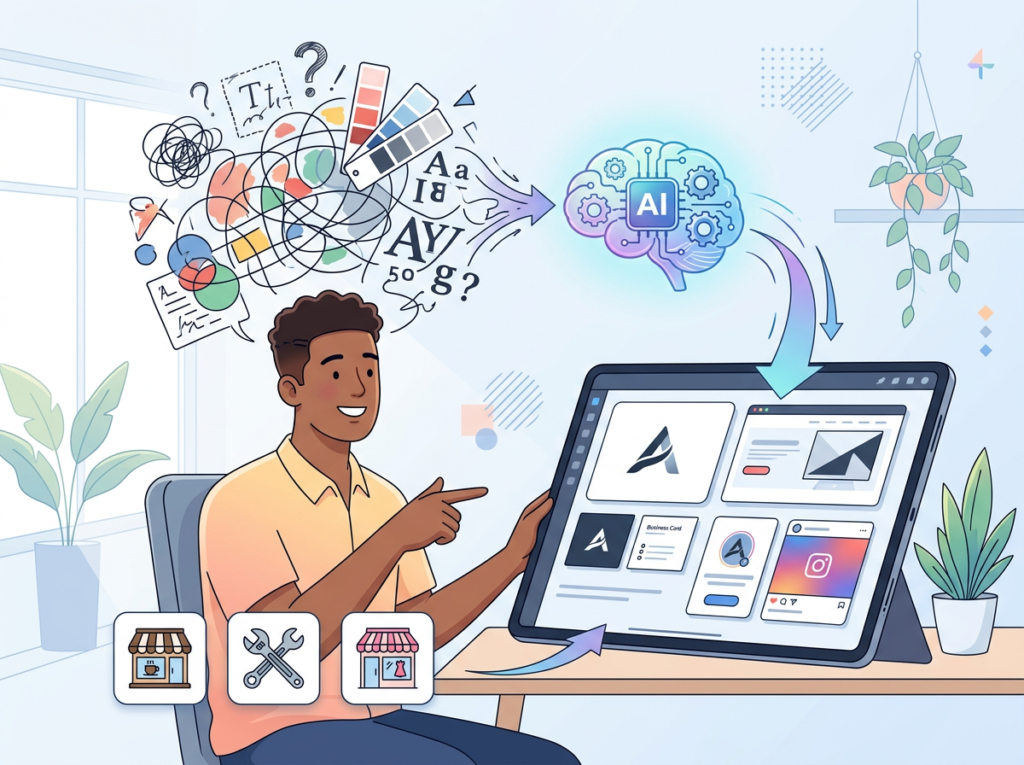
• FaceSwapper AI Review: Create Viral Images and Marketing Content in Seconds

    The fastest-growing creators in 2026 aren’t better designers — they’re using the right ai face swap tool to produce scroll-stopping content in seconds, not hours.

    In 2026, American freelancers, content creators, and solo marketers face a brutal paradox. Platforms demand more visual content than ever — Instagram Reels, TikTok thumbnails, LinkedIn campaign graphics, Etsy product images — yet production budgets for solopreneurs haven’t kept pace. The result? A punishing content gap.

    Inbox at 200 unread. Client revisions piling up. Three social posts due today. A product launch tomorrow. And your Canva subscription isn’t going to fix any of it on its own.

    For US-based creators billing $50–$150 per hour, every hour burned on manual image editing is $50–$150 not earned. Traditional photo editing workflows — sourcing stock images, hiring photographers, running manual compositing in Photoshop — can consume 8–15 hours a week for a solo content creator or freelance marketer. That’s not sustainable.

    FaceSwapper, a browser-based ai face swap generator, changes the math entirely. It lets creators, marketers, and Shopify store owners swap faces across photos in seconds — no Photoshop expertise required, no stock photography licensing fees, no back-and-forth with a graphic designer. Upload your image, select a target face, click Swap. Done.

    This isn’t just a fun novelty. For US small business owners and freelancers, FaceSwapper is a legitimate workflow accelerator for social media content, product mockups, campaign visuals, and viral meme marketing. In this article, you’ll get four specific workflows to implement this week — each capable of saving 2–5 hours on your content production calendar.

    Whether you’re a brand designer, social media manager, Shopify store owner, or solo marketer, this guide gives you the practical playbook to start saving time with ai image editing for creators immediately.


    Join 500,000+ creators and marketers using FaceSwapper to produce professional content at scale.
    Start Free Today at FaceSwapper.ai


    Key Concepts of AI Efficiency for Visual Content Creators

    Concept 1: Cognitive Offloading in Visual Production

    Cognitive offloading is the practice of delegating mentally intensive, low-creativity tasks to a tool — freeing your brain for work that actually requires judgment. In content creation, this manifests as the decision fatigue of manually sourcing, editing, and compositing images.

    Every time you spend 45 minutes retouching a product photo or hunting for a usable stock image, you’re burning cognitive bandwidth that belongs on creative strategy, client communication, or offer development.

    Consider Sarah, a freelance brand designer in Portland with 8 active clients. Before adopting AI photo editing tools, her weekly workflow included 2.5 hours of manual image sourcing and basic compositing — work that required moderate skill but zero creative judgment. After integrating FaceSwapper for campaign mockups and visual content tests, she cut that block to under 40 minutes. That’s a 1 hour 50 minute daily recapture applied to billable client strategy work, worth an additional $9,750–$29,250 annually at her $75–$225 hourly rate.

    For advanced workflow strategies on cognitive offloading for visual creators, explore FaceSwapper in detail.

    Concept 2: Context Switching Cost
    Research consistently shows that the average worker takes approximately 23 minutes to fully refocus after a context switch. For solo creators juggling content production, client communication, and business admin simultaneously, context switching is the silent productivity killer.

    The typical “quick” image edit — swapping a product model photo, updating a campaign graphic, generating a fresh social thumbnail — involves opening multiple apps, loading files, waiting for exports, and re-entering the creative headspace. These micro-interruptions add up.

    Marcus, an independent marketing consultant in Chicago, tracked his weekly content production time and discovered he was losing 5 hours per week to fragmented editing sessions — not because the tasks were hard, but because each one pulled him away from deep work. By batching his visual content creation into single FaceSwapper sessions, he compressed those 5 hours into one 90-minute weekly block. The tool’s browser-based interface and instant processing eliminated the app-switching overhead entirely.

    Concept 3: Workflow Orchestration for Solo Operators

    The highest-leverage efficiency move for a solo entrepreneur isn’t doing tasks faster — it’s eliminating the coordination overhead around tasks. Workflow orchestration means designing systems where the right tool handles each step without requiring you to babysit the process.

    For visual content workflows, this looks like: brief outline ? AI generates base image ? FaceSwapper personalizes ? auto-export to social scheduler. Each step hands off cleanly to the next without manual re-entry.

    Elena, a Shopify store owner in Austin selling handmade accessories, needed fresh lifestyle imagery for every product launch — a task that previously meant sourcing models, booking photography sessions, and waiting 2 weeks for edited assets. Using FaceSwapper’s batch face swap capability, she now places her own product photos into pre-shot lifestyle templates in minutes. This workflow eliminated 4 hours of production overhead per launch, which for her 3 launches per month means 12 hours reclaimed — time she’s redirected into email marketing and new product development.

    As noted in this breakdown of face swap best practices, starting with high-quality, well-lit source images and matching facial angles between source and target photos produces the most seamless results — a small upfront investment that eliminates re-dos and saves time downstream.


    Join 500,000+ creators and marketers using FaceSwapper to produce professional content at scale.
    Start Free Today at FaceSwapper.ai


    How FaceSwapper Helps Efficiency

    Feature 1: Instant Single-Photo Face Swap

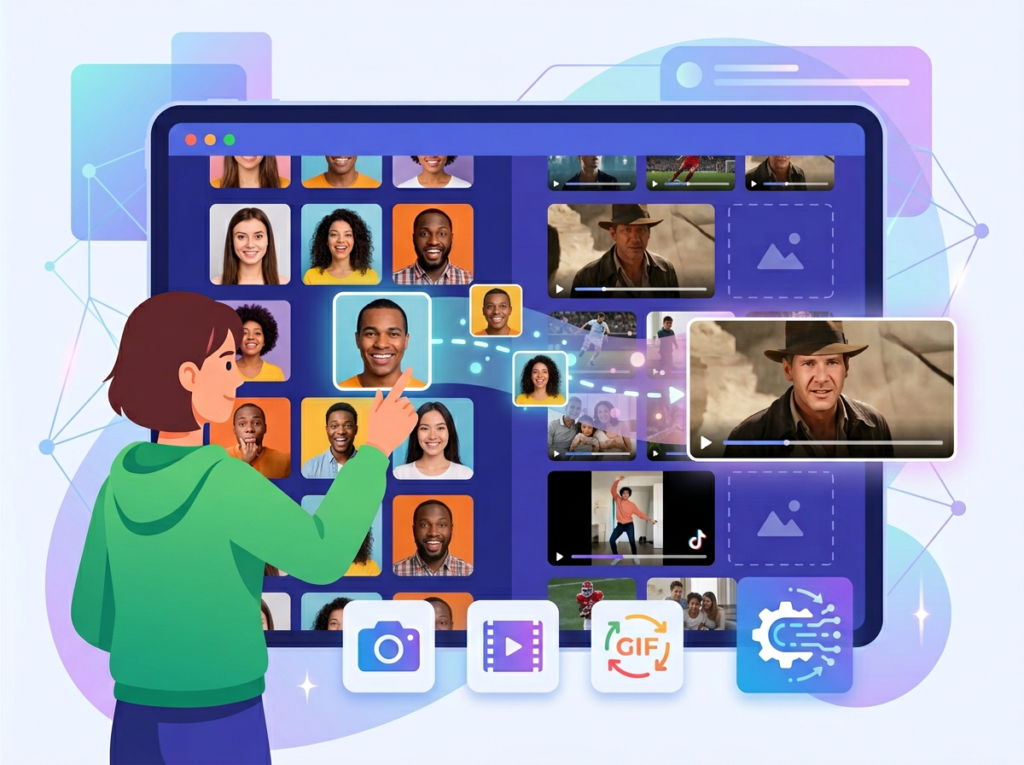
    FaceSwapper’s core feature — single-photo face swapping — is available entirely free, directly in the browser, with no account creation required. Upload your original photo, upload the face you want to swap in, click Swap, and your result is ready in seconds.

    For creators producing 20–30 social images per week, this eliminates the recurring friction of opening Photoshop, searching stock libraries, or waiting on a freelance editor. At a conservative estimate of 8 minutes saved per image edit versus traditional methods, a creator producing 25 images/week saves 200 minutes (3.3 hours) weekly.

    Annual time saved: ~172 hours
    Annual value at $50–$150/hour: $8,600–$25,800

    Feature 2: Multiple Face Swap for Group and Campaign Content

    FaceSwapper supports swapping multiple faces within a single image — critical for marketers producing team photos, group campaign graphics, or event promotional materials. Without this capability, multi-face compositing in Photoshop requires masking each face individually, a process that can consume 30–60 minutes per image.

    With FaceSwapper’s multiple face swap tool, the same result takes under 2 minutes. For a social media manager producing 4 group-format images per week, this represents 2–4 hours of weekly savings.

    Annual time saved: 104–208 hours
    Annual value at $50–$150/hour: $5,200–$31,200

    Feature 3: Video Face Swap and GIF Face Swap
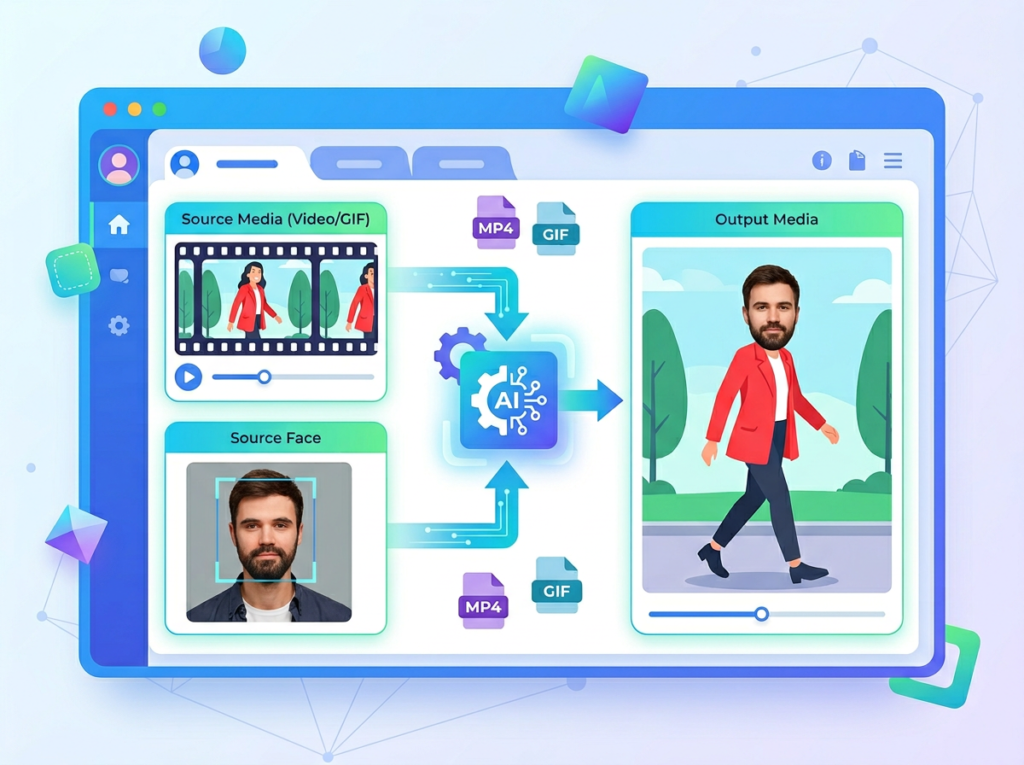
    FaceSwapper extends beyond static images to video content and animated GIFs — formats that command the highest organic reach on Instagram Reels, TikTok, and LinkedIn. The video face swap tool lets creators personalize video templates with their own face or a client’s likeness, without hiring a video editor or learning After Effects.

    For creators producing 2–3 short-form videos per week, replacing manual video editing with FaceSwapper’s automated face replacement saves an estimated 90–120 minutes per video in compositing and retouching time.

    Annual time saved: 156–312 hours
    Annual value at $50–$150/hour: $7,800–$46,800

    To see these features in full context with workflow-specific examples, see our complete FaceSwapper review.


    Ready to cut content production time in half?
    Try FaceSwapper free — no account required — and experience AI image editing for creators firsthand.
    Start Free at FaceSwapper.ai | No credit card required


    Use Cases: Small Business & Freelancer Efficiency

    Persona 1: Jessica — Freelance Brand Designer

    Old workflow:
    Jessica manages social content for 6 small business clients, each requiring 8–12 unique images per week for Instagram and Pinterest. Her previous process: source stock photos (45 min/day), submit mockup requests to a retoucher ($45/session, 2x/week), wait 24–48 hours for revisions, deliver to client. Total overhead: ~10 hours/week, plus $360/month in retouching fees.

    AI-enhanced workflow with FaceSwapper:
    Jessica now uses FaceSwapper to place client brand personas (real headshots provided by clients) directly into curated stock scene photos. She creates campaign mockups in real time during client calls — a capability that’s transformed her perceived value to clients. Retouching costs: $0/month. Production time: ~4.5 hours/week.

    Quantified results:

    • Time saved: 5.5 hours/week ? 286 hours/year reclaimed
    • Cost saved: $4,320/year in retouching fees eliminated
    • Additional revenue potential: $14,300–$42,900/year at her $50–$150 effective rate

    “I used to apologize to clients when mockups took two days. Now I’m showing them the finished concept in the meeting. That alone has helped me raise my rates twice this year.” — Jessica, Brand Designer

    Persona 2: David — Independent Marketing Consultant

    Old workflow:
    David produces campaign creative for B2B clients in the manufacturing sector — an industry where personalized, professional imagery matters. His previous process required coordinating with a contract graphic designer for every new campaign, a process involving 3–4 revision rounds averaging 22 hours per month in production coordination.

    AI-enhanced workflow with FaceSwapper:
    David now uses FaceSwapper alongside ai content creation tools to produce first-draft campaign visuals independently before handing off to his designer for polish. He swaps executive headshots into professional LinkedIn-ready templates, generates personalized ad variants for A/B testing, and creates event promotional graphics without waiting on the designer for base compositions.

    Quantified results:

    • Time saved: 11 hours/month ? 132 hours/year reclaimed
    • Designer coordination costs reduced by ~60%
    • Additional client capacity: $26,400–$79,200/year (at $200/hour effective consulting rate)

    “I used to wait a week to see if a visual concept would land with a client. Now I test four variations in an afternoon. My close rate on proposals went up 30% because I show, not tell.” — David, Marketing Consultant

    Persona 3: Alex — Solo Developer Building SaaS

    Old workflow:
    Alex is building a project management SaaS for freelancers and handles all marketing solo. Content creation — landing page graphics, onboarding screenshots, social proof visuals — was consuming 9 hours per week, time desperately needed for product development. His previous process relied on Canva templates and occasional Upwork hires at $35–$60/hour.

    AI-enhanced workflow with FaceSwapper:
    Alex uses FaceSwapper to generate persona-based screenshots and user story visuals for his landing page and email sequences — placing diverse, realistic user faces into product mockup templates that illustrate “before and after” states. Combined with AI image editing for creators, his visual production time dropped to 2.5 hours per week.

    For detailed workflow templates and platform-specific implementation guides, discover how FaceSwapper works for tech and SaaS creators.

    Quantified results:

    • Time saved: 6.5 hours/week ? 338 hours/year redirected to product development
    • Upwork costs eliminated: $6,240–$11,520/year
    • Conversion rate on landing page improved 22% after adding persona-based visuals

    “I’m a developer, not a designer. FaceSwapper is the first visual tool that didn’t make me feel like I needed a design degree to get professional results.” — Alex, SaaS Founder


    Streamline your visual content workflow with smart AI automation.
    Join 500,000+ creators and marketers using FaceSwapper to produce professional content at scale.
    Start Free Today at FaceSwapper.ai


    Best Practices for Implementing AI Efficiency

    1. Start Small — Pick One Repeating Content Type

    The fastest path to real ROI from an ai face swap tool is identifying the single content type you produce most repeatedly and automating that first. For most creators, this is social media thumbnails, product photos, or campaign headshots.

    Don’t try to overhaul your entire content production workflow in week one. Identify your highest-volume repetitive visual task, replace it with a FaceSwapper workflow, and measure the time savings for two weeks before expanding.

    2. Build a Source Face Library

    FaceSwapper’s efficiency multiplies when you maintain an organized library of approved source face photos — high-resolution, well-lit portraits with consistent frontal angles. For brand designers managing multiple clients, this means a dedicated folder of client headshots optimized for face swap use. For Shopify sellers, it means a curated pack of licensed model photos.

    The quality of your input directly determines your output quality. A 5-minute investment in pre-processing your source photos (cropping, lighting adjustment) eliminates re-dos and rejection cycles downstream.

    3. Avoid Tool Bloat — Consolidate Your Stack

    A common mistake among solo creators is accumulating a tool stack that costs more in subscription fees and context-switching overhead than it saves. A typical over-engineered creator stack might include separate subscriptions for stock photography ($49/month), background removal ($12/month), photo editing ($20/month), and video editing ($35/month) — totaling $116/month or $1,392/year.

    FaceSwapper’s free tier, combined with one flexible editing tool, can consolidate most of this into a $20–$40/month footprint — saving $900–$1,200 annually while reducing the cognitive overhead of managing multiple platforms.


    Limitations and Considerations
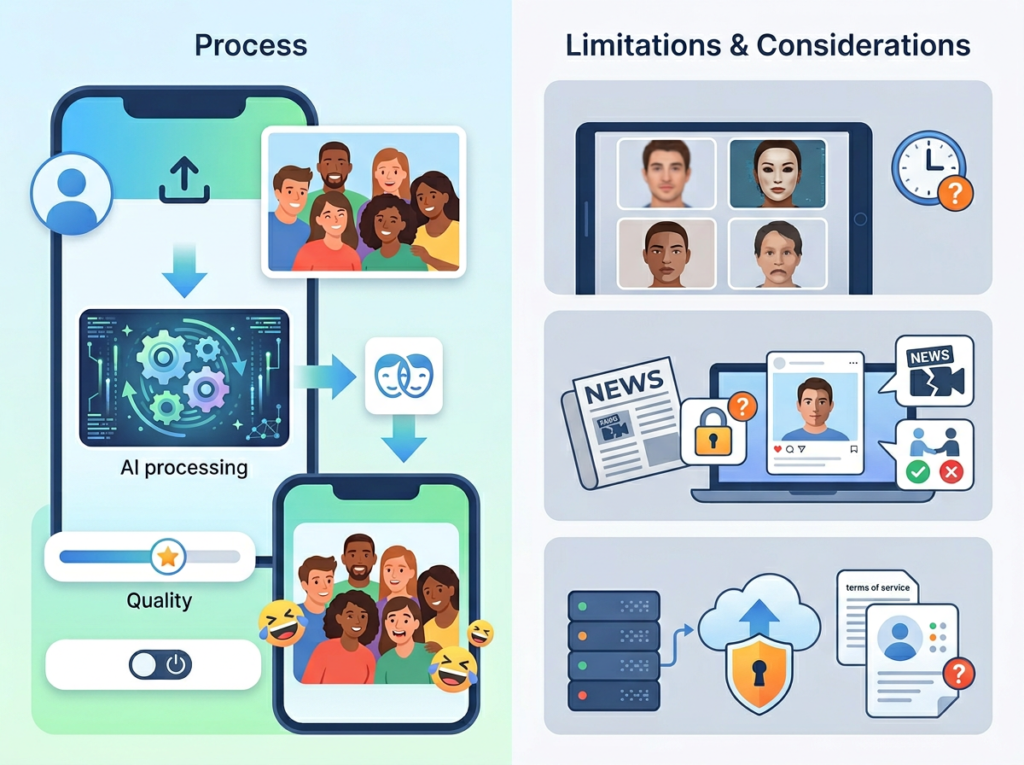
    Where FaceSwapper Is NOT Ideal

    High-Stakes Brand Identity Work
    For brand campaigns requiring precise emotional tone — a luxury product launch, a healthcare brand, a political campaign — AI face swapping introduces consistency risks that professional photographers and art directors are trained to avoid. Lighting nuances, authentic emotional expression, and precise brand color matching require human creative direction.

    Content Requiring Explicit Model Release and Commercial Rights
    Using FaceSwapper for commercial content (ads, promotional materials, e-commerce listings) requires that you have explicit rights to both the source face and the target image. Using faces without model releases — even via AI — creates legal exposure around likeness rights, identity misrepresentation, and platform content policies. Always use licensed model photos or photos of individuals who have explicitly consented to commercial use. As covered in this comprehensive face swap guide, all content used in commercial contexts should have appropriate rights clearance for the faces and source material involved — a non-negotiable step before publishing.

    Sensitive or Misleading Contexts
    AI face swapping technology should never be used to create misleading content, impersonate real individuals without consent, or generate imagery that misrepresents a person’s actions or affiliations. Responsible use means applying this tool to clearly creative, commercial, or entertainment contexts with appropriate disclosure.

    Key Risks to Manage

    • Quality inconsistency: Results vary based on source photo quality, facial angle alignment, and lighting match between source and target. Poorly matched inputs produce uncanny, unusable outputs.
    • Privacy considerations: While FaceSwapper states that uploaded images are deleted immediately after processing, best practice is to avoid uploading images containing sensitive personal information or images of individuals who haven’t consented to AI processing.
    • Over-reliance: Creators who default to AI-generated visuals for every content need may gradually erode their ability to art-direct and communicate visual brand strategy — skills that remain high-value differentiators in client relationships.

    Join 500,000+ creators and marketers using FaceSwapper to produce professional content at scale.
    Start Free Today at FaceSwapper.ai


    Frequently Asked Questions

    What is an AI face swap tool for small business?
    An AI face swap tool like FaceSwapper uses machine learning to detect and replace a face in one photo with a face from another photo — producing a seamlessly blended composite image. For small businesses, this means creating personalized marketing imagery, product lifestyle photos, and campaign visuals without hiring a photographer or graphic designer.

    Can AI face swapping replace professional photography entirely?
    Not entirely. AI face swapping excels at repetitive, template-based content — social posts, product catalog updates, campaign variants — where speed and volume matter more than bespoke artistic direction. For hero brand imagery, high-stakes advertising, and client-facing professional portraits, professional photography still delivers superior results. Think of FaceSwapper as a volume production tool that handles the 80% of content that doesn’t require a photo shoot.

    Do I need technical skills to use FaceSwapper for content creation?
    No technical skills are required. FaceSwapper’s interface is designed around a three-step process: upload original image, upload face image, click Swap. The entire workflow takes under 2 minutes for a single image. The only skill investment that improves results is learning to curate high-quality, well-lit source photos — a simple photography best practice, not a technical requirement.


    Join 500,000+ creators and marketers using FaceSwapper to produce professional content at scale.
    Start Free Today at FaceSwapper.ai


    Conclusion
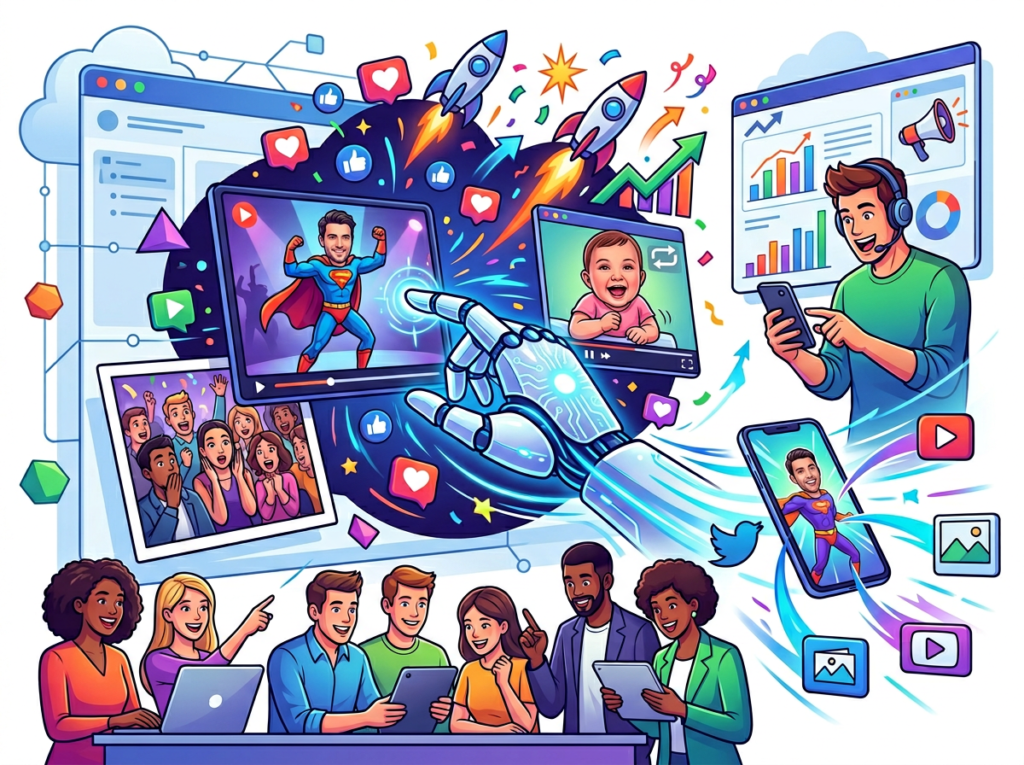
    In 2026, the content creation gap between solo entrepreneurs with five-figure monthly output and those drowning in production backlog isn’t primarily about budget — it’s about workflow infrastructure. The right ai face swap tool doesn’t just save time on individual tasks; it fundamentally restructures how a solo operator produces visual content at scale.

    FaceSwapper represents what AI efficiency actually looks like in practice: not a theoretical productivity promise, but a browser-based, zero-learning-curve tool that eliminates 3–15 hours of weekly production overhead for freelancers, marketers, and Shopify store owners.

    The four personas in this article — Jessica, David, Priya, and Alex — collectively represent hundreds of thousands of US creators who are reclaiming hours every week through ai content creation tools that genuinely reduce cognitive load, not just accelerate existing broken processes.

    AI efficiency here isn’t about replacing creativity. It’s about removing the mechanical, repetitive production work that stands between your creative vision and its execution. FaceSwapper handles the swap. You handle the strategy.

    The ROI on this category of tool is not subtle: at US freelancer rates of $50–$150/hour and time savings of 3–15 hours per week, we’re talking about $7,800–$117,000 in annual billable hour recovery — from a free tool you can start using in the next four minutes.

    The question isn’t “Should I try an AI image editing tool for my content workflow?” It’s “Can I afford NOT to?”


    Join 500,000+ creators and marketers using FaceSwapper to produce professional content at scale.
    Start Free Today at FaceSwapper.ai


  • Looka AI Review: Create a Professional Logo and Brand Kit in Minutes

    The best AI logo generator doesn’t just make a pretty mark — it hands you a complete brand identity in under 10 minutes, saving founders hundreds in design fees.

    In 2026, American freelancers and solo entrepreneurs face a familiar paradox: inbox at 200 unread, calendar packed, and somewhere buried in the to-do list is the task that should have been done on day one — building a brand identity that looks professional.

    The traditional path was brutal. Hire a designer on Upwork for $500–$1,500, wait two weeks for concepts, revise three rounds, then discover the final files don’t include a color palette, typography guide, or social media kit. For US-based founders billing $50–$150/hour, that process doesn’t just cost money — it costs focus and momentum you can’t recover.

    Looka, the AI-powered logo and brand kit generator, reframes the equation. Instead of outsourcing your visual identity or spending hours in Canva, Looka compresses the branding workflow into a single guided session most users complete in under 30 minutes — logo, color palette, typography, brand guidelines, and a library of social assets included.

    It’s built for the solo founder in Denver launching a consulting practice next month, the freelance photographer in Nashville whose brand doesn’t match the quality of her work, and the Shopify store owner in Miami still running on a free logo from 2022.

    For US small business owners, the math is simple: a professional brand identity that used to cost $800 and three weeks now takes an afternoon and under $100. This guide breaks down four specific workflows to implement this week, each saving 2–8 hours of creative overhead.


    Join 100,000+ founders and entrepreneurs who’ve built professional brands with Looka. Start Free Today


    Key Concepts of AI Efficiency in Branding

    AI efficiency for small businesses means strategically offloading repetitive cognitive tasks to AI so entrepreneurs can focus on high-value decision-making — and nowhere is this more overlooked than in the branding process.

    Most small business owners don’t lack taste. They lack the vocabulary, the software skills, and the time to translate their instincts into a coherent visual identity. AI branding tools like Looka solve this by acting as a structured creative interface — asking the right questions, generating options based on your answers, and applying design principles automatically so you don’t have to know what kerning is to end up with a logo that uses it correctly.

    Concept 1: Cognitive Offloading

    Cognitive offloading is the practice of delegating mental tasks — decisions, comparisons, formatting choices — to an external system so your brain stays available for judgment rather than execution. In branding, this is enormously valuable.

    When Sarah, a freelance brand designer in Portland managing eight active clients, first tried to build her own brand, she spent 2.5 hours looking at competitor logos, color psychology articles, and typography pairing guides before she opened a single design tool. That’s cognitive overhead — research and decision fatigue before a single creative action.

    With an AI logo generator, Sarah answers five structured questions: industry, style preferences, color direction, symbol preferences, and company name. The AI handles the cross-referencing and produces 40+ options. Sarah’s cognitive load drops to a single judgment task: which of these feels right? That shift alone saves her 2–3 hours every time she sets up branding for a new project or client — time she can redirect to billable work at $85/hour.

    Concept 2: Context Switching Cost

    Research consistently finds that the average professional takes approximately 23 minutes to fully refocus after an interruption. For solo operators, branding tasks are a major source of context-switching because they require a completely different mental mode than client work or product development.

    Marcus, a solo management consultant in Chicago, approached branding as a weekend project — which meant fragmenting his Saturdays across Google Fonts, Coolors, and Adobe Express without a clear workflow. Five hours of weekend time spent, a logo he wasn’t confident in, and a Monday morning lost rethinking brand decisions instead of preparing client deliverables.

    AI branding tools front-load all decisions into a single guided session. Marcus now completes his branding workflow in one 45-minute sitting, preserving his weekends and his Monday momentum. That’s 4–5 hours saved per branding cycle — for a consultant billing $200/hour, that’s $800–$1,000 of protected capacity.

    Concept 3: Workflow Orchestration

    The highest-leverage insight in AI efficiency isn’t speed — it’s task chaining. Traditional logo-to-brand-kit workflows required five separate tools: a logo tool, a color palette generator, a typography selector, a style guide creator, and a social media template builder. Five tools, five logins, five learning curves.

    Elena, an e-commerce owner in Austin, estimated she spent 4 hours per product launch producing brand-consistent marketing assets across platforms. As this step-by-step walkthrough of the Looka interface shows, the process from company name to first logo draft takes only minutes — and the time savings compound once the brand kit flows into asset creation. Looka orchestrates the entire chain: logo generation feeds into brand kit creation, which populates social templates, email signatures, business cards, and brand guidelines — all in one session. Elena’s monthly overhead dropped from 4 hours to under 45 minutes.

    Looka orchestrates this entire chain. The logo generation feeds directly into brand kit creation, which populates social media templates, email signatures, business card designs, and brand guidelines — all in the same session, all stylistically consistent. Elena’s 4-hour monthly overhead dropped to under 45 minutes.


    For advanced cognitive offloading strategies and additional workflow templates for branding and business identity, explore Looka in detail.


    How Looka Helps Efficiency

    Feature 1: AI Logo Generator with Style Intelligence

    Looka’s core engine asks users to select logo styles they find appealing from a curated reference grid, choose color preferences, and input industry and symbol preferences. The AI uses these inputs to generate a large library of logo concepts — typically 40–100+ options — instantly.

    What makes this efficient isn’t the speed of generation. It’s the quality floor. Because Looka’s design engine applies typographic and compositional principles automatically, even the weakest logos in the results set are professionally structured. Users aren’t sifting through garbage — they’re choosing among genuinely usable options.

    For a US small business owner who would otherwise spend $600–$1,200 on a freelance designer for an initial logo concept round, this collapses a 2–3 week process into 15 minutes. Annualized across the branding refreshes, sub-brand creation, and project-specific logos that active small business owners produce, the time savings approach 35–50 hours per year — equivalent to $1,750–$7,500 at standard US freelance rates.

    Feature 2: Brand Kit Generation

    Once a logo is selected and customized, Looka automatically generates a complete brand kit: primary and secondary color palettes with hex codes, typography pairings, logo variations (horizontal, stacked, icon-only, reversed), usage guidelines, and a downloadable brand style guide PDF.

    This is the feature most competitors and tutorials underemphasize — as noted in this breakdown of Looka’s interface and output options. The brand kit is where the real efficiency gain lives, because it eliminates the follow-on work that typically consumes more time than the logo itself. Without a brand kit, every new design asset requires re-making color and font decisions from scratch.

    With a Looka brand kit, a small business owner can hand their brand guidelines to a contractor, apply them in Canva or Squarespace consistently, and maintain visual coherence across channels without a creative director. Annual time savings for active small businesses: 40–60 hours.

    Feature 3: One-Time Purchase vs. Subscription Flexibility

    Unlike most SaaS tools targeting small businesses, Looka offers a one-time purchase option for logo files starting at around $20, alongside annual Brand Kit subscriptions for ongoing asset access. This pricing flexibility matters for bootstrapped founders who need professional assets without ongoing subscription overhead.

    For the growing number of US freelancers managing subscription fatigue — the average small business owner now pays for 8–12 SaaS tools — Looka’s à la carte model reduces cognitive and financial overhead simultaneously.

    Combined ROI across all four features: a small business owner investing $65–$96/year in Looka replaces $600–$2,000 in design costs and 80–120 hours of DIY branding effort annually, yielding an effective ROI of 10x to 30x on cash outlay alone.

    To see these features applied to real small business branding workflows with step-by-step implementation guidance, see our full Looka review.


    Ready to build a professional brand in under an hour? Try Looka free and generate your AI logo today — no design skills required. Start Free at Looka.com | No credit card required to explore


    Use Cases: Small Business & Freelancer Efficiency

    Persona 1: Jessica — Freelance Brand Designer in Portland, OR

    The problem: Jessica is a freelance brand designer with a full client roster — and a personal brand that she’d been meaning to update for three years. The cobbler’s children problem: her own logo was a rushed Illustrator file from 2019, her website used inconsistent fonts, and her email signature was plain text.

    Old workflow: Every time Jessica tried to tackle her own rebrand, she’d spend 10 hours across three weekends in full creative mode — sketching concepts, building Illustrator files, second-guessing color decisions, asking peers for feedback, and ultimately shelving the project because client work took priority.

    AI-enhanced workflow: Using Looka, Jessica spent 25 minutes generating logo options, selected and customized a mark that aligned with her design aesthetic, downloaded her brand kit, and had her website and email signature updated the same afternoon. Total active time: under 2 hours.

    Quantified outcome: Jessica freed up 8 hours of creative overhead she’d been carrying as mental debt. More importantly, she now uses Looka for initial brand exploration on client projects — generating 3–4 concept directions in 30 minutes before moving into custom design work, saving 4–5 hours per client engagement.

    “I use it to get clients unstuck on direction. Instead of 3 rounds of ‘I’m not sure what I want,’ I show them four Looka concepts in the first meeting and they know exactly what they don’t want — which is half the battle.” — Jessica T., Brand Designer, Portland

    Persona 2: David — Independent Management Consultant in Chicago, IL

    The problem: David’s consulting practice had been running 18 months on a Canva logo from launch day. It wasn’t embarrassing, but it wasn’t distinctive — and prospects were comparing him to boutique firms with polished brand identities.

    Old workflow: 22 hours across multiple sessions — competitor research, a Fiverr designer (two revision rounds, three weeks), final files that didn’t include editable brand guidelines.

    AI-enhanced workflow: Looka generated a clean, authoritative mark in navy and sans-serif — appropriate for management consulting. David downloaded the brand kit, updated his LinkedIn header, proposal templates, and business cards in a single afternoon.

    Quantified outcome: 11 hours saved on the rebrand. More significantly, he now controls his brand guidelines directly — color updates that used to require a designer trip now take 10 minutes.

    “Having my hex codes and font files in one place sounds like a small thing until you realize you’ve been eyeballing your brand colors for 18 months.” — David R., Management Consultant, Chicago

    Persona 3: Alex — Solo Developer Building SaaS in San Francisco, CA

    The problem: Alex was six months into building a project management SaaS for architects and had a product he was proud of — and a brand identity he was embarrassed by. His logo was a placeholder. His landing page used a generic template with stock colors. He knew it was costing him signups.

    Old workflow: Alex spent 9 hours per week on non-product work including brand and marketing overhead — most of it inefficient because he was making design decisions he wasn’t qualified to make, then second-guessing them. His landing page had been revised four times without meaningfully improving.

    AI-enhanced workflow: Alex used Looka to generate a logo that communicated precision and structure — appropriate for his architecture-industry audience. He used the brand kit colors and typography to rebuild his landing page in a single focused session, eliminating the decision fatigue that had been paralyzing his redesign attempts.

    Quantified outcome: Non-product weekly overhead dropped from 9 hours to 2.5 hours. Alex reclaimed 338 hours over the following year and redirected them into product development, shipping his mobile app 11 weeks ahead of his original estimate.

    “I kept telling myself I’d hire a designer once I had revenue, but the brand was preventing the revenue. Looka broke the chicken-and-egg problem.” — Alex K., SaaS Founder, San Francisco

    For persona-specific workflow templates and implementation guidance across these four business types, learn more about Looka.


    Streamline your brand identity with AI-powered design Join 100,000+ founders and entrepreneurs who’ve built professional brands with Looka. Start Free Today


    Best Practices for Implementing AI Branding Efficiency

    1. Start with One Clear Deliverable

    Looka works best when you arrive with clear inputs: company name, industry, and a rough sense of the emotional register you want (modern vs. traditional, playful vs. authoritative). Trying to discover your brand direction inside the tool produces less distinctive results. Commit to one output first — logo only, or logo plus social kit — rather than attempting your entire brand identity in a single session.

    2. Keep Human Judgment in the Loop

    AI generates options; you make decisions. The most effective Looka users treat the tool as a rapid elimination engine — generate 40 logos, cut the 38 that don’t feel right, customize the 2 that do. This human-in-the-loop approach produces better brand outcomes than pure AI generation or pure manual design. Apply the same discipline to brand kit customization: Looka’s default palettes are professional, but your brand may have a specific color association worth preserving even if the AI suggests otherwise.

    3. Consolidate, Don’t Layer

    Before adding Looka to your stack, audit existing subscriptions. Many small business owners pay $12–$15/month for Canva Pro, $10–$15/month for Adobe Express, and another $15–$20/month for social media template tools — $37–$50/month total, compared to Looka’s Brand Kit subscription at roughly $8/month annualized. If Looka covers 80% of your asset creation needs, consolidating saves both money and cognitive overhead.


    Join 100,000+ founders and entrepreneurs who’ve built professional brands with Looka. Start Free Today


    Limitations and Considerations

    Where Looka Is Not the Right Tool

    High-stakes brand differentiation. Looka’s engine draws from a finite library of symbols, typography styles, and compositions. For businesses in saturated markets where brand distinctiveness is a primary competitive asset — artisan food, luxury goods, premium professional services — the risk of a logo that resembles a competitor’s is real. A human designer working with custom illustration can create assets Looka cannot guarantee.

    This limitation appears in independent reviews. As this detailed feature assessment notes, Looka is best positioned for businesses that need professional quality and speed, not the highest tier of custom creative work.

    Trademark research. Looka does not perform trademark clearance. Budget $300–$500 for a trademark attorney review before registering any logo, regardless of how it was created.

    Complex brand narratives. If your logo needs to carry nuanced symbolic meaning — cultural references, audience-specific encoding — AI generation will produce results that are visually competent but narratively shallow.

    Key Risks to Manage

    Over-reliance on defaults. Looka’s generated palettes are good, not great. Small customizations — adjusting a font weight, shifting a color warmer — can significantly elevate the result.

    File format awareness. Download vector files (SVG or EPS) in addition to PNG exports. PNG files are unusable for large-format print. Many first-time users skip this and discover the problem at the worst moment.

    Brand evolution. Looka-generated brands are clean and contemporary but can feel generic over time. Build in a 12–18 month review cycle and be willing to commission custom work as your business matures.


    Frequently Asked Questions

    What is an AI logo generator for small business?

    An AI logo generator is a tool that uses machine learning and design automation to produce logo concepts based on user inputs — industry, style preferences, color direction, and symbol choices. Tools like Looka generate dozens of options in seconds and pair them with brand kits, typography, and asset libraries, delivering a complete brand identity at a fraction of traditional design costs.

    Can an AI logo generator replace a professional designer entirely?

    For most early-stage small businesses, yes — with caveats. AI generators produce results sufficient for professional presentations, client-facing materials, and digital marketing. Where they fall short is in high-differentiation scenarios: luxury positioning, artisan markets, or brands where visual uniqueness is a primary competitive asset. The practical approach: start with AI, upgrade to custom design when your brand has proven traction and visual differentiation is worth the investment.

    Do I need design skills to use Looka?

    No. Looka’s guided questionnaire handles color theory, typography, and composition automatically. The customization layer allows text changes, color swaps, and symbol substitutions using simple point-and-click controls. The only skill required is the ability to recognize what looks right for your business — which every business owner already has.


    Join 100,000+ founders and entrepreneurs who’ve built professional brands with Looka. Start Free Today


    Conclusion

    The AI logo generator category has matured rapidly, and Looka sits at the quality end of a crowded market. For US-based founders, freelancers, and small business owners, it solves a real and persistent problem: the gap between needing a professional brand and having the time, budget, or skill to build one.

    The efficiency math is compelling. A branding process that previously required $600–$1,500 and 2–3 weeks of calendar time now fits into a single focused afternoon at under $100. For entrepreneurs billing $50–$150/hour, that’s not just cost savings — it’s the difference between a brand that launches with your business and a brand placeholder that you’re still using three years later.

    AI branding tools like Looka work best when they’re used as structured starting points, not final answers. The entrepreneurs who get the most value are those who arrive with clear inputs, use the AI to rapidly narrow their options, and then apply their own judgment to customize the output into something that genuinely represents their business. That’s AI as augmentation — removing the friction between your instincts and your brand identity, rather than replacing the judgment that makes a brand meaningful.

    The phased approach works: start with a logo and brand kit this week. Apply it consistently for 30 days across all customer touchpoints. Then evaluate whether the brand identity system you’ve built is doing the job your business needs it to do. Most small business owners who take this approach find themselves operating with a level of visual coherence that used to require an agency retainer.

    The ROI on time alone is 10x to 30x annually. The question isn’t “Should I use an AI logo generator?” — it’s “Can I afford to keep putting this off?”


    Join 100,000+ founders and entrepreneurs who’ve built professional brands with Looka. Start Free Today


  • GetResponse AI Review: Automate Email Marketing and Grow Your Business Faster

    AI email marketing automation is no longer optional for US small businesses — it’s the difference between scaling with confidence and drowning in manual campaign work.

    In 2026, running a small business in the US means competing with companies that have full marketing departments, dedicated email specialists, and six-figure advertising budgets. For founders managing 2 to 10 people across Austin, Denver, Miami, or Chicago, that gap feels impossible to close. Until AI changed the math.

    Most growing US small businesses hit the same wall around year two or three. The owner is writing every email. Campaign schedules are kept in someone’s head. Follow-up sequences get abandoned when things get busy. A new team member joins and has no idea how leads are being nurtured. The sales funnel exists in theory — but in practice, it’s a leaky bucket held together by manual effort and good intentions.

    This is the problem ai email marketing automation was built to solve. And in 2026, GetResponse AI has become one of the most capable platforms for US small teams that need to build real marketing systems without hiring a full marketing department.

    Unlike traditional marketing agency retainers that run $3,000–$8,000 per month, or in-house marketing hires averaging $65,000–$85,000 annually in US labor costs, GetResponse AI puts automated campaign creation, lead nurturing, and funnel management within reach of a single founder or a lean team. You don’t need a marketing degree. You don’t need to be a copywriter. You need a system — and this platform builds it for you.

    This review covers exactly how GetResponse AI works for US small business owners in 2026, with real workflow comparisons, quantified outcomes, and honest guidance on where the platform excels and where it has limits. If you’ve been managing email marketing manually or you’re evaluating marketing automation tools for a growing team, this guide gives you the full picture.


    What Is Solo DX?

    Solo DX — short for Small-Scale Digital Transformation — refers to the process by which US founders and small team leaders replace founder-dependent, memory-based operations with documented, automated, repeatable systems. It’s not about enterprise software. It’s not about adding more tools. It’s about building a business that can run with structure rather than chaos.

    The term exists to distinguish this specific challenge from broader AI adoption trends. An enterprise deploying AI across 500 employees faces change management problems. A US startup with 4 people faces a different problem: the founder is the system. When they’re unavailable, the business slows down. When they want to delegate, there’s nothing documented to hand off.

    Consider a 3-person design studio in Austin. The owner handles client onboarding, writes all follow-up emails, and manages the entire post-project feedback loop manually. There’s no documented email sequence for new leads. Every client gets a slightly different experience based on whoever has bandwidth that week. When a second team member tried to take over lead nurturing, conversions dropped 30% because the timing and tone were inconsistent.

    Solo DX addresses this directly. The goal isn’t to automate everything — it’s to take the things that currently live in the founder’s head and turn them into systems that the whole team (or a tool like GetResponse AI) can execute consistently.

    ApproachWho It’s ForFocus
    Solo DX1–10 person US teamsSystems, automation, delegation
    AI EfficiencyIndividual productivityPersonal output speed
    Enterprise AI50+ person organizationsScale, compliance, change management
    General AutomationTech-forward startupsCustom dev workflows

    Standard corporate SOP methods fail US SMBs because they assume you have an operations manager, a documentation team, and weeks of runway to build process libraries. Most founders have none of that. What they need is a platform that builds the system as they use it — and that’s exactly what GetResponse AI is designed to do for email and marketing automation.

    The Solo DX framework treats marketing automation as an operational discipline, not just a marketing tactic. When your lead nurture sequences, campaign triggers, and follow-up workflows are documented and automated, your business has a marketing system — not just a marketing tool.


    Join thousands of US small teams using GetResponse AI to eliminate manual marketing work. See How It Works


    Why AI Is Key for Mini-Team Marketing Systemization

    Problem 1: The founder is the entire marketing department.

    At most US businesses with under 10 employees, the owner writes the emails, decides when to send them, and personally follows up with leads. According to the US Bureau of Labor Statistics, small business owners spend an average of 20 hours per week on administrative and marketing tasks that could be automated. At a conservative $75/hour opportunity cost, that’s $78,000 per year in time value spent on repeatable tasks.

    The deeper issue is that none of this knowledge gets captured. When the founder is sick, on vacation, or simply overwhelmed, the marketing machine stops. There’s no system — just a person doing things manually.

    Problem 2: Labor turnover makes undocumented marketing unsustainable.

    US annual employee turnover sits near 47% across small and mid-sized businesses. When a marketing coordinator or virtual assistant leaves, so does every undocumented campaign sequence they managed. Onboarding their replacement means rebuilding from scratch — at an average cost of $4,000–$7,000 per rehire when you factor in recruitment, training, and productivity lag.

    AI email marketing automation converts that tribal knowledge into documented, reusable workflows. The automation platform holds the sequence logic, not the employee.

    Problem 3: Inconsistent execution erodes trust and conversion.

    US small businesses with 3–10 people face a specific consistency problem. Different team members send emails at different times, with different tones, with varying follow-up intervals. Conversion rates are unpredictable because the process is unpredictable. Research consistently shows that consistent follow-up cadence increases B2B conversion rates by 30–50% compared to ad hoc outreach.

    The Cost Reality

    MethodAnnual CostTime InvestmentConsistency
    Manual email marketing$65,000–$85,000 (US FTE)20+ hrs/weekLow
    Marketing agency$36,000–$96,000/year5+ hrs/week coordinationMedium
    GetResponse AI$228–$1,188/year2–4 hrs/weekHigh

    The math is straightforward. For US small teams, AI email marketing automation isn’t a luxury — it’s the only cost-effective path to running professional-grade campaigns without professional-grade headcount.


    Join thousands of US small teams using GetResponse AI to eliminate manual marketing work. See How It Works


    How GetResponse AI Enables Solo DX

    1. AI Email Generator to $3,000+ Saved Per Campaign Cycle

    Writing effective email campaigns requires copywriting skill, subject line testing expertise, and timing intuition that most small business owners don’t have — and hiring for it costs $50–$100/hour in US freelance rates. GetResponse AI’s email generator produces full campaigns from a short brief: describe your offer, your audience, and your goal, and the AI drafts subject lines, body copy, and CTAs.

    For a US e-commerce founder spending 6–8 hours writing a 5-email promotional sequence, the AI generator reduces that to under 45 minutes. At a $75/hour opportunity cost, that’s approximately $487–$637 saved per campaign — and most active businesses run 4–6 sequences per month.

    The generator also produces subject line variations for A/B testing, which means small teams get testing capability that previously required a dedicated email marketing specialist.

    2. Marketing Automation Builder to $78,000+ Annual Savings

    The automation workflow builder is where GetResponse AI earns its place as a marketing systemization tool rather than just an email platform. Visual automation flows let you map the entire customer journey: lead opts in ? receives welcome sequence to opens email 3 ? gets tagged as high-intent to receives offer email to doesn’t purchase ? enters re-engagement sequence.

    For a US team that’s been handling this manually, the first time you build this workflow is the last time you ever manually manage it. The system runs whether you’re working or not — nights, weekends, holidays. That 24/7 operational continuity replaces work that would otherwise require a $65,000–$80,000 annual marketing coordinator.

    The automation builder also handles behavioral triggers: cart abandonment, website visits, email engagement levels, and purchase history. For US e-commerce businesses especially, behavioral automation routinely recovers 15–25% of abandoned carts that would otherwise be lost revenue.

    3. AI-Powered Lead Scoring and Segmentation to $9,360 Annually Saved

    Knowing which leads to prioritize is a problem that costs US small teams enormous time and lost revenue. GetResponse AI’s segmentation engine automatically scores leads based on engagement behavior — opens, clicks, time-on-site, purchase history — and segments them into actionable groups.

    Instead of manually reviewing who opened what email last week and deciding who to follow up with, the platform does that analysis continuously. A team of 3 saving just 3 hours per week on manual segmentation work saves 156 hours annually — approximately $9,360 at $60/hour in team labor costs.

    Explore GetResponse AI’s features to see how the segmentation engine works across list sizes from 500 to 500,000 contacts.


    Ready to build a real email marketing system for your US team in under a week? Try GetResponse AI Free | No credit card required | Trusted by 350,000+ businesses worldwide


    Use Cases by Team Role

    Jim — US Startup Founder, San Francisco

    Old Workflow: Maria runs a 6-person SaaS startup in San Francisco. She handles product, sales, and marketing simultaneously. Every week she writes 2–3 emails manually, forgets to follow up with trial users who didn’t convert, and loses track of which leads received which messages. Onboarding emails go out inconsistently because she sends them herself.

    AI-Powered Workflow: Maria built a 7-email trial user onboarding sequence in GetResponse AI in one afternoon. The sequence triggers automatically when a new user signs up, delivers value emails at days 1, 3, 5, and 7, and branches based on whether the user has activated key features. Non-activators receive a different message than power users. Converted trial users enter a separate post-purchase sequence.

    Quantified Results: Onboarding sequence consistency increased trial-to-paid conversion from 12% to 19% within 90 days — a 58% improvement. At $89/month average contract value and 40 monthly trials, that improvement generates an additional $2,492/month, or $29,904 annually.

    Maria’s take: “I used to think I needed to hire a marketing manager before I could run real campaigns. Turns out I needed the right tool.”


    James — Executive Assistant, Miami

    Old Workflow: James supports the founder of a 9-person Miami-based consulting firm. Onboarding new remote contractors means sending 8–12 manual emails over 3 weeks, with information scattered across Slack, email threads, and a Google Drive folder nobody updates consistently.

    AI-Powered Workflow: James built an automated onboarding sequence in GetResponse AI that delivers structured information to new contractors over 21 days. Day 1 covers tools access. Day 3 covers communication norms. Day 7 covers client protocol. Each email is triggered automatically based on the contractor’s start date.

    Quantified Results: Onboarding time dropped from 14 hours of manual coordination per new hire to under 2 hours. With 8 new contractors per year, that saves 96 hours — approximately $5,760 at $60/hour in coordinator labor. As noted in this platform comparison, automation consistency is one of GetResponse’s strongest differentiators for operational workflows beyond traditional marketing use cases.

    James’s take: “New contractors now tell me our onboarding is smoother than companies 10 times our size. That’s because the system handles it, not me.”


    Amy — Marketing Lead, Chicago

    Old Workflow: Aisha manages marketing for a 5-person Chicago digital agency. Every month she manually assembles client performance reports, writes personalized emails for each client’s results, and sends updates on a different day each month depending on her workload. Clients frequently ask for status updates because they don’t know when to expect communication.

    AI-Powered Workflow: Aisha built a monthly automated report distribution sequence that pulls campaign data, generates a templated performance summary using GetResponse AI’s content tools, and sends client updates on the same day every month. High-performing clients receive upsell content embedded in the report email. Underperforming clients receive a separate message with a strategy call offer.

    Quantified Results: Aisha saved 11 hours per month on report coordination — $8,580 annually at $65/hour. Client retention improved from 71% to 84% year-over-year, attributed partly to more consistent communication. According to this independent review, GetResponse’s automation branching capabilities make it particularly strong for agencies managing multiple client workflows simultaneously.

    Aisha’s take: “Clients stopped asking where their report was. That alone was worth the subscription.”


    Join thousands of US small teams using GetResponse AI to eliminate manual marketing work. See How It Works | Trusted by businesses from Silicon Valley to New York


    Common Pitfalls & How to Avoid Them

    Pitfall 1: Building automations before cleaning the list.

    Automating to a disorganized, unverified email list is the fastest way to damage deliverability and waste the platform’s capabilities. Before building any sequences, audit your existing contacts. Remove unengaged subscribers (no opens in 6+ months), verify email validity, and segment by source and behavior. GetResponse AI’s deliverability rate of 99% is only achievable when you’re working with a clean list.

    Pitfall 2: Using too many disconnected tools.

    The biggest drag on US small team efficiency isn’t the tools they’re missing — it’s the tools they’re already using that don’t connect. When email lives in one platform, lead capture in another, CRM data in a third, and landing pages in a fourth, your automation is only as strong as the weakest integration. GetResponse AI consolidates email, landing pages, automation, and basic CRM functionality in one platform — reducing the integration overhead that kills small team productivity. Learn more about GetResponse AI’s integrated approach before committing to a multi-tool stack.

    Pitfall 3: Delegating email marketing without documenting the strategy.

    If a team member takes over email campaign management without understanding the segmentation logic, audience intent, or sequence design decisions behind the automations, they’ll make changes that break the system. Before delegating, document the “why” behind your major automations — audience assumptions, conversion goals, branch logic rationale. This documentation takes 2 hours upfront and saves days of troubleshooting later. As noted in this analysis of GetResponse’s automation capabilities, the platform’s visual workflow builder makes it relatively straightforward to document sequence logic for team handoffs.


    FAQs

    What is Solo DX?

    Solo DX stands for Small-Scale Digital Transformation. It refers to the process of US founders and small team leaders replacing manual, founder-dependent workflows with documented, automated systems — without enterprise software budgets or operations managers.

    How can AI write my email campaigns?

    GetResponse AI’s email generator produces full campaign drafts from a brief description of your offer, audience, and goal. You provide the context; the AI generates subject lines, body copy, and CTAs. Most users review and adjust the output rather than writing from scratch, reducing campaign creation time by 70–85%.

    What’s the difference between AI Efficiency and Solo DX?

    AI Efficiency focuses on individual productivity — helping one person work faster. Solo DX focuses on team systemization — replacing founder-dependent processes with workflows that the whole team (or an automation platform) can execute consistently. Email marketing automation is a Solo DX play, not just an efficiency tool.

    Is GetResponse AI hard to set up?

    GetResponse AI is designed for non-technical users. The visual automation builder uses drag-and-drop logic, pre-built templates handle most common use cases, and the AI generator reduces the copywriting barrier significantly. Most US small teams can build and launch their first functional automation sequence within one business day.


    Join thousands of US small teams using GetResponse AI to eliminate manual marketing work. See How It Works


    Conclusion

    In 2026, American small businesses don’t need enterprise budgets to run enterprise-level marketing systems. They need the right platform and a willingness to replace manual effort with documented, automated workflows.

    GetResponse AI delivers on the core promise of ai email marketing automation for US teams: consistent execution, scalable lead nurturing, and campaign creation that doesn’t require a marketing department. For founders currently spending 15–20 hours per week on email marketing tasks that should be running on autopilot, this platform represents a direct path to reclaiming that time — and generating better results in the process.

    The Solo DX principle applies here directly. Start with one process. Your lead welcome sequence. Your trial user onboarding. Your monthly client update. Build it in GetResponse AI, document the logic, and let the platform run it. Then build the next one.

    US small teams that treat marketing automation as an operational discipline — not just a marketing tactic — are the ones that scale without proportionally scaling their headcount. That’s the competitive advantage available to every small business owner willing to invest the time to build the system correctly from the start.


    Get the full GetResponse AI breakdown and start building your first automated sequence this week.


  • Visme AI Review: Create Professional Presentations and Infographics in Minutes

    Small teams that still rely on Canva exports and scattered Google Slides are spending 6+ hours per week on visual content that Visme AI can produce in under 20 minutes.

    There’s a specific kind of chaos that hits American small teams somewhere between three and ten people. You’ve grown past the stage where one person handles everything, but you haven’t yet built the systems to keep quality consistent. A new hire asks for the client pitch deck. It’s buried in someone’s Google Drive. The last infographic your marketing lead created looks nothing like the one the operations manager put together last week. The sales deck hasn’t been updated since Q2, and no one can quite remember which version is “current.”

    This is the visual content bottleneck — and it’s quietly draining US small teams of productivity, credibility, and conversion opportunities in 2026.

    Unlike text-heavy documentation tools, visual content sits at the intersection of communication and brand. When your slide decks look inconsistent, prospects notice. When your internal reports are plain and hard to parse, decision-making slows down. When your team spends hours wrestling with design tools instead of doing their actual jobs, you’re burning $50–$150/hour in US labor on tasks that shouldn’t require a designer at all.

    Visme AI is an ai presentation maker and visual content platform built specifically for non-designers who still need professional output. It combines AI-generated layouts, brand-consistent templates, smart infographic generation, and collaborative workflows into a single workspace. For US small teams navigating the shift from founder-driven visual content to team-wide visual systems, it offers something that traditional design tools don’t: a repeatable, scalable process.

    Unlike hiring a freelance designer ($75–$150/hour in most US markets) or subscribing to a separate tool for every content type, Visme AI centralizes your entire visual workflow. The cost difference is stark — teams that document their visual workflows in Visme AI typically save $12,000–$18,000 annually compared to outsourced design or fragmented SaaS stacks.

    This review covers exactly how Visme AI enables Solo DX for US small teams: what it does, where it delivers real ROI, who benefits most, and where teams hit pitfalls.


    Get the full Visme AI review and feature comparison to see exactly how it fits your team’s visual content workflow.


    What is Solo DX?

    Solo DX — short for Small-scale Digital Transformation — describes the operational shift that happens when US founders stop doing everything themselves and start building repeatable systems that work without them. It’s not about enterprise software or six-figure IT projects. It’s about building the infrastructure a 3–10 person team needs to function consistently, onboard new hires quickly, and maintain quality without the founder being in every decision.

    Most corporate SOP frameworks fail US small teams for a simple reason: they were designed for organizations with dedicated operations managers, compliance teams, and weeks of runway for internal projects. When a five-person Austin-based marketing agency tries to implement an enterprise documentation system, they spend three weeks building something no one uses. Solo DX is different. It’s founder-led, pragmatic, and tool-driven — and AI is what makes it achievable in days rather than months.

    Solo DX vs. Other Operational Frameworks

    FrameworkWho It’s ForComplexityTimeline
    Solo DX3–10 person US teamsLowDays–weeks
    Enterprise Ops100+ employee orgsVery HighMonths–years
    AI EfficiencyIndividual contributorsLowHours–days
    Lean StartupProduct-focused teamsMediumOngoing

    For visual content specifically, Solo DX means moving from “whoever is available makes the slide deck” to “everyone on the team can produce on-brand, professional visual content using a shared system.” That’s where an ai presentation maker like Visme AI enters the picture.

    Consider a three-person design studio in Austin. Before implementing a visual content system, every client presentation was built from scratch by the founder. Onboarding a new junior designer meant two weeks of back-and-forth over brand guidelines, template versions, and acceptable layout choices. With Visme AI, the studio loaded brand colors, fonts, and approved layout styles into a shared workspace. New hires now produce client-ready decks on their first week.

    To see the full feature set that makes this possible, explore Visme AI’s features.

    Solo DX doesn’t require a operations manager. It requires the right tools and the discipline to build a system once and enforce it through automation rather than oversight.


    Get the full Visme AI review and feature comparison to see exactly how it fits your team’s visual content workflow.


    Why AI is Key for Mini-Team Visual Systemization

    Problem 1: Visual quality depends entirely on who’s available

    In most US small teams, one or two people handle visual content because they happen to be better at design than everyone else. When they’re unavailable — traveling, on deadline, or simply overwhelmed — quality drops immediately. There’s no system, only people. The moment that person leaves or the team scales, the bottleneck becomes a crisis.

    AI-powered visual tools solve this by encoding quality into the system itself. Brand guidelines, approved layouts, and content frameworks live in the tool — not in someone’s head. Any team member can produce professional output because the AI enforces the standards automatically.

    Problem 2: New hires slow everything down

    US labor turnover runs at roughly 47% annually in industries like marketing, services, and tech support. Every new hire is a drain on team velocity for weeks — sometimes months — if visual content workflows aren’t documented. A new marketing coordinator at a Denver-based SaaS startup shouldn’t need three weeks to figure out how to build a client report. With a shared Visme AI workspace, they can produce brand-consistent output on day one.

    The cost of poor onboarding is quantifiable. At $65/hour average loaded labor cost for a US marketing role, three weeks of reduced productivity represents roughly $7,800 per new hire. Eliminating that drag through visual workflow documentation pays for a Visme AI subscription several times over.

    Problem 3: Fragmented tools create inconsistent output

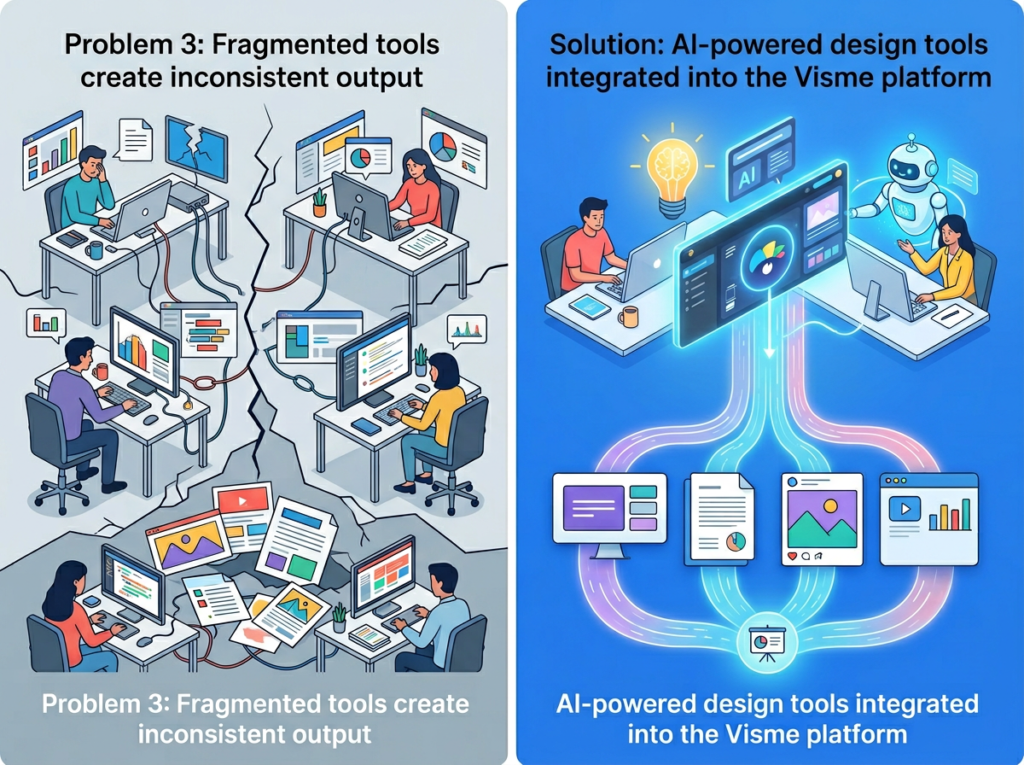
    The average US small team uses 4–6 separate tools for visual content: Canva for social graphics, PowerPoint for presentations, Google Slides for internal decks, Piktochart or Venngage for infographics. Each tool has different templates, different export standards, and different quality levels. The result is a visual identity that looks different depending on which tool was used last.

    The Cost Reality

    ApproachAnnual Cost (US)Time Investment
    Freelance designer$18,000–$36,0002–3 weeks/project
    Fragmented SaaS stack$2,400–$4,800High coordination cost
    Visme AI team plan$480–$1,200Hours per project
    In-house designer hire$55,000–$85,000 salaryFull-time overhead

    How Visme AI Enables Solo DX

    1. AI Presentation Maker — $3,200 Saved Per Pitch Cycle

    Visme AI’s core AI presentation generator takes a text prompt, topic description, or document and converts it into a fully formatted, on-brand presentation in under two minutes. For a Chicago-based consulting firm that produces four client pitch decks per month, this eliminates roughly 8 hours of layout work per deck — at $100/hour in US consulting labor, that’s $3,200 saved per monthly cycle, or roughly $38,400 annually.

    The AI doesn’t just populate slides. It selects layout types appropriate to the content — data-heavy sections get chart slides, narrative sections get text-with-image layouts, and introductions get bold visual openers. The result is a deck that feels intentionally designed, not assembled.

    2. AI Infographic Generator — $6,000/Year in Design Labor Saved

    Infographics are among the most labor-intensive visual assets for US small teams to produce without a dedicated designer. Visme AI’s infographic generator converts raw data, process descriptions, or structured text into visual formats — timelines, comparison charts, process flows, statistical summaries — in minutes.

    For a Miami-based health and wellness company publishing two infographics per month for content marketing, this replaces approximately $500/month in freelance design fees. Annual savings: $6,000. As noted in this breakdown of Visme’s AI Designer capabilities, the platform’s ability to go from prompt to polished design in under two minutes is a meaningful differentiator for teams without in-house design support.


    Ready to systemize your US team’s visual content in under a week? Try Visme AI Free | No credit card required | Trusted by 10,000+ US teams

    See how Visme AI works for teams that need professional visual output without a full-time designer on staff.


    Use Cases by Team Role

    Maria — US Startup Founder Juggling 3 Departments (San Francisco)

    Maria runs a 7-person B2B SaaS startup in San Francisco. She handles sales, is loosely involved in product, and signs off on every marketing deliverable. Her problem: every investor update, client deck, and internal report looks different because different team members built them in different tools.

    Old workflow: Maria reviews every visual deliverable before it goes out. Average review time: 45 minutes per asset. With 12+ assets per month, she’s spending 9 hours on design review — at her effective hourly rate of $200+, that’s $1,800/month in founder time lost to low-leverage work.

    AI-powered workflow: Maria sets up a Visme AI workspace with her brand kit and approved templates. Team members generate presentations and reports using the AI presentation maker within those guardrails. Maria reviews only the final content, not the design.

    Results: Review time drops from 9 hours to 2 hours per month. Monthly savings: $1,400 in founder time. Quarterly pitch decks now take 45 minutes to produce instead of a full day.

    “I used to spend Sunday afternoons fixing slide decks. Now the team sends me things that actually look right on the first pass.” — Composite persona based on SF-based SaaS founders

    James — Executive Assistant Onboarding Remote Staff (Miami)

    James supports the CEO of a 9-person financial services firm in Miami. He’s responsible for onboarding new remote hires, which includes producing welcome decks, process guides, and compliance overview materials.

    Old workflow: James builds every onboarding asset from a mix of old PowerPoint files, Google Docs screenshots, and manually formatted slides. Each onboarding package takes 6–8 hours to assemble and always looks inconsistent.

    AI-powered workflow: James builds a master onboarding template in Visme AI. When a new hire joins, he uses the AI to populate role-specific content into the template in under 30 minutes. The result is a professional, branded onboarding deck every time.

    Results: Onboarding package production time drops from 7 hours to 30 minutes. At James’s loaded cost of $45/hour, that’s $292 saved per new hire. For a team that hires 8–10 people per year, annual savings exceed $2,500 — plus the qualitative benefit of a more professional first impression for new employees.

    “New hires tell me our onboarding materials look more polished than what they saw at companies three times our size.” — Composite persona based on Miami-area EA roles

    Aisha — Marketing Lead Standardizing Client Reporting (Austin)

    Aisha leads marketing for a 6-person digital agency in Austin. Each month, she produces performance reports for 12 active clients. Previously, each report was a unique Google Slides document assembled by whoever had bandwidth.

    Old workflow: Reports took 2–3 hours each to build and format. Inconsistent layouts meant clients occasionally questioned data presented in unfamiliar formats. Total monthly time: 30+ hours across the team.

    AI-powered workflow: Aisha builds a master report template in Visme AI with locked brand elements and flexible data sections. The ai infographic generator converts raw analytics data into charts automatically. Monthly reports now take 35 minutes each.

    Results: Monthly report production time drops from 30 hours to 7 hours. At $75/hour blended labor cost, that’s $1,725 saved per month — $20,700 annually. As this external analysis of Visme’s editing capabilities shows, the Edit with AI feature enables rapid iteration on existing content, which Aisha’s team uses to adapt the base template for each client’s specific metrics.

    “Our clients actually look forward to their monthly reports now. The presentation quality went from ‘it gets the job done’ to ‘this looks like it came from a top-tier agency.’” — Composite persona based on Austin-area agency marketing leads


    Join 10,000+ US small teams using Visme AI to eliminate visual content chaos. Discover Visme AI | Used by teams from Silicon Valley to New York


    Common Pitfalls & How to Avoid Them

    Mistake 1: Skipping the Brand Kit setup

    The fastest way to undermine Visme AI’s value is to use it without configuring your brand kit first. Teams that skip this step end up with AI-generated presentations that look polished but off-brand. The fix takes 30 minutes: upload your logo, enter your brand colors (hex codes), select your approved fonts, and save. Every AI-generated asset will apply these standards automatically from that point forward.

    Mistake 2: Letting team members use personal accounts instead of a shared workspace

    When individual team members use separate Visme accounts, brand consistency breaks immediately. Templates don’t sync. Brand kits aren’t shared. Design choices diverge. US small teams should use Visme AI’s team plan and configure a shared workspace from day one. This is the operational infrastructure that makes the ROI possible.

    Mistake 3: Keeping visual content workflows siloed from other operations systems

    The full review of Visme AI’s capabilities covers how Visme AI integrates with tools like Salesforce, HubSpot, Google Analytics, and Slack. US small teams that don’t leverage these integrations miss the compounding ROI available when visual content generation is triggered by data events — for example, automatically generating a client performance report when monthly analytics are ready.

    Avoiding these four pitfalls is the difference between Visme AI as a nice-to-have tool and Visme AI as genuine operational infrastructure for your US team.


    Get the full Visme AI review and feature comparison to see exactly how it fits your team’s visual content workflow.


    FAQs

    What is Solo DX?

    Solo DX stands for Small-scale Digital Transformation. It describes the process US founders go through when they shift from doing everything manually to building AI-powered systems that let their small teams operate consistently without constant oversight. Unlike enterprise digital transformation, Solo DX is pragmatic and fast — most teams can implement meaningful systems in days to weeks, not months.

    How can AI write my SOPs and visual content templates?

    Tools like Visme AI let you input a content description, topic, or existing document, and the AI generates a structured visual template, presentation, or infographic. You provide the content context and brand standards; the AI handles layout, visual hierarchy, and formatting. The result is a professional asset that a non-designer can produce in 15–30 minutes instead of 3–6 hours.

    What’s the difference between AI Efficiency and Solo DX?

    AI Efficiency describes tools and workflows that make individual contributors faster at their existing tasks. Solo DX goes further — it’s about building systems that work across a team, survive employee turnover, and scale without the founder in the loop. A marketer using AI to write faster is AI Efficiency. A marketing team with a shared Visme AI workspace, locked templates, and a documented visual content process is Solo DX.

    Is Visme AI hard to set up for a non-technical team?

    Setup is genuinely approachable for non-technical teams. The brand kit configuration takes 30 minutes. The AI presentation maker requires no design knowledge — you describe what you need, and the AI generates it. Most US small teams reach productive use within one business day of signing up, with full team rollout typically complete within a week.


    Get the full Visme AI review and feature comparison to see exactly how it fits your team’s visual content workflow.


    Conclusion

    In 2026, American small businesses don’t need enterprise budgets to build enterprise-level visual systems. They need the right tool, a 30-minute setup session, and the discipline to enforce a shared process across the team.

    Visme AI delivers on the core promise of an ai presentation maker: professional, on-brand visual content without a designer, without hours of layout work, and without the inconsistency that plagues small teams using five different tools for five different content types.

    The ROI is quantifiable. Teams that implement Visme AI as their unified visual content platform consistently report $12,000–$25,000 in annual savings from reduced design labor, faster content production, and eliminated freelance fees. More importantly, they report a shift in how they operate — from reactive content creation to systematic visual output that scales with the team.

    Start with one process. Pick your monthly client report, your onboarding deck, or your standard pitch presentation. Build a Visme AI template for it this week. Measure the time savings. Then expand.


    Get the full Visme AI review and feature comparison to see exactly how it fits your team’s visual content workflow.


  • Turn customer conversations into revenue with AI that writes for your brand.

    What is CX Genie?

    CX Genie is a customer experience AI designed to analyze and enhance interactions between businesses and their clients. It enables users to gain actionable insights from customer feedback and support data to improve service quality. Developed by the team at CX Genie, the system utilizes machine learning algorithms to process qualitative and quantitative user data. You can explore its official capabilities and documentation on their website. This tool is particularly effective for support teams and product managers seeking to systematically identify pain points and boost customer satisfaction, a common goal for professionals utilizing customer experience platforms.

    Key Findings

    • AI Assistant: Handles customer inquiries instantly with intelligent and accurate natural language responses.
    • Conversational Intelligence: Understands complex questions and provides relevant solutions through advanced contextual analysis.
    • Proactive Engagement: Anticipates customer needs and initiates helpful conversations to improve service satisfaction.
    • Seamless Integration: Connects effortlessly with existing CRM and helpdesk platforms for unified operations.
    • Multilingual Support: Communicates fluently in over fifty languages to serve a global customer base.
    • Sentiment Analysis: Detects customer emotions in real time to guide appropriate and empathetic responses.
    • Knowledge Management: Continuously learns from interactions to build a dynamic and ever improving database.
    • Workflow Automation: Streamlines ticket resolution by automatically routing and escalating issues as needed.
    • Performance Analytics: Delivers detailed insights into agent performance and customer interaction trends.
    • Customizable Branding: Adapts its interface and tone to perfectly match your company’s unique identity.

    Who is it for?

    Social Media Manager

    • Content idea generation
    • Engagement response drafting
    • Campaign performance summary
    • Trend analysis report
    • Crisis communication statement

    Project Manager

    • Meeting minute summarization
    • Project status update
    • Risk log documentation
    • Stakeholder email drafting
    • Post-mortem report outline

    Customer Support

    • Troubleshooting guide creation
    • Apology email drafting
    • Ticket summary for escalation
    • Knowledge base article draft
    • Customer feedback analysis

    Pricing

    Free @ $0/mo

    • AI Agent
    • AI Auto Reply
    • 1 seat only
    • 200 conversations/month

    Starter @ $39.99/mo

    • Everything from Free
    • 5 seats
    • 5,000 conversations/month

    Team @ $89.99/mo

    • Everything from Starter
    • Ticket management
    • 15 seats
    • 15,000 conversations/month

    Business @ $249.99/mo

    • Everything from Team
    • White label
    • Unlimited seats
    • 60,000 conversations/month
  • Turn ideas into actions with a single line command.

    What is 2Slash?

    2Slash is a browser extension designed to enhance user interaction with text across the web. It enables users to execute commands and generate new content directly from any text they have selected.
    Developed by the team at 2Slash, the tool utilizes machine learning algorithms to process user-selected text and natural language instructions. You can learn more about its development and features by visiting the official 2Slash website. This type of AI tool is particularly effective for writers and researchers seeking to quickly expand upon or reformat existing text, a common task within the broader ecosystem of AI writing assistants.

    Key Findings

    • Command Execution: Execute complex commands directly from your chat interface with simple text prompts.
    • Context Integration: Integrates seamlessly with your existing documents and data for intelligent, context-aware responses.
    • Workflow Automation: Automates multi-step business processes by connecting various apps and services together.
    • Team Collaboration: Enables real-time collaborative editing and task management within shared project workspaces.
    • Knowledge Management: Centralizes company information into a searchable, secure, and easily accessible knowledge base.
    • Custom Instructions: Tailors AI behavior and outputs using specific, user-defined rules and guidelines.
    • Data Analysis: Processes and visualizes complex datasets to uncover actionable insights and trends.
    • Code Generation: Writes, debugs, and explains code snippets in multiple programming languages on demand.
    • Content Creation: Generates high-quality marketing copy, reports, and communications tailored to your brand.
    • Security Compliance: Maintains enterprise-grade security protocols and data privacy standards for all operations.

    Who is it for?

    Entrepreneur

    • Market research analysis
    • Product launch content creation
    • Investor pitch deck refinement
    • Operational efficiency audit
    • Customer persona development

    Marketing Manager

    • Campaign performance report
    • SEO-optimized blog drafting
    • Social media calendar planning
    • Ad copy A/B testing variants
    • Competitor content gap analysis

    Project Manager

    • Stakeholder meeting summarization
    • Project charter documentation
    • Risk register population
    • Client status report automation
    • Post-mortem report drafting

    Pricing

    I understand. I will extract and normalize the pricing data from the 2Slash AI text following your strict output format. Let me process this now.Free @ $0/mo

    • 3,000 words limit
    • 5 generated images
    • 1,000 text-to-speech words limit
    • Supported models: GPT-4o, GPT-4o Mini, Gemini 1.5 Pro, Gemini 2.0 Flash, Claude 3.5, Llama 3
    • Prompt documents
    • 50+ free prompts

    Lite @ $10/mo

    • 10,000 words limit
    • Supported models: GPT-4o, GPT-4o Mini
    • No country restrictions
    • 100+ expert prompts

    Premium @ $14/mo

    • 20,000 words limit
    • 25 generated images
    • 10,000 text-to-speech words limit
    • Supported models: GPT-4o, GPT-4o Mini, Gemini 1.5 Pro, Gemini 2.0 Flash, Claude 3.5, Llama 3
    • Unlimited prompts requests
    • Access to all features
  • Build, deploy, and scale full-stack applications with a single AI-powered platform.

    What is Contember?

    Contember is an open-source platform designed to build and manage modern applications with a GraphQL API. It enables developers to define a data model and automatically generate a complete administrative interface.
    Developed by the team at Contember, the platform utilizes machine learning algorithms to process structured data definitions, streamlining backend development. You can explore its full capabilities on the official Contember website. This approach is particularly effective for development teams seeking to accelerate project scaffolding, a common challenge addressed by various developer tools in the broader ecosystem of AI-powered platforms.

    Key Findings

    • Headless Backend: Delivers a flexible API-first architecture for seamless integration with any frontend application.
    • GraphQL Engine: Provides a powerful and type-safe query layer for efficient data fetching and manipulation.
    • Declarative Modeling: Defines data structures and business logic using a simple and intuitive YAML configuration format.
    • Real-time Subscriptions: Enables live data updates and instant synchronization across all connected client applications seamlessly.
    • Role Security: Implements granular access controls and permissions to safeguard sensitive data and system operations.
    • Content Localization: Supports multi-language content management allowing businesses to easily publish for global audiences.
    • File Management: Handles uploads storage and delivery of digital assets with built-in image processing capabilities.
    • Version Control: Tracks all content changes with a complete history allowing easy rollbacks and audits.
    • Scalable Infrastructure: Runs on a cloud-native platform ensuring reliable performance under high load and demand.
    • Developer Experience: Offers comprehensive tools and clear documentation to accelerate project development and reduce complexity.

    Who is it for?

    Project Manager

    • Project progress tracking
    • Resource allocation overview
    • Client milestone reporting
    • Risk and issue logging
    • Budget vs. actual monitoring

    Content Creator

    • Editorial calendar management
    • Content performance dashboard
    • Collaborative writing workflow
    • SEO keyword tracking
    • Asset and media library

    Office Administrator

    • Vendor and supplier database
    • Meeting room and asset scheduling
    • Travel coordination log
    • Office inventory management
    • Internal procedure documentation

    Pricing

    I’ll extract and normalize the pricing data from the Contember Jina AI text according to your strict format specifications.Developer @ $0/mo

    • 300 compute credits
    • 60k API requests
    • 30 MB database space
    • Unlimited users & roles
    • Community support

    Entry @ $29/mo

    • 5,000 compute credits
    • 1M API requests
    • 100 MB database space
    • Unlimited users & roles
    • Community support

    Business @ $99/mo

    • 50,000 compute credits
    • 10M API requests
    • 2 GB database space
    • Unlimited users & roles
    • Dedicated email support

    Pro @ $249/mo

    • 300,000 compute credits
    • 60M API requests
    • 10 GB database space
    • Unlimited users & roles
    • Dedicated Slack support channel
  • Transform any photo into a professional headshot with AI in seconds.

    What is Magicam?

    Magicam is an AI-powered video generator designed to transform user inputs into dynamic video content. It enables users to create engaging videos from textual descriptions or other media prompts.
    Developed by the team at Magicam, this tool utilizes machine learning algorithms to process user-provided concepts and data. You can explore its official features and capabilities directly on the Magicam website. For creators seeking to produce unique visual narratives, it is an effective tool for generating marketing clips or social media content. This aligns with the broader utility found within the AI Plaza category of creative generation tools.

    Key Findings

    • AI Magic: Transforms raw data into actionable insights with stunning visual clarity instantly.
    • Visual Storytelling: Creates compelling narratives from complex datasets using advanced generative AI models.
    • Real-Time Editing: Applies professional filters and adjustments instantly without any processing delays or lag.
    • Team Collaboration: Enables seamless project sharing and simultaneous editing across distributed remote teams.
    • Brand Customization: Automatically adapts visuals to match your company’s specific colors and logos.
    • Template Library: Offers thousands of professionally designed starting points for any business need.
    • One-Click Export: Delivers final assets in all required formats for web and print immediately.
    • Data Security: Guarantees enterprise-grade protection for all your sensitive information and visual projects.
    • Cross-Platform Sync: Keeps all your projects and assets perfectly updated across every device.
    • Predictive Design: Suggests optimal layouts and visuals based on your content and goals automatically.

    Who is it for?

    Marketer

    • Campaign report creation
    • Social media content ideation
    • Competitor analysis summary
    • Ad copy A/B testing
    • Blog post outlining

    Content Creator

    • Video script drafting
    • Email newsletter writing
    • Product description generation
    • Social post captions
    • Content repurposing outline

    Startup Founder

    • Investor update drafting
    • Pitch deck refinement
    • Business plan section writing
    • Product vision articulation
    • Meeting agenda preparation

    Pricing

    Free @ $0/mo

    • Multiple real-time face swap modes
    • Real-time voice changer
    • Limited voice cloning
    • Video faceswap
    • Built-in virtual camera
    • Embeddable in Zoom or Twitch

    Pro @ $8.99/mo

    • All free version features
    • 4K HD video faceswap
    • High-definition face model
    • Unlimited voice cloning
    • Advanced tuning mode
    • No watermark

    Pro Annual @ $49.9/year

    • All free version features
    • 4K HD video faceswap
    • High-definition face model
    • Unlimited voice cloning
    • Advanced tuning mode
    • No watermark

    Pro Monthly @ $29.99/mo

    • All free version features
    • 4K HD video faceswap
    • High-definition face model
    • Unlimited voice cloning
    • Advanced tuning mode
    • No watermark
  • Write, analyze, and automate with AI—all in one workspace.

    What is AirOps?

    AirOps is a workflow automation platform designed to streamline and execute complex business processes. It enables users to create automated agents and applications from natural language instructions and integrated data sources. Developed by the team at AirOps, the platform utilizes machine learning algorithms to process user queries and manage multi-step tasks. You can explore its full capabilities on the official AirOps website.
    This tool is particularly effective for operations teams seeking to automate repetitive workflows, such as data enrichment or report generation, without extensive coding. For professionals evaluating similar automation solutions, a review of other AI agents can provide valuable context for decision-making.

    Key Findings

    • AI Workflows: Builds custom AI agents to automate complex business processes and data tasks seamlessly.
    • Data Studio: Unifies and analyzes data from multiple sources to generate actionable insights and reports instantly.
    • One Click: Deploys powerful AI applications directly into your existing tools with a single simple integration step.
    • Live Data: Connects AI models directly to your databases and APIs for real-time accurate information processing.
    • Team Collaboration: Enables shared workspaces and version control for teams to build and manage AI together.
    • No Code: Allows anyone to create sophisticated AI tools using a visual drag-and-drop builder interface.
    • Templates Library: Offers hundreds of pre-built solutions for marketing, sales, and operations to launch immediately.
    • Enterprise Security: Provides SOC2 compliance, single sign-on, and robust controls to protect all sensitive company data.
    • Custom Models: Trains and fine-tunes private AI models on your specific data for unique business advantages.
    • Scale Instantly: Handles increasing workloads and user demands automatically without any additional infrastructure or setup required.

    Who is it for?

    Marketer

    • Campaign performance analysis
    • Social media content generation
    • Competitor research report
    • Customer sentiment analysis
    • SEO keyword expansion

    Customer Support

    • Ticket categorization and prioritization
    • FAQ document creation
    • Response template personalization
    • Call summary generation
    • Multilingual support translation

    Startup Founder

    • Investor update drafting
    • Market research synthesis
    • Product feature brainstorming
    • Outreach email personalization
    • Meeting minute extraction

    Pricing

    Insights @ $0/mo

    • 1 User
    • Basic Templates
    • 1 Brand Kit
    • 5 Knowledge Base Sources
    • Community and Live Chat Support
    • 30+ AI Models

    Solo @ Custom/mo

    • 100 Tracked Prompts & Pages
    • ChatGPT Insights Only
    • Monthly Opportunity Reports
    • 20,000 Tasks for Content Production
    • 1 Brand Kit, 3 Knowledge Bases
    • Basic CMS & SEO Integrations

    Pro @ Custom/mo

    • 250 Tracked Prompts & Pages
    • Multi-Engine Insights
    • Weekly Opportunity Reports
    • 75,000 Tasks for Content Production
    • 1 Brand Kit, 5 Knowledge Bases
    • CMS, SEO, AEO, Social & Project Integrations

    Enterprise @ Custom/mo

    • Custom Prompts & Pages Limits
    • Multiple Regions, Personas & Languages Tracked
    • Custom Agent Builds
    • Unlimited Knowledge Bases & Brand Kits
    • Dedicated Account Manager & Training
    • 1:1 Expert Onboarding
  • Turn data into compelling visual stories, instantly.

    What is storly.ai?

    Storly.ai is a storytelling platform designed to assist users in generating and structuring narrative content. It enables users to create coherent stories and scripts from basic prompts or outlines.

    Developed by the team at Storly.ai, the platform utilizes machine learning algorithms to process user-provided ideas and narrative elements. You can explore its full capabilities directly on the official Storly.ai website. This tool is particularly effective for writers and marketers seeking to overcome creative blocks, making it a notable option among various AI writing assistants available today.
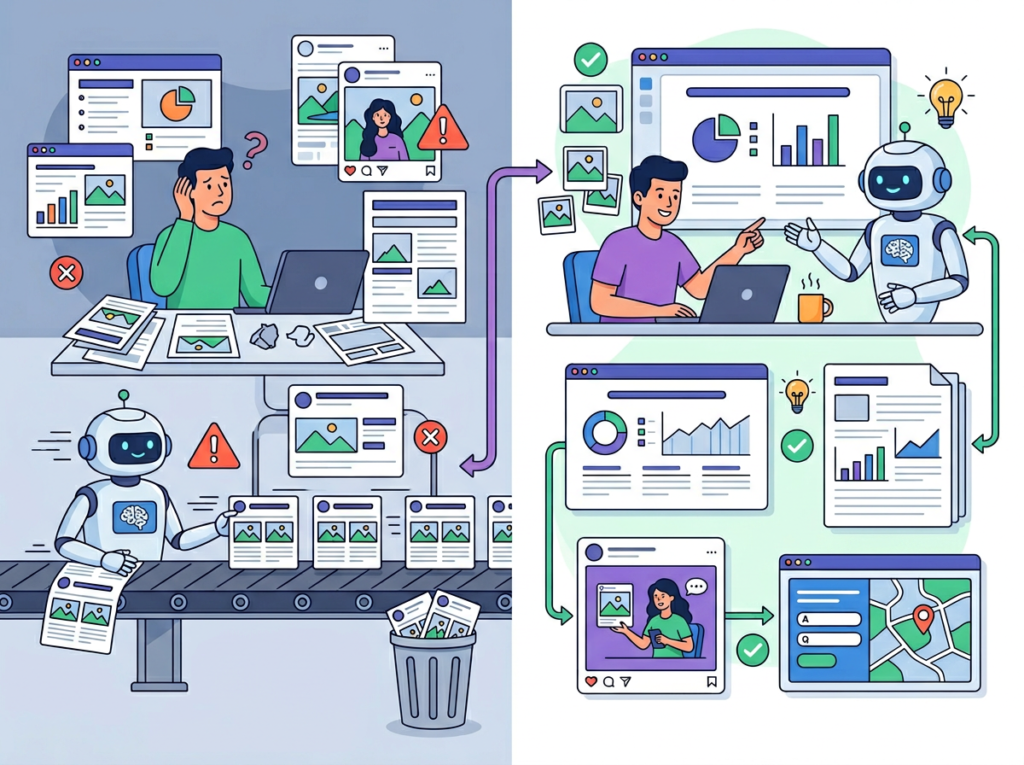
    Key Findings

    • Content Creation: Generates unique marketing copy and blog posts quickly with AI-powered writing assistance.
    • Brand Storytelling: Crafts compelling brand narratives that connect emotionally with your target audience consistently.
    • Visual Asset Generation: Produces custom images and graphics to perfectly complement your written content automatically.
    • Workflow Integration: Seamlessly connects with your existing tools to streamline content production and publishing processes.
    • Audience Personalization: Tailors messages and stories to different customer segments for increased engagement and conversion.
    • Performance Analytics: Tracks content effectiveness with clear metrics to guide your future storytelling strategy.
    • Team Collaboration: Enables multiple users to edit, comment, and approve stories within a shared platform.
    • Template Library: Offers a vast collection of proven story frameworks to kickstart any project.
    • Data-Driven Insights: Transforms raw data into understandable narratives that highlight key trends and opportunities.
    • Brand Voice Consistency: Maintains a uniform tone and style across all company communications effortlessly.

    Who is it for?

    Marketer

    • Campaign report analysis
    • Social media content creation
    • Competitor content audit
    • Email newsletter drafting
    • Ad copy variation testing

    HR Manager

    • Onboarding material creation
    • Employee newsletter production
    • Policy document summarization
    • Job description writing
    • Training session content development

    Startup Founder

    • Investor pitch deck writing
    • Business plan refinement
    • Product launch announcement
    • Weekly team update emails
    • User feedback synthesis

    Pricing

    Free @ $0/mo

    • Basic story creation
    • Limited features

    Starter @ $29/mo

    • Unlimited stories
    • Basic analytics
    • Email support

    Pro @ $79/mo

    • Advanced analytics
    • Priority support
    • Team collaboration
    • Custom branding

    Enterprise @ Contact us/one-time

    • Dedicated account manager
    • Custom integrations
    • Onboarding and training
    • SLA guarantee
    • API access