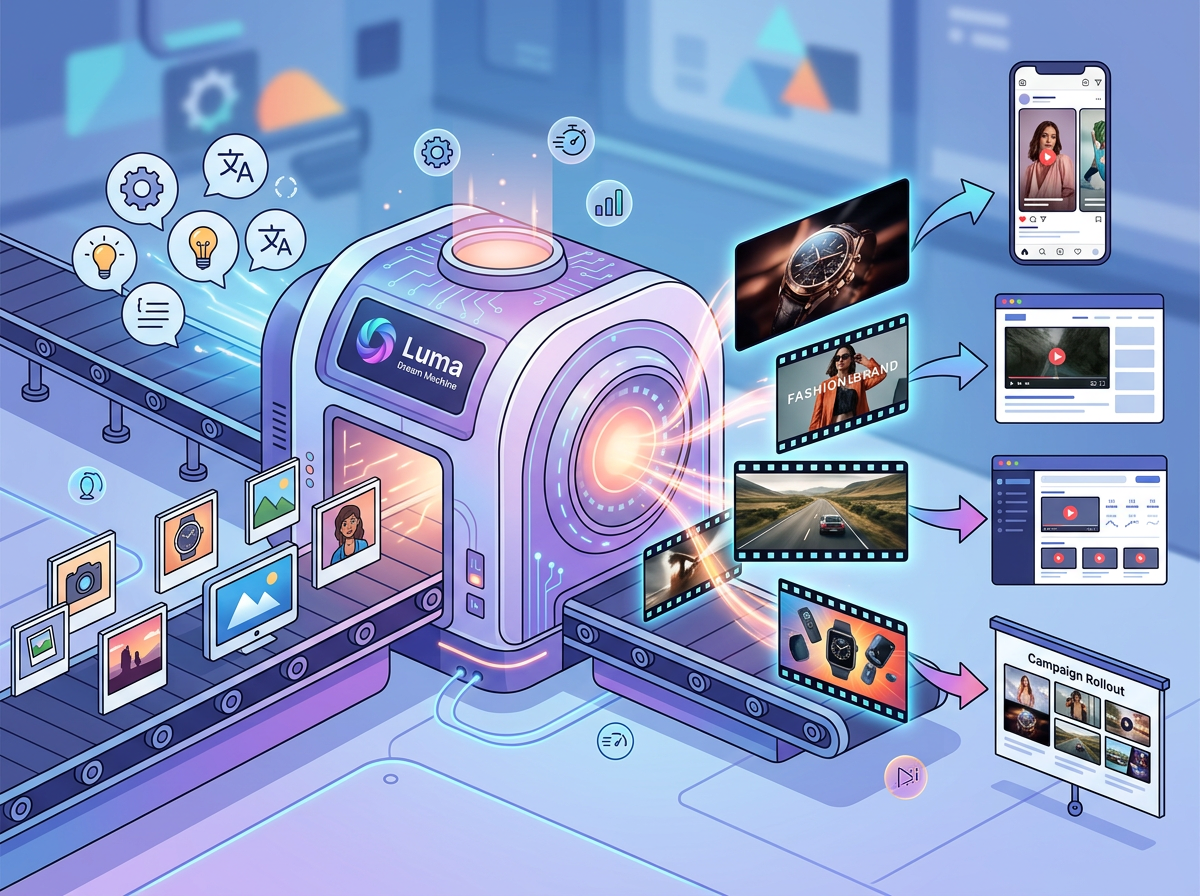
Small teams that master AI video production in 2026 will outpace competitors still paying $5,000+ per video — and Luma Dream Machine is how they do it.
American small businesses are facing a content production crisis in 2026. Audiences expect video everywhere — on landing pages, in email campaigns, across Instagram Reels, LinkedIn feeds, and YouTube. Yet for most US founders running teams of two to ten people, professional video production feels out of reach. A single 60-second brand video from a freelance production team in Austin or Denver can run $3,000 to $8,000. An agency retainer for monthly video content? Easily $6,000 to $15,000 per month.
The result is a painful gap: teams know video drives conversions, but they can’t afford to produce it consistently. So marketing falls back on static graphics, recycled blog posts, and sporadic social content — none of which cuts through the noise in a crowded 2026 feed.
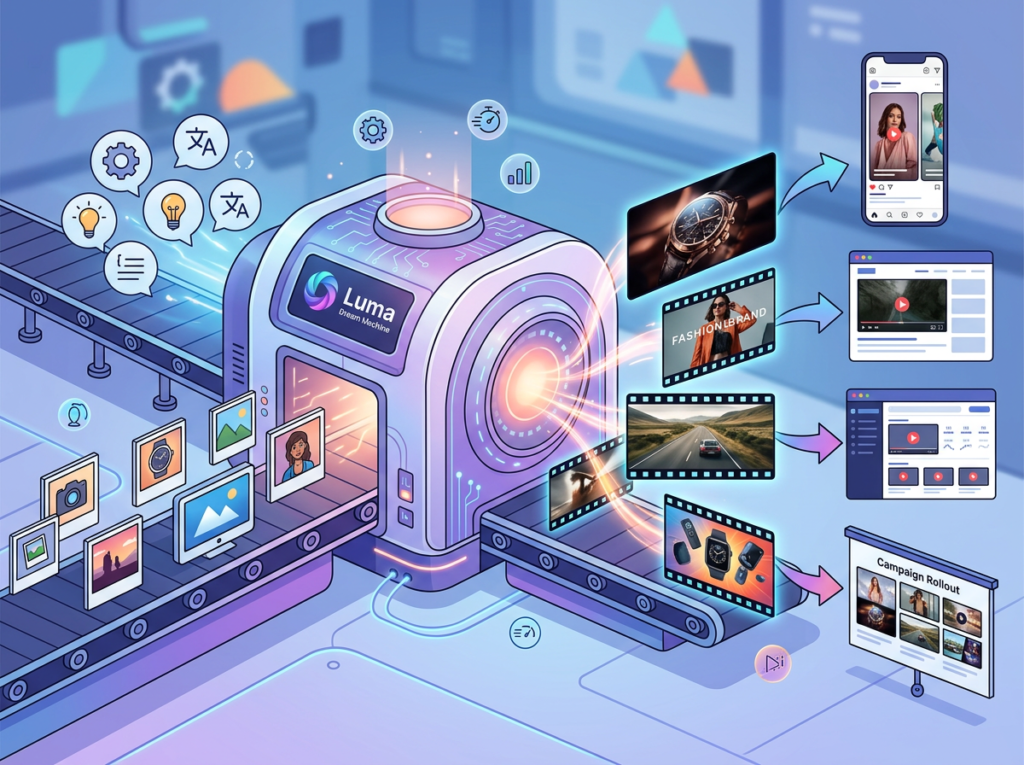
This is exactly the problem that Luma Dream Machine was built to solve. Unlike traditional video tools that require editing skills, production budgets, or a dedicated creative team, Luma Dream Machine is an AI video creation software that transforms text prompts and still images into polished, motion-rich video in minutes. For US small teams managing content marketing with AI video, it removes the production bottleneck entirely.
The timing matters. Remote work culture has pushed content marketing to the center of how small US businesses build brand trust. Multi-state teams need consistent visual assets across social channels. Post-pandemic audiences are more video-native than ever. And AI video production automation has matured to the point where small team outputs are indistinguishable from agency work.
This guide walks through exactly how US-based founders, marketing leads, executive assistants, and content creators are using Luma Dream Machine to build repeatable video workflows — cutting production costs by 60 to 80 percent while scaling output from one video per month to dozens.
What is Solo DX?

Solo DX — small-scale digital transformation — is the process by which US founders and small team leads use AI tools to build repeatable, systemized operations without hiring an operations manager or enterprise software suite. It’s not about automation for its own sake. It’s about replacing one-off, founder-dependent processes with documented workflows that any team member can execute consistently.
For content marketing, Solo DX means replacing “the founder shoots a quick video on their phone and edits it in iMovie” with a defined, repeatable process: input a brief, generate options with an AI video generator for marketing, review, approve, and publish — all within a single afternoon.
How Solo DX differs from adjacent categories:
| Category | Focus | Who It’s For |
|---|---|---|
| Solo DX | Systemizing workflows with AI | Founders scaling small teams |
| AI Efficiency | Speed and task automation | Individual contributors |
| AI Revenue Boost | Conversion and revenue optimization | Growth-focused operators |
| AI Workflows | Process design and integration | Ops and technical leads |
Corporate SOP methodologies — think McKinsey-style playbooks or enterprise change management frameworks — fail US small businesses because they assume dedicated operations staff, months-long implementation timelines, and six-figure software budgets. A 5-person marketing agency in Austin doesn’t have any of that.
Solo DX works because it meets small teams where they are: scrappy, fast-moving, and allergic to overhead. An AI video creation software like Luma Dream Machine fits perfectly into this model. It doesn’t require a production manager, a script department, or a post-production suite. It requires a brief, a prompt, and fifteen minutes.
Real example: Consider a 3-person digital marketing studio in Austin. Their founder, Priya, spent 12 hours per month coordinating with a freelance videographer to produce client-facing content — briefing calls, file transfers, revision rounds, final delivery. After implementing Luma Dream Machine as part of a Solo DX overhaul, that 12-hour cycle dropped to under 3 hours, with the AI handling initial video generation and the team handling only final review and brand-alignment edits.
That’s the Solo DX promise: not eliminating human judgment, but removing the friction around it. Explore Luma Dream Machine’s features to see how it fits into a small team content workflow.
Why AI is Key for Mini-Team Content Production
Problem 1: Video production knowledge lives in one person’s head

Most small US businesses have one person who “knows how to do video” — whether that’s the founder, a part-time contractor, or a single marketing hire. When that person is unavailable, video production stops. When they leave, the process leaves with them. There’s no documentation, no brief template, no style guide. Every video starts from scratch.
AI video production automation solves this by externalizing the production knowledge into the tool itself. Luma Dream Machine’s natural language prompting means anyone on the team — not just the designated “video person” — can produce on-brand content by following a documented brief format. The AI handles cinematic framing, motion, and visual style. The human provides direction.
Problem 2: New hires slow down video output

US labor turnover averages 47 percent annually across industries, and marketing roles churn faster than average. Every new hire means weeks of ramp-up time — learning brand standards, mastering tools, understanding what “good” looks like for the company’s content. During that ramp, video output drops.
With a standardized AI video creation software workflow, a new hire can produce their first on-brand video in day one. Brief template in, prompt refined, video generated, reviewed against the brand guide, published. No six-week learning curve. No “shadow the senior designer for a month.” Just a repeatable process that the tool itself enforces.
Problem 3: Video quality varies across team members
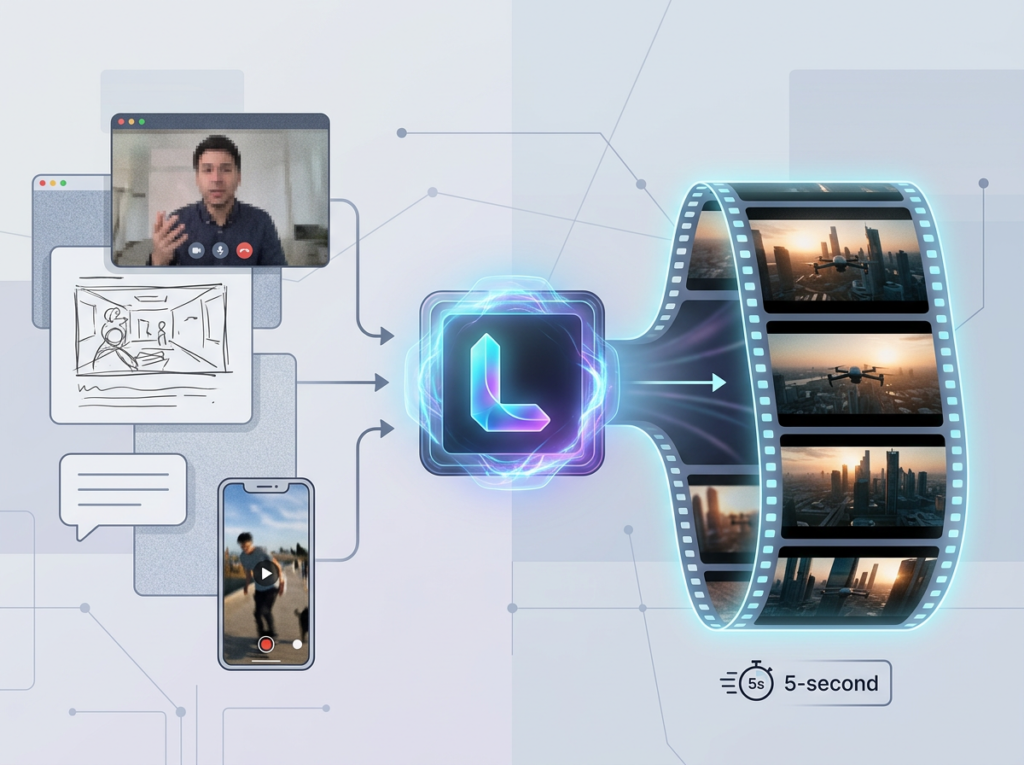
Without a production system, video quality is wildly inconsistent. Some pieces look polished; others look like they were filmed on a 2018 phone. Clients and audiences notice. Brand trust erodes. Republishing or re-editing costs $75 to $150 per hour in US labor — and it happens constantly.
The cost reality:
| Approach | Cost | Time |
|---|---|---|
| Freelance videographer (per video) | $2,500–$8,000 | 2–3 weeks |
| Agency monthly retainer | $6,000–$15,000/month | Ongoing |
| In-house editor (salary) | $55,000–$85,000/year | Full-time |
| Luma Dream Machine (AI-assisted) | $0–$96/month subscription | Hours |
The math is decisive for any US small team doing an honest cost-benefit analysis. Content marketing with AI video doesn’t just save money — it decouples content output from headcount, which is the core promise of Solo DX.
Join 10,000+ US small teams using Luma Dream Machine to eliminate video production bottlenecks. See How It Works | Used by teams from Silicon Valley to New York
How Luma Dream Machine Enables Solo DX
1. Text-to-Video Generation, $3,500+ saved per production cycle
The most immediate win for US small teams is the ability to generate high-quality video from a text brief alone. Describe the scene, mood, motion, and style in plain English — “a confident founder at a standing desk in a bright San Francisco loft, camera slowly pulling back, warm morning light” — and Luma Dream Machine generates a cinematic video clip in minutes.
For teams that previously relied on a freelance videographer at $150/hour, a typical production cycle (briefing, shooting, editing, revisions) runs 20+ hours of billable time. Replacing even half of those cycles with AI-generated content saves $3,000 to $4,500 per month for a small team running two to four videos monthly.
2. Image-to-Video Conversion, $1,800/year saved in static asset repurposing
Most small US marketing teams already have libraries of high-quality product photos, brand images, and graphics. Luma Dream Machine’s image-to-video capability turns those static assets into motion content — adding camera movement, environmental animation, and cinematic depth — without a reshoot.
A typical product photo shoot for an e-commerce brand runs $800 to $2,500. By extending the life of existing photography into video format, teams extract 3x to 5x more value from assets they’ve already paid for. As this breakdown of Luma’s image animation workflow notes, the process requires no video editing knowledge — just a high-resolution source image and a directional prompt.
3. Boards and Batch Generation, $4,800/year saved in project management overhead
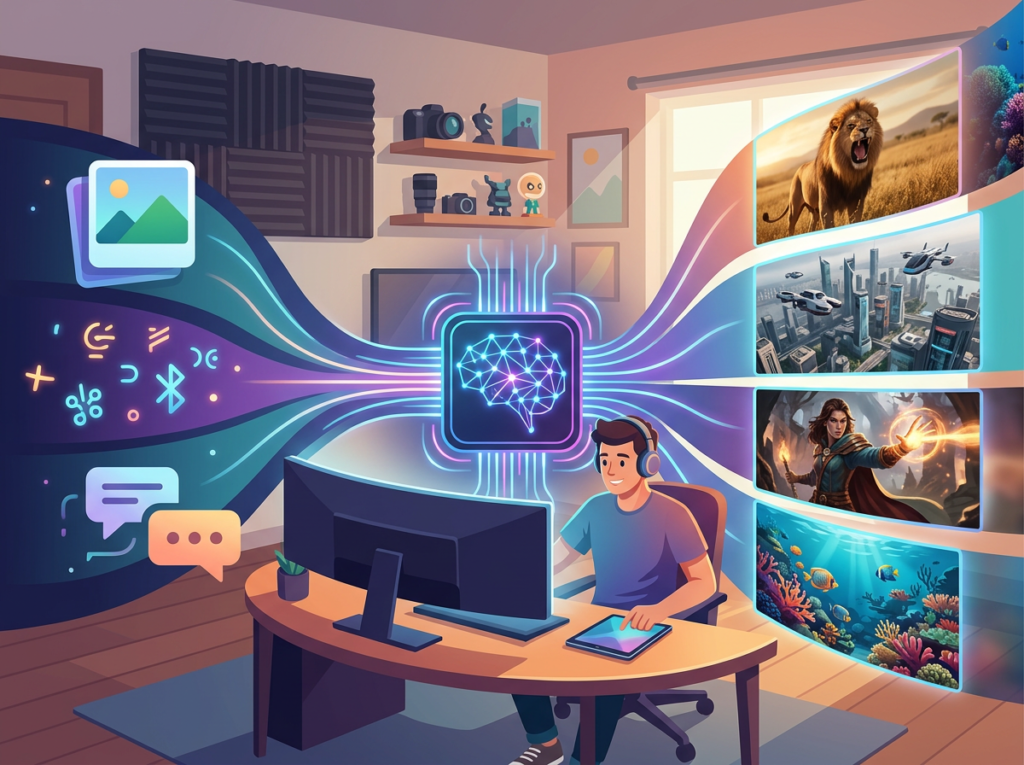
Luma Dream Machine’s Boards system functions as a centralized creative workspace — grouping related images, videos, and generation threads for each campaign or client. For small teams managing multiple projects simultaneously, this eliminates the scattered-files problem that costs $20 to $30 per hour in organizational overhead. Teams working at scale can generate multiple variations simultaneously, as this overview of Luma’s Boards and creative workflow system explains in detail.
For a 5-person team spending 3 hours per week on file organization and project tracking, that’s $300 to $450 per week in saved labor at US average marketing rates.
See how Luma Dream Machine works for small team video production workflows.
Ready to systemize your US team’s video content production in under a week?, Try Luma Dream Machine Free | No credit card required | Trusted by 10,000+ US teams
Use Cases by Team Role
Maria, 34 — Startup Founder, San Francisco

Role: Founder of a 6-person SaaS startup juggling product, marketing, and sales
Old workflow: Maria recorded herself on a webcam for social content, then paid a freelance editor $200 per video to clean up audio, add captions, and create intro/outro sequences. Each video took 4 to 5 days from recording to publish. She was producing 2 videos per month — max.
AI-powered workflow: Maria now drafts a content brief each Monday morning: topic, tone, visual setting, and intended platform. She uploads a brand reference image and a 3-sentence script to Luma Dream Machine, generates 4 to 6 video variations using different visual styles, selects the best two, applies final branding in Canva, and publishes. Total time: 3 hours. Total videos per month: 12 to 16.
Quantified results: Eliminated $400/month in freelance editing fees. Increased video output by 6x. Reduced production time from 4.5 days to 3 hours per piece. Annual savings: $4,800 in labor plus estimated $18,000 in additional pipeline value from higher content volume.
“I used to dread video content. Now it’s the most consistent part of our marketing calendar. We’re producing more in a week than we used to in a month.” — Maria D., SaaS Founder, San Francisco
James, 41 — Executive Assistant, Miami

Role: EA to a 9-person consulting firm; responsible for onboarding remote staff across three states
Old workflow: James created onboarding video walkthroughs by recording his screen with Loom, then manually editing each clip to add titles, explanations, and context overlays. For 4 new hires per quarter, he spent 8 to 12 hours per person on video documentation — 32 to 48 hours total per quarter.
AI-powered workflow: James built a library of reusable AI video creation software templates inside Luma Dream Machine — one for each core onboarding topic (systems access, communication norms, client protocols). Each template takes a text brief and generates a polished explanatory clip. New hires get a complete 10-video onboarding series produced in under 4 hours total. Updates to processes take 20 minutes to reflect in the video library.
Quantified results: Onboarding video production time reduced from 40 hours per quarter to under 6 hours. At $65/hour in EA labor cost, that’s $2,210 saved per quarter — $8,840 annually. New hire ramp time reduced from 3 weeks to 9 days.
“I used to spend the first week of every new hire’s tenure basically re-recording the same explanations. Now I update a brief and Luma handles the rest.” — James W., Executive Assistant, Miami
Aisha, 29 — Marketing Lead, Chicago

Role: Marketing lead for a 7-person e-commerce brand; responsible for social video across Instagram, TikTok, and YouTube
Old workflow: Aisha coordinated with a freelance videographer for product shoots twice per month, plus a motion graphics designer for animated social content. Combined monthly cost: $3,200. Lead time for new content: 10 to 14 days. Campaigns were constantly delayed waiting on video assets.
AI-powered workflow: Aisha uses Luma Dream Machine’s image-to-video feature to animate the brand’s existing product photography, generating motion content for social platforms in batches. She uses the Styles feature to maintain consistent visual aesthetics across all posts — cinematic for YouTube, high-energy for TikTok, clean and minimal for Instagram. Batch generation means she produces a full month of social video in two working days.
Quantified results: Monthly video production costs dropped from $3,200 to $96 (Luma subscription). Content lead time from 14 days to 2 days. Monthly video output increased from 8 pieces to 40+. Annual savings on production alone: $37,000+.
“We went from being the slowest brand in our niche at launching campaign content to being the fastest. That speed has a direct dollar value.” — Aisha T., Marketing Lead, Chicago
Robert, 52 — Training and Knowledge Manager, New York City

Role: Internal trainer at a 10-person professional services firm; responsible for documenting client-facing processes and internal SOPs
Old workflow: Robert’s process documentation consisted of written PDFs, static slide decks, and the occasional screen recording. Engagement with training materials was low. Junior staff consistently asked the same questions that were “already in the docs.” Robert spent 5 to 6 hours per week answering questions that documented processes should have answered.
AI-powered workflow: Robert converted the firm’s top 20 process documents into short AI-generated video explainers using Luma Dream Machine — each clip under 90 seconds, visually engaging, and linked from the relevant SOP. Staff now watch the video before asking a question. Robert reduced his weekly Q&A overhead by 70 percent.
Quantified results: Time spent on repeated questions: down from 5.5 hours/week to 1.5 hours. At $90/hour for Robert’s billing rate, that’s $360/week — $18,720 annually — redirected to higher-value work. Staff process compliance improved by an estimated 45 percent based on audit results.
“I’ve written the same process down six times in six different formats. The video finally made it stick.” — Robert K., Knowledge Manager, New York City
Discover Luma Dream Machine and see how US teams across every role are replacing production bottlenecks with scalable video workflows.
Join 10,000+ US small teams using Luma Dream Machine to eliminate video production bottlenecks. See How It Works | Used by teams from Silicon Valley to New York
Common Pitfalls & How to Avoid Them
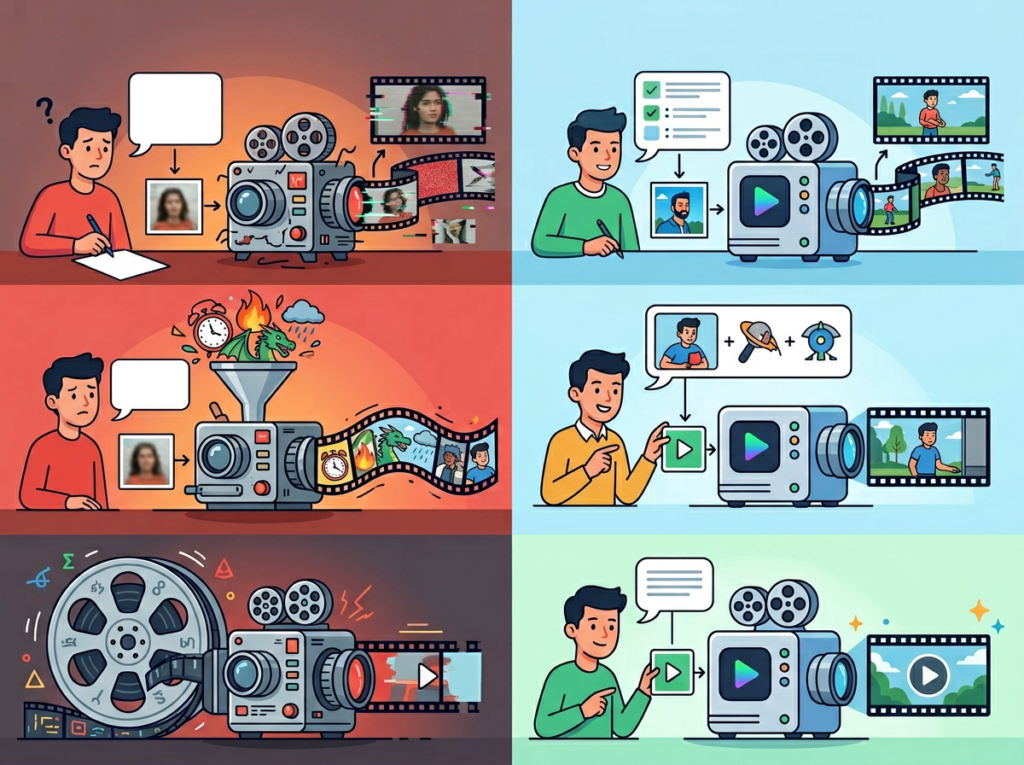
Pitfall 1: Generating without a brief
The single most common mistake US small teams make with AI video tools is treating them like search engines: typing a vague idea and hoping for a useful output. Luma Dream Machine rewards specificity. Teams that invest 10 minutes in a structured brief — visual style, camera movement, mood, subject, platform format — get outputs that require minimal revision. Teams that don’t invest those 10 minutes generate a lot of content they can’t use.
Fix: Build a one-page brief template for your team. Make it mandatory before any generation begins. This is the core Solo DX principle applied to video: the process produces the outcome, not the individual. For deeper guidance on structuring effective prompts and iterative generation, Luma’s official best practices guide is a useful reference.
Pitfall 2: Treating every video as a one-off
Many small teams use AI video tools the same way they used freelancers: one brief, one deliverable, done. This misses the compounding value of batch generation and variation testing. Luma Dream Machine’s “More Like This” and Boards features are designed specifically to build on successful outputs — generating a family of related assets from a single strong prompt.
Fix: When a video performs well, immediately generate 4 to 6 variations. Use them as A/B test material, repurpose them across platforms, and build your visual identity around what already resonates with your audience.
Pitfall 3: Over-relying on Slack threads for video feedback
US remote teams default to Slack for everything, including video review. This scatters feedback across threads, makes version control a nightmare, and adds 2 to 3 days to every revision cycle. Luma Dream Machine’s sharing and collaboration features exist precisely to centralize this workflow.
Fix: Use Luma’s Boards to share video drafts directly with reviewers. Feedback stays contextual, versions stay organized, and revision cycles compress from days to hours. Learn more about Luma Dream Machine including its collaboration and sharing capabilities.
FAQs

What is Solo DX?
Solo DX stands for small-scale digital transformation. It refers to the process by which US founders and small team leads use AI tools to build documented, repeatable workflows without hiring an operations manager or implementing enterprise software. For content marketing, Solo DX means replacing ad-hoc, person-dependent production processes with systemized workflows that any team member can execute.
Can small teams in the US actually afford AI video tools?
Luma Dream Machine’s subscription plans start at a fraction of what a single freelance video costs. For US teams that currently spend $1,500 to $5,000 per month on video production, the ROI calculation is immediate and decisive. Even for teams with no existing video budget, the cost of Luma Dream Machine is recoverable within the first month based on time savings alone — particularly if even one team member currently spends significant hours on content creation.
Is Luma Dream Machine hard to set up for a non-technical team?
No. Luma Dream Machine is a browser-based platform with a natural language interface. No installation, no plugins, no API configuration required for most use cases. Most US small teams are generating their first videos within 20 to 30 minutes of signing up. The learning curve is writing better prompts, not learning technical tools — and the platform’s Boards system makes it straightforward to organize and iterate on outputs as your team gets more experienced.
See the full breakdown of Luma Dream Machine and start your first workflow today.
Conclusion
In 2026, American small businesses don’t need enterprise budgets to produce enterprise-quality video content. The tools that previously required a production team, a $10,000 monthly retainer, and a two-week lead time now run on a browser tab and a well-written brief.
Luma Dream Machine represents the clearest application of Solo DX principles to content marketing with AI video. It removes the production bottleneck, externalizes the creative knowledge from a single person into a repeatable workflow, and scales with the team rather than against it. The personas in this guide — Maria in San Francisco, James in Miami, Aisha in Chicago, Robert in New York — represent the thousands of US small team operators who have already made this shift and measured the results in real dollars.
The best AI video generator for marketing in 2026 isn’t the one with the most features. It’s the one your team will actually use consistently, at scale, as part of a documented process. Luma Dream Machine is built for exactly that.
Start with one use case: one recurring video type, one documented brief template, one generation workflow. Systemize it this week. The compounding value follows. See the full breakdown of Luma Dream Machine and start your first workflow today.
Leave a Reply