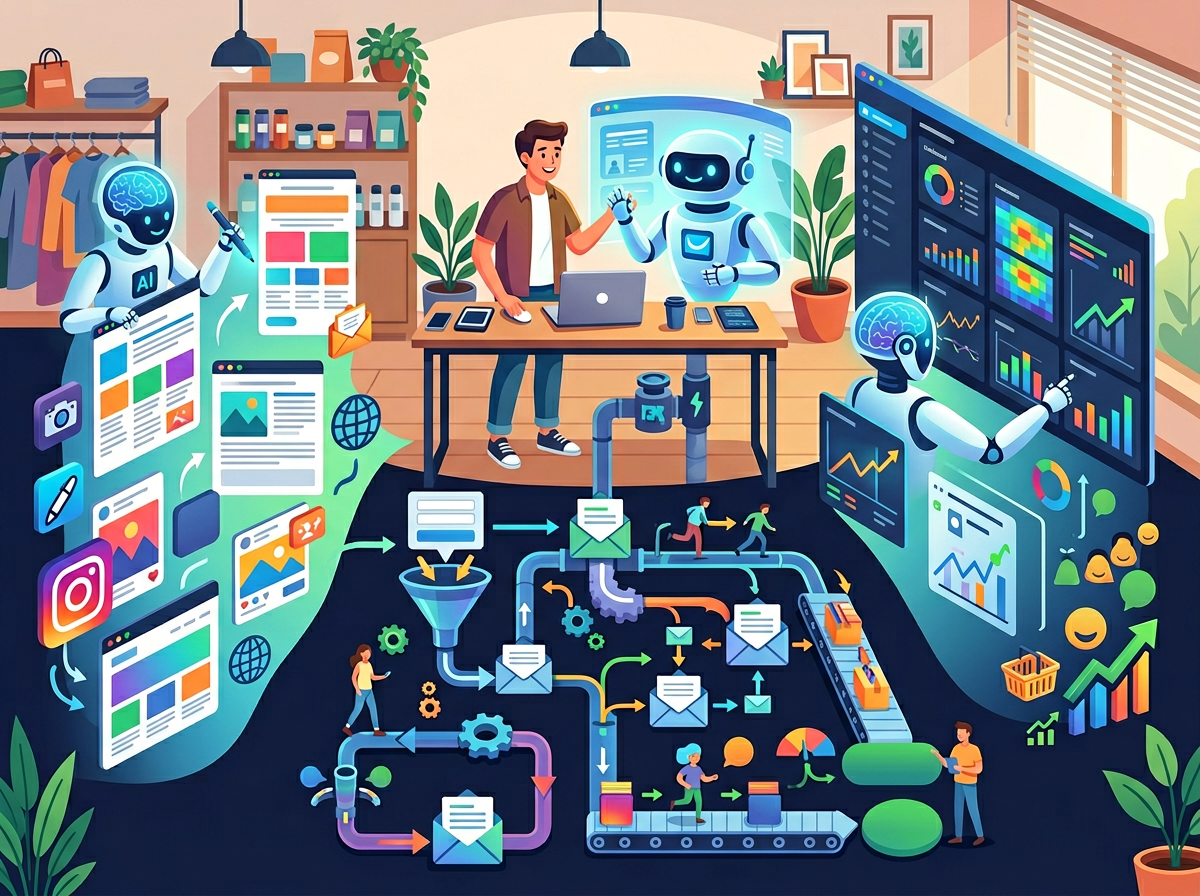
AI marketing automation for small business is no longer optional — owners who skip it are handing customers directly to competitors who wake up to full inboxes of warm leads.
In 2026, American freelancers and solo entrepreneurs face a marketing paradox that no amount of hustle can solve manually. You need consistent email campaigns, a functioning lead funnel, automated follow-up sequences, and a content calendar — all while actually delivering client work, managing invoices, and running the business that pays the bills.
The inbox sits at 200 unread. The campaign you planned three weeks ago is still a draft. The lead who downloaded your PDF on Tuesday never heard from you again. Sound familiar?
This is the daily reality for the majority of US-based small business owners who have not yet implemented ai marketing automation for small business. And the cost is staggering. For US freelancers billing $75–$150 per hour, every hour spent writing one-off emails, manually segmenting lists, or designing landing pages from scratch is a direct revenue loss — often $300–$600 per week in unbillable time.
GetResponse AI is a platform built to close this gap. It isn’t just an email tool. It’s a fully integrated marketing automation system with AI-powered campaign generation, conversion funnels, landing page builders, and behavioral triggers — all engineered so that one person can execute what used to require a three-person marketing team.
This article covers four specific workflows you can implement this week, each realistically saving 3–6 hours. It also includes concrete persona examples, honest limitations, and ROI calculations grounded in US market rates. Whether you’re a freelance consultant, an e-commerce seller, or a local service provider, you’ll leave this article with a clear picture of exactly where GetResponse AI fits into your business — and where it doesn’t.
For workflow templates and setup guides tailored to service-based businesses like Alex’s, learn more about GetResponse AI.
Key Concepts of AI Marketing Automation
Concept 1: Behavioral Triggering

Traditional email marketing operates on a schedule: you send a newsletter every Tuesday. Behavioral triggering flips that model. Instead of time-based sends, the system monitors what contacts actually do — open an email, click a link, visit a pricing page, abandon a cart — and sends the right message at the exact moment of peak intent.
For US entrepreneurs, this is transformative. Consider Rachel, a freelance HR consultant in Denver with a list of 1,800 contacts. Before automation, she sent a monthly newsletter and followed up with leads manually. After setting up behavioral triggers in GetResponse AI — a three-email sequence that fires when someone clicks her “services” page — her consultation booking rate increased by 34% without any additional effort on her part. She reclaimed roughly 6 hours per month that had previously gone to manual follow-up.
The core insight: AI doesn’t replace your message. It optimizes when and to whom it’s delivered.
Concept 2: Funnel Consolidation
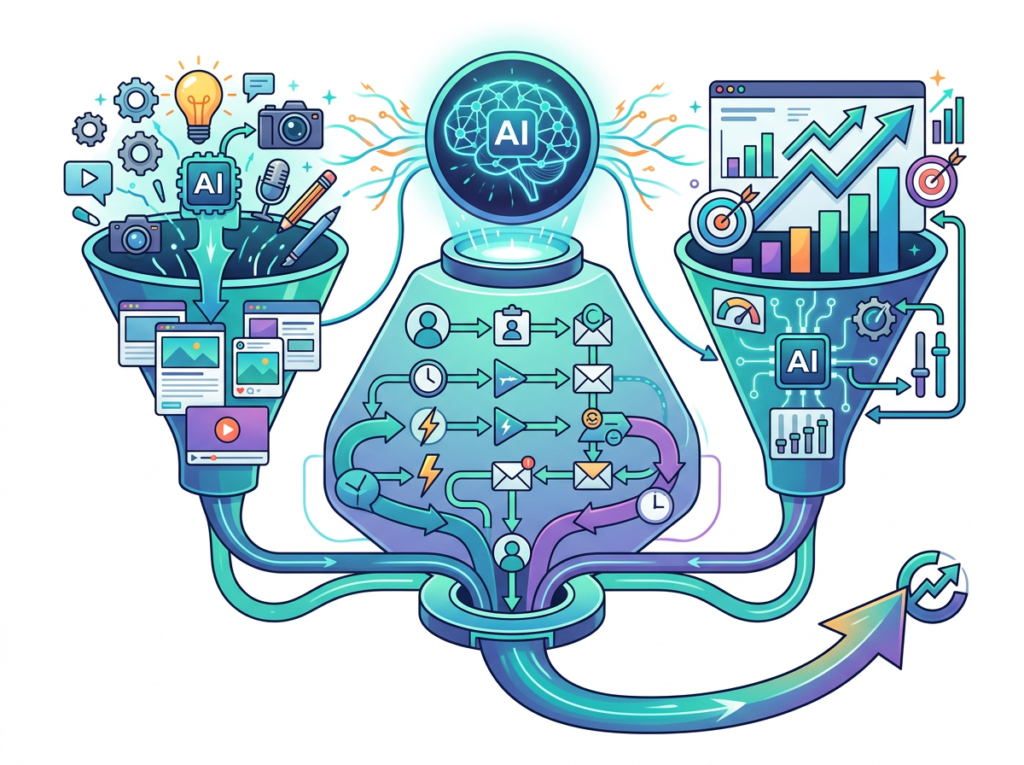
Most small business owners are unknowingly running their marketing across four or five disconnected tools: a landing page builder here, an email platform there, a form builder somewhere else, and a separate CRM to tie it all together. The monthly cost for this stack often lands between $180–$350. More critically, the data never fully syncs, which means your automations fire on incomplete information.
Sales funnel automation software that consolidates these functions into a single system eliminates both the cost and the data fragmentation. When your landing page, form, email sequence, and contact record all live in one platform, the AI can see the full picture of a lead’s behavior and trigger the right response automatically.
As noted in this breakdown of GetResponse’s full platform capabilities, the platform’s integrated approach — combining list management, landing pages, webinars, and email automation — is what distinguishes it from point solutions that only handle one piece of the funnel.
Marcus, an independent financial advisor in Phoenix, reduced his marketing tech stack from six tools to two after consolidating into GetResponse AI. His monthly software spend dropped from $290 to $79, and his lead-to-consultation conversion rate improved because his follow-up sequences were now firing on accurate behavioral data rather than estimated timing.
Concept 3: AI Content Generation at Scale

For solo entrepreneurs, the bottleneck in email marketing is almost never strategy — it’s production. You know you should be nurturing your list. You just don’t have four hours to write a five-email welcome sequence from scratch.
AI email campaign generators address this specifically. GetResponse AI’s content creation tools can produce full email sequences, subject line variations, and landing page copy based on your brand inputs and campaign objectives. This doesn’t mean publishing AI output without review — it means your starting point is 80% of the way there instead of a blank page.
For US businesses where freelance copywriters charge $150–$400 per email, even modest use of AI content generation represents thousands of dollars in annual savings. To understand the full scope of how these capabilities work together in a single platform, explore GetResponse AI in detail.
How GetResponse AI Helps Small Business Efficiency
Feature 1: AI Email Generator
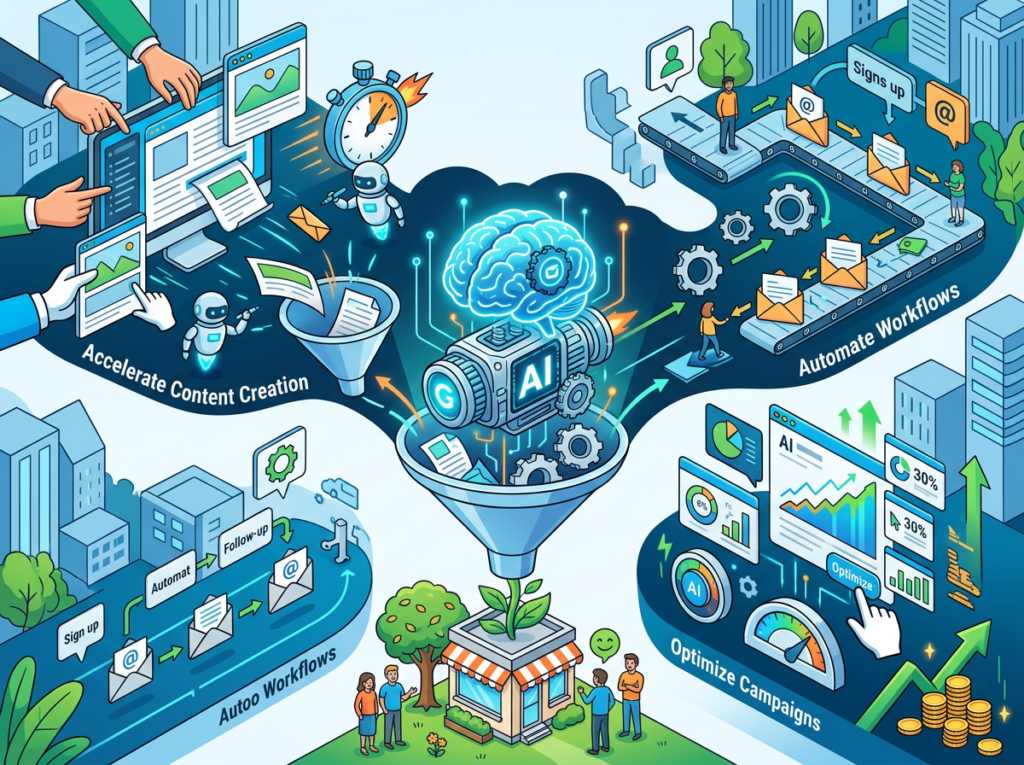
GetResponse’s GPT-powered email builder generates complete email drafts — subject line, preheader, body, and CTA — based on campaign type and goals you specify. In practice, this cuts email production time from 90–120 minutes per campaign to 15–25 minutes including review and edits.
For a business owner sending two campaigns per week:
- Time saved: ~3.5 hours/week ~182 hours/year
- At $75/hour equivalent value: $13,650/year in time recovered
Feature 2: Marketing Automation Builder
The visual automation builder lets you map out complete sequences — welcome series, abandoned cart recovery, post-purchase nurture, re-engagement campaigns — using a drag-and-drop interface. Once built, these sequences run indefinitely without ongoing attention.
Annual time saved vs. manual follow-up: approximately 120 hours for a list of 1,000–5,000 contacts. At $75/hour: $9,000/year in recovered capacity.
Feature 3: Conversion Funnel Builder
GetResponse AI includes a funnel builder that chains together landing pages, opt-in forms, confirmation pages, and email sequences into a single automated flow. Building one funnel manually using separate tools (page builder + form tool + email platform) typically takes 6–10 hours. In GetResponse, the same funnel can be assembled in 1–2 hours using AI-assisted templates.
For businesses running three to four active funnels annually, the time savings run 20–35 hours — worth $1,500–$2,625 at US rates.
Combined Annual ROI Estimate:
- Time savings: 300+ hours/year for an active small business
- Dollar value at $75/hour: ~$22,500
- GetResponse AI annual cost (Email Marketing Plus plan): ~$228–$588
- ROI range: 38x to 99x
Ready to stop manually writing every campaign? Try GetResponse AI free for 30 days and see how much of your marketing week can run on autopilot, Start Free Trial | No credit card required
To see specific workflow examples and compare features against alternatives, see our full GetResponse AI review.
Use Cases: Real Workflows for Freelancers and Small Teams
Persona 1: Jim — Freelance Brand Designer, Portland, OR

Old Workflow:
- 4 hours/month writing and scheduling email campaigns
- 3 hours/month manually following up with inquiry form submissions
- 2 hours/month updating her portfolio landing page
- Total: 9 hours/month on marketing tasks
AI-Enhanced Workflow with GetResponse:
- Set up a five-email welcome sequence using the AI email generator — completed in 90 minutes
- Built an inquiry follow-up automation that fires within 4 hours of a new contact submission
- Created a portfolio landing page using GetResponse’s AI page builder, connected directly to her email list
Results:
- Monthly marketing time reduced to 2.5 hours (review + light copy edits only)
- Time saved: 6.5 hours/month, 78 hours/year
- At her billable rate of $125/hour: $9,750 in annual revenue capacity recovered
- Inquiry response rate improved from “whenever I remember” to same-day automatic
“I finally feel like my list is actually working for me instead of sitting there making me feel guilty,” Jessica says. “The welcome sequence alone books me two to three discovery calls a month that I never had before.”
Persona 2: David — Independent Management Consultant, Chicago, IL

Old Workflow:
- 5 hours/week manually drafting individual follow-up emails after events
- No list segmentation — everyone got the same generic message
- No lead scoring to prioritize high-intent contacts
- Total: 20+ hours/month in marketing-adjacent admin
AI-Enhanced Workflow with GetResponse:
- Created three audience segments by contact source: conference attendees, website opt-ins, referral introductions
- Built separate nurture sequences for each segment using the automation builder
- Set up behavioral triggers: contacts who clicked the “engagement packages” page received a high-priority consultation invite within 24 hours
Results:
- Monthly marketing admin reduced to 6 hours (strategy + content review)
- Time saved: 14+ hours/month, 168 hours/year
- At his consulting rate of $250/hour: $42,000 in annual recovered billing capacity
- Pipeline visibility improved significantly — David can now see which leads are engaging with content before getting on a call
“Before, I was basically starting from zero with every lead. Now I know exactly who’s read what and who’s ready to talk. It changes the entire conversation.”
Persona 3: Alex — Solo Marketing Consultant, Nashville, TN

Old Workflow:
- 3 hours/week writing her newsletter
- 2 hours/week managing her lead magnet funnel (a PDF + email sequence)
- 3 hours/week on ad hoc prospect follow-up
- Total: 8 hours/week in non-billable marketing work
AI-Enhanced Workflow with GetResponse:
- Moved her weekly newsletter to a bi-weekly cadence and used the AI writer to draft first versions in 20 minutes instead of 3 hours
- Rebuilt her lead magnet funnel as a single GetResponse conversion funnel — page, form, delivery, and five-email sequence — in one afternoon
- Set behavioral triggers on prospect follow-up so high-intent contacts (multiple email opens, pricing page visits) automatically received a calendar booking link
Results:
- Weekly non-billable marketing time reduced from 8 hours to 2.5 hours
- Time saved: 5.5 hours/week ? 286 hours/year
- At her consulting rate of $175/hour: $50,050 in annual recovered billing capacity
- Newsletter open rate increased from 22% to 31% after switching to Perfect Timing delivery
“My marketing now takes less time than my clients’ marketing. That was not the case six months ago.”
For workflow templates and setup guides tailored to service-based businesses like Alex’s, learn more about GetResponse AI.
Ready to build marketing workflows that run while you work? Join over 400,000 businesses using GetResponse to automate email, funnels, and lead generation., Start Your Free Trial Today
Best Practices for Implementing AI Marketing Automation
1. Start with One Automation, Not Five

The biggest mistake small business owners make is trying to automate everything at once. The result is a half-built system of incomplete sequences and broken triggers that creates more confusion than clarity.
Pick the single workflow with the highest current pain point. For most service businesses, this is the inquiry follow-up sequence. For product businesses, it’s the abandoned cart recovery. Build that one automation completely, let it run for 30 days, and review performance before adding the next.
2. Review AI-Generated Copy Before Sending

GetResponse’s AI email writer is impressive, but it doesn’t know your voice, your customers, or the specific language that resonates with your audience. Treat AI output as a first draft, not a finished product. Plan for a 15–20 minute review and editing pass on any AI-written email before it goes out under your name.
High-stakes emails — sales announcements, pricing change notifications, apology emails — should always be written with significant human input even if AI is used for structure.
3. Track Time Savings, Not Just Revenue
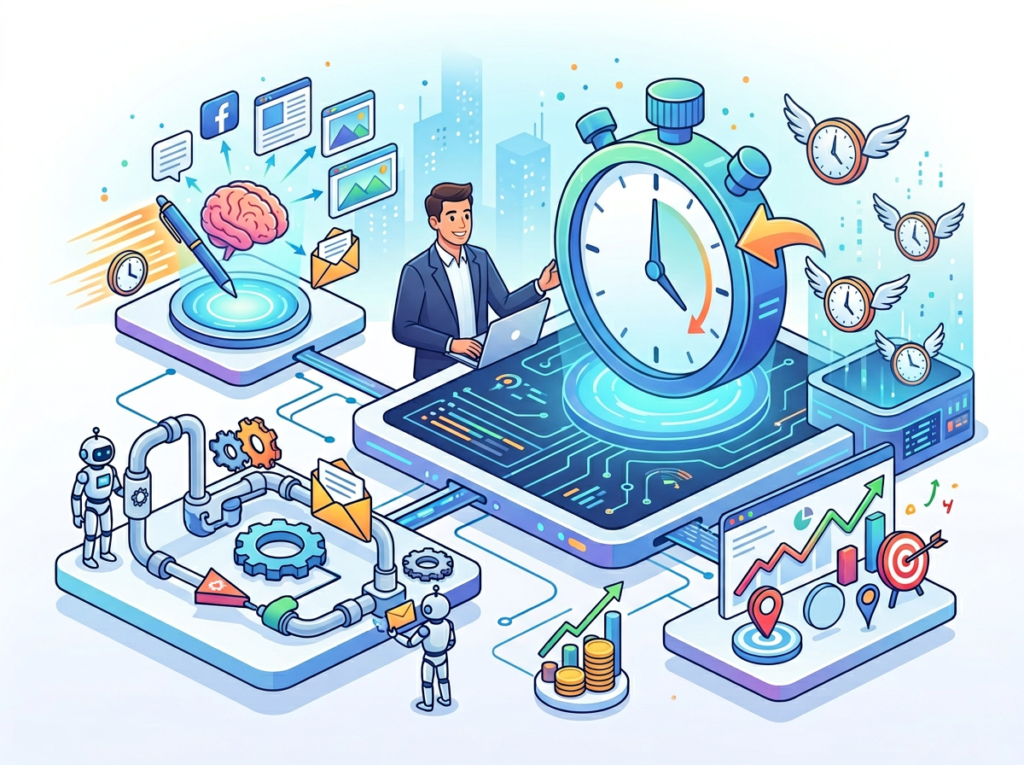
It’s tempting to measure AI automation success purely in revenue metrics. But for solo entrepreneurs, the more immediately measurable impact is time recovery. Log your current weekly hours on email, follow-up, and funnel management before you start. Measure again at 60 days. The delta is your ROI baseline — and it’s almost always larger than expected.
As noted in this overview of GetResponse’s feature set for growing businesses, users who track time savings alongside revenue consistently report higher satisfaction and more strategic use of the platform over time.
For workflow templates and setup guides tailored to service-based businesses like Alex’s, learn more about GetResponse AI.
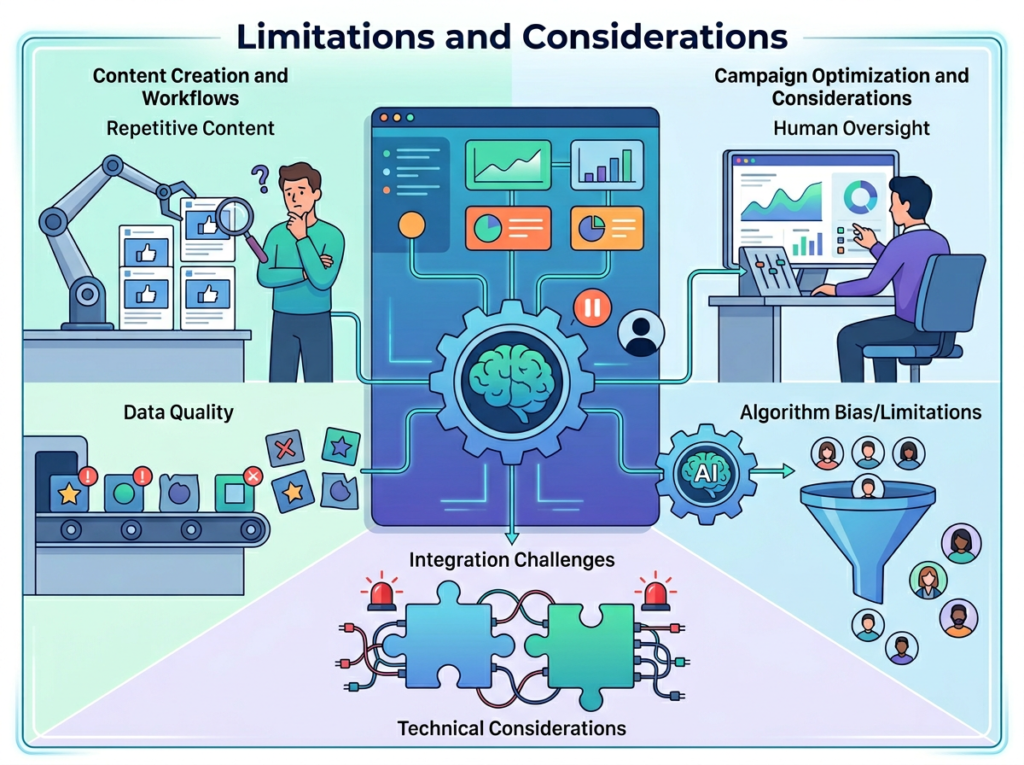
Limitations and Considerations
Where GetResponse AI Is NOT the Right Tool
High-Stakes Brand Voice Content: GetResponse’s AI email writer can produce clean, competent copy. What it can’t replicate is the specific voice you’ve spent years developing with your audience. For cornerstone brand content — your brand story, major product launches, culture-defining communications — don’t outsource to AI. The output will be technically fine and emotionally forgettable.
Legal or Compliance-Sensitive Communications: Terms of service updates, contract notifications, refund policy communications, and any email that could create legal exposure should be written and reviewed by a human — ideally one with relevant expertise. AI-generated content in these contexts carries meaningful hallucination risk.
Crisis Communication and Sensitive Situations: If something goes wrong with a customer order, a public complaint goes viral, or you need to communicate a difficult change to your audience, AI-generated responses are almost always the wrong choice. The emotional intelligence required in these moments is not something any current AI system reliably delivers.
Key Risks to Manage
Deliverability Dependency: As you automate more email volume, deliverability hygiene becomes critical. Poorly maintained lists, high complaint rates, or over-sending can damage your sender reputation and tank open rates platform-wide. GetResponse includes list hygiene tools — actually use them.
Over-Automation of Relationship-Based Businesses: For consultants, coaches, and service providers whose entire business model is built on personal relationships, aggressive automation can feel cold and transactional to prospects. Match your automation intensity to the relationship expectations of your specific audience.
Feature Depth vs. Learning Curve: GetResponse is a comprehensive platform. The breadth of features that makes it powerful also means there’s a genuine learning curve. Budget 4–8 hours upfront to learn the interface before expecting ROI. The investment pays off quickly — but it is an investment.
Frequently Asked Questions
What is AI marketing automation for small business?
AI marketing automation for small business refers to using software with built-in AI capabilities to automatically execute repetitive marketing tasks — sending emails, segmenting leads, triggering follow-up sequences, optimizing send times — based on contact behavior and predefined rules. Rather than manually managing each touchpoint, you build the workflow once and the system runs it continuously. For solo entrepreneurs, this effectively creates a marketing function that operates without ongoing daily labor.
Can AI replace all of my marketing work?
No, and any platform that suggests otherwise is overselling. AI automation excels at high-volume, rule-based tasks: welcome sequences, abandoned cart recovery, re-engagement campaigns, and list segmentation. It is poor at creative strategy, brand voice development, crisis communication, and anything requiring genuine contextual judgment. Think of AI as handling the execution layer of your marketing so you can spend your limited time on strategy and relationships.
Do I need technical skills to use GetResponse AI?
No specialized technical skills are required. GetResponse is designed for non-technical users with a visual drag-and-drop interface for automation building, template-based page creation, and a guided setup process for common workflows like welcome sequences and lead funnels. Most users report being able to build their first functional automation within 2–3 hours of signing up.
Conclusion
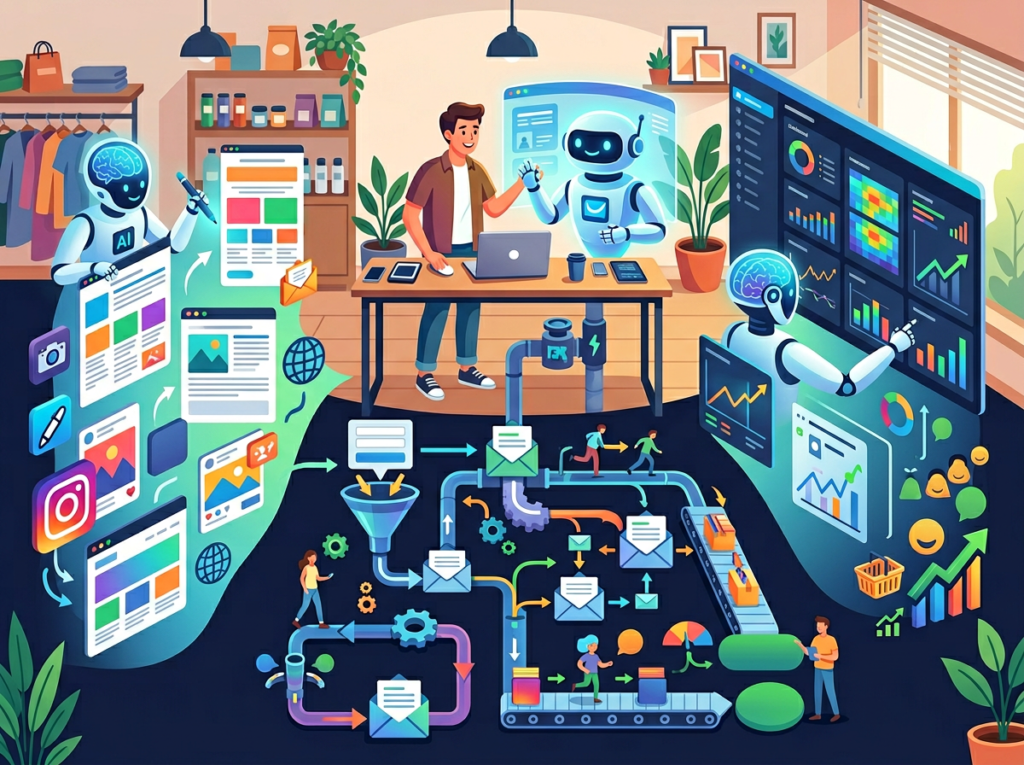
The case for AI marketing automation for small business in 2026 is no longer theoretical — it’s operational. GetResponse AI gives freelancers, consultants, e-commerce sellers, and solo entrepreneurs the ability to run professional-grade email marketing, lead generation, and funnel automation without a dedicated marketing hire.
The four personas in this article — a designer, a consultant, a product seller, and a marketing professional — each represent a real pattern of time loss that automation directly addresses. Across the board, the time recovered runs 3–8 hours per week, representing $12,000–$50,000 in annual billing capacity at US market rates. Against a platform cost of $228–$588 per year, the ROI is not marginal. It’s transformational.
Automation doesn’t replace the human judgment that makes your business distinctively yours. It frees that judgment for the decisions and relationships that actually require it.
Start with one workflow this week — your inquiry follow-up sequence, your welcome email series, or your abandoned cart recovery. Build it once. Let it run. Then measure what you get back.
The question for small business owners in 2026 is no longer “Should I use AI marketing automation?” It’s “Can I afford to keep doing this manually?”
For workflow templates and setup guides tailored to service-based businesses like Alex’s, learn more about GetResponse AI.
Leave a Reply