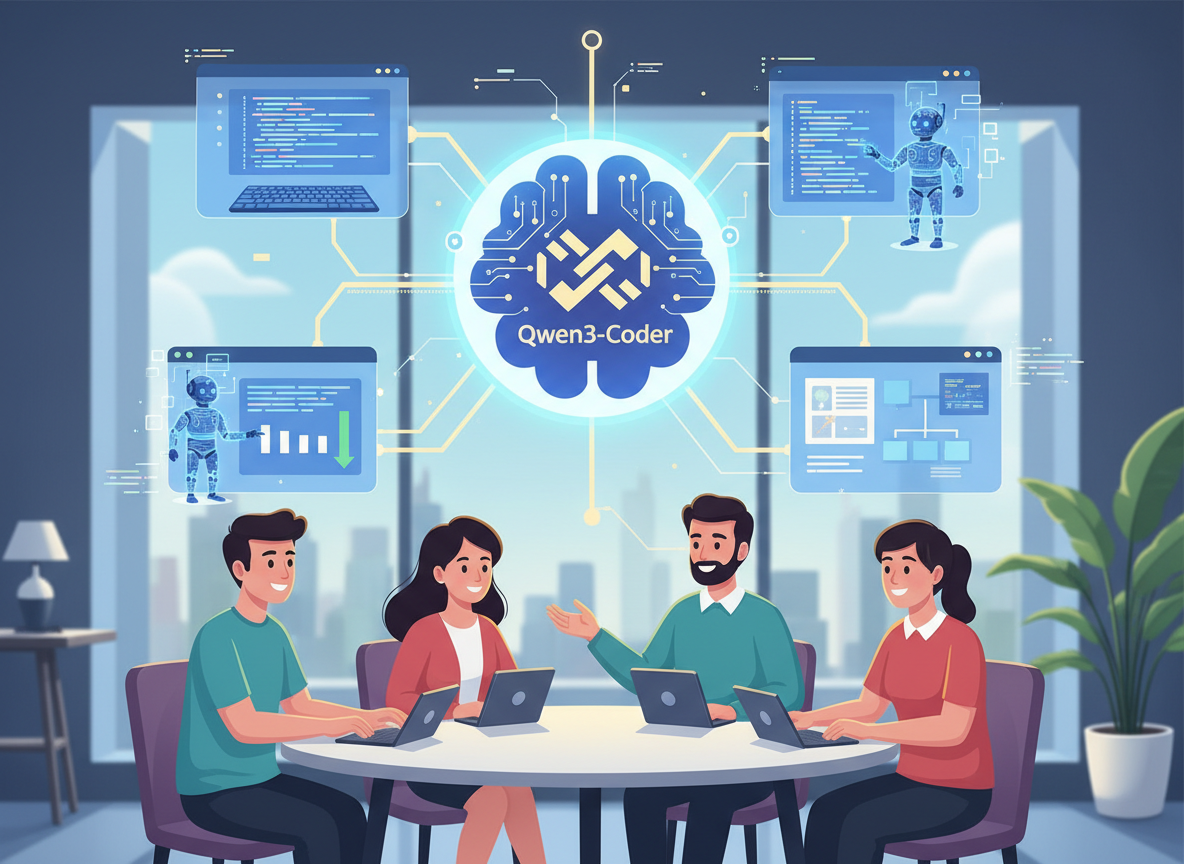
Small teams using the right ai coding assistant for small teams ship faster, stress less, and compete with companies three times their size.
In 2026, American founders and small development teams face a brutal paradox. The backlog keeps growing. Investors want demos. Customers want features. And your team of three developers is already running at full capacity — no slack in the system, no room to breathe.
The dev inbox is overflowing with bug reports. Code reviews are backed up. Boilerplate for the new microservice still hasn’t been written because everyone’s firefighting. You need another engineer, but hiring takes months, costs $150,000 or more in fully loaded salary, and doesn’t solve the problem today.
This is where the conversation about ai coding assistant for small teams stops being theoretical and becomes urgent.
For US-based development teams billing out at $75–200 per engineering hour, every hour your senior developer spends writing repetitive CRUD boilerplate is $75–200 lost from architecture work, product thinking, or shipping customer-facing features. The math is unforgiving. And for founders who are personally in the code, the opportunity cost is even steeper.
Qwen3-Coder, released by Alibaba’s Qwen team, has quickly become one of the most capable open-weight coding models available in 2026. It’s not just a code completion tool — it’s a full-context coding collaborator capable of reading entire codebases, generating complex multi-file implementations, and explaining legacy systems in plain English.
This article breaks down four specific workflows that small development teams can implement this week using Qwen3-Coder, each capable of saving 2–8 hours per developer per week. That’s not a headline estimate — it’s grounded in real workflow analysis, task-by-task time accounting, and what teams are actually reporting in production use.
By the end, you’ll have a clear picture of where Qwen3-Coder delivers genuine ROI, where it falls short, and how to integrate it into your team’s workflow without creating new complexity.
Key Concepts of AI Efficiency for Development Teams
AI efficiency for small development teams means strategically delegating repetitive, low-judgment coding tasks to AI so your engineers can focus on the architecture decisions, product logic, and customer-facing work that actually drives growth.
Before diving into Qwen3-Coder’s specific capabilities, it’s worth understanding the three cognitive mechanisms that explain why AI coding tools create such outsized productivity gains for small teams — and why most teams only capture a fraction of their potential benefit.
Concept 1: Cognitive Offloading in Software Development
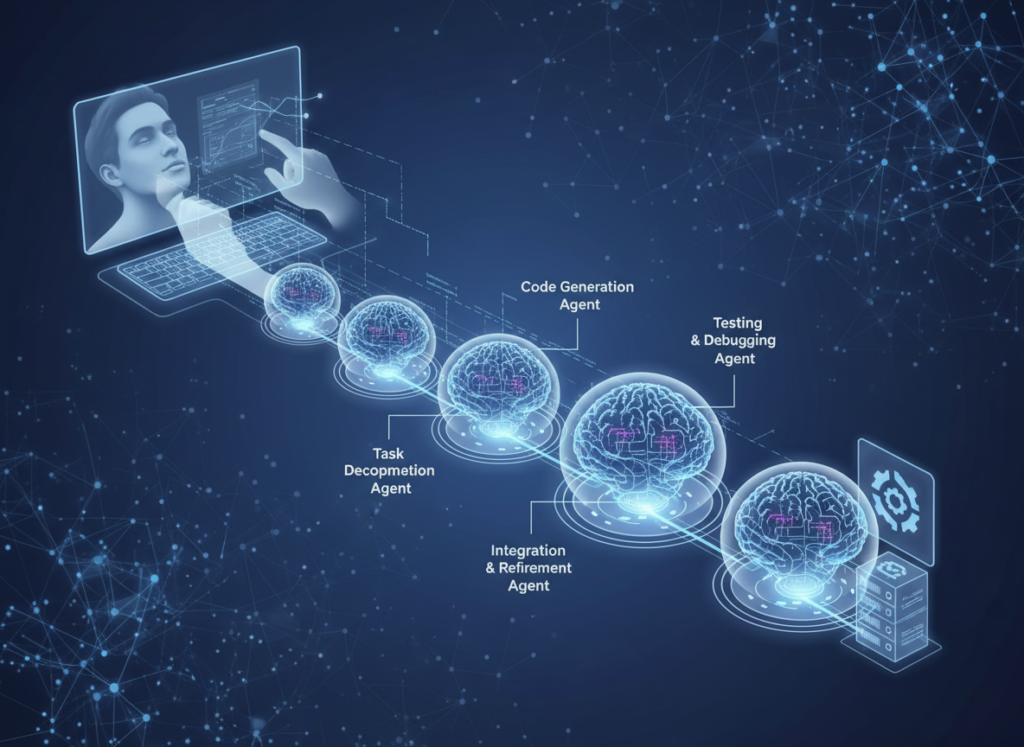
Cognitive offloading means externalizing mental work that your brain would otherwise have to do. In software development, a significant portion of every engineer’s day is spent on tasks that require remembering rather than thinking: what was the signature of that utility function? How does this ORM handle eager loading? What’s the right syntax for this API endpoint?
These micro-lookup tasks feel small individually. But they’re constant. And each one breaks concentration.
Consider Tyler, a full-stack developer at a four-person SaaS startup in Denver. Before integrating an AI code generation tool into his workflow, Tyler estimated he was spending roughly 25% of each coding session on lookups — Stack Overflow, documentation, previous code files, Slack history. When he started using Qwen3-Coder to answer these inline questions without breaking flow, his effective coding output increased by approximately 2.5 hours per day. He wasn’t working more hours. He was spending more of his existing hours in flow state.
For a developer billing $100/hour, 2.5 hours of reclaimed deep work per day represents $62,500 in annual productivity recovery — from one change to how they interact with documentation.
Concept 2: Context Switching Cost in Small Teams
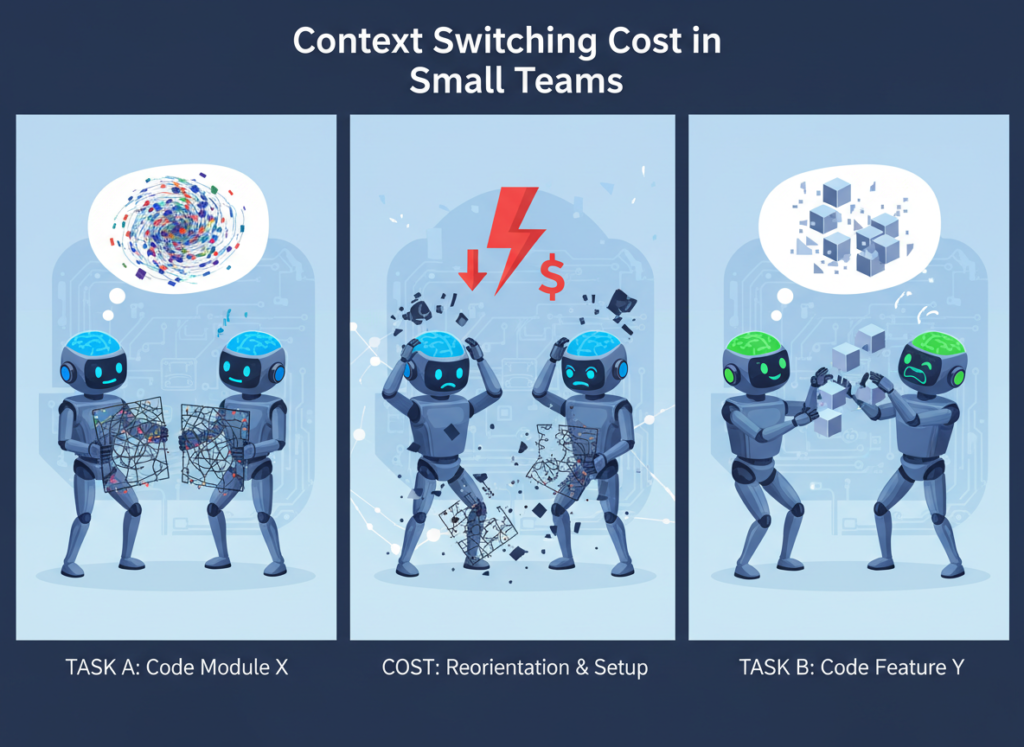
Research consistently shows that the average knowledge worker takes 23 minutes to fully refocus after an interruption. For developers — who work in complex, deeply layered mental models — that recovery time can be even longer.
Small teams are especially vulnerable here. When your team has three engineers and two are deep in feature work, the third becomes a de facto help desk: answering questions from marketing, reviewing PRs, jumping into incidents. Every context switch is a tax on deep work.
Marcus, an independent software consultant in Boston, quantified this directly. He was losing roughly 6 hours per week to context-switching overhead: the mental startup cost every time he moved between client projects, re-read code he hadn’t touched in two weeks, or re-familiarized himself with a codebase before a call. He now uses Qwen3-Coder to generate codebase summaries and context briefs before each session, cutting that re-orientation time from 40 minutes to under 10. That’s five hours per week returned to billable work.
As noted in this analysis of Qwen3-Coder’s evaluation results, the model shows particular strength in long-context tasks — precisely the kind of codebase understanding that makes context-switching recovery so expensive.
Concept 3: Workflow Orchestration
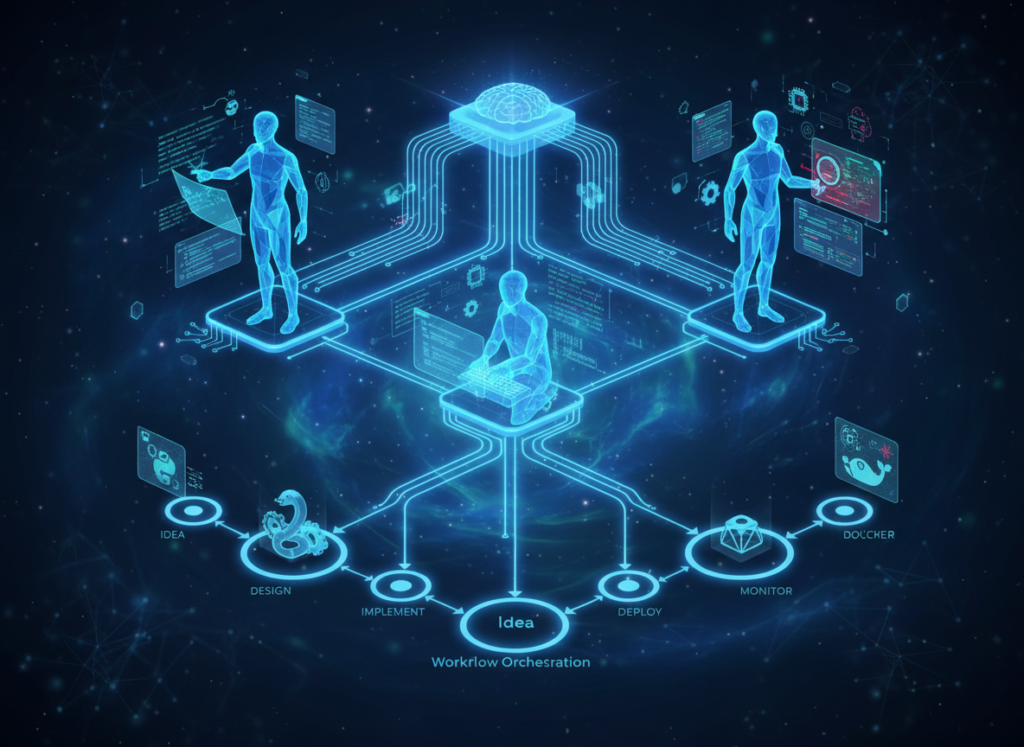
The most advanced — and most underused — application of AI coding tools isn’t autocomplete or single-function generation. It’s workflow orchestration: using AI as a conductor that ties together multiple development tasks into a single coherent flow.
Rather than asking “write this function,” orchestration looks like: “here’s the existing data model, here’s the new feature spec, here’s the test suite structure — generate the model updates, controller logic, migration, and unit tests as a coherent set.” This is where Qwen3-Coder’s long-context window creates real leverage.
Elena, a solo developer building a Shopify app in Phoenix, reclaimed approximately 4 hours per week by shifting from single-prompt code generation to multi-step orchestration sessions. Instead of five separate prompts that each required her to manually thread context, she learned to structure orchestration prompts that produced complete, coherent feature implementations in one pass.
For detailed orchestration workflow templates and implementation patterns, explore Qwen3-Coder in detail.
How Qwen3-Coder Helps Efficiency
Qwen3-Coder helps small development teams achieve exceptional efficiency through its massive context window, agentic task chaining, natural language code explanation, and deep multi-language code generation capabilities.
Qwen3-Coder isn’t just incrementally better than older coding assistants — it represents a qualitative shift in what’s possible for small teams operating without dedicated DevOps, QA, or documentation staff. Here’s where the time savings are real, quantified, and reproducible.
Feature 1: Long-Context Codebase Understanding (up to 1M tokens)

Qwen3-Coder supports context windows up to 1 million tokens, which means it can ingest entire codebases — not just individual files. For small teams working on mature projects with thousands of lines of code, this is transformative.
The practical application: instead of spending 30–45 minutes re-familiarizing yourself with a module before making changes, you paste the relevant files into context and ask Qwen3-Coder to summarize the architecture, identify dependencies, and flag potential impact areas for the change you’re planning. That’s a task that previously required a senior engineer’s experience and memory — now accessible in minutes.
Estimated annual time savings: 45–60 hours per developer ROI at $75–150/hour: $3,375–9,000 per developer annually
Feature 2: Agentic Code Generation and Multi-File Implementation

Where earlier coding assistants generated single functions or files, Qwen3-Coder can plan and execute multi-step coding tasks across multiple files. Ask it to implement a feature, and it can generate the model, the service layer, the controller, the tests, and a migration — with consistent naming, style, and logic across all files.
For a two-person team building a B2B SaaS product, this capability alone can eliminate entire sprint ceremonies. What previously required breaking a feature into individual sub-tasks, assigning them, reviewing them, and integrating them can collapse into a structured prompt session and a focused human review pass.
Estimated annual time savings: 50–75 hours per team ROI at $75–150/hour: $3,750–11,250 per team annually
Feature 3: Automated Code Review and Bug Detection
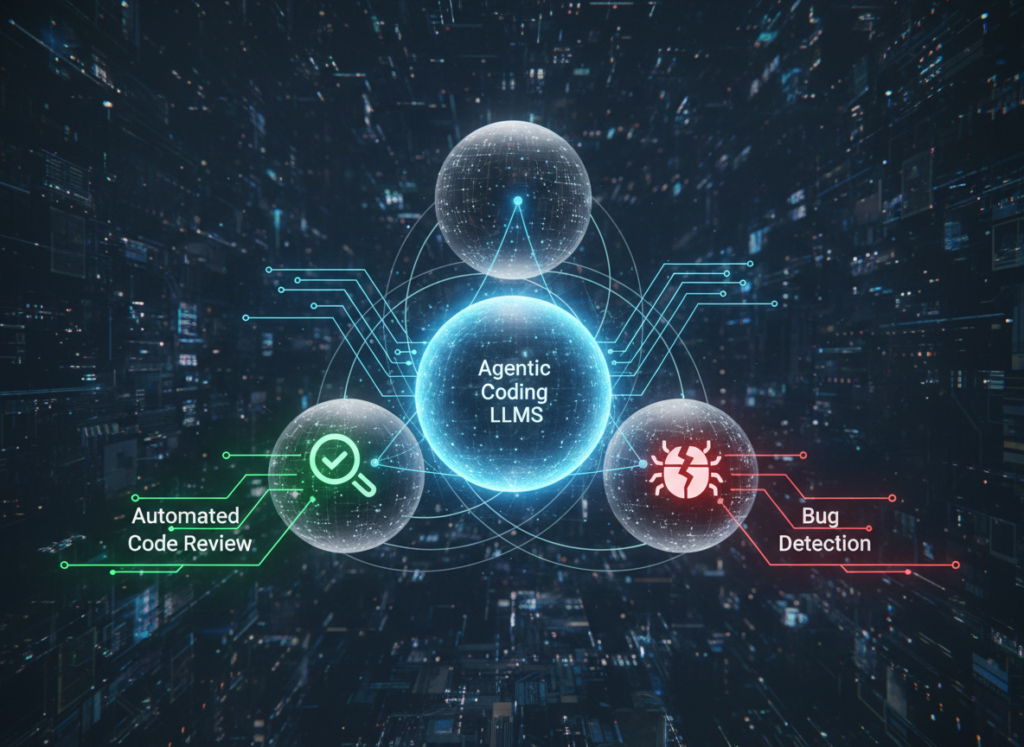
Not a replacement for human code review — but a powerful first pass. Qwen3-Coder can analyze pull requests for common anti-patterns, security vulnerabilities, performance issues, and style inconsistencies before a human reviewer ever looks at it. This compresses review cycles and catches the mechanical issues, freeing human reviewers to focus on logic and architecture.
For small teams where code review is often a bottleneck — one senior developer reviewing everything — this materially increases throughput.
Estimated annual time savings: 30–50 hours per team ROI at $75–150/hour: $2,250–7,500 per team annually
Combined annual ROI estimate: $13,875–41,250 per small team — against a deployment cost that runs from free (self-hosted) to modest API usage fees, representing a 50x to 150x return depending on team size and hourly rate.
Ready to cut development overhead in half? Try Qwen3-Coder and experience AI coding efficiency firsthand. Start Free at Qwen.ai | No credit card required for base access
Use Cases: Small Team & Founder Efficiency
From freelance developers to technical co-founders, AI coding workflow automation transforms daily development by eliminating repetitive implementation work and reducing the cognitive overhead that drains small teams.
Persona 1: Freelance React Developer in Portland

The situation: Jessica runs a solo development practice serving four small business clients. She builds and maintains React frontends, handles client communication, writes proposals, and manages her own business. She bills at $110/hour and works approximately 45 hours per week — but only about 28 of those hours are billable.
Old workflow: New client projects started with 3–4 hours of boilerplate setup: project scaffolding, routing, state management configuration, component library integration, CI/CD config. Every client had slightly different preferences, but 80% of the setup was identical. She was also spending 6–8 hours per week on code documentation and client-facing technical summaries.
AI-enhanced workflow: Jessica now uses Qwen3-Coder to handle project initialization through a structured prompt template she refined over two weeks. She inputs the client’s tech preferences, and Qwen3-Coder generates a complete starter scaffold with her preferred architecture patterns. Documentation for client handoffs is generated from her code with light editing. She also uses it for automated code completion on repetitive component patterns.
Quantified results: Boilerplate setup: 3.5 hours ? 45 minutes. Documentation overhead: 7 hours/week ? 2 hours/week. Net reclaimed time: approximately 9 hours per week.
Additional revenue potential: At $110/hour, 9 hours per week × 48 working weeks = $47,520 in additional billing capacity annually.
“I stopped thinking of Qwen3-Coder as a code generator. It’s more like having a very fast junior developer who never gets tired of setup tasks.” — based on reported user experience patterns
Persona 2: Two-Person SaaS Team

The situation: David and his co-founder are building a B2B HR software product. David handles backend development; his co-founder handles sales and product. David is the entire engineering team.
Old workflow: Feature development was slow because every new feature required David to context-switch constantly: writing specs, building, writing tests, handling customer support tickets, reviewing infrastructure. Code reviews were non-existent — no one to review his code. Bug detection happened when customers reported issues.
AI-enhanced workflow: David implemented a three-stage development process using Qwen3-Coder as an ai programming assistant for 2026-era development. Stage one: architectural planning prompt — he describes the feature; Qwen3-Coder generates a technical spec and flags potential conflicts with existing code. Stage two: multi-file implementation — Qwen3-Coder generates the full feature implementation. Stage three: automated review — Qwen3-Coder reviews its own output against security and performance criteria before David does a final human pass.
According to this breakdown of Qwen3-Coder’s capabilities for production use, the model performs particularly well in agentic coding workflows where planning and implementation are tightly coupled.
Quantified results: Feature development cycles shortened by approximately 40%. Bug escape rate (bugs reaching production) reduced significantly. David reclaimed roughly 15 hours per month previously spent on mechanical implementation tasks.
Additional capacity: 15 hours/month × 12 months = 180 hours/year returned to architecture, customer development, and strategic product decisions — the work that actually moves the company forward.
Persona 3: Solo Developer Building Developer Tools SaaS

The situation: Alex is a technical founder building a developer productivity tool. He’s pre-revenue, working from savings, and every week of development time has a direct cost measured in runway.
Old workflow: Alex spent 9 hours per week on non-product work: writing internal documentation, maintaining test suites, onboarding the occasional contractor, and managing the infrastructure he’d built early in the project. His actual product development time was crowded into the remaining hours.
AI-enhanced workflow: Alex rebuilt his entire development practice around Qwen3-Coder as his primary developer productivity AI layer. Test generation, documentation, code review, infrastructure change analysis — all routed through Qwen3-Coder before touching his attention. He set a personal rule: if a task doesn’t require product judgment or customer understanding, it goes to AI first.
Quantified results: Non-product overhead: 9 hours/week ? 2.5 hours/week. Product development time increased by 6.5 hours per week. Over 52 weeks, that’s 338 additional hours in product development — roughly equivalent to hiring a half-time contractor, at zero incremental cost.
Streamline your development workflow with smart coding automation. Join engineers and founders using Qwen3-Coder to ship faster without hiring. ? Start Free at Qwen.ai
Best Practices for Implementing AI Coding Efficiency
Successfully implementing AI coding efficiency requires starting with one high-friction workflow, maintaining human review of all AI outputs, resisting tool proliferation, and tracking actual time savings against baseline measurements.
1. Start with One High-Friction Task

The teams that get the most value from AI coding tools are not the ones who try to integrate AI into everything simultaneously. They’re the ones who identify their single most painful recurring task — the one that consumes disproportionate time for the value it delivers — and use AI to eliminate it.
For most small dev teams, this is one of three things: boilerplate generation, documentation, or codebase re-orientation. Pick one. Get genuinely proficient with Qwen3-Coder on that single task. Then expand.
Trying to overhaul your entire development workflow in week one creates confusion, erodes trust in the tool, and often results in abandoning the experiment before the ROI materializes.
2. Always Maintain Human-in-the-Loop Review
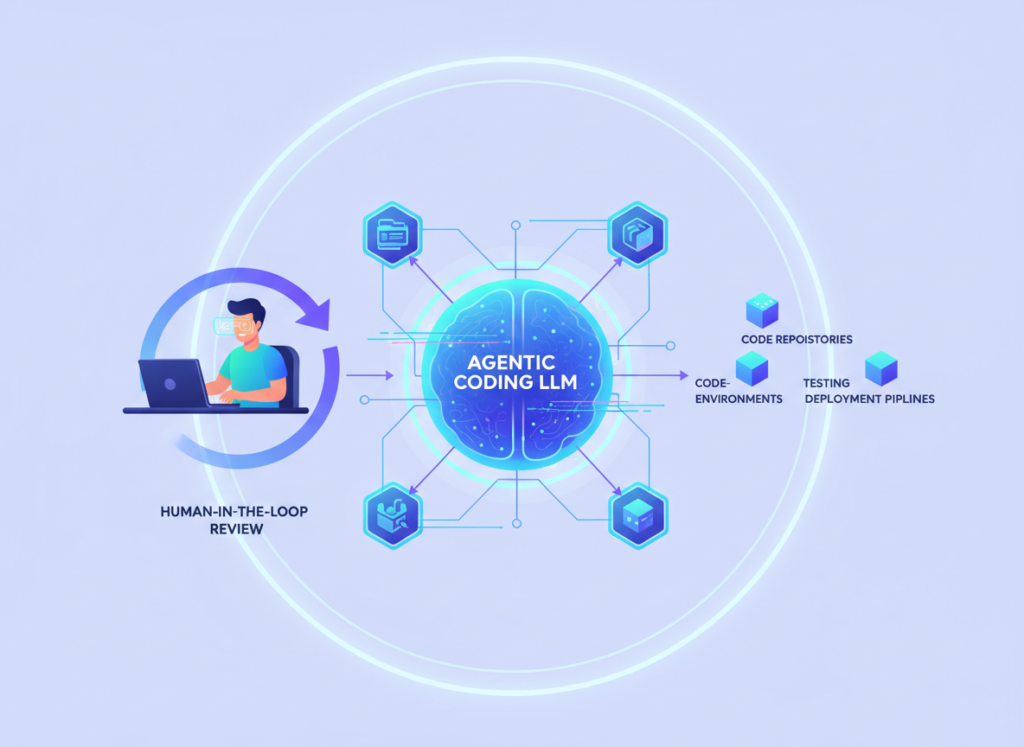
AI-generated code ships bugs. It makes assumptions. It sometimes generates plausible-looking implementations that fail edge cases or violate business logic you haven’t spelled out. This is not a reason to avoid the tool — it’s a reason to build a clear review process.
The right model: use Qwen3-Coder to generate, use your engineering judgment to verify. The time savings come from eliminating the generation work, not from eliminating review. A 20-minute code generation and 15-minute review still beats a 90-minute manual implementation.
3. Track What You’re Actually Replacing

Before you integrate Qwen3-Coder into a workflow, spend one week logging how long the current manual process takes. After integration, log it again. Without baseline measurement, you’re flying blind on ROI — and you’re more likely to undervalue the tool (or overvalue it) than if you have hard numbers.
Small teams that track their time savings consistently are also more likely to identify the next high-value workflow to automate. The measurement habit compounds.
Limitations and Considerations
AI coding efficiency works best for well-defined, repetitive implementation tasks — but fails at nuanced architecture decisions, security-critical code, and any development work where deep business context is required.
Qwen3-Coder is genuinely impressive. It’s also a tool with real limitations that every small team should understand before integrating it into production workflows.
Where Qwen3-Coder is NOT the right tool:
Complex architecture decisions. The model generates code, but it doesn’t understand your business. When deciding whether to build a feature as a microservice or extend a monolith, whether to use a particular database schema, or how to structure your data model for future scale — these decisions require context the model doesn’t have and judgment it can’t replicate. Use AI to implement decisions, not to make them.
Security-critical implementations. Authentication flows, payment processing, data encryption, compliance-related features — these areas demand expert human review regardless of how the initial code was generated. AI-generated code can introduce subtle vulnerabilities that pass casual inspection. Treat all AI-generated security code as a draft that requires specialist review.
Code that carries regulatory or legal weight. If you’re building in healthcare (HIPAA), finance (SOC 2, PCI), or any regulated industry, AI-generated code is a starting point, not a finished product. Human expert review is non-negotiable.
Key risks to manage actively:
- Hallucination: Qwen3-Coder can generate code that looks correct but isn’t — particularly for less common APIs or edge-case logic. Test everything.
- Context window limitations in practice: While the model supports massive context windows, effective prompting for long-context tasks requires skill. Early users often underperform because they’re not structuring prompts to take full advantage of available context.
- Over-reliance risk: Teams that stop maintaining certain skills because AI handles them may find those skills atrophied when AI falls short on an edge case. Keep engineers engaged with all parts of the stack, even when AI is handling routine implementation.
This evaluation analysis of Qwen3-Coder in production environments provides additional technical context on deployment configurations and where the model performs best.
Frequently Asked Questions

What is an AI coding assistant for small teams?
An AI coding assistant for small teams is a tool that uses large language models to generate, review, explain, and document code in response to natural language prompts. For small teams, the value is in delegating routine implementation work — boilerplate, documentation, tests, code reviews — to AI so developers can focus on architecture and product decisions. Qwen3-Coder is one of the most capable options available in 2026 for teams that want both open-weight flexibility and enterprise-grade performance.
Can an AI code generation tool replace a developer? No. AI coding tools generate code — they don’t make product decisions, understand your customers, architect systems for scale, or take accountability for what ships. The right framing is augmentation: one developer with strong AI tooling can ship what previously required two or three developers on routine tasks. The human engineer’s role shifts from implementation to direction and review.
How do small development teams use AI to save time?
The highest-ROI applications are: (1) boilerplate and scaffold generation, (2) automated documentation, (3) codebase re-orientation before context-switching, and (4) first-pass code review. Teams that integrate AI into these four workflows consistently report reclaiming 5–15 hours per developer per week, depending on their existing workflow efficiency.
Do I need technical skills to use Qwen3-Coder for coding workflow automation?
Yes — Qwen3-Coder is designed for developers. Effective use requires the ability to evaluate AI-generated code, structure clear technical prompts, and integrate the tool into your existing development environment. Non-technical founders can use AI tools for adjacent tasks (documentation, specs, technical writing), but the core coding workflow benefits require engineering judgment to capture safely.
Conclusion
In 2026, the competitive gap between small development teams that use AI coding tools effectively and those that don’t is widening rapidly. It’s not a gap in raw talent. It’s a gap in leverage.
Qwen3-Coder offers a genuine ai coding assistant for small teams that goes beyond autocomplete — into full-context codebase understanding, multi-file implementation, automated documentation, and AI code review. The ROI math is clear: teams recovering 8–15 engineering hours per week at US development rates are generating $30,000–60,000 or more in annual productivity value against modest tooling costs.
The key is implementation discipline. Start with one high-friction task. Measure your baseline. Build the review habit before you expand usage. Treat AI-generated code as a very capable first draft, not a finished product.
The question for small development teams in 2026 isn’t whether AI coding automation is worth evaluating. The teams shipping fastest already answered that. The question is: which workflows will you automate first?
The ROI on getting this right runs 50x to 150x annually. The cost of waiting is measured in sprints you don’t ship, engineers you can’t afford to hire, and runway that runs shorter than it should.
Start with Qwen3-Coder at Qwen.ai
Leave a Reply