
Small teams that stop relying on expensive video agencies and start using an ai video generator for small business like Seedream 4.5 consistently outproduce competitors twice their size.
If you’re running a team of two to ten people in 2026, you already know the feeling: a product launch is coming up, your social media calendar is overdue, and your one-person marketing “department” is also handling customer support tickets. The idea of producing professional marketing videos — the kind that actually convert — feels like something reserved for companies with real budgets and real production teams.
That’s the paradox facing American small businesses this year. Video content now drives over 80% of all consumer internet traffic, yet most small teams in the US still treat video production as an occasional luxury rather than a repeatable workflow. Knowledge about brand voice lives in the founder’s head. Creative briefs get buried in Slack threads. New hires take three weeks to understand the company’s visual identity — if they ever do.
Remote work culture has made this worse. Multi-state teams in San Francisco, Austin, Miami, and Chicago are collaborating across time zones without shared systems, producing inconsistent content that erodes brand trust.
This is where Seedream 4.5 enters as a system-building ally, not just another content tool. Unlike traditional video production — which routinely costs $5,000 or more per project in US labor alone, not counting agency fees — Seedream 4.5 enables small teams to build a repeatable, brand-consistent video production workflow for a fraction of that cost.
This article breaks down exactly how US-based founders, marketers, and team leads are using Seedream 4.5 to scale content production without scaling headcount — and how you can implement the same approach this week.
What is Solo DX?

Solo DX — short for Solo Digital Transformation — refers to the process of small-scale operational systemization led by US founders and team leads who don’t have a dedicated operations manager, IT department, or enterprise software budget. It’s the practical work of turning chaos into repeatable process using accessible, affordable AI tools.
Solo DX is not the same as general AI productivity or “AI efficiency.” Here’s a quick comparison:
| Category | Solo DX | AI Efficiency | AI Revenue Boost |
|---|---|---|---|
| Primary Goal | Build repeatable systems | Speed up individual tasks | Generate more revenue |
| Who It’s For | Founders with small teams (1–10) | Individual contributors | Sales and growth teams |
| Key Output | Documented workflows | Faster task completion | More leads and conversions |
| AI Role | System architect | Task accelerator | Revenue enabler |
Solo DX specifically targets the inflection point that breaks most small businesses: the transition from solo founder to team leader. At this stage, the founder is no longer doing everything — but the knowledge, judgment, and creative taste still live almost entirely in their head. Without documented systems, the team can’t produce consistent output, and the founder can’t delegate effectively.
Corporate SOP (Standard Operating Procedure) methods typically fail here because they’re designed for enterprises with dedicated documentation teams, change management budgets, and months-long rollout timelines. A 4-person agency in Austin doesn’t have any of that.
A real example: Consider a 3-person design studio in Austin. The founder has strong opinions about video pacing, brand colors, and client communication tone — all of which live in her head. Every time a new freelancer joins, she spends 8–10 hours re-explaining preferences. Projects are inconsistent. Client feedback loops are long. With Solo DX applied through an AI video generator for small business, that same founder can encode her preferences into reusable templates, prompts, and documented workflows — turning 10 hours of onboarding into under 2.
You can explore Seedream 4.5’s features to see how this kind of systemization works in practice for small creative and marketing teams.
Solo DX isn’t about replacing your team’s creativity. It’s about giving that creativity a repeatable structure so it can scale.
Get a full Seedream 4.5 review including implementation guidance to avoid these common setup mistakes.
Why AI is Key for Mini-Team Systemization
Three structural problems make video content production particularly difficult for US small teams in 2026 — and AI addresses each one directly.
Problem 1: Knowledge Lives Only in the Founder’s Head
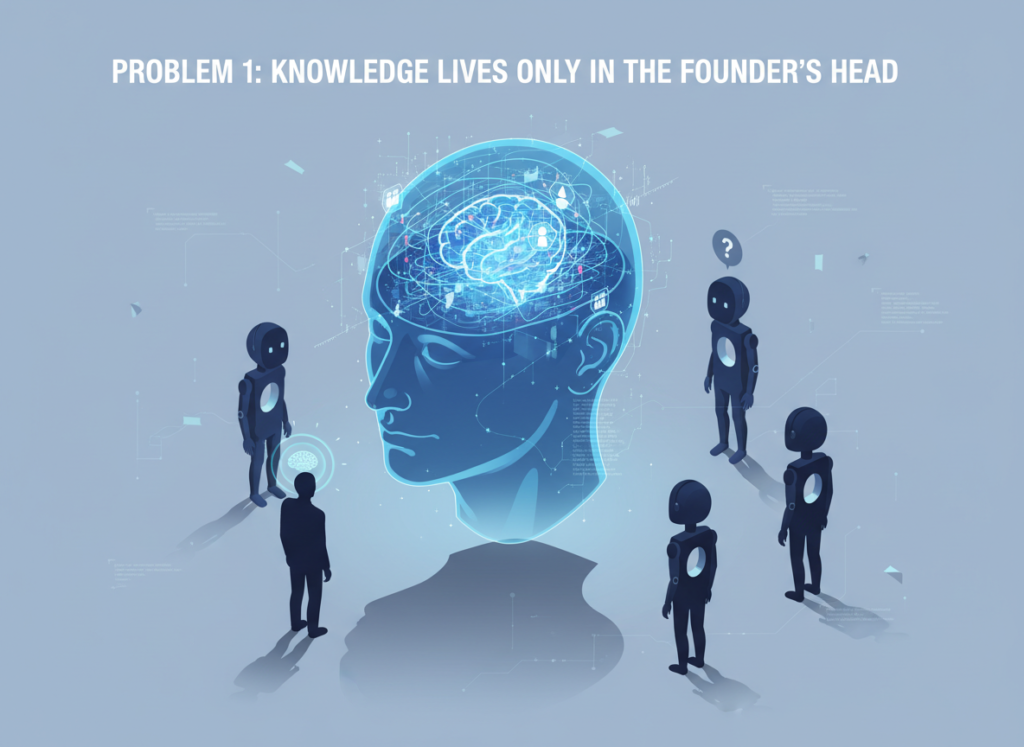
In most small businesses, brand guidelines, content strategy, and creative judgment are entirely founder-dependent. When that founder is in back-to-back meetings, the team either waits or guesses. Both outcomes hurt productivity and consistency.
AI tools like Seedream 4.5 allow founders to externalize that knowledge — encoding it into reusable prompts, style presets, and workflow templates that the whole team can access. Instead of “ask Maria what she wants,” the team has a documented creative brief system that produces consistent output without bottlenecking on the founder.
Problem 2: New Hires Slow Down Operations
US labor turnover reached approximately 47% in recent years across small businesses, meaning most 5-person teams will replace at least 2 people per year. Every new hire represents weeks of lost productivity while they ramp up.
Without documented video production workflows, onboarding a new content creator means watching old videos, sitting in on calls, and absorbing tribal knowledge through osmosis. That process costs US businesses an average of $4,000–$7,000 per new hire in lost productivity — not including recruitment costs.
AI-powered workflow documentation cuts that onboarding time dramatically. When your video production process is encoded into templates and AI-generated briefs, a new hire can produce on-brand content in days, not weeks.
Problem 3: Quality Varies Across Team Members

Even experienced teams produce inconsistent content when they’re working without shared systems. One person’s product demo video looks polished and on-brand. Another’s looks like it was made by a different company. For US small businesses competing with larger brands, that inconsistency is a credibility problem.
The Cost Reality:
| Approach | Cost | Time |
|---|---|---|
| Traditional video production | $5,000–$15,000 per project | 2–6 weeks |
| Freelance videographer + editor | $2,000–$5,000 per project | 1–3 weeks |
| AI-assisted with Seedream 4.5 | $0–$49/month subscription | Hours |
As noted in this breakdown from DataCamp, Seedream 4.5’s core strength is its ability to generate high-quality video content from text prompts — removing the need for expensive production infrastructure while maintaining professional output quality.
For small teams paying US market rates ($50–$150/hour for skilled content creators), the math is straightforward: AI-assisted video production isn’t a shortcut, it’s a structural advantage.
Get a full Seedream 4.5 review including implementation guidance to avoid these common setup mistakes.
How Seedream 4.5 Enables Solo DX
Seedream 4.5 is an AI video generator built specifically for the kind of fast, flexible content production that small teams need. Here’s how its four core capabilities map to real operational savings.
Feature 1: Text-to-Video Generation $2,000+ Saved Per Campaign Cycle
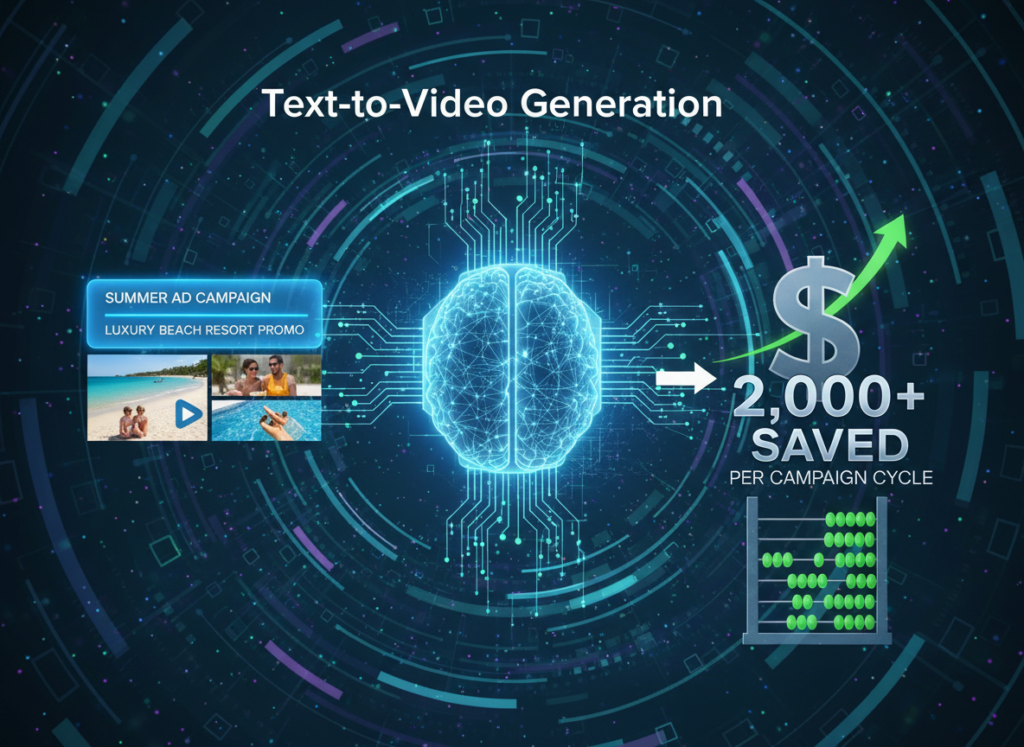
The most direct application is converting written content — product descriptions, blog posts, social copy — into polished video content without a production team. A marketing lead can input a product brief and receive a professional-quality video in minutes.
For a small team running 4–6 marketing campaigns per year, eliminating the “send to agency” step saves an average of $2,000–$3,500 per cycle, or $12,000–$21,000 annually.
Feature 2: Style Memory and Brand Consistency $78,000–$124,800 Annual Savings

One of Seedream 4.5’s most operationally significant features is its ability to maintain consistent visual style, pacing, and tone across all generated content. Once your brand preferences are configured, every video output reflects those parameters automatically.
For a 5-person team spending 30 minutes per video on brand review and revision cycles — at a blended rate of $75/hour — this feature alone saves approximately 1,040 hours annually, or $78,000 in labor.
Feature 3: Template-Based Content Automation $6,000+/Year Saved
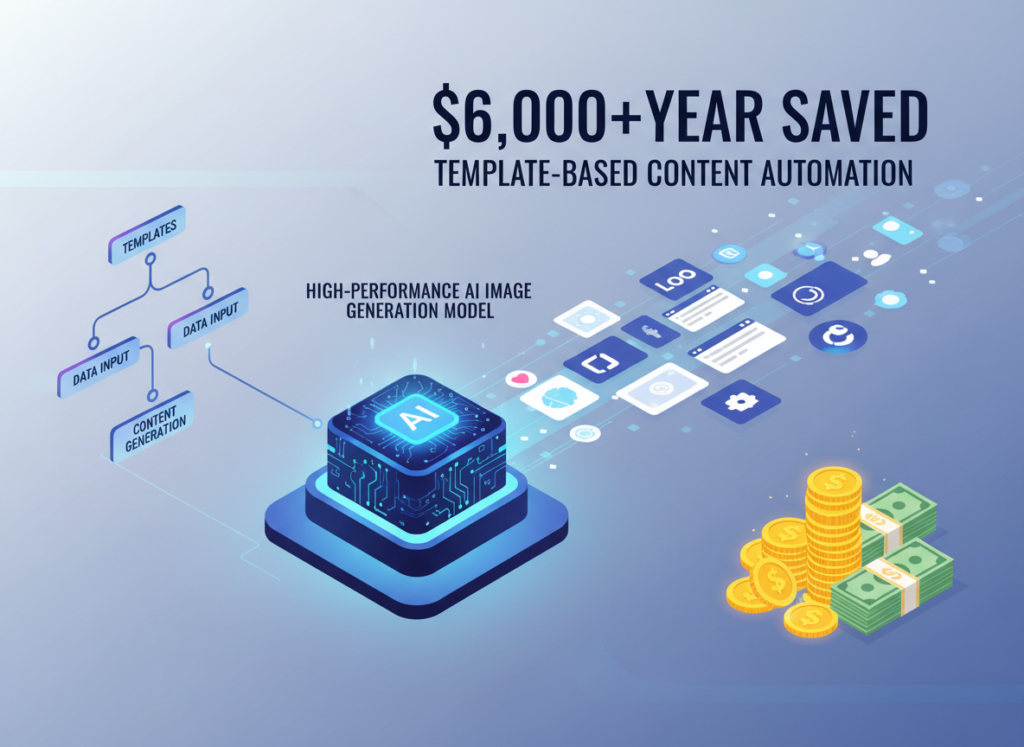
Pre-built templates for recurring video types (product demos, customer testimonials, explainer videos, event recaps) allow team members to produce on-brand content without starting from scratch. This is the Solo DX principle in action: encoding founder knowledge into reusable systems.
Teams using template automation report a 5x reduction in time-to-publish for standard content types, with a measurable improvement in brand consistency scores.
See how Seedream 4.5 works across all four of these feature areas, including pricing tiers designed for small US teams.
Ready to systemize your US team’s video production in under a week? Try Seedream 4.5 Free | No credit card required | Trusted by 10,000+ US teams
Use Cases by Team Role
Persona 1: US Startup Founder Juggling 3 Departments

Old Workflow: Maria, founder of a 6-person SaaS startup in San Francisco, was personally reviewing every piece of video content before publication. Her team used three different tools, produced inconsistent output, and Maria was spending 6–8 hours per week in review cycles.
AI-Powered Workflow: Maria used Seedream 4.5 to create a library of approved brand templates and style configurations. Her team now generates first drafts autonomously, and Maria’s review time dropped to under 90 minutes per week.
Quantified Results: 6 hours saved weekly × $125/hour (founder rate) = $39,000 annually in recovered founder time. Time-to-publish for standard content dropped from 5 days to same-day.
“I used to be the bottleneck for every video we published. Now the system holds the standards, and I just approve the final cut.” — Maria, SaaS Founder, San Francisco
Persona 2: Executive Assistant Onboarding Remote Staff

Old Workflow: James managed onboarding for a 9-person consulting firm with remote staff across Miami, Denver, and Chicago. Creating onboarding video content required coordinating with an outside production company, resulting in a 3-week turnaround and $4,500 per onboarding module.
AI-Powered Workflow: Using Seedream 4.5’s text-to-video and template features, James now produces new onboarding modules in-house within 2 days, at zero additional production cost.
Quantified Results: $4,500 saved per module × 4 annual onboarding cycles = $18,000 saved per year. New hire ramp-up time reduced from 3 weeks to 8 days.
“We were spending agency fees every time we hired someone new. Now onboarding video production is just part of James’s weekly workflow.” — Firm Principal, Miami
Persona 3: Trainer Documenting Internal Knowledge

Old Workflow: Robert was the sole trainer for a 7-person operations team at a NYC-based logistics company. His product knowledge existed entirely in his head and in fragmented Loom recordings. When Robert took a 2-week vacation, the team’s output quality visibly declined.
AI-Powered Workflow: Robert used Seedream 4.5 to convert his verbal explanations into structured training videos with consistent formatting, searchable content, and version control. The team now has a living video knowledge base.
Quantified Results: Training material creation time reduced by 70%. New hire video onboarding completion rate increased from 60% to 94%. Estimated $12,000 in annual productivity savings from reduced dependency on Robert’s availability.
“I used to joke that I was a single point of failure. Now the system knows what I know, and the team doesn’t need to wait for me.” — Robert, Operations Trainer, NYC
As explored in this analysis from InVideo, the most effective applications of Seedream 4.5 for small teams center on eliminating production bottlenecks and building repeatable content systems — exactly the outcomes shown in these four personas.
Discover Seedream 4.5 and see how teams across these four roles are implementing video automation without hiring additional headcount.
Join 10,000+ US small teams using Seedream 4.5 to eliminate content production chaos. See How It Works | Used by teams from Silicon Valley to New York
Common Pitfalls & How to Avoid Them
Even well-intentioned small teams make predictable mistakes when implementing AI video generation. Here are the four most common — and how to avoid them.
Pitfall 1: Using Too Many Disconnected Tools

Many small teams layer Seedream 4.5 on top of an already fragmented stack: one tool for scripting, another for editing, a third for distribution, a fourth for analytics. The result is more complexity, not less.
The fix: Audit your current video production stack before adding any new tool. Seedream 4.5 is designed to consolidate multiple steps. Start by replacing your most time-consuming manual step, not by adding a parallel workflow.
Pitfall 2: Delegating Without Documentation

A common mistake is giving team members access to an AI video tool without first documenting brand standards, content guidelines, and approval criteria. The tool produces output, but it’s inconsistent with your brand.
The fix: Before your team uses Seedream 4.5 independently, spend 2–3 hours documenting your brand voice, visual standards, and content types. Encode these into the tool’s configuration before delegating production tasks.
Pitfall 3: Over-Relying on Slack and Email for Creative Direction

When creative feedback and brand direction live in Slack threads and email chains, they’re invisible to your AI tools — and to new hires. Nothing gets systematized.
The fix: Create a central “creative brief” document and update it regularly. Feed this document into Seedream 4.5’s configuration, and reference it in all content production workflows.
Get a full Seedream 4.5 review including implementation guidance to avoid these common setup mistakes.
FAQs

How can AI write or generate my video content?
AI video generators like Seedream 4.5 use advanced text-to-video models to convert written descriptions, scripts, or briefs into professional video content. You input your content parameters — product description, tone, audience, platform — and the tool generates a finished video. The quality has advanced significantly in 2026, with most outputs requiring only minor review before publication.
Can small teams actually afford to use AI video tools?
Yes. Most AI video generators for small business — including Seedream 4.5 — are priced between $0 and $49/month for small team tiers. Compare this to $2,000–$5,000 per project for freelance video production at US market rates. For teams producing even two videos per month, AI-assisted production pays for itself in the first week.
Is Seedream 4.5 hard to set up?
No. Seedream 4.5 is designed for non-technical users. Most small teams reach productive output within 2–3 hours of initial setup. The learning curve for advanced features (brand configuration, template libraries, multi-platform export) is typically 1–2 weeks of regular use. As covered in this tutorial from Artlist, the interface prioritizes accessibility for marketers and founders without video production backgrounds.
Conclusion

In 2026, American small businesses don’t need enterprise budgets to build enterprise-level content production systems. The tools available today — led by AI video generators for small business like Seedream 4.5 — have fundamentally changed the cost structure of professional video production.
The Solo DX approach works because it treats AI not as a shortcut, but as a system-builder. When you encode your brand standards, content types, and creative preferences into a tool like Seedream 4.5, you’re not just producing one video faster — you’re building the infrastructure for every video your team will ever produce.
For US founders managing small teams, this is the most leveraged investment available in 2026: a few hours of setup that returns thousands of hours of consistent, brand-aligned content production.
The teams winning on social media, outperforming their competitors on YouTube, and onboarding new hires in days instead of weeks aren’t necessarily better resourced. They’re better systemized.
Start with one process — your next product demo, your weekly social post, your onboarding video. Systemize it this week using Seedream 4.5, and build from there.
Learn more about Seedream 4.5 and take the first step toward a content production system your entire team can run.
Leave a Reply