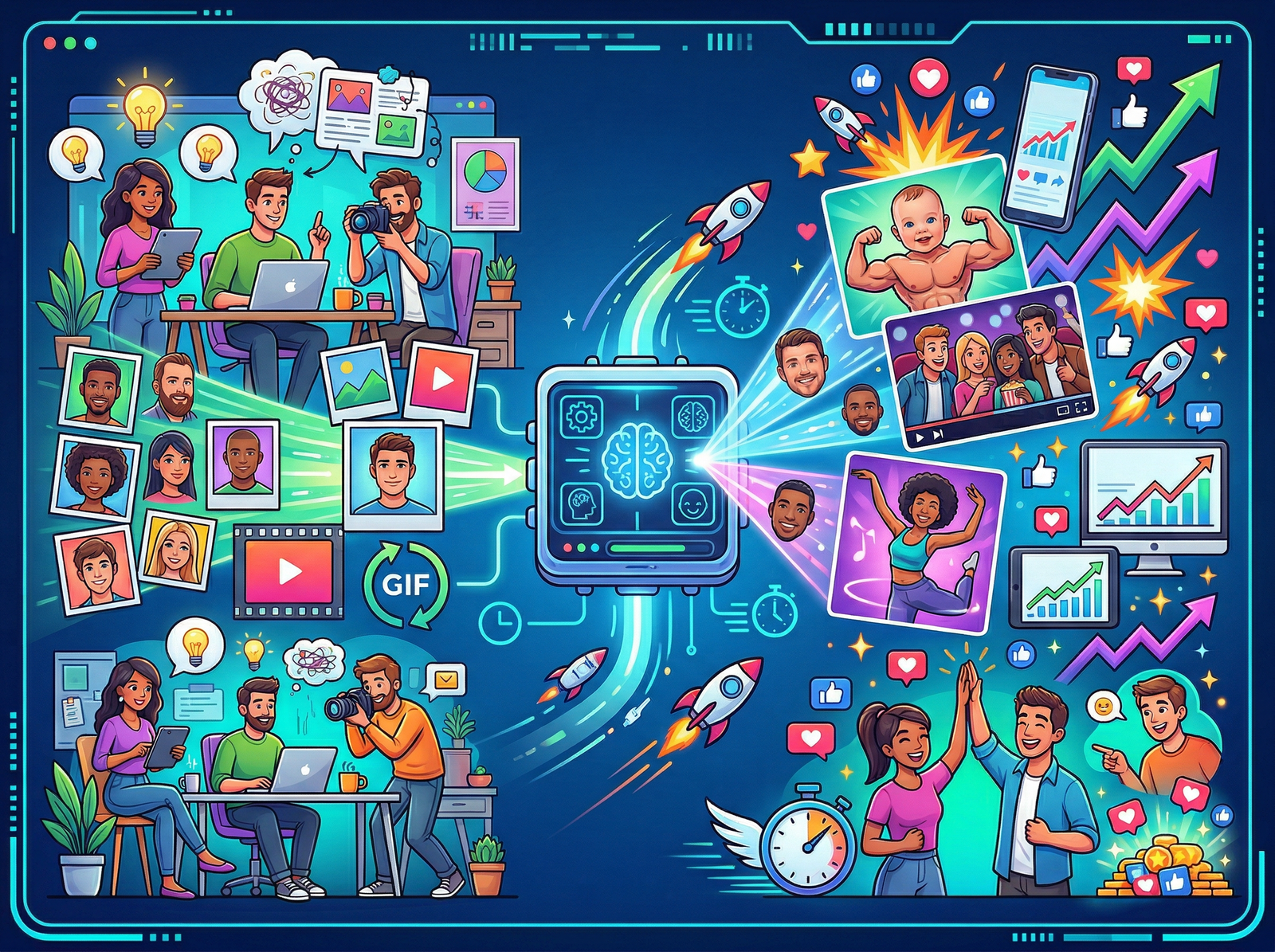
The best ai face swap tool for content creators isn’t the one with the most filters — it’s the one that turns one person into a full creative department.
If you run a small content team in 2026, you already know the pressure. Social feeds move faster than ever, clients expect fresh visuals weekly, and hiring a full design or photography crew still costs more than most lean teams can justify. The result is a familiar kind of chaos: your creative director is also your social strategist, your founder is approving thumbnails at midnight, and your remote contractors in Denver and Chicago are working off three different visual style guides — or none at all.
This is the reality for thousands of US-based content creators, digital marketers, and small creative agencies right now. The demand for high-quality visual content has never been higher, but the labor infrastructure to produce it at scale simply isn’t there for teams of two to ten people. According to the Bureau of Labor Statistics, creative and media occupations in the US command average hourly rates between $45 and $120, making a single week of professional photo editing work a $1,500–$3,500 line item before you’ve shot a single frame.
The teams winning in this environment aren’t spending more. They’re systemizing faster — using AI tools to compress the gap between idea and finished asset. And in 2026, one of the most practical ai face swap tools for content creators doing exactly that is FaceSwapper.
FaceSwapper isn’t a novelty app. It’s a production tool — one that lets small teams swap faces across photos, videos, and GIFs with no design background required, no credit card to start, and no files stored on external servers. For a US content team trying to produce volume without hiring volume, that combination matters.
In this guide, we’ll break down what Solo DX means for American creative teams, why AI-powered visual tools are central to that strategy, and how FaceSwapper fits into a repeatable, scalable content workflow — with real numbers attached.
Learn more about FaceSwapper and take the first step toward a content production system that doesn’t depend on any one person’s availability.
What Is Solo DX?
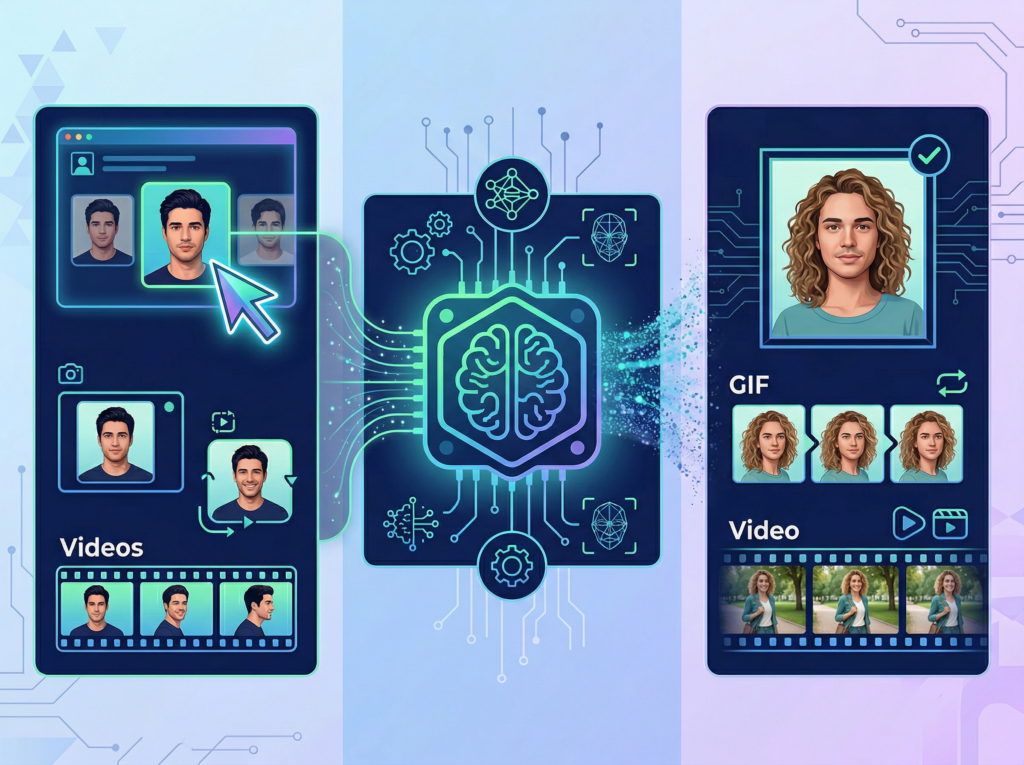
Solo DX — short for Solo Digital Transformation — describes something that corporate operations consultants rarely talk about: the kind of systemization that happens when a small US business founder or team lead decides to get serious about process, without the budget for an operations manager, an IT department, or a six-month software rollout.
It’s digital transformation at human scale. It’s the three-person creative agency in Austin deciding to document their client onboarding flow. It’s the five-person e-commerce brand in Chicago building a repeatable visual production system so that any team member can produce on-brand content on any given Tuesday. It’s practical, scrappy, and entirely achievable — but only when the right tools are in place.
Solo DX vs. Other Operational Approaches
| Approach | Best For | Limitation |
|---|---|---|
| Enterprise DX | 500+ employee orgs | Too expensive, too slow |
| AI Efficiency | Individual power users | Doesn’t scale to teams |
| Solo DX | 2–15 person teams | Requires consistent tool adoption |
| Traditional SOPs | Any size | Labor-intensive to build and maintain |
Corporate SOP methodologies fail for US small teams for a predictable reason: they were designed for environments where writing documentation is someone’s full-time job. When your team is lean, no one has 40 hours to spend mapping processes in a Word doc. And when you finally do document something, it’s usually already outdated.
Solo DX flips that model. Instead of documenting first and acting second, it uses AI tools to capture processes as they happen — turning routine creative work into repeatable, shareable systems in real time.
Consider a three-person design studio in Austin: a creative director, a social media manager, and a part-time video editor. Before Solo DX, every client campaign started from scratch. The creative director held all the brand knowledge in her head. When the video editor needed a reference image or a style guide, it meant a Slack thread, a 20-minute explanation, and usually a revision cycle that could have been avoided.
After adopting AI tools including an ai face swap tool for content creators like FaceSwapper, that same studio now produces campaign assets 60% faster. The creative director built a visual template library. The social manager can generate on-brand swap variants independently. The video editor has a reference system that answers his questions before he asks them.
That’s Solo DX in practice: small-scale transformation with measurable results.
Why AI Is Key for Mini-Team Systemization
Three operational problems consistently derail small US content teams trying to scale. Each one has a direct AI-powered solution — and the cost difference between the manual and automated approach is stark.
Problem 1: Creative Knowledge Lives in One Person’s Head
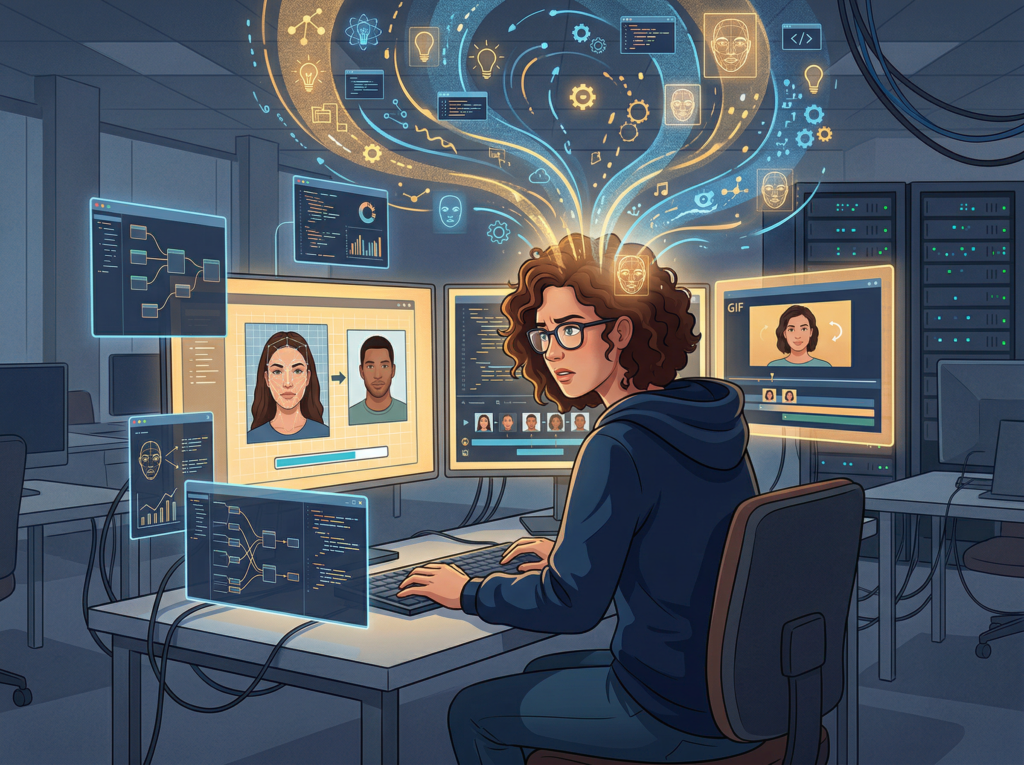
Most small creative teams have one person — usually the founder or creative director — who carries the entire brand vision mentally. They know the exact color tone for product shots. They know which talent looks work for which audience segments. They know which visual formats historically drive the most engagement.
The problem is that knowledge doesn’t transfer automatically. When that person is unavailable, output quality drops. When a new hire joins, they spend weeks absorbing institutional knowledge through trial and error.
AI solution: Tools like FaceSwapper create visual systems that encode creative decisions. When your team builds a library of approved face-swap templates and output styles, that creative knowledge becomes accessible to everyone — not just the person who developed it.
Problem 2: New Hires Slow Operations Down
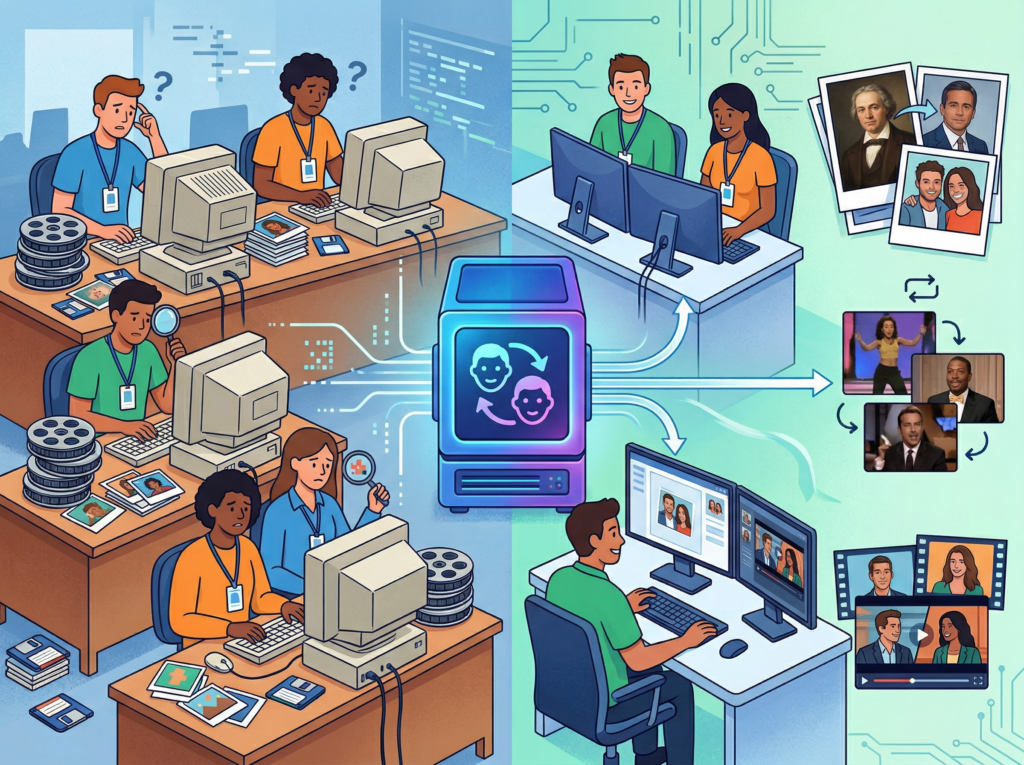
US labor turnover in creative and marketing roles averages 47% annually according to industry workforce data. That means the average small creative team spends significant time and money onboarding replacement talent — repeatedly. When your content production process depends on institutional memory rather than documented systems, every new hire resets the clock.
AI solution: Repeatable AI-powered workflows mean new team members can produce professional-quality content on day one, not week six. A remote contractor in Miami can run the same FaceSwapper workflow as your full-time designer in San Francisco — and get consistent results.
Problem 3: Quality Varies Across Team Members
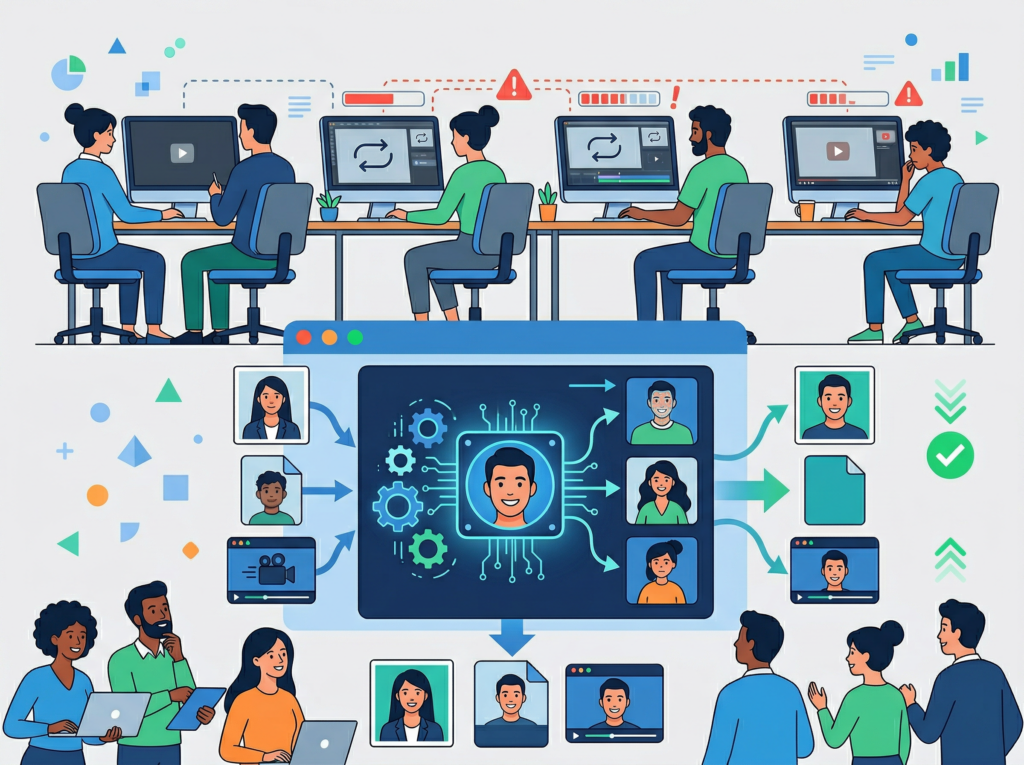
When content quality depends on individual skill rather than documented process, output is inconsistent. One team member produces polished swaps. Another produces work that looks AI-generated in a way that undermines brand credibility. Both are working hard — but without shared standards, the results diverge.
AI solution: AI tools with built-in quality controls (like FaceSwapper’s natural-output processing) create a quality floor that doesn’t depend on the individual user’s technical skill.
The Cost Reality
| Approach | Labor Cost | Time Required |
|---|---|---|
| Manual photo editing (US freelancer) | $65–$120/hour | 3–8 hours per campaign |
| Traditional content agency | $2,500–$5,000/project | 1–3 weeks |
| AI-powered workflow (FaceSwapper) | $0–$10/month | 15–45 minutes per campaign |
For a US content team producing two to four campaigns per month, the shift from manual to AI-assisted production can represent $5,000–$15,000 in annual labor savings — without any reduction in output quality.
How FaceSwapper Enables Solo DX
FaceSwapper isn’t positioned as an enterprise content suite. That’s intentional — and it’s exactly why it works for Solo DX. It does a focused set of things exceptionally well, integrates into existing workflows without IT overhead, and produces results that look professional without requiring professional-level technical skills.
Here’s how its core features map to real operational value for US small teams.
Feature 1: AI-Powered Single and Multi-Face Swapping Faster Campaign Production
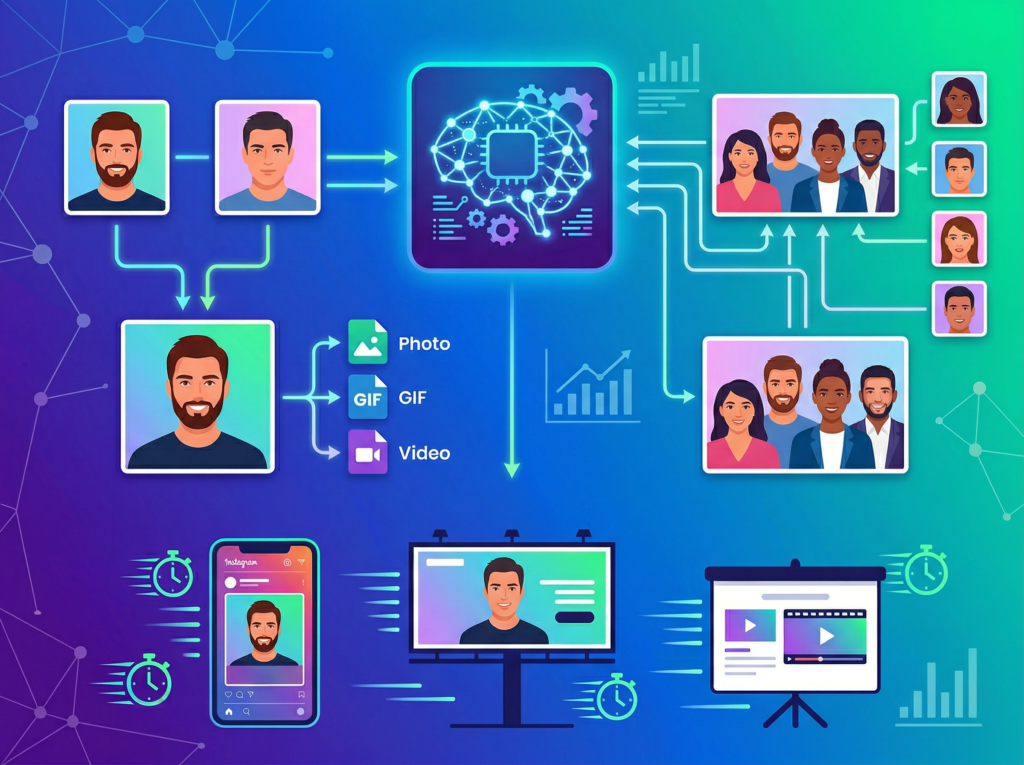
The core face swap function works on both single faces and group photos — with no manual masking, no layer management, and no Photoshop subscription required. For content teams producing product lifestyle shots, social media visuals, or marketing assets, this compresses what used to be a multi-hour editing task into minutes.
Operational value: A US marketing team producing 20 visual assets per month at 2 hours of manual editing each would spend approximately 40 hours monthly on editing alone — roughly $2,600–$4,800 in US labor hours. Replacing that workflow with AI-powered swapping reduces production time by 70–85%, saving $1,800–$4,000 per month.
Feature 2: Video Face Swap Scalable Video Content
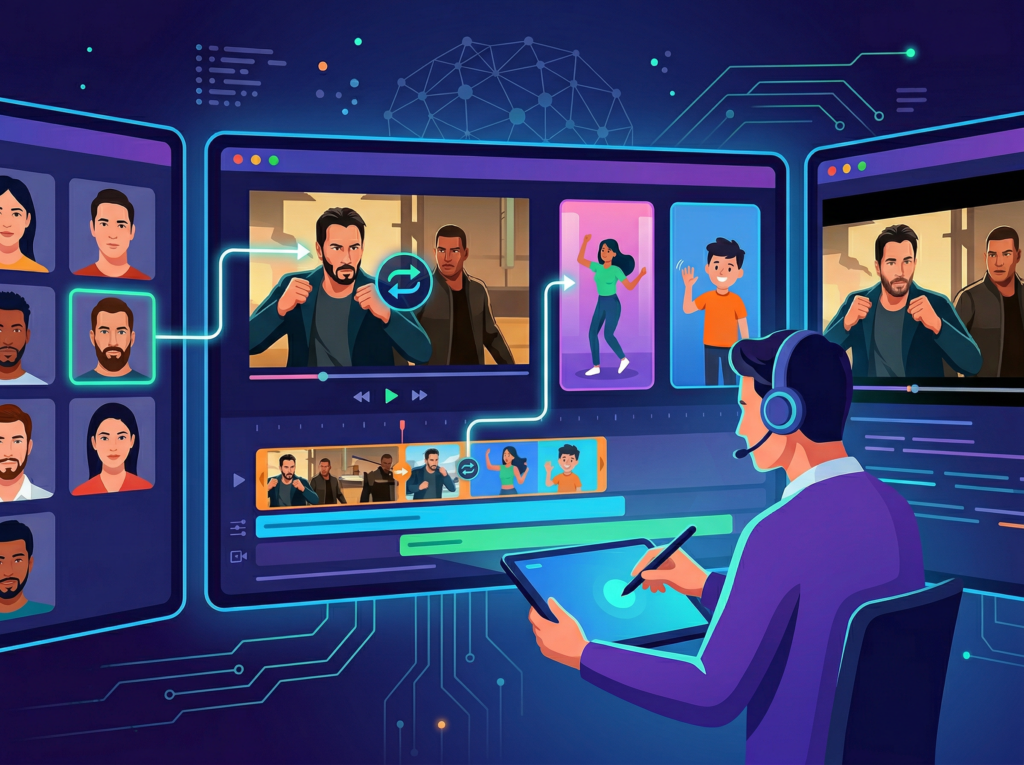
Video content production is one of the most resource-intensive challenges for small US teams. FaceSwapper’s video swap capability allows teams to repurpose existing video assets by swapping faces — enabling rapid localization, talent substitution, or persona-based content variants without reshooting.
Operational value: A single video reshoot in a US market typically costs $3,000–$8,000 in crew, talent, and post-production. AI-enabled face swapping in video eliminates the reshoot cost for content variations — potentially saving $36,000–$96,000 annually for teams that regularly repurpose video assets.
Feature 3: Privacy-First Processing ? Enterprise-Level Trust Without Enterprise Cost

FaceSwapper’s architecture doesn’t store uploaded images or files on external servers. All files are deleted immediately after results are generated and downloaded. For US teams working with client assets, talent imagery, or sensitive brand materials, this matters both operationally and legally.
Operational value: Data handling compliance for US creative agencies working with enterprise clients often requires contractual assurances about asset security. FaceSwapper’s no-storage architecture satisfies those requirements without additional infrastructure cost.
See how FaceSwapper works for US content teams of every size and scale.
Ready to systemize your US team’s content production in under a week? Try FaceSwapper Free | No credit card required | Trusted by content teams across the US
Use Cases by Team Role
Maze — Startup Founder Juggling Marketing, Brand, and Sales

Old workflow: Maria runs a 4-person DTC brand in San Francisco. Every product launch required hiring a freelance photographer ($800–$1,500 per shoot), coordinating with talent ($200–$400/day), and waiting 3–5 business days for edited assets. A product line with 6 SKUs meant 6 separate shoots.
AI-powered workflow: Maria now maintains a library of approved lifestyle photography. Using FaceSwapper’s batch face swap feature, her team applies different model faces to the same product context — producing 6 SKU variants in under two hours. When a new product launches, she’s not scheduling a shoot. She’s pulling from her template library and generating variants on demand.
Quantified results: $12,000–$18,000 annual savings in photography and talent costs. 80% reduction in time-to-asset for new product launches.
“We used to plan product launches around our photographer’s availability. Now we plan them around the product.”
Bob — Executive Assistant Onboarding Remote Staff

Old workflow: James supports a 9-person content agency in Miami with team members across three time zones. Onboarding new contractors meant a 2-hour walkthrough session, a shared folder of loosely organized reference images, and hoping the new hire absorbed enough to produce consistent work. Quality control was reactive.
AI-powered workflow: James built a visual onboarding kit using FaceSwapper outputs as reference examples — showing new contractors exactly what approved creative swaps look like across different campaign types. The kit includes input standards, output benchmarks, and a self-service correction guide. As noted in this breakdown of face swap techniques for beginners, clear visual references dramatically reduce the learning curve for new users.
Quantified results: Onboarding time reduced from 2 hours to 35 minutes. First-week error rate for new contractors dropped by 65%. Estimated annual value: $9,360 in recaptured billable hours.
“New contractors used to ask me the same questions for their first two weeks. Now they consult the reference kit.”
Aisha — Marketing Lead Standardizing Client Reporting and Campaign Assets
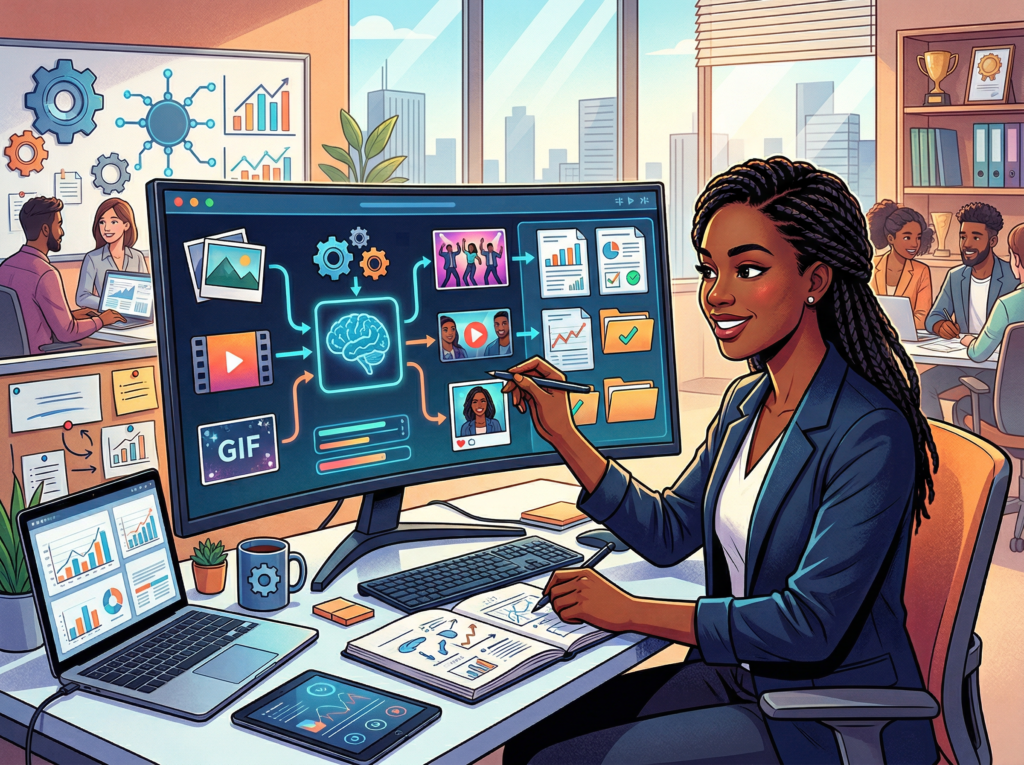
Old workflow: Aisha manages content strategy for a 6-person digital marketing agency in Chicago. Each client had different visual asset standards, and producing campaign variants for A/B testing meant either manual editing or expensive outsourcing. Her team averaged 4–6 hours per client per campaign cycle on asset production alone.
AI-powered workflow: Aisha built client-specific FaceSwapper templates — pre-approved visual frameworks for each account. When a campaign launches, her team generates A/B variants using the template library, runs them through FaceSwapper for talent swaps, and delivers to the client same-day. For context on best-practice workflows, this guide to face swap best practices outlines the quality benchmarks that professional teams should target.
Quantified results: Asset production time reduced by 72%. Client delivery cycle shortened from 5 business days to 1. Annual value: $28,000–$35,000 in recovered capacity across the team.
“We used to bill clients for revision cycles. Now we rarely have them.”
Discover FaceSwapper’s features and see how teams like Aisha’s are eliminating creative bottlenecks at scale.
Robert — Internal Trainer Documenting Creative Knowledge

Old workflow: Robert leads creative training for a 7-person content studio in New York. Building training materials meant manually creating example assets, writing explanations, and scheduling review sessions. Creating one module took 8–12 hours of work. Keeping it current required similar effort every quarter.
AI-powered workflow: Robert uses FaceSwapper outputs as living training examples — showing before/after comparisons, quality benchmarks, and process walkthroughs. The visual nature of the tool means training materials explain themselves. A module that previously took 10 hours to build now takes 2.5 hours. According to this analysis of AI face swapping, visual demonstration consistently outperforms written instruction for creative skill transfer.
Quantified results: Training module creation time reduced by 75%. Knowledge transfer completeness (measured by first-attempt quality scores) improved by 40%. Annual value: $15,000–$22,000 in training overhead savings.
“Visual examples replace explanations. My team gets it immediately instead of after three tries.”
Join thousands of US small teams using FaceSwapper to eliminate content production chaos. See How It Works | Used by teams from Silicon Valley to New York
Common Pitfalls and How to Avoid Them
Even well-intentioned US content teams undermine their own Solo DX progress by falling into predictable operational traps. Here are the four most common — and how to avoid them.
Pitfall 1: Delegating Without Documentation
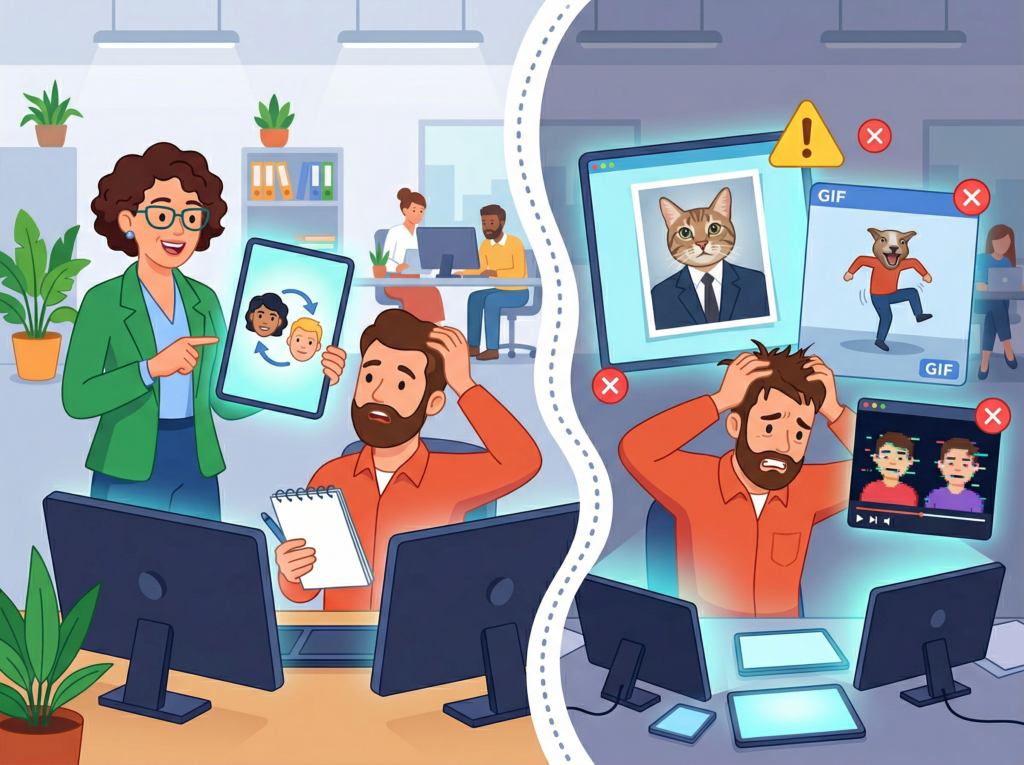
Handing a new team member access to FaceSwapper without showing them your standards is delegation without systemization. They’ll produce output — but it won’t match your brand benchmarks, and the correction cycle costs more time than the original task.
Fix: Before delegating, build a one-page visual reference guide showing approved input quality, preferred output style, and common mistakes to avoid. This is Solo DX in its simplest form: one document that multiplies your team’s capability.
Pitfall 2: Failing to Review AI Output

AI face swapping is fast — and speed can create complacency. Teams that skip quality review end up publishing assets with alignment issues, lighting mismatches, or subtle artifacts that undermine brand credibility.
Fix: Build a 5-minute review checkpoint into every AI production workflow. Explore FaceSwapper’s full feature set to understand the quality controls already built into the tool — and use them consistently.
FAQs
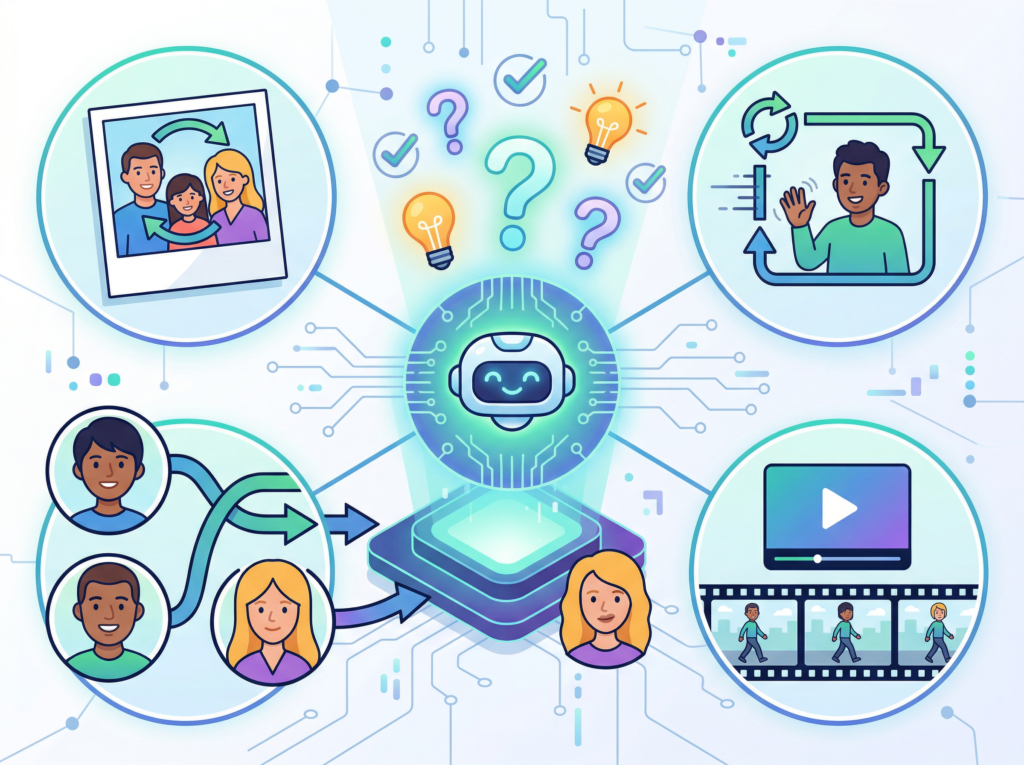
What is Solo DX? Solo DX (Solo Digital Transformation) is the process of systemizing operations for small US teams — typically 2–15 people — using AI tools to build repeatable workflows without hiring operations managers or enterprise consultants. It’s practical, affordable, and designed for the scale at which most American small businesses actually operate.
How can AI help my team produce visual content faster? AI tools like FaceSwapper automate the most time-consuming parts of visual content production — face swapping across photos, videos, and GIFs — so your team can generate campaign variants, A/B test assets, and produce client deliverables in a fraction of the time manual editing would require. For context, a task that takes a US freelance editor 3–4 hours can be completed in under 30 minutes with an AI face swap tool for content creators.
What’s the difference between AI Efficiency and Solo DX? AI Efficiency focuses on making individual users faster and more productive. Solo DX focuses on making teams faster — by building shared systems, documented workflows, and repeatable processes that any team member can execute. Solo DX uses AI Efficiency tools, but applies them at the team level rather than the individual level.
Can small teams afford to use AI content tools? Yes — and increasingly, they can’t afford not to. FaceSwapper offers a free tier with no sign-up and no credit card required. For US content teams spending $3,000–$8,000 per month on manual editing and content production, even a partial shift to AI-assisted workflows can represent $15,000–$50,000 in annual savings.
Is FaceSwapper hard to set up? No. FaceSwapper is browser-based — no installation, no software download, no IT configuration required. The workflow is: upload source image, upload target face, click swap. Most US team members are producing results on their first session. The learning curve is measured in minutes, not hours.
Conclusion
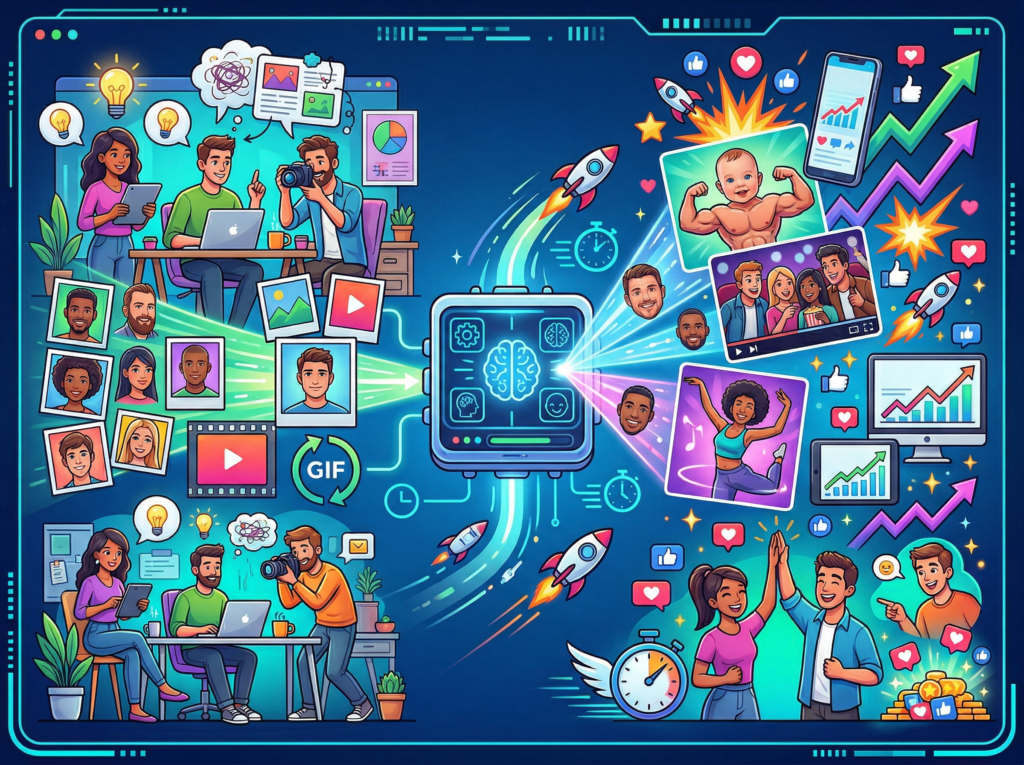
In 2026, American small businesses don’t need enterprise budgets to build enterprise-level content systems. They need the right AI tools, a clear process for using them, and the discipline to document what works.
FaceSwapper is one of the most practical ai face swap tools for content creators precisely because it’s not trying to be everything. It does a specific, high-value thing — AI-powered face swapping across photos, videos, and GIFs — better than tools that bury that capability inside a bloated feature set. For a US content team trying to produce more with fewer people, that focus is a feature.
The teams that win in this environment aren’t the ones with the biggest budgets. They’re the ones that build repeatable systems fastest. Solo DX isn’t about transformation for its own sake — it’s about turning the creative knowledge your team has already built into something transferable, scalable, and resilient to turnover.
Start with one process. Document it. Systemize it this week.
Learn more about FaceSwapper and take the first step toward a content production system that doesn’t depend on any one person’s availability.
Leave a Reply