The AI that works invisibly to secure your data and automate your workflows.
What is Shadow?
Shadow is an AI video generator designed to create dynamic video content from user inputs. It enables users to produce videos from text prompts, images, or other media, transforming static ideas into moving visual narratives. Developed by the team at Shadow, this tool utilizes machine learning algorithms to process user-provided descriptions and assets. You can explore its official capabilities and access the platform directly at its website. For creators seeking to produce marketing materials or social media clips, this type of video generator is an effective solution for rapid visual storytelling, similar to other tools found within the AI Plaza’s video generation category.
Key Findings
Shadow Detection: Identifies potential security threats before they impact your critical business operations.
Data Encryption: Secures all sensitive information with military-grade protocols across every network transmission.
Access Control: Manages user permissions precisely to ensure only authorized personnel reach confidential company data.
Threat Analysis: Continuously monitors network activity to detect and neutralize sophisticated cyber attacks immediately.
Incident Response: Automatically initiates containment procedures to minimize damage from any confirmed security breach.
Behavioral Analytics: Learns normal user patterns to flag anomalous activities that could indicate compromise.
Compliance Reporting: Generates detailed audit trails and reports to meet strict industry regulatory requirements effortlessly.
Real Time Alerts: Delivers instant notifications about suspicious events directly to your security team’s dashboard.
Cloud Integration: Protects your hybrid infrastructure by extending security policies seamlessly across all cloud platforms.
Vulnerability Assessment: Proactively scans systems for weaknesses and recommends prioritized patches to prevent exploitation.
Your AI co-pilot for turning ideas into actionable plans instantly.
What is Aha?
Aha is a video generator designed to produce animated videos from textual descriptions. It enables users to create dynamic visual content from simple text prompts. Developed by the team at Aha, this tool utilizes machine learning algorithms to process user input and generate corresponding video sequences. You can explore its official features and capabilities on their website. This type of AI tool is particularly effective for content creators and marketers who need to quickly produce engaging explainer videos or social media clips. For those interested in similar creative AI applications, the AI Plaza offers a curated selection of video generation tools for comparison.
Key Findings
Intelligent Analysis: Uncovers hidden patterns and insights from complex datasets to drive smarter decisions.
Predictive Forecasting: Anticipates market trends and customer behavior with twelve months of projected accuracy.
Seamless Integration: Connects effortlessly with your existing business software and tools without disruptive downtime.
Automated Reporting: Generates comprehensive performance summaries and actionable insights every single week automatically.
Customizable Dashboards: Provides real-time data visualization tailored to your specific departmental needs and KPIs.
Natural Conversations: Understands and responds to complex queries using advanced, context-aware language models daily.
Proactive Alerts: Notifies your team of critical anomalies and opportunities instantly via preferred channels.
Workflow Optimization: Streamlines internal processes by identifying bottlenecks and recommending efficient procedural improvements consistently.
Data Security: Protects all sensitive business information with enterprise-grade encryption and strict access controls.
Scalable Performance: Grows effortlessly with your business, handling increased data loads and user requests reliably.
Tactiq is a meeting assistant designed to automatically transcribe and summarize conversations. It enables users to generate structured notes and action items from live meetings or recorded audio.
Developed by the team at Tactiq, the tool utilizes machine learning algorithms to process spoken dialogue with high accuracy. You can learn more about its features on the official Tactiq website. This makes it particularly effective for professionals who need to capture key decisions without manual note-taking, streamlining post-meeting workflows for better productivity. For similar tools that enhance meeting efficiency, you can explore other options in the meeting assistants category.
Key Findings
Live Transcription: Captures every spoken word in meetings with real-time accuracy and clarity.
Speaker Identification: Automatically labels each participant in conversations for clear and organized meeting notes.
Action Detection: Highlights decisions and assigned tasks to ensure critical follow-ups are never missed.
Topic Summarization: Condenses lengthy discussions into concise, actionable summaries for quick review and reference.
Platform Integration: Connects seamlessly with popular video conferencing tools like Zoom, Google Meet, and Teams.
Secure Storage: Keeps all your transcriptions and notes protected with enterprise-grade encryption and access controls.
Team Collaboration: Allows members to share, comment, and edit transcripts together in a shared workspace.
Searchable History: Finds any past discussion instantly using powerful keyword search across your entire archive.
One-Click Export: Saves transcripts and summaries directly to Google Docs, Notion, or as text files.
Insight Analytics: Provides data on meeting frequency, duration, and key topics to improve productivity.
Turn complex ideas into clear visuals with AI-powered diagramming.
What is Wondershare Edrawmax?
Wondershare EdrawMax is a diagramming software designed to facilitate the creation of visual representations of information. It enables users to generate a wide array of diagrams, charts, and layouts from conceptual ideas or structured data.
Developed by the team at Wondershare, the software utilizes machine learning algorithms to process user inputs and intelligently assist in the diagramming process. You can explore its official features and capabilities directly on the Wondershare EdrawMax website. This tool is particularly effective for professionals who need to translate complex processes into clear visuals, making it a valuable asset within the broader ecosystem of AI-powered productivity software.
Key Findings
Diagram Creation: Transforms complex ideas into clear visual diagrams for any project or presentation effortlessly.
Brainstorming Tools: Captures and organizes creative thoughts visually to enhance team collaboration and idea development effectively.
Template Library: Offers thousands of professional templates to jumpstart any diagram, chart, or floor plan instantly.
Team Collaboration: Enables real-time co-editing and commenting for seamless teamwork on diagrams from any location.
Cloud Integration: Saves and syncs your work automatically across all devices for access anywhere, anytime.
Data Visualization: Connects live data to create dynamic charts and graphs that update automatically with changes.
Professional Output: Exports diagrams in multiple formats including PDF, PPT, and Word for polished presentations easily.
Intelligent Formatting: Automatically aligns and styles shapes and connectors for a clean, professional diagram appearance.
Cross-Platform Use: Works perfectly on Windows, Mac, Linux, and web browsers for universal access and compatibility.
Custom Symbol Libraries: Provides specialized icons and shapes for industries like engineering, network design, and business.
AI meeting assistant that turns conversations into actionable notes and tasks.
What is MeetMinutes?
MeetMinutes is an AI meeting assistant designed to automate the documentation and analysis of conversations. It enables users to generate structured notes, summaries, and action items directly from meeting audio.
Developed by the team at MeetMinutes, the platform utilizes machine learning algorithms to process spoken dialogue, transforming it into organized text. You can explore its full capabilities on the official website. This tool is particularly effective for professionals and teams seeking to improve meeting productivity and accountability, making it a valuable resource among productivity-focused AI tools.
Key Findings
AI Assistant: Transcribes meetings in real time with high accuracy across multiple languages.
Meeting Summaries: Generates concise and actionable summaries highlighting key decisions and assigned tasks.
Action Items: Tracks and assigns follow up tasks automatically syncing with your project management tools.
Searchable Transcripts: Allows instant keyword search across all past meetings for easy information retrieval.
Speaker Identification: Distinguishes between different participants labeling each speaker clearly in the transcript.
Secure Storage: Keeps all your meeting data encrypted and compliant with enterprise security standards.
Seamless Integration: Connects directly with popular calendar and video conferencing platforms you already use.
Live Collaboration: Enables teams to highlight and comment on transcripts in real time together.
Custom Templates: Creates tailored summary formats to match your team’s specific workflow and needs.
Insight Analytics: Provides data on meeting efficiency participant engagement and topic frequency trends.
Rewrite anything with AI that sounds just like you.
What is Wordtune?
Wordtune is an AI writing assistant designed to help users refine and improve their written text. It enables users to transform their initial drafts into more polished, clear, and stylistically appropriate content. Developed by the team at Wordtune, the tool utilizes machine learning algorithms to process user-provided text. You can explore its full capabilities on the official Wordtune website. This type of assistant is particularly effective for professionals and students who need to enhance the tone, clarity, and impact of their documents. For those seeking similar tools to improve their writing, the AI Plaza features a dedicated category for writing assistants.
Key Findings
AI Writing: Helps professionals craft clear and impactful text for any business communication need.
Grammar Correction: Instantly fixes grammatical errors and typos to ensure polished and professional writing.
Tone Adjustment: Refines the emotional tone of your text to better suit your audience and intent.
Sentence Rewriting: Rephrases existing sentences to improve clarity, conciseness, or overall readability instantly.
Vocabulary Enhancement: Suggests stronger and more precise word choices to elevate your writing quality.
Idea Expansion: Develops brief thoughts into fully fleshed-out paragraphs with relevant details and explanations.
Summarization Tool: Condenses long articles or documents into concise summaries while preserving key information.
Plagiarism Checker: Scans your text for duplicate content to ensure originality and maintain integrity.
Team Collaboration: Enables multiple users to edit and provide feedback on documents in real time.
Writing Analytics: Provides insights into your writing habits and patterns to help you improve consistently.
Automate sales outreach and close more deals with AI-powered lead engagement.
What is B2B Rocket?
B2B Rocket is a sales automation platform designed to streamline and enhance business-to-business outreach and lead generation. It enables users to create personalized, automated sales sequences from targeted prospect lists.
Developed by the team at B2B Rocket, the platform utilizes machine learning algorithms to process user-provided data and optimize communication strategies. You can explore its full capabilities on the official B2B Rocket website. This type of tool is particularly effective for sales teams seeking to scale their prospecting efforts efficiently, a common goal for professionals utilizing sales automation software.
Key Findings
Lead Generation: Scans millions of business profiles to identify and qualify ideal customer prospects automatically.
Sales Intelligence: Delivers deep company insights and trigger events to empower your outreach with precision.
Conversation Automation: Engages prospects with personalized, AI-driven dialogues that nurture leads and book meetings autonomously.
Pipeline Acceleration: Moves prospects through the sales funnel faster with intelligent sequencing and follow-up reminders.
Revenue Predictions: Forecasts sales outcomes and pinpoints risks using advanced AI models on your data.
Team Alignment: Syncs marketing and sales activities on a single platform for unified execution and tracking.
Integration Hub: Connects seamlessly with your existing CRM and business tools without disruptive setup or coding.
Performance Analytics: Measures campaign success and agent productivity with clear, actionable reports and real-time dashboards.
Data Enrichment: Automatically appends firmographic and technographic details to leads for highly targeted segmentation and messaging.
Compliance Guard: Ensures all communications adhere to global regulations like GDPR with built-in safeguards and controls.
The AI co-pilot that accelerates your team’s learning and productivity.
What is Qureos?
Qureos is a learning platform designed to facilitate skill development and career advancement. It enables users to access structured educational content and practical resources from industry professionals.
Developed by the team at Qureos, the platform utilizes machine learning algorithms to process user interactions and learning progress to personalize educational pathways. You can explore its official features at qureos.com. This system is particularly effective for individuals seeking to build job-ready competencies, making it a valuable resource among educational technology tools.
Key Findings
Personalized Learning: Creates custom skill development paths for each employee based on role.
Career Roadmaps: Provides clear, structured progression plans with defined milestones and required competencies.
Skill Assessments: Identifies individual and organizational skill gaps through tailored quizzes and simulations.
Mentor Matching: Connects employees with ideal internal or external mentors using intelligent compatibility algorithms.
Progress Tracking: Monitors learner advancement and skill mastery with detailed analytics and visual reports.
Content Curation: Aggregates and recommends relevant courses, articles, and videos from top global platforms.
Goal Alignment: Ensures individual development objectives are directly linked to broader company strategic goals.
Engagement Analytics: Measures platform interaction and learning participation to improve program adoption rates.
Talent Development: Builds a robust internal talent pipeline by systematically upskilling the existing workforce.
Integration Ready: Seamlessly connects with major HRIS and LMS platforms for unified data management.
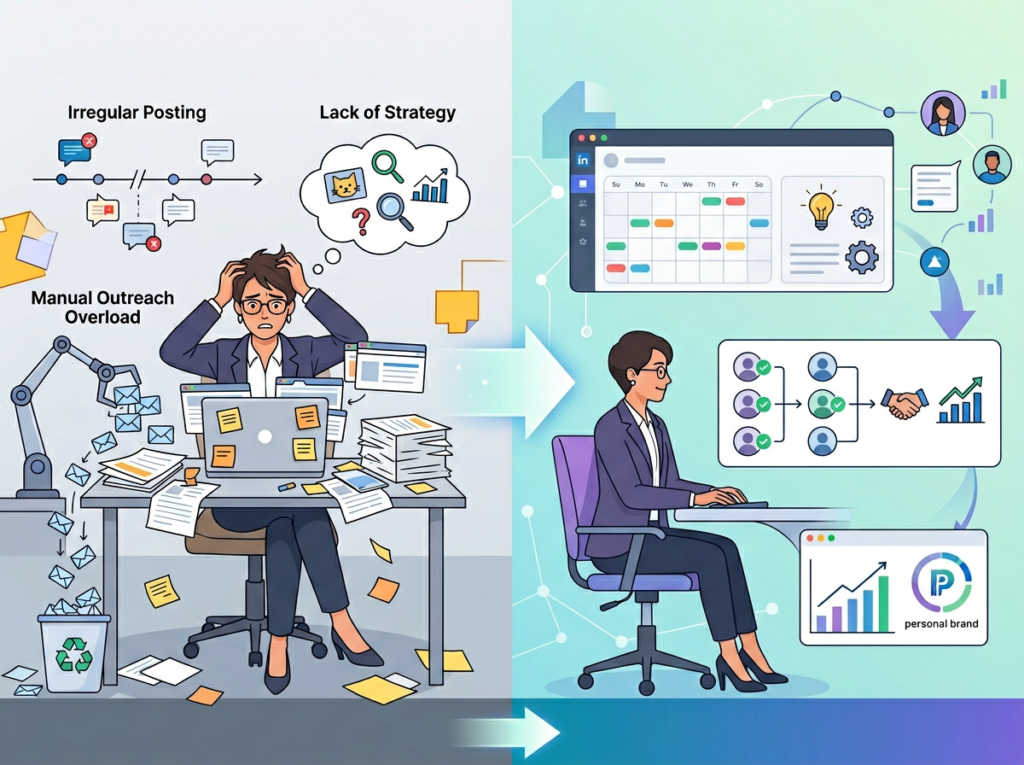
LinkedIn has become the most valuable lead generation channel for US small businesses in 2026 — but for most founders and small teams, it’s also one of the most time-consuming. If you’re running a team of two to ten people, you already know what this looks like: someone remembers to post on Monday, nothing goes up Tuesday through Thursday, and by Friday the algorithm has forgotten you exist.
The problem isn’t motivation. It’s bandwidth.
US-based small teams are stretched across sales, delivery, and client work simultaneously. The average founder spends roughly 6.5 hours per week on LinkedIn-related tasks — writing posts, responding to comments, monitoring competitors, and trying to stay relevant in a feed that moves at lightning speed. At $100/hour in opportunity cost, that’s over $33,000 per year directed at a channel most teams never fully optimize.
What’s changed in 2026 is that AI linkedin automation tools have matured enough to handle the repetitive, high-volume side of content production without sacrificing the personal tone that makes LinkedIn work. The platforms that do this best don’t just generate generic posts — they learn your voice, study what’s working in your niche, and help you maintain a consistent presence even during your busiest client weeks.
Taplio sits at the center of this shift. Built specifically for LinkedIn, it combines AI content generation, scheduling, engagement tracking, and lead relationship management into a single platform designed for founders, marketers, and small teams who need to grow on LinkedIn without adding headcount.
This article breaks down exactly how Taplio works for US small teams in 2026 — what it enables, where it saves real money, and how teams across industries are using it to generate leads and build authority without burning out their people.
What is Solo DX?
Solo DX — short for Solo Digital Transformation — describes the process of using AI and automation tools to build scalable, repeatable systems without a dedicated operations team. It’s the approach US founders take when they’ve outgrown “winging it” but aren’t yet in a position to hire a VP of Marketing or a full-time content strategist.
Unlike enterprise digital transformation, which relies on six-figure consultants and multi-year roadmaps, Solo DX is lean by design. It’s what happens when a three-person agency in Austin decides that instead of hiring a social media manager, they’ll use an AI linkedin automation tool to run their LinkedIn presence with 90 minutes of input per week instead of 8.
How Solo DX compares to other categories:
Category
Scale
Focus
Budget
Solo DX
2–10 person teams
Systems + automation
$50–$500/month
AI Efficiency
Individual operators
Speed + output
$20–$100/month
AI Revenue Boost
Growth-stage teams
Leads + pipeline
$200–$2,000/month
Enterprise AI
50+ employees
Cross-dept integration
$5,000+/month
The reason corporate SOP methods fail for US SMBs is structural. A Fortune 500 company can assign a team to audit content workflows for six weeks. A six-person consulting firm in Denver can’t. They need tools that are opinionated, fast to set up, and immediately useful — not platforms that require a 40-hour onboarding process before you see your first post.
Consider a three-person design studio in Austin. Before using an AI-driven LinkedIn workflow, the founder — who had the strongest voice and deepest client relationships — was the only person who could write the studio’s LinkedIn content. When she was on deadline, posting stopped. When posting stopped, inbound inquiries dropped. Within 30 days of switching to a structured AI-assisted content system, she was able to hand off 70% of post creation to a junior team member working from AI-generated drafts, while still maintaining her distinctive voice.
Explore Taplio’s features to see how it supports this kind of workflow hand-off for small creative and professional services teams.
Solo DX is the framework that makes this possible at scale — and LinkedIn content automation is one of its most immediate, measurable applications.
Try Taplio Free | No credit card required | Trusted by 10,000+ US teams
Why AI is Key for LinkedIn Content Automation
Problem 1: The Founder Bottleneck
In most small businesses, the founder has the strongest personal brand, the deepest industry knowledge, and the least available time. Content that should live on LinkedIn sits in their drafts folder for three weeks before being abandoned. When they do post, it performs well — but the inconsistency kills momentum.
The AI solution here isn’t to replace the founder’s voice. It’s to build a system that extracts their perspective efficiently. Tools that analyze past posts, identify writing patterns, and generate new drafts in that style reduce the time investment from 45 minutes per post to under 10 minutes of review and editing. Across a five-post-per-week cadence, that’s a recovery of 2.5+ hours weekly — roughly $13,000 annually at US consulting rates.
Problem 2: Team-Level Content Consistency
US labor turnover in marketing-adjacent roles runs close to 47% annually. Every time a content hire leaves, the LinkedIn voice shifts. Followers notice. Engagement drops. The algorithm penalizes inconsistency.
AI linkedin automation tools solve this by making content strategy a system rather than a person. When the guidelines, tone settings, and content templates live in the platform rather than in an employee’s head, transitions become smoother. New team members can produce on-brand content from week one instead of week six.
Problem 3: The ROI Visibility Gap
Most US small teams know LinkedIn is important — they just can’t prove it. Without clear attribution between content activity and pipeline outcomes, LinkedIn content gets deprioritized when things get busy. This creates a feast-or-famine posting pattern that undermines long-term growth.
Analytics-driven scheduling tools close this gap by tracking which content formats, topics, and posting times drive the most profile visits, connection requests, and inbound messages. When a team can see that their Wednesday morning thought leadership posts drive 3x more inbound leads than their Friday product updates, they can optimize with data rather than guessing.
The Cost Reality
Building a manual LinkedIn content operation for a small US team typically costs between $4,000 and $8,000 monthly when you factor in a part-time content strategist ($3,000–$5,000), a social media coordinator ($1,500–$2,500), and tool subscriptions. An AI-assisted approach using a platform like Taplio brings that same output to under $100/month in subscription fees, with 3–5 hours of weekly team input rather than 20+.
How Taplio Enables LinkedIn Content Automation
1. AI-Powered Post Generation
Taplio’s AI content engine analyzes your existing LinkedIn posts, identifies your writing patterns and preferred topics, and generates new post drafts that match your voice. For a marketing lead at a SaaS startup in San Francisco, this means producing a week’s worth of content in under an hour — instead of blocking out half a day.
The system can generate full posts from a short prompt, expand bullet points into narrative posts, rewrite underperforming content, and adapt a single idea into multiple formats (short insight posts, story-led posts, carousel outlines). For teams where one person is responsible for both their own and their company’s LinkedIn presence, this multiplies output without multiplying time.
Estimated ROI: Saving 4+ hours weekly at $75/hour US rate = $15,600 annually per content-responsible team member.
2. Viral Post Library and Inspiration Engine
One of the most consistent problems small teams face is ideation fatigue — running out of things to say before running out of audience. Taplio solves this with a library of high-performing LinkedIn posts, filterable by industry, format, engagement level, and topic. As noted in this breakdown of how AI supports LinkedIn growth, maintaining a reliable inspiration pipeline is foundational to consistent posting.
For US teams in B2B services — consulting, marketing agencies, tech startups — the ability to see what’s resonating in your specific niche and then adapt those structures to your own perspective compresses the ideation phase from hours to minutes.
Estimated ROI: Eliminating 3 hours/week of research and ideation at $85/hour = $13,260 annually.
3. Engagement and Lead Relationship Tracking
Taplio’s CRM-lite functionality tracks who’s engaging with your content — which prospects are consistently liking and commenting, which connections haven’t been contacted in 90 days, and which relationships are warming toward a conversation. For US founders and sales-led teams, this turns passive content activity into an active lead pipeline.
Rather than manually reviewing LinkedIn notifications and trying to remember which leads have been nurtured, teams can see a prioritized list of people to engage with each morning, with full context on their interaction history.
Estimated ROI: Identifying 2 additional qualified conversations per month at a 20% close rate = $24,000+ annually at an average US B2B deal size of $5,000.
See how Taplio works across all four of these functions before committing to a plan.
Ready to automate your LinkedIn content and generate leads on autopilot?Try Taplio Free | No credit card required | Trusted by 10,000+ US teams
Use Cases by Team Role
Operations Leader
James manages operations for a 12-person consulting firm in Miami. His job includes handling the firm’s LinkedIn company page, which had gone dark for six months before he took ownership of it.
Old workflow: James would brief a freelance writer monthly, receive a batch of posts, spend 2 hours editing them for accuracy and tone, and then manage the scheduling manually. Total time investment: 6–8 hours monthly, $800–$1,200 in freelancer fees.
AI-powered workflow: James uses Taplio to generate company page content from internal meeting notes and client case study summaries. He pastes a rough summary of a recent client win, the AI formats it into a structured LinkedIn post, and he approves or edits within five minutes.
Quantified results: Monthly content spend dropped from $1,000 to $99 (Taplio subscription). Time investment fell from 8 hours to 90 minutes monthly. Company page followers increased from 340 to 1,100 in four months. Two partnership inquiries came through LinkedIn that quarter.
“We went from a dead company page to one that actually represents what we do. It took less effort than I expected.” — James (composite)
Marketing Leader
Aisha is the sole marketing hire at a 7-person fintech startup in Austin. She manages the CEO’s personal LinkedIn, the company page, and her own professional brand simultaneously. Before Taplio, she was producing about 3 posts per week across all three accounts. The goal was 15.
Old workflow: Aisha maintained separate content calendars for each account in Notion, wrote every post from scratch, and spent 12–15 hours per week on LinkedIn alone. She was burning out and the accounts still weren’t hitting their targets.
AI-powered workflow: Aisha now manages all three accounts from a single Taplio workspace. Each account has its own tone profile. She generates drafts for all three in a single two-hour session on Mondays, reviews and schedules everything, and uses the remaining time for engagement and response management.
Quantified results: Weekly post volume went from 3 to 16 across the three accounts. Time on LinkedIn dropped from 15 hours to 4.5 hours weekly — a savings of 10.5 hours at her $65/hour equivalent rate, or $35,490 annually. The CEO’s profile views tripled. As this analysis of AI-assisted LinkedIn strategy notes, the combination of AI generation and human editing is what keeps content feeling authentic rather than automated.
“Managing three LinkedIn accounts used to feel impossible. Now it’s just part of Monday morning.” — Aisha (composite)
Business Development Director
Robert leads BD for a professional services firm in Chicago. He has 14,000 LinkedIn connections built over 20 years and rarely posts — despite his connections representing the firm’s single most valuable network asset.
Old workflow: Robert would occasionally share industry articles with a sentence of commentary, averaging one post per month. His network was largely dormant from a content engagement standpoint.
AI-powered workflow: Robert now uses Taplio to convert his weekly team briefing notes and client conversations into three LinkedIn posts per week. The AI drafts; Robert adds one or two personal observations in his own words; the post goes out. He also uses Taplio’s relationship tracking to identify connections who haven’t been contacted in over six months and re-engages them proactively.
Quantified results: Posts per month went from 1 to 12. Engagement rate from existing connections: 4.2% average (industry benchmark: 1.8%). Three former clients re-engaged within 90 days of Robert resuming consistent posting. Estimated referral pipeline attributed to LinkedIn reactivation: $60,000 in the first quarter.
“I didn’t think I had time to post. Turns out I just didn’t have a system. Now the system runs on maybe 20 minutes a day.” — Robert (composite)
Discover Taplio and see which use case maps most closely to your team’s current LinkedIn challenges.
Join 10,000+ US small teams using Taplio to grow on LinkedIn without the manual grind.See How It Works | Used by teams from Silicon Valley to Chicago
Common Pitfalls and How to Avoid Them
Pitfall 1: Treating AI Output as Final Copy
The most common mistake teams make is publishing AI-generated posts without editing them. Even the best AI content tools produce drafts, not finished posts. LinkedIn’s algorithm rewards authentic, conversational content — and readers can tell the difference between a post that came from a real perspective and one that was generated and published without a human pass.
The fix is simple: build a 5-minute editing step into every post. Add one specific detail — a client name (anonymized if needed), a number from your actual experience, a specific city or context. That level of personalization is what separates content that drives connections from content that gets scrolled past. You can find a detailed breakdown of Taplio including how its editing interface supports this review workflow.
Pitfall 2: Using LinkedIn Automation Without a Content Strategy
Posting consistently is necessary but not sufficient. US teams that automate posting without first defining their content pillars, target audience, and conversion goals end up with high post volume and low business impact. Before automating, spend two hours defining three to four content themes that map directly to your services and the questions your best clients ask most often.
Pitfall 3: Neglecting Multiple Accounts
For teams with both a company page and active personal brands (which is the high-leverage approach for most US B2B businesses), managing LinkedIn across multiple accounts manually creates coordination chaos. Centralized tools solve this — but only if the team commits to using them consistently rather than reverting to ad hoc posting from individual devices. This practical overview of how teams use Taplio for productivity illustrates how multi-account coordination benefits real practitioners.
FAQs
What’s the difference between AI Efficiency and Solo DX?
AI Efficiency refers to tools that make individual tasks faster — writing faster, summarizing faster, responding faster. Solo DX is about using AI to build systems that don’t depend on any one person. An individual using a writing tool to draft posts faster is AI Efficiency. A three-person team with a defined LinkedIn content system that runs consistently regardless of who’s available that week — that’s Solo DX.
Can small US teams afford LinkedIn automation tools?
Taplio’s entry-level plan is under $50/month. For US small teams spending $75–$150/hour on skilled labor, the tool pays for itself if it saves even 30–45 minutes per week. Most teams report saving 4–8 hours weekly once the system is set up — making the ROI not just positive but substantial.
Is Taplio hard to set up for a non-technical team?
No. Taplio is a browser-based application with no technical installation required. Most teams are generating their first AI-drafted posts within 20 minutes of signing up. The learning curve for the scheduling and analytics features is measured in hours, not weeks.
Try Taplio Free | No credit card required | Trusted by 10,000+ US teams
Conclusion
In 2026, American small businesses don’t need enterprise budgets to build enterprise-level LinkedIn presence. The tools that once required dedicated social media teams, expensive agencies, and five-figure monthly retainers are now accessible to a four-person startup in Denver or a solo consultant in Charlotte for under $100/month.
Taplio sits at the intersection of where that shift is most practical. It doesn’t try to replace human judgment — it removes the parts of LinkedIn content production that don’t require human judgment: the blank-page problem, the scheduling logistics, the tracking of which relationships need attention. What’s left is a more strategic, higher-leverage use of your team’s time.
The ai linkedin automation tool category has matured. The question for US small teams in 2026 isn’t whether to automate LinkedIn content — it’s which system to use and how to implement it in a way that feels authentic rather than mechanical.
Start with one account. Define three content pillars. Run the system for 30 days before evaluating results. The teams that commit to consistency — even at lower post volumes — consistently outperform those who burst-post for two weeks and then go silent.
Learn more about Taplio and see the full feature set before your next content planning session.
In 2026, US-based indie hackers, solo founders, and small development teams face a brutal paradox: the market demands faster software than ever before, but engineering headcount remains flat or shrinking. Venture dollars are tighter. Customer patience is shorter. And the gap between “we’re building it” and “we shipped it” can make or break a startup.
The inbox is full of feature requests. The sprint board is a wall of red. The backlog stretches three months out. And somewhere in the middle of all this, a two-person team is expected to ship, test, document, review, and iterate on a product that a well-funded competitor built with a team of fifteen.
This is the reality Windsurf Editor was built for.
For US developers billing at $100–$175 per hour — or building products where every delayed sprint is a delayed revenue milestone — every hour spent on repetitive scaffolding, boilerplate, and context-switching isn’t just frustrating. It’s expensive. A solo developer burning eight hours a week on tasks that could be automated is leaving $40,000–$70,000 in annual productivity on the table.
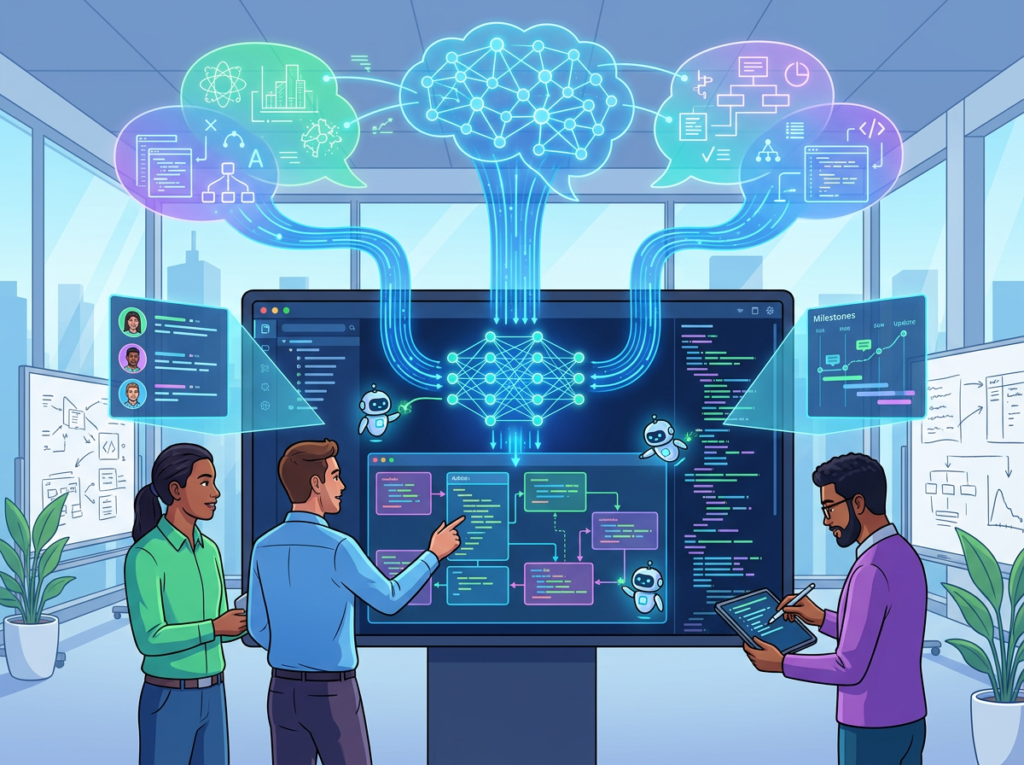
Windsurf Editor, developed by Codeium, is not just another autocomplete tool bolted onto a text editor. It’s an agentic AI coding environment that understands your codebase at depth, chains tasks together autonomously, and keeps you in a flow state longer — so the hours you do spend coding yield dramatically more output.
This article won’t give you vague “save time with AI” advice. Instead, you’ll get four concrete workflows that small teams can implement this week, each engineered to reclaim two to six hours of engineering time. You’ll see before-and-after comparisons from real developer personas, ROI calculations in USD, and an honest look at where Windsurf Editor falls short.
If you’re a founder, indie hacker, or a small team lead who wants to build more without hiring more, this is your guide.
Key Concepts of AI Coding Efficiency
Concept 1: Cognitive Offloading in Engineering Contexts
Every developer carries a mental model of the codebase in their head. File structure, function dependencies, API contracts, edge cases — this model takes hours to load and seconds to shatter. When a team member asks a question mid-sprint, when a bug surfaces in an unexpected module, or when you have to context-switch between frontend and backend tasks, that mental model partially collapses. Rebuilding it is invisible work that never appears on a sprint board but silently consumes hours every week.
Cognitive offloading means delegating this model-maintenance work to an AI that holds the full codebase in context. Rather than re-reading three files to remember how a function chains together, a developer can ask Windsurf Editor directly — and receive an accurate, context-aware answer in seconds.
Consider a developer like Ryan, a solo SaaS builder in Denver working on a B2B project management tool. Before using an AI coding editor, Ryan spent an estimated 2.5 hours daily on “re-orientation tasks”: re-reading old code before making changes, writing boilerplate he’d written dozens of times before, and manually tracing function calls through five interconnected files. With Windsurf Editor maintaining that context, Ryan reclaimed nearly 12 hours per week — time he redirected to building the billing system he’d been postponing for two months. This walkthrough of building a real app with Windsurf illustrates how the tool’s codebase awareness directly reduces this re-orientation tax in practice.
Concept 2: Context-Switching Cost and Flow State Preservation
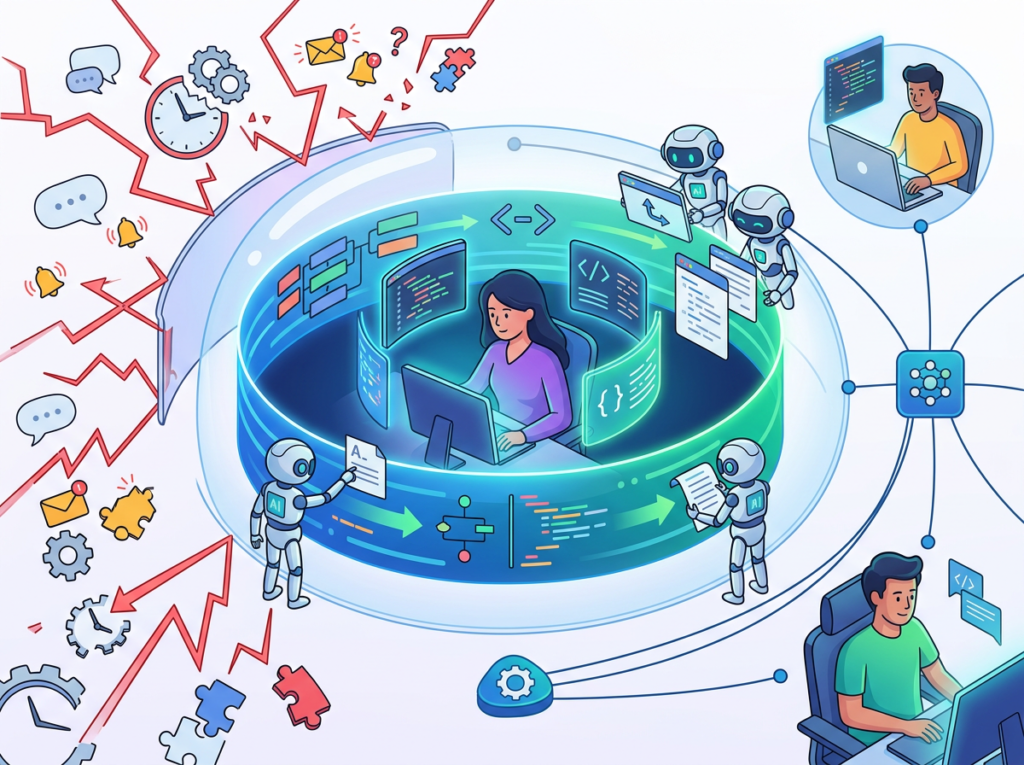
Research consistently shows that it takes an average of 23 minutes for knowledge workers to fully re-engage after an interruption. For developers, the cost is even steeper, because deep work — debugging a race condition, architecting a new feature, refactoring a complex service — requires sustained concentration that context-switching systematically destroys.
A small team of two to four developers might experience ten to fifteen context-switching events per day: Slack messages, code reviews, deployment issues, customer escalations. Each one chips away at the focused work that actually ships product.
AI coding editors reduce context-switching friction by keeping the cognitive thread intact. When Windsurf Editor can handle boilerplate generation, test scaffolding, and documentation drafting autonomously — without requiring the developer to shift attention — the interruptions that do occur are smaller and recovery is faster.
Marcus, an independent consultant in Seattle who builds custom internal tools for mid-market companies, estimates he saves five hours per week simply by not having to mentally reload the project context each time he returns to a task. Over a year, that’s 260 hours — equivalent to six and a half standard work weeks.
Concept 3: Agentic Workflow Orchestration
The third concept is what separates 2026-generation AI coding tools from the basic autocomplete assistants that emerged in 2023. Agentic orchestration means the AI doesn’t just respond to prompts — it chains sequences of actions autonomously, executing multi-step workflows without requiring a prompt for each individual step.
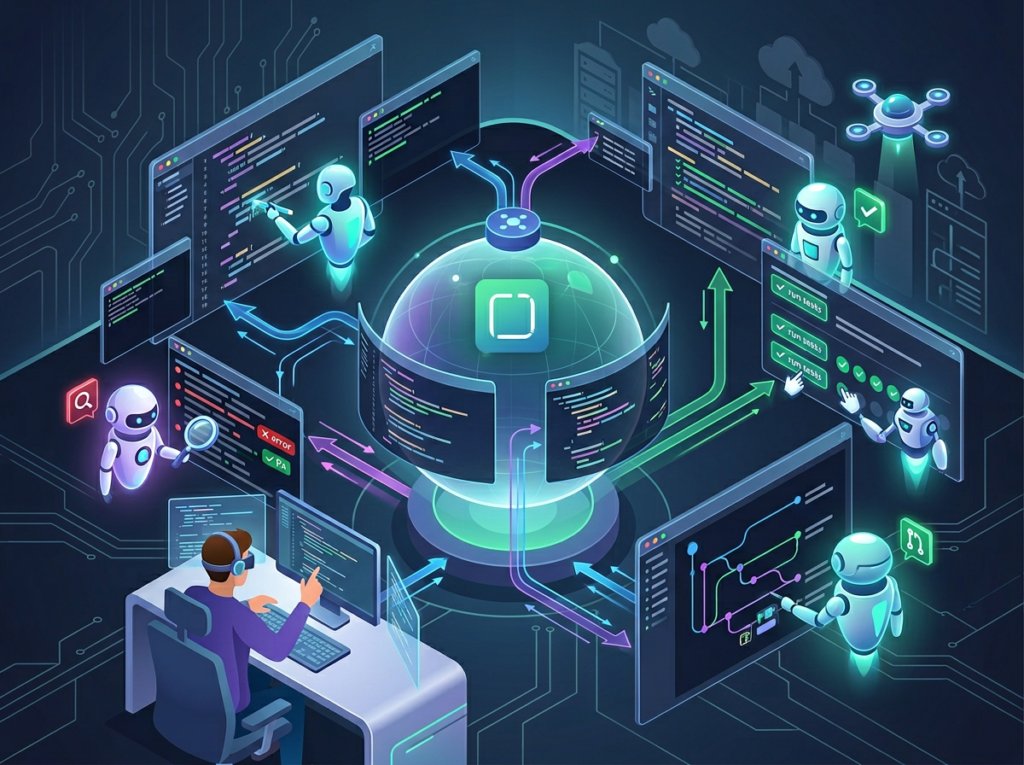
In practice, this looks like: a developer describes a feature in natural language, and Windsurf Editor scaffolds the files, writes the initial implementation, runs relevant tests, identifies failures, and proposes targeted fixes — without the developer touching the keyboard between steps. The developer reviews the output, approves or redirects, and the agent continues.
This shifts the developer from executor to reviewer — a fundamentally higher-leverage role.
For Elena, a two-person startup co-founder in Austin building a marketplace SaaS, agentic workflows reclaimed four hours per month that previously went to routine CRUD endpoint scaffolding. That’s four hours per month back into product decisions that actually differentiate her company.
To understand how Windsurf Editor specifically implements these concepts with production-ready features, explore Windsurf Editor in detail.
How Windsurf Editor Helps Efficiency
Feature 1: Cascade — Deep Codebase Context
Cascade is Windsurf Editor’s core intelligence engine. Unlike standard AI assistants that respond only to what’s in the current file or the current prompt, Cascade maintains awareness across the entire codebase, tracking file relationships, function dependencies, and the developer’s recent actions in real time.
This means when you ask Cascade to “add pagination to the users endpoint,” it doesn’t generate a generic implementation. It understands your existing API structure, follows your naming conventions, and integrates pagination in a way that’s consistent with how the rest of your codebase is written.
For a solo developer, this eliminates the “AI cleanup tax” — the extra time spent correcting AI-generated code that doesn’t fit the project’s architecture. Teams using contextually-aware AI assistance report spending 40–60% less time editing AI-generated code compared to context-blind autocomplete tools.
Annual time saved: 38–52 hours per developer Annual value at $125/hour: $4,750–$6,500
Feature 2: Agentic Task Chaining (Write Mode)
Windsurf Editor’s Write Mode allows Cascade to autonomously execute multi-step coding tasks: creating files, writing implementations, running terminal commands, reading test output, and iterating — all in a single agentic loop.
For small teams, this is transformative for high-repetition, low-judgment tasks: setting up new service modules, writing CRUD endpoints, scaffolding test suites, generating migration files. These tasks aren’t intellectually demanding, but they’re time-consuming and interruption-prone when done manually.
As noted in this step-by-step breakdown of Windsurf’s core workflows, the tool’s ability to chain terminal actions and code generation in sequence is one of its most practical differentiators for developers building full-stack features independently.
Annual time saved: 44–60 hours per developer Annual value at $125/hour: $5,500–$7,500
Feature 3: Supercomplete and Intent-Aware Prediction
Standard code autocomplete predicts the next line. Windsurf Editor’s Supercomplete predicts the next logical block — entire functions, complete class methods, multi-line conditional logic — based on the surrounding context and the developer’s evident intent.
For a developer building a feature, this means typing a function signature and watching Windsurf Editor draft the complete implementation, including error handling, type annotations, and docstrings. The developer reviews, accepts, and moves on. What previously took 15–20 minutes of focused writing takes 2–3 minutes of review.
Annual time saved: 80–100 hours per developer Annual value at $125/hour: $10,000–$12,500
Ready to ship faster without growing your team? Try Windsurf Editor free and start reclaiming engineering hours this week. Start Free | No credit card required
Use Cases: Small Teams and Indie Hackers
Persona 1: Jake, Solo SaaS Developer
Background: Jake is building a B2B invoicing SaaS for freelance agencies. He’s pre-revenue, working alone, and has six months of runway left. Every sprint matters.
Old Workflow: Jake spent approximately nine hours per week on repetitive development tasks: writing CRUD endpoints from scratch, manually updating type definitions across files, debugging test failures without AI assistance, and writing documentation he kept postponing. His actual product-building time was closer to 26 hours per week.
AI-Enhanced Workflow with Windsurf Editor: Jake now describes a new feature to Cascade in natural language. Cascade scaffolds the endpoint, writes the database migration, updates the TypeScript interfaces across three files, and generates an initial test suite — all in a single agentic pass. Jake reviews, adjusts edge cases, and approves. What used to take three hours takes 45 minutes.
Results:
Time on repetitive tasks: 9 hours/week ? 2.5 hours/week
Engineering time reclaimed: 338 hours/year
Product velocity: Jake shipped his payment integration four weeks ahead of the original estimate
“I was starting to think I’d need a co-founder just to keep up with the backlog. Windsurf changed the math entirely. I’m shipping like a two-person team.”
Persona 2: Priya and Daniel, Two-Person Product Studio
Background: Priya (frontend) and Daniel (backend) run a boutique product studio in Brooklyn building custom SaaS tools for SMBs. They have three client projects running simultaneously.
Old Workflow: The team lost significant time to inter-developer coordination: Daniel would scaffold an API, Priya would need to understand its structure before building the frontend, and they’d burn an hour per feature on “API translation.” Daniel also spent 12 hours per month writing boilerplate following the same patterns across every project.
AI-Enhanced Workflow: Daniel uses Windsurf Editor’s agentic mode to scaffold full-stack feature modules — API endpoint, data model, and basic frontend component — in a single chained workflow. Priya reviews the generated frontend scaffold and focuses her time on the UI polish and UX decisions that actually require her expertise. The “API translation” overhead dropped by 80%.
As this guide to Windsurf AI rules and prompt engineering describes, developers who invest time in learning how to structure their prompts and workspace rules see compounding efficiency returns as the AI learns to match their project conventions.
Inter-developer coordination overhead: reduced by 80%
Client delivery speed: 35% faster across all three active projects
Additional project capacity: the team took on a fourth client
“We used to cap out at three clients because coordination overhead ate our bandwidth. Now we’re running four and it actually feels sustainable.”
Persona 3: Sofia, Indie Hacker Building a Chrome Extension
Background: Sofia is a non-traditional developer — a product manager by training who learned to code. She’s building a Chrome extension for job seekers, working evenings and weekends around a full-time job.
Old Workflow: Sofia’s part-time schedule meant significant re-orientation time every time she returned to the codebase. She’d spend 30–45 minutes re-reading code before she could write a single line. With only 10–12 hours of coding time per week, this was a brutal tax. Her velocity: roughly one small feature per week.
AI-Enhanced Workflow: Windsurf Editor’s Cascade holds the codebase context between sessions. Sofia opens the editor, asks Cascade to summarize where she left off and what’s in progress, and is writing meaningful code within five minutes instead of 45. Cascade also handles the JavaScript edge cases and browser API quirks that used to send her to Stack Overflow for 30-minute detours.
Results:
Re-orientation time: 45 minutes ? 5 minutes per session
Hours saved per week: 4–5 hours (on a 10-hour schedule — nearly 50% efficiency gain)
Feature velocity: one small feature/week two to three features/week
Launch timeline moved up by eight weeks
“I can actually see this launching now. Before, I was starting to doubt whether I’d ever finish it on a part-time schedule.”
For persona-specific workflow templates and implementation guides tailored to consulting and indie development, discover how Windsurf Editor works.
Build more. Hire less. Ship faster. Join the growing community of developers using Windsurf Editor to work like a team of one — with the output of four. Start Free Today
Best Practices for Implementing Windsurf Editor
1. Start with One Workflow, Not Ten
The instinct when adopting a powerful tool is to apply it everywhere immediately. Resist this. Choose one high-repetition task to automate first — endpoint scaffolding, test generation, or documentation drafting. Master it for two weeks, measure the time savings concretely, then expand. Teams that try to transform their entire workflow at once frequently end up in a “chaos period” where debugging AI output takes longer than manual work would have.
2. Maintain Human Oversight on Architecture Decisions
Windsurf Editor excels at implementing well-defined tasks. It is not a substitute for architectural judgment. Questions like “should this be a microservice or a module” or “is this the right data model for our growth trajectory” require human expertise and business context that no AI coding editor currently provides. Use Windsurf Editor to execute on decisions you’ve already made — not to make those decisions for you.
Limitations and Considerations
Where Windsurf Editor is NOT the Right Tool
Greenfield architecture design. When making foundational decisions about system design, data models, and technology choices, AI-generated suggestions can bias you toward conventional patterns that may not fit your specific constraints. Architectural planning still benefits from human reasoning and domain expertise.
Security-sensitive code. Authentication flows, authorization logic, cryptographic implementations, and payment processing code require review by someone with security expertise. AI-generated code in these domains can contain subtle vulnerabilities that pass automated testing but fail under adversarial conditions.
Novel algorithms. Windsurf Editor excels at well-understood patterns. If you’re implementing an algorithm without established precedents in public code, AI suggestions will be less reliable and require deeper verification.
Client-facing copy. Error messages and onboarding strings generated by AI tend toward generic phrasing. These surfaces directly affect user experience and deserve human craft.
Key Risks to Manage
Hallucination in API references. AI coding assistants can confidently suggest API calls or library methods that don’t exist. Always verify generated code against official documentation for any library you haven’t personally used.
Over-reliance and skill atrophy. Junior developers who lean on AI tools without understanding the underlying code risk missing the learning experiences that build engineering judgment.
Data privacy. Review Codeium’s data handling policies before using Windsurf Editor with proprietary codebases, especially for enterprise clients with strict data governance requirements.
Join the growing community of developers using Windsurf Editor to work like a team of one — with the output of four. Start Free Today
Frequently Asked Questions
What is an AI coding editor for small teams? An AI coding editor for small teams is a development environment that integrates AI into the coding workflow — handling boilerplate generation, test scaffolding, multi-file edits, and repetitive implementation tasks autonomously. Unlike basic autocomplete tools, AI coding editors like Windsurf Editor maintain awareness of the full codebase and can chain multi-step tasks without requiring a manual prompt for each action. For small teams, this effectively multiplies engineering capacity without requiring additional headcount.
Can Windsurf Editor replace a developer on a small team? No — and framing it that way misses the actual value. Windsurf Editor replaces the repetitive, low-judgment portion of a developer’s work: scaffolding, boilerplate, routine test generation, documentation. It does not replace the architectural thinking, product judgment, user empathy, and creative problem-solving that define valuable engineering. The practical outcome is that existing developers become dramatically more productive, not that developer roles become unnecessary.
How do indie hackers and solo developers use AI coding editors to ship faster? The highest-leverage use cases are: (1) codebase re-orientation — asking the AI to summarize where you left off, (2) agentic feature scaffolding — describing a feature and letting the AI generate the file structure, endpoints, and initial implementation, and (3) test generation — writing test suites for code you’ve already written. Together, these typically reclaim 30–50% of a solo developer’s weekly coding time.
Join the growing community of developers using Windsurf Editor to work like a team of one — with the output of four. Start Free Today
Conclusion
The math for small development teams in 2026 is straightforward. The ai coding editor for small teams that wins isn’t the one with the longest feature list — it’s the one that eliminates the most invisible work while keeping the developer in the position of creative and architectural authority.
Windsurf Editor earns its place on that shortlist by doing what most AI tools only promise: it maintains real codebase context, chains tasks autonomously, and adapts to how your specific team actually writes code. For a solo developer or a two-to-four person team, the recoverable hours run into the hundreds annually — at US developer rates, that’s $25,000 to $35,000 in reclaimed capacity per engineer.
That’s the return profile of a new hire, not a $240/year subscription.
The caveat matters equally: Windsurf Editor works best when you use it as an execution engine for decisions you’ve already made. It does not replace architectural thinking, security expertise, or engineering judgment. Use it for what it does exceptionally well — and keep humans in the loop on everything that actually requires them.
The question for small teams in 2026 isn’t “Should we use an AI coding editor?” It’s “Can we afford to be the team that isn’t?”
Join the growing community of developers using Windsurf Editor to work like a team of one — with the output of four. Start Free Today