Ship production-ready code from pull requests, automatically.
What is GitStart?
GitStart is a code review automation tool designed to streamline the software development process. It enables developers to manage and delegate coding tasks by connecting them with a global network of vetted engineers for efficient code review and implementation.
Developed by the team at GitStart, the platform utilizes machine learning algorithms to process project requirements and match them with appropriate technical talent. You can explore its official features at gitstart.com. This approach is particularly effective for engineering teams seeking to accelerate their development cycles by offloading routine coding work, a common strategy within the broader landscape of developer tools.
Key Findings
Code Review: AI-powered analysis identifies bugs and suggests fixes in pull requests instantly.
Merge Confidence: Predicts integration success and flags risky commits before deployment to production.
Team Alignment: Visualizes developer contributions and pinpoints bottlenecks to streamline project management workflows.
Security Scanning: Proactively detects vulnerabilities and enforces compliance standards across all code repositories.
Knowledge Sharing: Surfaces relevant documentation and past solutions to accelerate onboarding and problem-solving.
Workflow Automation: Orchestrates code deployments and testing pipelines to minimize manual intervention and errors.
Performance Insights: Monitors application health and resource usage to optimize speed and cost efficiency.
Custom Integrations: Connects seamlessly with existing tools like Jira and Slack for unified operations.
Predictive Analytics: Forecasts project timelines and resource needs using historical data and trends.
Developer Onboarding: Guides new hires through codebases and best practices with interactive AI tutorials.
Enterprise AI that speaks your business, learns your data, and works autonomously.
What is Zeko AI?
Zeko AI is a video generator designed to produce video content from textual descriptions. It enables users to create dynamic visual narratives directly from written prompts or scripts. Developed by the team at Zeko.ai, the platform utilizes machine learning algorithms to process user instructions and generate corresponding video sequences. You can explore its official capabilities directly on the Zeko AI website. This type of tool is particularly effective for content creators and marketers who require a rapid method for prototyping visual concepts or producing initial drafts for social media campaigns, making it a notable option among available video generators.
Key Findings
AI Assistant: Acts as a proactive digital coworker handling complex queries and tasks intelligently.
Enterprise Security: Implements military-grade encryption and access controls to protect sensitive business data completely.
Seamless Integration: Connects effortlessly with existing CRM, ERP, and productivity tools without disruptive workflow changes.
Predictive Analytics: Forecasts market trends and customer behavior with remarkable accuracy using advanced algorithms.
Real-Time Translation: Breaks down language barriers instantly during global meetings and communications across all channels.
Custom Workflows: Designs and automates unique business processes tailored to your specific operational needs perfectly.
Voice Command: Executes complex tasks and retrieves information through simple, natural spoken language commands effortlessly.
Data Visualization: Transforms raw numbers into interactive, insightful dashboards for clearer and faster decision-making.
Compliance Guardian: Continuously monitors and adapts to regulatory changes ensuring your operations remain fully compliant.
Scalable Infrastructure: Grows seamlessly with your business from startup to enterprise without performance degradation ever.
Transform text into realistic voiceovers and videos in minutes.
What is Wavel AI?
Wavel AI is an artificial intelligence tool designed to generate and manipulate audio content. It enables users to create synthetic voiceovers and audio productions from text-based input scripts.
Developed by the team at Wavel AI, the platform utilizes machine learning algorithms to process user-provided text and generate corresponding speech. You can explore its official features at wavel.ai. This technology is particularly effective for content creators seeking to produce professional voice narration efficiently, a common application within the broader landscape of AI voice generation tools.
Key Findings
Voice Cloning: Creates realistic synthetic voices from short audio samples for diverse media projects instantly.
Emotion Control: Adjusts vocal tone and delivery to convey specific emotions like joy or urgency perfectly.
Realistic Dubbing: Provides high-quality video dubbing in multiple languages while perfectly matching the speaker’s lip movements.
Text To Speech: Converts written text into natural, human-like audio using advanced AI for clear narration.
Video Translation: Automatically translates and localizes video content into over fifty languages with accurate voiceovers.
AI Avatars: Generates professional digital presenters that deliver your script with natural gestures and expressions.
Audio Enhancement: Cleans and improves poor quality recordings by removing noise and enhancing speech clarity.
Voice Changer: Modifies existing voices in real-time for creative projects, podcasts, or anonymous presentations.
Podcast Creation: Produces full podcast episodes from a text script, complete with music, sound effects, and hosting.
AI Subtitles: Automatically generates and synchronizes accurate subtitles for videos to improve accessibility and reach.
Turn creative briefs into production-ready assets, instantly.
What is Artwork Flow?
Artwork Flow is a creative design AI designed to assist in the production of marketing and branding assets. It enables users to generate and manage visual content from textual prompts and creative briefs. Developed by the team at Artwork Flow, the platform utilizes machine learning algorithms to process design requirements and brand guidelines. You can explore its full capabilities on the official Artwork Flow website. This tool is particularly effective for marketing teams and designers who need to maintain brand consistency while rapidly producing materials like social media graphics and packaging mockups. For those evaluating similar creative tools, a review of available AI design platforms can provide valuable comparative insights.
Key Findings
Creative Collaboration: Streamlines team feedback and approval cycles for marketing assets with precision.
Brand Consistency: Maintains visual identity across all projects using centralized digital asset management tools.
Workflow Automation: Accelerates project delivery by automating repetitive design tasks and approval processes.
Asset Management: Organizes and secures all creative files in a single, searchable cloud repository.
Template Control: Ensures design compliance with locked, on-brand templates for teams and partners.
Version Tracking: Eliminates confusion by maintaining a clear history of all file changes.
Seamless Integration: Connects with popular tools like Slack and Figma for a unified workflow.
Approval Routing: Directs assets to correct stakeholders with customizable, automated review and sign-off.
Real-Time Editing: Allows multiple users to collaborate and edit creative projects simultaneously online.
Performance Analytics: Provides insights into team productivity and project bottlenecks with detailed reports.
AI-powered market intelligence to find, track, and win your ideal customers.
What is Crunchbase?
Crunchbase is a business intelligence platform designed to provide comprehensive data on companies and industry trends. It enables users to analyze detailed corporate profiles, funding rounds, and key personnel from a vast global database. Developed by the team at Crunchbase, the platform utilizes machine learning algorithms to process and structure vast amounts of commercial information, ensuring the data remains current and actionable. You can explore its full suite of features directly at its official website. This tool is particularly effective for professionals in sales, investment, and market research who require reliable company insights, making it a valuable resource within the broader ecosystem of business intelligence tools.
Key Findings
Lead Generation: Identifies and qualifies potential business leads with precision and actionable insights daily.
Market Intelligence: Provides deep industry analysis and competitor tracking to inform strategic decision-making effectively.
Investment Tracking: Monitors startup funding rounds and venture capital activity across global markets seamlessly.
Company Profiles: Delivers comprehensive firmographic data on millions of public and private companies worldwide.
Sales Prospecting: Enables targeted outreach by filtering companies based on specific criteria and growth signals.
Deal Sourcing: Discovers new investment opportunities and potential acquisition targets through advanced search filters.
Relationship Mapping: Visualizes key executive connections and organizational hierarchies to uncover warm introduction paths.
Trend Analysis: Surfaces emerging industry trends and market shifts from vast datasets for proactive planning.
Competitor Monitoring: Tracks rival company news, leadership changes, and product launches in real time.
Data Enrichment: Enhances existing CRM records with accurate, up-to-date firmographic and contact information automatically.
Talknotes is an AI-powered note-taking assistant designed to convert spoken audio into structured, written notes. It enables users to transform voice recordings or live speech into organized text summaries and action items. Developed by the team at Talknotes, the tool utilizes machine learning algorithms to process spoken language, accurately capturing key points and details from conversations. You can explore its full functionality on the official website. This application is particularly effective for professionals and students who need to quickly document meetings or lectures, as it automates the tedious process of manual transcription. For those seeking similar productivity tools, the AI Plaza offers a comprehensive directory of various AI assistants.
Key Findings
Voice Transcription: Converts spoken meetings into accurate text notes instantly and securely.
Craft the perfect tone and message for every business communication, instantly.
What is VibeFlow?
VibeFlow is an AI video generator designed to create video content from user prompts. It enables users to produce stylized video clips and animations from textual descriptions or other input media.
Developed by the team at VibeFlow.ai, the tool utilizes machine learning algorithms to process user instructions and visual data. You can explore its official features and capabilities at VibeFlow.ai. This technology is particularly effective for content creators seeking to rapidly prototype visual concepts, making it a notable option among other AI video generators available on the platform.
Key Findings
Dynamic Personalization: Crafts unique user experiences by adapting content and interactions to individual preferences instantly.
Emotion Recognition: Detects subtle emotional cues from text and voice to tailor empathetic and appropriate responses.
Conversational Intelligence: Maintains natural, context-aware dialogues that learn and evolve from each interaction seamlessly.
Predictive Engagement: Anticipates user needs and proactively suggests relevant actions or content before they ask.
Seamless Integration: Connects effortlessly with existing CRM, support, and analytics platforms using simple API connections.
Real-time Analytics: Provides live insights into user sentiment and engagement metrics for immediate strategic adjustments.
Brand Alignment: Learns and mirrors your brand’s unique voice and tone across all customer communications consistently.
Scalable Architecture: Handles from ten to ten million concurrent interactions without compromising speed or personalization quality.
Multilingual Support: Communicates fluently in over fifty languages, understanding cultural nuances for genuine global conversations.
Continuous Learning: Evolves its models autonomously using new interaction data to improve accuracy and relevance perpetually.
Transform images instantly: optimize, resize, and deliver at lightning speed.
What is ImageKit?
ImageKit is a cloud-based image and video optimization platform designed to automate the management and delivery of visual media. It enables users to transform, resize, and deliver images and videos efficiently across various devices and platforms.
Developed by the team at ImageKit.io, the service utilizes machine learning algorithms to process visual content intelligently. You can explore its full capabilities on the official website. For professionals managing extensive digital assets, such a tool is effective for maintaining performance and visual quality at scale, a common requirement within the broader domain of media optimization tools.
Key Findings
Image Optimization: Dynamically resizes and compresses images to ensure fast loading speeds across all devices.
AI Enhancement: Automatically improves image quality and applies smart crops to focus on key visual elements.
Global Delivery: Serves optimized images from a worldwide CDN ensuring low latency and high availability everywhere.
Real-time Editing: Allows on-the-fly transformations like cropping and filtering without storing multiple image versions manually.
Developer Friendly: Offers simple integration with SDKs and APIs for seamless implementation into existing applications and websites.
Performance Analytics: Provides detailed insights into image usage and delivery performance to inform optimization strategies effectively.
Secure Storage: Keeps all uploaded assets safe with access controls and automatic backup systems in place.
Cost Efficiency: Reduces bandwidth and storage costs through intelligent formatting and compression techniques applied automatically.
Seamless Integration: Connects directly with popular platforms and media libraries for a smooth streamlined workflow setup.
Visual Consistency: Maintains brand standards by applying uniform watermarks and color profiles across all image assets.
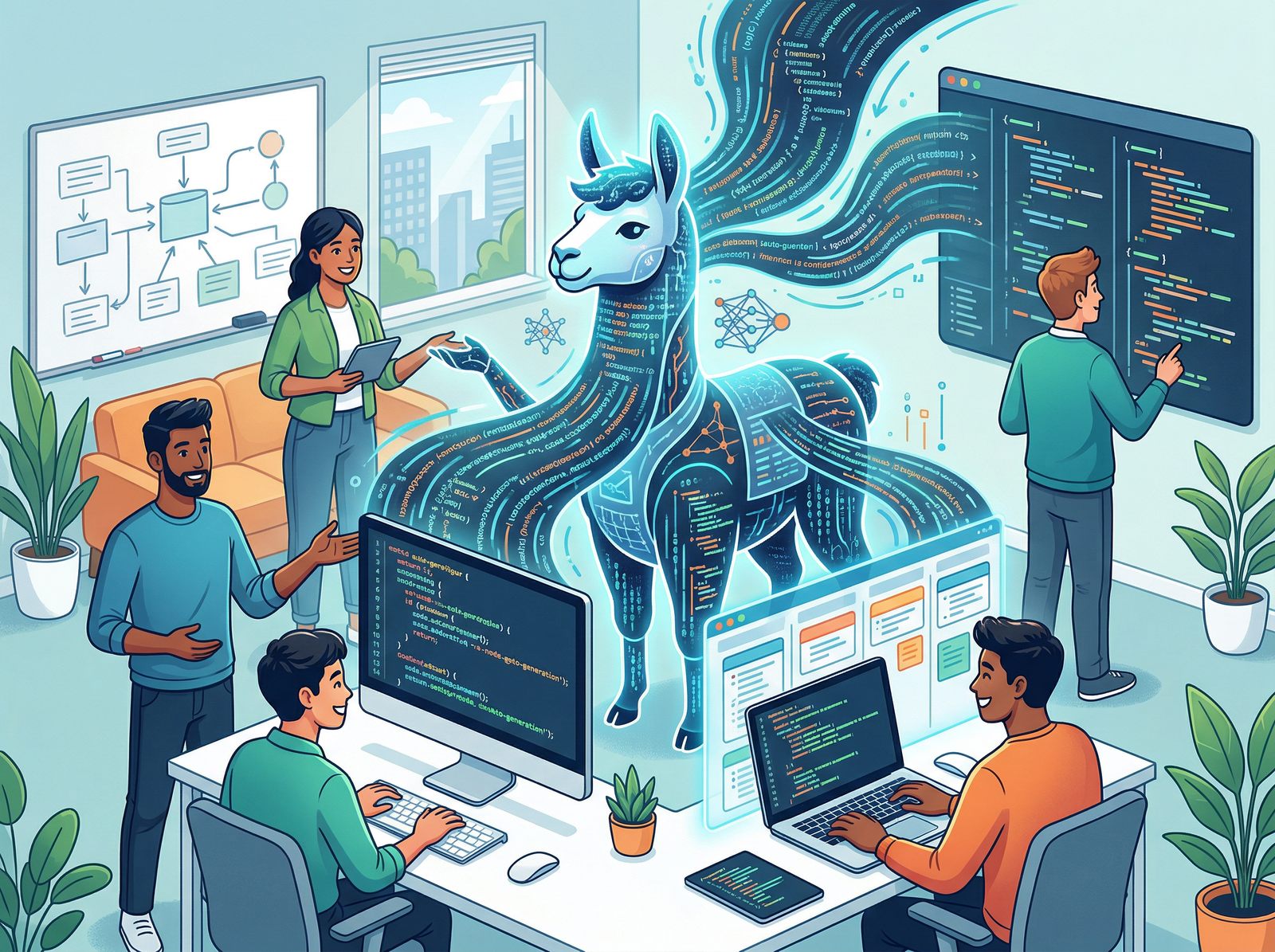
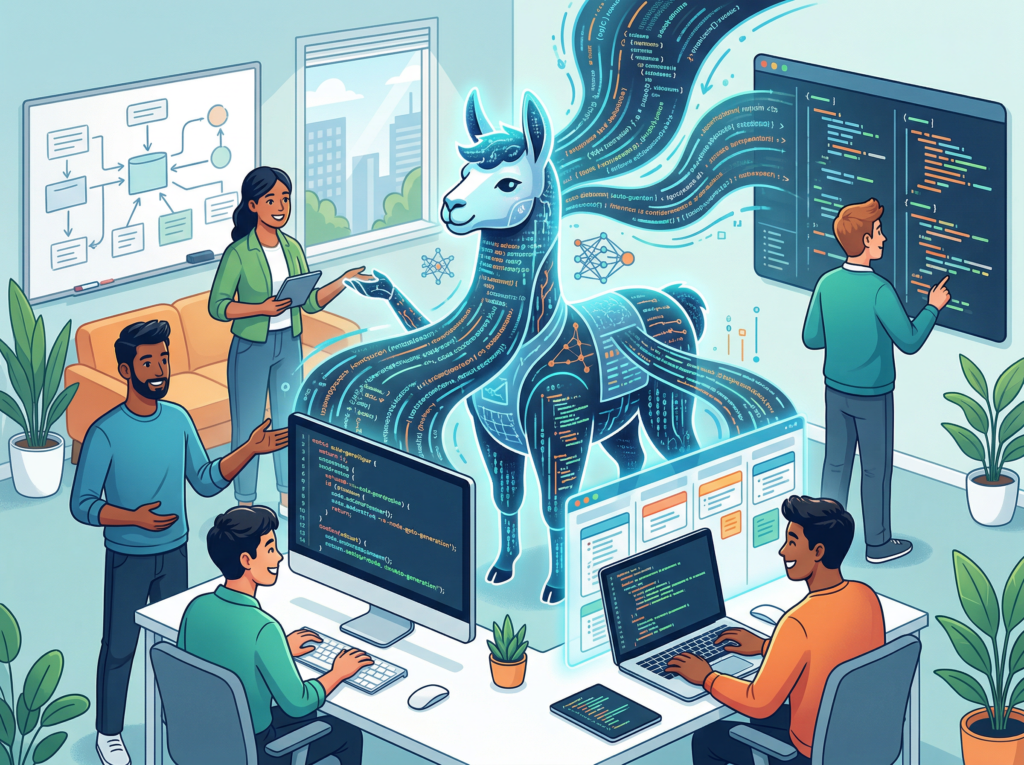
Open source AI coding models are rewriting how small dev teams compete — and Code Llama 70B is the one giving scrappy teams enterprise-grade output without the enterprise price tag.
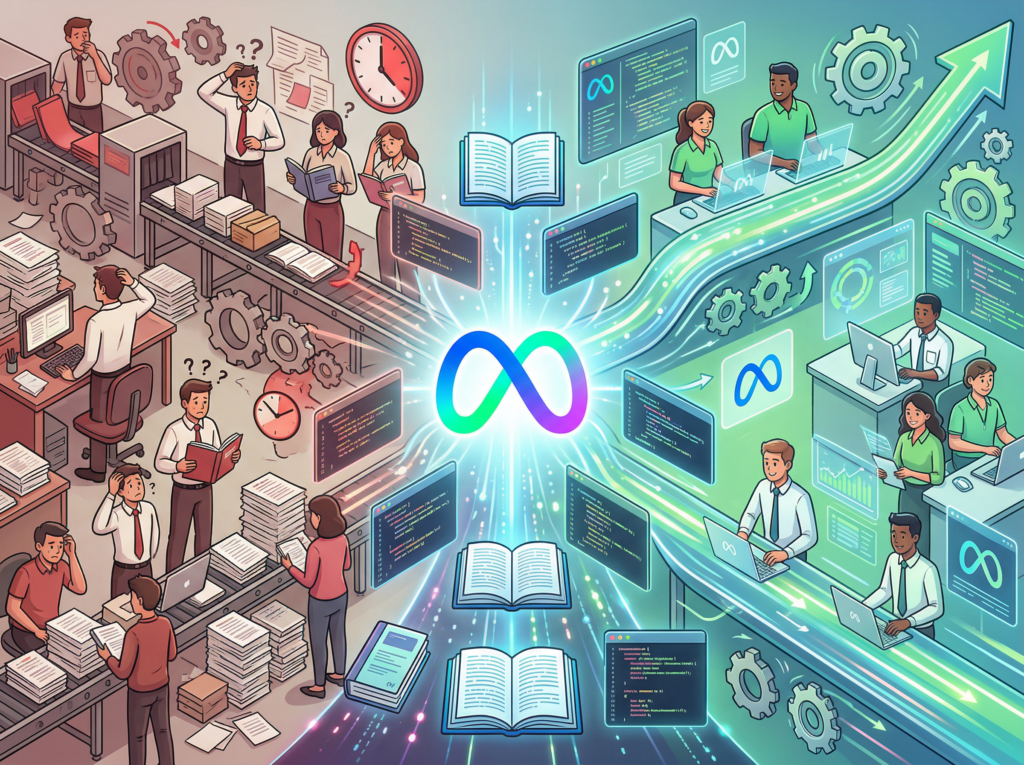
If your engineering team is spending more time hunting down undocumented logic, re-explaining architecture decisions in Slack, or waiting for one senior dev to unblock everyone else — you don’t have a hiring problem. You have a systems problem. And in 2026, that problem is costing American small teams real money.
The average US software developer earns between $120,000 and $160,000 annually. When those developers spend 30–40% of their time on repetitive, low-complexity coding tasks — boilerplate, documentation, test generation, code reviews — you’re burning $36,000 to $64,000 per developer per year on work that an open source AI coding model for developers can handle in seconds.
Remote-first engineering teams across Austin, Denver, Chicago, and the Bay Area are facing the same growing pain: they’ve scaled beyond one or two co-founders, but they haven’t built the systems to match. Knowledge lives in one senior developer’s head. New hires take three to six weeks to become productive. Code quality varies wildly depending on who wrote it and when. Pull requests pile up because no one documented the decision-making process behind the codebase.
This is exactly the operational chaos that Solo DX is designed to solve — and Code Llama 70B is one of the most powerful tools small development teams can use to get there.
Unlike traditional documentation approaches that can cost $5,000 or more in US labor just to produce a basic SOP set, Code Llama 70B is an open-weight model that can be self-hosted, fine-tuned, and deployed on your own infrastructure. It was built specifically for code-related tasks: generation, completion, debugging, explanation, and test writing. For a small team with a tight budget and an ambitious shipping schedule, that’s not a nice-to-have. It’s a competitive advantage.
This guide walks through exactly how Code Llama 70B enables small US development teams to systemize their workflows, reduce bottlenecks, and ship faster — without adding headcount.
Join thousands of US small development teams using Code Llama 70B to eliminate operational bottlenecks.See How It Works
What is Solo DX?
Solo DX stands for Small-scale Digital Transformation — the process of building repeatable, documented, AI-assisted systems within a small team, led by a founder or team lead without access to a dedicated operations manager or enterprise IT department.
It’s a category distinct from general AI productivity tools. Where AI Efficiency focuses on individual-level output gains, Solo DX is about the operational layer: knowledge capture, process documentation, repeatable workflows, and team-wide consistency. The goal isn’t just to make one developer faster. It’s to build systems that make the whole team faster — and keep working even when key people are unavailable.
How Solo DX compares to other AI categories:
Category
Focus
Who Benefits
Primary Outcome
Solo DX
Team systems & workflows
Founders, team leads
Repeatable operations
AI Efficiency
Individual output
Freelancers, solo operators
Personal productivity
AI Revenue Boost
Sales & marketing automation
Growth teams
More pipeline
AI Workflows
Process automation
Ops-heavy teams
Reduced manual steps
Corporate SOP methodologies — the kind used by Fortune 500 companies — fail for US small teams for a predictable reason: they were designed for companies with dedicated process engineers, legal review teams, and months of runway to implement. A six-person dev shop in Austin or a bootstrapped SaaS team in Chicago doesn’t have that infrastructure. They need systems that can be built fast, iterated on quickly, and maintained without a full-time operations hire.
Consider a real-world example: a three-person product studio in Austin had all their deployment knowledge living inside one senior developer’s private notes. When that developer took two weeks off, the team was blocked on three client deliverables. There was no runbook. There was no documented process. There was no way to hand off the work without a two-hour call. That’s a Solo DX problem — and it’s one that Code Llama 70B is specifically positioned to solve.
By using an open source AI coding model for developers like Code Llama 70B, that Austin studio was able to generate deployment documentation, create annotated code explanations, and build internal Q&A tooling directly from their existing codebase — in under a week. You can explore Code Llama 70B’s features to understand exactly what capabilities are available for teams in this position.
The key insight of Solo DX is this: you don’t need more people to build better systems. You need the right AI tools and the discipline to use them consistently.
Why AI is Key for Mini-Team Systemization
American small development teams face three systemic problems that grow more expensive as the team grows. Each one has a direct AI solution — and a calculable cost if left unaddressed.
Problem 1: Knowledge Lives Only in the Founder’s (or Senior Dev’s) Head
In a two or three person team, this is manageable. By the time you hit five to eight people, it’s a crisis. The senior developer becomes the single point of failure for every architectural question, every deployment decision, every “why did we build it this way” conversation. That developer is now spending 10–15 hours per week in context-switching mode instead of shipping.
At a fully-loaded cost of $85–$120/hour for a senior US developer, that’s $44,200–$93,600 in annual cost just from knowledge-bottleneck overhead.
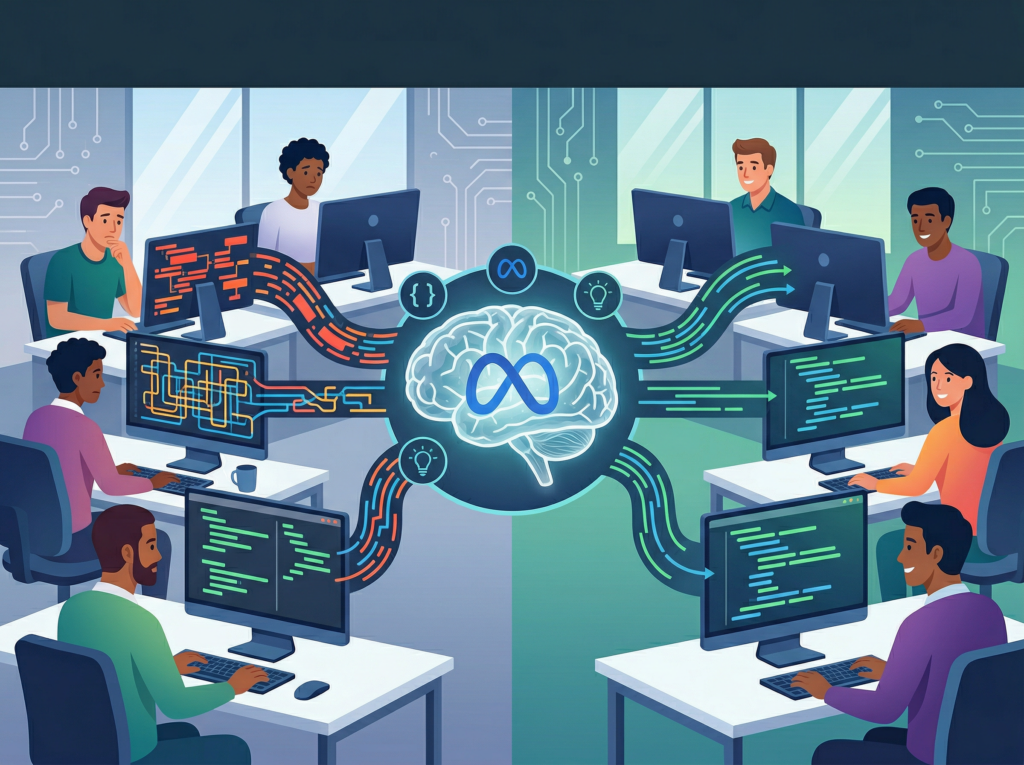
AI Solution: Code Llama 70B can be used to generate inline documentation, explain complex code in plain English, and produce contextual Q&A responses from existing codebases — turning tribal knowledge into searchable, usable assets.
Problem 2: New Hires Slow Down Operations
US labor turnover in the tech sector runs at roughly 13–18% annually in competitive markets. Every time a new developer joins the team, the ramp-up period — getting familiar with the codebase, understanding conventions, learning the deployment workflow — takes three to six weeks on average. During that time, the new hire is consuming senior developer time rather than contributing output.
That ramp-up period costs approximately $8,000–$18,000 per new hire in lost productivity and senior developer time, depending on team size and project complexity.
AI Solution: Code Llama 70B can generate onboarding documentation directly from a codebase, produce annotated walkthroughs of key modules, and answer developer questions in natural language — cutting ramp-up time by 40–60%.
Problem 3: Code Quality Varies Across Team Members
Without documented standards, code review guidelines, and shared conventions, quality becomes personality-dependent. Some developers write thorough tests. Others don’t. Some follow the architecture. Others improvise. The result is a codebase that becomes increasingly expensive to maintain.
AI Solution: Code Llama 70B can enforce consistent patterns by generating boilerplate, suggesting test cases, and flagging deviations from established conventions — acting as an always-available code standards engine.
The Cost Reality:
Manual systemization — hiring a technical writer, running documentation sprints, building onboarding materials from scratch — costs $5,000–$15,000 in US labor and takes four to eight weeks. With Code Llama 70B running on self-hosted infrastructure, the same output can be produced in hours, at a cost of $0 in subscription fees (open-weight model) plus modest compute costs.
Join thousands of US small development teams using Code Llama 70B to eliminate operational bottlenecks.See How It Works
How Code Llama 70B Enables Solo DX
Code Llama 70B is a code-specialized large language model released by Meta AI, built on the Llama 2 architecture and trained on 500 billion tokens of code and code-related data. The 70B parameter version is the most capable in the family, designed for tasks requiring deep code understanding: complex generation, multi-file reasoning, explanation, and fine-tuning on proprietary codebases.
Here’s how four specific capabilities map directly to Solo DX outcomes for small US development teams.
Feature 1: AI-Generated Code Documentation and SOPs
Code Llama 70B can take raw source code — functions, modules, entire files — and generate structured documentation, inline comments, and plain-English explanations suitable for onboarding materials or internal wikis.
ROI: A typical documentation sprint for a 10,000-line codebase costs $2,000–$4,000 in US labor at $80–$100/hour. With Code Llama 70B, the same documentation can be generated in 2–4 hours of prompt engineering and review work. Estimated savings: $2,000–$3,500 per documentation cycle.
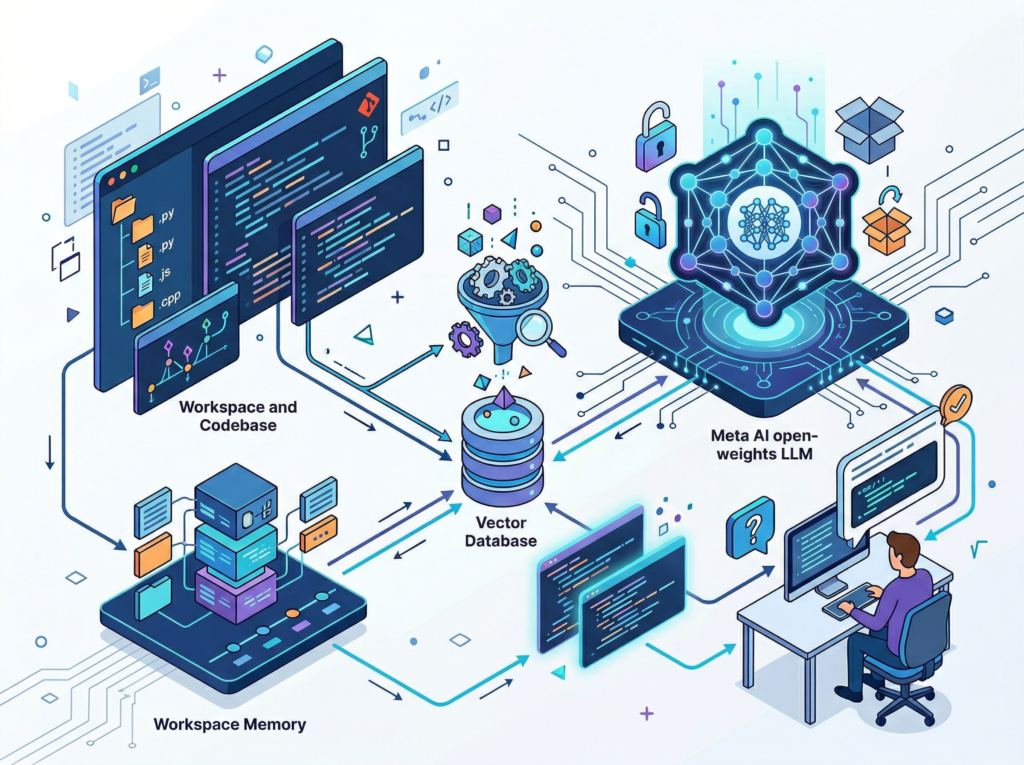
Feature 2: Codebase Q&A and Workspace Memory (via RAG Integration)
When Code Llama 70B is integrated with a retrieval-augmented generation (RAG) pipeline pointed at your codebase, it becomes a searchable knowledge base. Developers can ask natural language questions — “How does the authentication module handle token refresh?” — and receive accurate, context-aware answers without interrupting senior team members.
ROI: If this eliminates 5 interruptions per developer per week at 15 minutes each, and you have four developers at $80/hour: 4 developers × 5 questions × 0.25 hours × $80 × 50 weeks = $80,000 annually in recovered senior developer time.
Feature 3: Template and Boilerplate Automation
Repetitive code patterns — API wrappers, database schemas, component scaffolding — can be templated and generated on demand. Code Llama 70B can be fine-tuned on your own codebase conventions to produce boilerplate that already follows your team’s patterns.
ROI: Estimated time savings of 2–4 hours per week per developer on scaffolding work. At $80/hour with a team of four: $33,280–$66,560 annually in recovered development time.
See how Code Llama 70B works across all of these use cases, including deployment configurations and hardware requirements for self-hosting.
Ready to systemize your US team’s development workflow in under a week?Try Code Llama 70B Free | No credit card required | Trusted by development teams across the US
Use Cases by Team Role
Persona 1: US Startup Founder Juggling 3 Departments — Maria, San Francisco
Old Workflow: Maria is the CTO and de facto product lead of a six-person SaaS startup in San Francisco. Every architectural decision runs through her. New features get delayed because junior developers aren’t sure how to extend the existing data models without breaking something. She spends every Monday morning in “explanation mode” before writing a single line of code herself.
AI-Powered Workflow: Maria uses Code Llama 70B to generate a living architecture document from the codebase — one that answers common structural questions automatically. She sets up a lightweight RAG pipeline so developers can query the codebase directly. Architectural decisions are now logged as annotated code comments generated by the model.
Results: Maria recovered 8–10 hours per week of uninterrupted engineering time. Junior developers became self-sufficient within two weeks of onboarding. Estimated value: $62,400–$78,000 annually at her effective billing rate.
“It’s like having a senior engineer on call who’s read every line of our codebase and never forgets anything.” — Founder profile composite, SF Bay Area
Persona 2: Engineering Lead Onboarding Remote Staff — James, Miami
Old Workflow: James runs engineering for a fully remote product team spread across Miami, Denver, and Chicago. Every new hire onboarding involves the same three-week process: a series of calls, a Notion doc that’s three versions out of date, and an informal “shadow a senior dev” period. It’s inconsistent, time-consuming, and dependent on whoever happens to be available.
AI-Powered Workflow: James uses Code Llama 70B to generate a structured onboarding guide directly from the codebase — annotated module walkthroughs, environment setup scripts, and a Q&A interface that answers new hire questions in real time. According to this breakdown of fine-tuning Code Llama 70B Instruct, fine-tuning on proprietary codebases is achievable even for teams without dedicated ML engineers.
Results: New hire ramp-up dropped from 4 weeks to 10 days. Senior developer onboarding time was cut by 70%. Estimated annual savings across three hires per year: $24,000–$54,000.
“We went from hoping new hires would figure it out to having a system that actually works every time.” — Engineering lead profile composite, remote team
Join thousands of US small development teams using Code Llama 70B to eliminate operational bottlenecks.See How It Works
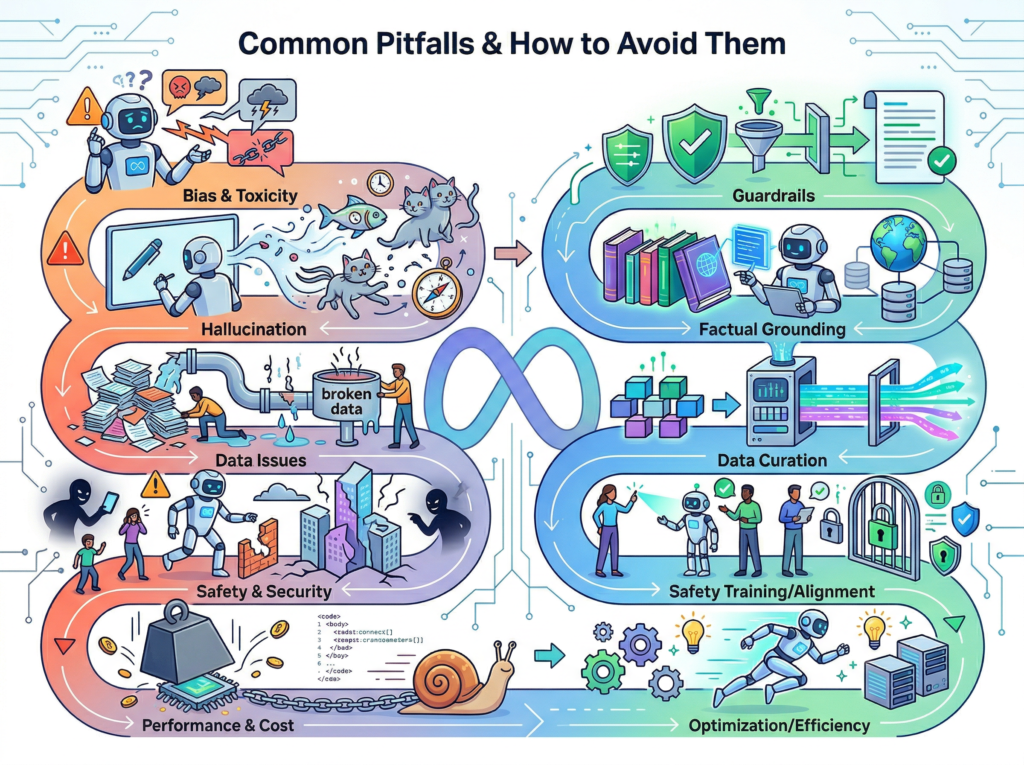
Common Pitfalls & How to Avoid Them
Even well-intentioned teams run into implementation problems. Here are the four most common mistakes US small development teams make when adopting an open source AI coding model for developers like Code Llama 70B — and how to avoid each one.
Pitfall 1: Using Too Many Disconnected Tools
Teams often layer Code Llama 70B on top of a fragmented stack — one tool for documentation, another for code review, another for onboarding — without integration. The result is a system that’s harder to maintain than the problem it was supposed to solve.
Fix: Start with one workflow. Pick the highest-pain bottleneck (usually documentation or onboarding) and build a complete system around it before expanding. Use Code Llama 70B as the core engine and keep the surrounding tooling minimal.
Pitfall 2: Failing to Review AI Output
Code Llama 70B is a powerful open source AI coding model for developers, but it produces output that requires human review — especially in security-sensitive contexts, complex business logic, and external API integrations. Teams that treat AI output as production-ready without review accumulate technical debt fast.
Fix: Build review checkpoints into your workflow from day one. Treat Code Llama 70B output the way you’d treat a junior developer’s first PR: review it, give feedback, and iterate. A detailed breakdown of Code Llama 70B covers the model’s known limitations and recommended validation practices.
Pitfall 3: Over-Relying on Slack and Email for Knowledge
Slack threads and email chains are knowledge graveyards. They’re searchable in theory and useless in practice. Teams that continue routing important technical decisions through chat instead of their AI-assisted knowledge base are building a system that leaks.
Fix: Establish a simple rule: any technical decision that would take more than 5 minutes to explain goes into the documented knowledge base, not a Slack message. Code Llama 70B can help draft those entries in under two minutes.
Join thousands of US small development teams using Code Llama 70B to eliminate operational bottlenecks.See How It Works
FAQs
What is Solo DX? Solo DX (Small-scale Digital Transformation) is the practice of building repeatable, AI-assisted operational systems within a small team, led by a founder or team lead without a dedicated operations manager. The goal is to create the same kind of systemized workflows that enterprise companies have — without the enterprise overhead.
How can AI write my code documentation and SOPs? Code Llama 70B can analyze your existing codebase and generate inline documentation, module-level READMEs, plain-English architecture explanations, and structured onboarding guides. You provide the code; the model produces the documentation. Most teams can get a first draft of their core documentation in a single afternoon.
What’s the difference between AI Efficiency and Solo DX? AI Efficiency focuses on making individual developers faster — better autocomplete, faster debugging, quicker lookups. Solo DX focuses on the operational layer: team-wide systems, shared knowledge bases, repeatable onboarding, and consistent code quality standards. Both matter, but Solo DX has a multiplier effect across the entire team.
Can small teams afford to use Code Llama 70B? Yes. Code Llama 70B is an open-weight model, which means you can self-host it without per-token API fees. Hardware costs vary depending on your setup — this guide to self-hosting 70B models affordably covers practical options ranging from cloud instances to on-premises GPU servers. For many small teams, the total compute cost runs $50–$300/month — a fraction of the labor cost it offsets.
Is Code Llama 70B hard to set up? Setup complexity depends on your infrastructure. Running the model locally requires a GPU with at least 40GB VRAM (for full precision) or quantized configurations that run on more modest hardware. Cloud deployment via providers like AWS, GCP, or Azure is straightforward and documented. For teams without ML engineering experience, using a managed inference endpoint is typically the fastest path to a working implementation.
Conclusion
In 2026, American small development teams don’t need enterprise budgets to build enterprise-level engineering systems. They need the right open source AI coding model for developers — and the discipline to deploy it around their actual operational bottlenecks.
Code Llama 70B offers something that most commercial AI coding tools don’t: the ability to self-host, fine-tune, and deeply integrate with your proprietary codebase without sending your code to a third-party API. For teams working with sensitive client data, proprietary algorithms, or compliance requirements, that’s not a minor feature. It’s a decisive one.
The Solo DX framework gives small teams a clear implementation path: start with the highest-pain bottleneck, build one system around it, prove the ROI, and expand. Whether that’s codebase documentation, new hire onboarding, test generation, or standards enforcement — Code Llama 70B provides the AI coding foundation to make it work.
Start with one process. Systemize it this week. The compounding value of documented, repeatable systems doesn’t show up on day one — but it shows up decisively by month three.
Learn more about Code Llama 70B and take the first step toward a development team that ships consistently, onboards fast, and stops losing institutional knowledge every time someone goes on vacation.
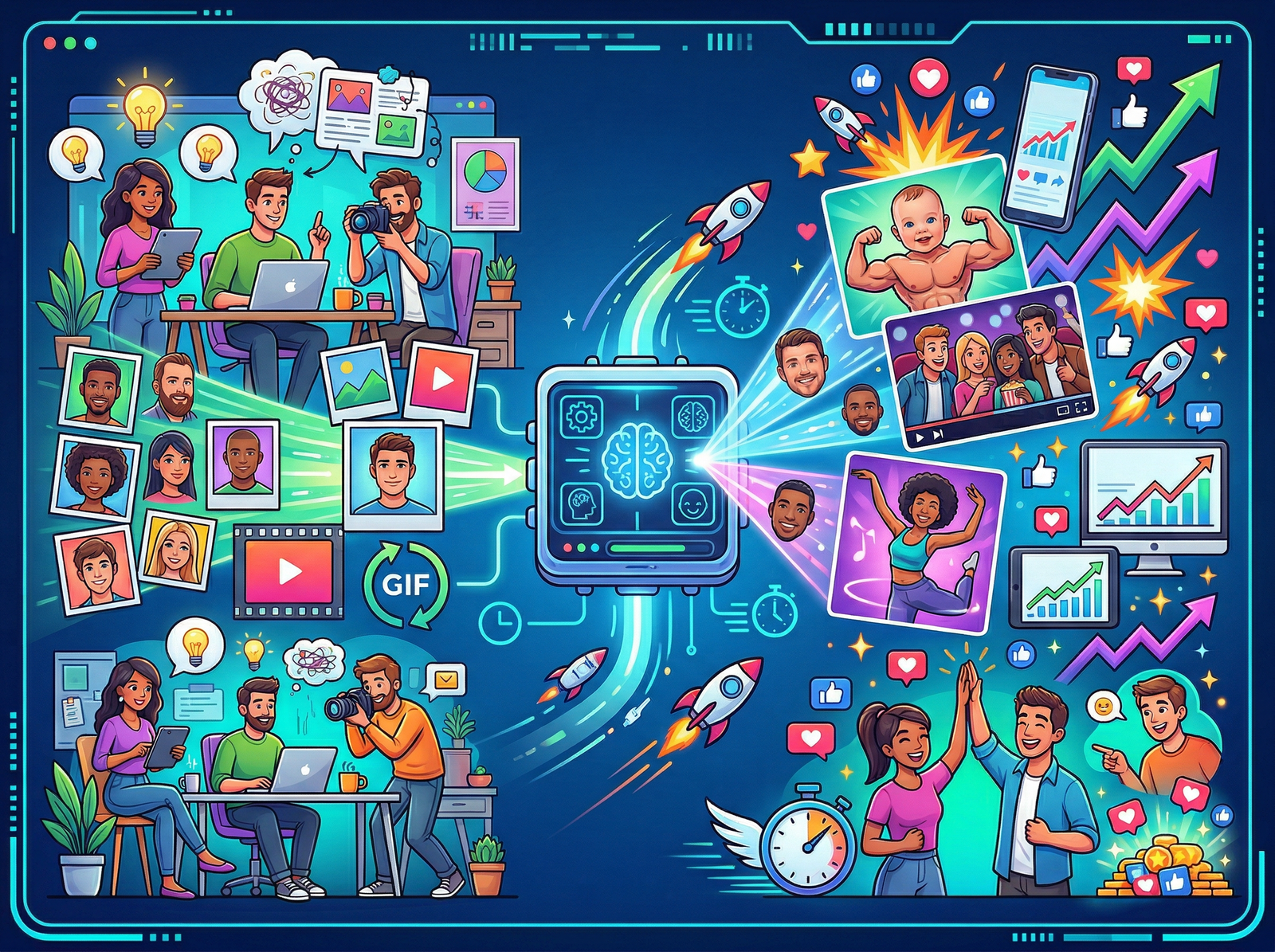
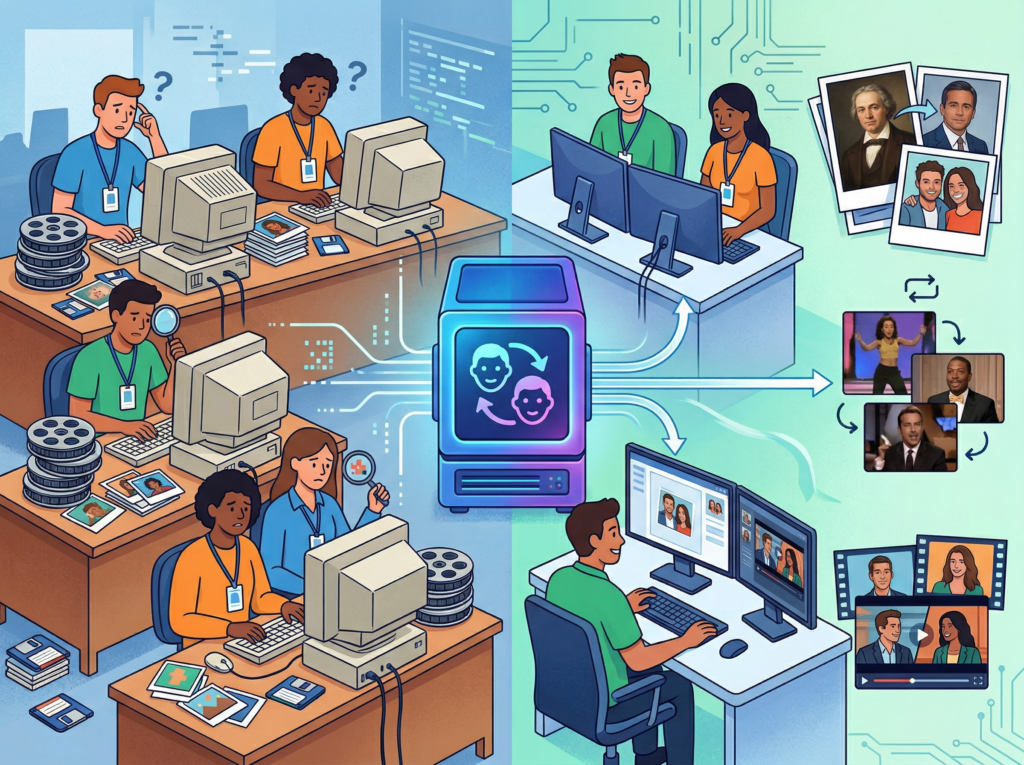
The best ai face swap tool for content creators isn’t the one with the most filters — it’s the one that turns one person into a full creative department.
If you run a small content team in 2026, you already know the pressure. Social feeds move faster than ever, clients expect fresh visuals weekly, and hiring a full design or photography crew still costs more than most lean teams can justify. The result is a familiar kind of chaos: your creative director is also your social strategist, your founder is approving thumbnails at midnight, and your remote contractors in Denver and Chicago are working off three different visual style guides — or none at all.
This is the reality for thousands of US-based content creators, digital marketers, and small creative agencies right now. The demand for high-quality visual content has never been higher, but the labor infrastructure to produce it at scale simply isn’t there for teams of two to ten people. According to the Bureau of Labor Statistics, creative and media occupations in the US command average hourly rates between $45 and $120, making a single week of professional photo editing work a $1,500–$3,500 line item before you’ve shot a single frame.
The teams winning in this environment aren’t spending more. They’re systemizing faster — using AI tools to compress the gap between idea and finished asset. And in 2026, one of the most practical ai face swap tools for content creators doing exactly that is FaceSwapper.
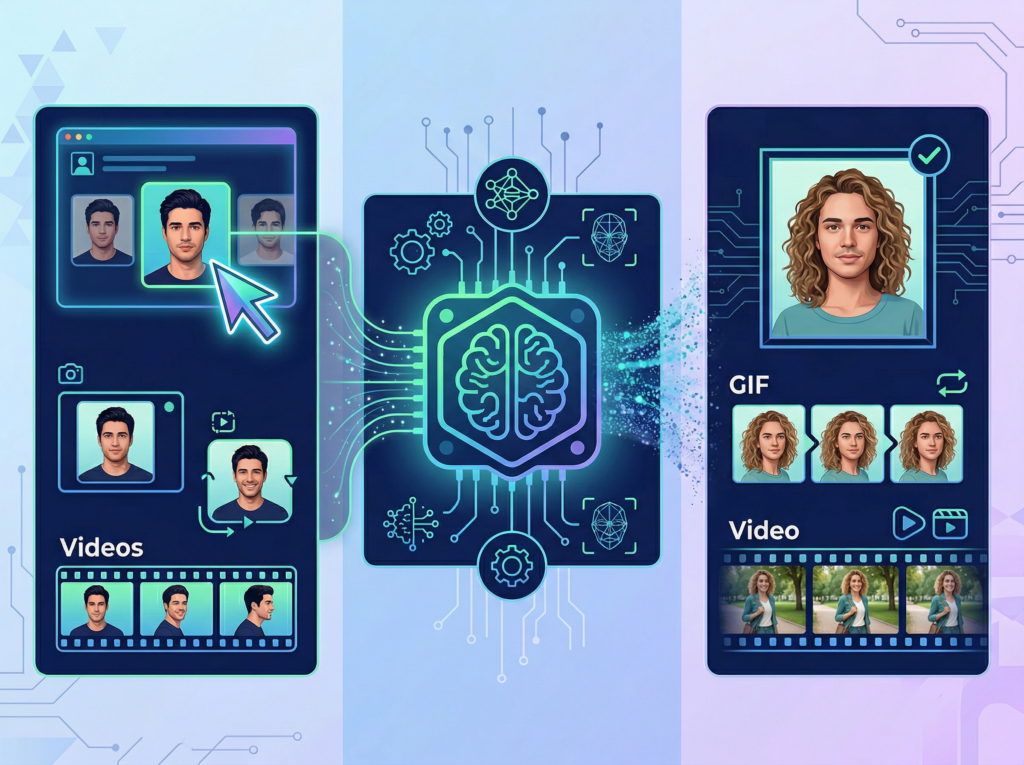
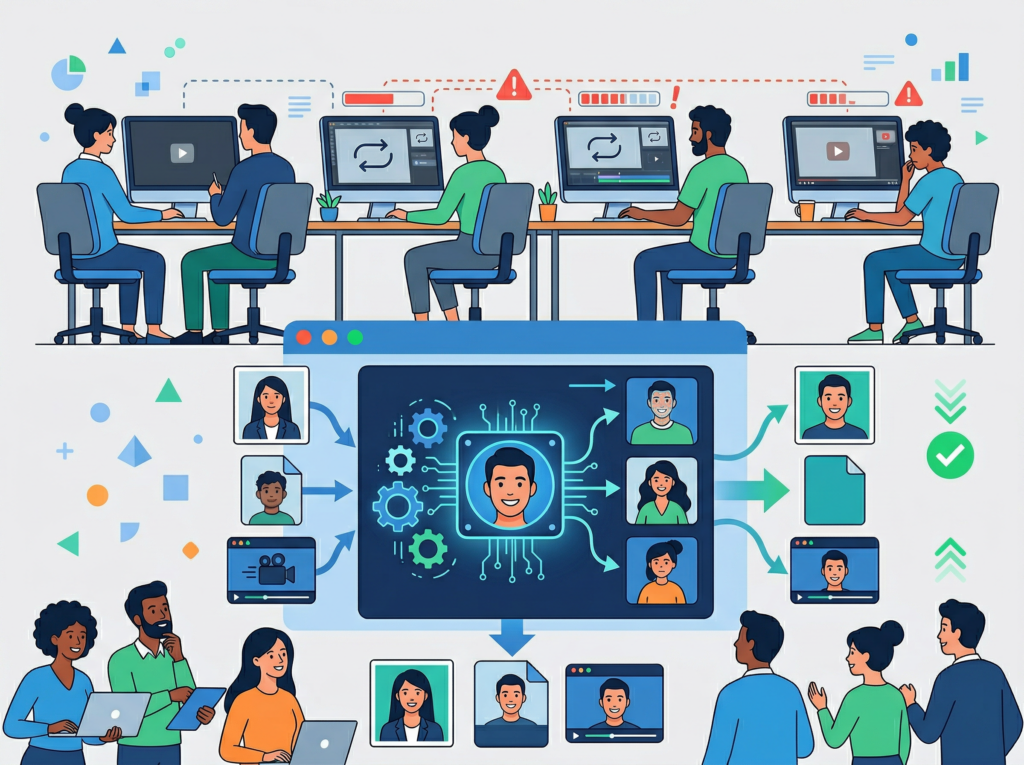
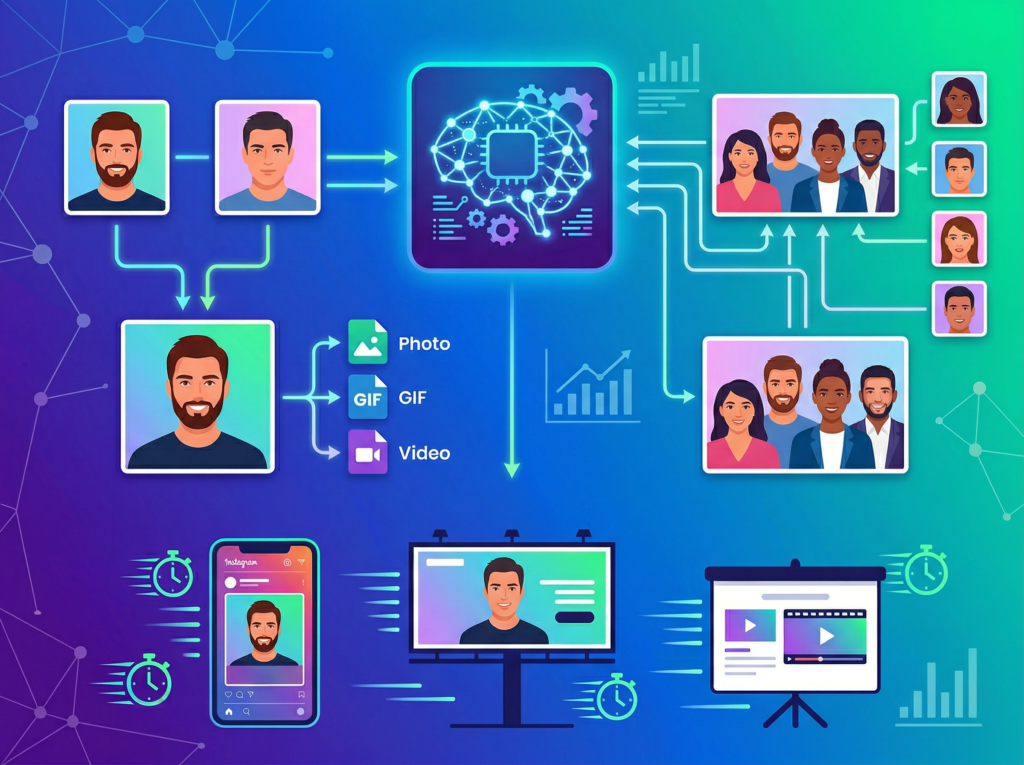
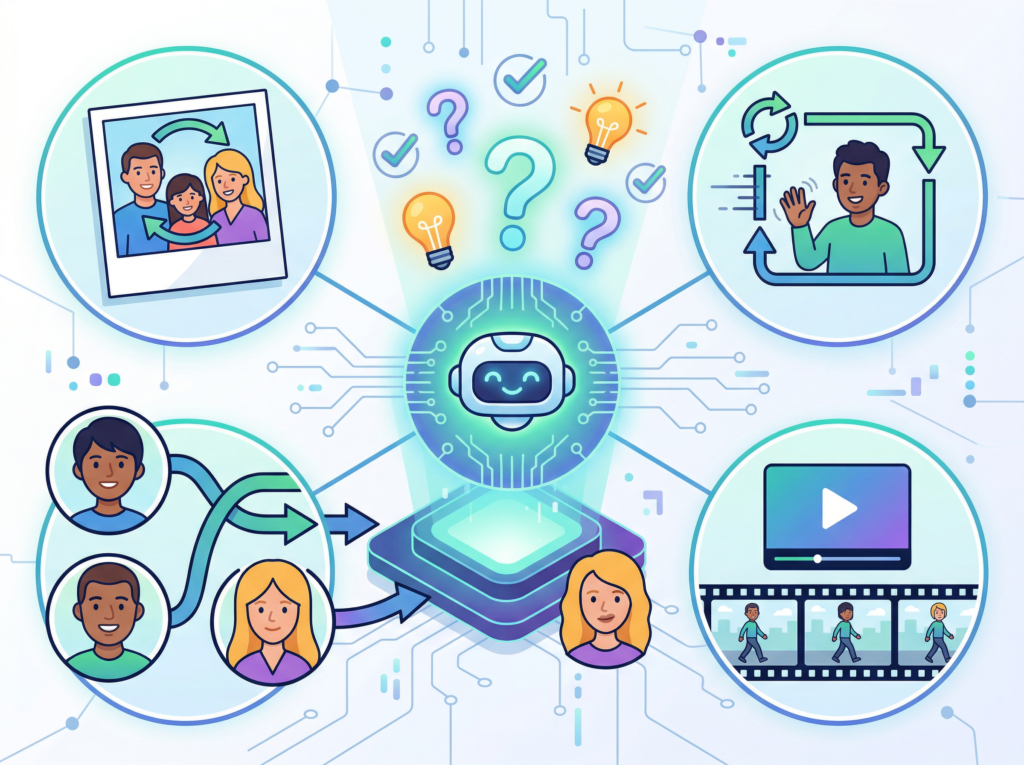
FaceSwapper isn’t a novelty app. It’s a production tool — one that lets small teams swap faces across photos, videos, and GIFs with no design background required, no credit card to start, and no files stored on external servers. For a US content team trying to produce volume without hiring volume, that combination matters.
In this guide, we’ll break down what Solo DX means for American creative teams, why AI-powered visual tools are central to that strategy, and how FaceSwapper fits into a repeatable, scalable content workflow — with real numbers attached.
Learn more about FaceSwapper and take the first step toward a content production system that doesn’t depend on any one person’s availability.
What Is Solo DX?
Solo DX — short for Solo Digital Transformation — describes something that corporate operations consultants rarely talk about: the kind of systemization that happens when a small US business founder or team lead decides to get serious about process, without the budget for an operations manager, an IT department, or a six-month software rollout.
It’s digital transformation at human scale. It’s the three-person creative agency in Austin deciding to document their client onboarding flow. It’s the five-person e-commerce brand in Chicago building a repeatable visual production system so that any team member can produce on-brand content on any given Tuesday. It’s practical, scrappy, and entirely achievable — but only when the right tools are in place.
Solo DX vs. Other Operational Approaches
Approach
Best For
Limitation
Enterprise DX
500+ employee orgs
Too expensive, too slow
AI Efficiency
Individual power users
Doesn’t scale to teams
Solo DX
2–15 person teams
Requires consistent tool adoption
Traditional SOPs
Any size
Labor-intensive to build and maintain
Corporate SOP methodologies fail for US small teams for a predictable reason: they were designed for environments where writing documentation is someone’s full-time job. When your team is lean, no one has 40 hours to spend mapping processes in a Word doc. And when you finally do document something, it’s usually already outdated.
Solo DX flips that model. Instead of documenting first and acting second, it uses AI tools to capture processes as they happen — turning routine creative work into repeatable, shareable systems in real time.
Consider a three-person design studio in Austin: a creative director, a social media manager, and a part-time video editor. Before Solo DX, every client campaign started from scratch. The creative director held all the brand knowledge in her head. When the video editor needed a reference image or a style guide, it meant a Slack thread, a 20-minute explanation, and usually a revision cycle that could have been avoided.
After adopting AI tools including an ai face swap tool for content creators like FaceSwapper, that same studio now produces campaign assets 60% faster. The creative director built a visual template library. The social manager can generate on-brand swap variants independently. The video editor has a reference system that answers his questions before he asks them.
That’s Solo DX in practice: small-scale transformation with measurable results.
Why AI Is Key for Mini-Team Systemization
Three operational problems consistently derail small US content teams trying to scale. Each one has a direct AI-powered solution — and the cost difference between the manual and automated approach is stark.
Problem 1: Creative Knowledge Lives in One Person’s Head
Most small creative teams have one person — usually the founder or creative director — who carries the entire brand vision mentally. They know the exact color tone for product shots. They know which talent looks work for which audience segments. They know which visual formats historically drive the most engagement.
The problem is that knowledge doesn’t transfer automatically. When that person is unavailable, output quality drops. When a new hire joins, they spend weeks absorbing institutional knowledge through trial and error.
AI solution: Tools like FaceSwapper create visual systems that encode creative decisions. When your team builds a library of approved face-swap templates and output styles, that creative knowledge becomes accessible to everyone — not just the person who developed it.
Problem 2: New Hires Slow Operations Down
US labor turnover in creative and marketing roles averages 47% annually according to industry workforce data. That means the average small creative team spends significant time and money onboarding replacement talent — repeatedly. When your content production process depends on institutional memory rather than documented systems, every new hire resets the clock.
AI solution: Repeatable AI-powered workflows mean new team members can produce professional-quality content on day one, not week six. A remote contractor in Miami can run the same FaceSwapper workflow as your full-time designer in San Francisco — and get consistent results.
Problem 3: Quality Varies Across Team Members
When content quality depends on individual skill rather than documented process, output is inconsistent. One team member produces polished swaps. Another produces work that looks AI-generated in a way that undermines brand credibility. Both are working hard — but without shared standards, the results diverge.
AI solution: AI tools with built-in quality controls (like FaceSwapper’s natural-output processing) create a quality floor that doesn’t depend on the individual user’s technical skill.
The Cost Reality
Approach
Labor Cost
Time Required
Manual photo editing (US freelancer)
$65–$120/hour
3–8 hours per campaign
Traditional content agency
$2,500–$5,000/project
1–3 weeks
AI-powered workflow (FaceSwapper)
$0–$10/month
15–45 minutes per campaign
For a US content team producing two to four campaigns per month, the shift from manual to AI-assisted production can represent $5,000–$15,000 in annual labor savings — without any reduction in output quality.
How FaceSwapper Enables Solo DX
FaceSwapper isn’t positioned as an enterprise content suite. That’s intentional — and it’s exactly why it works for Solo DX. It does a focused set of things exceptionally well, integrates into existing workflows without IT overhead, and produces results that look professional without requiring professional-level technical skills.
Here’s how its core features map to real operational value for US small teams.
Feature 1: AI-Powered Single and Multi-Face Swapping Faster Campaign Production
The core face swap function works on both single faces and group photos — with no manual masking, no layer management, and no Photoshop subscription required. For content teams producing product lifestyle shots, social media visuals, or marketing assets, this compresses what used to be a multi-hour editing task into minutes.
Operational value: A US marketing team producing 20 visual assets per month at 2 hours of manual editing each would spend approximately 40 hours monthly on editing alone — roughly $2,600–$4,800 in US labor hours. Replacing that workflow with AI-powered swapping reduces production time by 70–85%, saving $1,800–$4,000 per month.
Feature 2: Video Face Swap Scalable Video Content
Video content production is one of the most resource-intensive challenges for small US teams. FaceSwapper’s video swap capability allows teams to repurpose existing video assets by swapping faces — enabling rapid localization, talent substitution, or persona-based content variants without reshooting.
Operational value: A single video reshoot in a US market typically costs $3,000–$8,000 in crew, talent, and post-production. AI-enabled face swapping in video eliminates the reshoot cost for content variations — potentially saving $36,000–$96,000 annually for teams that regularly repurpose video assets.
Feature 3: Privacy-First Processing ? Enterprise-Level Trust Without Enterprise Cost
FaceSwapper’s architecture doesn’t store uploaded images or files on external servers. All files are deleted immediately after results are generated and downloaded. For US teams working with client assets, talent imagery, or sensitive brand materials, this matters both operationally and legally.
Operational value: Data handling compliance for US creative agencies working with enterprise clients often requires contractual assurances about asset security. FaceSwapper’s no-storage architecture satisfies those requirements without additional infrastructure cost.
Ready to systemize your US team’s content production in under a week?Try FaceSwapper Free | No credit card required | Trusted by content teams across the US
Use Cases by Team Role
Maze — Startup Founder Juggling Marketing, Brand, and Sales
Old workflow: Maria runs a 4-person DTC brand in San Francisco. Every product launch required hiring a freelance photographer ($800–$1,500 per shoot), coordinating with talent ($200–$400/day), and waiting 3–5 business days for edited assets. A product line with 6 SKUs meant 6 separate shoots.
AI-powered workflow: Maria now maintains a library of approved lifestyle photography. Using FaceSwapper’s batch face swap feature, her team applies different model faces to the same product context — producing 6 SKU variants in under two hours. When a new product launches, she’s not scheduling a shoot. She’s pulling from her template library and generating variants on demand.
Quantified results: $12,000–$18,000 annual savings in photography and talent costs. 80% reduction in time-to-asset for new product launches.
“We used to plan product launches around our photographer’s availability. Now we plan them around the product.”
Bob — Executive Assistant Onboarding Remote Staff
Old workflow: James supports a 9-person content agency in Miami with team members across three time zones. Onboarding new contractors meant a 2-hour walkthrough session, a shared folder of loosely organized reference images, and hoping the new hire absorbed enough to produce consistent work. Quality control was reactive.
AI-powered workflow: James built a visual onboarding kit using FaceSwapper outputs as reference examples — showing new contractors exactly what approved creative swaps look like across different campaign types. The kit includes input standards, output benchmarks, and a self-service correction guide. As noted in this breakdown of face swap techniques for beginners, clear visual references dramatically reduce the learning curve for new users.
Quantified results: Onboarding time reduced from 2 hours to 35 minutes. First-week error rate for new contractors dropped by 65%. Estimated annual value: $9,360 in recaptured billable hours.
“New contractors used to ask me the same questions for their first two weeks. Now they consult the reference kit.”
Aisha — Marketing Lead Standardizing Client Reporting and Campaign Assets
Old workflow: Aisha manages content strategy for a 6-person digital marketing agency in Chicago. Each client had different visual asset standards, and producing campaign variants for A/B testing meant either manual editing or expensive outsourcing. Her team averaged 4–6 hours per client per campaign cycle on asset production alone.
AI-powered workflow: Aisha built client-specific FaceSwapper templates — pre-approved visual frameworks for each account. When a campaign launches, her team generates A/B variants using the template library, runs them through FaceSwapper for talent swaps, and delivers to the client same-day. For context on best-practice workflows, this guide to face swap best practices outlines the quality benchmarks that professional teams should target.
Quantified results: Asset production time reduced by 72%. Client delivery cycle shortened from 5 business days to 1. Annual value: $28,000–$35,000 in recovered capacity across the team.
“We used to bill clients for revision cycles. Now we rarely have them.”
Robert — Internal Trainer Documenting Creative Knowledge
Old workflow: Robert leads creative training for a 7-person content studio in New York. Building training materials meant manually creating example assets, writing explanations, and scheduling review sessions. Creating one module took 8–12 hours of work. Keeping it current required similar effort every quarter.
AI-powered workflow: Robert uses FaceSwapper outputs as living training examples — showing before/after comparisons, quality benchmarks, and process walkthroughs. The visual nature of the tool means training materials explain themselves. A module that previously took 10 hours to build now takes 2.5 hours. According to this analysis of AI face swapping, visual demonstration consistently outperforms written instruction for creative skill transfer.
Quantified results: Training module creation time reduced by 75%. Knowledge transfer completeness (measured by first-attempt quality scores) improved by 40%. Annual value: $15,000–$22,000 in training overhead savings.
“Visual examples replace explanations. My team gets it immediately instead of after three tries.”
Join thousands of US small teams using FaceSwapper to eliminate content production chaos.See How It Works | Used by teams from Silicon Valley to New York
Common Pitfalls and How to Avoid Them
Even well-intentioned US content teams undermine their own Solo DX progress by falling into predictable operational traps. Here are the four most common — and how to avoid them.
Pitfall 1: Delegating Without Documentation
Handing a new team member access to FaceSwapper without showing them your standards is delegation without systemization. They’ll produce output — but it won’t match your brand benchmarks, and the correction cycle costs more time than the original task.
Fix: Before delegating, build a one-page visual reference guide showing approved input quality, preferred output style, and common mistakes to avoid. This is Solo DX in its simplest form: one document that multiplies your team’s capability.
Pitfall 2: Failing to Review AI Output
AI face swapping is fast — and speed can create complacency. Teams that skip quality review end up publishing assets with alignment issues, lighting mismatches, or subtle artifacts that undermine brand credibility.
Fix: Build a 5-minute review checkpoint into every AI production workflow. Explore FaceSwapper’s full feature set to understand the quality controls already built into the tool — and use them consistently.
FAQs
What is Solo DX? Solo DX (Solo Digital Transformation) is the process of systemizing operations for small US teams — typically 2–15 people — using AI tools to build repeatable workflows without hiring operations managers or enterprise consultants. It’s practical, affordable, and designed for the scale at which most American small businesses actually operate.
How can AI help my team produce visual content faster? AI tools like FaceSwapper automate the most time-consuming parts of visual content production — face swapping across photos, videos, and GIFs — so your team can generate campaign variants, A/B test assets, and produce client deliverables in a fraction of the time manual editing would require. For context, a task that takes a US freelance editor 3–4 hours can be completed in under 30 minutes with an AI face swap tool for content creators.
What’s the difference between AI Efficiency and Solo DX? AI Efficiency focuses on making individual users faster and more productive. Solo DX focuses on making teams faster — by building shared systems, documented workflows, and repeatable processes that any team member can execute. Solo DX uses AI Efficiency tools, but applies them at the team level rather than the individual level.
Can small teams afford to use AI content tools? Yes — and increasingly, they can’t afford not to. FaceSwapper offers a free tier with no sign-up and no credit card required. For US content teams spending $3,000–$8,000 per month on manual editing and content production, even a partial shift to AI-assisted workflows can represent $15,000–$50,000 in annual savings.
Is FaceSwapper hard to set up? No. FaceSwapper is browser-based — no installation, no software download, no IT configuration required. The workflow is: upload source image, upload target face, click swap. Most US team members are producing results on their first session. The learning curve is measured in minutes, not hours.
Conclusion
In 2026, American small businesses don’t need enterprise budgets to build enterprise-level content systems. They need the right AI tools, a clear process for using them, and the discipline to document what works.
FaceSwapper is one of the most practical ai face swap tools for content creators precisely because it’s not trying to be everything. It does a specific, high-value thing — AI-powered face swapping across photos, videos, and GIFs — better than tools that bury that capability inside a bloated feature set. For a US content team trying to produce more with fewer people, that focus is a feature.
The teams that win in this environment aren’t the ones with the biggest budgets. They’re the ones that build repeatable systems fastest. Solo DX isn’t about transformation for its own sake — it’s about turning the creative knowledge your team has already built into something transferable, scalable, and resilient to turnover.
Start with one process. Document it. Systemize it this week.
Learn more about FaceSwapper and take the first step toward a content production system that doesn’t depend on any one person’s availability.